SUBSCRIBE TO OUR FREE NEWSLETTER
Daily news & progressive opinion—funded by the people, not the corporations—delivered straight to your inbox.
5
#000000
#FFFFFF
To donate by check, phone, or other method, see our More Ways to Give page.
Daily news & progressive opinion—funded by the people, not the corporations—delivered straight to your inbox.
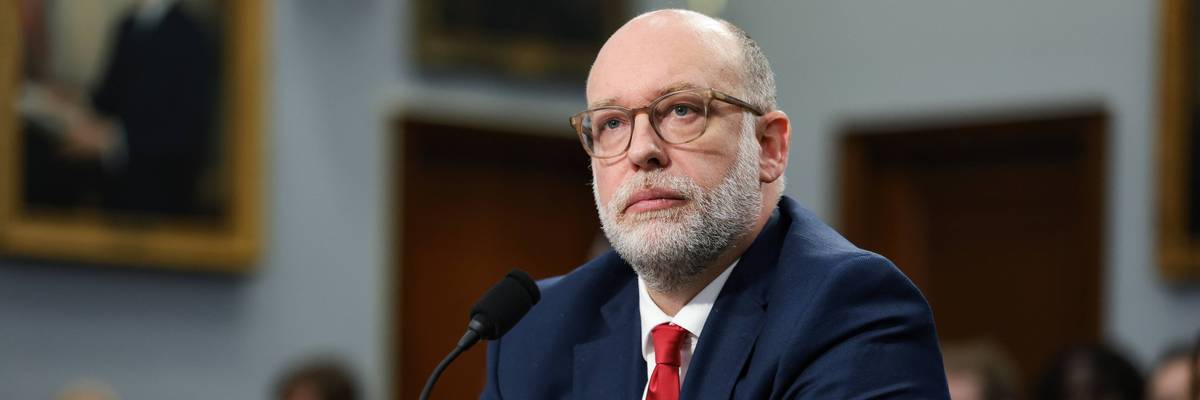
White House Office of Management and Budget Director Russell Vought testifies before a House Appropriations Subcommittee on Capitol Hill on June 30, 2026 in Washington, DC.
“This is not a grant reform—it is a blueprint for a spoils system applied to federal science funding."
An environmental watchdog group is calling on the White House Office of Management and Budget to withdraw a proposal that it said will give President Donald Trump and his allies unchecked power to control over a trillion dollars worth of federal grants.
Monday marked the end of the public comment period for a proposal from the OMB, spearheaded by Project 2025 architect Russell Vought and issued in late May, that would require all discretionary federal grants to “demonstrably advance the president’s policy priorities.”
As Elizabeth Kolbert explained in The New Yorker:
It would replace the current guidance for signing off on government grants, which generally leaves the task to civil servants and peer-review panels.
Instead, the final say would go to political appointees. All discretionary awards from the federal government would have to be assessed by senior administration officials, who could deny them on the [grounds] that they didn’t fit the President’s agenda. Grants could also be terminated at any time for the same reason.
The rules would affect hundreds of billions of dollars in funding disbursed by agencies ranging from the National Endowment for the Arts to the Transportation Department, to pay for everything from local dance performances to massive infrastructure projects.
Public Employees for Environmental Responsibility (PEER) filed a formal comment on Monday urging the OMB to withdraw the proposal.
"The scale of what is proposed is staggering," the group said. "This rule would institutionalize corruption and cronyism in the distribution of over a trillion dollars in annual federal funds."
The comment noted the proposal's language forbidding political appointees from deferring to peer review, which the group said will lead grants to be awarded based on ideological conformity rather than scientific merit.
"This language makes clear that the rule's purpose is not to add accountability over expert review but to replace expert judgment with political judgment entirely," the comment says. "Researchers would learn quickly to propose only work likely to survive ideological screening, while federal program officers, many of whom are being stripped of civil service protections, would face pressure to recommend or approve grants to preserve their jobs. "
“This would corrupt scientific judgment at every level of the process,” it adds, noting the Trump administration’s concerted effort to strip away funding for research on health and environmental issues that conflict with his political agenda, including climate science, vaccine safety, chemical safety, and emerging infectious diseases.
Since last year, the administration has terminated or frozen nearly 8,000 research grants and has effectively slashed the budget of the National Science Foundation by refusing to disburse funds appropriated by Congress. The agency is on track to issue the fewest grants in more than half a century, according to a report last month from Grant Witness.
The proposal would also allow agency heads to keep grants from being posted publicly whenever they determine that doing so would be contrary to the "national interest," which the rule does not define.
PEER said this change "permits agencies to offer grants by invitation only among preferred recipients with no requirement to explain or justify the determination."
The group pointed to the Trump administration’s pattern of directing no-bid contracts to the president’s family, friends, and supporters.
Trump megadonor and former Department of Government Efficiency (DOGE) head Elon Musk, the comment notes, was allowed to oversee the cancellation of the contracts for numerous vendors while never touching any of the more than $19 billion his businesses held in federal contracts.
“This is not a grant reform—it is a blueprint for a spoils system applied to federal science funding,” said Tim Whitehouse, executive director of PEER.
PEER's comment is one of nearly 342,000 OMB has received about the proposal in just over a month, of which 52,000 are publicly posted. The office is hoping to finalize the proposal by October 1 and has denied requests from watchdog organizations to extend the public comment period.
If that happens, Whitehouse has said it would upend the systems of accountability and transparency for scientific funding that have been in place for decades.
“Grant money has historically been distributed through programs authorized by Congress using statutory, regulatory, formula-based, or competitive criteria rather than direct tests of political loyalty,” added Whitehouse. “Placing all scientific research funding under the unreviewable discretion of political appointees is not an administrative reform; it is a recipe for corruption on a scale not seen even in this administration.”
Dear Common Dreams reader, It’s been nearly 30 years since I co-founded Common Dreams with my late wife, Lina Newhouser. We had the radical notion that journalism should serve the public good, not corporate profits. It was clear to us from the outset what it would take to build such a project. No paid advertisements. No corporate sponsors. No millionaire publisher telling us what to think or do. Many people said we wouldn't last a year, but we proved those doubters wrong. Together with a tremendous team of journalists and dedicated staff, we built an independent media outlet free from the constraints of profits and corporate control. Our mission has always been simple: To inform. To inspire. To ignite change for the common good. Building Common Dreams was not easy. Our survival was never guaranteed. When you take on the most powerful forces—Wall Street greed, fossil fuel industry destruction, Big Tech lobbyists, and uber-rich oligarchs who have spent billions upon billions rigging the economy and democracy in their favor—the only bulwark you have is supporters who believe in your work. But here’s the urgent message from me today. It's never been this bad out there. And it's never been this hard to keep us going. At the very moment Common Dreams is most needed, the threats we face are intensifying. We need your support now more than ever. We don't accept corporate advertising and never will. We don't have a paywall because we don't think people should be blocked from critical news based on their ability to pay. Everything we do is funded by the donations of readers like you. When everyone does the little they can afford, we are strong. But if that support retreats or dries up, so do we. Will you donate now to make sure Common Dreams not only survives but thrives? —Craig Brown, Co-founder |
An environmental watchdog group is calling on the White House Office of Management and Budget to withdraw a proposal that it said will give President Donald Trump and his allies unchecked power to control over a trillion dollars worth of federal grants.
Monday marked the end of the public comment period for a proposal from the OMB, spearheaded by Project 2025 architect Russell Vought and issued in late May, that would require all discretionary federal grants to “demonstrably advance the president’s policy priorities.”
As Elizabeth Kolbert explained in The New Yorker:
It would replace the current guidance for signing off on government grants, which generally leaves the task to civil servants and peer-review panels.
Instead, the final say would go to political appointees. All discretionary awards from the federal government would have to be assessed by senior administration officials, who could deny them on the [grounds] that they didn’t fit the President’s agenda. Grants could also be terminated at any time for the same reason.
The rules would affect hundreds of billions of dollars in funding disbursed by agencies ranging from the National Endowment for the Arts to the Transportation Department, to pay for everything from local dance performances to massive infrastructure projects.
Public Employees for Environmental Responsibility (PEER) filed a formal comment on Monday urging the OMB to withdraw the proposal.
"The scale of what is proposed is staggering," the group said. "This rule would institutionalize corruption and cronyism in the distribution of over a trillion dollars in annual federal funds."
The comment noted the proposal's language forbidding political appointees from deferring to peer review, which the group said will lead grants to be awarded based on ideological conformity rather than scientific merit.
"This language makes clear that the rule's purpose is not to add accountability over expert review but to replace expert judgment with political judgment entirely," the comment says. "Researchers would learn quickly to propose only work likely to survive ideological screening, while federal program officers, many of whom are being stripped of civil service protections, would face pressure to recommend or approve grants to preserve their jobs. "
“This would corrupt scientific judgment at every level of the process,” it adds, noting the Trump administration’s concerted effort to strip away funding for research on health and environmental issues that conflict with his political agenda, including climate science, vaccine safety, chemical safety, and emerging infectious diseases.
Since last year, the administration has terminated or frozen nearly 8,000 research grants and has effectively slashed the budget of the National Science Foundation by refusing to disburse funds appropriated by Congress. The agency is on track to issue the fewest grants in more than half a century, according to a report last month from Grant Witness.
The proposal would also allow agency heads to keep grants from being posted publicly whenever they determine that doing so would be contrary to the "national interest," which the rule does not define.
PEER said this change "permits agencies to offer grants by invitation only among preferred recipients with no requirement to explain or justify the determination."
The group pointed to the Trump administration’s pattern of directing no-bid contracts to the president’s family, friends, and supporters.
Trump megadonor and former Department of Government Efficiency (DOGE) head Elon Musk, the comment notes, was allowed to oversee the cancellation of the contracts for numerous vendors while never touching any of the more than $19 billion his businesses held in federal contracts.
“This is not a grant reform—it is a blueprint for a spoils system applied to federal science funding,” said Tim Whitehouse, executive director of PEER.
PEER's comment is one of nearly 342,000 OMB has received about the proposal in just over a month, of which 52,000 are publicly posted. The office is hoping to finalize the proposal by October 1 and has denied requests from watchdog organizations to extend the public comment period.
If that happens, Whitehouse has said it would upend the systems of accountability and transparency for scientific funding that have been in place for decades.
“Grant money has historically been distributed through programs authorized by Congress using statutory, regulatory, formula-based, or competitive criteria rather than direct tests of political loyalty,” added Whitehouse. “Placing all scientific research funding under the unreviewable discretion of political appointees is not an administrative reform; it is a recipe for corruption on a scale not seen even in this administration.”
An environmental watchdog group is calling on the White House Office of Management and Budget to withdraw a proposal that it said will give President Donald Trump and his allies unchecked power to control over a trillion dollars worth of federal grants.
Monday marked the end of the public comment period for a proposal from the OMB, spearheaded by Project 2025 architect Russell Vought and issued in late May, that would require all discretionary federal grants to “demonstrably advance the president’s policy priorities.”
As Elizabeth Kolbert explained in The New Yorker:
It would replace the current guidance for signing off on government grants, which generally leaves the task to civil servants and peer-review panels.
Instead, the final say would go to political appointees. All discretionary awards from the federal government would have to be assessed by senior administration officials, who could deny them on the [grounds] that they didn’t fit the President’s agenda. Grants could also be terminated at any time for the same reason.
The rules would affect hundreds of billions of dollars in funding disbursed by agencies ranging from the National Endowment for the Arts to the Transportation Department, to pay for everything from local dance performances to massive infrastructure projects.
Public Employees for Environmental Responsibility (PEER) filed a formal comment on Monday urging the OMB to withdraw the proposal.
"The scale of what is proposed is staggering," the group said. "This rule would institutionalize corruption and cronyism in the distribution of over a trillion dollars in annual federal funds."
The comment noted the proposal's language forbidding political appointees from deferring to peer review, which the group said will lead grants to be awarded based on ideological conformity rather than scientific merit.
"This language makes clear that the rule's purpose is not to add accountability over expert review but to replace expert judgment with political judgment entirely," the comment says. "Researchers would learn quickly to propose only work likely to survive ideological screening, while federal program officers, many of whom are being stripped of civil service protections, would face pressure to recommend or approve grants to preserve their jobs. "
“This would corrupt scientific judgment at every level of the process,” it adds, noting the Trump administration’s concerted effort to strip away funding for research on health and environmental issues that conflict with his political agenda, including climate science, vaccine safety, chemical safety, and emerging infectious diseases.
Since last year, the administration has terminated or frozen nearly 8,000 research grants and has effectively slashed the budget of the National Science Foundation by refusing to disburse funds appropriated by Congress. The agency is on track to issue the fewest grants in more than half a century, according to a report last month from Grant Witness.
The proposal would also allow agency heads to keep grants from being posted publicly whenever they determine that doing so would be contrary to the "national interest," which the rule does not define.
PEER said this change "permits agencies to offer grants by invitation only among preferred recipients with no requirement to explain or justify the determination."
The group pointed to the Trump administration’s pattern of directing no-bid contracts to the president’s family, friends, and supporters.
Trump megadonor and former Department of Government Efficiency (DOGE) head Elon Musk, the comment notes, was allowed to oversee the cancellation of the contracts for numerous vendors while never touching any of the more than $19 billion his businesses held in federal contracts.
“This is not a grant reform—it is a blueprint for a spoils system applied to federal science funding,” said Tim Whitehouse, executive director of PEER.
PEER's comment is one of nearly 342,000 OMB has received about the proposal in just over a month, of which 52,000 are publicly posted. The office is hoping to finalize the proposal by October 1 and has denied requests from watchdog organizations to extend the public comment period.
If that happens, Whitehouse has said it would upend the systems of accountability and transparency for scientific funding that have been in place for decades.
“Grant money has historically been distributed through programs authorized by Congress using statutory, regulatory, formula-based, or competitive criteria rather than direct tests of political loyalty,” added Whitehouse. “Placing all scientific research funding under the unreviewable discretion of political appointees is not an administrative reform; it is a recipe for corruption on a scale not seen even in this administration.”