

SUBSCRIBE TO OUR FREE NEWSLETTER
Daily news & progressive opinion—funded by the people, not the corporations—delivered straight to your inbox.
5
#000000
#FFFFFF
To donate by check, phone, or other method, see our More Ways to Give page.
Daily news & progressive opinion—funded by the people, not the corporations—delivered straight to your inbox.
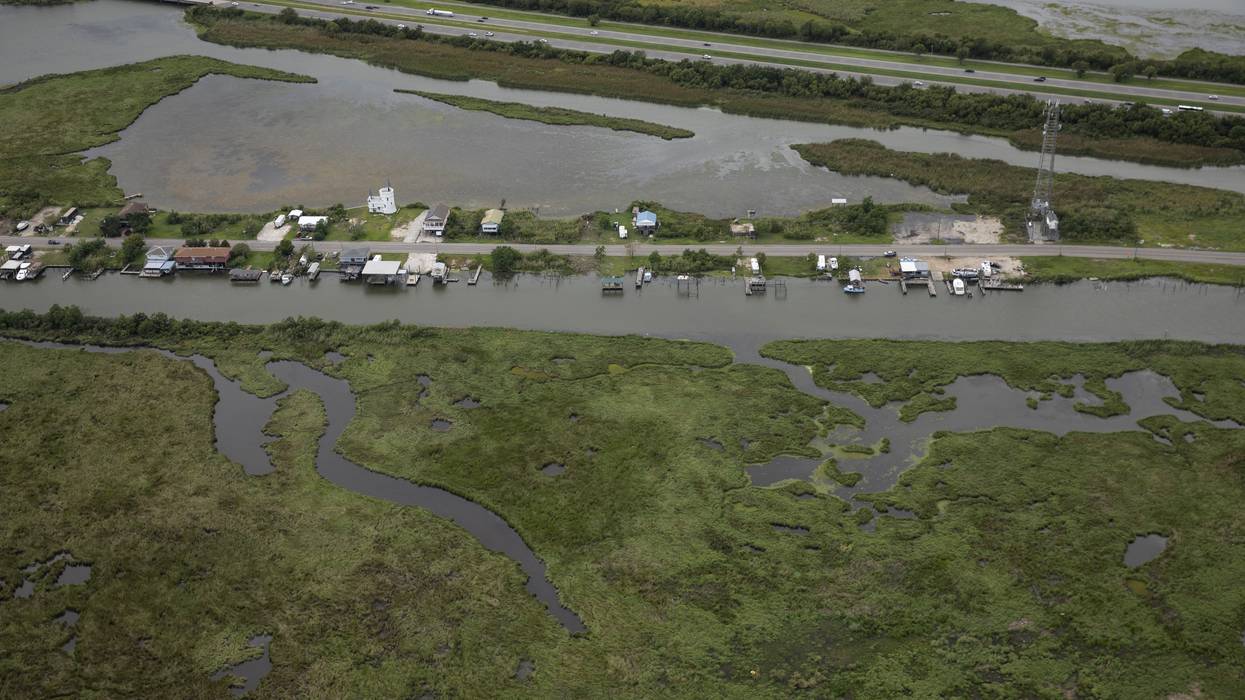
"Coastal Louisiana has evidently already crossed the point of no return," says new research.
A study published Monday warns that New Orleans must immediately begin planning and gradually implementing its permanent evacuation to avert a dangerously rushed exodus later, because it has passed a "point of no return" as climate-driven sea-level rise slowly swallows the storied city.
"With global temperatures poised to exceed the 1.5°C Paris Agreement threshold—a level that triggered substantial ice sheet collapse during the Last Interglacial—low-elevation coastal zones face sea-level commitments far beyond current planning horizons," says the study, which was published by the journal Nature Sustainability.
"With this geological frame of reference, we examine the impact of sea-level rise on what may be the most physically vulnerable coastal zone in the world using prehistoric and contemporary patterns of human mobility," the publication continues. "We highlight the positive aspects of the recently commenced out-migration in this region and argue that the fate of communities landwards of this coastal zone will be decided in the next few decades."
"While climate mitigation should remain the first step to prevent the worst outcomes, coastal Louisiana has evidently already crossed the point of no return,” the paper adds.
That's because rising waters are slowly eroding Louisiana's coast, including New Orleans, which “may well be surrounded by the Gulf of Mexico before the end of this century," according to the study's authors.
“Louisiana is a canary in the coal mine. It is one of the rare places where we’re already clearly seeing climate-motivated depopulation combined with other social and economic factors,” said Yale School of the Environment professor and study co-author Brianna Castro.
The authors argued that by acknowledging the inevitability of New Orleans' underwater future, government and residents can avert a fraught rushed retreat by planning and executing a managed multigenerational relocation and set an example for other threatened coastal communities.
According to one widely cited study published a decade ago, around 13 million Americans living in coastal areas could be forced to relocate to higher ground by the end of the century due climate-driven sea-level rise, with the Gulf Coast and Florida expected lose the most livable land. Globally, hundreds of millions of people are expected to be displaced by 2100 due to rising seas.
After Hurricane Katrina—which inundated the city and killed nearly 1,000 people in the New Orleans metro area—billions of dollars were spent fortifying the city's levee system, which failed catastrophically during the 2005 storm. However, experts warn that in the long term, levees won't be able to stop the rising waters any longer.
That's why the study's authors said officials must begin the city's orderly depopulation as soon as possible.
"What kind of retreat do you want?" asked Castro. "Do you want to incentivize it and then people go naturally for jobs, housing, and lifestyle amenities—or do you want people to wait and then have to leave abruptly in crisis?”
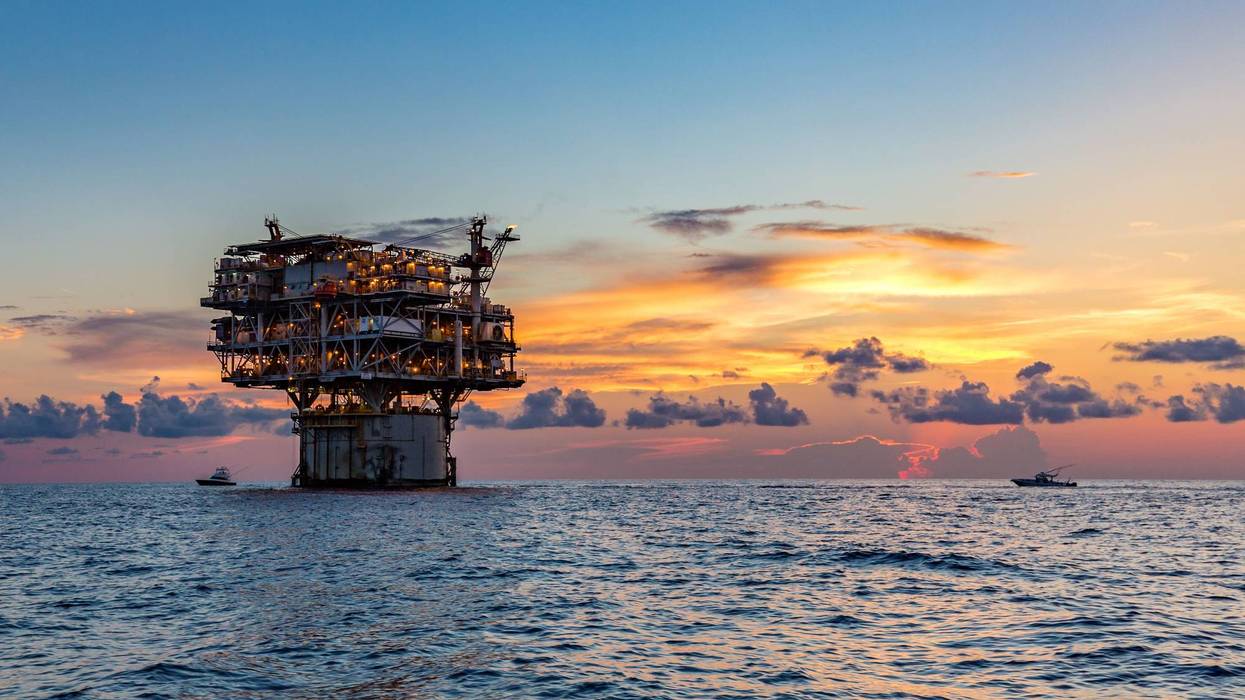
"Ultra-deep-water drilling is ultradangerous, full stop," said an attorney with the Center for Biological Diversity.
Determined to prevent a "sequel" to the worst oil spill in US history, BP's deadly Deepwater Horizon disaster in the Gulf of Mexico in 2010, six environmental protection groups on Monday sued the Trump administration over what they said was its illegal approval of the British fossil fuel giant's $5 billion plan to drill in the body of water's lowest depths off the coast of Louisiana.
BP has boasted that its planned Kaskida oil field is a "world-class project that reflects decades of technological innovation," but environmental legal firm Earthjustice argued that the company has failed to prove its has the "experience, expertise, and certified equipment to conduct safe drilling under extreme conditions" in waters deeper than 5,600 feet, where opponents of the plan say extreme pressure and temperatures will make a blowout and oil spill more likely than they'd be in a typical drilling project.
A "loss of well control" was blamed for the Deepwater Horizon explosion and spill that killed 11 people, harmed and killed more than 100,000 birds and marine animals as well as untold numbers of fish, and devastated local economies—and that type of accident is 6-7 times more likely in an ultra-deep drilling project like Kaskida, according to Earthjustice.
The organization wrote in a regulatory filing last year when it was trying to block the project that "deep-water and ultra-deep-water oil spills and accidents are also much more difficult to respond to and contain.”
"BP did not show in its proposals that it will have the necessary containment capabilities in case the company needs to stop a blown-out well from spilling 4.5 million barrels of oil or more across the Gulf."
The group is representing Healthy Gulf, Turtle Island Restoration Network, Habitat Recovery Project, Sierra Club, and Center for Biological Diversity in the lawsuit, which argues that President Donald Trump's Interior Department adopted in its environmental analysis of Kaskida a severe underestimation—by about half a million barrels of oil—of what a worst-case scenario oil spill would look like.
"BP did not show in its proposals that it will have the necessary containment capabilities in case the company needs to stop a blown-out well from spilling 4.5 million barrels of oil or more across the Gulf," said Earthjustice.
Rachel Mathews, a senior attorney with the Center for Biological Diversity, said it was "appalling that the Trump administration has authorized this deep-water drilling project without having information critical to preventing harm to marine life."
“This will put Rice’s whales, sea turtles, and other Gulf wildlife at terrible risk," said Mathews. "Ultra-deep-water drilling is ultradangerous, full stop.”
The Bureau of Ocean Energy Management's (BOEM) approval of the Kaskida project was preceded by several industry-friendly actions by the Trump administration, including a meeting last month of the federal Endangered Species Committee, which voted to exempt fossil fuel companies from following policies intended to protect endangered species in the Gulf. Advocates argued that the decision was made illegally because the panel is required to meet publicly.
The administration has also proposed weakening "well control" rules for offshore drilling operations, and the White House is consolidating the BOEM and the Bureau of Safety and Environmental Enforcement—two agencies that were intentionally separated following the Deepwater Horizon disaster after an investigative commission found that conflicts of interest were created when they acted as one regulatory agency.
“Kaskida is emblematic of a new era in offshore oil extraction: corporate hoarding of risky, ultra-deep water leases in an attempt to monopolize the future of oil production, with little to no oversight from the Trump administration. We, as citizens of the Gulf South, are not standing for it,” said Martha Collins, executive director of Healthy Gulf. “BP has shown how they handle oil spills on this anniversary of the Deepwater Horizon disaster—their risky drilling and inexperience at this great depth will ensure their continued legacy of the Gulf never being the same again.”
Despite the fact that the Trump administration has taken numerous actions to ramp up oil and gas production—as the US already produces record amounts of fossil fuels—those measures are doing little to reduce oil prices, noted Earthjustice.
“Offshore drilling is one of the riskiest kinds of oil extraction, but the Trump administration is ignoring the law to allow Big Oil CEOs to endanger coastal communities for the sake of corporate profit,” said Devorah Ancel, senior attorney at Sierra Club’s Environmental Law Program. “This permit would allow BP to develop multiple ultra-deep high-pressure wells, which is already exceptionally risky, and with BP’s track record in the Gulf, coastal ecosystems face extraordinary danger. We’re suing the Trump administration to ensure the coastal communities that would suffer the consequences of BP’s actions get their day in court.”
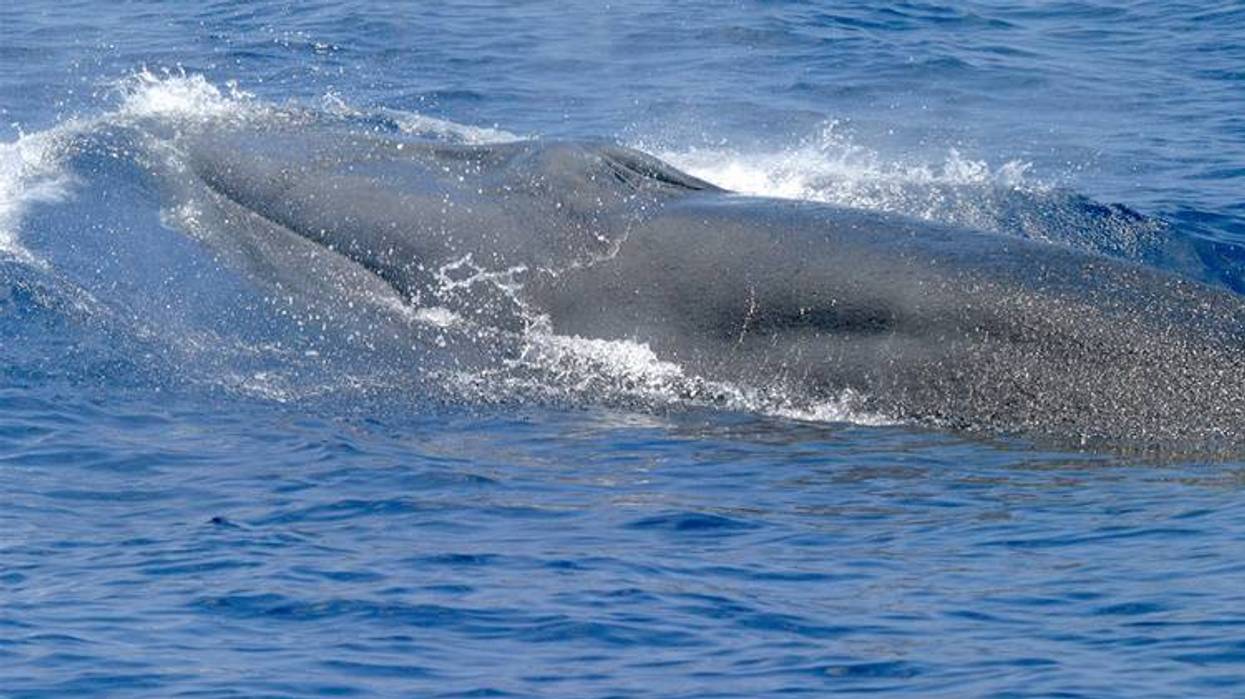
In the war for oil, they are obviously not interested in hearing about collateral damage, including the approximately 50 Rice's whales left in the Gulf of Mexico.
Nicknamed the “God Squad” for its power to rule whether economic or national security interests outweigh the possibility of wiping out an animal species, the Endangered Species Committee has granted two exemptions to the Endangered Species Act since it was created by Congress in 1978. It is composed of the secretaries of the Interior, Agriculture, and the Army, and the heads of the Environmental Protection Agency, the National Oceanic and Atmospheric Administration, and the Council of Economic Advisers.
The last time the committee granted an exemption was in 1992 when it allowed logging in sensitive areas for the northern spotted owl. Public outcry and litigation ultimately led to that requested exemption being withdrawn.
Last month, the committee was convened at the request of Defense Secretary Pete Hegseth. As gasoline prices in the US have soared past $4 a gallon and diesel fuel past $5 during President Donald Trump’s reckless war on Iran, Hegseth told the committee it was “a critical matter of national security” that fossil fuel extraction in the Gulf of Mexico be prioritized over any species at risk of extinction.
Never mind that one of those species is the Rice’s whale, which NOAA itself acknowledges is one of the rarest in the world. The whale exists only in the Gulf, with perhaps 50 or so left.That obviously means nothing to Trump and Hegseth, who are both so maddened that they have become modern Ahabs chasing a Moby Dick. In his right-wing Christian crusade, Hegseth openly prays for every bullet and missile to “find its mark” in war. In the war for oil, he obviously is not interested in hearing about collateral damage, saying: “Disruptions to Gulf oil production doesn’t hurt just us, it benefits our adversaries. We cannot allow our own rules to weaken our standing and strengthen those who wish to harm us. When development in the Gulf is chilled, we are prevented from producing the energy we need as a country and as a department.”
Fifty whales by themselves don’t stand a chance against the rhetoric of keeping gas under $5 a gallon.
Rice’s whale is hardly the only creature that could be decimated with ramped-up oil production. According to NOAA, the gulf is also a habitat for the endangered sperm whale; the endangered hawksbill, leatherback, and Kemp’s ridley sea turtles; and the endangered pillar coral. There is also a host of other animals listed as “threatened,” such as loggerhead and green sea turtles, Nassau grouper, the giant manta ray, and queen conch.The committee, chaired by Interior Secretary Doug Burgum, unanimously granted the exemption, based on Hegseth’s “findings.” Typical of Trump’s government, there is no description of those so-called findings. Burgum did not explain why this country’s pursuit of petroleum justifies further endangering endangered species. All Burgum said in a statement was that oil production in the Gulf “must not be disrupted or held hostage by ongoing litigation.”
The truth is that there is no evidence that the Endangered Species Act has “chilled” oil production in the Gulf of Mexico, let alone held it hostage. During the same week that Burgum’s committee granted that exemption, the Interior Department that Burgum leads announced that 2025 was the best year ever for the production of offshore oil. It is likely we will see a record-breaking output from the Gulf this year.
In fact, any argument that we need to risk eradicating more wildlife for oil was blown away by Trump himself. During last week’s address to the nation regarding his attack on Iran, he told Americans not to fret because “under my leadership, we are the No. 1 producer of oil and gas on the planet.” He said, “We don’t need” oil from the Middle East. He boasted, “We’re now totally independent of the Middle East.”
Even under current protections, wildlife is constantly being sacrificed for oil and gas. The biggest recent single hit to the Rice’s whale’s population was likely the 2010 Deepwater Horizon oil spill. NOAA estimated the population of Rice’s whales may have plummeted 22%, as nearly half its habitat in the eastern Gulf was exposed to oil. The spill, according to NOAA, also killed up to 200,000 adult, juvenile, and hatchling turtles, and the deaths of dolphins, on top of the whales, became the largest cetacean mortality event ever recorded in the Gulf.
Even though Rice’s whales dive during the day as deep as 400 feet to feed, studies cited by NOAA have found that they spend the night within 50 feet of the surface where the hard-to-see creatures can be struck by vessels. NOAA’s website reports that the top threats to the remaining population are vessel strikes and the noise from vessels and energy pollution and says, “For Rice’s whales to recover, we must address existing and emerging threats to the species and their habitat.”
Yet even NOAA yielded to Hegseth’s demand for an exemption.
NOAA Administrator Neil Jacobs promised that despite the exemption, oil and gas activities would still include “various protective measures for the Rice’s Whale.” Given Trump’s crippling of the Environmental Protection Agency and rollbacks of regulations under the Clean Water Act and the Clean Air Act, Jacobs’ statement is about as comforting as the statement from the American Petroleum Institute praising the exemption, claiming with a straight face that the oil and gas industry “has a long track record of protecting wildlife while developing offshore energy responsibly.”
There is reason to be optimistic that, like the ultimate withdrawal of the 1992 spotted owl exemption, this one for the Gulf of Mexico will eventually be blocked by litigation and public protest. The day before Burgum convened the Endangered Species Committee, a federal judge in California invalidated several Endangered Species Act rollbacks concocted during the first Trump administration that allowed agencies to increasingly ignore the harm of projects to wildlife.
The judge, Jon Tigar, said the administration made “serious” errors in an “arbitrary and capricious” effort to gut the Endangered Species Act. Let us hope that the courts continue to find yet more errors with the exemption for the Gulf of Mexico. Fifty whales by themselves don’t stand a chance against the rhetoric of keeping gas under $5 a gallon. The Trump administration is today’s Ahab lunging over its ship with a harpoon. This time, the whale really could be killed in the hunt for oil.
This piece was originally published by MS Now. It is shared here with permission of the author.
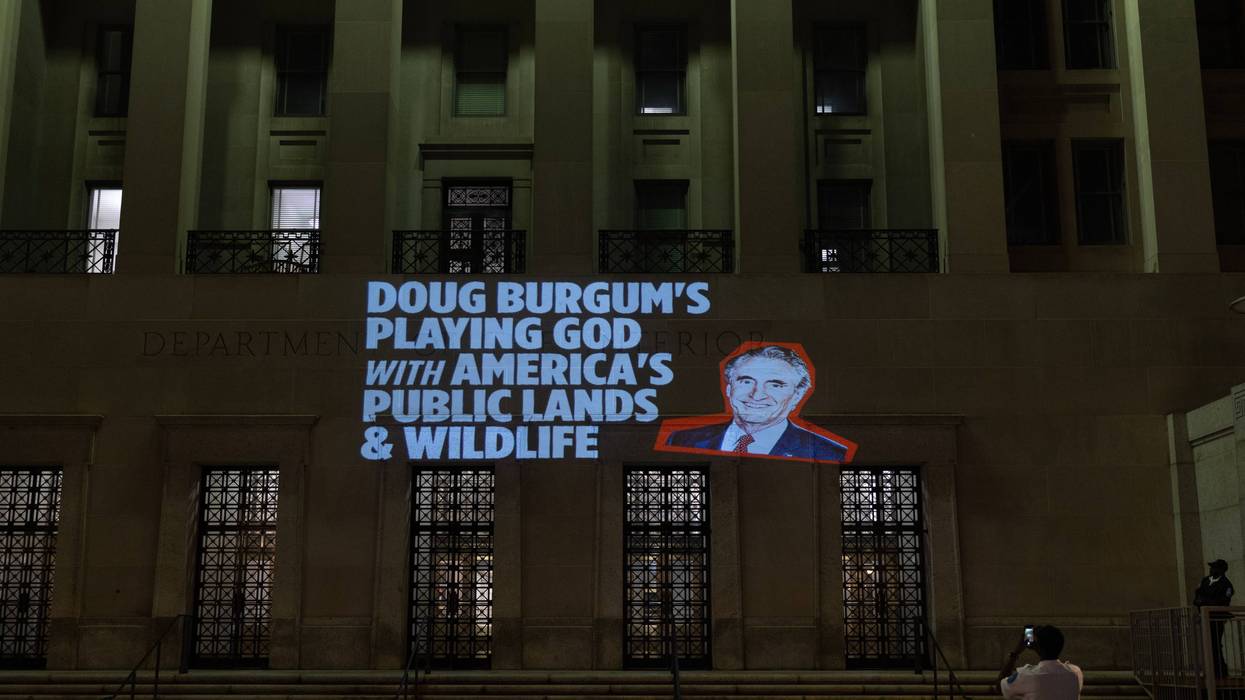
"This administration cannot recklessly play God with our shared American heritage at Secretary Hegseth's arbitrary say-so," said one conservationist.
The Trump administration's so-called "God Squad" swiftly came under fire from conservationists on Tuesday after voting unanimously for an "unprecedented" exemption allowing fossil fuel operations in the Gulf of Mexico to ignore policies intended to protect endangered species.
In the lead-up to the snap meeting, the Center for Biological Diversity filed a lawsuit in a Washington, DC federal court, and the administration confirmed in a filing last week that US Interior Secretary Doug Burgum, who chairs the Endangered Species Committee, organized the gathering at Defense Secretary Pete Hegseth's request.
The closed-door but livestreamed meeting proceeded as scheduled after a federal judge declined to block it. The New York Times reported Tuesday that as protesters rallied outside the Department of the Interior, Hegseth told the panel inside that "when development in the Gulf is chilled, we are prevented from producing the energy we need as a country."
"Recent hostile action by the Iranian terror regime highlights yet again why robust domestic oil production is a national security imperative," Hegseth claimed, though he emphasized that the administration's position on the matter preceded President Donald Trump's war on Iran, which has caused a surge in gasoline prices.
While a spokesperson for the oil and gas industry's trade group, the American Petroleum Institute, welcomed the vote on regulations for what president calls the Gulf of America, Brett Hartl, government affairs director at the Center for Biological Diversity, declared that "this amoral action by Pete Hegseth and Trump's cronies is as horrific as it is illegal, and we'll overturn it in court."
The center plans to update its suit to challenge Hegseth's "unfounded" national security determination and the unlawful exemption granted by the committee on Tuesday.
"Americans overwhelmingly oppose sacrificing endangered whales and other marine life so the fossil fuel industry can get richer," said Hartl. "This has nothing to do with national security and everything to do with Trump and his lackeys kowtowing to Big Oil."
"The fossil fuel industry has certainly gotten its money's worth from supporting Trump's reelection. I'm sure CEOs are gleeful about this vote, hoping to make even more money by sacrificing our country's wildlife and gutting environmental protections," he added. "When we overturn this heartless, cowardly act by Hegseth and the goons on the extinction committee, it's important for people to remember who failed to speak out against their actions."
It’s propaganda to call this group “The God Squad.”God creates life.This is “The Death Panel.”That’s all.
[image or embed]
— Dr. Genevieve Guenther (she/they) (@doctorvive.bsky.social) March 31, 2026 at 11:10 AM
In addition to Burgum, the panel includes the agriculture and Army secretaries; the Environmental Protection Agency and National Oceanic and Atmospheric Administration administrators; and the chair of the Council of Economic Advisers. Tuesday was only the fourth time the committee has convened since it was created by Congress nearly five decades ago, according to the Times.
"In a farcical piece of political theater consisting of high-level officials reading scripted remarks and engaging in zero deliberation, the Trump administration stripped America's wildlife heritage in the Gulf of Mexico of essential protections. The Endangered Species Act has not slowed an iota of oil from being extracted from the Gulf," Andrew Bowman, president and CEO of Defenders of Wildlife, said in a post-meeting statement. "I cannot stress enough how unprecedented and unlawful this action is."
"Invoking national security cannot justify potentially pushing the Rice's whale—or any of our nation's irreplaceable wildlife species—into the abyss of extinction," he asserted. "If this administration were truly concerned about national security, it would focus on what will protect our quality of life and a secure future for all Americans. That includes healthy lands and waters that support people and the wildlife that we love and rely upon."
Bowman added that "this administration cannot recklessly play God with our shared American heritage at Secretary Hegseth's arbitrary say-so. We will fight this injustice every step of the way."
While Trump and his appointees have worked to serve the fossil fuel industry and roll back Endangered Species Act protections throughout both of his terms, Lisa Gilbert, co-president of Public Citizen, suggested that, despite Hegseth's claims, Tuesday's meeting was tied to the new war in the Middle East and its consequences around the world.
"Trump's attempt to use secret meetings to sidestep the law and end key protections is a dangerous precedent by an unpopular administration that failed to understand the consequences of starting a war in the Middle East," she said. "Using 'national security' as justification to take shortcuts with legal requirements is a dangerous move with far-reaching implications."
"The Endangered Species Act requires that documents and meetings must be open to the public, yet the administration is cloaking this decision in secrecy," she explained. "Fossil fuel companies are not requesting this waiver, nor is any other industry—instead the Trump administration is using its war in Iran to justify a power grab that will do nothing to lower the price of fuel here in the US."
The night before the meeting, Save Our Parks projected messages onto the facade of the Interior Department building: "Doug Burgum's Playing God With America's Public Lands & Wildlife," "Burgum's Censoring Science, History, and the Truth," and "GOD SQUAD ENTER HERE."
Jayson O'Neill, a spokesperson for Save Our Parks, said that "Burgum has a 'god complex' over America’s parks, public lands, and wildlife. Throughout his entire tenure in the DC swamp, Burgum has used the heavy hand of government to muzzle the truth, limit public participation, strip science from decisions, and even whitewash and censor our history."
"Now, Burgum and his so-called 'God Squad' are continuing this failed leadership, ignoring science and public opinion to serve the interests of his buddies in the oil industry," he added. "Burgum's censorship is as unpopular as it is un-American."
If the defense secretary forces the God Squad to grant this sweeping—and unprecedented exemption—all the threatened and endangered creatures, both large and small, that call the Gulf waters and coastlines home will be at risk.
The Trump administration has made clear from day one that it intends to dramatically expand fossil fuel extraction on federal lands and in federal waters, with no regard for the consequences to wildlife or the public interest. In the latest jaw-dropping move, late on the night of March 25, government lawyers revealed in a court filing that, on March 13, Defense Secretary Pete Hegseth allegedly contacted Interior Secretary Doug Burgum to demand he convene a meeting of the Endangered Species Committee, or “God Squad.”
Secretary Hegseth’s rationale for the convening is based on a false narrative that “national security” reasons dictate that the God Squad must grant an Endangered Species Act (ESA) exemption for all oil and gas activities the Interior Department authorizes in the Gulf of Mexico.
On March 16, Burgum publicly announced a snap God Squad meeting on March 31 to consider exempting oil and gas activities in the Gulf from the ESA’s requirement that federal agencies avoid taking actions likely to jeopardize the continued existence of endangered and threatened species. The cryptic notice gave no indication that “national security” reasons warranted the meeting—the first in 35 years.
Certainly, none of the detailed statutory prerequisites to a God Squad vote have been met, and no complete exemption application has been teed up for the committee to consider, let alone for the public to examine.
No administration, Republican or Democratic, has ever tried to write itself a blank check to ignore the ESA’s requirements.
It cannot be a coincidence that Secretary Hegseth demanded a God Squad meeting just two weeks after the United States launched airstrikes across Iran. Iran has now blockaded the Strait of Hormuz, a key transit point for 20% of the world’s oil and gas supplies. The result: Global oil prices have spiked, and Republicans are on the ropes. But bypassing the ESA to further the administration's massive plans to expand Gulf oil production will do nothing to help Americans facing higher energy, food, and consumer goods prices today.
The truth is that the ESA has never stood—and is not now standing—in the way of oil and gas development in the Gulf. To assert otherwise is a red herring.
In fact, data shows that the ESA almost never stops projects.
Defenders of Wildlife’s Center for Conservation Innovation analyzed over 88,000 US Fish and Wildlife Service ESA consultations that took place between 2008-2015 and found that not a single project was halted or extensively altered due to a jeopardy finding. Most projects were not even delayed, and only two consultations resulted in a jeopardy finding.
And for a jeopardy opinion, the wildlife agency must try to develop a “reasonable and prudent alternative” that allows the project to go forward while avoiding jeopardy. The wildlife agency works closely with other federal agencies to ensure their actions can proceed without risking a species’ extinction.
If the defense secretary forces the God Squad to grant this sweeping—and unprecedented exemption—all the threatened and endangered creatures, both large and small, that call the Gulf waters and coastlines home will be at risk. From the critically endangered Rice’s whale with only 51 surviving animals to the beloved Florida manatee, from the tiny Alabama beach mouse and five sea turtle species to the largest animal that has ever lived, the blue whale and more—all will suffer the consequences if their ESA protections are ripped away.
No administration, Republican or Democratic, has ever tried to write itself a blank check to ignore the ESA’s requirements.
Invoking “national security” cannot justify potentially pushing the Rice’s whale—or any of our nation’s irreplaceable wildlife species—over the brink of extinction. If this administration were truly concerned about national security, it would focus on what is most important to Americans—a healthy environment; clean, renewable energy sources; an abundant and affordable food supply; public lands to recreate on; and the protection of our country’s shared heritage of treasured lands, waters, and wildlife.
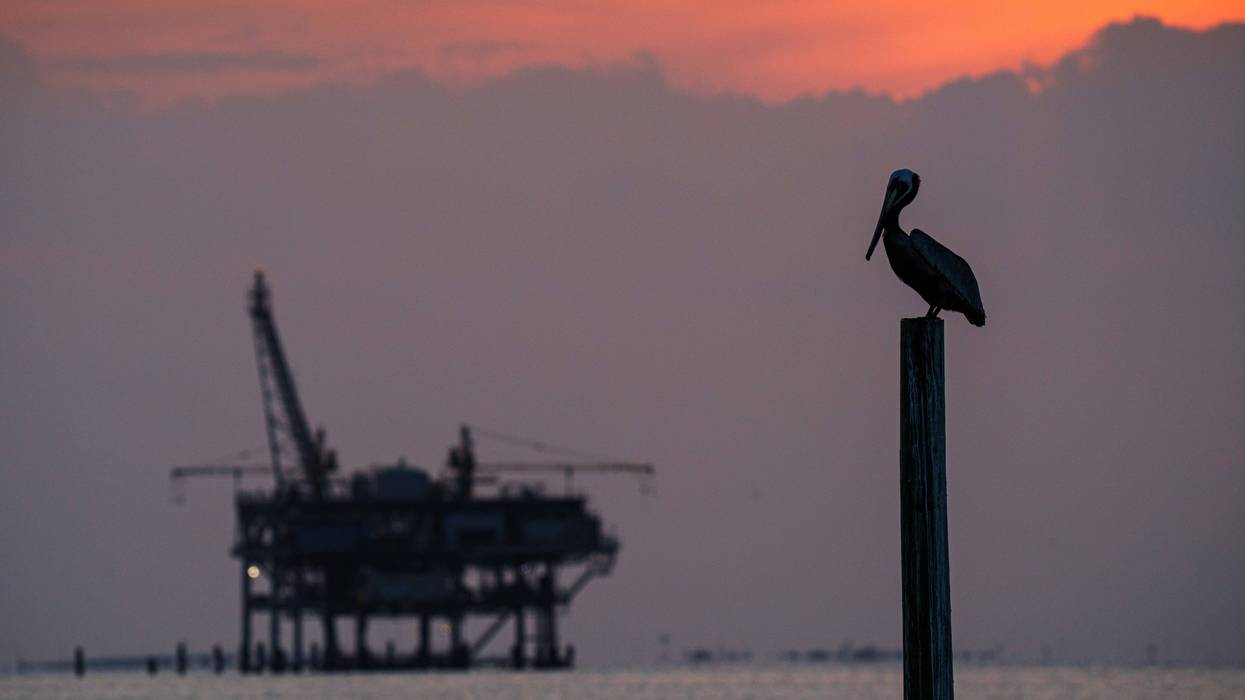
The Center for Biological Diversity estimates that Trump's new five-year offshore drilling plan could release over 12 million gallons of oil into ocean waters around the US.
President Donald Trump's plan to dramatically expand offshore drilling could result in thousands of additional oil spills and put dozens of endangered species at increased risk, according to a new analysis by a leading conservation group.
In November, the US Department of the Interior published a draft plan to expand drilling over the next five years, replacing a more restrictive one drawn up by the Biden administration.
The proposal includes as many as 34 potential offshore lease sales across American coasts, covering approximately 1.27 billion acres, far more than previous administrations have offered.
The new plan opens up drilling in 21 areas off the coast of Alaska, seven in the Gulf of Mexico, and six along the Pacific Coast. These are in addition to 36 new offshore oil lease sales mandated in last year's Republican budget reconciliation package.
An analysis published Tuesday by the Center for Biological Diversity found that the increase in drilling could lead to an additional 4,232 oil spills and dump an extra 12.1 million gallons of oil into ocean waters.
The calculation is based on average spill rates from pipelines and platforms from 1974 to 2015. However, it does not even include catastrophic events like the 2010 BP oil spill, which resulted in more than 210 million gallons of oil being released into the Gulf of Mexico.
"Trump’s ridiculously reckless drilling plan could cause thousands of new oil spills, threatening almost every US coast,” said Kristen Monsell, the oceans legal director at the Center for Biological Diversity.
The group estimates, based on prior figures, that 2,627 of those spills—more than half—will occur in the Gulf of Mexico, releasing about 7.5 million gallons of oil into the ecosystem.
The Gulf is home to several endangered species likely to be affected by the new drilling. The black-capped petrel's population is in rapid decline as pollution has destroyed its food source. Rice's whale has only about 50 individuals remaining and lost 20% of its population in the BP spill. Kemp's ridley sea turtle, which has experienced a population rebound after dropping to near extinction, would be imperiled by another spill.
In the Pacific, sea otters are uniquely vulnerable to oil spills because they coat their fur, which acts as insulation against the cold. Killer and blue whales, whose populations have been nearly wiped out, would also be in danger.
Meanwhile, Arctic animals already affected by climate change—like bowhead whales, Pacific walruses, and beluga whales—all face potential further damage to their habitats due to drilling off the coast of Alaska.
“Nobody wants beaches and marine life coated in crude, but that’ll be our future if Trump’s scheme goes forward," Monsell said. "Every new drilling project signs us up for decades of problems, and our wildlife and coastal economies will suffer the most.”
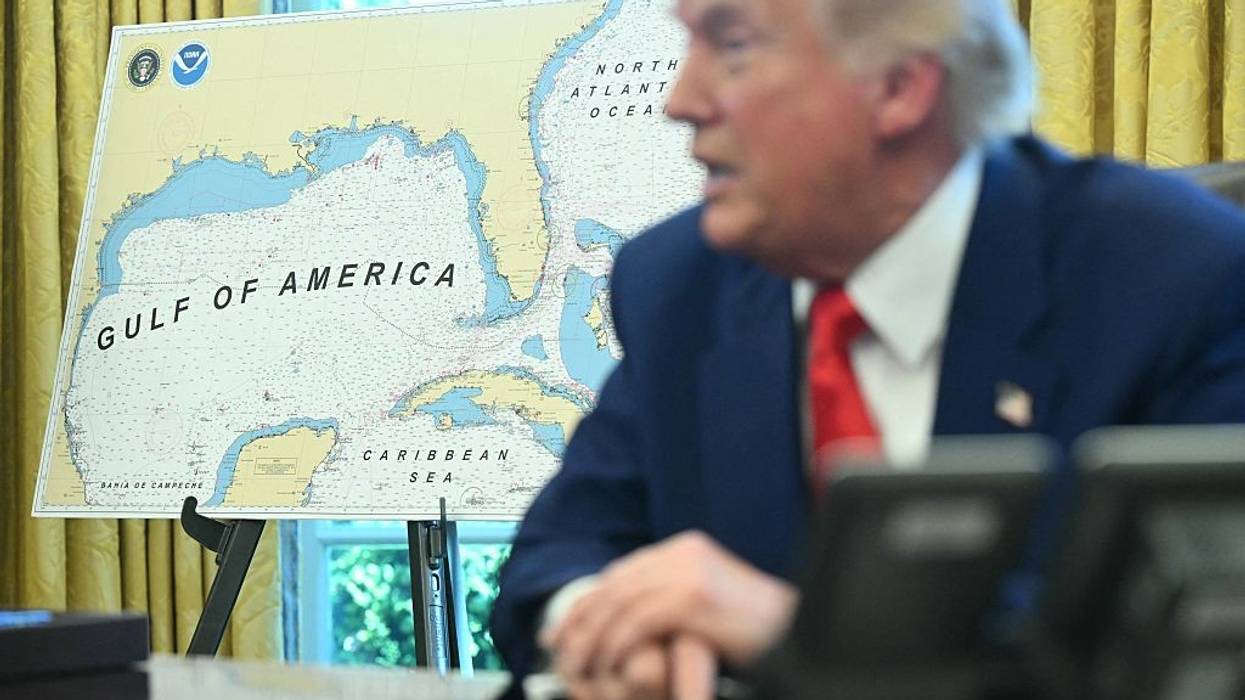
"Is it a constitutional crisis yet?" asked one journalist.
Despite a federal court ruling last week, journalists with the Associated Press were blocked from reporting on several White House events on Monday, leading to fresh accusations that President Donald Trump is openly violating court orders as well as core constitutional protections, in this case freedom of speech and the press.
"Our journalists were blocked from the Oval Office today," said Lauren Easton, an AP spokesperson, following a press event with Trump and El Salvador President Nayib Bukele. "We expect the White House to restore AP's participation in the pool as of today, as provided in the injunction order."
A pair of AP photographers were later allowed to attend an event on the South Lawn, but a print journalist was barred from entry.
According to the AP:
Last week's federal court decision forbidding the Trump administration from punishing the AP for refusing to rename the Gulf of Mexico was to take effect Monday. The administration is appealing the decision and arguing with the news outlet over whether it needs to change anything until those appeals are exhausted.
The U.S. Court of Appeals for the D.C. circuit set a Thursday hearing on Trump’s request that any changes be delayed while case is reviewed. The AP is fighting for more access as soon as possible.
"Is it a constitutional crisis yet?" asked Missouri-based journalist Steve Lambson in response to the latest developments.
"More contemptuous behavior by this administration," added attorney Bernadette Foley. "What will the courts do about it? What will GOP do?"
In the federal court ruling last week, the presiding judge wrote that access to presidential events "must be reasonable and not viewpoint-based," though the White House has been clear the decision was a punitive response to editorial decisions by AP with which it disagreed.
"While the AP does not have a constitutional right to enter the Oval Office," the judge said, "it does have a right to not be excluded because of its viewpoint. … All the AP wants, and all it gets, is a level playing field."
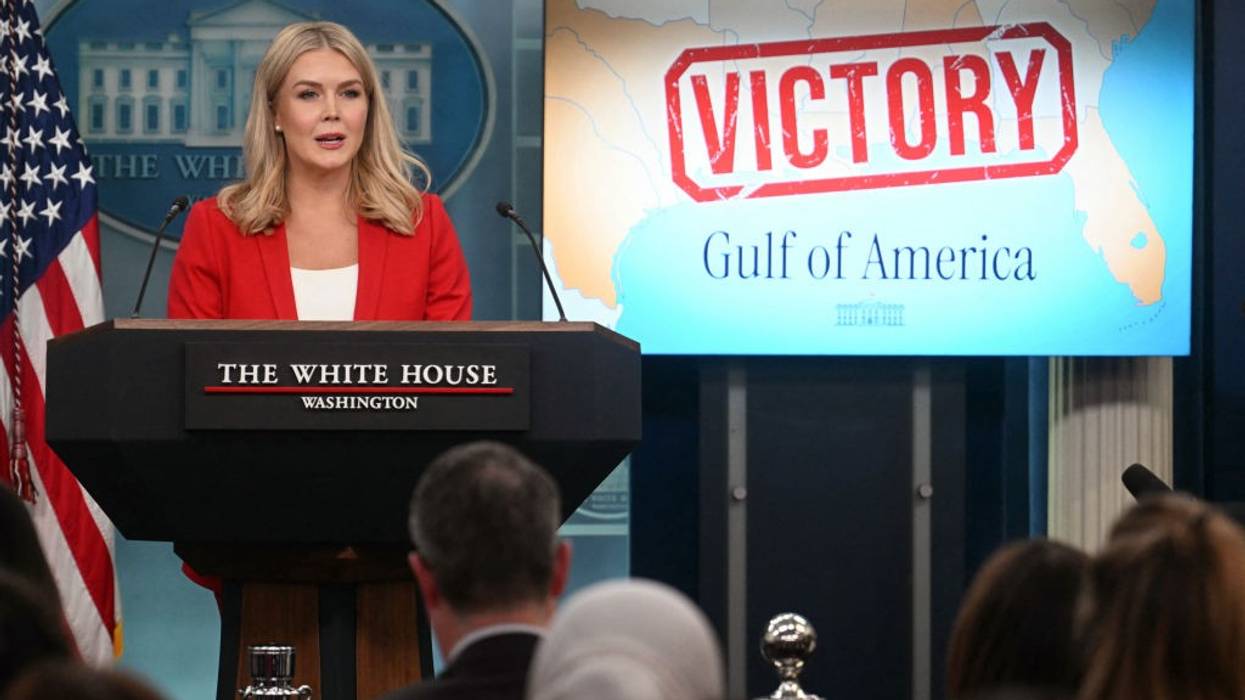
A spokesperson for the news agency said the ruling "affirms the fundamental right of the press and public to speak freely without government retaliation."
A federal judge appointed by U.S. President Donald Trump during his first term ruled Tuesday that the White House cannot cut off The Associated Press' access to the Republican leader because of the news agency's refusal to use his preferred name for the Gulf of Mexico.
"About two months ago, President Donald Trump renamed the Gulf of Mexico the Gulf of America. The Associated Press did not follow suit. For that editorial choice, the White House sharply curtailed the AP's access to coveted, tightly controlled media events with the president," wrote Judge Trevor N. McFadden, who is based in Washington, D.C.
Specifically, according to the news outlet, "the AP has been blocked since February 11 from being among the small group of journalists to cover Trump in the Oval Office or aboard Air Force One, with sporadic ability to cover him at events in the East Room."
The AP responded to the restrictions by suing White House Chief of Staff Susie Wiles, Deputy Chief of Staff Taylor Budowich, and Press Secretary Karoline Leavitt, "seeking a preliminary injunction enjoining the government from excluding it because of its viewpoint," McFadden noted in his 41-page order. "Today, the court grants that relief."
The judge explained that "this injunction does not limit the various permissible reasons the government may have for excluding journalists from limited-access events. It does not mandate that all eligible journalists, or indeed any journalists at all, be given access to the president or nonpublic government spaces. It does not prohibit government officials from freely choosing which journalists to sit down with for interviews or which ones' questions they answer. And it certainly does not prevent senior officials from publicly expressing their own views."
"The court simply holds that under the First Amendment, if the government opens its doors to some journalists—be it to the Oval Office, the East Room, or elsewhere—it cannot then shut those doors to other journalists because of their viewpoints," he stressed. "The Constitution requires no less."
McFadden blocked his own order from taking effect before next week, giving the Trump administration time to respond or appeal. Still, AP spokesperson Lauren Easton said Tuesday that "we are gratified by the court's decision."
"Today’s ruling affirms the fundamental right of the press and public to speak freely without government retaliation," Easton added. "This is a freedom guaranteed for all Americans in the U.S. Constitution."
NPR reported that "an AP reporter and photographer were turned back from joining a reporting pool on a presidential motorcade early Tuesday evening, almost two hours after the decision came down."
"This move tears at the independence of a free press in the United States," said the head of the White House Correspondents' Association. "In a free country, leaders must not be able to choose their own press corps."
As part of U.S. President Donald Trump's long-running war with the news media, White House Press Secretary Karoline Leavitt announced Tuesday that the administration will now decide which outlets get to participate in the presidential press pool.
The widely condemned announcement came just a day after U.S. District Judge Trevor N. McFadden, a Trump appointee, declined to lift the White House's ban on Associated Press reporters attending press briefings and Air Force One flights because the outlet refuses to call the Gulf of Mexico the "Gulf of America" in line with the president's January executive order.
The White House Correspondents' Association (WHCA) has managed the press pool since the 1950s. While the group has faced its share of criticism, journalists and others also weren't buying Leavitt's attempt to frame the Trump takeover of the responsibility as an effort to include reporters previously denied the significant access to the president that pool members have.
"This move tears at the independence of a free press in the United States. It suggests the government will choose the journalists who cover the president. In a free country, leaders must not be able to choose their own press corps," WHCA president Eugene Daniels said in a Tuesday statement.
As Daniels detailed:
For generations, the working journalists elected to lead the White House Correspondents' Association board have consistently expanded the WHCA's membership and its pool rotations to facilitate the inclusion of new and emerging outlets.
Since its founding in 1914, the WHCA has sought to ensure that the reporters, photographers, producers, and technicians who actually do the work—365 days of every year—decide amongst themselves how these rotations are operated, so as to ensure consistent professional standards and fairness in access on behalf of all readers, viewers and listeners.
To be clear, the White House did not give the WHCA board a heads-up or have any discussions about today's announcements. But the WHCA will never stop advocating for comprehensive access, full transparency, and the right of the American public to read, listen to and watch reports from the White House, delivered without fear or favor.
His remarks followed reporting that the WHCA was trying to quietly resolve the dispute with the AP. CNN chief media analyst Brian Stelter said on social media last week: "So why aren't more reporters and media outlets speaking out more vehemently to help the AP? In part, I'm told, it's because the WH Correspondents' Association is trying to work out a solution behind the scenes."
The WHCA did file a motion on Sunday seeking to submit an amicus brief in the AP case before McFadden. The document states that "the government should never interfere with the operation of an independent press, nor should it demand that reporters adopt the government's messaging, framing, and, indeed, ideological worldview. Such conduct is wholly at odds with the Constitution and cannot be permitted to persist."
boy i'll tell you, it does not seem like the white house correspondents' association read this well at all
[image or embed]
— Alex Kirshner ( @alexkirshner.com) February 25, 2025 at 1:56 PM
Daniels was far from alone in blasting the Trump administration's decision on Tuesday. The AP reported that the Reporters Committee for Freedom of the Press called it "a drastic change in how the public obtains information about its government."
Bruce D. Brown, the group's president, said that "the White House press pool exists to serve the public, not the presidency."
The Committee to Protect Journalists said on social media that it "is alarmed by the White House's decision to pick who can be part of the press pool. Given the White House's decision to ban the AP from pool activities in retaliation for an editorial choice, it is concerning that the administration will now exert yet more control over which outlets are able to access the president and events he attends."
Jenna Leventoff, senior policy counsel at the ACLU, said that "the president does not get to handpick his news coverage, and he cannot condition access to the White House on an outlet's speech alone. The First Amendment protects the rights of outlets to make their own editorial decisions, but this decision opens the door for government punishment of outlets that don't comply with the White House's editorial demands. This is not just about silencing reporters but about dodging accountability and keeping the American people in the dark about important news that impacts each and every one of them."
Some journalists pointed to Russian President Vladimir Putin. Susan Glasser, a staff writer at The New Yorker, warned that the Trump White House is "on the way to establishing its own version of a Kremlin press pool, approved media only."
Glasser co-authored the book Kremlin Rising with her husband, New York Times chief White House correspondent Peter Baker. He said Tuesday that "having served as a Moscow correspondent in the early days of Putin's reign, this reminds me of how the Kremlin took over its own press pool and made sure that only compliant journalists were given access."
"The message is clear," Baker continued. "Given that the White House has already kicked one news organization out of the pool because of coverage it does not like, it is making certain everyone else knows that the rest of us can be barred too if the president does not like our questions or stories."
MSNBC host Symone Sanders Townsend—who served as chief spokesperson for former Vice President Kamala Harris—suggested that "the reporters should refuse to comply and should continue the precedent of deciding the pool themselves."
"Do I wish I could have picked the reporters in the press pool who were covering the VP when I worked at the White House? Some days… yes," she said. "But that is not how this works."
This article has been updated with comment from the ACLU.

However, the Trump-appointed federal judge said he would expedite the case due to its importance.
A U.S. federal judge on Monday rejected an emergency request by The Associated Press to lift the White House's ban on its reporters for refusing to call the Gulf of Mexico the "Gulf of America"—but said he would fast-track the important case.
U.S. District Judge Trevor N. McFadden—an appointee of President Donald Trump—said that the AP is not facing "the type of dire situation" that would warrant issuance of the temporary restraining order sought by the wire service, according to The New York Times.
However, Politico senior legal affairs reporter Kyle Cheney said that McFadden "has ordered expedited consideration of the matter given the weighty issues at the heart of it."
Earlier this month, Trump indefinitely banned AP reporters from White House press briefings and Air Force One flights over its refusal to fully adopt the president's new name for the Gulf of Mexico. The news agency responded by suing three Trump administration officials over the blocked access: White House Chief of Staff Susan Wiles, Deputy Chief of Staff Taylor Budowich, and Press Secretary Karoline Leavitt.
"The press and all people in the United States have the right to choose their own words and not be retaliated against by the government," the AP said in its lawsuit. The AP has explained that because the gulf is an international body of water, it will continue to call it the Gulf of Mexico, while referencing Trump's name change, because Mexico and other countries do not recognize the new appellation.
The White House welcomed the ruling with video screens reading "Victory" and "Gulf of America" in the James S. Brady Briefing Room, where press conferences are held.
"As we have said from the beginning, asking the president of the United States questions in the Oval Office and aboard Air Force One is a privilege granted to journalists, not a legal right," the White House said in response to McFadden's ruling.
"We stand by our decision to hold the Fake News accountable for their lies, and President Trump will continue to grant an unprecedented level of access to the press," the White House statement added. "This is the most transparent administration in history."
Dozens of media organizations—including pro-Trump outlets like Fox News and Newsmax—urged the White House to lift its ban on the AP.
In an extraordinary move earlier Monday, interim U.S. Attorney Ed Martin used his official account on X, Elon Musk's social media site, to erroneously describe federal prosecutors as "President Trump's lawyers."
"We are proud to fight to protect his leadership as our president and we are vigilant in standing against entities like the AP that refuse to put America first," Martin wrote.
Martin's post drew a sharp rebuke from Democratic U.S. Sen. Chris Murphy of Connecticut, who retorted that "the U.S. attorney for D.C. is not 'President Trump's lawyer' and its job is not to 'protect his leadership' nor prosecute people who 'refuse to put America first.'"