5
#000000
#FFFFFF
To donate by check, phone, or other method, see our More Ways to Give page.
Daily news & progressive opinion—funded by the people, not the corporations—delivered straight to your inbox.

Chief Justice John Roberts sits during a group photo of the justices at the Supreme Court in Washington, DC on April 23, 2021.
Daunting structural obstacles will make it harder for voters to be heard during the upcoming midterms, and we can trace many of these back to the Supreme Court and its destructive rulings on democracy over the past two decades.
Will this be a “wave” election, sweeping new people into power? In some ways, it already is.
Due to retirements and primary defeats in safe districts, there will be 99 new members of Congress next year—and that’s before accounting for any seats that change party hands. A powerful anti-incumbent fervor pervades both parties.
Throughout history, there have been times when voters spoke loudly. The 1974 Watergate election, in which Democrats won 49 new seats. The 1994 “Republican Revolution” that made Newt Gingrich speaker after gaining 54 seats. The 2018 election, the first time voters rejected Donald Trump’s chaos. Polls do not suggest a swing of that magnitude. Democrats are lagging in popularity, even as voters recoil from Trump’s Republicans. But voter sentiment is not the only reason less may change than before.
Even if the Supreme Court does no further damage, it will have designed a dystopian political system where competition is scarce, billionaires dominate spending, and voters of color have little protection against abuse.
Daunting structural obstacles will make it harder for voters to be heard. We can trace many of these back to the Supreme Court and its destructive rulings on democracy over the past two decades. If the voice of voters is muffled this year, blame the Roberts Court.
To start, there are far too few competitive congressional districts. In 2019, in Rucho v. Common Cause, the Roberts Court refused to police gerrymandering. Then Louisiana v. Callais earlier this year finally demolished the Voting Rights Act and let Southern states eliminate seats held by Black lawmakers.
Political scientist Peter Miller of the Brennan Center for Justice explained it this way: “About 1 in 10 Americans are in a new US House district this year. Mid-decade redistricting in nine states ahead of the elections in November has scrambled the House elections (an 11th-hour attempt to redraw the map in Missouri was rejected by the US Supreme Court for the third and hopefully final time just last week). All of this effort to gerrymander the maps, however, may come to nothing as it is becoming clear that the two parties have fought the redistricting wars to a draw.”
But even amid electoral upheaval, nearly all seats are reliably Democratic or Republican. Political scientist Larry Sabato calculates there are only 21 competitive seats this year. The Cook Political Report counts 22 toss-up seats.
The Supreme Court has also demolished the laws that curbed big money in politics. Today big donors wield greater power than in memory. The top 20 donors have already spent $1.2 billion this year—all but two of them helping Republicans—and that figure is from before the start of the general election campaign. Elon Musk alone has already spent over $90 million. And while donors like Musk can be identified, much of this funding consists of “dark money,” where the identity of the donor is obscured.
It can all blur. But until 2010’s Citizens United and the cases that followed in lower courts, all this spending would have been flatly, explicitly illegal.
Then there are laws, big and small, by which states restrict the right to vote. The Supreme Court has not reversed a state voter suppression law this century. Shelby County v. Holder in 2013 first gutted the Voting Rights Act. Since then, our research shows, the turnout gap between white and nonwhite voters has grown all over the country. And it has grown at twice the rate in the places once covered by preclearance under the Voting Rights Act. That means hundreds of thousands fewer votes are expected this year than might have been the case otherwise.
Generally, the court has refrained from injecting itself into election contests. In 2020, after all, the justices refused to countenance Trump’s bid to overturn the election.
This year, the court’s record is mixed. Encouragingly, two weeks ago the justices upheld a ruling that blocked a Postal Service rule on mail voting. A different decision would have been a disaster, since 1 in 3 Americans votes with a mail ballot.
But on Friday, the justices let the administration use the “SAVE program.” This is a notoriously inaccurate and incomplete tool to verify citizenship status, which the Trump administration wants to use as a prod to purge voter rolls. The ruling will likely not affect this election. But this all augurs continued legal battles over voting in years to come, especially as the next presidential contest looms.
We want the justices, mostly, to stay out, and let state and local election officials do their work of protecting voters. At the same time, if politicians try to steal the election, crying “fraud” and “rigged,” we may need the Supreme Court to step up. Let’s hope it never faces that test.
The court’s term begins next Monday. It will hear major cases on the public funding of private religious schools, environmental laws, and more. Much of the most important work of the term has been done already with the emergency rulings on the “shadow docket” policing the elections.
But even if the Supreme Court does no further damage, it will have designed a dystopian political system where competition is scarce, billionaires dominate spending, and voters of color have little protection against abuse.
Dear Common Dreams reader, It’s been nearly 30 years since I co-founded Common Dreams with my late wife, Lina Newhouser. We had the radical notion that journalism should serve the public good, not corporate profits. It was clear to us from the outset what it would take to build such a project. No paid advertisements. No corporate sponsors. No millionaire publisher telling us what to think or do. Many people said we wouldn't last a year, but we proved those doubters wrong. Together with a tremendous team of journalists and dedicated staff, we built an independent media outlet free from the constraints of profits and corporate control. Our mission has always been simple: To inform. To inspire. To ignite change for the common good. Building Common Dreams was not easy. Our survival was never guaranteed. When you take on the most powerful forces—Wall Street greed, fossil fuel industry destruction, Big Tech lobbyists, and uber-rich oligarchs who have spent billions upon billions rigging the economy and democracy in their favor—the only bulwark you have is supporters who believe in your work. But here’s the urgent message from me today. It's never been this bad out there. And it's never been this hard to keep us going. At the very moment Common Dreams is most needed, the threats we face are intensifying. We need your support now more than ever. We don't accept corporate advertising and never will. We don't have a paywall because we don't think people should be blocked from critical news based on their ability to pay. Everything we do is funded by the donations of readers like you. When everyone does the little they can afford, we are strong. But if that support retreats or dries up, so do we. Will you donate now to make sure Common Dreams not only survives but thrives? —Craig Brown, Co-founder |
Will this be a “wave” election, sweeping new people into power? In some ways, it already is.
Due to retirements and primary defeats in safe districts, there will be 99 new members of Congress next year—and that’s before accounting for any seats that change party hands. A powerful anti-incumbent fervor pervades both parties.
Throughout history, there have been times when voters spoke loudly. The 1974 Watergate election, in which Democrats won 49 new seats. The 1994 “Republican Revolution” that made Newt Gingrich speaker after gaining 54 seats. The 2018 election, the first time voters rejected Donald Trump’s chaos. Polls do not suggest a swing of that magnitude. Democrats are lagging in popularity, even as voters recoil from Trump’s Republicans. But voter sentiment is not the only reason less may change than before.
Even if the Supreme Court does no further damage, it will have designed a dystopian political system where competition is scarce, billionaires dominate spending, and voters of color have little protection against abuse.
Daunting structural obstacles will make it harder for voters to be heard. We can trace many of these back to the Supreme Court and its destructive rulings on democracy over the past two decades. If the voice of voters is muffled this year, blame the Roberts Court.
To start, there are far too few competitive congressional districts. In 2019, in Rucho v. Common Cause, the Roberts Court refused to police gerrymandering. Then Louisiana v. Callais earlier this year finally demolished the Voting Rights Act and let Southern states eliminate seats held by Black lawmakers.
Political scientist Peter Miller of the Brennan Center for Justice explained it this way: “About 1 in 10 Americans are in a new US House district this year. Mid-decade redistricting in nine states ahead of the elections in November has scrambled the House elections (an 11th-hour attempt to redraw the map in Missouri was rejected by the US Supreme Court for the third and hopefully final time just last week). All of this effort to gerrymander the maps, however, may come to nothing as it is becoming clear that the two parties have fought the redistricting wars to a draw.”
But even amid electoral upheaval, nearly all seats are reliably Democratic or Republican. Political scientist Larry Sabato calculates there are only 21 competitive seats this year. The Cook Political Report counts 22 toss-up seats.
The Supreme Court has also demolished the laws that curbed big money in politics. Today big donors wield greater power than in memory. The top 20 donors have already spent $1.2 billion this year—all but two of them helping Republicans—and that figure is from before the start of the general election campaign. Elon Musk alone has already spent over $90 million. And while donors like Musk can be identified, much of this funding consists of “dark money,” where the identity of the donor is obscured.
It can all blur. But until 2010’s Citizens United and the cases that followed in lower courts, all this spending would have been flatly, explicitly illegal.
Then there are laws, big and small, by which states restrict the right to vote. The Supreme Court has not reversed a state voter suppression law this century. Shelby County v. Holder in 2013 first gutted the Voting Rights Act. Since then, our research shows, the turnout gap between white and nonwhite voters has grown all over the country. And it has grown at twice the rate in the places once covered by preclearance under the Voting Rights Act. That means hundreds of thousands fewer votes are expected this year than might have been the case otherwise.
Generally, the court has refrained from injecting itself into election contests. In 2020, after all, the justices refused to countenance Trump’s bid to overturn the election.
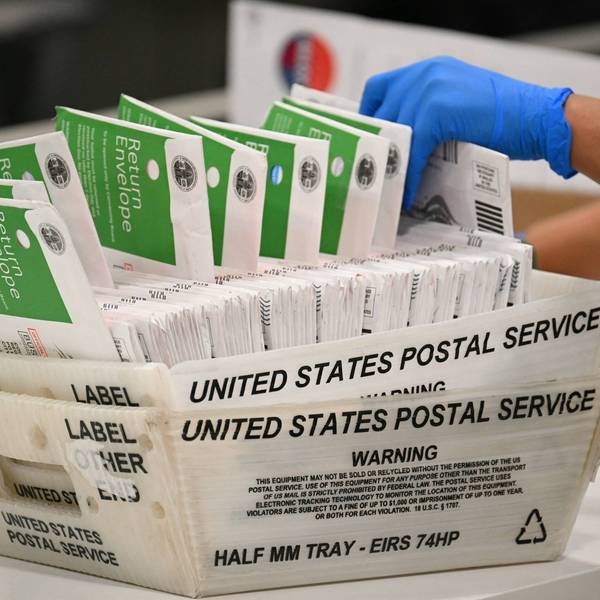
This year, the court’s record is mixed. Encouragingly, two weeks ago the justices upheld a ruling that blocked a Postal Service rule on mail voting. A different decision would have been a disaster, since 1 in 3 Americans votes with a mail ballot.
But on Friday, the justices let the administration use the “SAVE program.” This is a notoriously inaccurate and incomplete tool to verify citizenship status, which the Trump administration wants to use as a prod to purge voter rolls. The ruling will likely not affect this election. But this all augurs continued legal battles over voting in years to come, especially as the next presidential contest looms.
We want the justices, mostly, to stay out, and let state and local election officials do their work of protecting voters. At the same time, if politicians try to steal the election, crying “fraud” and “rigged,” we may need the Supreme Court to step up. Let’s hope it never faces that test.
The court’s term begins next Monday. It will hear major cases on the public funding of private religious schools, environmental laws, and more. Much of the most important work of the term has been done already with the emergency rulings on the “shadow docket” policing the elections.
But even if the Supreme Court does no further damage, it will have designed a dystopian political system where competition is scarce, billionaires dominate spending, and voters of color have little protection against abuse.
Will this be a “wave” election, sweeping new people into power? In some ways, it already is.
Due to retirements and primary defeats in safe districts, there will be 99 new members of Congress next year—and that’s before accounting for any seats that change party hands. A powerful anti-incumbent fervor pervades both parties.
Throughout history, there have been times when voters spoke loudly. The 1974 Watergate election, in which Democrats won 49 new seats. The 1994 “Republican Revolution” that made Newt Gingrich speaker after gaining 54 seats. The 2018 election, the first time voters rejected Donald Trump’s chaos. Polls do not suggest a swing of that magnitude. Democrats are lagging in popularity, even as voters recoil from Trump’s Republicans. But voter sentiment is not the only reason less may change than before.
Even if the Supreme Court does no further damage, it will have designed a dystopian political system where competition is scarce, billionaires dominate spending, and voters of color have little protection against abuse.
Daunting structural obstacles will make it harder for voters to be heard. We can trace many of these back to the Supreme Court and its destructive rulings on democracy over the past two decades. If the voice of voters is muffled this year, blame the Roberts Court.
To start, there are far too few competitive congressional districts. In 2019, in Rucho v. Common Cause, the Roberts Court refused to police gerrymandering. Then Louisiana v. Callais earlier this year finally demolished the Voting Rights Act and let Southern states eliminate seats held by Black lawmakers.
Political scientist Peter Miller of the Brennan Center for Justice explained it this way: “About 1 in 10 Americans are in a new US House district this year. Mid-decade redistricting in nine states ahead of the elections in November has scrambled the House elections (an 11th-hour attempt to redraw the map in Missouri was rejected by the US Supreme Court for the third and hopefully final time just last week). All of this effort to gerrymander the maps, however, may come to nothing as it is becoming clear that the two parties have fought the redistricting wars to a draw.”
But even amid electoral upheaval, nearly all seats are reliably Democratic or Republican. Political scientist Larry Sabato calculates there are only 21 competitive seats this year. The Cook Political Report counts 22 toss-up seats.
The Supreme Court has also demolished the laws that curbed big money in politics. Today big donors wield greater power than in memory. The top 20 donors have already spent $1.2 billion this year—all but two of them helping Republicans—and that figure is from before the start of the general election campaign. Elon Musk alone has already spent over $90 million. And while donors like Musk can be identified, much of this funding consists of “dark money,” where the identity of the donor is obscured.
It can all blur. But until 2010’s Citizens United and the cases that followed in lower courts, all this spending would have been flatly, explicitly illegal.
Then there are laws, big and small, by which states restrict the right to vote. The Supreme Court has not reversed a state voter suppression law this century. Shelby County v. Holder in 2013 first gutted the Voting Rights Act. Since then, our research shows, the turnout gap between white and nonwhite voters has grown all over the country. And it has grown at twice the rate in the places once covered by preclearance under the Voting Rights Act. That means hundreds of thousands fewer votes are expected this year than might have been the case otherwise.
Generally, the court has refrained from injecting itself into election contests. In 2020, after all, the justices refused to countenance Trump’s bid to overturn the election.
This year, the court’s record is mixed. Encouragingly, two weeks ago the justices upheld a ruling that blocked a Postal Service rule on mail voting. A different decision would have been a disaster, since 1 in 3 Americans votes with a mail ballot.
But on Friday, the justices let the administration use the “SAVE program.” This is a notoriously inaccurate and incomplete tool to verify citizenship status, which the Trump administration wants to use as a prod to purge voter rolls. The ruling will likely not affect this election. But this all augurs continued legal battles over voting in years to come, especially as the next presidential contest looms.
We want the justices, mostly, to stay out, and let state and local election officials do their work of protecting voters. At the same time, if politicians try to steal the election, crying “fraud” and “rigged,” we may need the Supreme Court to step up. Let’s hope it never faces that test.
The court’s term begins next Monday. It will hear major cases on the public funding of private religious schools, environmental laws, and more. Much of the most important work of the term has been done already with the emergency rulings on the “shadow docket” policing the elections.
But even if the Supreme Court does no further damage, it will have designed a dystopian political system where competition is scarce, billionaires dominate spending, and voters of color have little protection against abuse.