SUBSCRIBE TO OUR FREE NEWSLETTER
Daily news & progressive opinion—funded by the people, not the corporations—delivered straight to your inbox.
5
#000000
#FFFFFF
To donate by check, phone, or other method, see our More Ways to Give page.
Daily news & progressive opinion—funded by the people, not the corporations—delivered straight to your inbox.
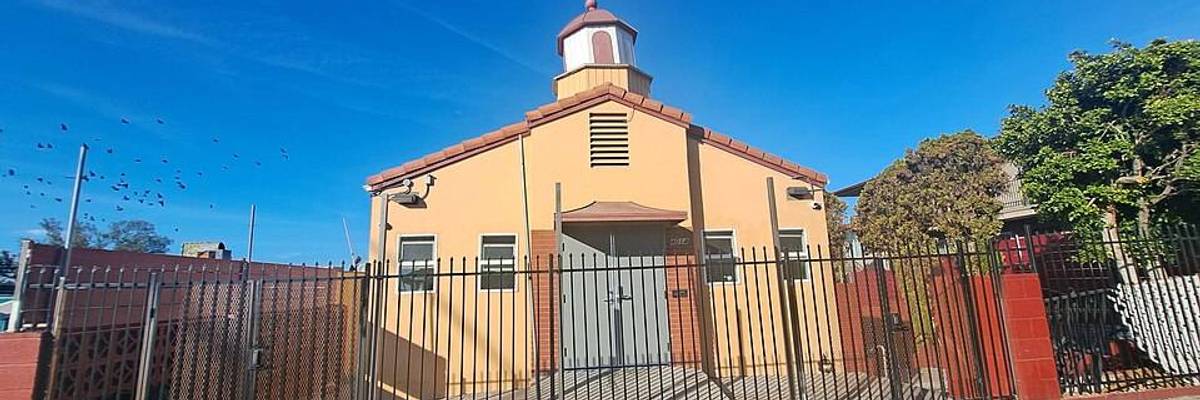
Masjid Al-Ansar Mosque is shown in San Diego, California.
A recent lawsuit where parents at Palo Alto Unified School District sued over a field trip to a mosque is one of the latest manifestations of the policing of California public schools over how Palestine is or is not taught.
As Jewish-Arab American, I feel the responsibility to work to overturn the dominating narratives that divide my people. I can see clearly the manufactured ill will that has fueled ignorance and the murder of ten of thousands of Palestinians and stripping of the survivors’ dignity. Misinformation about Islam and the silencing of Arab voices are shadows on the wall, distracting us from a deeper truth: that we share a common humanity, and that the best of our cultures and faiths calls us toward kindness, forgiveness, and humility, even as public attention so often fixates on separation.
California has seen a sustained campaign by pro-Israel advocacy organizations to reshape how Palestine is taught—or not taught—in public schools through a plethora of bills aimed to censor ethnic studies, and a recent lawsuit where parents at Palo Alto Unified School District sued over a field trip to a mosque is one of the latest manifestations of the policing of public schools. The lawsuit sparked serious debate on the discretion afforded to public educators in developing course content.
Claims made include that students were encouraged to wear hijabs, that other houses of worship were not included in the class plans, and that students were exposed to a speaker they deemed controversial, Zahra Billoo.
Whatever one’s personal views are on these topics, let’s ground back to facts: A field trip to a mosque isn’t illegal. Lawsuits are often made even in cases where the plaintiff is aware the law wasn’t broken, but the lawsuit itself can be used as a tactic of intimidation and to mobilize negative press attention toward the defendants, as is the case here.
This lawsuit is motivated by a desire to intimidate schools away from exposing students to Islam and speakers who represent the opposite of Israeli propaganda.
Starting with the claim regarding hijabs: Is it illegal to encourage a student to wear the proper attire to enter a space of worship that is optional to enter in the first place? I don’t think so.
Next, a main claim was that “the mosque was the only house of worship included in the program, according to the lawsuit,” as Jweekly put it. This one caused me to pause.
Should you be allowed to take students to a house of worship? If so, then where would we be able to draw the line?
There are hundreds of religions out there. Classes would be going to houses of worship everyday in order to meet the proposed standards. Does it have to be all or nothing? Surely students could be allowed to visit one or two houses of worship without visiting them all, as it would be impossible to determine a reasonable legal standard for this.
I think defining the purpose of the class in question is also very important here. If the purpose of the class is to expose students to minorities, which would be characteristic of a class called “Social Justice Pathway,” it is true that Muslims are minorities in this country. Islamophobia is ironically being triggered online in the responses to this incident.
The Council on American-Islamic Relations is a legal advocacy organization for Muslims. CAIR supports Muslims whose civil rights are directly targeted. It is appropriate to have a representative of that organization address a class focused on social justice. Muslims are materially being denied access and rights based on their religion and identity in the United States. With the other Abrahamic religions being dominant and widely represented, I would assert that Islam is the least represented of the Abrahamic religions in the US and is deserving of students getting a chance to experience it firsthand.
Recent national polling suggests that Muslim Americans experience religious discrimination at higher rates than any other faith group surveyed, including in consequential areas such as employment, housing, banking, healthcare, travel, education, immigration, and interactions with law enforcement.
Another thing that bothered me (but didn’t shock me) about this lawsuit is that it assumes students shouldn’t be exposed to “controversial” speakers. It is hardly illegal for students to hear controversial speakers in school. In fact, a balanced education relies on freedom of ideas and information rather than censorship. Even if a parent finds some of Billoo's statements deeply objectionable, does that mean high school students cannot hear her speak?
Zahra is a staunch supporter of Palestinian rights, and it is convenient for Zionist groups to label her as antisemitic. Articles portraying her as antisemitic rely on the conflation of Judaism and Zionism. Zahra is a supporter of Jewish Voice for Peace and If Not Now, which are composed of Jewish people who refuse to allow Israeli nationalist propaganda to define what it means to be Jewish.
If the plaintiffs are arguing that any discussion of and exposure to Muslims must be accompanied by a discussion of other religious groups—where does that requirement end? Such a rule would be impractical and inappropriate in many educational contexts.
Educators require the agency to make reasonable judgments about which communities and perspectives are relevant to a particular lesson. This lawsuit is motivated by a desire to intimidate schools away from exposing students to Islam and speakers who represent the opposite of Israeli propaganda.
Ultimately, all of this is to say: I reject the premise that protecting Jewish students requires shielding them from Palestinian advocacy or Muslim voices. My Jewishness does not require that.
Dear Common Dreams reader, It’s been nearly 30 years since I co-founded Common Dreams with my late wife, Lina Newhouser. We had the radical notion that journalism should serve the public good, not corporate profits. It was clear to us from the outset what it would take to build such a project. No paid advertisements. No corporate sponsors. No millionaire publisher telling us what to think or do. Many people said we wouldn't last a year, but we proved those doubters wrong. Together with a tremendous team of journalists and dedicated staff, we built an independent media outlet free from the constraints of profits and corporate control. Our mission has always been simple: To inform. To inspire. To ignite change for the common good. Building Common Dreams was not easy. Our survival was never guaranteed. When you take on the most powerful forces—Wall Street greed, fossil fuel industry destruction, Big Tech lobbyists, and uber-rich oligarchs who have spent billions upon billions rigging the economy and democracy in their favor—the only bulwark you have is supporters who believe in your work. But here’s the urgent message from me today. It's never been this bad out there. And it's never been this hard to keep us going. At the very moment Common Dreams is most needed, the threats we face are intensifying. We need your support now more than ever. We don't accept corporate advertising and never will. We don't have a paywall because we don't think people should be blocked from critical news based on their ability to pay. Everything we do is funded by the donations of readers like you. When everyone does the little they can afford, we are strong. But if that support retreats or dries up, so do we. Will you donate now to make sure Common Dreams not only survives but thrives? —Craig Brown, Co-founder |
As Jewish-Arab American, I feel the responsibility to work to overturn the dominating narratives that divide my people. I can see clearly the manufactured ill will that has fueled ignorance and the murder of ten of thousands of Palestinians and stripping of the survivors’ dignity. Misinformation about Islam and the silencing of Arab voices are shadows on the wall, distracting us from a deeper truth: that we share a common humanity, and that the best of our cultures and faiths calls us toward kindness, forgiveness, and humility, even as public attention so often fixates on separation.
California has seen a sustained campaign by pro-Israel advocacy organizations to reshape how Palestine is taught—or not taught—in public schools through a plethora of bills aimed to censor ethnic studies, and a recent lawsuit where parents at Palo Alto Unified School District sued over a field trip to a mosque is one of the latest manifestations of the policing of public schools. The lawsuit sparked serious debate on the discretion afforded to public educators in developing course content.
Claims made include that students were encouraged to wear hijabs, that other houses of worship were not included in the class plans, and that students were exposed to a speaker they deemed controversial, Zahra Billoo.
Whatever one’s personal views are on these topics, let’s ground back to facts: A field trip to a mosque isn’t illegal. Lawsuits are often made even in cases where the plaintiff is aware the law wasn’t broken, but the lawsuit itself can be used as a tactic of intimidation and to mobilize negative press attention toward the defendants, as is the case here.
This lawsuit is motivated by a desire to intimidate schools away from exposing students to Islam and speakers who represent the opposite of Israeli propaganda.
Starting with the claim regarding hijabs: Is it illegal to encourage a student to wear the proper attire to enter a space of worship that is optional to enter in the first place? I don’t think so.
Next, a main claim was that “the mosque was the only house of worship included in the program, according to the lawsuit,” as Jweekly put it. This one caused me to pause.
Should you be allowed to take students to a house of worship? If so, then where would we be able to draw the line?
There are hundreds of religions out there. Classes would be going to houses of worship everyday in order to meet the proposed standards. Does it have to be all or nothing? Surely students could be allowed to visit one or two houses of worship without visiting them all, as it would be impossible to determine a reasonable legal standard for this.
I think defining the purpose of the class in question is also very important here. If the purpose of the class is to expose students to minorities, which would be characteristic of a class called “Social Justice Pathway,” it is true that Muslims are minorities in this country. Islamophobia is ironically being triggered online in the responses to this incident.
The Council on American-Islamic Relations is a legal advocacy organization for Muslims. CAIR supports Muslims whose civil rights are directly targeted. It is appropriate to have a representative of that organization address a class focused on social justice. Muslims are materially being denied access and rights based on their religion and identity in the United States. With the other Abrahamic religions being dominant and widely represented, I would assert that Islam is the least represented of the Abrahamic religions in the US and is deserving of students getting a chance to experience it firsthand.
Recent national polling suggests that Muslim Americans experience religious discrimination at higher rates than any other faith group surveyed, including in consequential areas such as employment, housing, banking, healthcare, travel, education, immigration, and interactions with law enforcement.
Another thing that bothered me (but didn’t shock me) about this lawsuit is that it assumes students shouldn’t be exposed to “controversial” speakers. It is hardly illegal for students to hear controversial speakers in school. In fact, a balanced education relies on freedom of ideas and information rather than censorship. Even if a parent finds some of Billoo's statements deeply objectionable, does that mean high school students cannot hear her speak?
Zahra is a staunch supporter of Palestinian rights, and it is convenient for Zionist groups to label her as antisemitic. Articles portraying her as antisemitic rely on the conflation of Judaism and Zionism. Zahra is a supporter of Jewish Voice for Peace and If Not Now, which are composed of Jewish people who refuse to allow Israeli nationalist propaganda to define what it means to be Jewish.
If the plaintiffs are arguing that any discussion of and exposure to Muslims must be accompanied by a discussion of other religious groups—where does that requirement end? Such a rule would be impractical and inappropriate in many educational contexts.
Educators require the agency to make reasonable judgments about which communities and perspectives are relevant to a particular lesson. This lawsuit is motivated by a desire to intimidate schools away from exposing students to Islam and speakers who represent the opposite of Israeli propaganda.
Ultimately, all of this is to say: I reject the premise that protecting Jewish students requires shielding them from Palestinian advocacy or Muslim voices. My Jewishness does not require that.
As Jewish-Arab American, I feel the responsibility to work to overturn the dominating narratives that divide my people. I can see clearly the manufactured ill will that has fueled ignorance and the murder of ten of thousands of Palestinians and stripping of the survivors’ dignity. Misinformation about Islam and the silencing of Arab voices are shadows on the wall, distracting us from a deeper truth: that we share a common humanity, and that the best of our cultures and faiths calls us toward kindness, forgiveness, and humility, even as public attention so often fixates on separation.
California has seen a sustained campaign by pro-Israel advocacy organizations to reshape how Palestine is taught—or not taught—in public schools through a plethora of bills aimed to censor ethnic studies, and a recent lawsuit where parents at Palo Alto Unified School District sued over a field trip to a mosque is one of the latest manifestations of the policing of public schools. The lawsuit sparked serious debate on the discretion afforded to public educators in developing course content.
Claims made include that students were encouraged to wear hijabs, that other houses of worship were not included in the class plans, and that students were exposed to a speaker they deemed controversial, Zahra Billoo.
Whatever one’s personal views are on these topics, let’s ground back to facts: A field trip to a mosque isn’t illegal. Lawsuits are often made even in cases where the plaintiff is aware the law wasn’t broken, but the lawsuit itself can be used as a tactic of intimidation and to mobilize negative press attention toward the defendants, as is the case here.
This lawsuit is motivated by a desire to intimidate schools away from exposing students to Islam and speakers who represent the opposite of Israeli propaganda.
Starting with the claim regarding hijabs: Is it illegal to encourage a student to wear the proper attire to enter a space of worship that is optional to enter in the first place? I don’t think so.
Next, a main claim was that “the mosque was the only house of worship included in the program, according to the lawsuit,” as Jweekly put it. This one caused me to pause.
Should you be allowed to take students to a house of worship? If so, then where would we be able to draw the line?
There are hundreds of religions out there. Classes would be going to houses of worship everyday in order to meet the proposed standards. Does it have to be all or nothing? Surely students could be allowed to visit one or two houses of worship without visiting them all, as it would be impossible to determine a reasonable legal standard for this.
I think defining the purpose of the class in question is also very important here. If the purpose of the class is to expose students to minorities, which would be characteristic of a class called “Social Justice Pathway,” it is true that Muslims are minorities in this country. Islamophobia is ironically being triggered online in the responses to this incident.
The Council on American-Islamic Relations is a legal advocacy organization for Muslims. CAIR supports Muslims whose civil rights are directly targeted. It is appropriate to have a representative of that organization address a class focused on social justice. Muslims are materially being denied access and rights based on their religion and identity in the United States. With the other Abrahamic religions being dominant and widely represented, I would assert that Islam is the least represented of the Abrahamic religions in the US and is deserving of students getting a chance to experience it firsthand.
Recent national polling suggests that Muslim Americans experience religious discrimination at higher rates than any other faith group surveyed, including in consequential areas such as employment, housing, banking, healthcare, travel, education, immigration, and interactions with law enforcement.
Another thing that bothered me (but didn’t shock me) about this lawsuit is that it assumes students shouldn’t be exposed to “controversial” speakers. It is hardly illegal for students to hear controversial speakers in school. In fact, a balanced education relies on freedom of ideas and information rather than censorship. Even if a parent finds some of Billoo's statements deeply objectionable, does that mean high school students cannot hear her speak?
Zahra is a staunch supporter of Palestinian rights, and it is convenient for Zionist groups to label her as antisemitic. Articles portraying her as antisemitic rely on the conflation of Judaism and Zionism. Zahra is a supporter of Jewish Voice for Peace and If Not Now, which are composed of Jewish people who refuse to allow Israeli nationalist propaganda to define what it means to be Jewish.
If the plaintiffs are arguing that any discussion of and exposure to Muslims must be accompanied by a discussion of other religious groups—where does that requirement end? Such a rule would be impractical and inappropriate in many educational contexts.
Educators require the agency to make reasonable judgments about which communities and perspectives are relevant to a particular lesson. This lawsuit is motivated by a desire to intimidate schools away from exposing students to Islam and speakers who represent the opposite of Israeli propaganda.
Ultimately, all of this is to say: I reject the premise that protecting Jewish students requires shielding them from Palestinian advocacy or Muslim voices. My Jewishness does not require that.