SUBSCRIBE TO OUR FREE NEWSLETTER
Daily news & progressive opinion—funded by the people, not the corporations—delivered straight to your inbox.
5
#000000
#FFFFFF
To donate by check, phone, or other method, see our More Ways to Give page.
Daily news & progressive opinion—funded by the people, not the corporations—delivered straight to your inbox.
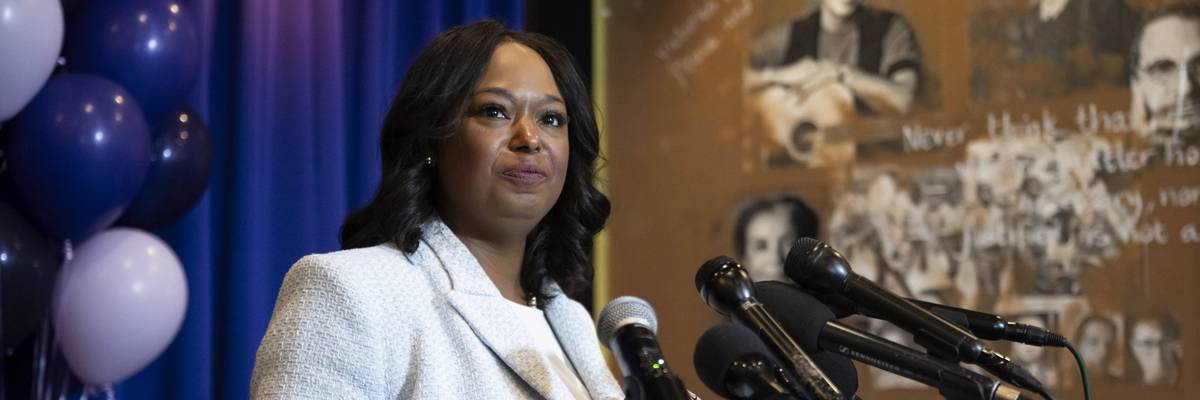
DC City Councilmember Janeese Lewis George (D-Ward 4) holds a press conference following her victory in the Democratic primary for mayor of Washington earlier this week at Busboys and Poets on June 18, 2026 in Washington, DC.
History has taught us that Jews are safest in societies and political systems that pursue true safety for everyone who faces marginalization and hate.
During an election season, it’s natural to take sides—that’s what elections are for. But taking sides doesn’t have to mean dividing the Jewish community, or isolating Jews from the broader community around us.
As the Executive Director of Jews United for Justice and the JUFJ Campaign Fund in Washington, DC and Maryland, I lead a group that has worked for more than a quarter century to ensure that everyone in our region—no matter our religion, where we come from, how much money we have, or what we look like—can live with freedom, safety, and belonging. Unfortunately, in DC, we just witnessed primary elections that saw national political polarization impacting us locally. Disagreements and concerns within the Jewish community are intersecting with local electoral politics—in ways that I fear could leave us more divided and less safe. But there is another path forward.
The JUFJ Campaign Fund endorses candidates who we believe will use their voices and their offices to build a more just region for all of us, including Jews. In this month’s DC Primary election, all seven of the progressive candidates that we endorsed won. That includes Janeese Lewis George, the winner of the Democratic Primary for Mayor, and soon-to-be Councilmember Aparna Raj, both of whom have also been endorsed by local chapters of the Democratic Socialists of America (DSA).
Given DSA’s anti-Zionist positions, for some Jews, DSA’s backing is enough to warrant labeling these politicians as a threat to our community. Yet for myself and our organization, our personal experiences of these candidates could not be more contrary to that image.
When we feel alone and misunderstood, every disagreement can seem like a threat. Yet I know, from these past 20 years, that the way through this anxiety is relationships.
All of our endorsees, including Lewis George, Raj, and others endorsed by DSA, have shown up for my colleagues and me individually, our organizations, and their own Jewish constituents. They’ve cited our community’s needs and concerns as important to them, and recognized our community as part of their winning coalitions on election night. Even—and especially—when we have had disagreements, we have remained in relationships that allow us to recognize each other’s humanity and to build a strong Jewish presence in our shared political work.
At JUFJ’s community seders this spring, we hosted a dozen candidates for local and statewide office in DC, Montgomery County, and Baltimore. These candidates were Jewish and non-Jewish, ones who had received our endorsements and ones who hadn’t, DSA members and not, of many races and ethnicities—and they all came together to retell the Passover story and connect it to the struggles we face here in our region. I’ve seen these candidates build relationships and create space for conversation with our Jewish community over many years, and throughout this campaign season. And these relationships bear fruit during hard times.
After the terrorist attack against Temple Israel in Michigan this March, a non-Jewish, DSA-endorsed candidate wrote to one of my colleagues: “I saw the news coming out of Detroit and just wanted to say I’m thinking of you. It means a lot to be able to organize alongside you and others in the Jewish community to create a vision for a multiracial democracy where we’re all safe together. Hope you're doing ok.” Another non-Jewish DSA-endorsed elected official called all the senior rabbis in their jurisdiction on October 8, 2023, and has since worked to arrange additional security for Jewish institutions after antisemitic violence. In DC and Montgomery County, our endorsed candidates in elected office have voted time and time again to support funding for Jewish nonprofits and providing security grants for places of worship.
When I started at JUFJ in 2008, I didn’t see antisemitism as one of the pivotal challenges to address in our region. Today, that has changed. We’ve made dismantling antisemitism a key piece of our ongoing work, including working with candidates and elected officials to help them gain a better understanding of antisemitism, how it affects us, and what they can do. Unfortunately, we are living through a time when some politicians and community leaders attempt to build their own power by fueling antisemitism and exploiting divisions within our communities. They want Jews to feel isolated and alone. But isolation is not a path to safety. Anger and resentment is not a strategy.
When we feel alone and misunderstood, every disagreement can seem like a threat. Yet I know, from these past 20 years, that the way through this anxiety is relationships. Building and maintaining relationships with people who are different from me means that I have people to reach out to for a better understanding of our differences. As the great Black activist and musician Bernice Johnson Reagon put it, “Coalition work is not work done in your home.” To build coalitions with people who are different from us, we must resist the urge to isolate—despite fears and disagreements.
As DC’s next mayor and other progressive and democratic socialist candidates across the country take office, we in the Jewish community have a choice ahead of us. We can treat them as potential threats—even as they say they are working to build a city where everyone can thrive. Or, we can consider them to be potential partners and allies, despite any differences—and engage openly and honestly with them on that basis.
History has taught us that Jews are safest in societies and political systems that pursue true safety for everyone who faces marginalization and hate. That is why our movement here in the DMV has endorsed candidates who are committed to tackling antisemitism, and who are also looking out for my Black, brown, immigrant, and low-income neighbors. When we look out for and talk to each other, only then can our society be a place where all of us can live with respect and dignity.
Dear Common Dreams reader, It’s been nearly 30 years since I co-founded Common Dreams with my late wife, Lina Newhouser. We had the radical notion that journalism should serve the public good, not corporate profits. It was clear to us from the outset what it would take to build such a project. No paid advertisements. No corporate sponsors. No millionaire publisher telling us what to think or do. Many people said we wouldn't last a year, but we proved those doubters wrong. Together with a tremendous team of journalists and dedicated staff, we built an independent media outlet free from the constraints of profits and corporate control. Our mission has always been simple: To inform. To inspire. To ignite change for the common good. Building Common Dreams was not easy. Our survival was never guaranteed. When you take on the most powerful forces—Wall Street greed, fossil fuel industry destruction, Big Tech lobbyists, and uber-rich oligarchs who have spent billions upon billions rigging the economy and democracy in their favor—the only bulwark you have is supporters who believe in your work. But here’s the urgent message from me today. It's never been this bad out there. And it's never been this hard to keep us going. At the very moment Common Dreams is most needed, the threats we face are intensifying. We need your support now more than ever. We don't accept corporate advertising and never will. We don't have a paywall because we don't think people should be blocked from critical news based on their ability to pay. Everything we do is funded by the donations of readers like you. When everyone does the little they can afford, we are strong. But if that support retreats or dries up, so do we. Will you donate now to make sure Common Dreams not only survives but thrives? —Craig Brown, Co-founder |
During an election season, it’s natural to take sides—that’s what elections are for. But taking sides doesn’t have to mean dividing the Jewish community, or isolating Jews from the broader community around us.
As the Executive Director of Jews United for Justice and the JUFJ Campaign Fund in Washington, DC and Maryland, I lead a group that has worked for more than a quarter century to ensure that everyone in our region—no matter our religion, where we come from, how much money we have, or what we look like—can live with freedom, safety, and belonging. Unfortunately, in DC, we just witnessed primary elections that saw national political polarization impacting us locally. Disagreements and concerns within the Jewish community are intersecting with local electoral politics—in ways that I fear could leave us more divided and less safe. But there is another path forward.
The JUFJ Campaign Fund endorses candidates who we believe will use their voices and their offices to build a more just region for all of us, including Jews. In this month’s DC Primary election, all seven of the progressive candidates that we endorsed won. That includes Janeese Lewis George, the winner of the Democratic Primary for Mayor, and soon-to-be Councilmember Aparna Raj, both of whom have also been endorsed by local chapters of the Democratic Socialists of America (DSA).
Given DSA’s anti-Zionist positions, for some Jews, DSA’s backing is enough to warrant labeling these politicians as a threat to our community. Yet for myself and our organization, our personal experiences of these candidates could not be more contrary to that image.
When we feel alone and misunderstood, every disagreement can seem like a threat. Yet I know, from these past 20 years, that the way through this anxiety is relationships.
All of our endorsees, including Lewis George, Raj, and others endorsed by DSA, have shown up for my colleagues and me individually, our organizations, and their own Jewish constituents. They’ve cited our community’s needs and concerns as important to them, and recognized our community as part of their winning coalitions on election night. Even—and especially—when we have had disagreements, we have remained in relationships that allow us to recognize each other’s humanity and to build a strong Jewish presence in our shared political work.
At JUFJ’s community seders this spring, we hosted a dozen candidates for local and statewide office in DC, Montgomery County, and Baltimore. These candidates were Jewish and non-Jewish, ones who had received our endorsements and ones who hadn’t, DSA members and not, of many races and ethnicities—and they all came together to retell the Passover story and connect it to the struggles we face here in our region. I’ve seen these candidates build relationships and create space for conversation with our Jewish community over many years, and throughout this campaign season. And these relationships bear fruit during hard times.
After the terrorist attack against Temple Israel in Michigan this March, a non-Jewish, DSA-endorsed candidate wrote to one of my colleagues: “I saw the news coming out of Detroit and just wanted to say I’m thinking of you. It means a lot to be able to organize alongside you and others in the Jewish community to create a vision for a multiracial democracy where we’re all safe together. Hope you're doing ok.” Another non-Jewish DSA-endorsed elected official called all the senior rabbis in their jurisdiction on October 8, 2023, and has since worked to arrange additional security for Jewish institutions after antisemitic violence. In DC and Montgomery County, our endorsed candidates in elected office have voted time and time again to support funding for Jewish nonprofits and providing security grants for places of worship.
When I started at JUFJ in 2008, I didn’t see antisemitism as one of the pivotal challenges to address in our region. Today, that has changed. We’ve made dismantling antisemitism a key piece of our ongoing work, including working with candidates and elected officials to help them gain a better understanding of antisemitism, how it affects us, and what they can do. Unfortunately, we are living through a time when some politicians and community leaders attempt to build their own power by fueling antisemitism and exploiting divisions within our communities. They want Jews to feel isolated and alone. But isolation is not a path to safety. Anger and resentment is not a strategy.
When we feel alone and misunderstood, every disagreement can seem like a threat. Yet I know, from these past 20 years, that the way through this anxiety is relationships. Building and maintaining relationships with people who are different from me means that I have people to reach out to for a better understanding of our differences. As the great Black activist and musician Bernice Johnson Reagon put it, “Coalition work is not work done in your home.” To build coalitions with people who are different from us, we must resist the urge to isolate—despite fears and disagreements.
As DC’s next mayor and other progressive and democratic socialist candidates across the country take office, we in the Jewish community have a choice ahead of us. We can treat them as potential threats—even as they say they are working to build a city where everyone can thrive. Or, we can consider them to be potential partners and allies, despite any differences—and engage openly and honestly with them on that basis.
History has taught us that Jews are safest in societies and political systems that pursue true safety for everyone who faces marginalization and hate. That is why our movement here in the DMV has endorsed candidates who are committed to tackling antisemitism, and who are also looking out for my Black, brown, immigrant, and low-income neighbors. When we look out for and talk to each other, only then can our society be a place where all of us can live with respect and dignity.
During an election season, it’s natural to take sides—that’s what elections are for. But taking sides doesn’t have to mean dividing the Jewish community, or isolating Jews from the broader community around us.
As the Executive Director of Jews United for Justice and the JUFJ Campaign Fund in Washington, DC and Maryland, I lead a group that has worked for more than a quarter century to ensure that everyone in our region—no matter our religion, where we come from, how much money we have, or what we look like—can live with freedom, safety, and belonging. Unfortunately, in DC, we just witnessed primary elections that saw national political polarization impacting us locally. Disagreements and concerns within the Jewish community are intersecting with local electoral politics—in ways that I fear could leave us more divided and less safe. But there is another path forward.
The JUFJ Campaign Fund endorses candidates who we believe will use their voices and their offices to build a more just region for all of us, including Jews. In this month’s DC Primary election, all seven of the progressive candidates that we endorsed won. That includes Janeese Lewis George, the winner of the Democratic Primary for Mayor, and soon-to-be Councilmember Aparna Raj, both of whom have also been endorsed by local chapters of the Democratic Socialists of America (DSA).
Given DSA’s anti-Zionist positions, for some Jews, DSA’s backing is enough to warrant labeling these politicians as a threat to our community. Yet for myself and our organization, our personal experiences of these candidates could not be more contrary to that image.
When we feel alone and misunderstood, every disagreement can seem like a threat. Yet I know, from these past 20 years, that the way through this anxiety is relationships.
All of our endorsees, including Lewis George, Raj, and others endorsed by DSA, have shown up for my colleagues and me individually, our organizations, and their own Jewish constituents. They’ve cited our community’s needs and concerns as important to them, and recognized our community as part of their winning coalitions on election night. Even—and especially—when we have had disagreements, we have remained in relationships that allow us to recognize each other’s humanity and to build a strong Jewish presence in our shared political work.
At JUFJ’s community seders this spring, we hosted a dozen candidates for local and statewide office in DC, Montgomery County, and Baltimore. These candidates were Jewish and non-Jewish, ones who had received our endorsements and ones who hadn’t, DSA members and not, of many races and ethnicities—and they all came together to retell the Passover story and connect it to the struggles we face here in our region. I’ve seen these candidates build relationships and create space for conversation with our Jewish community over many years, and throughout this campaign season. And these relationships bear fruit during hard times.
After the terrorist attack against Temple Israel in Michigan this March, a non-Jewish, DSA-endorsed candidate wrote to one of my colleagues: “I saw the news coming out of Detroit and just wanted to say I’m thinking of you. It means a lot to be able to organize alongside you and others in the Jewish community to create a vision for a multiracial democracy where we’re all safe together. Hope you're doing ok.” Another non-Jewish DSA-endorsed elected official called all the senior rabbis in their jurisdiction on October 8, 2023, and has since worked to arrange additional security for Jewish institutions after antisemitic violence. In DC and Montgomery County, our endorsed candidates in elected office have voted time and time again to support funding for Jewish nonprofits and providing security grants for places of worship.
When I started at JUFJ in 2008, I didn’t see antisemitism as one of the pivotal challenges to address in our region. Today, that has changed. We’ve made dismantling antisemitism a key piece of our ongoing work, including working with candidates and elected officials to help them gain a better understanding of antisemitism, how it affects us, and what they can do. Unfortunately, we are living through a time when some politicians and community leaders attempt to build their own power by fueling antisemitism and exploiting divisions within our communities. They want Jews to feel isolated and alone. But isolation is not a path to safety. Anger and resentment is not a strategy.
When we feel alone and misunderstood, every disagreement can seem like a threat. Yet I know, from these past 20 years, that the way through this anxiety is relationships. Building and maintaining relationships with people who are different from me means that I have people to reach out to for a better understanding of our differences. As the great Black activist and musician Bernice Johnson Reagon put it, “Coalition work is not work done in your home.” To build coalitions with people who are different from us, we must resist the urge to isolate—despite fears and disagreements.
As DC’s next mayor and other progressive and democratic socialist candidates across the country take office, we in the Jewish community have a choice ahead of us. We can treat them as potential threats—even as they say they are working to build a city where everyone can thrive. Or, we can consider them to be potential partners and allies, despite any differences—and engage openly and honestly with them on that basis.
History has taught us that Jews are safest in societies and political systems that pursue true safety for everyone who faces marginalization and hate. That is why our movement here in the DMV has endorsed candidates who are committed to tackling antisemitism, and who are also looking out for my Black, brown, immigrant, and low-income neighbors. When we look out for and talk to each other, only then can our society be a place where all of us can live with respect and dignity.