SUBSCRIBE TO OUR FREE NEWSLETTER
Daily news & progressive opinion—funded by the people, not the corporations—delivered straight to your inbox.
5
#000000
#FFFFFF
To donate by check, phone, or other method, see our More Ways to Give page.

Long before global environmental summits sensationalized terms like sustainability and ecological restoration, a young teenager in an almost forgotten corner of the world stood on a barren, sun-baked sandbar with just 20 bamboo seedlings in his hands.
He was oblivious to the future his hands would sow, a future that would etch his name in textbooks around the world. Today, observances like World Nature Conservation Day exist to remind us how crucial such grassroots action is.
In 1997, the International Union for Conservation of Nature (IUCN) declared July 28 as the World Nature Conservation Day. Since then, it has evolved into a global movement, galvanizing governments, institutions, civil society, and individuals to advance collective action for environmental stewardship.
This World Nature Conservation Day, the story of this boy who came to be known as the "Forest Man of India" stands as a testament to the power of individual environmental stewardship.
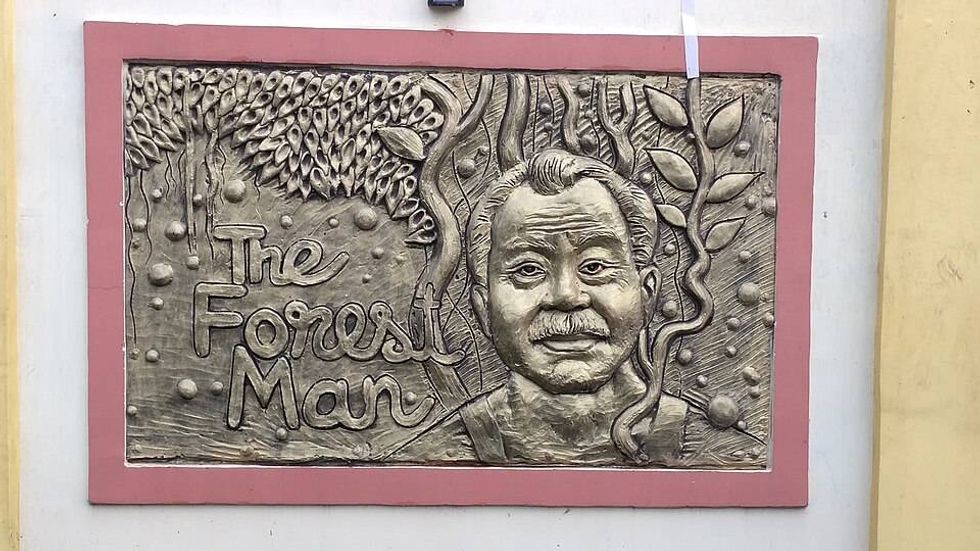 A wall carving of Jadav Payeng is displayed at Goalpara college. (Photo by Medhi Jyoti / CC BY-SA 4.0)
Popularly known as "The Forest Man of India," Payeng earned this title through years of dedication and his childhood passion for change. Change is something that many hope for, but few have the perseverance and groundwork to realize.
Starting with just 20 bamboo seedlings on a sandbar of the river Brahmaputra, he has continued to nurture the plants to this day. Despite the odds, he stood firm with limited resources and determination to keep planting, never giving up on his mission.
This article traces the evolution of his extraordinary journey, examining not only the scale of his environmental contribution but also the quiet determination that sustained it.
The origin of the Molai Forest dates back to 1979. Jadav Payeng, who was then employed as a labourer under a development project of the social forestry division, was assigned the stewardship of a 200-hectare patch of land in Arunachapori (an island). The project, which was intended to last for five years, ended in three.
Payeng, who had nowhere else to go, decided to keep planting trees and taking care of the flora he had already planted. In the same year, he found many dead snakes that had died from excessive heat after floods washed them onto the treeless sandbar. It was then that he planted 20 bamboo saplings on the sandbar.
The tale of Jadav Payeng shows that an environmental transformation does not always begin with huge policy changes or major funding. At times, it starts with a single individual who plants a seed and cultivates a dream which never fades away.
It was not just that he took care of the saplings; he also planted additional trees on his own, aiming to convert the area into a forest. What Jadav Payeng has created is arguably the world’s largest man-made forest.
Marked by the recurring devastation of floods on the island of Majuli, Payeng’s childhood was profoundly shaped by the disaster that forced his parents to abandon their native village. Reflecting on his childhood, he recalls that his village provided everything—from thatch to cane needed to sustain a comfortable life in their elevated dwellings, colloquially known as “Chang Ghar.”
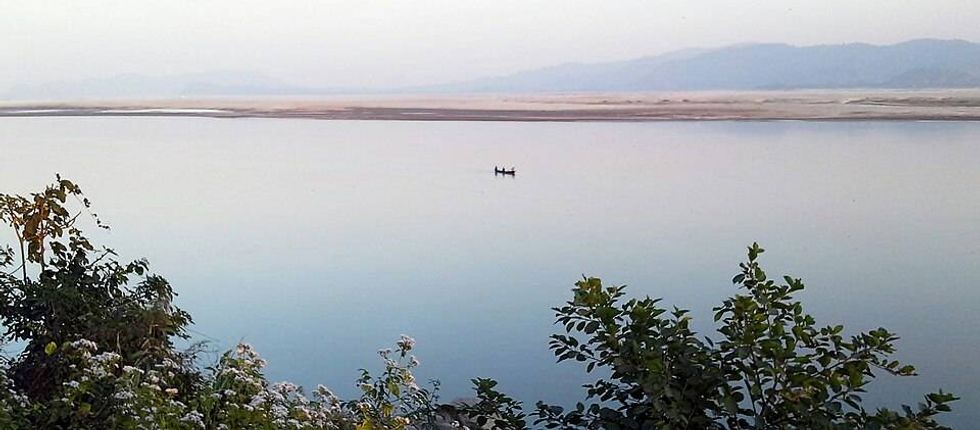 The Brahmaputra River is shown. (Photo by Dipayan Choudhury / CC BY-SA 4.0)
Molai Kathoni, or the Molai Forest, is the sprawling forest reserve created by Jadav Payeng, named after him as a token of appreciation for his decades of hard work. Now this wonderful forest houses more than 100 varieties of native flora, including hydrophytic, medicinal and aromatic, orchid, fruit-bearing, and timber trees.
The story of Molai Kathoni gained widespread attention in 2008, when a herd of elephants migrated into the forest reserve from the north bank of the Brahmaputra River, moving further south. This unique and flourishing patch of greenery soon caught the eye of the media, who aptly dubbed it “Molai Kathoni,” meaning “Molai’s woods.”
Payeng’s initial efforts evolved into a self-sustaining forest from bamboo to various trees. The net area covered by this forest is a staggering 1,360 acres and shelters threatened species such as Asian elephants, Bengal tigers, and one-horned rhinoceroses. A herd of around 100 elephants regularly visits the forest every year and generally stays for around six months.
In addition, Molai Kathoni provides shelter to 250 families living in about 10 to 12 huts in different groups. Notable flora species from his forest include Arjun (Terminalia arjuna), Pride of India (Lagerstroemia speciosa), Silk trees (Albizia procera), and Cotton trees (Bombax ceiba). Bamboo alone spans over 300 hectares.
Initially, in order to irrigate the large stretch of saplings, Payeng constructed bamboo structures above the saplings and put earthen pots with very small holes in them for drip irrigation. Water was allowed to seep out gradually over several days, nourishing the delicate saplings as he went about other chores.
To transform the infertile sandbar into nutrient-rich soil, Payeng physically transported red ants, earthworms, and organic biomass from his village to the island. The insects served as biological plows, altering the soil's composition and preparing the ground for deciduous trees.
For over three decades, his creation largely remained in the dark, away from public recognition and media sensationalization. When his story finally emerged, the world stood in awe of a man who, despite not having completed his secondary education, had ignited a quiet revolution painted in countless shades of green.
Jadav Payeng went on to win the third-highest civilian award of India: "The Padma Shri" in 2015. He was awarded the "Commonwealth Point of Light" award by the government of the United Kingdom. Payeng was named the "Forest Man of India" by Jawaharlal Nehru University in 2012. In 2025, the Jyoti Prasad Trust instituted the "Jadav Payeng International Award" in his honor.
The innovative solutions he developed, utilizing coconut tree planting to control soil erosion in Majuli, have garnered recognition for helping fight climate change. His inspirational story transcended borders, inspiring a children’s book, Jadav and the Tree Place. Moreover, his story has been integrated into school curricula across the United States and beyond as a compelling lesson in ecology.
Despite international acclaim, numerous awards, and appearances in award-winning documentaries (such as William D. McMaster's Forest Man), Payeng lives a remarkably simple life. He continues to wake up before dawn, taking a boat across the river to care for his forest and earn his living from the sale of milk from his livestock.
Payeng's contribution is not just about creating a green forest. The trees that Payeng planted act as carbon sinks, absorbing carbon dioxide while enhancing ecosystem health by supporting biodiversity, regulating water cycles, and sustaining diverse habitats.
Now his focus is on spreading his forest to another sandbar of the Brahmaputra and completely turning Majuli Island into a tropical paradise. In an interview with The Better India, he said that education systems should mandate every child to plant two trees. Payeng reiterated the need to integrate planting trees in school curricula in a TED talk he was invited to in 2015.
The tale of Jadav Payeng shows that an environmental transformation does not always begin with huge policy changes or major funding. At times, it starts with a single individual who plants a seed and cultivates a dream which never fades away.
For those seeking inspiration amid the mayhem of the climate crisis, the Molai island forest is a living testimony to what one dedicated soul can achieve.
As we celebrate World Nature Conservation Day, Payeng’s towering forest whispers a powerful message: Healing our planet doesn’t require an army; it can begin with one person planting the first seed.
Long before global environmental summits sensationalized terms like sustainability and ecological restoration, a young teenager in an almost forgotten corner of the world stood on a barren, sun-baked sandbar with just 20 bamboo seedlings in his hands.
He was oblivious to the future his hands would sow, a future that would etch his name in textbooks around the world. Today, observances like World Nature Conservation Day exist to remind us how crucial such grassroots action is.
In 1997, the International Union for Conservation of Nature (IUCN) declared July 28 as the World Nature Conservation Day. Since then, it has evolved into a global movement, galvanizing governments, institutions, civil society, and individuals to advance collective action for environmental stewardship.
This World Nature Conservation Day, the story of this boy who came to be known as the "Forest Man of India" stands as a testament to the power of individual environmental stewardship.
A wall carving of Jadav Payeng is displayed at Goalpara college. (Photo by Medhi Jyoti / CC BY-SA 4.0)
Popularly known as "The Forest Man of India," Payeng earned this title through years of dedication and his childhood passion for change. Change is something that many hope for, but few have the perseverance and groundwork to realize.
Starting with just 20 bamboo seedlings on a sandbar of the river Brahmaputra, he has continued to nurture the plants to this day. Despite the odds, he stood firm with limited resources and determination to keep planting, never giving up on his mission.
This article traces the evolution of his extraordinary journey, examining not only the scale of his environmental contribution but also the quiet determination that sustained it.
The origin of the Molai Forest dates back to 1979. Jadav Payeng, who was then employed as a labourer under a development project of the social forestry division, was assigned the stewardship of a 200-hectare patch of land in Arunachapori (an island). The project, which was intended to last for five years, ended in three.
Payeng, who had nowhere else to go, decided to keep planting trees and taking care of the flora he had already planted. In the same year, he found many dead snakes that had died from excessive heat after floods washed them onto the treeless sandbar. It was then that he planted 20 bamboo saplings on the sandbar.
The tale of Jadav Payeng shows that an environmental transformation does not always begin with huge policy changes or major funding. At times, it starts with a single individual who plants a seed and cultivates a dream which never fades away.
It was not just that he took care of the saplings; he also planted additional trees on his own, aiming to convert the area into a forest. What Jadav Payeng has created is arguably the world’s largest man-made forest.
Marked by the recurring devastation of floods on the island of Majuli, Payeng’s childhood was profoundly shaped by the disaster that forced his parents to abandon their native village. Reflecting on his childhood, he recalls that his village provided everything—from thatch to cane needed to sustain a comfortable life in their elevated dwellings, colloquially known as “Chang Ghar.”
The Brahmaputra River is shown. (Photo by Dipayan Choudhury / CC BY-SA 4.0)
Molai Kathoni, or the Molai Forest, is the sprawling forest reserve created by Jadav Payeng, named after him as a token of appreciation for his decades of hard work. Now this wonderful forest houses more than 100 varieties of native flora, including hydrophytic, medicinal and aromatic, orchid, fruit-bearing, and timber trees.
The story of Molai Kathoni gained widespread attention in 2008, when a herd of elephants migrated into the forest reserve from the north bank of the Brahmaputra River, moving further south. This unique and flourishing patch of greenery soon caught the eye of the media, who aptly dubbed it “Molai Kathoni,” meaning “Molai’s woods.”
Payeng’s initial efforts evolved into a self-sustaining forest from bamboo to various trees. The net area covered by this forest is a staggering 1,360 acres and shelters threatened species such as Asian elephants, Bengal tigers, and one-horned rhinoceroses. A herd of around 100 elephants regularly visits the forest every year and generally stays for around six months.
In addition, Molai Kathoni provides shelter to 250 families living in about 10 to 12 huts in different groups. Notable flora species from his forest include Arjun (Terminalia arjuna), Pride of India (Lagerstroemia speciosa), Silk trees (Albizia procera), and Cotton trees (Bombax ceiba). Bamboo alone spans over 300 hectares.
Initially, in order to irrigate the large stretch of saplings, Payeng constructed bamboo structures above the saplings and put earthen pots with very small holes in them for drip irrigation. Water was allowed to seep out gradually over several days, nourishing the delicate saplings as he went about other chores.
To transform the infertile sandbar into nutrient-rich soil, Payeng physically transported red ants, earthworms, and organic biomass from his village to the island. The insects served as biological plows, altering the soil's composition and preparing the ground for deciduous trees.
For over three decades, his creation largely remained in the dark, away from public recognition and media sensationalization. When his story finally emerged, the world stood in awe of a man who, despite not having completed his secondary education, had ignited a quiet revolution painted in countless shades of green.
Jadav Payeng went on to win the third-highest civilian award of India: "The Padma Shri" in 2015. He was awarded the "Commonwealth Point of Light" award by the government of the United Kingdom. Payeng was named the "Forest Man of India" by Jawaharlal Nehru University in 2012. In 2025, the Jyoti Prasad Trust instituted the "Jadav Payeng International Award" in his honor.
The innovative solutions he developed, utilizing coconut tree planting to control soil erosion in Majuli, have garnered recognition for helping fight climate change. His inspirational story transcended borders, inspiring a children’s book, Jadav and the Tree Place. Moreover, his story has been integrated into school curricula across the United States and beyond as a compelling lesson in ecology.
Despite international acclaim, numerous awards, and appearances in award-winning documentaries (such as William D. McMaster's Forest Man), Payeng lives a remarkably simple life. He continues to wake up before dawn, taking a boat across the river to care for his forest and earn his living from the sale of milk from his livestock.
Payeng's contribution is not just about creating a green forest. The trees that Payeng planted act as carbon sinks, absorbing carbon dioxide while enhancing ecosystem health by supporting biodiversity, regulating water cycles, and sustaining diverse habitats.
Now his focus is on spreading his forest to another sandbar of the Brahmaputra and completely turning Majuli Island into a tropical paradise. In an interview with The Better India, he said that education systems should mandate every child to plant two trees. Payeng reiterated the need to integrate planting trees in school curricula in a TED talk he was invited to in 2015.
The tale of Jadav Payeng shows that an environmental transformation does not always begin with huge policy changes or major funding. At times, it starts with a single individual who plants a seed and cultivates a dream which never fades away.
For those seeking inspiration amid the mayhem of the climate crisis, the Molai island forest is a living testimony to what one dedicated soul can achieve.
As we celebrate World Nature Conservation Day, Payeng’s towering forest whispers a powerful message: Healing our planet doesn’t require an army; it can begin with one person planting the first seed.
Long before global environmental summits sensationalized terms like sustainability and ecological restoration, a young teenager in an almost forgotten corner of the world stood on a barren, sun-baked sandbar with just 20 bamboo seedlings in his hands.
He was oblivious to the future his hands would sow, a future that would etch his name in textbooks around the world. Today, observances like World Nature Conservation Day exist to remind us how crucial such grassroots action is.
In 1997, the International Union for Conservation of Nature (IUCN) declared July 28 as the World Nature Conservation Day. Since then, it has evolved into a global movement, galvanizing governments, institutions, civil society, and individuals to advance collective action for environmental stewardship.
This World Nature Conservation Day, the story of this boy who came to be known as the "Forest Man of India" stands as a testament to the power of individual environmental stewardship.
A wall carving of Jadav Payeng is displayed at Goalpara college. (Photo by Medhi Jyoti / CC BY-SA 4.0)
Popularly known as "The Forest Man of India," Payeng earned this title through years of dedication and his childhood passion for change. Change is something that many hope for, but few have the perseverance and groundwork to realize.
Starting with just 20 bamboo seedlings on a sandbar of the river Brahmaputra, he has continued to nurture the plants to this day. Despite the odds, he stood firm with limited resources and determination to keep planting, never giving up on his mission.
This article traces the evolution of his extraordinary journey, examining not only the scale of his environmental contribution but also the quiet determination that sustained it.
The origin of the Molai Forest dates back to 1979. Jadav Payeng, who was then employed as a labourer under a development project of the social forestry division, was assigned the stewardship of a 200-hectare patch of land in Arunachapori (an island). The project, which was intended to last for five years, ended in three.
Payeng, who had nowhere else to go, decided to keep planting trees and taking care of the flora he had already planted. In the same year, he found many dead snakes that had died from excessive heat after floods washed them onto the treeless sandbar. It was then that he planted 20 bamboo saplings on the sandbar.
The tale of Jadav Payeng shows that an environmental transformation does not always begin with huge policy changes or major funding. At times, it starts with a single individual who plants a seed and cultivates a dream which never fades away.
It was not just that he took care of the saplings; he also planted additional trees on his own, aiming to convert the area into a forest. What Jadav Payeng has created is arguably the world’s largest man-made forest.
Marked by the recurring devastation of floods on the island of Majuli, Payeng’s childhood was profoundly shaped by the disaster that forced his parents to abandon their native village. Reflecting on his childhood, he recalls that his village provided everything—from thatch to cane needed to sustain a comfortable life in their elevated dwellings, colloquially known as “Chang Ghar.”
The Brahmaputra River is shown. (Photo by Dipayan Choudhury / CC BY-SA 4.0)
Molai Kathoni, or the Molai Forest, is the sprawling forest reserve created by Jadav Payeng, named after him as a token of appreciation for his decades of hard work. Now this wonderful forest houses more than 100 varieties of native flora, including hydrophytic, medicinal and aromatic, orchid, fruit-bearing, and timber trees.
The story of Molai Kathoni gained widespread attention in 2008, when a herd of elephants migrated into the forest reserve from the north bank of the Brahmaputra River, moving further south. This unique and flourishing patch of greenery soon caught the eye of the media, who aptly dubbed it “Molai Kathoni,” meaning “Molai’s woods.”
Payeng’s initial efforts evolved into a self-sustaining forest from bamboo to various trees. The net area covered by this forest is a staggering 1,360 acres and shelters threatened species such as Asian elephants, Bengal tigers, and one-horned rhinoceroses. A herd of around 100 elephants regularly visits the forest every year and generally stays for around six months.
In addition, Molai Kathoni provides shelter to 250 families living in about 10 to 12 huts in different groups. Notable flora species from his forest include Arjun (Terminalia arjuna), Pride of India (Lagerstroemia speciosa), Silk trees (Albizia procera), and Cotton trees (Bombax ceiba). Bamboo alone spans over 300 hectares.
Initially, in order to irrigate the large stretch of saplings, Payeng constructed bamboo structures above the saplings and put earthen pots with very small holes in them for drip irrigation. Water was allowed to seep out gradually over several days, nourishing the delicate saplings as he went about other chores.
To transform the infertile sandbar into nutrient-rich soil, Payeng physically transported red ants, earthworms, and organic biomass from his village to the island. The insects served as biological plows, altering the soil's composition and preparing the ground for deciduous trees.
For over three decades, his creation largely remained in the dark, away from public recognition and media sensationalization. When his story finally emerged, the world stood in awe of a man who, despite not having completed his secondary education, had ignited a quiet revolution painted in countless shades of green.
Jadav Payeng went on to win the third-highest civilian award of India: "The Padma Shri" in 2015. He was awarded the "Commonwealth Point of Light" award by the government of the United Kingdom. Payeng was named the "Forest Man of India" by Jawaharlal Nehru University in 2012. In 2025, the Jyoti Prasad Trust instituted the "Jadav Payeng International Award" in his honor.
The innovative solutions he developed, utilizing coconut tree planting to control soil erosion in Majuli, have garnered recognition for helping fight climate change. His inspirational story transcended borders, inspiring a children’s book, Jadav and the Tree Place. Moreover, his story has been integrated into school curricula across the United States and beyond as a compelling lesson in ecology.
Despite international acclaim, numerous awards, and appearances in award-winning documentaries (such as William D. McMaster's Forest Man), Payeng lives a remarkably simple life. He continues to wake up before dawn, taking a boat across the river to care for his forest and earn his living from the sale of milk from his livestock.
Payeng's contribution is not just about creating a green forest. The trees that Payeng planted act as carbon sinks, absorbing carbon dioxide while enhancing ecosystem health by supporting biodiversity, regulating water cycles, and sustaining diverse habitats.
Now his focus is on spreading his forest to another sandbar of the Brahmaputra and completely turning Majuli Island into a tropical paradise. In an interview with The Better India, he said that education systems should mandate every child to plant two trees. Payeng reiterated the need to integrate planting trees in school curricula in a TED talk he was invited to in 2015.
The tale of Jadav Payeng shows that an environmental transformation does not always begin with huge policy changes or major funding. At times, it starts with a single individual who plants a seed and cultivates a dream which never fades away.
For those seeking inspiration amid the mayhem of the climate crisis, the Molai island forest is a living testimony to what one dedicated soul can achieve.
As we celebrate World Nature Conservation Day, Payeng’s towering forest whispers a powerful message: Healing our planet doesn’t require an army; it can begin with one person planting the first seed.