Elon Musk Is the World's First Trillionaire—Let's Make Sure He's the Last
Musk’s trillion does not materialize from genius. It is extracted from systems that workers built, that governments subsidized, and that the public is now invited to applaud.
Elon Musk was set to become the world’s first trillionaire Friday after the public debut of his rocket and AI company, SpaceX.
Sit with that number for a moment. A trillion dollars. If you spent a million dollars every single day, it would take you 2,700 years to spend down a trillion. It is more than the entire GDP of Argentina or Nigeria. It is a figure so large that our brains are not really equipped to process it as a real thing.
According to Oxfam, 60% of billionaire wealth globally is not “earned” in any sense of the word that you or I would recognize, but derived from inheritance, monopoly power, or crony connections.
By UBS’s own count, the great wealth transfer is accelerating, with a record $297.8 billion passing to just 91 heirs in 2025. Musk’s own wealth did not surge through some new invention, but through a private-market revaluation of SpaceX and his AI company xAI, a paper merger that pushed his net worth from $500 billion to $800 billion in just four months.
The 1% have the money and, for now, control of the politics. The 99% have the majority, the moral case, and a growing refusal to be distracted from who is actually picking their pockets.
Tesla, the engine of much of his wealth, runs on public subsidy, tax incentives, and regulatory frameworks his own companies have spent years bending into shape. Musk’s trillion does not materialize from genius. It is extracted from systems that workers built, that governments subsidized, and that the public is now invited to applaud.
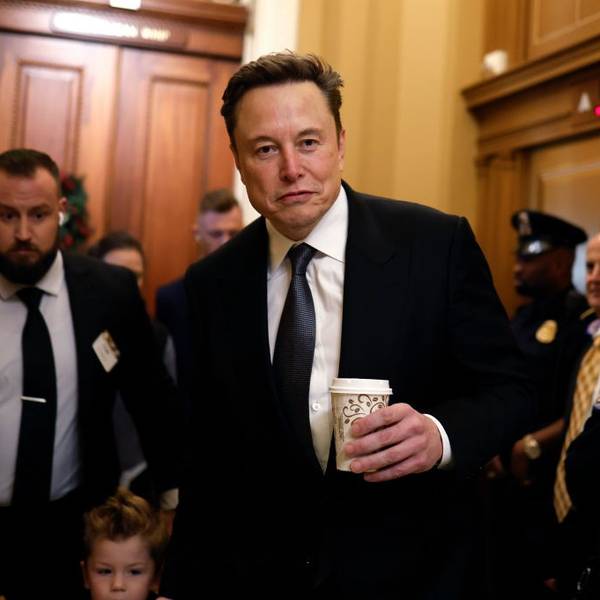
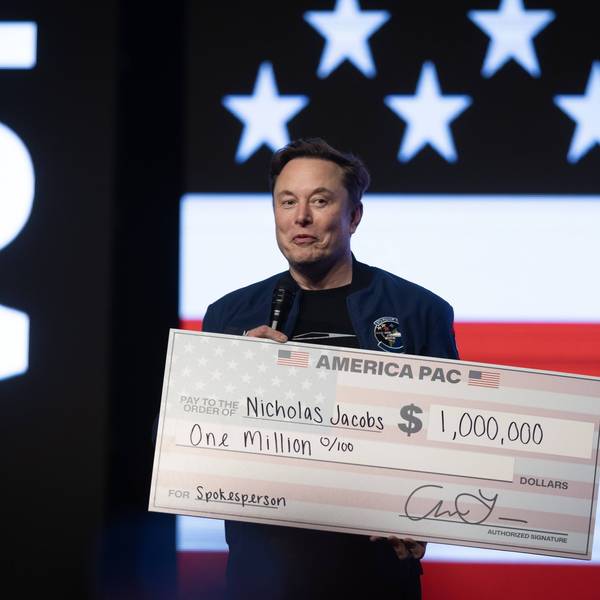
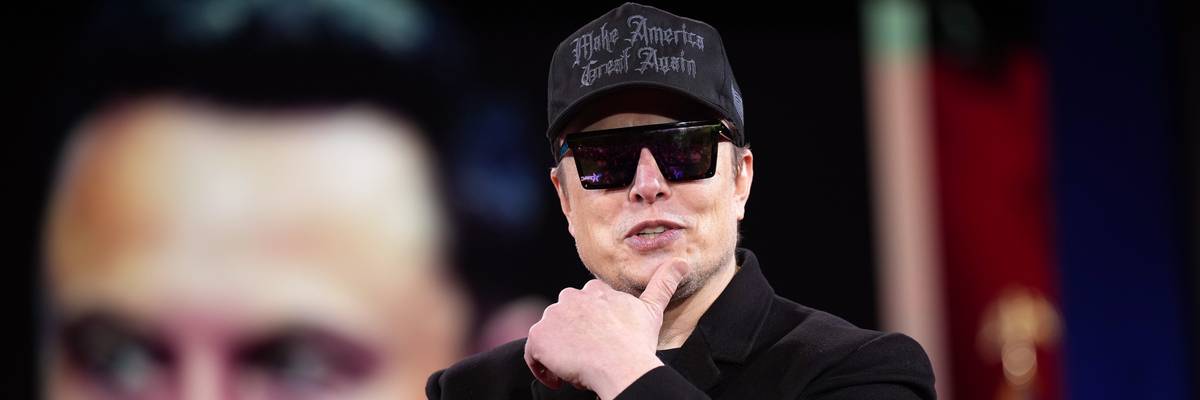
Earlier this year—while his companies held billions in government contracts—Musk played a role inside the US government running the so-called Department of Government Efficiency. DOGE fired the regulators, hollowed out the agencies, and dismantled the oversight structures that might otherwise have asked awkward questions of his own companies.
A Yale model estimated Musk’s political activities cost Tesla between one million and 1.26 million US vehicle sales as furious Americans boycotted the electric car manufacturer. He took that hit and kept going, which tells you what the access was worth to him. This is regulatory capture as a business model, dressed up as a public service.
But this is not about one man and his excessive wealth. It is systemic, and the same pattern recurs across every region.
In South Africa, the Gupta brothers spent years so deeply embedded in former President Jacob Zuma’s government that a judicial commission concluded the state itself had been captured, with cabinet appointments and contracts steered to serve private interests.
In India, Gautam Adani built one of the world’s great fortunes in lockstep with his proximity to Prime Minister Narendra Modi, winning state contracts and infrastructure concessions as his net worth soared, while those who called it crony capitalism were brushed aside.
In Mexico, Carlos Slim became one of the richest men on Earth almost overnight when the Salinas government privatized the state telephone monopoly and sold it to him, handing a public asset to a private fortune that has dominated the country’s telecoms ever since.
Billionaires are 4,000 times more likely to hold political office than ordinary citizens, and where they do not hold office outright, they buy the people who do. When wealth concentrates at this velocity, democracy is revealed as a sham.
Meanwhile, the world that produced this wealth continues as it is. The World Inequality Report, drawing on the work of 200 researchers, found that the poorest half of humanity holds barely 2% of global wealth while fewer than 60,000 people at the very top control three times as much as that entire bottom half combined.
This context cannot be separated from the Musk wealth story. The systems that funnel money upward at unbelievable speed are the same systems that underfund public health, load poor countries with debt they cannot escape, and leave communities without the basics that governments once treated as obligations.
You will be told, as you always are, that taxing extreme wealth is complicated, that capital flees, that redistribution is a blunt and dangerous tool. These arguments are made by people who would be taxed more.
A wealth tax sufficient to fund universal healthcare and education across the Global South has been modeled, costed, and proposed repeatedly. The obstacle has never been the arithmetic. It has always been the politics, and the politics is owned by the people the tax would affect.
But here is what the first trillionaire does not want you to notice. Across the same world that produced Musk’s fortune, the 99% are organizing. Carnegie’s Global Protest Tracker recorded more than 110 major anti-government protests across 70 countries in the last year. Most of them were powered by the same anger at the same rigged system.
Young people forced a tax climbdown in Kenya, brought down governments in Nepal and Madagascar, and took to the streets from Morocco to Indonesia demanding the rules be rewritten. They did it without trillion-dollar war chests. They did it themselves, alongside people like you and me, in solidarity, with an insistence that wealth concentration is not inevitable.
That movement is the counterweight to everything this moment represents. Billionaires are feeling the pressure. In May, Jeff Bezos went on CNBC to insist the tax system is crony capitalism, defend his peers against "vilification," and deny that the ultra rich avoid tax at all, the sound of a class that suddenly feels the need to argue its case in public.
Every wealth tax now argued seriously in a parliament, every billionaire levy being debated at the United Nations, every debt cancellation demand making it onto a government agenda arrived there because people organized and refused to accept the terms being set for them from above. The 1% have the money and, for now, control of the politics. The 99% have the majority, the moral case, and a growing refusal to be distracted from who is actually picking their pockets.
The 12 of June, 2026 may be the day the first trillionaire was officially minted, but it can also be the moment millions more people decide they have had enough.
We are at a crossroads
This country and this world are at a monumental crossroads. In a few short weeks, US voters will have an opportunity to beat back the forces of fascism and confront the billionaires who are rigging the economy, our media system, and our democracy, making it increasingly impossible for ordinary people to get by. We’re not just talking about the election. We’re talking about what must be done once these fascist elements are vanquished from power. We need a bolder set of solutions than what either major party has so far been willing to offer and a working-class movement ready to fight like hell for it. Trump didn't emerge from nowhere. The conditions that fueled MAGA authoritarianism were created by decades of radical neoliberal economic policies and a corrupt political system dominated by corporate interests. They slashed taxes on the super-rich, promising that the benefits would trickle down. They said giveaways to the corporate titans would make life more affordable for the rest of us. It was all bullshit. And when a bitter, betrayed populace searches for someone to blame, right-wing demagogues have little trouble finding scapegoats. People know when they're being lied to, but you won't hear any of this from the corporate media. Only independent journalism—powered and funded by people who believe in building a better world—can deliver truly trustworthy daily news. Our Fall Campaign is underway, and we need your help. To power our newsroom through the rest of the year, we need to raise $125,000 by midnight on October 31. So if you share our vision, please contribute whatever you can to sustain our work. |
Elon Musk was set to become the world’s first trillionaire Friday after the public debut of his rocket and AI company, SpaceX.
Sit with that number for a moment. A trillion dollars. If you spent a million dollars every single day, it would take you 2,700 years to spend down a trillion. It is more than the entire GDP of Argentina or Nigeria. It is a figure so large that our brains are not really equipped to process it as a real thing.
According to Oxfam, 60% of billionaire wealth globally is not “earned” in any sense of the word that you or I would recognize, but derived from inheritance, monopoly power, or crony connections.
By UBS’s own count, the great wealth transfer is accelerating, with a record $297.8 billion passing to just 91 heirs in 2025. Musk’s own wealth did not surge through some new invention, but through a private-market revaluation of SpaceX and his AI company xAI, a paper merger that pushed his net worth from $500 billion to $800 billion in just four months.
The 1% have the money and, for now, control of the politics. The 99% have the majority, the moral case, and a growing refusal to be distracted from who is actually picking their pockets.
Tesla, the engine of much of his wealth, runs on public subsidy, tax incentives, and regulatory frameworks his own companies have spent years bending into shape. Musk’s trillion does not materialize from genius. It is extracted from systems that workers built, that governments subsidized, and that the public is now invited to applaud.
Earlier this year—while his companies held billions in government contracts—Musk played a role inside the US government running the so-called Department of Government Efficiency. DOGE fired the regulators, hollowed out the agencies, and dismantled the oversight structures that might otherwise have asked awkward questions of his own companies.
A Yale model estimated Musk’s political activities cost Tesla between one million and 1.26 million US vehicle sales as furious Americans boycotted the electric car manufacturer. He took that hit and kept going, which tells you what the access was worth to him. This is regulatory capture as a business model, dressed up as a public service.
But this is not about one man and his excessive wealth. It is systemic, and the same pattern recurs across every region.
In South Africa, the Gupta brothers spent years so deeply embedded in former President Jacob Zuma’s government that a judicial commission concluded the state itself had been captured, with cabinet appointments and contracts steered to serve private interests.
In India, Gautam Adani built one of the world’s great fortunes in lockstep with his proximity to Prime Minister Narendra Modi, winning state contracts and infrastructure concessions as his net worth soared, while those who called it crony capitalism were brushed aside.
In Mexico, Carlos Slim became one of the richest men on Earth almost overnight when the Salinas government privatized the state telephone monopoly and sold it to him, handing a public asset to a private fortune that has dominated the country’s telecoms ever since.
Billionaires are 4,000 times more likely to hold political office than ordinary citizens, and where they do not hold office outright, they buy the people who do. When wealth concentrates at this velocity, democracy is revealed as a sham.
Meanwhile, the world that produced this wealth continues as it is. The World Inequality Report, drawing on the work of 200 researchers, found that the poorest half of humanity holds barely 2% of global wealth while fewer than 60,000 people at the very top control three times as much as that entire bottom half combined.
This context cannot be separated from the Musk wealth story. The systems that funnel money upward at unbelievable speed are the same systems that underfund public health, load poor countries with debt they cannot escape, and leave communities without the basics that governments once treated as obligations.
You will be told, as you always are, that taxing extreme wealth is complicated, that capital flees, that redistribution is a blunt and dangerous tool. These arguments are made by people who would be taxed more.
A wealth tax sufficient to fund universal healthcare and education across the Global South has been modeled, costed, and proposed repeatedly. The obstacle has never been the arithmetic. It has always been the politics, and the politics is owned by the people the tax would affect.
But here is what the first trillionaire does not want you to notice. Across the same world that produced Musk’s fortune, the 99% are organizing. Carnegie’s Global Protest Tracker recorded more than 110 major anti-government protests across 70 countries in the last year. Most of them were powered by the same anger at the same rigged system.
Young people forced a tax climbdown in Kenya, brought down governments in Nepal and Madagascar, and took to the streets from Morocco to Indonesia demanding the rules be rewritten. They did it without trillion-dollar war chests. They did it themselves, alongside people like you and me, in solidarity, with an insistence that wealth concentration is not inevitable.
That movement is the counterweight to everything this moment represents. Billionaires are feeling the pressure. In May, Jeff Bezos went on CNBC to insist the tax system is crony capitalism, defend his peers against "vilification," and deny that the ultra rich avoid tax at all, the sound of a class that suddenly feels the need to argue its case in public.
Every wealth tax now argued seriously in a parliament, every billionaire levy being debated at the United Nations, every debt cancellation demand making it onto a government agenda arrived there because people organized and refused to accept the terms being set for them from above. The 1% have the money and, for now, control of the politics. The 99% have the majority, the moral case, and a growing refusal to be distracted from who is actually picking their pockets.
The 12 of June, 2026 may be the day the first trillionaire was officially minted, but it can also be the moment millions more people decide they have had enough.
- As Americans Live Paycheck to Paycheck, Tesla Shareholders Approve Musk's $1 Trillion Package ›
- 'This Is OIigarchy': While Job Market Sinks, Musk Aims to Become First Trillionaire ›
- Trillionaire Welfare Baby Elon Musk Is Born! ›
- As Elon Musk Becomes a Trillionaire, Report Highlights 'Darker Realities' of His Texas SpaceX Fiefdom ›
- 'A New Pinnacle of Oligarchy': Elon Musk Poised to Become World's First Trillionaire ›
- 'Trillionaires Shouldn't Exist': Obscene Musk Milestone Spurs Calls for Aggressive Wealth Tax ›
- Opinion | The World's First Trillionaire Is a Flashing Red Light for Democracy | Common Dreams ›
Elon Musk was set to become the world’s first trillionaire Friday after the public debut of his rocket and AI company, SpaceX.
Sit with that number for a moment. A trillion dollars. If you spent a million dollars every single day, it would take you 2,700 years to spend down a trillion. It is more than the entire GDP of Argentina or Nigeria. It is a figure so large that our brains are not really equipped to process it as a real thing.
According to Oxfam, 60% of billionaire wealth globally is not “earned” in any sense of the word that you or I would recognize, but derived from inheritance, monopoly power, or crony connections.
By UBS’s own count, the great wealth transfer is accelerating, with a record $297.8 billion passing to just 91 heirs in 2025. Musk’s own wealth did not surge through some new invention, but through a private-market revaluation of SpaceX and his AI company xAI, a paper merger that pushed his net worth from $500 billion to $800 billion in just four months.
The 1% have the money and, for now, control of the politics. The 99% have the majority, the moral case, and a growing refusal to be distracted from who is actually picking their pockets.
Tesla, the engine of much of his wealth, runs on public subsidy, tax incentives, and regulatory frameworks his own companies have spent years bending into shape. Musk’s trillion does not materialize from genius. It is extracted from systems that workers built, that governments subsidized, and that the public is now invited to applaud.
Earlier this year—while his companies held billions in government contracts—Musk played a role inside the US government running the so-called Department of Government Efficiency. DOGE fired the regulators, hollowed out the agencies, and dismantled the oversight structures that might otherwise have asked awkward questions of his own companies.
A Yale model estimated Musk’s political activities cost Tesla between one million and 1.26 million US vehicle sales as furious Americans boycotted the electric car manufacturer. He took that hit and kept going, which tells you what the access was worth to him. This is regulatory capture as a business model, dressed up as a public service.
But this is not about one man and his excessive wealth. It is systemic, and the same pattern recurs across every region.
In South Africa, the Gupta brothers spent years so deeply embedded in former President Jacob Zuma’s government that a judicial commission concluded the state itself had been captured, with cabinet appointments and contracts steered to serve private interests.
In India, Gautam Adani built one of the world’s great fortunes in lockstep with his proximity to Prime Minister Narendra Modi, winning state contracts and infrastructure concessions as his net worth soared, while those who called it crony capitalism were brushed aside.
In Mexico, Carlos Slim became one of the richest men on Earth almost overnight when the Salinas government privatized the state telephone monopoly and sold it to him, handing a public asset to a private fortune that has dominated the country’s telecoms ever since.
Billionaires are 4,000 times more likely to hold political office than ordinary citizens, and where they do not hold office outright, they buy the people who do. When wealth concentrates at this velocity, democracy is revealed as a sham.
Meanwhile, the world that produced this wealth continues as it is. The World Inequality Report, drawing on the work of 200 researchers, found that the poorest half of humanity holds barely 2% of global wealth while fewer than 60,000 people at the very top control three times as much as that entire bottom half combined.
This context cannot be separated from the Musk wealth story. The systems that funnel money upward at unbelievable speed are the same systems that underfund public health, load poor countries with debt they cannot escape, and leave communities without the basics that governments once treated as obligations.
You will be told, as you always are, that taxing extreme wealth is complicated, that capital flees, that redistribution is a blunt and dangerous tool. These arguments are made by people who would be taxed more.
A wealth tax sufficient to fund universal healthcare and education across the Global South has been modeled, costed, and proposed repeatedly. The obstacle has never been the arithmetic. It has always been the politics, and the politics is owned by the people the tax would affect.
But here is what the first trillionaire does not want you to notice. Across the same world that produced Musk’s fortune, the 99% are organizing. Carnegie’s Global Protest Tracker recorded more than 110 major anti-government protests across 70 countries in the last year. Most of them were powered by the same anger at the same rigged system.
Young people forced a tax climbdown in Kenya, brought down governments in Nepal and Madagascar, and took to the streets from Morocco to Indonesia demanding the rules be rewritten. They did it without trillion-dollar war chests. They did it themselves, alongside people like you and me, in solidarity, with an insistence that wealth concentration is not inevitable.
That movement is the counterweight to everything this moment represents. Billionaires are feeling the pressure. In May, Jeff Bezos went on CNBC to insist the tax system is crony capitalism, defend his peers against "vilification," and deny that the ultra rich avoid tax at all, the sound of a class that suddenly feels the need to argue its case in public.
Every wealth tax now argued seriously in a parliament, every billionaire levy being debated at the United Nations, every debt cancellation demand making it onto a government agenda arrived there because people organized and refused to accept the terms being set for them from above. The 1% have the money and, for now, control of the politics. The 99% have the majority, the moral case, and a growing refusal to be distracted from who is actually picking their pockets.
The 12 of June, 2026 may be the day the first trillionaire was officially minted, but it can also be the moment millions more people decide they have had enough.
- As Americans Live Paycheck to Paycheck, Tesla Shareholders Approve Musk's $1 Trillion Package ›
- 'This Is OIigarchy': While Job Market Sinks, Musk Aims to Become First Trillionaire ›
- Trillionaire Welfare Baby Elon Musk Is Born! ›
- As Elon Musk Becomes a Trillionaire, Report Highlights 'Darker Realities' of His Texas SpaceX Fiefdom ›
- 'A New Pinnacle of Oligarchy': Elon Musk Poised to Become World's First Trillionaire ›
- 'Trillionaires Shouldn't Exist': Obscene Musk Milestone Spurs Calls for Aggressive Wealth Tax ›
- Opinion | The World's First Trillionaire Is a Flashing Red Light for Democracy | Common Dreams ›