5
#000000
#FFFFFF
To donate by check, phone, or other method, see our More Ways to Give page.
Daily news & progressive opinion—funded by the people, not the corporations—delivered straight to your inbox.
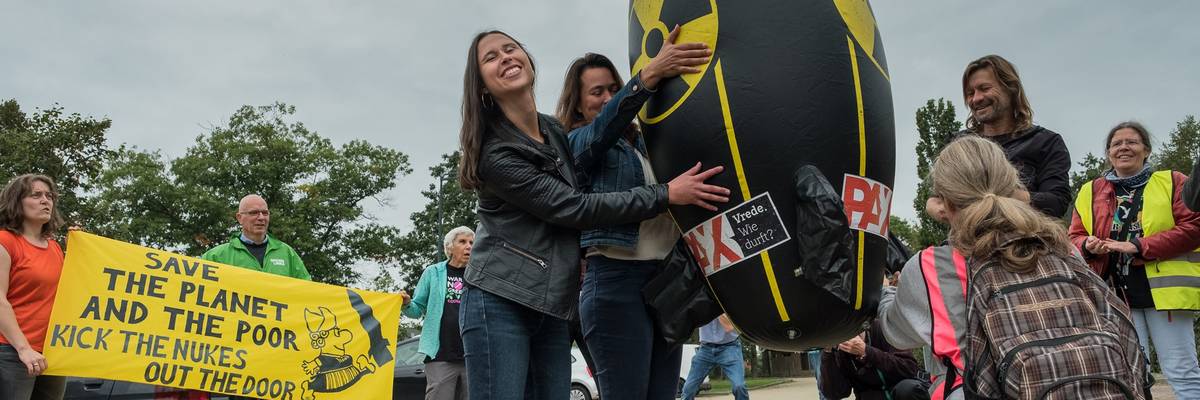
An inflatable representing a bomb is symbolically dismantled by Alexandra Muñoz, team leader of the Pax No Nukes project, during the protest against nuclear bombs on September 25, 2021 in Volkel, Netherlands.
At this time of great peril, it is also a time of great opportunity if only we will act. We know how to build these weapons, and we know how to take them apart.
On Saturday the world observes the United Nations International Day for the Total Elimination of Nuclear Weapons, known as Nuclear Weapons Elimination Day. It was first observed on September 26, 2014 subsequent to the UN Declaration in December 2013 following high-level United Nations meetings on nuclear disarmament. The day provides an opportunity to educate the public and elected officials about the benefits of eliminating nuclear weapons, as well as the humanitarian, social, and economic costs of their continued existence.
Today, our world faces the greatest threat of nuclear war with the devastating possibility of the extinction of humanity. Current nuclear arsenals have roughly 12,187 nuclear weapons, hundreds of which are on hair-trigger alert with the potential to cause the deaths of billions from the use of only this small percentage of the world’s arsenals.
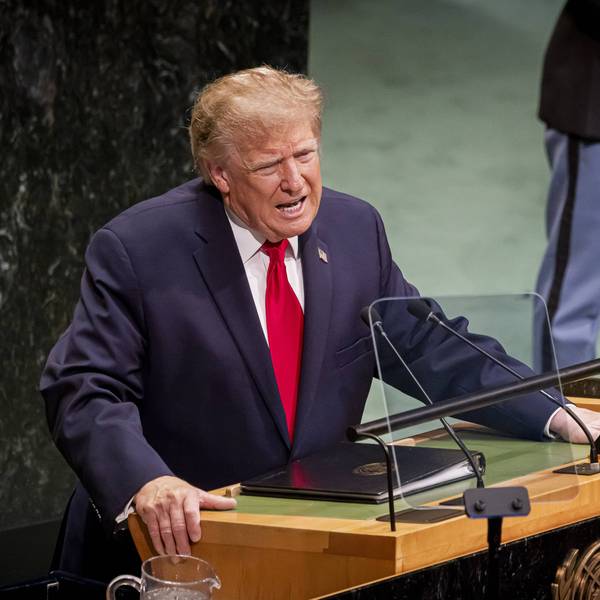
We have seen a breakdown in relationships between the largest nuclear armed states. The expiration of the New START Treaty occurred on February 5 this year. This has left the world for the first time since 1970 with no agreed-upon nuclear limitation treaty. We have witnessed reckless and immoral threats against adversaries and ultimately to all of humanity by the nuclear “superpowers,“ including US President Donald Trump’s not-so-veiled nuclear threat to annihilate Iran and its people before the world community at the UN's 81st General Assembly on Tuesday of this week. Such vitriol and illegal statements regarding the threatened use of nuclear weapons cannot be tolerated. Imagine our reaction if we heard any other nation espousing similar comments before the international community.
An informed and active citizenry must step forward and lead the way.
We have also recently acknowledged the illegal placement of weapons in space by the United States. In our technologically reliant world, the existence and potential use of such weapons threatens much of our day to day lives with the possibility of rendering technology impotent.
Each of these facts when combined with the potential for disruptive technologies, including discussions and testing of artificial intelligence in nuclear war scenarios, led the Bulletin of the Atomic Scientists to reset their famous Doomsday Clock to 85 seconds to midnight earlier this year, the closest it has been since the bombings of Hiroshima and Nagasaki 81 years ago.
The challenge to rein in these weapons seems daunting and impossible.
Yet, at this time of great peril, it is also a time of great opportunity if only we will act. We know how to build these weapons, and we know how to take them apart. We have made tremendous progress through the decades reducing global arsenals from roughly 64,000 in 1985 to the current totals. What is needed is the political will and courage.
Internationally, nuclear weapons are illegal to possess, develop, test, acquire, transfer, use, or threaten to use, by virtue of the Treaty on the Prohibition of Nuclear Weapons (TPNW), which was adopted on July 7, 2017 and entered into force on January 22, 2021. This treaty evolved from the inertia of the Treaty on the Non-Proliferation of Nuclear Weapons (NPT) with the understanding of the humanitarian consequences of even a limited war, and the refusal of the non-nuclear nations to be held hostage any longer by their nuclear counterparts. Initially adopted by 122 nations, the treaty currently has 101 nations that have signed it and 75 that have ratified it through their legislative bodies representing a majority of the world‘s population. The lion's share of effort on this treaty has been by the International Campaign to Abolish Nuclear Weapons (ICAN), recipient of the 2017 Nobel Peace Prize. ICAN is a coalition of 733 international partner organizations.
Here in the United States, a similar grassroots coalition exists called “Back From the Brink.“ This coalition includes 505 organizations encompassing every sector of society, 78 municipalities and counties, eight state legislative bodies, 594 local and state officials, 70 members of Congress through Congressional Resolutions H.Res 317 and S.Res 323, and 28 community hubs across the nation. Addressing the urgent danger of nuclear weapons, the campaign works to build awareness and support for the need to abolish these weapons coupled with the immediate actionable precautionary measures necessary to prevent nuclear war until their elimination is achieved.
As such, Back From the Brink calls on the United States to lead a global effort to prevent nuclear war. It urges the US to enact these five policy solutions:
Working with Back From the Brink is Students for Nuclear Disarmament (SND). As a national, nonpartisan, organization dedicated to raising awareness among Gen Z about the threat that nuclear weapons pose to humanity, its growing presence in high schools, colleges, and universities across the nation educates and empowers young people to take action against the growing threat of nuclear war.
To succeed in this critical effort to save humanity, we must remain informed and work to inform others. Our movement, while still barely noted by corporate media, is unstoppable and must continue to move quickly and strategically. An informed and active citizenry must step forward and lead the way. We must demand wise public officials to act immediately and move away from the brink of nuclear war.
Dear Common Dreams reader, It’s been nearly 30 years since I co-founded Common Dreams with my late wife, Lina Newhouser. We had the radical notion that journalism should serve the public good, not corporate profits. It was clear to us from the outset what it would take to build such a project. No paid advertisements. No corporate sponsors. No millionaire publisher telling us what to think or do. Many people said we wouldn't last a year, but we proved those doubters wrong. Together with a tremendous team of journalists and dedicated staff, we built an independent media outlet free from the constraints of profits and corporate control. Our mission has always been simple: To inform. To inspire. To ignite change for the common good. Building Common Dreams was not easy. Our survival was never guaranteed. When you take on the most powerful forces—Wall Street greed, fossil fuel industry destruction, Big Tech lobbyists, and uber-rich oligarchs who have spent billions upon billions rigging the economy and democracy in their favor—the only bulwark you have is supporters who believe in your work. But here’s the urgent message from me today. It's never been this bad out there. And it's never been this hard to keep us going. At the very moment Common Dreams is most needed, the threats we face are intensifying. We need your support now more than ever. We don't accept corporate advertising and never will. We don't have a paywall because we don't think people should be blocked from critical news based on their ability to pay. Everything we do is funded by the donations of readers like you. When everyone does the little they can afford, we are strong. But if that support retreats or dries up, so do we. Will you donate now to make sure Common Dreams not only survives but thrives? —Craig Brown, Co-founder |
On Saturday the world observes the United Nations International Day for the Total Elimination of Nuclear Weapons, known as Nuclear Weapons Elimination Day. It was first observed on September 26, 2014 subsequent to the UN Declaration in December 2013 following high-level United Nations meetings on nuclear disarmament. The day provides an opportunity to educate the public and elected officials about the benefits of eliminating nuclear weapons, as well as the humanitarian, social, and economic costs of their continued existence.
Today, our world faces the greatest threat of nuclear war with the devastating possibility of the extinction of humanity. Current nuclear arsenals have roughly 12,187 nuclear weapons, hundreds of which are on hair-trigger alert with the potential to cause the deaths of billions from the use of only this small percentage of the world’s arsenals.
We have seen a breakdown in relationships between the largest nuclear armed states. The expiration of the New START Treaty occurred on February 5 this year. This has left the world for the first time since 1970 with no agreed-upon nuclear limitation treaty. We have witnessed reckless and immoral threats against adversaries and ultimately to all of humanity by the nuclear “superpowers,“ including US President Donald Trump’s not-so-veiled nuclear threat to annihilate Iran and its people before the world community at the UN's 81st General Assembly on Tuesday of this week. Such vitriol and illegal statements regarding the threatened use of nuclear weapons cannot be tolerated. Imagine our reaction if we heard any other nation espousing similar comments before the international community.
An informed and active citizenry must step forward and lead the way.
We have also recently acknowledged the illegal placement of weapons in space by the United States. In our technologically reliant world, the existence and potential use of such weapons threatens much of our day to day lives with the possibility of rendering technology impotent.
Each of these facts when combined with the potential for disruptive technologies, including discussions and testing of artificial intelligence in nuclear war scenarios, led the Bulletin of the Atomic Scientists to reset their famous Doomsday Clock to 85 seconds to midnight earlier this year, the closest it has been since the bombings of Hiroshima and Nagasaki 81 years ago.
The challenge to rein in these weapons seems daunting and impossible.
Yet, at this time of great peril, it is also a time of great opportunity if only we will act. We know how to build these weapons, and we know how to take them apart. We have made tremendous progress through the decades reducing global arsenals from roughly 64,000 in 1985 to the current totals. What is needed is the political will and courage.
Internationally, nuclear weapons are illegal to possess, develop, test, acquire, transfer, use, or threaten to use, by virtue of the Treaty on the Prohibition of Nuclear Weapons (TPNW), which was adopted on July 7, 2017 and entered into force on January 22, 2021. This treaty evolved from the inertia of the Treaty on the Non-Proliferation of Nuclear Weapons (NPT) with the understanding of the humanitarian consequences of even a limited war, and the refusal of the non-nuclear nations to be held hostage any longer by their nuclear counterparts. Initially adopted by 122 nations, the treaty currently has 101 nations that have signed it and 75 that have ratified it through their legislative bodies representing a majority of the world‘s population. The lion's share of effort on this treaty has been by the International Campaign to Abolish Nuclear Weapons (ICAN), recipient of the 2017 Nobel Peace Prize. ICAN is a coalition of 733 international partner organizations.
Here in the United States, a similar grassroots coalition exists called “Back From the Brink.“ This coalition includes 505 organizations encompassing every sector of society, 78 municipalities and counties, eight state legislative bodies, 594 local and state officials, 70 members of Congress through Congressional Resolutions H.Res 317 and S.Res 323, and 28 community hubs across the nation. Addressing the urgent danger of nuclear weapons, the campaign works to build awareness and support for the need to abolish these weapons coupled with the immediate actionable precautionary measures necessary to prevent nuclear war until their elimination is achieved.
As such, Back From the Brink calls on the United States to lead a global effort to prevent nuclear war. It urges the US to enact these five policy solutions:
Working with Back From the Brink is Students for Nuclear Disarmament (SND). As a national, nonpartisan, organization dedicated to raising awareness among Gen Z about the threat that nuclear weapons pose to humanity, its growing presence in high schools, colleges, and universities across the nation educates and empowers young people to take action against the growing threat of nuclear war.
To succeed in this critical effort to save humanity, we must remain informed and work to inform others. Our movement, while still barely noted by corporate media, is unstoppable and must continue to move quickly and strategically. An informed and active citizenry must step forward and lead the way. We must demand wise public officials to act immediately and move away from the brink of nuclear war.
On Saturday the world observes the United Nations International Day for the Total Elimination of Nuclear Weapons, known as Nuclear Weapons Elimination Day. It was first observed on September 26, 2014 subsequent to the UN Declaration in December 2013 following high-level United Nations meetings on nuclear disarmament. The day provides an opportunity to educate the public and elected officials about the benefits of eliminating nuclear weapons, as well as the humanitarian, social, and economic costs of their continued existence.
Today, our world faces the greatest threat of nuclear war with the devastating possibility of the extinction of humanity. Current nuclear arsenals have roughly 12,187 nuclear weapons, hundreds of which are on hair-trigger alert with the potential to cause the deaths of billions from the use of only this small percentage of the world’s arsenals.
We have seen a breakdown in relationships between the largest nuclear armed states. The expiration of the New START Treaty occurred on February 5 this year. This has left the world for the first time since 1970 with no agreed-upon nuclear limitation treaty. We have witnessed reckless and immoral threats against adversaries and ultimately to all of humanity by the nuclear “superpowers,“ including US President Donald Trump’s not-so-veiled nuclear threat to annihilate Iran and its people before the world community at the UN's 81st General Assembly on Tuesday of this week. Such vitriol and illegal statements regarding the threatened use of nuclear weapons cannot be tolerated. Imagine our reaction if we heard any other nation espousing similar comments before the international community.
An informed and active citizenry must step forward and lead the way.
We have also recently acknowledged the illegal placement of weapons in space by the United States. In our technologically reliant world, the existence and potential use of such weapons threatens much of our day to day lives with the possibility of rendering technology impotent.
Each of these facts when combined with the potential for disruptive technologies, including discussions and testing of artificial intelligence in nuclear war scenarios, led the Bulletin of the Atomic Scientists to reset their famous Doomsday Clock to 85 seconds to midnight earlier this year, the closest it has been since the bombings of Hiroshima and Nagasaki 81 years ago.
The challenge to rein in these weapons seems daunting and impossible.
Yet, at this time of great peril, it is also a time of great opportunity if only we will act. We know how to build these weapons, and we know how to take them apart. We have made tremendous progress through the decades reducing global arsenals from roughly 64,000 in 1985 to the current totals. What is needed is the political will and courage.
Internationally, nuclear weapons are illegal to possess, develop, test, acquire, transfer, use, or threaten to use, by virtue of the Treaty on the Prohibition of Nuclear Weapons (TPNW), which was adopted on July 7, 2017 and entered into force on January 22, 2021. This treaty evolved from the inertia of the Treaty on the Non-Proliferation of Nuclear Weapons (NPT) with the understanding of the humanitarian consequences of even a limited war, and the refusal of the non-nuclear nations to be held hostage any longer by their nuclear counterparts. Initially adopted by 122 nations, the treaty currently has 101 nations that have signed it and 75 that have ratified it through their legislative bodies representing a majority of the world‘s population. The lion's share of effort on this treaty has been by the International Campaign to Abolish Nuclear Weapons (ICAN), recipient of the 2017 Nobel Peace Prize. ICAN is a coalition of 733 international partner organizations.
Here in the United States, a similar grassroots coalition exists called “Back From the Brink.“ This coalition includes 505 organizations encompassing every sector of society, 78 municipalities and counties, eight state legislative bodies, 594 local and state officials, 70 members of Congress through Congressional Resolutions H.Res 317 and S.Res 323, and 28 community hubs across the nation. Addressing the urgent danger of nuclear weapons, the campaign works to build awareness and support for the need to abolish these weapons coupled with the immediate actionable precautionary measures necessary to prevent nuclear war until their elimination is achieved.
As such, Back From the Brink calls on the United States to lead a global effort to prevent nuclear war. It urges the US to enact these five policy solutions:
Working with Back From the Brink is Students for Nuclear Disarmament (SND). As a national, nonpartisan, organization dedicated to raising awareness among Gen Z about the threat that nuclear weapons pose to humanity, its growing presence in high schools, colleges, and universities across the nation educates and empowers young people to take action against the growing threat of nuclear war.
To succeed in this critical effort to save humanity, we must remain informed and work to inform others. Our movement, while still barely noted by corporate media, is unstoppable and must continue to move quickly and strategically. An informed and active citizenry must step forward and lead the way. We must demand wise public officials to act immediately and move away from the brink of nuclear war.