5
#000000
#FFFFFF
To donate by check, phone, or other method, see our More Ways to Give page.
Daily news & progressive opinion—funded by the people, not the corporations—delivered straight to your inbox.

Despite positioning itself to the conservative center of the political spectrum in recent decades, the Democratic Party can yet build on its members' near universal call for a more muscular confrontation with Republicans and Trump.
The Democrat's 2026 midterm electoral strategy remains essentially the same as it was during the melted-down 2024 presidential election: Focus on President Donald Trump's obvious character flaws and failings rather than highlight the critical issues and offer progressive alternatives. Waiting for Trump to shoot himself in the foot is not a winning campaign strategy. Neither are abstract ideas about defending democracy and saving the nation from autocracy or fascism. Voters want practical approaches to everyday challenges of rising food costs, prohibitively expensive and inadequate health insurance, skyrocketing medical costs, exorbitant childcare and pre-K expenses, and spiraling energy pricing.
Since the last quarter of the 20th century, establishment Democrats and their leaders have slid so far to the political right that progressive, populist initiatives are undermined by fear of taxes and debt. The Democratic Party has allowed conservatives to label it as a party of spendthrift liberals and radical leftists rather than actually embracing a progressive agenda offering optimistic, creative, and constructive alternatives to the conservatives' agenda favoring the wealthy and corporations. Due to its conservative turn, moreover, Democratic leadership is decidedly reluctant to back progressive and politically aggressive Democratic candidates, as seen in the candidacies of Zohran Mamdani in New York and Graham Platner in Maine.
The political table has been so tilted toward conservative goals that the survival of the Democratic Party and popular elections itself are clearly threatened. Gerrymandering, opposing mail-in ballots, requiring stricter voter identification, confiscating state voting records and increasing the presence of security forces at polls are among the voter suppression tactics that conservatives are employing to rig the midterm and other future elections. The use of the military to confiscate ballots in the upcoming midterm elections is far from out of the question. Financing independent candidates to siphon off votes from Democratic ones is another ploy to be expected. To counter these anti-democratic tactics, Democrats must frame these challenges in practical personal terms—as corrupt means to prevent citizens from influencing policy, as ways to deny such popular initiatives as universal healthcare and control over other cost-of-living expenses. Complaining about the threat to democracy simply isn't concrete and personal enough.
Absent vociferous opposition to the conservative direction in international affairs, the Democrats also cede this critical ground to Republicans. This effectively facilitates the displacement of diplomacy by militarism as the principal approach to resolving global issues and conflicts. Without alerting and educating the American public to its profound and eminently dangerous military, political, and economic implications, the Democrats' influence here is essentially neutered. The present conflicts in the Middle East illustrate this point. Despite expressed public concern for supplying Israel with the munitions used against Palestinians in Gaza, the Democrats demurred from leveraging the removal of military support to promote a ceasefire and negotiated settlement. Neither did the party bring to the public's attention the US abandoning diplomatic negotiations with Iran in February, negotiations that were reportedly making progress on nuclear energy concerns. The combination of unrestricted military aid and disingenuous diplomacy fueled a regional war. This is a reality that must be made emphatically clear to American citizens.
Running against a personality cult and election rigging without offering hope for a better future through specific, concrete policy commitments effectively puts Democrats on the defensive and abandons the progressive populist movement in its own party.
Despite positioning itself to the conservative center of the political spectrum in recent decades, the Democratic Party can yet build on its members' near universal call for a more muscular confrontation with Republicans and Trump. One starting point is massive military spending. The disastrous domestic and global effects of US military campaigns and overall defense spending present Democrats with a historic political opportunity. To take advantage of this opportunity the party must immediately take the offensive by highlighting the deleterious impact of unparalleled military expenditures. This campaign strategy can unfold in specific ways, drawing into high relief the connection between allocating vast resources away from social programs into military coffers.
First, levels of defense spending are inversely, and critically, correlated with spending for services that profoundly impact the quality of life of the vast majority of Americans. The proposed $1.5 trillion military expenditure for 2027—a 44% increase over 2026 and more than half of the total government budget—sequesters funding that could be used for domestic purposes, programs ranging from education, public health, housing, transportation, and social services to agriculture, science, and environmental protection. This comparison highlights the distorted priorities of the nation and directly relates to the jaundiced attitude toward the federal government and the disaffection of large swaths of American voters. It further counters the impact of disinformation and misinformation that aggravate divisions and suspicions fueled by negative propaganda and conspiracy rhetoric promoted by the Trump administration.
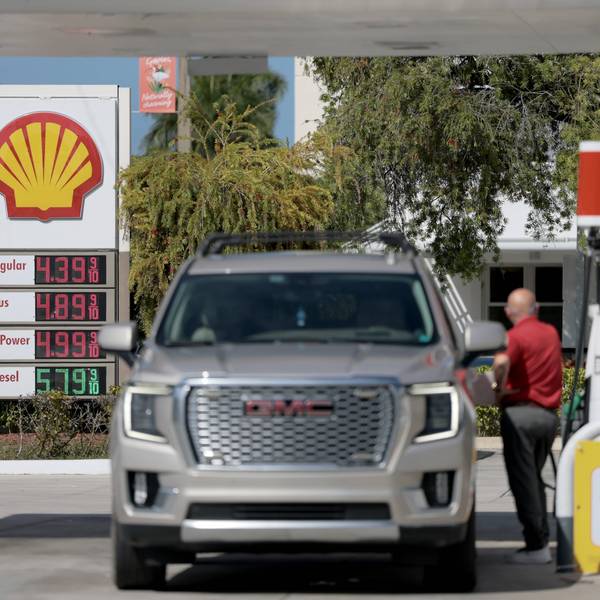
Second, heavy defense spending and military confrontation and conflict contribute to global economic and political instability beyond the devastating human suffering inflicted by military tactics and war. This course blazes a treacherous path that violates human rights and international law, fraying alliances and degrading the country's respect and reputation internationally. The escalation of military exchanges and strategies that Iran and the US are pursuing in the Strait of Hormuz signify not only the destructive international impact but also the extensive domestic economic stress it thrusts on Americans. The price of gasoline and its broad inflationary effect are prime examples. Defense spending drives up national debt with minimal social benefit. While military expenditure does provide jobs in the defense industry, a portion of savings resulting from limiting military spending can be used to retrain displaced workers for new high-paying employment in renewable energy and other industries the government could incentivize, industries where workers and their unions could be protected by statutory law.
Third, and amply illustrated by the militarized standoff in the Gulf of Hormuz, the Iran War is strengthening American economic competitors while splintering alliances with nations now losing confidence in US military and commercial relations. Fearful of the impulsive, unreliable posturing and military aggression of the Trump administration, countries in various regions of the world are forging commercial relations with China. Moreover, Beijing's massive investment in improving and producing renewable energy and its delivery—a strategic market position the current administration and its congressional supporters have ceded to the Chinese—is a wise and calculated enterprise. This investment displaces future scientific, technological, and commercial development in this country, further restricting employment and scientific investment in a growing sustainable energy source. At the same time, the progressive shift from oil and gas to renewable fuels may redirect international finance based in Wall Street to direct and indirect investment in economic expansion in China and in parts of the world that adopt and eventually depend on Chinese technology.
Last, the enormous investment in defense is not justified relative to defense spending worldwide. The US spends more on defense than the next six countries combined—three times as much as China and five times as much as Russia. With an over 40% boost in next year's military budget the disparity in military expenditures will even widen the military spending gap between America and other countries. Given the many social needs in this country and the military's aggressive engagement in projecting its power, enormous resources heedlessly dedicated to the military undermines quality of life across the nation and is simply unsustainable. Favoring diplomacy over military action, moreover, brings greater stability to international relations, reduces unnecessary military expenditures, and, in turn, can redirect funds to investment in international commercial relations to spur sustainable domestic economic growth.
As this brief examination of America's misplaced priorities demonstrates, the Democrats not only have clear opportunities to undermine the false narratives of the present administration and its supporters, they also have the public responsibility to do so. A similarly focused, analytical, and expansive argument may be made with tax cuts for the wealthy, with the severe personnel reductions at the Centers for Disease Control and Prevention and elsewhere, and with myriad other issues. These campaign arguments should be, moreover, framed as national security threats.
Squandering such a political opportunity and advantage will weaken the party overall. It further undercuts the groundwork laid by local party members—through demonstrations and campaigns to increase voter turnout—by ignoring local calls for a more aggressive campaign strategy that directly challenges Republicans and offers sustainable social, economic, and environmental policies.
The party should not wait for a wave of nationalism to be ginned up in the wake of a specious “deal” with Iran or for an “October surprise” like the sudden discovery of funds to help pay Americans' medical bills. Running against a personality cult and election rigging without offering hope for a better future through specific, concrete policy commitments effectively puts Democrats on the defensive and abandons the progressive populist movement in its own party, sacrificing forward-thinking and future planning to backward-thinking and complacency. This is a losing proposition in the short-term and long-term future. It not only erodes the power of the vote but it will also alienate millions more Americans at a time when creative, constructive leadership and citizen engagement are imperative to meet the existential social, economic, and ecological challenges of the coming years and decades.
Dear Common Dreams reader, It’s been nearly 30 years since I co-founded Common Dreams with my late wife, Lina Newhouser. We had the radical notion that journalism should serve the public good, not corporate profits. It was clear to us from the outset what it would take to build such a project. No paid advertisements. No corporate sponsors. No millionaire publisher telling us what to think or do. Many people said we wouldn't last a year, but we proved those doubters wrong. Together with a tremendous team of journalists and dedicated staff, we built an independent media outlet free from the constraints of profits and corporate control. Our mission has always been simple: To inform. To inspire. To ignite change for the common good. Building Common Dreams was not easy. Our survival was never guaranteed. When you take on the most powerful forces—Wall Street greed, fossil fuel industry destruction, Big Tech lobbyists, and uber-rich oligarchs who have spent billions upon billions rigging the economy and democracy in their favor—the only bulwark you have is supporters who believe in your work. But here’s the urgent message from me today. It's never been this bad out there. And it's never been this hard to keep us going. At the very moment Common Dreams is most needed, the threats we face are intensifying. We need your support now more than ever. We don't accept corporate advertising and never will. We don't have a paywall because we don't think people should be blocked from critical news based on their ability to pay. Everything we do is funded by the donations of readers like you. When everyone does the little they can afford, we are strong. But if that support retreats or dries up, so do we. Will you donate now to make sure Common Dreams not only survives but thrives? —Craig Brown, Co-founder |
The Democrat's 2026 midterm electoral strategy remains essentially the same as it was during the melted-down 2024 presidential election: Focus on President Donald Trump's obvious character flaws and failings rather than highlight the critical issues and offer progressive alternatives. Waiting for Trump to shoot himself in the foot is not a winning campaign strategy. Neither are abstract ideas about defending democracy and saving the nation from autocracy or fascism. Voters want practical approaches to everyday challenges of rising food costs, prohibitively expensive and inadequate health insurance, skyrocketing medical costs, exorbitant childcare and pre-K expenses, and spiraling energy pricing.
Since the last quarter of the 20th century, establishment Democrats and their leaders have slid so far to the political right that progressive, populist initiatives are undermined by fear of taxes and debt. The Democratic Party has allowed conservatives to label it as a party of spendthrift liberals and radical leftists rather than actually embracing a progressive agenda offering optimistic, creative, and constructive alternatives to the conservatives' agenda favoring the wealthy and corporations. Due to its conservative turn, moreover, Democratic leadership is decidedly reluctant to back progressive and politically aggressive Democratic candidates, as seen in the candidacies of Zohran Mamdani in New York and Graham Platner in Maine.
The political table has been so tilted toward conservative goals that the survival of the Democratic Party and popular elections itself are clearly threatened. Gerrymandering, opposing mail-in ballots, requiring stricter voter identification, confiscating state voting records and increasing the presence of security forces at polls are among the voter suppression tactics that conservatives are employing to rig the midterm and other future elections. The use of the military to confiscate ballots in the upcoming midterm elections is far from out of the question. Financing independent candidates to siphon off votes from Democratic ones is another ploy to be expected. To counter these anti-democratic tactics, Democrats must frame these challenges in practical personal terms—as corrupt means to prevent citizens from influencing policy, as ways to deny such popular initiatives as universal healthcare and control over other cost-of-living expenses. Complaining about the threat to democracy simply isn't concrete and personal enough.
Absent vociferous opposition to the conservative direction in international affairs, the Democrats also cede this critical ground to Republicans. This effectively facilitates the displacement of diplomacy by militarism as the principal approach to resolving global issues and conflicts. Without alerting and educating the American public to its profound and eminently dangerous military, political, and economic implications, the Democrats' influence here is essentially neutered. The present conflicts in the Middle East illustrate this point. Despite expressed public concern for supplying Israel with the munitions used against Palestinians in Gaza, the Democrats demurred from leveraging the removal of military support to promote a ceasefire and negotiated settlement. Neither did the party bring to the public's attention the US abandoning diplomatic negotiations with Iran in February, negotiations that were reportedly making progress on nuclear energy concerns. The combination of unrestricted military aid and disingenuous diplomacy fueled a regional war. This is a reality that must be made emphatically clear to American citizens.
Running against a personality cult and election rigging without offering hope for a better future through specific, concrete policy commitments effectively puts Democrats on the defensive and abandons the progressive populist movement in its own party.
Despite positioning itself to the conservative center of the political spectrum in recent decades, the Democratic Party can yet build on its members' near universal call for a more muscular confrontation with Republicans and Trump. One starting point is massive military spending. The disastrous domestic and global effects of US military campaigns and overall defense spending present Democrats with a historic political opportunity. To take advantage of this opportunity the party must immediately take the offensive by highlighting the deleterious impact of unparalleled military expenditures. This campaign strategy can unfold in specific ways, drawing into high relief the connection between allocating vast resources away from social programs into military coffers.
First, levels of defense spending are inversely, and critically, correlated with spending for services that profoundly impact the quality of life of the vast majority of Americans. The proposed $1.5 trillion military expenditure for 2027—a 44% increase over 2026 and more than half of the total government budget—sequesters funding that could be used for domestic purposes, programs ranging from education, public health, housing, transportation, and social services to agriculture, science, and environmental protection. This comparison highlights the distorted priorities of the nation and directly relates to the jaundiced attitude toward the federal government and the disaffection of large swaths of American voters. It further counters the impact of disinformation and misinformation that aggravate divisions and suspicions fueled by negative propaganda and conspiracy rhetoric promoted by the Trump administration.
Second, heavy defense spending and military confrontation and conflict contribute to global economic and political instability beyond the devastating human suffering inflicted by military tactics and war. This course blazes a treacherous path that violates human rights and international law, fraying alliances and degrading the country's respect and reputation internationally. The escalation of military exchanges and strategies that Iran and the US are pursuing in the Strait of Hormuz signify not only the destructive international impact but also the extensive domestic economic stress it thrusts on Americans. The price of gasoline and its broad inflationary effect are prime examples. Defense spending drives up national debt with minimal social benefit. While military expenditure does provide jobs in the defense industry, a portion of savings resulting from limiting military spending can be used to retrain displaced workers for new high-paying employment in renewable energy and other industries the government could incentivize, industries where workers and their unions could be protected by statutory law.
Third, and amply illustrated by the militarized standoff in the Gulf of Hormuz, the Iran War is strengthening American economic competitors while splintering alliances with nations now losing confidence in US military and commercial relations. Fearful of the impulsive, unreliable posturing and military aggression of the Trump administration, countries in various regions of the world are forging commercial relations with China. Moreover, Beijing's massive investment in improving and producing renewable energy and its delivery—a strategic market position the current administration and its congressional supporters have ceded to the Chinese—is a wise and calculated enterprise. This investment displaces future scientific, technological, and commercial development in this country, further restricting employment and scientific investment in a growing sustainable energy source. At the same time, the progressive shift from oil and gas to renewable fuels may redirect international finance based in Wall Street to direct and indirect investment in economic expansion in China and in parts of the world that adopt and eventually depend on Chinese technology.
Last, the enormous investment in defense is not justified relative to defense spending worldwide. The US spends more on defense than the next six countries combined—three times as much as China and five times as much as Russia. With an over 40% boost in next year's military budget the disparity in military expenditures will even widen the military spending gap between America and other countries. Given the many social needs in this country and the military's aggressive engagement in projecting its power, enormous resources heedlessly dedicated to the military undermines quality of life across the nation and is simply unsustainable. Favoring diplomacy over military action, moreover, brings greater stability to international relations, reduces unnecessary military expenditures, and, in turn, can redirect funds to investment in international commercial relations to spur sustainable domestic economic growth.
As this brief examination of America's misplaced priorities demonstrates, the Democrats not only have clear opportunities to undermine the false narratives of the present administration and its supporters, they also have the public responsibility to do so. A similarly focused, analytical, and expansive argument may be made with tax cuts for the wealthy, with the severe personnel reductions at the Centers for Disease Control and Prevention and elsewhere, and with myriad other issues. These campaign arguments should be, moreover, framed as national security threats.
Squandering such a political opportunity and advantage will weaken the party overall. It further undercuts the groundwork laid by local party members—through demonstrations and campaigns to increase voter turnout—by ignoring local calls for a more aggressive campaign strategy that directly challenges Republicans and offers sustainable social, economic, and environmental policies.
The party should not wait for a wave of nationalism to be ginned up in the wake of a specious “deal” with Iran or for an “October surprise” like the sudden discovery of funds to help pay Americans' medical bills. Running against a personality cult and election rigging without offering hope for a better future through specific, concrete policy commitments effectively puts Democrats on the defensive and abandons the progressive populist movement in its own party, sacrificing forward-thinking and future planning to backward-thinking and complacency. This is a losing proposition in the short-term and long-term future. It not only erodes the power of the vote but it will also alienate millions more Americans at a time when creative, constructive leadership and citizen engagement are imperative to meet the existential social, economic, and ecological challenges of the coming years and decades.
The Democrat's 2026 midterm electoral strategy remains essentially the same as it was during the melted-down 2024 presidential election: Focus on President Donald Trump's obvious character flaws and failings rather than highlight the critical issues and offer progressive alternatives. Waiting for Trump to shoot himself in the foot is not a winning campaign strategy. Neither are abstract ideas about defending democracy and saving the nation from autocracy or fascism. Voters want practical approaches to everyday challenges of rising food costs, prohibitively expensive and inadequate health insurance, skyrocketing medical costs, exorbitant childcare and pre-K expenses, and spiraling energy pricing.
Since the last quarter of the 20th century, establishment Democrats and their leaders have slid so far to the political right that progressive, populist initiatives are undermined by fear of taxes and debt. The Democratic Party has allowed conservatives to label it as a party of spendthrift liberals and radical leftists rather than actually embracing a progressive agenda offering optimistic, creative, and constructive alternatives to the conservatives' agenda favoring the wealthy and corporations. Due to its conservative turn, moreover, Democratic leadership is decidedly reluctant to back progressive and politically aggressive Democratic candidates, as seen in the candidacies of Zohran Mamdani in New York and Graham Platner in Maine.
The political table has been so tilted toward conservative goals that the survival of the Democratic Party and popular elections itself are clearly threatened. Gerrymandering, opposing mail-in ballots, requiring stricter voter identification, confiscating state voting records and increasing the presence of security forces at polls are among the voter suppression tactics that conservatives are employing to rig the midterm and other future elections. The use of the military to confiscate ballots in the upcoming midterm elections is far from out of the question. Financing independent candidates to siphon off votes from Democratic ones is another ploy to be expected. To counter these anti-democratic tactics, Democrats must frame these challenges in practical personal terms—as corrupt means to prevent citizens from influencing policy, as ways to deny such popular initiatives as universal healthcare and control over other cost-of-living expenses. Complaining about the threat to democracy simply isn't concrete and personal enough.
Absent vociferous opposition to the conservative direction in international affairs, the Democrats also cede this critical ground to Republicans. This effectively facilitates the displacement of diplomacy by militarism as the principal approach to resolving global issues and conflicts. Without alerting and educating the American public to its profound and eminently dangerous military, political, and economic implications, the Democrats' influence here is essentially neutered. The present conflicts in the Middle East illustrate this point. Despite expressed public concern for supplying Israel with the munitions used against Palestinians in Gaza, the Democrats demurred from leveraging the removal of military support to promote a ceasefire and negotiated settlement. Neither did the party bring to the public's attention the US abandoning diplomatic negotiations with Iran in February, negotiations that were reportedly making progress on nuclear energy concerns. The combination of unrestricted military aid and disingenuous diplomacy fueled a regional war. This is a reality that must be made emphatically clear to American citizens.
Running against a personality cult and election rigging without offering hope for a better future through specific, concrete policy commitments effectively puts Democrats on the defensive and abandons the progressive populist movement in its own party.
Despite positioning itself to the conservative center of the political spectrum in recent decades, the Democratic Party can yet build on its members' near universal call for a more muscular confrontation with Republicans and Trump. One starting point is massive military spending. The disastrous domestic and global effects of US military campaigns and overall defense spending present Democrats with a historic political opportunity. To take advantage of this opportunity the party must immediately take the offensive by highlighting the deleterious impact of unparalleled military expenditures. This campaign strategy can unfold in specific ways, drawing into high relief the connection between allocating vast resources away from social programs into military coffers.
First, levels of defense spending are inversely, and critically, correlated with spending for services that profoundly impact the quality of life of the vast majority of Americans. The proposed $1.5 trillion military expenditure for 2027—a 44% increase over 2026 and more than half of the total government budget—sequesters funding that could be used for domestic purposes, programs ranging from education, public health, housing, transportation, and social services to agriculture, science, and environmental protection. This comparison highlights the distorted priorities of the nation and directly relates to the jaundiced attitude toward the federal government and the disaffection of large swaths of American voters. It further counters the impact of disinformation and misinformation that aggravate divisions and suspicions fueled by negative propaganda and conspiracy rhetoric promoted by the Trump administration.
Second, heavy defense spending and military confrontation and conflict contribute to global economic and political instability beyond the devastating human suffering inflicted by military tactics and war. This course blazes a treacherous path that violates human rights and international law, fraying alliances and degrading the country's respect and reputation internationally. The escalation of military exchanges and strategies that Iran and the US are pursuing in the Strait of Hormuz signify not only the destructive international impact but also the extensive domestic economic stress it thrusts on Americans. The price of gasoline and its broad inflationary effect are prime examples. Defense spending drives up national debt with minimal social benefit. While military expenditure does provide jobs in the defense industry, a portion of savings resulting from limiting military spending can be used to retrain displaced workers for new high-paying employment in renewable energy and other industries the government could incentivize, industries where workers and their unions could be protected by statutory law.
Third, and amply illustrated by the militarized standoff in the Gulf of Hormuz, the Iran War is strengthening American economic competitors while splintering alliances with nations now losing confidence in US military and commercial relations. Fearful of the impulsive, unreliable posturing and military aggression of the Trump administration, countries in various regions of the world are forging commercial relations with China. Moreover, Beijing's massive investment in improving and producing renewable energy and its delivery—a strategic market position the current administration and its congressional supporters have ceded to the Chinese—is a wise and calculated enterprise. This investment displaces future scientific, technological, and commercial development in this country, further restricting employment and scientific investment in a growing sustainable energy source. At the same time, the progressive shift from oil and gas to renewable fuels may redirect international finance based in Wall Street to direct and indirect investment in economic expansion in China and in parts of the world that adopt and eventually depend on Chinese technology.
Last, the enormous investment in defense is not justified relative to defense spending worldwide. The US spends more on defense than the next six countries combined—three times as much as China and five times as much as Russia. With an over 40% boost in next year's military budget the disparity in military expenditures will even widen the military spending gap between America and other countries. Given the many social needs in this country and the military's aggressive engagement in projecting its power, enormous resources heedlessly dedicated to the military undermines quality of life across the nation and is simply unsustainable. Favoring diplomacy over military action, moreover, brings greater stability to international relations, reduces unnecessary military expenditures, and, in turn, can redirect funds to investment in international commercial relations to spur sustainable domestic economic growth.
As this brief examination of America's misplaced priorities demonstrates, the Democrats not only have clear opportunities to undermine the false narratives of the present administration and its supporters, they also have the public responsibility to do so. A similarly focused, analytical, and expansive argument may be made with tax cuts for the wealthy, with the severe personnel reductions at the Centers for Disease Control and Prevention and elsewhere, and with myriad other issues. These campaign arguments should be, moreover, framed as national security threats.
Squandering such a political opportunity and advantage will weaken the party overall. It further undercuts the groundwork laid by local party members—through demonstrations and campaigns to increase voter turnout—by ignoring local calls for a more aggressive campaign strategy that directly challenges Republicans and offers sustainable social, economic, and environmental policies.
The party should not wait for a wave of nationalism to be ginned up in the wake of a specious “deal” with Iran or for an “October surprise” like the sudden discovery of funds to help pay Americans' medical bills. Running against a personality cult and election rigging without offering hope for a better future through specific, concrete policy commitments effectively puts Democrats on the defensive and abandons the progressive populist movement in its own party, sacrificing forward-thinking and future planning to backward-thinking and complacency. This is a losing proposition in the short-term and long-term future. It not only erodes the power of the vote but it will also alienate millions more Americans at a time when creative, constructive leadership and citizen engagement are imperative to meet the existential social, economic, and ecological challenges of the coming years and decades.