December, 04 2025, 08:52am EDT

CDC’s Out of Touch Advisory Committee on Immunization Practices Poised to Undermine Childhood Vaccination Schedule
The Advisory Committee on Immunization Practices (ACIP) at the Centers for Disease Control and Prevention (CDC) is meeting today and Friday to discuss and vote on the hepatitis B vaccine and to consider sweeping changes to the childhood/adolescent immunization schedule, among other matters. Reports suggest that the ACIP will recommend delaying a birth dose of the hepatitis B vaccine that has been routinely administered to newborns for years. An independent evidence review released on Tuesday found “no benefit related to vaccine safety or protection of a delayed first dose [of the hepatitis B vaccine] compared with vaccination at birth.” At present, the CDC recommends the first dose of the hepatitis B vaccine at birth, with subsequent doses at one or two months and between six and 18 months of age. Dr. Robert Steinbrook, Health Research Group Director at Public Citizen, issued the following statement:
“Delaying a birth dose of the hepatitis B vaccine is a public health tragedy in the making. For 35 years, vaccination at birth has protected millions of newborns against the potentially deadly hepatitis B virus. Although thousands of infants are born each year to women with hepatitis B virus infection, about one in five pregnant women in the U.S. do not receive hepatitis B testing and a third of women who test positive do not receive recommended follow-up care.
“Pushing back the first dose of this safe and effective vaccine means that fewer infants will be vaccinated. Unvaccinated children will be vulnerable to undiagnosed infection in their mothers and exposure to the virus after birth, and some will develop chronic hepatitis B infection and life-threatening liver disease.
“Undermining the childhood immunization schedule because of unfounded beliefs about the safety of vaccines is a senseless assault on public health that will only lead to entirely preventable disease outbreaks in the years ahead.”
Public Citizen is a nonprofit consumer advocacy organization that champions the public interest in the halls of power. We defend democracy, resist corporate power and work to ensure that government works for the people - not for big corporations. Founded in 1971, we now have 500,000 members and supporters throughout the country.
(202) 588-1000LATEST NEWS
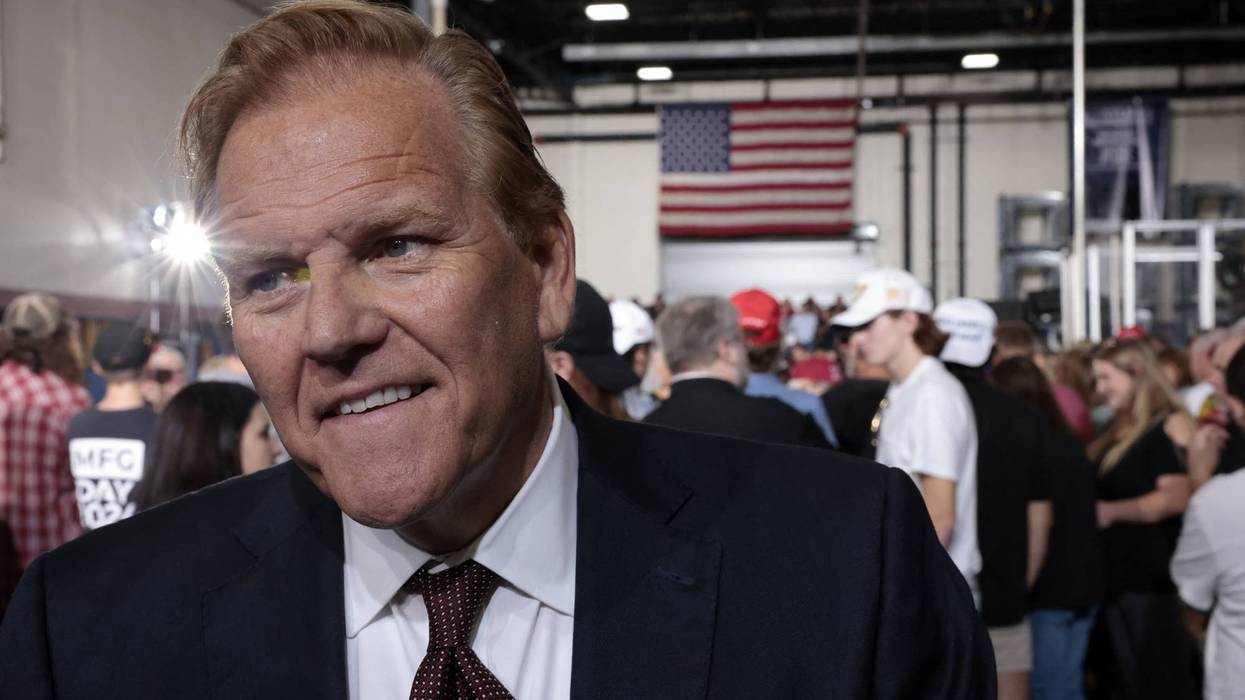
'A Vote for Rogers Is a Vote for the Trump Agenda' Says El-Sayed as Rogers Hedges in Interview
Appearing on NBC's "Meet the Press" on Sunday, Michigan Republican Senate candidate Mike Rogers twice dodged questions about his support for President Donald Trump and the MAGA movement.
Oct 25, 2026
In another indication that the cratering popularity of President Donald Trump and his policies is making GOP midterm candidates nervous, Michigan Republican Senate candidate Mike Rogers stammered before saying there was something wrong with his earpiece when asked if a vote for him was "a vote for the Trump agenda."
The moment came during an interview with Kristin Welker on NBC's "Meet the Press" Sunday morning.
"I'm apologizing, I'm having some difficulty in my earpiece, but, 'Is a vote for you...' I'm not sure, I'll tell you what a vote for me is, it's a great day for the state of Michigan," Rogers said.
His midterm opponent, Democratic Michigan Senate candidate Dr. Abdul El-Sayed, shot back on social media: "Lemme pick that up for him: Yes, yes it is. A vote for Rogers is a vote for the Trump agenda."
Lemme pick that up for him: Yes, yes it is. A vote for Rogers is a vote for the Trump agenda.
— Dr. Abdul El-Sayed (@AbdulElSayed) October 25, 2026
Throughout the interview, Rogers hedged on his relationship to the president and the MAGA movement that put him in power. In his extended answer to the first question, he mentioned that there were things that he disagreed with Trump on, namely some of the Canadian tariffs and the Iran War, but argued that a Republican majority was better placed to "work with" Trump on those issues rather than "just go back to poke him in the eye." He did not say why a Republican Congress had not been able to make progress on either ending the war or mitigating the tariffs to date.
However, when Welker then asked him if he would vote to repeal some of Trump's tariffs, Rogers also sidestepped the question, saying, "The best way to do this is walk in and say, 'Can we work this out?'"
Toward the end of the same interview, Rogers also would not answer directly when Welker asked, "Big picture: Do you consider yourself to be a MAGA Republican?"
Rogers responded by calling the question "a little bit disgusting" and spending the rest of the interview talking over Welker about Democrats who had told him they would not vote for his opponent El-Sayed.
Oh my goodness -- for nearly 3 minutes, Mike Rogers refuses to answer Kristen Welker's repeated questions about if he considers himself to be "a MAGA Republican" https://t.co/q4uSP5hgam
— Aaron Rupar (@atrupar) October 25, 2026
"He’s too afraid to admit he’s a MAGA Republican and he’s too afraid to admit he’s not," writer and director Andy Ostroy wrote on social media. "Mike Rogers is a weak, feckless coward who has nothing to offer Michiganders except outrageously racist lies about @AbdulElSayed, and the good people of Michigan know it. Which is why Abdul is going to win…"
Rogers' flailing came days after Trump's net approval ratings fell to a new career low of 31%, according to Reuters/Ipsos polling.
Social media account The Measured Take noted that "Mike Rogers has tied himself to Donald Trump for years. With nine days until the election and Trump’s approval rating in the low 30s, he sees the writing on the wall and is trying to distance himself."
The interview reflects a growing trend of Republican midterm candidates tepidly and belatedly criticizing some of Trump's policies, especially the war with Iran, without taking any real action to back up their words.
El-Sayed had previously slammed Rogers for reversing course on the war in late September.
“You’ve spent your entire campaign supporting the war in Iran," he said. "Liar, coward, fraud.”
Keep ReadingShow Less
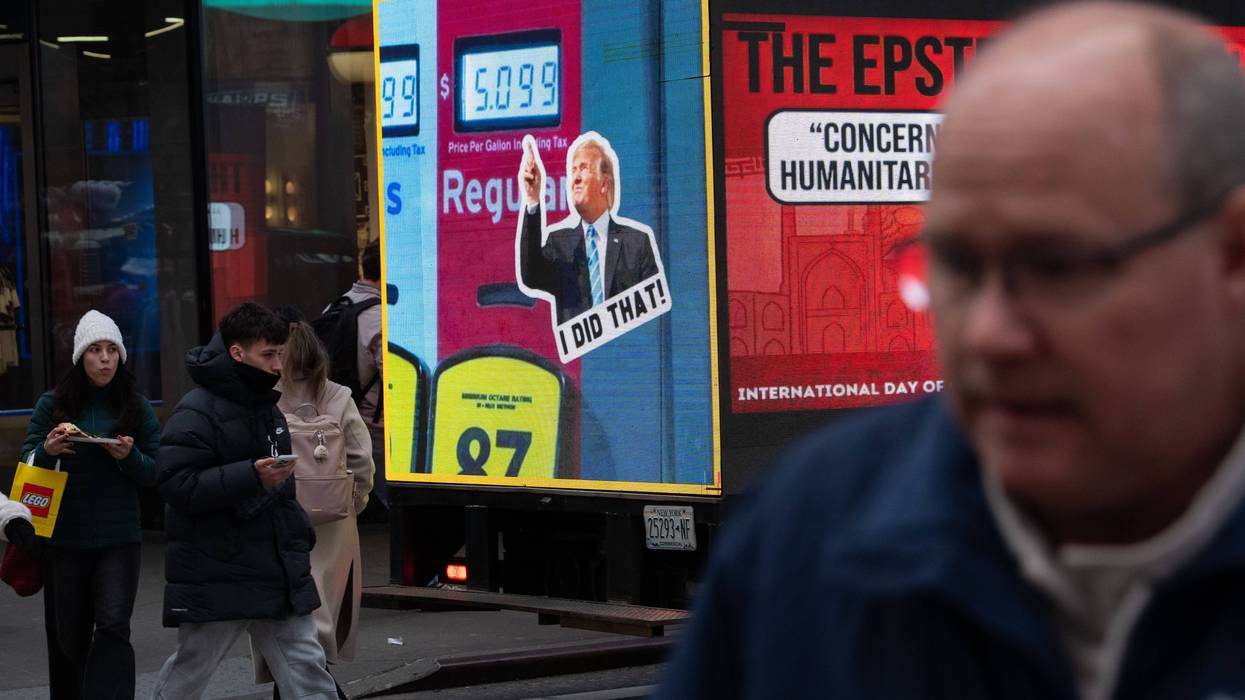
'Just Run This as an Ad': Trump Dismisses Pump Pain to Boast of Oil and Gas Profits
"I don't give a damn, I'm going to say it: We're making a freaking fortune," the president said at a rally in Georgia.
Oct 25, 2026
If there was any doubt, President Donald Trump made it very clear Saturday evening that he cares more about wealthy oil and gas executives than ordinary people.
During a midterm campaign rally in Perry, Georgia, Trump acknowledged the high price of oil and gas, but said that the US fossil fuel industry was "making hundreds of billions of dollars."
His advisers, he told the crowd, had instructed him not to mention this "because people are paying a little higher," he said in a condescending voice. "That number's going to come way down," he continued, "but what we've done for this country, we're making money like this country has never made before," seemingly conflating the fortunes of wealthy oil and gas companies with the US as a whole.
TRUMP on HIGH GAS PRICES: We’re making money like we’ve never made before. They’ll say: President Trump is bragging about all the money they're making while people are suffering at the pump. I don’t give a damn. We’re making a freaking fortune. https://t.co/KZ2pYsTPyR
— Acyn (@Acyn) October 25, 2026
"Trump to people who want lower gas prices: 'Fuck you, I’m making money!'" Melanie D'Arrigo, the executive director of the Campaign for New York Health, posted on social media. "Just run this as an ad."
Nation writer Jeet Heer made a similar point, saying that Trump's remarks were an "amazing closing argument—for the Democrats. They just need to run this clip."
Drop Site News reporter Ryan Grim noted the tone of Trump's voice.
"Trump here does a widdle baby voice to mock people who are complaining about high gas prices, explaining that the oil and gas industry is making 'hundreds of billions, trillions,'" Grim wrote on social media. "It’s never been clearer how much he hates the people who voted for him."
"Like the epigraph for the entire Trump 2.0 presidency: 'I don’t give a damn. We’re making a fortune.'"
Trump seemed to anticipate a negative reaction to his statement, which echoed similar points he had made at a rally in Arizona over a week before.
"I can just see the fake headlines," he said. "President Trump is talking about all the money they're making while people are suffering at the pump. That will be the headline. But I said, I don't give a damn, I'm going to say it: We're making a freaking fortune."
Yet his supposedly fake headline is just a factual restatement of his own words.
It is true that major oil companies have made a killing from the Iran War, with ExxonMobil and Chevron reporting combined second-quarter profits for 2026 of $26.5 billion. This has been good for Trump, who owns stock in oil companies that has made him between $1.5 million and $4.4 million richer since the illegal war he started. However, this windfall has not reached ordinary Americans, who have spent around $1,100 per household in additional gas and diesel costs since the war began, according to the running Iran War Energy Cost Tracker maintained by the Watson School of International and Public Affairs and the Climate Solutions Lab at Brown University.
In fact, and in contradiction to Trump's boasting of shared American prosperity, Big Oil's windfall exists because of consumer suffering, as Climate Solutions Lab director Jeff Colgan pointed out.
“The profits for Big Oil are huge, and they are coming straight out of the pockets of American consumers at a time when many people are feeling the pinch,” Colgan told HuffPost on Tuesday.
Ron Filipkowski, editor in chief at MediasTouch, also noted the divide between the wealthy few benefiting from Trump's policies and everyone else when responding to Trump's remarks on Saturday.
"We are making the oil oligarchs rich. We are making Trump and his cronies rich. It is literally at our expense every day. There’s no trickling down happening. And Trump is bragging about it knowing nobody in the Republican Party will stand up to him and say enough," he wrote on social media.
New Yorker writer Susan Glasser said Saturday's statement was "like the epigraph for the entire Trump 2.0 presidency: 'I don’t give a damn. We’re making a fortune.'"
Jamie Henn, the director of Fossil Free Media, clarified on Sunday what Trump meant when he said "we."
"When Trump says 'we' are making money he doesn’t mean you, me, or the United States. He means Exxon, Chevron, and his other Big Oil donors," Henn wrote on social media.
In a separate post, however, he offered a policy solution that would actually benefit the majority of Americans.
"A Big Oil Windfall Profits Tax could return thousands of dollars to families who are struggling most to pay for fuel at the pump," he wrote.
Sen. Bernie Sanders (I-Vt.) also weighed in on Sunday:
"Trump just said the quiet part out loud: He doesn’t “give a damn” about higher gas prices, as long as his billionaire friends are making a fortune," Sanders wrote on social media. "Trump doesn’t tell the truth very often, but he did last night!"
The Young Turks executive producer and host Ana Kasparian summed it up on Saturday: "The government tells us they hate us every single day."
Update: This piece has been updated with quotes from Sen. Bernie Sanders and Jamie Henn.
Keep ReadingShow Less
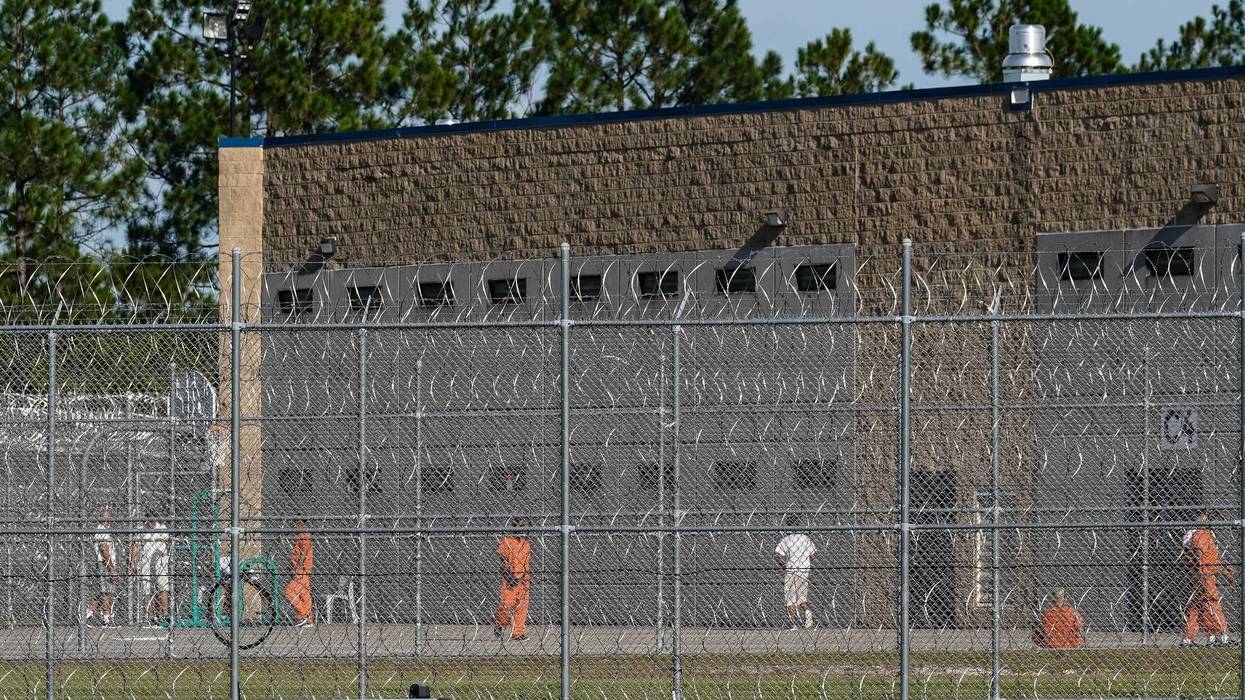
'Dismantle ICE' Says Jayapal After 60th Death in Agency Custody During Trump 2.0
"When our country detains people, we have the responsibility of ensuring both their physical and mental health—not driving them, though incredible cruelty, to commit suicide," Jayapal said.
Oct 25, 2026
Immigration and Customs Enforcement confirmed on Saturday that a man had died in its custody the day before, marking the 60th death in ICE custody since President Donald Trump resumed office with the promise of mass deportations.
Luis Sandoval, a 48-year-old man from El Salvador, was found early on Friday morning with a "ligature around his neck" in the Folkston D. Ray ICE Processing Center in Folkston, Georgia, according to a press release from the agency.
"Today I received notification of the 60th death in ICE custody since Trump returned to office. Sadly, this appears to be a death by suicide," Rep. Pramila Jayapal (D-Wash.) wrote on social media in response to the news. "When our country detains people, we have the responsibility of ensuring both their physical and mental health—not driving them, though incredible cruelty, to commit suicide. Dismantle ICE."
"We call for an immediate independent investigation into this tragic death and for accountability. Folkston must be shut down immediately.”
Sandoval was detained in Newark, New Jersey on October 2 and transferred to Georgia on October 8. ICE said that staff attempted "life-saving measures" upon discovering him Friday and that Charlton County Emergency Medical Services also attempted to save him when they arrived on the scene. ICE added that the death was "under investigation."
“This was a preventable tragedy,” Azadeh Shahshahani, legal and advocacy director for the Georgia-based Project South, said, as The Guardian reported. “We hold ICE and the private prison corporation fully responsible for any harm that migrants suffer at Folkston. We call for an immediate independent investigation into this tragic death and for accountability. Folkston must be shut down immediately.”
The Folkston detention center is contracted to the private prison company GEO Group. Immigrant rights advocates and Democratic lawmakers have raised alarms about the Folkston before Sandoval's death due to its treatment of detainees, approximately 500 of who launched a hunger strike in early October over a lack of due process in their asylum cases as well as poor conditions in the facility.
“People have reported seeing bugs in the water. People have reported getting rashes, presumably from the water that they never had. Skin rashes that they’ve never had before,” Samantha Hamilton, senior litigation staff attorney at Asian Americans Advancing Justice Atlanta, told The Current. ”People have reported their hair falling out as a result of taking showers from the water, and because the water is so disgusting, people really try to avoid it at all costs.”
Sandoval died the day after Georgia Democratic Sens. Jon Ossof and Raphael Warnock sent a letter to Department of Homeland Security Secretary Markwayne Mullin and the DHS inspector general calling on them to launch an “immediate investigation” into how the facility was treating detainees, and hunger strikers in particular, as The Current reported further.
It is not yet known if Sandoval was among the hunger strikers.
Sandoval is not the first person to die in ICE custody at Folkston. In April 2024, Jaspal Singh died after being placed under medical observation when he reported feeling chest pains. A review by ICE determined that the medical care he received at Folkston contributed to his death.
An average of one person has died in ICE custody every 10 days this year, Relevant Research president Austin Kocher, who is also an American University research fellow, told The Guardian.
“Even in the past, there has not been such an overt dehumanization and overt view that migrants’ lives are expendable,” Kocher said. “I worry that that tone [from the Trump administration] has a tendency towards neglect and viewing migrants as disposable.”
The 988 Suicide & Crisis Lifeline—which offers 24/7, free, and confidential support—can be reached by calling or texting 988, or through chat at 988lifeline.org.
Keep ReadingShow Less
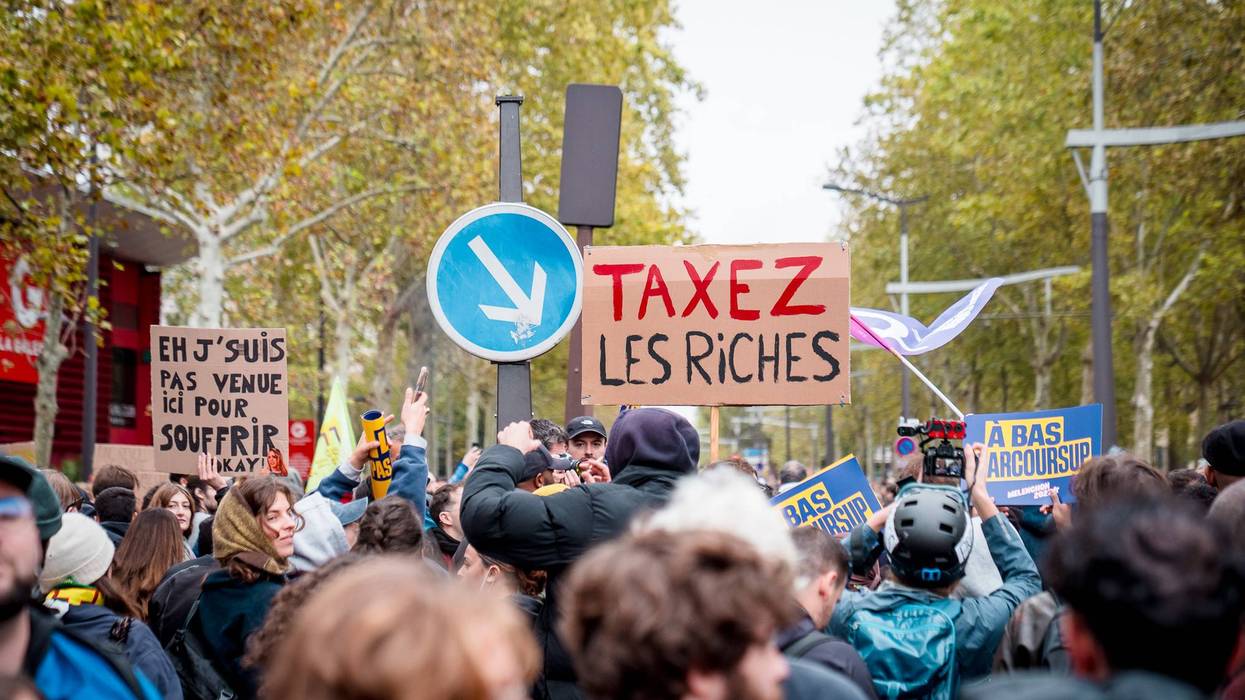
Thousands March Across Europe Against Inequality and 'for Young People’s Future'
“Looking at countries like the United States, we don’t want to end up like them, where part of the population has everything and the others have nothing,” one French protester said.
Oct 24, 2026
Hundreds of thousands of people took to the streets across Europe on Saturday as anger continues to build over the rising cost of living and deteriorating social services.
While demonstrators emphasized different demands in different countries, the protest wave reflects a sense that the status quo has ceased to work for ordinary people, especially the young.
“I see so many more similarities than differences,” Alice de Brito, the vice president of French student union UNEF, told CNN of the protests. “We are all talking about the need for investments in education, in the universities, in youth in general. But we are also talking about the cost of living, about housing.”
France
Across France, between 410,000 and 800,000 people turned out in the continuation of protests that erupted in September when students began to mobilize against underfunding, teacher shortages, and other poor conditions in their schools. Adult workers have joined with the students, criticizing widespread inequality and the rising cost of living, leading to mass demonstrations on October 17 and again a week later.
“Looking at countries like the United States, we don’t want to end up like them, where part of the population has everything and the others have nothing,” Paris protester Louis Ledoux--Xatard told The Associated Press.
“Too many billionaires; we are preparing the revolution," one group of protesters chanted, according to Al Jazeera.
There were 289 protests in France, including in Marseilles, Nantes, Nice, Lyon, Bordeaux, and Orleans. Interior Minister Laurent Nunez said that almost 1,000 people were arrested, though the number was expected to grow. Two people sustained significant injuries.
"Behind every police officer, a compliant camera."
The protest in Paris had originally been scheduled to run through the center of the city, but authorities relocated it to outskirts and banned marches organized by groups other than unions.
"It won’t stop the movement. It won’t stop students from demanding better conditions in schools,” nurse Soumaya Abed told AP of the changes.
Jean-Luc Mélenchon, who leads the left-wing France Unbowed party, criticized the government of President Emmanuel Macron for changing the route, but also praised the marchers for carrying on.
"Total victory for the social movement," Mélenchon wrote on social media. "The march gathered at the new authorized point and is now flowing calmly over more than four kilometers. The provocations for disorder by the Paris police prefect and [French Prime Minister Sébastien] Lecornu are a total failure. For the authorities, it is time to give in, or soon they will have only the exit door left."
Victoire totale du mouvement social. La marche s'est rassemblée au nouveau point autorisé et déferle dans le calme sur plus de quatre kilomètres. Les provocations aux désordres du préfet de police et de Lecornu sont un échec total. Pour les autorités, il est temps de céder, sinon il ne leur restera bientôt que la porte de sortie.
— Jean-Luc Mélenchon (@JLMelenchon) October 24, 2026
Media reported that the Parisian demonstration was largely peaceful until the end, when police released tear gas and fired water cannons and some black-clad protesters threw projectiles.
Reporters with Agence France-Presse said they saw:
police charge several times and vigorously use tear gas and batons against some, mostly young, protesters.
"The police started moving towards everyone, telling them to get down and back off. They were just taking people down, you know, beating protesters," one demonstrator bleeding from a baton blow to his face, who gave his first name as David, told AFP.
Other witnesses also described a repressive police response to The Guardian:
Mike, a 23-year-old student who also declined to give his surname, said: “Look around, they’re just teenagers. Is it normal for teenagers to be teargassed and beaten with batons?”
For Jessica, a 24-year-old student, said: “I just don’t understand why there’s so much violence. I feel like our right to protest is being trampled on.”
Mélenchon lambasted the police and the media for working together to discredit the movement.
"In Paris, to ruin the day and unwind, the so-called forces of law and order gas and fire into the crowd at the back of the procession, all in a bid to get footage for the domestic news channels that spent the whole week airing the images that spurred the Trappes killer," he wrote on social media, referring to a racially motivated shooting west of Paris on Friday that killed one and wounded five.
In a second post, he added: "It continues with the policing of minds through the televisions of power. Tonight, staging of the « tails of the procession » to spew hatred against the popular movement. Without a single image of the masses in peaceful action. Behind every police officer, a compliant camera."
He encouraged readers to "turn off the televisions! Form your own opinion without a guardian. Journey through social networks. Stay free to think for yourselves."
Belgium
In neighboring Belgium, hundreds of people marched in Brussels in a continuation of demonstrations for improvements in the education system.
“We are here for young people’s future, for better work," rally speaker Celia Ponce told the crowd, as The Brussels Times reported.
She also accused governments of wanting to "destroy public services."
Protesters build barricades with bikes and scooters in Brussels, Belgium.Follow Press TV on Telegram: https://t.co/1ymjeeywxb https://t.co/TtQNj1BQYU
— PressTV Extra (@PresstvExtra) October 24, 2026
Police used tear gas to disperse some protesters and, in an incident reported by Reuters, kicked and hit one demonstrator after they fell during a chase.
Spain
Approximately 25,000 people marched in Madrid to support Spain's pension system and demand that it keep pace with inflation and that a gender gap be eliminated, according to Al Jazeera.
"How beautiful Madrid is when it defends its rights," Emilio Delgado, deputy spokesperson for left party Mas Madrid, wrote on social media. "We propose that no pension should be below the minimum wage. A lifetime of work deserves a dignified retirement."
Un aviso a @NunezFeijoo: No vamos a permitir que recortéis las pensiones. https://t.co/lQ7V0cQomZ
— Emilio Delgado (@EmilioDelgadoOr) October 24, 2026
The protests come a month ahead of Spain's general election, in which current Prime Minister Pedro Sanchez's Spanish Socialist Workers' Party will face off against the right-wing Popular Party. Popular Party leader Alberto Nunez Feijoo has promised to adjust pensions according to inflation if his party wins, but demonstrators are still concerned about what a right-wing victory would mean for the pension system.
Portugal
In Portugal, meanwhile, the main demand was affordable housing.
People marched in Lisbon, continuing a movement that began October 10 in the city of Porto calling on the government to address the country's housing crisis, according to The Resident.
Palco dos protestos promovidos pelo movimento Acampada de Lisboa, o Rossio voltou a acolher "um mar de gente" que reivindica soluções do Governo para a atual crise da habitação.Veja a reportagem em direto no local: https://t.co/gpSIyl2mLr#agitacaosocial #europa #protestos #manifestacoes #lisboa #rossio #pais #portugal #habitacao #custodevida #noticias #sicnoticias
— SIC Notícias (@SICNoticias) October 24, 2026
"We have no home, so we set up tents!” read the slogan of the March, organized by the Acampada de Lisboa movement.
The protesters also opposed new policies from Prime Minister Luis Montenegro that would weaken a limit on annual rent increases and make it easier to evict people who are unable to make rent payments, according to AP.
Italy
Thousands of people joined demonstrations across Italy to protest the affordability crisis as well as the right-wing government of Prime Minister Giorgia Meloni. Protests were called for eight cities including Milan, Turin, and Rome, with 10,000 attending the Milan demonstration alone.
“We are here because of the rising prices and because I believe that our government has no respect for its citizens,” a 17-year-old student participant, who did not give a name, told Al Jazeera. “There are four people in my family. My mother works in a factory, but my father is about to lose his job. It’s hard to make ends meet on just one salary."
Thousands of protesters took to the streets across Italy to demonstrate against Giorgia Meloni’s right-wing government and the rising cost of living, as hundreds of soldiers were deployed to Milan as protests continue.🔗: https://t.co/JquqwnAyhj https://t.co/B97TnZaY9L
— Al Jazeera English (@AJEnglish) October 24, 2026
The Italian protests were a continuation of demonstrations that have taken place throughout October. There were fewer clashes between police and demonstrators on Saturday compared with earlier marches, though some protesters tried to enter the Colosseum before being pushed back.
Albania
In Albania, outrage over plans by US President Donald Trump's son-in-law Jared Kushner to build a luxury resort near a protected wildlife area—which is widely seen as an example of government corruption—has dovetailed with demands by students for less corruption in the education system specifically as well as lower tuition fees and more funding.
A demonstration in the capital of Tirana on Saturday marked the 12th day of anti-government protests this month following a summer of mobilizations against the luxury hotel.
Some protesters lit fires and threw projectiles, while police used tear gas, rubber bullets, and water cannons.
Protesters in Albania have fought running battles with police, on a 12th day of anti-government protests. Police in the capital, Tirana, used water cannon, tear gas and rubber bullets after Prime Minister Edi Rama warned he would take strong action to quell unrest. https://t.co/6oZMYPU7Ei
— Al Jazeera English (@AJEnglish) October 24, 2026
One demonstrator, the 28-year-old Daniel Tahiri, told Reuters that the Albanian government was a "dictatorship with the clothes of democracy."
"Albanians have woken up," Tahiri said.
Keep ReadingShow Less
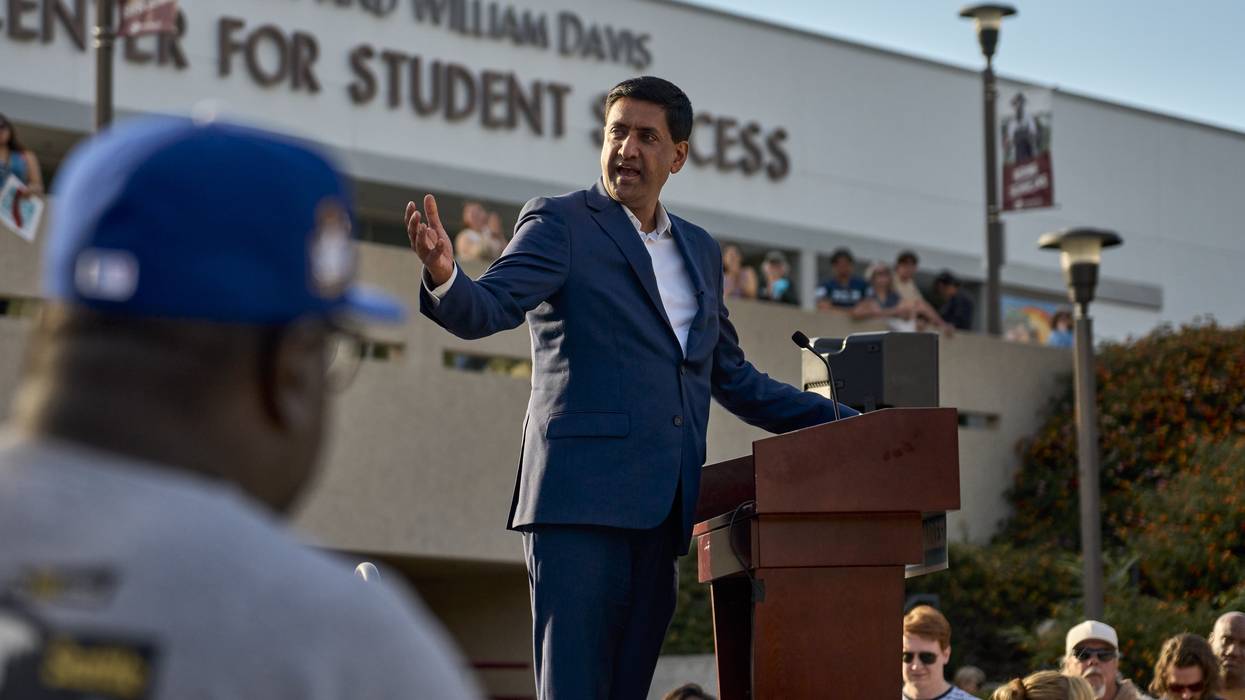
'Make Him Veto Medicare for All': Khanna Proposes Bold Agenda in Case of Dem Victory
Progressive California Rep. Ro Khanna argued against centrist Democratic Sen. Brian Schatz's statement that Democrats should not try to pass ambitious bills if they won control of Congress in November.
Oct 24, 2026
Progressives including Rep. Ro Khanna slammed a recommendation from Hawaii Sen. Brian Schatz, who will be the No. 2 Democrat in the Senate if the party retakes control of the body following the November 3 midterm elections, that Democratic legislators should moderate their ambitions if they regain control of Congress.
Speaking on CNN's "The Arena" with Kasie Hunt on Thursday, Schatz responded to Hunt's question about how a governing Democratic caucus might respond to the "energy" and "anger" on the left with a word of caution.
"I do not think it is time to propose things that the president of the United States is guaranteed to veto," Schatz said. "I think that is somewhat of a bit of wasted energy. And then if we want to be more aspirational, if we want to make more bold policy changes, we're going to have to take the presidency and both chambers and that's for 2028."
https://t.co/7ahr7Yu3Iv
— David Sirota (@davidsirota) October 24, 2026
Instead, Schatz argued that Democrats should see a midterm victory as an "institutional check against an out-of-control president" and use its leverage "to try to bring this war to a conclusion and to reverse the Medicaid and SNAP [Supplemental Nutrition Assistance Program] cuts."
Not everyone agreed with Schatz's prescription, however, arguing that forcing President Donald Trump to veto popular policies could only help the Democrats going forward.
Progressive Rep. Ro Khanna (D-Calif.) wrote on social media late Friday that Democrats should force Trump to veto a litany of progressive policies from Medicare for All to blocking aid and bombs to Israel to taxing billionaires.
"Make him veto Medicare for All," he advised.
Make him veto Medicare for AllMake him veto a $25 living wageMake him veto free childcareMake him veto Block the Bombs to IsraelMake him veto zero aid to IsraelMake him veto free collegeMake him veto erasing student loansMake him veto taxes on billionaires
— Ro Khanna (@RoKhanna) October 24, 2026
Groundwork CEO Lindsay Owens called Schatz's strategy "worrisome" on Saturday.
"Trump vetoing bills to make healthcare cheaper is a good political outcome for Dems," she wrote on social media, arguing that it would increase the likelihood of a Democratic victory in 2028.
Worrisome strategy form a top Dem. 1. By defn if the bill gets to potus’s desk ~everyone in the caucus voted for it (not just the left). 2. Trump vetoing bills to make health care cheaper is a good political outcome for Dems (& makes it more likely that we win in 28 to do this).
— Lindsay Owens (@owenslindsay1) October 24, 2026
Writer Katelyn Burns agreed, writing: "No, wrong. You pass the popular agenda and let the other party stand in the way of what the people want. Why the fuck would you pre-veto shit??"
The Debt Collective wrote: "This broken ideology actually explains a lot. They just genuinely do not understand the strategy of making President Trump veto popular things—it almost makes you wonder if they just don't support the popular things at all."
Other s responded with sarcasm.
"Let's just not make waves and confirm Trump's judges for two years, maybe let Republicans run the committees too, that would be the sensible move," wrote The Prospect executive editor David Dayen.
Austin Ahlman, a reporter and political analyst for anti-monopoly think tank the Open Market Institute, joked: "Smart. Wouldn’t want anyone to mistake you for the opposition."
Keep ReadingShow Less

Israeli Occupation Forces Ramp Up Ethnic Cleansing in West Bank After Palestinian Resistance Attack
"What we saw today was an attempt to copy the illegal practices used in Gaza, in the heart of the West Bank,” said one Israeli lawyer. “They want to wipe out entire areas exactly as they did in Gaza."
Oct 23, 2026
Israeli forces on Friday began demolishing homes and businesses and forcibly evacuating residents near Hebron in the illegally occupied West Bank following a Palestinian resistance attack that killed two Israeli soldiers.
"First, we will destroy this place and completely transform it, but we will do something that has never been done before," Israeli Prime Minister Benjamin Netanyahu said at the scene of the shooting attack that took place earlier Friday near Hebron Junction. "We will evacuate the residents, go from house to house, remove weapons from there as well, and deal with and destroy all terrorist infrastructure."
"We will consider expanding this model to other cities as well," Netanyahu added.
The prime minister also ordered the Israel Defense Forces (IDF) to “immediately impose a lockdown on Hebron and prepare for a full lockdown" of the entire West Bank, while vowing to launch the largest military operation in the occupied territory since it was conquered during the 1967 Six-Day War and subsequently ethnically cleansed of more than 100,000 Palestinians.
Israeli Defense Minister Israel Katz also vowed that neighborhoods associated with the attackers would be "evacuated"—a word that critics call a euphemism for ethnic cleansing—"just like in Gaza; just like in Lebanon."
Far-right Israeli Finance Minister Bezalel Smotrich echoed those calls.
"There is no other option but a comprehensive military campaign in Judea and Samaria to dismantle the Palestinian Authority, collect weapons, and eliminate terrorists," he said, referring to Israel's name for the West Bank.
"Exactly like in Gaza and Lebanon," Smotrich added.
Israeli forces have killed or wounded more than 250,000 people in Gaza since the Hamas-led attack of October 2023, while forcibly displacing around 1.9 million residents and destroying or damaging more than 80% of the strip's structures. In Lebanon, nearly 40,000 people have been killed or injured by Israeli attacks over the same period, during which there were two waves of mass displacement in which more than a million people were forced from their homes each time. Dozens of Lebanese villages have been flattened.
Demolition and displacement were the order of the day in the West Bank Friday as Israeli bulldozers began demolishing homes after Netanyahu's announcement, even as local residents said their properties had no connection to the attack on the slain IDF troops.
The Times of Israel reported that soldiers ordered Palestinians in the Farsh al-Hawa area to evacuate ahead of demolitions, with footage showing residents being pushed out as their belongings were loaded onto trucks.
“We are already here with the equipment on the ground, sending an unequivocal message to our enemies: If you mess with us, we will exact a very, very painful price from you,” Smotrich said in Farsh al-Hawa.
Israel’s High Court intervened and issued a temporary order to halt demolitions after Arab-Israeli human rights lawyer Mohammed Dahleh filed an urgent petition on behalf of two factory owners who claimed the destruction violated Israeli law as well as international prohibitions on collective punishment.
“What we saw today was an attempt to copy the illegal practices used in Gaza, in the heart of the West Bank,” Dahleh told The Guardian. “They want to wipe out entire areas exactly as they did in Gaza and the refugee camps in the West Bank.”
Another Israeli human rights attorney, Michael Sfard, called Smotrich's video announcement a "direct admission" of collective punishment.
The demolitions and forced evacuations are unfolding amid a wider Israeli campaign of home destruction, settler pogroms and other deadly violence, and displacement that Palestinian rights advocates and United Nations officials have called ethnic cleansing.
Palestinian olive harvesters, as well as international solidarity activists accompanying them, journalists covering settler attacks, and even international diplomats have come under attack by IDF-backed settler terrorists. The United Nations Office for the Coordination of Humanitarian Affairs (OCHA) said earlier this week that between September 1 and October 12, Israeli settlers carried out 199 attacks connected to the harvest, killing one Palestinian, injuring 124, and damaging more than 2,500 trees and saplings.
According to OCHA, over 1,130 Palestinians—at least 250 of them children—have been killed by Israeli soldiers and settlers in the West Bank since October 2023.
Friday's developments came four days ahead of Israel's elections, in which the ruling far-right coalition is trying to boost support among voters, including settler colonists pushing the government to annex the West Bank.
Netanyahu has vowed to annex all settler colonies. Smotrich has presented a plan to annex approximately 82% of the West Bank, excluding six major Palestinian cities. Ben-Gvir wants to annex the entire West Bank.
Israel's actions on Friday drew widespread condemnation.
“Israeli leaders are publicly announcing plans for collective punishment and acts that could constitute war crimes,” the Israeli human rights group B'Tselem said, while imploring “governments and international institutions to act now, using all means available under international law, to prevent the forcible displacement of Palestinian civilians, collective punishment, and extensive unlawful destruction in Hebron.”
Keep ReadingShow Less
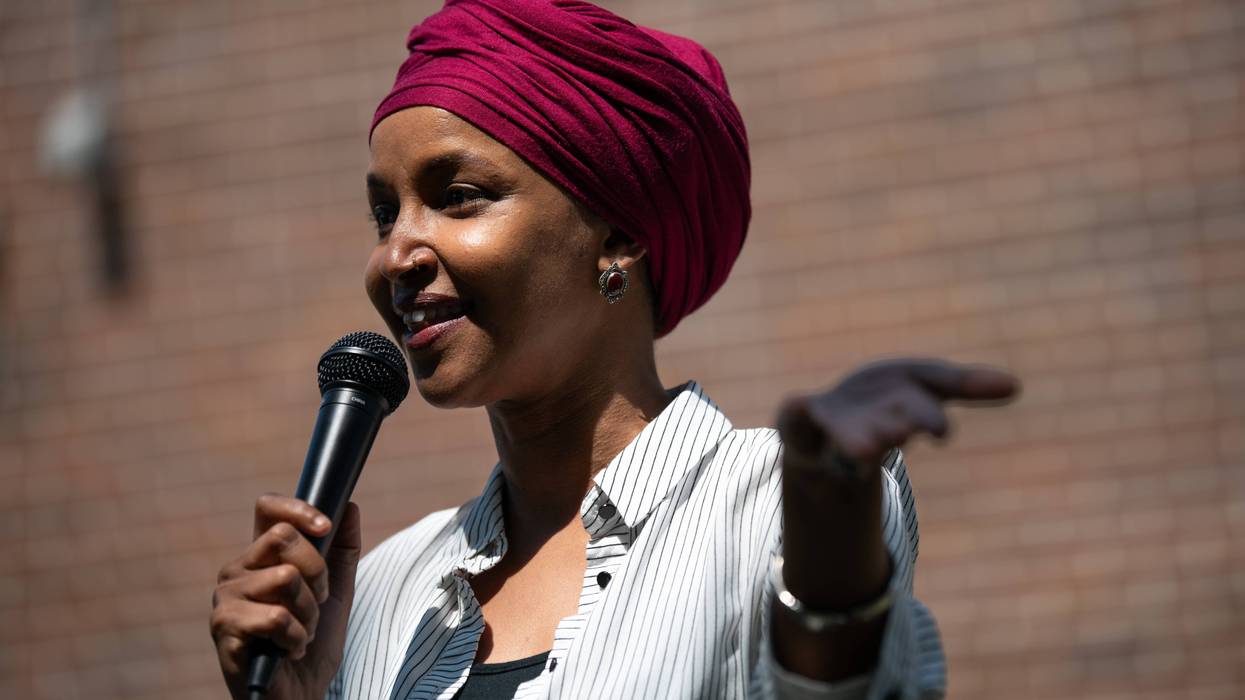
'My Name Has Always Been Ilhan Omar': Congresswoman Calls Out 'Creep' Trump
Amid efforts to deport the congresswoman, Trump amplified an unproven claim that Omar is living under a false name.
Oct 23, 2026
As the Trump administration tries to have her deported, US Rep. Ilhan Omar shot back at President Donald Trump on Friday after he accused her of having lived under a false identity.
In a post to Truth Social, Trump referenced a federal court filing by the US Department of Justice (DOJ) that referred to the Minnesota congresswoman as "Ilhan Nur Said Elmi" without explanation.
"It was just revealed that Ilhan Omar’s name is not Ilhan Omar, the one she used to get elected and sworn into Congress, but rather, it’s an entirely different name, Ilhan Nur Said Elmi, and that her last name is, incredibly, also the exact name of her brother, Ahmed Nur Said Elmi, the person they said she married and had children with," Trump wrote on Thursday night, referencing another unproven conspiracy theory that Omar has long denied.
"Because she used a fake name to be sworn in, I assume she must IMMEDIATELY resign from Congress. Please inform the Speaker of the House of Representatives, James Michael Johnson, that the Dumocrat Party has just conceded her seat."
A spokesperson for Omar told Fox News that the allegation that she was living under an alias is "completely false."
Fox 9 Minneapolis-St. Paul confirmed that the 44-year-old congresswoman has gone by the name “Ilhan Omar” as early as age 17, when she was listed in her Edison High School yearbook as a junior. The Associated Press found that she also used the name Ilhan Omar in marriage licenses, divorce proceedings, voter registrations, and other public records dating back nearly two decades.
"The pedophile protection party’s president is laundering right-wing conspiracy theories through the most corrupt DOJ in American history," Omar wrote on social media. "Whenever the news turns bad, this creep reaches for one name: mine. So let’s make it crystal clear. My name has always been Ilhan Omar."
"Maybe you should focus on what your VP’s real name is," she said, referencing the fact that Vice President JD Vance, born James Donald Bowman, has changed his legal name twice.
The dispute comes after last week’s raid on Omar’s home as part of a highly politicized investigation into her citizenship by the US Department of Homeland Security.
The investigation reportedly focuses not on the allegation about Omar’s brother, but on whether she or members of her family falsified information when they immigrated to the US and subsequently obtained citizenship.
Investigators are reportedly examining whether Omar or her father falsified her birth date, listing her as 17 rather than 18 so she could obtain citizenship through him as a minor. Omar has not been charged with a crime, and investigators have not yet publicly provided evidence of the claim.
Trump has regularly launched racist attacks against Somali Americans during his presidency, saying they should all be deported and referring to them as “garbage” with “low IQs.” While pushing to deport Omar, he has often demonized her based on her Somali heritage.
"She’s been a scammer for a long time. I’m pretty good at watching that stuff, and she comes from a non-country, basically. Somalia has no government, has no nothing," he said during a campaign rally in Iowa this week. "All they do is run around shooting each other. Then she comes over here."
Rep. Randy Fine (R-Fla.)—who has previously described Omar as a “terrorist” and called for the mass deportation of all Muslim immigrants from the US—announced plans to introduce a resolution on Friday to expel Omar from Congress if she is found to have broken the law.
Keep ReadingShow Less
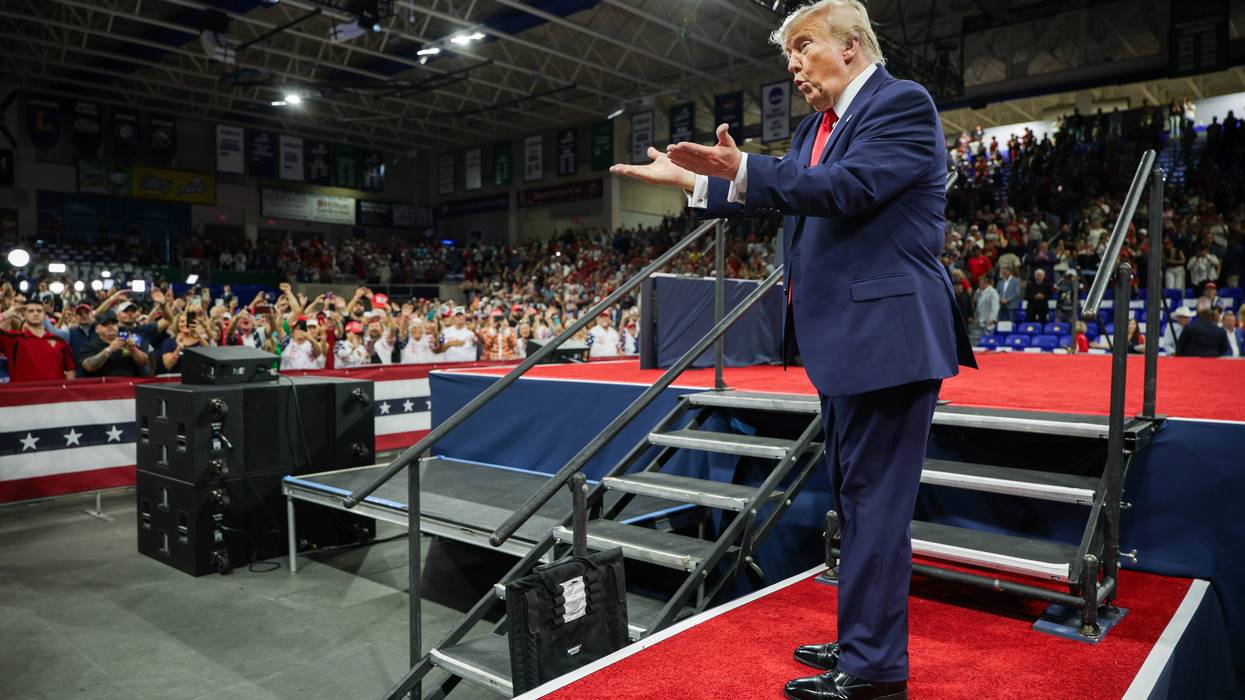
'We May Do Another Little Epic Fury,' Trump Says After Claiming Not to Know About Possible Strike on Iran
The president previously said he wouldn't take any more military action in Iran until after the midterms.
Oct 23, 2026
When President Donald Trump landed in Florida for a Friday campaign rally, he dismissed comments from one of his own ambassadors that the US could strike Iran this weekend as part of his illegal nearly eight-month war—but once the commander-in-chief took the stage, he changed his tune, threatening more bloodshed.
In an interview with online commentator Mario Nawfal published earlier Friday, US Ambassador to Turkey Tom Barrack, who is also Trump's special envoy to Syria and Iraq, said: "Could there be a strike this weekend? Absolutely."
"The president is very clear. He's open and available and accessible to a deal. And we've been at the table for months and months and months," he continued, noting that in addition to the nuclear priorities and aiming to reopen the Strait of Hormuz, the US is "in a bargain for unfreezing assets, releasing sanctions, no more kinetic engagement, [and] supplying the needed help to Israel, our ally."
Trump had said on his Truth Social platform earlier this month that "we are having productive discussions with the Islamic Republic of Iran. I want to make it clear to everybody that, while Iran is in very bad condition, both Economically and Militarily, and while the Blockade will remain in full force and effect, with Oil flowing in Record Numbers of Barrels through the Hormuz Strait (22 Million Barrels, last night alone, with not one barrel coming from, or going to, Iran!), we will not be attacking Iran at any time prior to the Midterm Elections to be held in the United States on November 3rd."
Asked about Barrack's suggestion that a US attack could come soon while on a Florida runway, and whether it meant Trump was rethinking that position, the president responded: "That was my ambassador? He's a pretty powerful man, I guess. Well, if that's the case, I don't know anything about it."
While replying to the reporter, Trump exchanged a glance with Republican Florida Gov. Ron DeSantis, who giggled at the president's answer.
Once Trump was onstage at Florida Gulf Coast University's Alico Arena, he bragged about ditching the Obama administration's Iran nuclear deal, and overseeing two military operations: Midnight Hammer, the June 2025 strike on Iranian nuclear facilities, and Epic Fury, the war he and Israel launched in February, in violation of the US Constitution and international law.
"We may do another little Epic Fury, or they'll agree," Trump told the crowd. "If they're smart, they'll just say, 'Let's get down to business.' But, you know, I doubt they'll do that because perhaps they're not smart—but we did a number on them."
Trump's illegal war—which has killed thousands of people across the Middle East—and its resulting economic impact have been key topics for Democrats hoping to reclaim control of both chambers of Congress, and potentially impeach him a historic third time.
Keep ReadingShow Less
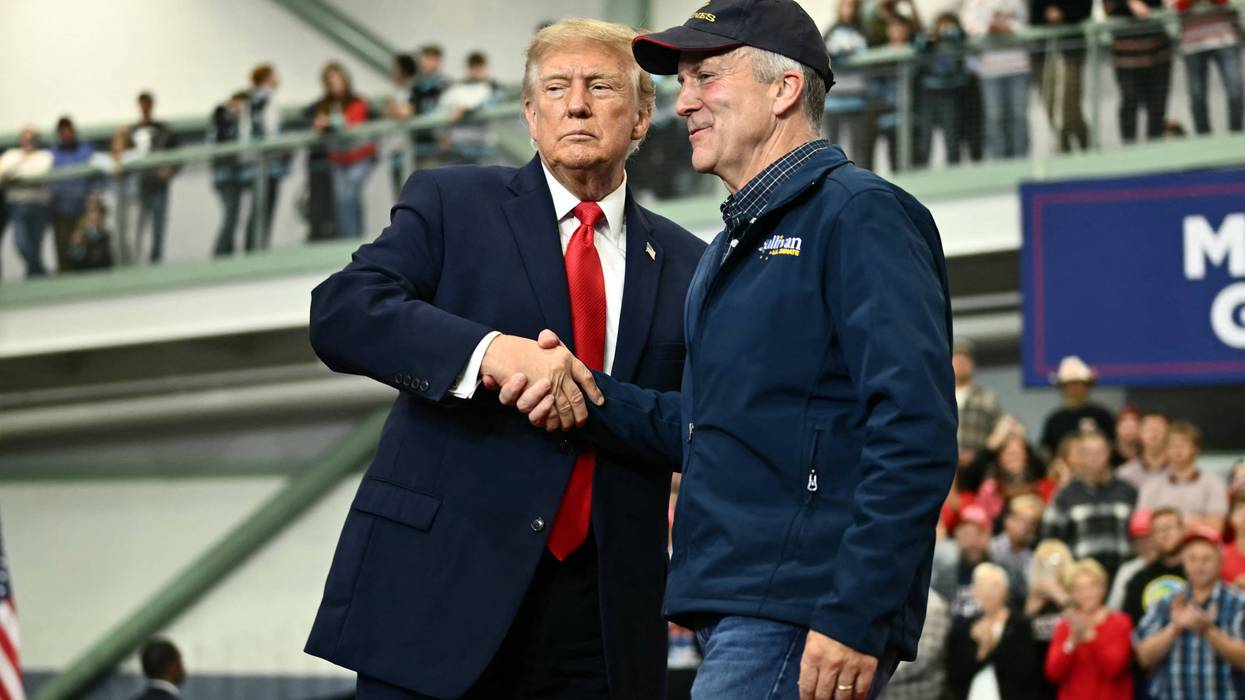
Trump-Ordered DOJ Lawsuit in Alaska Seen as First Salvo in GOP Effort to Undermine Midterm Elections
"I'm the one that said do it," Trump said of the lawsuit, which seeks to block certification of Alaska's Senate election if the Democrat wins.
Oct 23, 2026
On the same day that Attorney General Todd Blanche declared the US Department of Justice would not "improperly" try to block states from certifying their elections, the DOJ appears to have taken its boldest step yet to do just that—at the apparent direction of President Donald Trump.
The DOJ on Thursday filed an unprecedented complaint in Alaska asking a federal judge to block the certification of its Senate election results if Republican Sen. Dan Sullivan narrowly loses to his Democratic challenger, former US Rep. Mary Peltola. The race could determine control of the chamber.
Filed just 12 days before Election Day and after voting had begun, the lawsuit claims voters intending to support the Republican incumbent may be confused into voting for a different person on the ballot, a retired teacher who is also named Dan Sullivan.
The second Sullivan, a registered Republican from Petersburg, Alaska, was initially kicked off the ballot over fears that he was trying to fool voters. But that decision was later reversed by a judge, whose decision was upheld by the Alaska Supreme Court.
Alaska's ballots distinguish between the two Dans Sullivan, with the senator listed as "registered Republican" and "incumbent," and the other listed without any identifiers.
"It's clearly marked which one is the GOP candidate and which one is just a guy," argued journalist Dave Weigel.
In its lawsuit, the DOJ claimed that the "sole purpose" of the other Sullivan's candidacy is to sow confusion and "benefit the Peltola campaign by reducing the number of votes for Sen. Sullivan."
As evidence of this, it points to Sullivan's statements that he voted for Democrats in the last three election cycles and supported Peltola's candidacy for the US House of Representatives, though it does not allege he directly coordinated with the Democratic candidate.
Instead of seeking to boot the alleged Sullivan impostor from the ballot again, the DOJ is pursuing a different remedy: It wants Alaska to delay the certification of a Peltola victory if giving all of the other Sullivan's votes to the senator would change the election outcome. Certification would remain on hold while investigators determine whether those voters meant to support the incumbent.
The latest polling average from FiftyPlusOne shows Peltola leading Sen. Sullivan by a margin of roughly two percentage points. The other Sullivan is currently polling at about 4%.
However, Alaska's ranked-choice voting system makes it considerably less likely that name-based confusion would actually cost Sen. Sullivan the election. Voters who mistakenly selected the wrong Sullivan as their first choice could still support the incumbent by ranking him second, reducing the potential for the two candidates to split the GOP vote.
 US President Donald Trump arrives for a campaign rally at the Menard Memorial Sports Center on October 13, 2026, in Wasilla, Alaska. (Photo by Alex Wong/Getty Images)
University of Notre Dame law professor Derek Muller said the DOJ's legal argument to suspend the certification of Alaska's election was "one of the worst ones I’ve ever seen."
In a blog post, he said the DOJ's request to probe whether voters accidentally cast their ballots for the wrong Sullivan was "essentially impossible" to fulfill because "the best evidence that voters preferred one Sullivan over another is how they marked their ballots."
"Some, in a panic, might react that the department is trying to deny certification of an election in a state," he said. "Of course that’s what the department is trying to do. But the legal claim is so absurdly thin, there’s essentially no likelihood of success."
Though the Alaska lawsuit is the first direct request to block an election result in 2026, Alaska is not the first state where Blanche's DOJ has filed an eleventh-hour lawsuit that critics argue is meant to interfere with election results.
The department sued California earlier this month, seeking to have the state exclude the ballots of around 20,000 voters it claimed were noncitizens based on a database known to be riddled with errors.
Election experts have pushed back on Blanche's assertion that the DOJ can intervene in states' election certification processes, even in what he described as a "doomsday scenario," since the US Constitution explicitly grants the power to run elections to states.
In stark contrast to previous US attorneys general, who have stressed their legal independence, Blanche said plainly earlier this week, "I work for President Trump."
Asked about the Alaska lawsuit on Friday, Trump told reporters directly, "I'm the one that said do it."
With Republicans projected to suffer heavy losses in the House and Senate, DOJ lawsuits represent one of several ways Trump administration officials have suggested they may interfere with elections.
Blanche and Homeland Security Secretary Markwayne Mullin have floated the idea of dispatching armed agents to polling places in violation of federal law. Trump has raised the possibility of seizing voting machines, and he has ordered the US Postal Service to block mail ballots from being delivered in some states, an effort that has been halted in court.
Devan Barber, executive director of the Democratic Senatorial Campaign Committee, told The Associated Press that the Alaska lawsuit was yet another form of meddling.
"Donald Trump knows that Dan Sullivan is going to lose the election," Barber said, "so now his Department of Justice is filing a sham lawsuit to overturn the will of Alaska voters and steal an election when he loses."
Keep ReadingShow Less
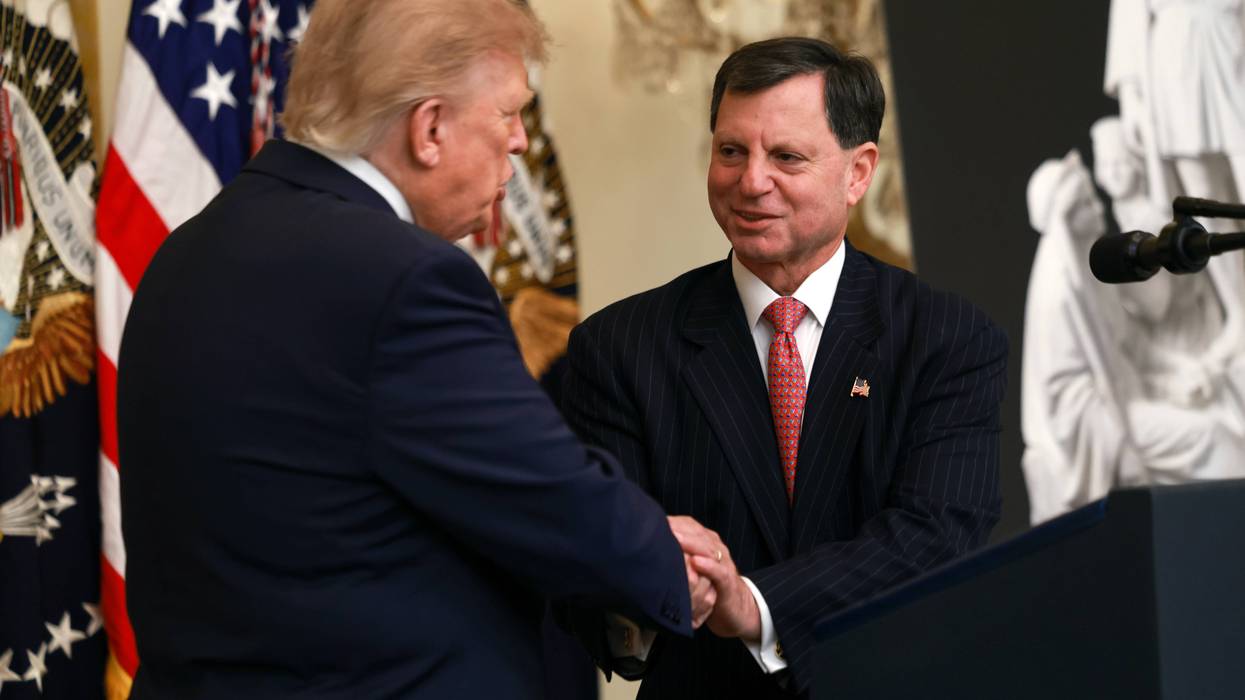
Social Security Agency Accused—Once Again—of Illegally Using Federal Resources to Praise Trump
"Here we are, watching the SSA join a list of politicized agencies being used as partisan tools in the White House’s political toolbox."
Oct 23, 2026
The US Social Security Administration on Friday was accused yet again of unlawfully using federal resources for the overtly political purpose of celebrating President Donald Trump—this time less than two weeks out from the midterm elections.
On Thursday, SSA—headed by Trump nominee Frank Bisignano—sent out an email praising the "historic tax cut" that Trump signed into law last summer, a reference to the Republican budget law that gutted Medicaid and federal nutrition assistance while damaging Social Security's finances.
The SSA email noted that the law "also created Trump Accounts, individual investment accounts for America’s children designed to grow with the US economy and build long-term savings."
"Trump Accounts are one of the most significant investments in the next generation of Americans in our nation’s history, by giving every American child a stake in our country’s success and a strong financial foundation for the future," the email gushes, not mentioning that Trump's treasury secretary and one of the president's top Republican allies have described the accounts as a backdoor way to privatize Social Security.
Now the Social Security Administration is using taxpayer funds to campaign for Trump and his candidates in the midterms—an obvious violation of federal law but a classic authoritarian move https://t.co/qVoyB4lIvl
— Berin Szóka (@BerinSzoka) October 22, 2026
SSA sent its email weeks after the Trump administration faced backlash for unlawfully using taxpayer funds to air political ads ahead of the midterms.
MS NOW's Steve Benen noted Thursday that the latest SSA email is part of a "broader pattern" of behavior by the Bisignano-led Social Security agency.
"In early July the Social Security Administration sent out an unsolicited email celebrating Republican tax breaks... which followed related political emails to Social Security beneficiaries in July 2025 and August 2025," Benen wrote. "When people get unsolicited official statements from the Social Security Administration, they should be able to have some confidence that the agency isn’t trying to lobby them with political messaging."
"And yet, here we are, watching the SSA join a list of politicized agencies being used as partisan tools in the White House’s political toolbox, creating a dynamic in which many Americans are likely to approach the next message they receive from the government about Social Security with some skepticism," he added.
In July, a group of Democratic senators led by Elizabeth Warren of Massachusetts wrote to Bisignano about the SSA's "partisan, politicized" messages "that heaped praise on President Trump." The senators pointed to a July 2, 2026 email to "an untold number of Americans" in which SSA "referred to President Trump six times, named him directly in reference to 'protecting and strengthening Social Security' and gave him and his administration credit for 'not only protecting Social Security, but... [also] providing meaningful and immediate relief to older Americans.'"
"It is safe to say that few presidents have done more than President Trump to damage Social Security—yet in an Orwellian twist, you are misusing official resources to heap praise on him," the senators wrote to Bisignano. "The decision to send this email raises fresh questions about your judgement and your ability to prioritize SSA beneficiaries."
Keep ReadingShow Less
See More
Most Popular