

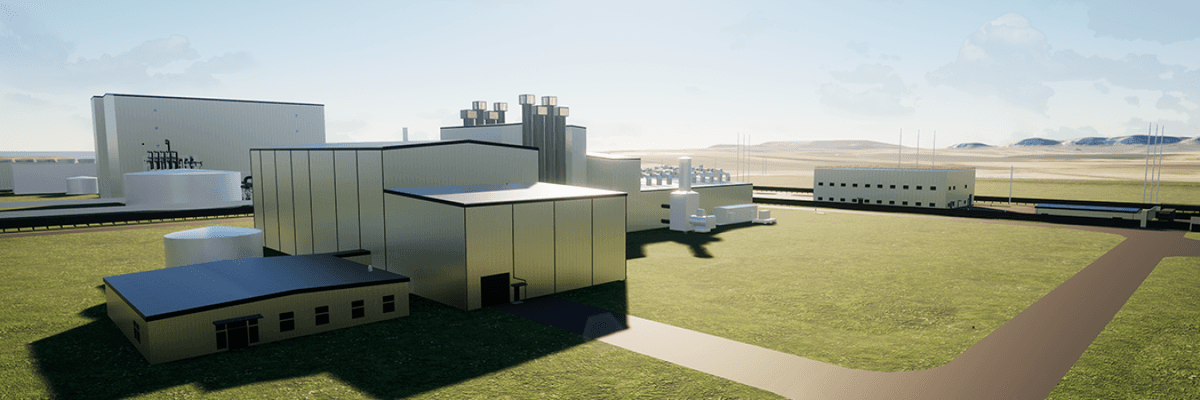
A computer-generated rendering of the proposed TerraPower Natrium reactor in Kemmerer, Wyoming.
Trump Regulators Ripped for 'Rushed' Approval of Bill Gates' Nuclear Reactor in Wyoming
"Make no mistake, this type of reactor has major safety flaws compared to conventional nuclear reactors that comprise the operating fleet," said one expert.
A leading nuclear safety expert sounded the alarm Tuesday over the Trump administration's expedited safety review of an experimental nuclear reactor in Wyoming designed by a company co-founded by tech billionaire Bill Gates and derided as a "Cowboy Chernobyl."
On Monday, the US Nuclear Regulatory Commission (NRC) announced that it has "completed its final safety evaluation" for Power Station Unit 1 of TerraPower's Natrium reactor in Kemmerer, Wyoming, adding that it found "no safety aspects that would preclude issuing the construction permit."
Co-founded by Microsoft's Gates, TerraPower received a 50-50 cost-share grant for up to $2 billion from the US Department of Energy’s Advanced Reactor Demonstration Program. The 345-megawatt sodium-cooled small modular reactor (SMR) relies upon so-called passive safety features that experts argue could potentially make nuclear accidents worse.
However, federal regulators "are loosening safety and security requirements for SMRs in ways which could cancel out any safety benefits from passive features," according to Union of Concerned Scientists nuclear power safety director Edwin Lyman.
"The only way they could pull this off is by sweeping difficult safety issues under the rug."
The reactor’s construction permit application—which was submitted in March 2024—was originally scheduled for August 2026 completion but was expedited amid political pressure from the Trump administration and Congress in order to comply with an 18-month timeline established in President Donald Trump’s Executive Order 14300.
“The NRC’s rush to complete the Kemmerer plant’s safety evaluation to meet the recklessly abbreviated schedule dictated by President Trump represents a complete abandonment of its obligation to protect public health, safety, and the environment from catastrophic nuclear power plant accidents or terrorist attacks," Lyman said in a statement Tuesday.
Lyman continued:
The only way the staff could finish its review on such a short timeline is by sweeping serious unresolved safety issues under the rug or deferring consideration of them until TerraPower applies for an operating license, at which point it may be too late to correct any problems. Make no mistake, this type of reactor has major safety flaws compared to conventional nuclear reactors that comprise the operating fleet. Its liquid sodium coolant can catch fire, and the reactor has inherent instabilities that could lead to a rapid and uncontrolled increase in power, causing damage to the reactor’s hot and highly radioactive nuclear fuel.
Of particular concern, NRC staff has assented to a design that lacks a physical containment structure to reduce the release of radioactive materials into the environment if a core melt occurs. TerraPower argues that the reactor has a so-called "functional" containment that eliminates the need for a real containment structure. But the NRC staff plainly states that it "did not come to a final determination of the adequacy and acceptability of functional containment performance due to the preliminary nature of the design and analysis."
"Even if the NRC determines later that the functional containment is inadequate, it would be utterly impractical to retrofit the design and build a physical containment after construction has begun," Lyman added. "The potential for rapid power excursions and the lack of a real containment make the Kemmerer plant a true ‘Cowboy Chernobyl.’”
The proposed reactor still faces additional hurdles before construction can begin, including a final environmental impact assessment. However, given the Trump administration's dramatic regulatory rollback, approval and construction are highly likely.
Former NRC officials have voiced alarm over the Trump administration's tightened control over the agency, which include compelling it to send proposed reactor safety rules to the White House for review and possible editing.
Allison Macfarlane, who was nominated to head the NRC during the Obama administration, said earlier this year that Trump's approach marks “the end of independence of the agency.”
“If you aren’t independent of political and industry influence, then you are at risk of an accident,” she warned.
We are at a crossroads
This country and this world are at a monumental crossroads. In a few short weeks, US voters will have an opportunity to beat back the forces of fascism and confront the billionaires who are rigging the economy, our media system, and our democracy, making it increasingly impossible for ordinary people to get by. We’re not just talking about the election. We’re talking about what must be done once these fascist elements are vanquished from power. We need a bolder set of solutions than what either major party has so far been willing to offer and a working-class movement ready to fight like hell for it. Trump didn't emerge from nowhere. The conditions that fueled MAGA authoritarianism were created by decades of radical neoliberal economic policies and a corrupt political system dominated by corporate interests. They slashed taxes on the super-rich, promising that the benefits would trickle down. They said giveaways to the corporate titans would make life more affordable for the rest of us. It was all bullshit. And when a bitter, betrayed populace searches for someone to blame, right-wing demagogues have little trouble finding scapegoats. People know when they're being lied to, but you won't hear any of this from the corporate media. Only independent journalism—powered and funded by people who believe in building a better world—can deliver truly trustworthy daily news. Our Fall Campaign is underway, and we need your help. To power our newsroom through the rest of the year, we need to raise $125,000 by midnight on October 31. So if you share our vision, please contribute whatever you can to sustain our work. |
A leading nuclear safety expert sounded the alarm Tuesday over the Trump administration's expedited safety review of an experimental nuclear reactor in Wyoming designed by a company co-founded by tech billionaire Bill Gates and derided as a "Cowboy Chernobyl."
On Monday, the US Nuclear Regulatory Commission (NRC) announced that it has "completed its final safety evaluation" for Power Station Unit 1 of TerraPower's Natrium reactor in Kemmerer, Wyoming, adding that it found "no safety aspects that would preclude issuing the construction permit."
Co-founded by Microsoft's Gates, TerraPower received a 50-50 cost-share grant for up to $2 billion from the US Department of Energy’s Advanced Reactor Demonstration Program. The 345-megawatt sodium-cooled small modular reactor (SMR) relies upon so-called passive safety features that experts argue could potentially make nuclear accidents worse.
However, federal regulators "are loosening safety and security requirements for SMRs in ways which could cancel out any safety benefits from passive features," according to Union of Concerned Scientists nuclear power safety director Edwin Lyman.
"The only way they could pull this off is by sweeping difficult safety issues under the rug."
The reactor’s construction permit application—which was submitted in March 2024—was originally scheduled for August 2026 completion but was expedited amid political pressure from the Trump administration and Congress in order to comply with an 18-month timeline established in President Donald Trump’s Executive Order 14300.
“The NRC’s rush to complete the Kemmerer plant’s safety evaluation to meet the recklessly abbreviated schedule dictated by President Trump represents a complete abandonment of its obligation to protect public health, safety, and the environment from catastrophic nuclear power plant accidents or terrorist attacks," Lyman said in a statement Tuesday.
Lyman continued:
The only way the staff could finish its review on such a short timeline is by sweeping serious unresolved safety issues under the rug or deferring consideration of them until TerraPower applies for an operating license, at which point it may be too late to correct any problems. Make no mistake, this type of reactor has major safety flaws compared to conventional nuclear reactors that comprise the operating fleet. Its liquid sodium coolant can catch fire, and the reactor has inherent instabilities that could lead to a rapid and uncontrolled increase in power, causing damage to the reactor’s hot and highly radioactive nuclear fuel.
Of particular concern, NRC staff has assented to a design that lacks a physical containment structure to reduce the release of radioactive materials into the environment if a core melt occurs. TerraPower argues that the reactor has a so-called "functional" containment that eliminates the need for a real containment structure. But the NRC staff plainly states that it "did not come to a final determination of the adequacy and acceptability of functional containment performance due to the preliminary nature of the design and analysis."
"Even if the NRC determines later that the functional containment is inadequate, it would be utterly impractical to retrofit the design and build a physical containment after construction has begun," Lyman added. "The potential for rapid power excursions and the lack of a real containment make the Kemmerer plant a true ‘Cowboy Chernobyl.’”
The proposed reactor still faces additional hurdles before construction can begin, including a final environmental impact assessment. However, given the Trump administration's dramatic regulatory rollback, approval and construction are highly likely.
Former NRC officials have voiced alarm over the Trump administration's tightened control over the agency, which include compelling it to send proposed reactor safety rules to the White House for review and possible editing.
Allison Macfarlane, who was nominated to head the NRC during the Obama administration, said earlier this year that Trump's approach marks “the end of independence of the agency.”
“If you aren’t independent of political and industry influence, then you are at risk of an accident,” she warned.
- What the Pro-Nuclear Bros Don’t Want You to Know About Their Mini Reactors ›
- 'Making America Unsafe Again': Alarm Over Environmental Review Exemption for Nuclear Reactors | Common Dreams ›
- Coalition Rips Trump Plan to 'Rubber-Stamp' Nuclear Reactors as Dangerous and Illegal | Common Dreams ›
- Opinion | Why Small Modular Nuclear Reactors Are a Dead End | Common Dreams ›
A leading nuclear safety expert sounded the alarm Tuesday over the Trump administration's expedited safety review of an experimental nuclear reactor in Wyoming designed by a company co-founded by tech billionaire Bill Gates and derided as a "Cowboy Chernobyl."
On Monday, the US Nuclear Regulatory Commission (NRC) announced that it has "completed its final safety evaluation" for Power Station Unit 1 of TerraPower's Natrium reactor in Kemmerer, Wyoming, adding that it found "no safety aspects that would preclude issuing the construction permit."
Co-founded by Microsoft's Gates, TerraPower received a 50-50 cost-share grant for up to $2 billion from the US Department of Energy’s Advanced Reactor Demonstration Program. The 345-megawatt sodium-cooled small modular reactor (SMR) relies upon so-called passive safety features that experts argue could potentially make nuclear accidents worse.
However, federal regulators "are loosening safety and security requirements for SMRs in ways which could cancel out any safety benefits from passive features," according to Union of Concerned Scientists nuclear power safety director Edwin Lyman.
"The only way they could pull this off is by sweeping difficult safety issues under the rug."
The reactor’s construction permit application—which was submitted in March 2024—was originally scheduled for August 2026 completion but was expedited amid political pressure from the Trump administration and Congress in order to comply with an 18-month timeline established in President Donald Trump’s Executive Order 14300.
“The NRC’s rush to complete the Kemmerer plant’s safety evaluation to meet the recklessly abbreviated schedule dictated by President Trump represents a complete abandonment of its obligation to protect public health, safety, and the environment from catastrophic nuclear power plant accidents or terrorist attacks," Lyman said in a statement Tuesday.
Lyman continued:
The only way the staff could finish its review on such a short timeline is by sweeping serious unresolved safety issues under the rug or deferring consideration of them until TerraPower applies for an operating license, at which point it may be too late to correct any problems. Make no mistake, this type of reactor has major safety flaws compared to conventional nuclear reactors that comprise the operating fleet. Its liquid sodium coolant can catch fire, and the reactor has inherent instabilities that could lead to a rapid and uncontrolled increase in power, causing damage to the reactor’s hot and highly radioactive nuclear fuel.
Of particular concern, NRC staff has assented to a design that lacks a physical containment structure to reduce the release of radioactive materials into the environment if a core melt occurs. TerraPower argues that the reactor has a so-called "functional" containment that eliminates the need for a real containment structure. But the NRC staff plainly states that it "did not come to a final determination of the adequacy and acceptability of functional containment performance due to the preliminary nature of the design and analysis."
"Even if the NRC determines later that the functional containment is inadequate, it would be utterly impractical to retrofit the design and build a physical containment after construction has begun," Lyman added. "The potential for rapid power excursions and the lack of a real containment make the Kemmerer plant a true ‘Cowboy Chernobyl.’”
The proposed reactor still faces additional hurdles before construction can begin, including a final environmental impact assessment. However, given the Trump administration's dramatic regulatory rollback, approval and construction are highly likely.
Former NRC officials have voiced alarm over the Trump administration's tightened control over the agency, which include compelling it to send proposed reactor safety rules to the White House for review and possible editing.
Allison Macfarlane, who was nominated to head the NRC during the Obama administration, said earlier this year that Trump's approach marks “the end of independence of the agency.”
“If you aren’t independent of political and industry influence, then you are at risk of an accident,” she warned.
- What the Pro-Nuclear Bros Don’t Want You to Know About Their Mini Reactors ›
- 'Making America Unsafe Again': Alarm Over Environmental Review Exemption for Nuclear Reactors | Common Dreams ›
- Coalition Rips Trump Plan to 'Rubber-Stamp' Nuclear Reactors as Dangerous and Illegal | Common Dreams ›
- Opinion | Why Small Modular Nuclear Reactors Are a Dead End | Common Dreams ›