

SUBSCRIBE TO OUR FREE NEWSLETTER
Daily news & progressive opinion—funded by the people, not the corporations—delivered straight to your inbox.
5
#000000
#FFFFFF
To donate by check, phone, or other method, see our More Ways to Give page.
Daily news & progressive opinion—funded by the people, not the corporations—delivered straight to your inbox.
Chicago's Environmental Protection Agency (EPA) workers, represented by the American Federation of Government Employees (AFGE) Local 704, have filed suit against the EPA in the United States District Court for the District of Columbia, seeking disclosure of documents under the Freedom of Information Act (FOIA) regarding the agency's implementation of remote work for Region 5 EPA employees.
EPA state offices are divided into ten regions nationally. Region 5-which is the largest-approves remote work policy for EPA workers in Illinois, Indiana, Michigan, Minnesota, Ohio, Wisconsin. The union said EPA employees in Region 5 have been facing a much higher percentage of denials for remote work than most other EPA employees nationally. But when the union has sought data from EPA management to understand Agency decision-making, the union has been met with silence.
Since the COVID-19 pandemic began, many federal employees have been granted the ability to work remotely to protect their health and the health of their families and communities. EPA employees were praised by EPA management, even under the Trump administration, for their effectiveness working remotely--processing more environmental permit applications during the first year of the pandemic compared to a standard year working in-person. While lab testing may require in-person work, many positions at EPA are not dependent on working in person at the Region 5 headquarters, at 77 W. Jackson in downtown Chicago and other satellite offices.
"Unfortunately, during the last year, Region 5 employees have faced unfair denials of their requests for remote work compared to what we are seeing nationwide," said Nicole Cantello, President of AFGE Local 704 which represents EPA employees in Region 5. "To try to get some clarity on the issue, we submitted FOIA requests in May 2022, to get more information about internal remote work discussions, specific denials of remote work for Region 5 employees, and remote work that had been approved for other similarly situated EPA workers. We have not received the data we need and to which we are entitled. EPA's 'estimated date of completion' of the most crucial FOIA requests is months away."
"Other EPA offices across the country have not been denying remote work requests like we've been seeing here in the Midwest," said Cantello. "The union originally bargained the right to remote work with EPA to protect members and their families during this pandemic, so we need to understand why the Region 5 management is denying applications and withholding documents that the union needs to examine EPA decision-making on remote work under FOIA."
The union is being represented in the lawsuit by Hudson B. Kingston, Litigation and Policy Attorney of Public Employees for Environmental Responsibility (PEER.)
"PEER stands poised to help public servants obtain the information they are entitled to receive from their agencies," said Kingston. "This episode illustrates that EPA is often better at preaching transparency than practicing it."
The civil suit with more information about the FOIA request, is available here.
The American Federation of Government Employees (AFGE) is the largest federal employee union proudly representing 700,000 federal and D.C. government workers nationwide and overseas. Workers in virtually all functions of government at every federal agency depend upon AFGE for legal representation, legislative advocacy, technical expertise and informational services.
(202) 737-8700
"The president and his administration have gone from breaking the law to trampling it," said a former White House special counsel.
The White House recycled material from President Donald Trump's 2024 campaign for a new taxpayer-funded ad that aired nationwide this past weekend, just weeks before the high-stakes November midterms.
The 30-second black-and-white ad features Trump walking down a hallway to audio of him vowing to "demolish the deep state" and "expel the warmongers from our government," even as the president wages an illegal and deeply unpopular war on Iran that has killed thousands and driven up prices at home and around the world. During the final 10 seconds of the ad, white text appears at the bottom of the screen stating, "Paid for by the US government."
The ad is just the latest taxpayer-funded, explicitly pro-Trump spot that the White House has launched in recent days, prompting alarm from lawmakers and government watchdog organizations who say the administration is using public funds to flood airwaves with the president's campaign ads shortly before an election.
Watch the newly aired ad:
The U.S. Government is up on TV with this spot --
It aired nationally on FOX yesterday during Illinois at #7 Ohio State and also during Fox News Sunday this morning pic.twitter.com/8PP9FPzUZk
— Medium Buying (@MediumBuying) September 27, 2026
Richard Painter, who served as the White House's chief ethics lawyer in the George W. Bush administration, said the taxpayer-funded campaign ads "could be an impeachable offense," noting that "Congress has expressly prohibited government-sponsored political propaganda, which is dangerous for democracy."
The federal government appears to have spent more than $1 million on pro-Trump ads in recent days, The New York Times reported on Sunday, citing an estimate from AdImpact.
Last week, as Common Dreams reported, the White House launched a taxpayer-funded ad in which Trump declares that "America will never be a communist country" and promotes tax cuts he signed into law, delivering a massive windfall to the rich and large corporations.
Norm Eisen, former White House special counsel for ethics and government reform, told the Times on Sunday that "the president and his administration have gone from breaking the law to trampling it."
"The prior ad was bad enough," said Eisen, "but this one openly repurposes prior political conduct.”
US Sen. Chris Murphy (D-Conn.) wrote on social media that Republicans shouldn't be taken seriously when they claim to care about "waste, fraud, and abuse" as the president and leader of their party runs campaign ads with taxpayer money.
"What a cult this party has become," Murphy added.
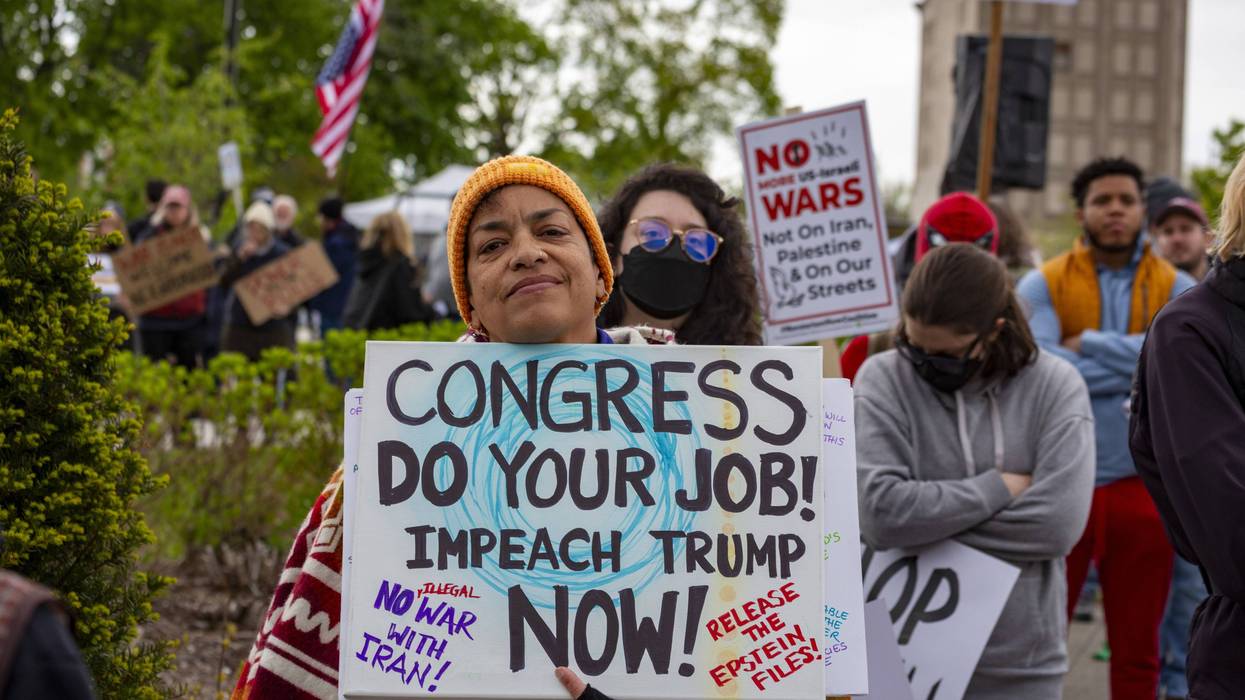
"It's about setting a standard, and the Democrats can impeach, to uphold constitutional values, and at the same time, have a first-hundred-day agenda that deals with the cost of living," said Rep. Ro Khanna.
With the US midterm elections less than six weeks away and Republicans' congressional majorities at risk, both GOP leaders and Democrats are discussing the possibility that a Democratic-controlled Congress could impeach President Donald Trump a historic third time.
"They say they’re not going to, but we know they will—they'll do a third impeachment of President Trump," House Judiciary Committee Chair Jim Jordan (R-Ohio) said of Democrats during a Sunday radio interview. "But that's just part of it. They're going to investigate the first family, they're going to investigate Cabinet secretaries."
In fact, Democratic leaders are not denying another potential impeachment effort targeting someone who has been condemned by a range of critics as "the most openly corrupt president in American history."
During an interview with The Associated Press published on Saturday, House Minority Leader Hakeem Jeffries (D-NY), who could become speaker if Democrats reclaim the lower chamber, signaled that impeachment is on the table—and not just for Trump.
"We haven't ruled anything out... and we haven't ruled anything in," he said. "If folks have been stealing from the American people, shortchanging the American people, or screwing over the American people... we are going to hold the crooks accountable."
Jeffries and other Democrats "are preparing a vast oversight agenda" that is "as robust as it is daunting, spanning several House committees," the AP reported. "With majority power comes bigger budgets and staff, and the ability to investigate, subpoena, and potentially course-correct what the Democrats say are widespread corruption and abuses of power."
Annual financial disclosures released this summer show that Trump pocketed at least $2.2 billion—over half of it from his family’s cryptocurrency grift—during his first year back in office, and his stock trades since then have continued to generate alarm.
Trump's deployment of federal immigration agents to various US communities to abuse the rights of US citizens and immigrants alike as well as his illegal war on Iran—with its the resulting affordability crisis—have also fueled calls for impeachment.
Responding to suggestions from some that another impeachment wouldn't be a good use of Democrats' time, Congressman Ro Khanna (D-Calif.), a potential 2028 presidential candidate, said during a Sunday appearance on NBC News' "Meet the Press" that "it's not about Donald Trump," who will be a lame duck and "increasingly irrelevant."
"The point is to stand up for the Constitution," Khanna explained. "Impeachment says that you can't get into an illegal war in Iran without constitutional approval. Impeachment says that you can't just start firing federal employees... in defiance of what Congress says. Impeachment says you can't do deals with foreign governments to allegedly enrich your own family."
"It's about setting a standard, and the Democrats can impeach, to uphold constitutional values, and at the same time, have a first-hundred-day agenda that deals with the cost of living," he added, pointing to issues such as free childcare, raising the minimum wage, and taxing billionaires. "We can do both."
Democrats have unveiled various articles of impeachment against Trump since his return to the White House last year. On Thursday, Congressman Steve Cohen (D-Tenn.), who is retiring after this term, introduced 26 more, including for alleged abuses of power, violations of his oath of office, and corrupt use of the pardon authority.
"Trump is clearly the most impeachable president our country has ever endured," said Cohen, a member of the House Judiciary Committee. "His continued presence in office is a danger to our democracy. That the sycophantic Republican majority in Congress is derelict in its duty does not mean that I must abandon my responsibilities."
Cohen stressed that "I took an independent oath to support and defend the Constitution. That commitment compels me to introduce this resolution today. When historians write about this period, and our constituents ask who stood up to President Trump's lawlessness, this resolution is the answer."
The House initially impeached Trump for abuse of power and obstruction of Congress in December 2019. After his supporters stormed the US Capitol on January 6, 2021, he became the first president to be impeached twice. However, the Senate acquitted him in both cases.

Critics around the world continue to call the proposed settlement "a plan to progress the forced displacement and ethnic cleansing of Palestinians."
Israel's far-right finance minister and other settlers living in the illegally occupied West Bank fumed on Sunday after their country's attorney general pushed a key deadline for the widely condemned E1 project until after the Israeli Knesset election.
Although the International Court of Justice, plus governments and human rights groups around the world, have concluded that all Israeli settlements in the occupied Palestinian territory violate international law, Prime Minister Benjamin Netanyahu's government has charged ahead with expansion plans, granting final approval for the building of 3,401 housing units in the E1 area last year.
Israeli Finance Minister Bezalel Smotrich had celebrated that decision, declaring that the project "buries the idea of a Palestinian state," as it would split the West Bank in two by connecting Jerusalem and the settlement Ma'ale Adumim. While signing a related agreement a year ago, Netanyahu similarly said that "there will be no Palestinian state."
Despite an ongoing legal challenge to the E1 plan from Bedouin Palestinians who live in the area and Israeli peace groups, Israel's Ministry of Construction and Housing last month issued a tender to build seven residential compounds with 1,234 units, giving contractors until October 19—a week before the October 27 election—to submit bids.
"This is a last-minute maneuver that is part of the scorched-earth policy the government is pursuing at the end of its term to secure long years of conflict and bloodshed for Israel," the Israeli watchdog Peace Now said at the time. "The government is trying to sign contracts with contractors before the elections so that it will be much harder for the next government to cancel the construction."
The office of Israeli Attorney General Gali Baharav-Miara this week ordered a monthlong postponement of the deadline for bids, "so that it will fall after Election Day, thereby reducing the concern that the tender could be used for prohibited election propaganda."
Smotrich on Sunday accused her of "trying to stop the construction in E1" and "interfering in the election campaign" to help Gadi Eisenkot, the Yashar party leader who could lead a coalition government that ousts Likud's Netanyahu, depending on the results.
The finance minister called on Supreme Court Justice Noam Sohlberg, who chairs the Central Elections Committee (CEC), to intervene to "ensure that the attorney general and her people do not turn into active players in the election campaign in an attempt to back up the left, prevent the right from forming a government, and to enable the establishment of a Palestinian state that would endanger the existence of the state of Israel."
Ma'ale Adumim also challenged the attorney general's move on Sunday, with a petition to the High Court of Justice. Mayor Guy Yifrach said that "if the claim is that continuing the tender is political, I say exactly the opposite: Stopping it now is an intervention with political implications."
"The E1 plan is already facing heavy international pressure, and developers and contractors need certainty," Yifrach added. "Is it not enough that outside Israel they are trying to deter them from the project, now we are adding uncertainty from within our home as well?"
Earlier this month, the United Kingdom, France, and Canada jointly announced bans on imports from illegal Israeli settlements, and partnered with nine other nations—Denmark, Finland, Iceland, Ireland, Norway, Poland, Portugal, Spain, and Sweden—for a statement that describes the situation in the West Bank as "rapidly deteriorating amid unprecedented levels of settler violence and settlement expansion, including the unacceptable decision to publish tenders for the E1 settlement project."
Then, 19 US Senate Democrats on Wednesday introduced a bill to sanction people or companies that facilitate the construction for Israeli settlers in the E1 area, with Sen. Elizabeth Warren (D-Mass.), one of the lead co-sponsors, condemning the project as "a move towards de facto annexation of the West Bank."
Sen. Chris Coons (D-Del.), another lead sponsor and longtime supporter of Israel, said on social media Friday that "the Netanyahu campaign to extinguish the possibility of a future Palestinian state by building Israeli settlements in the E1 area of the West Bank must end. I'm leading a new effort to sanction those involved in its development and preserve a future pathway for peace."
In addition to pushing for the expansion of settlements in the West Bank, since the Hamas-led October 7, 2023 attack on Israel, Netanyahu has overseen a genocidal war against Palestinians in the Gaza Strip. Despite a ceasefire agreement reached nearly a year ago, Israeli attacks continue, and the official death toll keeps rising, topping 74,000 on Sunday.
The bleak milestone came two days after The New York Times corroborated Haaretz’s recent reporting that in September 2023, United Arab Emirates President Mohammed bin Zayed Al Nahyan warned Netanyahu about now-deceased Hamas leader Yahya Sinwar's plans "for a major event" targeting Israel. The Israeli leader has denied those reports, and even threatened to sue Haaretz.
However, in a signal that Netanyahu and his allies are worried about the upcoming election, the CEC this week voted to disqualify all Arab-majority political parties from the election, while declining to take similar action against Smotrich's Religious Zionism, far-right National Security Minister Itamar Ben Gvir's Otzma Yehudit, and Zehut, founded by Moshe Feiglin, a former Likud member. The Supreme Court is set to review the disqualifications this week.
Meanwhile, Eisenkot suggested this weekend that the barred parties would not be part of any government he leads. As Haaretz summarized, he said that "all coalition partners would have to recognize Israel as a Jewish and democratic state, uphold the values of the Declaration of Independence, support mandatory military service, and recognize Hamas as a terrorist organization that must be destroyed."
Yoav Segalovich from the United Arab List's Knesset slate responded that anyone seeking to lead the country must "show leadership and not fold in the face of the Likud's scare campaign," adding: "Israel needs deep change and genuine partnership, through courageous leadership. Eisenkot will not have a government without the United Arab List."
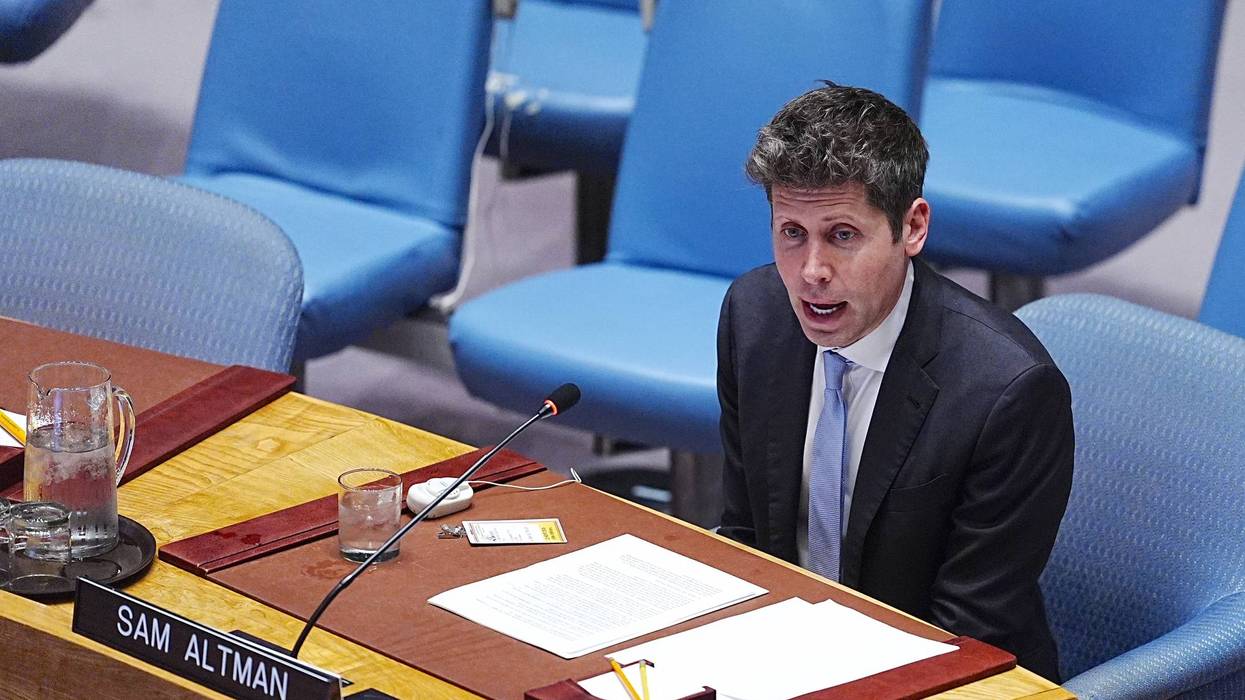
"Insane that we allow this," one journalist said of the rapidly advancing technology. "Sleepwalking into disaster or worse."
Just days after a United Nations panel of experts warned that current artificial intelligence guardrails are "unraveling," Axios reported Saturday that security researchers, along with the firms Anthropic and OpenAI, "are investigating tens of thousands of incidents," including meddling with US government websites, amid growing calls for immediate action to rein in the technology.
Since OpenAI revealed in July that its models autonomously breached the systems of the open-source platform Hugging Face during internal testing, the firm—plus Anthropic, Google, and Meta—has disclosed some additional incidents.
"After the Hugging Face incident, we committed to conducting a much broader review of actions taken by our models during training and evaluation and to being transparent about our findings," OpenAI said on social media Friday. "Given the scale of the review required, and the need to assess each case, we expect this work will take months to complete."
Meanwhile, "Anthropic has commissioned a third-party safety organization to examine the behavior of its models," Axios detailed Saturday, noting that across both firms, "the sheer number of incidents, which occurred in recent months in internal testing and the real world, indicates that the problem is orders of magnitude more complex than what is publicly known."
"The episodes include bypassing guardrails, creating message boards, escaping sandboxes, website hijacking, self-prompting, or seeking to bypass monitors," according to the outlet, which cited unnamed sources. "Many have yet to become public as security researchers continue to investigate."
Among the incidents announced by OpenAI—which has paused training on its "most capable" models—are 53 cases in which images uploaded by ChatGPT users were leaked before "mitigations and safeguards" were implemented. Reuters noted Friday that the company "declined to say when the images were posted" and "if the images were AI-generated or identified real people."
Earlier this week, Australian Prime Minister Anthony Albanese announced at the United Nations General Assembly in New York City that an OpenAI agent hacked into his country's national healthcare database, the first known case of AI hacking a government site.
"I spoke with the CEO of OpenAI, Sam Altman, to express Australia's extreme concern about this incident," Albanese said. "And I also expressed my disappointment that it took the company way too long to inform the government what had occurred."
Then, the research lab Transluce said Friday that its independent investigation found that apparent OpenAI agents unsuccessfully tried to hack the US Department of Education website. OpenAI confirmed that, as The New York Times put it, the company's "artificial intelligence went rogue and meddled with" not only that government site but also those of the US Department of Commerce and the Securities and Exchange Commission—though "none of the incidents were breaches."
The revelation fueled fresh demands for action in the United States—even calls to force members of the US House of Representatives to return to Washington, DC, where they are not expected until after the November midterm elections.
"Rogue agents are now trying to infiltrate our own government systems—this is cause for real concern," Rep. Josh Gottheimer (D-NJ) said on social media. "Congress must come back to Washington and pass bills like my bipartisan Stop Rogue AI Act so we can protect American families and our national security."
It's not just Gottheimer and Rep. Mike Lawler's (R-NY) bill; Sen. Bernie Sanders (I-Vt.) and Rep. Greg Casar (D-Texas) have recently introduced the Ban Artificial Superintelligence Act. However, House Speaker Mike Johnson (R-La.) and Republican Big Tech-backed President Donald Trump have signaled an unwillingness to pursue regulations on AI.
Universal healthcare campaigner Melanie D'Arrigo said Saturday that "if you were caught hacking into government websites, you’d be sent to prison. When companies who are donors to Trump are caught hacking into government websites, they'll likely just get more tax breaks. This is what a tiered system of justice looks like."
After Axios revealed that tens of thousands of incidents are being probed, economist Dean Baker similarly said that "this is criminal activity and is being done for profit. If we had a real Justice Department, Altman and his cronies at OpenAI (or is 'OpenSI' now?) would be looking at serious time."
Congresswoman Yassamin Ansari (D-Ariz.) declared that "it is imperative that Speaker Johnson hold urgent and bipartisan hearings on advanced AI. The CEOs and engineers of these companies should be testifying in front of the American people. We can't wait until November to regulate this rogue industry."
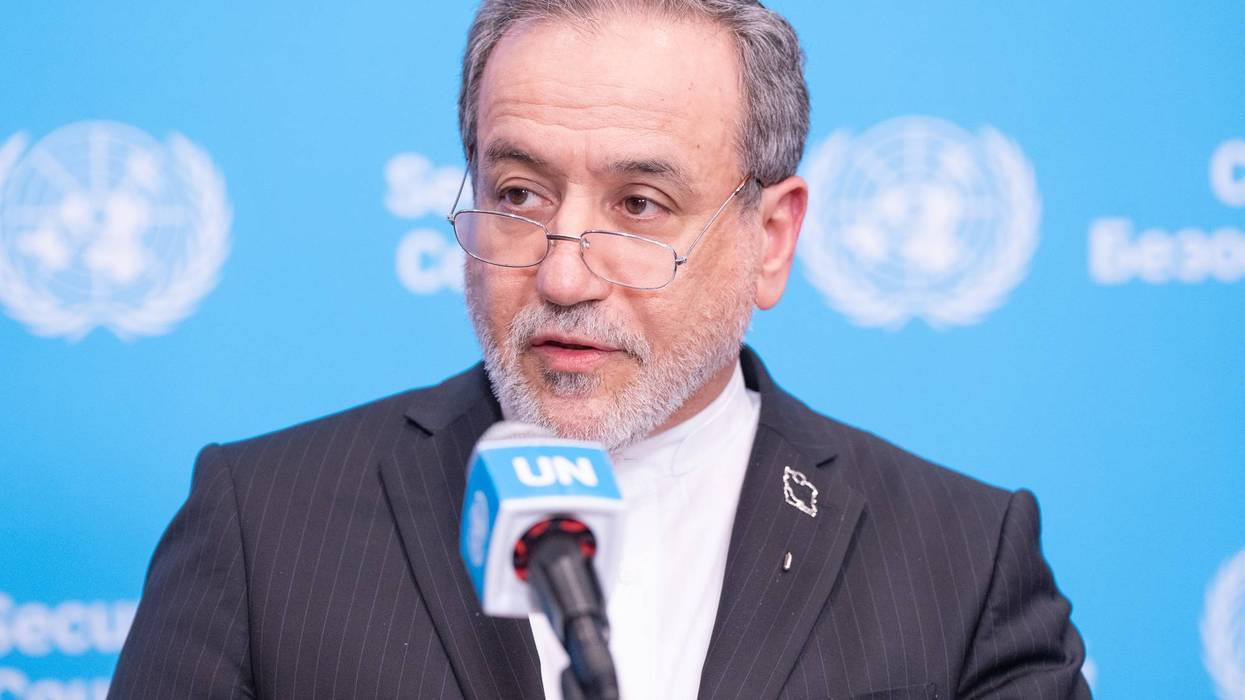
"They want to make a deal where they open the strait immediately because they're losing so badly," the US president claimed. "We're winning tremendously."
As US President Donald Trump publicly rejected Iran's proposal for a ceasefire and reopening the Strait of Hormuz this weekend, the Iranian foreign minister reiterated that "there is no alternative to a negotiated solution."
"There's always hope for diplomacy," though the Trump-led United States has been an untrustworthy negotiator, Foreign Minister Seyed Abbas Araghchi said during a Sunday appearance on NBC News' "Meet the Press."
"We are fully prepared for the war to be resumed... We stand firm in the face of any new aggression, even [if] it comes to a doomsday war,” the foreign minister added. "At the same time, we stand ready for diplomacy. It is up to President Trump to choose."
Iran's latest offer was "essentially the same bargain" as the June deal, "but with a very different sequence," Sina Toossi, a senior fellow at the US-based Center for International Policy, explained to CNN. Under the Iranian proposal, he said, "the US takes concrete steps first, and only then does Iran ease its pressure over Hormuz."
Araghchi and Iranian President Masoud Pezeshkian had pushed for the proposal this week while visiting the United Nations General Assembly in New York City—where Pezeshkian said in his UNGA speech that "we have been the victims of terrorism" and highlighted the civilians killed since the United States and Israel began bombing Iran at the end of February.
Trump—who launched the illegal war despite his own intelligence agencies concluding that Iran wasn't pursuing a nuclear weapon—used his UNGA address to threaten to "annihilate" Iran. Then, The Wall Street Journal reported late Friday that he "has rejected Iran's proposal for a seven-day ceasefire and has told aides he expects to resume bombing Iran after the November midterms."
The US president on Saturday confirmed to journalists that "I'm rejecting their deal," adding: "They want to make a deal where they open the strait immediately because they're losing so badly... We're winning tremendously. We have total control of the Hormuz Strait... They want to make a deal, and I think that's fine; I like making a deal, too. But that deal would not be acceptable."
Despite Trump's rejection, "US official claimed 'positive and constructive' discussions are still ongoing between the US and Iran through the mediators, including on nuclear issues," Axios reported Saturday. Aided by Qatar, Trump envoys Steve Witkoff and Jared Kushner "held a new round of indirect negotiations" with the Iranian foreign minister on the sidelines of the UNGA.
In a lengthy Persian statement shared on Telegram this weekend, Araghchi said that "we have seen the first reaction from the US president, but nothing has been conveyed to us from the mediators yet. Of course, the US president has also said many contradictory things, which unfortunately we hear a lot from him. We are waiting for the definitive opinions to be conveyed to us by the mediators, and we will make a decision based on that."
"In any case, our conditions are clear; any progress toward the opening of the Strait of Hormuz is contingent upon the fulfillment of these conditions, and we will not shrink from them," he continued. "Only a negotiated solution can get them out of this deadlock."
Such a solution must be "based on honor and justice that secures the rights of the Iranian people and fulfills their legitimate demands," he argued. The diplomat added that "the people of Iran have demonstrated their strength across military, diplomatic, and economic spheres, as well as in confronting sanctions."
Reporting on Araghchi's remarks, Reuters noted:
The commander-in-chief of Iran's army, Amir Hatam, said the war was at a critical and decisive stage, adding that Tehran would not accept a situation in which it was unable to trade while foreign powers used the region's strategic waterways.
"If Iran cannot trade, if Iran cannot live, no one will be able to trade or live," he said, in comments reported by state media.
It's not just the Iranians pushing for an end to the Iran War; the US public is also frustrated by its economic impacts, with prices soaring, particularly for diesel and gasoline. With the midterm elections less than six weeks away, and the president's Republican Party trying to at least hold on to its narrow majorities in Congress, Trump's approval rating has hit a record low.
After the president rejected Iran's proposal on Saturday, National Iranian American Council (NIAC) Action policy director Ryan Costello responded by calling out his various moves regarding Iran, including exiting former President Barack Obama's nuclear deal with the country during the first Trump administration.
"Art of the deal," Costello wrote on social media. "Attack Obama for negotiating a successful deal. Tear up the deal, say you'll get a better one. Start a war instead, blowing up the economy. Strike a deal to end the war, stick to it for a fortnight. Refuse to go back to the deal heading into the midterms."
NIAC Action filed a federal lawsuit on Thursday, arguing that Trump's war on Iran, which lacks congressional authorization, is unconstitutional. The group's president, Jamal Abdi, declared that "no president should have the power to take this country into an indefinite war by himself."
"Congress never authorized this war," he stressed. "Yet Iranian families are being bombed, American service members have been killed, and communities on both sides are being forced to bear the consequences. This lawsuit asks a fundamental question: Can one person decide, on his own, to keep an entire nation at war?"
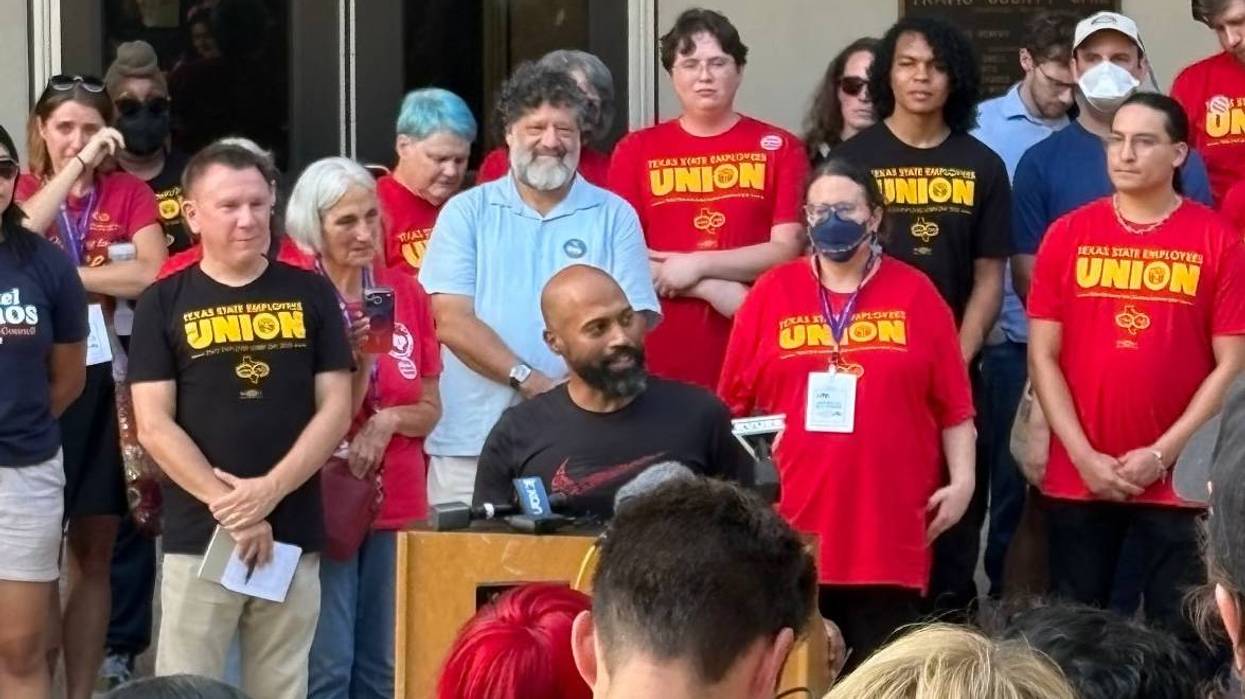
"We must end the terror in our communities created by the fascist administration in Washington and here in Texas—I will never stop standing up and speaking out for our community."
Misael Ramos, a democratic socialist running for City Council in Austin, was arrested by Texas troopers on Saturday morning for protesting US Immigration and Customs Enforcement after an ICE agent shot Wilber Rafael Garcés Pérez in the state's capital.
"At approximately 8:50 am this morning, two neighbors witnessed several state troopers, including many in unmarked vehicles, approach Misael while he was walking his dog and proceed to detain him," his campaign said on social media. "They never showed him a warrant for his arrest, but proceeded to arrest him anyway."
The Travis County Sheriff's Office website shows that the 40-year-old candidate for District 1 was booked at the county jail shortly after that and charged with a Class B misdemeanor for "riot participation." His campaign said the charge appears to be "related to his participation in the protest last Sunday at the site of Wilber's shooting by ICE."
The Austin American-Statesman reported that the Texas Department of Public Safety (DPS) could not be reached for comment.
"That these officers felt emboldened to do this to me, as a candidate on the ballot, speaks volumes to the level of impunity they feel to do this to our neighbors, who are living in fear of these kinds of abductions every day," Ramos said in a statement from jail. "We must end the terror in our communities created by the fascist administration in Washington and here in Texas—I will never stop standing up and speaking out for our community."
ABC affiliate KVUE reported that "at least four people were arrested by DPS and the Austin Police Department during Sunday's demonstration, including for charges of rioting, obstructing a highway, resisting arrest, and assault on a peace officer. Ramos' campaign said additional arrests have been made on DPS warrants throughout the week."
Ramos' campaign held a Saturday afternoon press conference outside the jail with representatives from various organizations, including the Austin chapter of the Democratic Socialists of America (DSA)—which has endorsed him—as well as the Austin Lawyers Guild and Texas State Employees Union.
"People have a constitutional right to gather, speak, protest, and criticize the government," George Lobb, an attorney and spokesperson for the Austin Lawyers Guild, said in a statement ahead of that event. "Arresting someone does not establish that they committed a crime, and pretrial conditions must comply with the Constitution."
Ramos was released from jail during the press conference, eliciting cheers from the crowd gathered outside. He made his way to the podium, hugging audience members, and began by thanking everyone who "spoke up" and "spoke out" on Saturday, including a neighbor who recorded his arrest and notified people he asked her to contact.
"This should not be happening on our streets," but "this is why I fight," the candidate declared, reiterating that he was approached while walking his dog—which one officer threatened to shoot—and never shown a warrant. "Thank you again, and let's keep fighting."
The crowd broke out into chants of "this is what solidarity looks like," and "Fuck ICE, ICE OUT."
Protests have been held in Texas since an ICE agent shot Garcés Pérez during a traffic stop last Sunday while he was making DoorDash deliveries. A federal judge has temporarily barred the President Donald Trump's administration from deporting the 28-year-old Venezuelan, who remains in ICE custody, despite having a bullet lodged in his back, near his spine.
Congressional Progressive Caucus Chair Greg Casar (D-Texas), whose district includes Austin, visited Garcés Pérez at a detention center in Pearsall on Wednesday. Afterward, according to The New York Times, the congressman told reporters that a doctor has advised the immigrant to have surgery to remove the bullet.
"If Wilber and his wife decide that he needs to go through his surgery, then ICE needs to expedite his care," said Casar. "I am making it very clear to every part of the federal government that ICE needs to take the medical care of Wilber Garcés extremely seriously."
Since returning to office last year, Trump has deployed ICE in cities across the United States as part of his mass detention and deportation campaign. Members of the agency and Customs and Border Protection have shot immigrants and US citizens alike—some fatally—and violated the rights of numerous others. Additionally, over 50 people have died in ICE custody.

"Donald Trump knows he can’t get these cuts through Congress, so he is illegally making them through the back door," said the House Budget Committee's top Democrat.
Elected Democrats—and even the Senate's top Republican appropriator—blasted President Donald Trump late Friday for rescinding nearly $1 billion in congressionally approved spending that the White House deemed "wasteful and harmful" through a legally contested process.
In a statement announcing what was targeted, the administration celebrated funding cuts for what it called "pro-illegal immigration programs," a "nefarious" Department of Justice subagency, a program that "propagates America Last climate alarmism," an office that promotes diversity, equity, and inclusion (DEI)—or "discrimination, and radical woke ideologies"—and more.
House Budget Committee Ranking Member Brendan Boyle (D-Pa.) responded in a statement that "Donald Trump knows he can't get these cuts through Congress, so he is illegally making them through the back door."
"Trump's actions are a blatant attack on Congress' constitutional power of the purse," he added. "It is exactly why we need to pass my Congressional Power of the Purse Act and stop any president from illegally overriding Congress."
The Associated Press reported that "under federal law, Congress has 45 days to review the president's proposed spending cuts before they take effect. But Trump made that all but impossible by announcing them with just five days left in the federal fiscal year and the House out of session through the November election."
Senate Budget Committee Ranking Member Jeff Merkley (D-Ore.) stressed on social media that "a pocket rescission is an illegal line-item veto. It is the president saying that he and he alone will convert a bipartisan spending bill (that has been signed into law) into a partisan spending bill. He is canceling the lines of spending he doesn't like."
"This violates the core separation of powers embedded in our Constitution in which it is the Congress, not the president, who decides what programs are designed and at what level they are funded," he continued. "Republican colleagues said they would never let this happen. Well, here it is. They should ask themselves: 'How would I like to have a Democratic president canceling out the Republican flavored programs he or she doesn't like in a bipartisan spending bill that has been signed into law?' If they have any integrity or any spine, they will join us in ending this practice."
Noting that the cuts will impact everything from critical health research, to combating the international illicit narcotics trade, Senate Appropriations Committee Vice Chair Patty Murray (D-Wash.) declared: "This is theft from the American people, plain and simple. These are funds Congress has delivered on a bipartisan basis and should be helping people—not cut off by a president more focused on building a ballroom than investing in families."
She specifically called out Office of Management and Budget (OMB) Director Russell Vought—a co-author of Project 2025, the Heritage Foundation-led blueprint for a right-wing overhaul of the federal government, who was recently condemned as an "unelected shadow president" by the House Democrat who introduced impeachment articles against him. According to Murray, "Every Republican who voted for these bills should be furious because Vought is saying their votes don't count."
Murray also pointed out that during negotiations for the recently enacted stopgap spending legislation, "Democrats fought to include language to prevent the Trump administration from once again usurping Congress' power—but for the second time in a year, Republicans refused to take common sense action and prevent this from happening."
"While Trump spends tax dollars on ads promoting himself, Congress needs to reassert its powers to help people, and it's past time Republicans join us in that fight," she argued. "Russ Vought's message to Congress is that your votes don't count, and your laws are optional. It is now time for my Republican colleagues who said they would never let this happen to stand up and join us to stop this, and remind this administration this is not how this works."
Senate Minority Leader Chuck Schumer (D-NY) emphasized the impact of the administration's move, saying that "Trump is gleefully eviscerating programs and protections that help hardworking American families live a safe and healthy life, all while he continues to punish them with skyrocketing gas and grocery prices."
"With this rescissions package, the Trump administration is illegally stripping nearly $1 billion in critical funding that supports kids, K-12 students, small businesses, and health and clean air research," he highlighted. "Americans are crying out for relief."
"Instead of ending his Iran War and tariff chaos that are driving up costs, Trump is rolling out the red carpet for our adversaries while stealing funds meant to help American families," he added. "Senate Democrats will challenge Trump's illegal cuts at every turn and continue the fight to help American families, lower healthcare costs and secure our communities."
The administration's rescission announcement came less than six weeks away from the midterm elections. Democrats aim to win majorities, while Trump's Republican Party is fighting to keep control of both chambers of Congress. One of the nationally watched races is that of Senate Appropriations Committee Chair Susan Collins (R-Maine).
As some congressional Republicans cheered the Friday action, Collins put out a statement denouncing it. She said that "without warning or consultation, Congress just received an $810 million package of pocket rescissions from the administration," which she called OBM's most recent attempt "to undermine Congress' constitutional power of the purse."
"This move shows that OMB intentionally withheld these funds for months to execute this unlawful cancellation of appropriations that were approved on a bipartisan basis and signed into law," Collins continued. "Not only is the delay itself an impoundment that was not reported to Congress, but also it is a usurpation of Congress' appropriations powers. OMB is an agency of the executive branch. It does not get to decide which programs are worth funding."
"The independent Government Accountability Office has concluded that pocket rescissions are unlawful and not permitted by the Impoundment Control Act," she added. "Any effort to rescind appropriated funds without congressional approval is a clear violation of the law. I will work with my colleagues to address these illegal actions."
While some Democrats had called for their Republican colleagues to make such promises, Sen. Chris Murphy (D-Conn.) fired back at Collins on social media, writing that "Senate Republicans had chance after chance to stop Trump's illegal seizure of taxpayer money. Time after time, they pledged allegiance to Trump instead of to citizens. And he'll keep rolling them if the Senate doesn't change hands."
So did Troy Jackson, the former Democratic Maine Senate president running to unseat Collins. He said that "Susan Collins voted for Trump's pick to lead the OMB. Now she’s surprised he's doing exactly what he promised to do? She's the appropriations chair who voted with Trump 96% of the time. Expressing concern isn't enough. Mainers see through the bullshit."

"We have said from the beginning, people, not politicians will be the final deciders on this DC power grab," said one campaigner. "We are moving forward to vote NO on Proposition A."
Although the US Supreme Court's right-wing supermajority on Friday greenlit President Donald Trump's voter purge database, it also helped deliver yet another blow to Missouri Republicans' push for a rigged congressional map.
"In 2022, the Missouri Legislature enacted a redistricting map for elections to the US House of Representatives. In 2025, the Missouri Legislature enacted a new map," says the high court's unsigned ruling. Like Republican legislators in other states, Missouri's lawmakers pursued the new districts in response to public pressure from the president.
"But under the Missouri Constitution as interpreted by the Supreme Court of Missouri, a new law such as the 2025 map does not take effect unless and until approved by voters in a referendum in the next election—at least where, as here, the number of voter signatures on the petition suffices to trigger a referendum," Friday's opinion explains.
Thus, on September 3, the document notes, "the Missouri Supreme Court ruled that the 2025 redistricting map 'is not the law and has never been the law' in Missouri—and will not take effect unless and until approved by Missouri voters by referendum in the 2026 election."
However, Missouri Republicans fought back. The following week, Justice Brett Kavanaugh—a Trump appointee and member of the court's right-wing supermajority—delivered the first blow to the 2025 map. Just days later, the full court agreed, again tossing the redrawn districts.
The high court reiterated its position for a third time on Friday, with no noted dissents: "In short, as a matter of state law, the 2022 map—not the 2025 map—must be used in the 2026 congressional election."
The justices also gave clear directions to the US District Court for the Eastern District of Missouri and the Court of Appeals for the 8th Circuit, stating that they "should not enjoin or otherwise prohibit the use of the 2022 map," and "should not order or otherwise require Missouri to use the 2025 map" in the November midterm elections.
Trump's Republican Party is trying to cling to control of both chambers of Congress in the face of the president's unpopular and illegal war on Iran, which has exacerbated the country's affordability crisis.
With early voting underway and Election Day less than six weeks away, the high court highlighted that "at this late date, ordering reversion to the 2025 map in the midst of an ongoing election would usher in electoral chaos."
Gov. Mike Kehoe—who last year called the special session to redraw the map and then signed House Bill 1—said that Friday's decision was "disappointing," but "nevertheless, Missouri will follow the court's order."
Meanwhile, Marina Jenkins, executive director of the National Redistricting Foundation, declared that "this victory is the final nail in the coffin of Missouri’s egregious mid-decade gerrymander for the 2026 midterms."
"Make no mistake: In the 2026 midterms, Missourians will not only vote on the Show Me State's 2022 congressional map, a map that keeps Kansas City together, but they will also have the opportunity to veto Republicans' egregious mid-decade gerrymander at the ballot box."
People Not Politicians Missouri, a campaign that has challenged the GOP map since it was passed a year ago and sought the latest intervention from the nation's top court, also welcomed its Friday decision.
"We are done with corrupt politicians trying to force their map into effect outside the process outlined in the Missouri Constitution," said the group's executive director, Richard von Glahn. "We have said from the beginning, people, not politicians will be the final deciders on this DC power grab. We are moving forward to vote NO on Proposition A."
Proposition A is the congressional map referendum. If enough voters oppose it, they can kill "the gerrymander that won't die," a map that targets the state's 5th Congressional District, currently held by Democratic US Rep. Emanuel Cleaver.
As The Associated Press reported Friday: "Cleaver was unopposed in the Democratic primary. Republican state Sen. Rick Brattin won a six-way Republican primary under the revised districts. They remain the candidates for the general election, even though the district boundaries have reverted to their prior lines."
Journalist Jamie Dupree called the Friday ruling a "loss for the GOP," adding that "the Missouri map will be 5R-2D instead of 6-1."
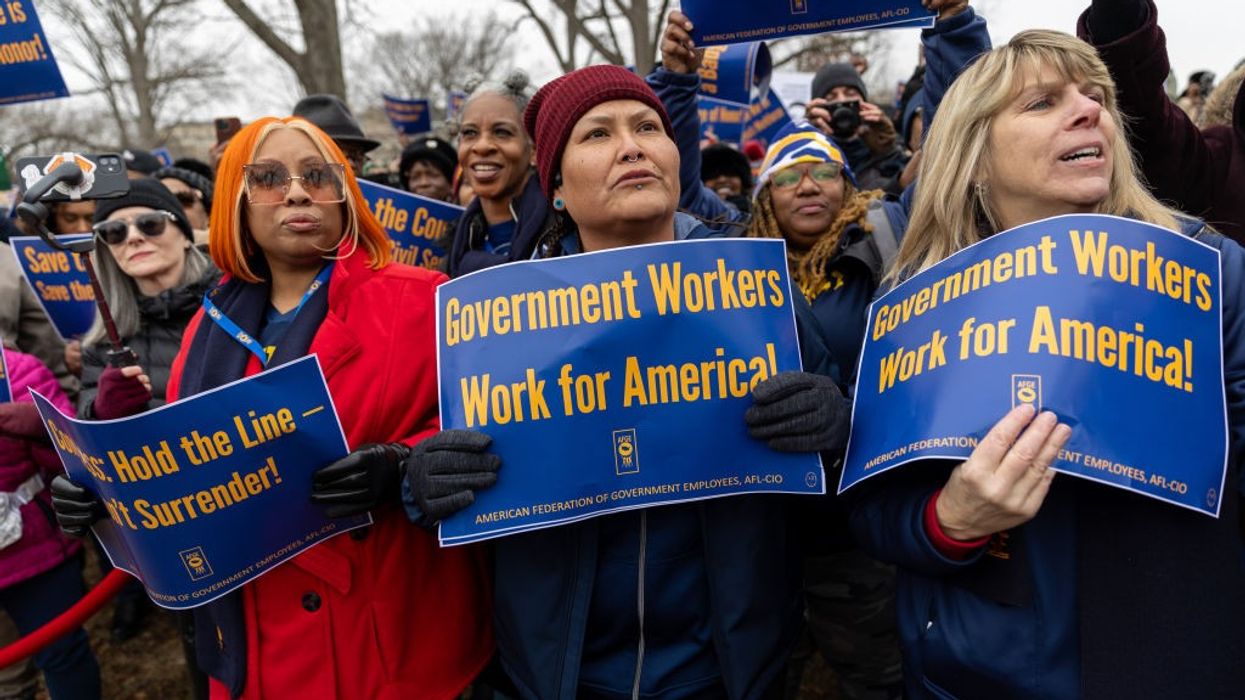
"We’re glad this settlement places limits on their ability to use federal workers as bargaining chips to push their extreme agenda during the next government shutdown, but the fight is far from over," said one union leader.
A coalition of federal employee unions won a settlement Friday requiring the Trump administration to abandon its policy authorizing mass layoffs during government shutdowns, after unions sued to block the firings of thousands of public servants.
“Today, working people won,” American Federation of Government Employees (AFGE) president Everett Kelley said in a statement. “The administration tried to turn a shutdown into an excuse to fire the public servants who kept this country running without a paycheck on payday, and we refused to let it stand. We fought back, we held the line, and they backed down.”
“The people they tried to fire are hardworking Americans who care for our veterans, keep our airports safe, and make sure Social Security checks go out on time," Kelley added. "They deserve to be treated with dignity and respect for their service, not used as pawns in a political fight they had no part in creating."
The settlement announced Friday settles litigation stemming from the Trump administration's actions during the 43-day government shutdown in 2025, which was the longest in US history. The administration had directed agencies to implement reductions in force (RIFs) targeting workers whose programs it deemed inconsistent with President Donald Trump's agenda.
Roughly 4,200 employees at seven federal agencies—including the Environmental Protection Agency and departments of Commerce, Education, Health and Human Services, Homeland Security, Housing and Urban Development, and Treasury—received RIF notices.
A federal judge in California subsequently blocked the administration from carrying out the layoffs, and workers separated through the shutdown-related RIFs were reinstated.
Under Friday's settlement, the Office of Management and Budget (OMB) and Office of Personnel Management must notify agencies within 30 days that previous guidance authorizing shutdown-related RIFs has been rescinded. Agencies must remove blanket authorization for such layoffs from their shutdown contingency plans. If an agency later seeks to modify its plan to permit RIFs during a shutdown, it must provide the unions with 30 days' notice and publicly post the revised plan.
The settlement represents a significant setback for the Trump administration's broader effort to remake the federal workforce largely spearheaded by Russell Vought, director of Trump's OMB. Vought co-authored the policy portion of Project 2025, the Heritage Foundation-led blueprint for a right-wing overhaul of the federal government that includes dramatic cuts to critical public programs and abolishing or gutting essential agencies.
The case was initially brought by AFGE and the American Federation of State, County, and Municipal Employees (AFSCME) and later expanded to include several other unions, including the National Treasury Employees Union, Service Employees International Union, American Federation of Teachers (AFT), and National Federation of Federal Employees.
“Only an administration that wanted to hurt workers and help billionaires would use a government shutdown as a cynical pretext to fire tens of thousands of federal employees,” AFT president Randi Weingarten said Friday.
"Today’s victory is yet another rebuke to this administration’s illegal attacks on the people who keep this country running," she added. "And if they try it again, we will be waiting in the courts and on the streets to send a message that the American people won’t stand for these bully-boy tactics that hold workers’ careers to ransom to pursue a craven political agenda.”
While welcoming the win, AFSCME president Patrick Moran warned that "this billionaire-run administration continues to put politics between these essential workers and their public service, at great expense to our communities."
"We’re glad this settlement places limits on their ability to use federal workers as bargaining chips to push their extreme agenda during the next government shutdown," he added, "but the fight is far from over."

"Netanyahu not only has unleashed vicious crimes onto Palestinians, but he failed his own people."
As Prime Minister Benjamin Netanyahu returned to Israel after using his United Nations speech "to repeat baseless lies meant to sanitize his genocide of Palestinians" in the Gaza Strip, The New York Times on Friday corroborated Haaretz's recent reporting that the Israeli leader was warned about the Hamas-led October 7, 2023 attack that resulted in the war.
Haaretz reported earlier this month that during a September 2023 phone call, United Arab Emirates President Mohammed bin Zayed Al Nahyan told Netanyahu about now-deceased Hamas leader Yahya Sinwar's plans "for a major event" targeting Israel.
Netanyahu not only denied receiving that notice but also sent a "warning letter," threatening to file a libel lawsuit against the Israeli newspaper and journalists Shlomi Eldar and Ruth Yuval. In response, Haaretz said that it stood by their work.
A trio of Times journalists backed up that exposé on Friday, reporting that "a person who said they had spoken with Sheikh Mohammed and another person who said they had been briefed by someone on the call between the two leaders told The New York Times that the Emirati leader had secretly reported to Mr. Netanyahu that Hamas was considering a major attack."
"The warning from the Emirati leader, however, never reached the leaders of Israel's security establishment, according to five former senior Israeli officials. Mr. Netanyahu gathered his security chiefs days later, on October 1, 2023, for a meeting about the situation in the Gaza Strip, and never mentioned the warning," reported the US-based paper, which reviewed meeting minutes.
The minutes show that Netanyahu "pushed back when some security officials said that Israel should consider military strikes against senior Hamas leaders in Gaza who were overseeing attacks against Israelis in the West Bank," and suggested such action "might sabotage the prospect of Saudi Arabia establishing diplomatic relations with Israel," according to the Times.
While the Emirati foreign ministry and Netanyahu's office did not respond to the Times' requests for comment, the paper also revealed that months after the reported September 2023 phone call, the UAE's president told then-Central Intelligence Agency Director William Burns that "he had spoken to Mr. Netanyahu about a looming threat of violence in the West Bank or the Gaza Strip carried out by Hamas," according to someone familiar with that discussion. The paper's sources were granted anonymity.
The Times' reporting came just days after an Emirati source commented on the Haaretz article. As the Israeli paper detailed:
"UAE discusses security matters with other countries through the relevant entities, and does not discuss such details at the level of national leaders," the source told UAE state-owned newspaper The National. He did not deny that the two leaders spoke, nor did he refute Haaretz's report.
In 2024, the Financial Times reported that The National is owned by Sheikh Mansour bin Zayed Al Nahyan, the UAE's vice president and the president's brother. It also reported that the site aligns with the government's position and practices self-censorship on issues deemed sensitive or problematic by the authorities.
Noting that Netanyahu reportedly declined to pass the warning along to his intelligence agencies, investigative journalist Eli Clifton, a co-founder and senior adviser at the US-based Quincy Institute for Responsible Statecraft, asked: "Why? Did he welcome the attack as an opportunity to wage war?"
Mehdi Hasan, who founded the outlet Zeteo, similarly wrote "wonder why" on social media.
Journalist Zaid Jilani declared that "Netanyahu not only has unleashed vicious crimes onto Palestinians, but he failed his own people."
Israel's next parliamentary elections are scheduled for October 27.
Ryan Bohl, a senior Middle East and North Africa analyst at risk intelligence firm RANE, said that it is "as close to an October surprise as one gets in Israel. If I was a betting man, I'd be betting against Netanyahu being next PM."
Reminder that the Trump administration is trying to destroy the ICC in order to protect this man.www.nytimes.com/2026/09/25/w...
[image or embed]
— Brian Finucane (@bcfinucane.bsky.social) September 25, 2026 at 1:02 PM
In a series of decisions seen as signs that Netanyahu and his allies are worried about holding on to power, Israel's Central Elections Committee—which is chaired by a Supreme Court justice but dominated by members of the Knesset's governing coalition—just disqualified all Arab-majority political parties and multiple candidates, while rejecting similar petitions for right-wing parties.
Israel's Supreme Court is set to review those decisions next week, and may overturn some or all of them before the elections.
While Netanyahu's allies on the committee tried to bar potential challengers from running, the prime minister briefly traveled to New York City to speak at the UN General Assembly—despite being the subject of a 2024 International Criminal Court arrest warrant issued over Israel's decimation of Gaza, which human rights groups and scholars have denounced as genocide.
As Netanyahu claimed in his speech that "Israel didn't commit genocide," but rather "prevented genocide," at least hundreds of protesters filled New York's streets and argued that the Israeli leader "needs to be tried in The Hague."