

SUBSCRIBE TO OUR FREE NEWSLETTER
Daily news & progressive opinion—funded by the people, not the corporations—delivered straight to your inbox.
5
#000000
#FFFFFF
To donate by check, phone, or other method, see our More Ways to Give page.
Daily news & progressive opinion—funded by the people, not the corporations—delivered straight to your inbox.
Today, a coalition of Oklahoma abortion providers and a reproductive justice organization filed two separate challenges in state court to block two different abortion bans passed during the 2022 state legislative session. The six-week Texas-style abortion ban (S.B. 1503;challenge linked here), which passed today with no debate or questions allowed, would become effective immediately upon Gov. Kevin Stitt's signature. The other ban (S.B. 612; challenge linked here) would make providing an abortion a felony punishable by up to 10 years in prison and/or a $100,000 fine. The challenge to S.B. 1503 was filed directly in Oklahoma Supreme Court. The challenge to S.B. 612, filed in trial court, was added to an existing case challenging other abortion restrictions enacted in 2021 that are currently blocked.
S.B. 1503
S.B. 1503 creates a bounty-hunting scheme similar to Texas's S.B. 8, which encourages the general public to bring costly and harassing lawsuits against anyone they believe has provided or aided providing abortion in violation of the ban. Under this scheme, anyone who successfully sues an abortion provider, a health center worker, or any person who helps someone access an abortion after about six weeks in Oklahoma would be rewarded with at least $10,000. This scheme has successfully banned most abortions in Texas since it took effect in September 2021, with devastating effects on patients who are forced to flee the state for care, seek abortion outside the health care system, or carry pregnancies against their will.
Oklahoma will become the second state this year, after Idaho, to follow Texas's example in attempting to cut patients off from abortions at the earliest stages of pregnancy even while Roe still stands. In a move reserved for constitutional crises and other urgent situations, the challenge to S.B. 1503 was filed directly in Oklahoma Supreme Court. Petitioners requested an emergency order blocking the law from taking effect while litigation on the merits of the law proceeds. Although federal challenges to Texas's similar ban have been unsuccessful in blocking the law, there is significant precedent in Oklahoma state court to support plaintiffs' arguments for relief preventing this ban from going into effect.
S.B. 612
The other ban challenged today (S.B. 612) is a total ban on abortion in Oklahoma that is set to take effect in late summer 2022. S.B. 612 was signed into law by Gov. Kevin Stitt on April 12 and would make providing an abortion a felony punishable by up to 10 years in prison and/or a $100,000 fine. Today's filing seeks to add a challenge to S.B. 612 to an existing case - Oklahoma Call for Reproductive Justice v. O'Connor - which was filed in state court last year against a slew of abortion restrictions passed in 2021. Those included a ban on abortion as early as six weeks of pregnancy and a separate total abortion ban, which declared that providing any abortions qualifies as "unprofessional conduct" by physicians resulting in loss of licensure. All five laws challenged in the original suit are currently blocked. In today's filing, the plaintiffs requested to have S.B. 612 temporarily blocked like these other laws as litigation moves forward.
Quotes from attorneys and plaintiffs
"The Oklahoma Supreme Court has repeatedly found that the state legislature's extreme attempts to restrict abortion are unconstitutional, and these bans are some of the most extreme yet," said Nancy Northup, president of the Center for Reproductive Rights. "We are asking the state courts to uphold the State Constitution and apply Oklahoma precedent to block these insidious abortion bans before they take effect. Oklahoma is a critical state for abortion access right now, with many Texans fleeing to Oklahoma for abortion care. These bans would further decimate abortion access across the South."
"To limit a person's freedom and autonomy is unconscionable and unconstitutional. Unless these abortion bans are stopped, Oklahomans will be robbed of the freedom to control their own bodies and futures," said Alexis McGill Johnson, president and CEO, Planned Parenthood Federation of America. "For more than seven months, Oklahoma abortion providers have taken in patients forced to leave Texas for essential care. The governor may joke about stopping people from crossing the Oklahoma border for abortion, but this is no laughing matter. Unless these bans are blocked, patients will be turned away, people seeking abortion will be unable to access essential care in their own communities, and their loved ones could be stopped from supporting them due to fear of being sued. We've told Oklahoma politicians loud and clear: keep your bans off our bodies. Today, we're taking the state to court to stop these bans from robbing Oklahomans of abortion access."
"These abortion bans will push abortion access out of reach for many communities who already face often insurmountable barriers to health care, including Black and brown communities, low-income communities, and people who live in rural areas," said Tamya Cox-Toure, co-chair, Oklahoma Call for Reproductive Justice. "These are the same communities who are most impacted by the maternal health crisis occurring in our country and in our state. The lawmakers who passed these bans do not care about access to healthcare, and we can't allow this law to take effect."
"As a physician who also provides abortions in Texas, I have seen firsthand the impact of a bounty-hunting scheme and abortion ban on patients and physicians," said Dr. Alan Braid, owner, Tulsa Women's Reproductive Clinic. "They are designed to threaten and intimidate physicians into not providing constitutionally protected health care, and force pregnant people to travel hundreds of miles to receive care. The pain this has caused in Texas is unfathomable, and I will fight alongside these other providers and advocates to prevent this law from taking effect in Oklahoma."
"Patients who are crossing state lines to get abortion services have the exact same question we do: why are their rights to make personal medical decisions less protected in one state than in another?" said Emily Wales, interim president and CEO, Planned Parenthood Great Plains. "Planned Parenthood Great Plains' providers have served thousands of Texans in the past seven months because of their state's harsh bounty-hunting scheme, and we have been proud to stand with them and provide essential, constitutionally protected abortion services. Now, rather than serving as a haven for patients unable to get care at home, Oklahoma politicians have made outcasts of their own people. With today's filings, we lift up the patients who will otherwise be unable to get care and ask the court to do its most essential function: honor the constitution and the individuals who need its protections."
If any of the abortion bans the legislature has passed in this session or the last take effect, abortion access will be almost entirely cut off for the thousands of patients who receive abortions in Oklahoma each year. The bans would also decimate abortion access for surrounding states: Since Texas's S.B. 8 took effect, Oklahoma clinics have reported huge upticks in Texas patients, resulting in weeks-long wait times. Planned Parenthood released data in February showing that, in the first four months after S.B. 8 took effect, more than half of the patients at its Oklahoma health centers were from Texas, compared to less than 10% in the prior year. Overall, during that period, these Oklahoma health centers saw a nearly 2500% increase in Texas patients.
The challenge to S.B. 1503 was filed in Oklahoma Supreme Court against the State of Oklahoma and all 77 state court clerks. The plaintiffs - Oklahoma Call for Reproductive Justice, Dr. Alan Braid, Tulsa Women's Reproductive Clinic, Comprehensive Health of Planned Parenthood Great Plains, and Planned Parenthood of Arkansas & Eastern Oklahoma - are represented by the Center for Reproductive Rights, Planned Parenthood Federation of America, and Blake Patton.
Oklahoma Call for Reproductive Justice v. O'Connor (to which the challenge to S.B. 612 was added today) was filed by the Center for Reproductive Rights, Planned Parenthood Federation of America, Dechert LLP, and Blake Patton on behalf of the Oklahoma Call for Reproductive Justice, Tulsa Women's Reproductive Clinic, Dr. Alan Braid, Comprehensive Health of Planned Parenthood Great Plains, and Planned Parenthood of Arkansas and Eastern Oklahoma.
The Center for Reproductive Rights is a global human rights organization of lawyers and advocates who ensure reproductive rights are protected in law as fundamental human rights for the dignity, equality, health, and well-being of every person.
(917) 637-3600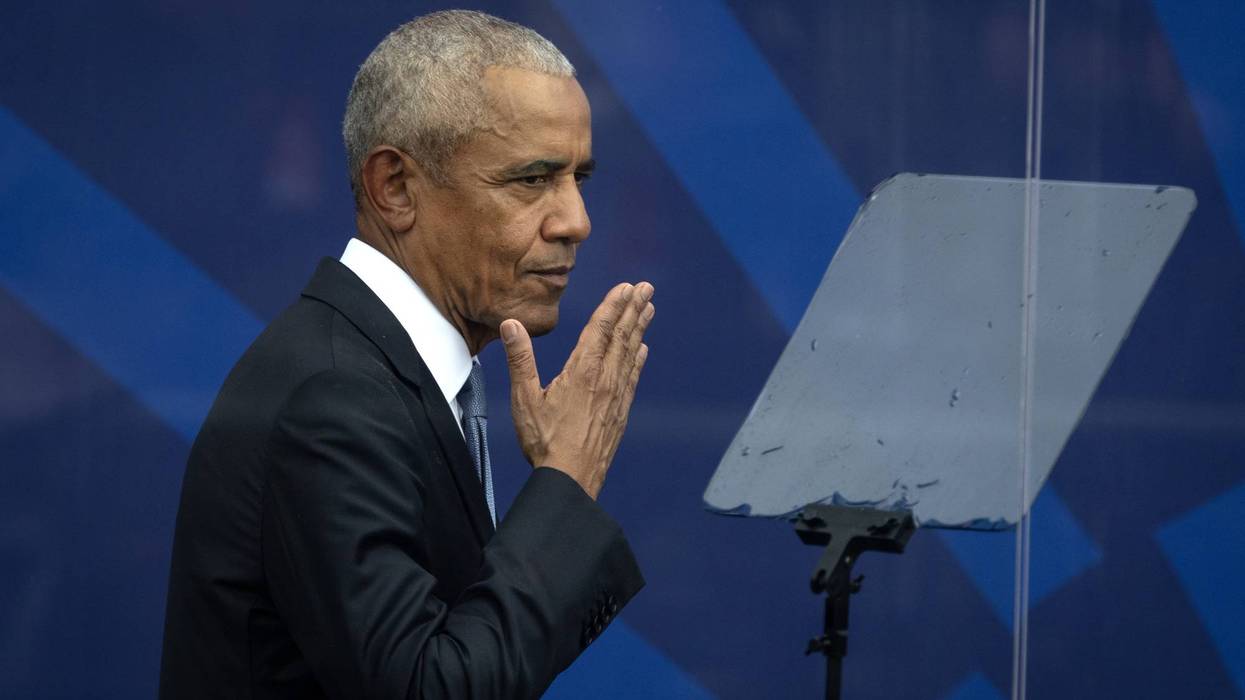
"The full weight of the federal government is being brought down on a law-abiding elected official because she has dared to criticize the president."
Former President Barack Obama on Sunday spoke out against the Trump administration's plot to strip Rep. Ilhan Omar of her US citizenship and remove her from the country.
In a lengthy social media post, Obama said the administration's attack on Omar (D-Minn.) violates "a basic principle of American democracy that the government can’t selectively target individuals simply because of their political beliefs or what they say."
Obama's post came nearly one week after agents at the US Department of Homeland Security conducted a raid of Omar's home. Days after the raid, the Wall Street Journal reported that the raid on Omar was part of an effort to build “a case to strip her of her US citizenship and ultimately deport her."
"To understand why this is so appalling, it’s important to know the facts," Obama wrote. "Congresswoman Omar came to this country with her father when she was 12 years old. Five years later, her father became a naturalized citizen. If Ilhan had been 18 at the time, she would have had to apply for citizenship separately. But because she was 17, she became a naturalized citizen automatically."
Obama noted that President Donald Trump has repeatedly targeted Omar "as someone who he believes does not belong in this country," and accused the president of seizing upon an "unsubstantiated theory that she was actually 18 when her father was naturalized" to carry out his deportation plot.
"The full weight of the federal government is being brought down on a law-abiding elected official because she has dared to criticize the president," Obama wrote. "And it’s not the first time this has happened. Under President Trump, the Justice Department has repeatedly gone after those he considers his political enemies—from the Attorney General of New York, to the former head of the FBI, to members of the Federal Reserve."
Obama concluded by warning that letting Trump's actions go unchallenged would set a terrible precedent that even the president's allies could one day live to regret.
"If this becomes the new normal, there’s no reason to believe it will stop with [Omar]," Obama wrote, "or that future presidents, in either party, won’t do the same."
Trump rose to political prominence last decade by spreading a racist conspiracy theory falsely claiming that Obama was born in Kenya, and thus ineligible to be president.
"Trump told everybody one singular truth. He said the system is broken... and unfortunately, it turned out that he was lying about all the ways they were going to fix these things," said Montana Democratic congressional candidate Sam Forstag.
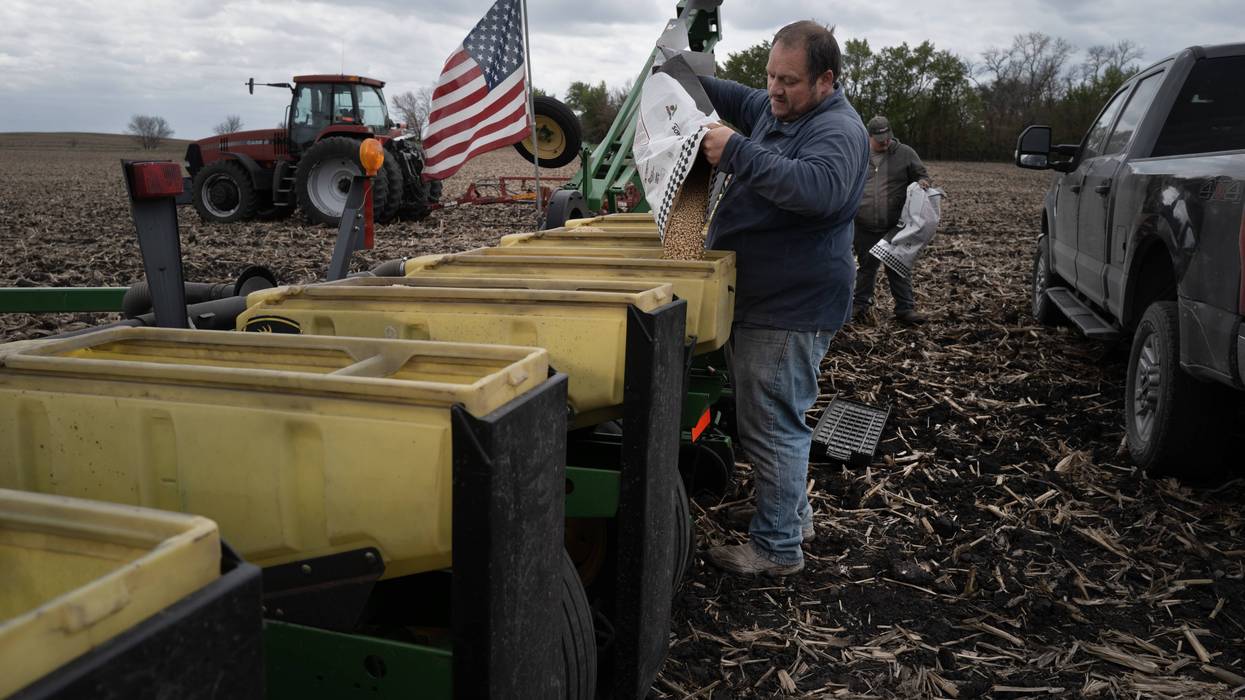
Rural voters who have long been the Republican Party's core base are expressing major discontent with the current state of the US economy, which has been hurt by President Donald Trump's tariffs and his illegal war with Iran.
While it's not clear that rural voters are ready to abandon the GOP to support Democrats, a recent focus group showed they appear receptive to populist economic appeals.
According to a Sunday CNN report, Republican operatives were recently "taken aback" when they spoke with rural voters who blamed "billionaires" and "corrupt politicians" for the country's economic woes.
These operatives were surprised, CNN wrote, because they had "never seen government corruption emerge as a top issue for so many Republican voters in congressional races."
This comes as Republicans across the country have increasingly come to rely on contributions from billionaires, and in particular SpaceX CEO Elon Musk, who has funneled at least $276 million to GOP groups and his own super political action committee (PAC) since July alone.
Democrat Sam Forstag, who is making a populist economic pitch in his campaign in Montana's 1st Congressional District, told CNN that voters' concerns about corruption are now "all out in the open," and he said many of Trump's current political troubles stem from his broken promises to fix a rigged system.
"Trump told everybody one singular truth," said Forstag. "He said the system is broken... and unfortunately, it turned out that he was lying about all the ways they were going to fix these things."
Forstag's comments were echoed by Arthur Ray Lambert, a Colorado horse trainer who explained his disappointment with Trump in an interview published by The New York Times on Sunday.
"We thought that the president was going to come in with his team and fix stuff," Lambert said. "And at first, he sounded good. But now, I hate to say it, but I think it’s time for him and his team to get out of there and somebody else come in."
Joseph Kennedy, a Colorado cattle and sheep farmer, told the Times he felt "bamboozled" after voting for Trump, and would instead sit out the upcoming election.
"I’m over politics," Kennedy explained. "I’ve dropped out."
Journalist Yvonne Wingett Sanchez, in a story published by The Atlantic last week, wrote that residents she spoke with recently in rural Arizona are both disappointed with Trump's economy and disgusted by political corruption.
"Almost all told me they are angry about Trump’s decisions to start a war and spend hundreds of millions of dollars ornamenting a capital city they will never see," Sanchez wrote. "They lamented the corruption they see as endemic in the government and in large corporations, and denounced billionaires, whom they view as capitalizing on their pain."
A Fox News poll released last week found that 60% of voters say they are “extremely concerned” about government corruption, which is higher than the 58% who are extremely concerned about inflation and the 50% who are extremely concerned about gas prices.
Meta has also been accused of trying to sabotage Brazilian President Luiz Inácio Lula da Silva's campaign.
Fears of big tech platforms censoring progressive political movements are on the rise after social media giant Meta temporarily shut down the Instagram account of the No Kings coalition on Saturday.
According to No Kings, Meta suspended its official account, which was being used to post videos and images of demonstrations throughout the US, at approximately 1:00 pm Eastern time on Saturday.
The account was restored roughly two hours later, but its administrators were still blocked from posting new content for hours after.
When asked about why the account was taken down, Meta told No Kings that it "made a bad call," without elaborating.
Meta spokesperson Andy Stone would subsequently offer a more detailed explanation in a Saturday social media post.
"When accounts post, share or comment at very high frequencies it can trigger automated systems," Stone wrote. "That's what happened with the No Kings IG account in the lead up to today's day of action. Unfortunately, that automated action was clearly taken in error. Everything is now working as it should and we sincerely apologize."
Leah Greenberg, co-founder of No Kings sponsor Indivisible, was not buying Meta's official explanation.
"This excuse does not match the facts," Greenberg wrote. "We will look forward to a detailed explanation of what happened here and how Meta will take steps to make sure it doesn’t happen again."
Sen. Chris Murphy (D-Conn.) called Meta's suspension of the account "outrageous," and vowed to "put this on the January investigation list" should Democrats retake control of Congress after the 2026 midterm elections.
Sen. Chris Van Hollen (D-Md.) asked if Meta was "censoring free speech to appease [President] Donald Trump," and added that "we the people deserve answers."
The suspension of the No Kings account was just the latest example of alleged Big Tech censorship.
Bleecker Street, the distributor of director Alex Gibney's four-hour documentary about SpaceX CEO Elon Musk, told The Hollywood Reporter on Saturday that TikTok had permanently suspended the film's promotional account.
Messages shared with The Hollywood Reporter revealed that TikTok accused the Musk documentary account of violating its rules regarding political content, although it was not clear what those violations were.
The Hollywood Reporter noted that while "TikTok has no official affiliation with Elon Musk... it is partly owned by [Oracle founder] Larry Ellison, who gets a rough moment in the doc when a text from him offering to pay billions to the mogul to help finance his Twitter acquisition is shown."
In Brazil, the campaign of President Luiz Inácio Lula da Silva last week filed a legal complaint accusing Meta of shutting down accounts promoting his candidacy while using its algorithms to promote content produced by the campaign of far-right rival Flávio Bolsonaro.
As The Associated Press reported on Thursday, a judge in Brazil's top electoral court sided with Lula's campaign, ruling that Meta "cannot reduce the distribution of political content, restrict searches, or remove posts in a way that creates an imbalance between Lula and Bolsonaro."
Attorneys representing Lula's campaign said the lawsuit against Meta was necessary because content produced by the president and his supporters "faces delivery restrictions, without any justification or transparency," while "profiles acting as political operatives for the opposing side... receive a disproportionate and artificial reach, garnering more views even than global celebrities."
Meta has consistently denied that it is biased against Lula's campaign, and it accused the president in a court filing of using "minor technical issues" to spin "a political narrative" against the company.
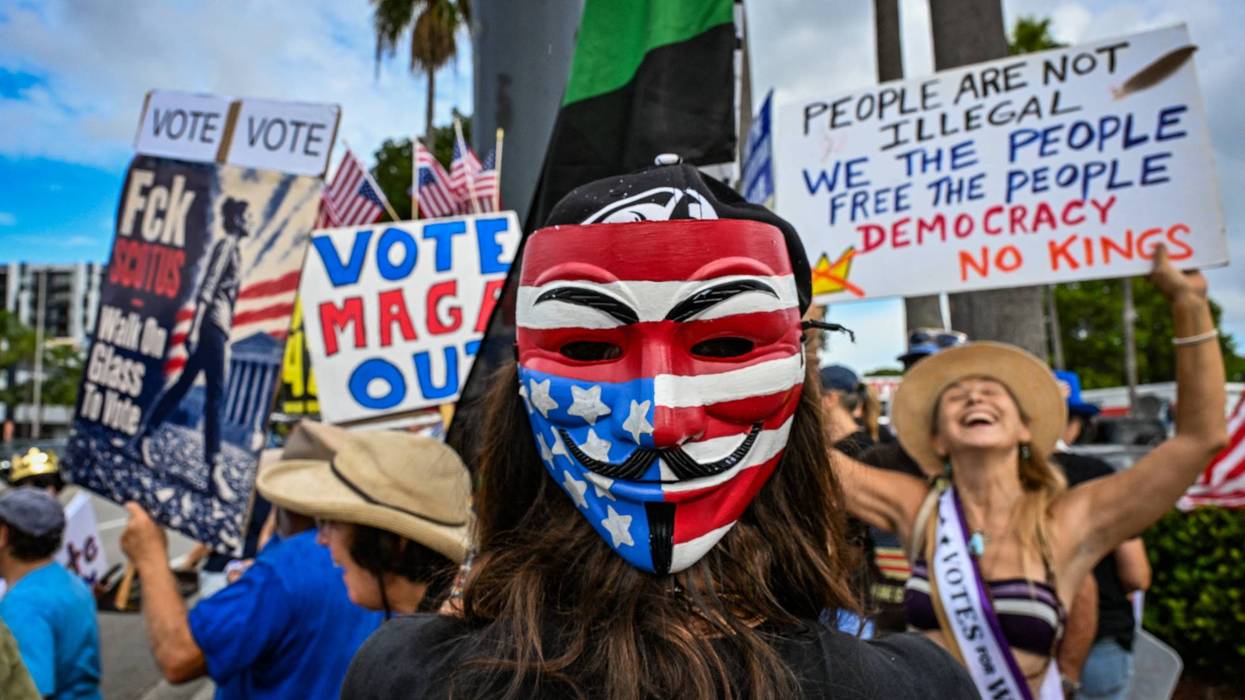
"Voting early is the first step in how we protect those rights. A vote cast today can't be lost to a long line or a closed polling place."
More than 3,000 No Kings rallies held in all 50 US states on Saturday sought to rally voters to the polls ahead of the 2026 midterm elections.
While past No Kings demonstrations have focused on protesting the policies of President Donald Trump and the Republican Party, Saturday's demonstrations were geared toward helping Americans ensure that their vote is counted in next month's elections.
On the No Kings website, organizers described the events as "a day of nonpartisan voter participation, being in community with each other, and making sure every eligible voter has a plan, knows their options, and is ready to make their voice count."
Speaking at a No Kings event in Atlanta, Georgia, Indivisible co-founder Leah Greenberg emphasized how important early voting will be to stopping any attempted meddling by the Trump administration in the elections.
"In America, power lies at the hands of the people, and we express our power at the ballot box," said Greenberg. "Nobody knows better than the folks here that that right was never given by the powerful, it was demanded by generations of dedicated, brilliant, fearless organizers who put their lives and their freedom on the line to demand that this nation live up to its promises."
Leah Greenberg: No Kings is a deceptively simple statement. It is a statement that in America, power lies at the hands of the people, and we express our power at the ballot box.
[image or embed]
— Indivisible ❌👑 (@indivisible.org) October 17, 2026 at 12:53 PM
Greenberg outlined how Trump has tried to attack the voting process throughout his second term, including his unprecedented mid-decade redistricting campaign and his attempts to restrict the right to vote by mail.
"They want chaos, fear, and confusion at the polls," said Greenberg. "Voting early is the first step in how we protect those rights. A vote cast today can't be lost to a long line or a closed polling place."
In a Thursday interview with journalist Steven Beschloss, Indivisible co-founder Ezra Levin said he hoped the No Kings rallies would drive "the biggest turnout in midterms in American history," which he said was important "because we have an authoritarian" in Trump "who will take advantage of any uncertainty."
Minnesota Democratic US Senate candidate Peggy Flanagan, whose state came under siege last winter from federal immigration agents, expressed support for the No Kings rallies in a Saturday social media post.
"This year, Minnesotans showed the world that we don't do kings," Flanagan wrote. "Today, we're doing it again. No matter where you are, make your voice heard."
The demonstrations also earned a thumbs up from Rep. Delia Ramirez (D-Ill.).
"No kings. No authoritarians. No warmongers. No despots," Ramirez wrote. "All across the country, Americans are taking to the streets and organizing to defend our neighbors and our democracy! Remember that you have rights."
Attendance estimates for Saturday’s No Kings protests were not available as of this writing, though past rallies have drawn as many as 8 million people nationwide.
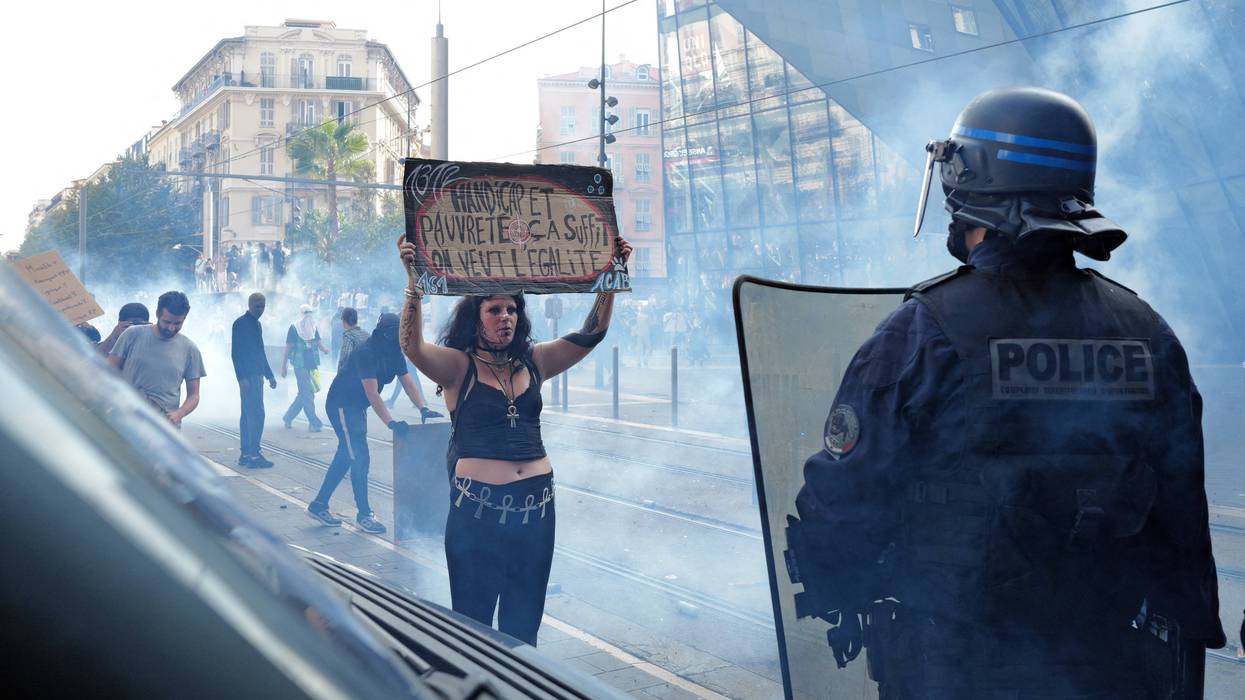
"For years we've had climate, economy, and equality problems, but the government is not doing anything about it," said one protester.
Protests erupted throughout France on Saturday, with demonstrators citing a wide variety of grievances including inequality, the high cost of living, and poor conditions in the nation's schools.
As reported by Agence France-Presse, tens of thousands of demonstrators marched in Paris and other cities to protest what they said was inaction by the French government on the biggest problems facing the country.
"For years we've had climate, economy, and equality problems," one protester identified as Agnes told AFP, "but the government is not doing anything about it."
18-year-old student Kamil Alahyan told AFP that there are "so many reasons" to protest, including "the elections coming up in 2027, politicians who lie, the ultra-rich who've been taking more and more wealth over the past 10 years."
A 19-year-old protester identified as Lola expressed a similar view in an interview published by The Guardian on Saturday.
"We are fighting because the cost of living is too harsh," Lola said, "because the price of fuel is too high, because high school pupils are being violently attacked and hurt all over the country just for trying to protest and ask for more teachers and decent learning conditions."
Student organizer Ryad Rani told AFP that "the government is trembling and it's right to tremble because when the French people are angry, they never let up."
Saturday's demonstrations mark the expansion of a movement that began last month when students blockaded their schools to protest staffing shortages, dilapidated buildings, and a widely criticized university application system.
According to The New York Times, demonstrations took place in at least 140 cities across the country.
Some of the protests did turn violent in major cities including Lyon, Marseille, and Paris, AFP reported. A Saturday BBC report claimed that more than 270 protesters have been arrested nationwide.
French Prime Minister Sébastien Lecornu accused "ultra-left groups" of inciting violence at the demonstrations.
"To those who clearly want to use these acts of violence as a 'warm-up' ahead of the presidential election, let me be clear: we will not be intimidated," Lecornu wrote in a social media post. "No one will impose their political agenda through violence."
Jean-Luc Mélenchon, leader the left-wing France Unbowed party, slammed the media for focusing too much on the isolated incidents of violence and not reporting on the overwhelmingly peaceful nature of the demonstrations.
"Crowds of people everywhere, calm and joyful everywhere when the police aren't around," Mélenchon wrote in a social media post that featured photos of peaceful marches from across the country, which he described as "images you won't see in the official media."
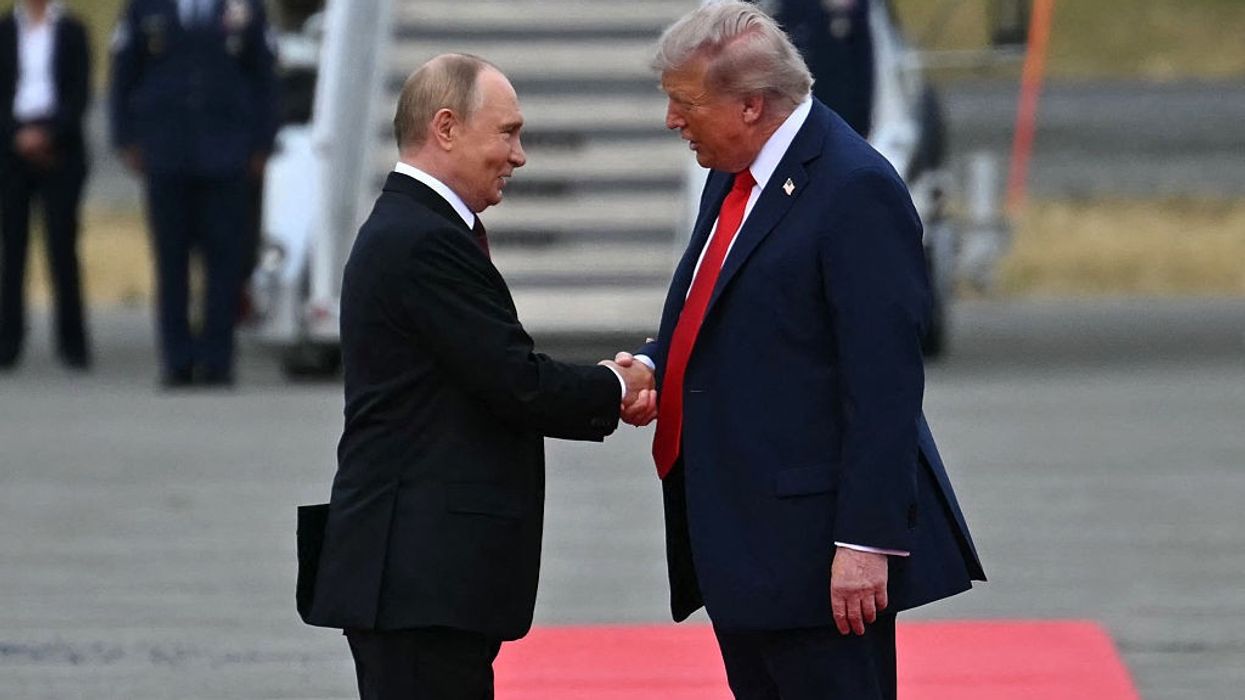
"These waivers have nothing to do with our national security, and everything to do with sucking up to Vladimir Putin," said US Sen. Richard Blumenthal.
President Donald Trump on Friday signed an executive order that waived new sanctions on Russia that were set to take effect thanks to bipartisan legislation signed into law by the president last month.
Trump justified the decision by claiming the sanctions waiver "is in the national interests of the United States," without offering further details. The president said he submitted a report to Congress elaborating on his reasons for waiving the sanctions.
A Friday report in The New York Times described the waiver as "another economic lifeline to Russian President Vladimir V. Putin," as the sanctions had been designed "to target Russian officials, oligarchs, and financial institutions" and "squeeze the financial lifelines sustaining Russia’s war against Ukraine."
Ukrainian President Volodymyr Zelenskyy condemned the sanctions waiver, and urged US lawmakers and voters to speak out against the US president's actions.
"It is important that everyone in America... sees what is really happening," Zelenskyy wrote in a Saturday social media post. "At a time when the Russians have carried out such a massive attack on our energy sector, a decision was unfortunately made in America to completely disregard the [sanctions law], which was supposed to impose truly effective pressure on Russia to bring this war to an end."
Zelenskyy emphasized that the sanctions package could still do a lot of good, but "it needs to actually work, and every voice in support of it matters."
Trump in recent weeks has been pressuring Ukraine to stop its attacks on Russian energy infrastructure in a bid to lower global prices of gas and diesel, both of which have skyrocketed in recent months because of the president's illegal war with Iran.
In addition to pressuring Ukraine, Trump also struck a deal with Russia to import diesel into the US, drawing a bipartisan rebuke from lawmakers who accused the president of funding Putin's war machine.
Rep. Don Beyer (D-Va.) ripped Trump's decision to waive the Russia sanctions in a Friday social media post.
"Trump’s latest surrender to Putin again betrays our Ukrainian partners," Beyer wrote, "and defies clear congressional intent of legislation designed to punish Russia for its illegal war of aggression."
Beyer also pointed to flaws in the sanctions bill that he said gave Trump too much discretionary power to not only waive sanctions on Russia, but to impose further tariffs on US allies.
"Congress must fix this flawed law," he said, "to stop Trump from capitulating to Putin and ensure that it truly supports Ukraine."
Sen. Thom Tillis (R-NC) on Saturday slammed Trump's sanctions waiver as "beyond irresponsible."
"What part of enforcing a law passed 86-11 by the Senate does the President and his advisors not understand?" Tillis asked. "It's unconscionable that this administration is capitulating to a Russian dictator who illegally invaded Ukraine and butchers innocent civilians every single day."
Sen. Richard Blumenthal (D-Conn.), who co-authored the sanctions law with the late Sen. Lindsey Graham (R-SC), said Trump has shown "that he stands on the side of a bloodthirsty thug and the enablers of Russia's war machine and against the majority of Americans, their representatives in both houses of Congress, and our European allies."
"These waivers have nothing to do with our national security, and everything to do with sucking up to Vladimir Putin," Blumenthal added. "I hope my Republican colleagues will join me in condemning this craven, cowardly action."
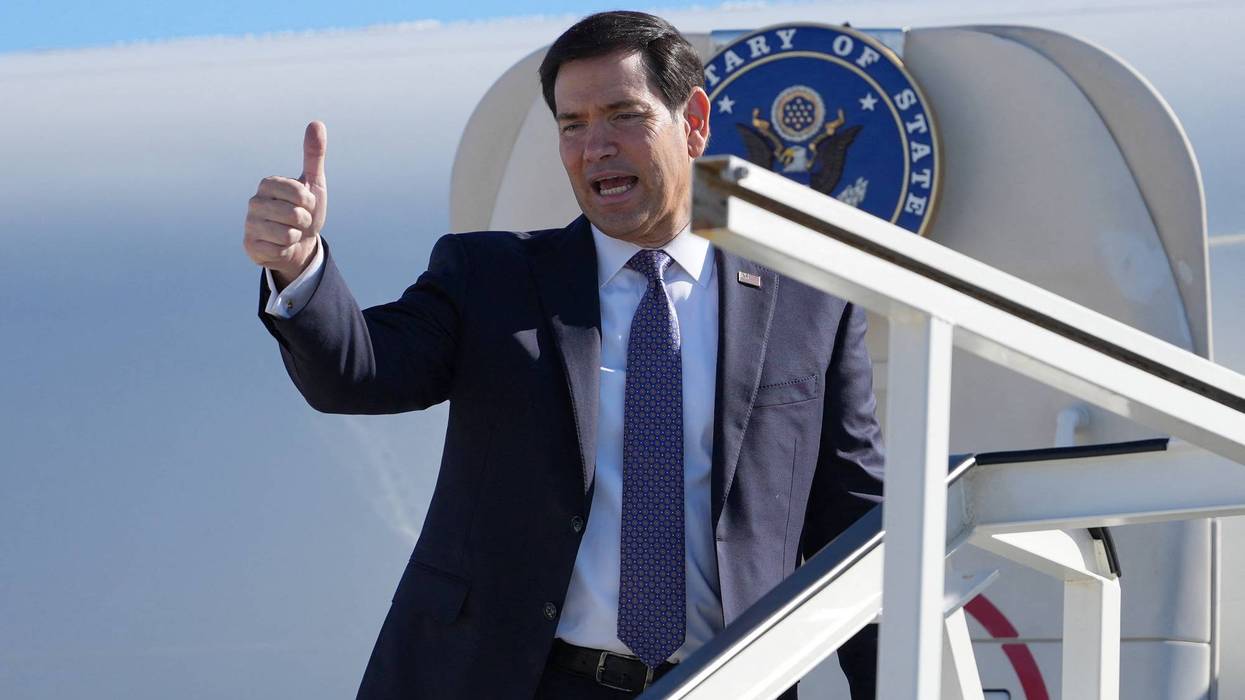
"The US and India have an obligation to promote and defend the rights to freedom of assembly and expression," six Democrats in Congress reminded the top US diplomat.
On the eve of US Secretary of State Marco Rubio's trip to India, six progressives in the House of Representatives on Friday sounded the alarm over the Indian government's response to recent protests, including its alleged spying on American soil.
"We write with concern regarding a pattern of repression, wrongful detention, and excessive use of force by security forces during student protests in Delhi and other localities across India," Democratic Reps. Jesús "Chuy" García (Ill.), Pramila Jayapal (Wash.), Jim McGovern (Mass.), Eleanor Holmes Norton (DC), Ilhan Omar (Minn.), and Rashida Tlaib (Mich.) said in a letter to President Donald Trump's top diplomat.
"The United States-India relationship has historically been rooted in democratic values, constitutional governance, and strong people-to-people ties," they wrote. "As the world's largest democracies and state parties to the International Covenant on Civil and Political Rights, the US and India have an obligation to promote and defend the rights to freedom of assembly and expression. It is in this spirit of shared values and obligations that we raise the following concerns."
As the letter lays out, protests began in June after the leak and subsequent cancellation of India's medical college entrance examination. While the demonstrators initially demanded reforms to the education system, including the resignation of Education Minister Dharmendra Pradhan, the Cockroach Janta Party's (CJP) movement ultimately "grew to give voice to a broader set of grievances, including high levels of youth unemployment, government corruption, and barriers to democratic participation."
In recent weeks, "tens of thousands of demonstrators have taken to the streets of major cities across India to protest... the Election Commission's Special Intensive Revision (SIR), which has purged more than 130 million people from voter rolls since 2025," the letter details, noting that protesters have called for the resignation of Chief Election Commissioner Gyanesh Kumar.
At least "hundreds of people have been detained by police across India since October 10, including CJP movement leaders, protesters, and journalists," the lawmakers highlighted. The government of Prime Minister Narendra Modi and his right-wing Bharatiya Janata Party has also closed some public spaces, used unwarranted force against unarmed demonstrators, and ordered telecommunications companies to shut down mobile internet services in a bid to thwart protests.
However, the Democrats aren't just alarmed by actions across India; they also pointed to "reports that Indian diplomatic missions in the United States hired photographers to surveil protesters on American soil," with members of US human rights groups and the Indian diaspora disclosing that they were recorded at protests in Chicago, San Francisco, and Washington, DC.
"These incidents raise particular alarm in light of India's documented pattern of engaging in transnational repression, including through the weaponization of consular services, harassment, intimidation, and physical violence," the members of Congress wrote. "It is unacceptable that individuals on United States soil may not exercise their rights to freedom of expression and assembly, guaranteed to them by the US Constitution and international law for fear of retribution by a foreign government."
The lawmakers asked Rubio's department to:
Rubio is expected to meet with Indian Foreign Minister S. Jaishankar in Mumbai on October 20. However, Rubio—a former US senator expected to run for president in 2028—and the second Trump administration more broadly have also been widely criticized for authoritarian behavior and their records on human rights.
After Rubio attacked Amnesty International, the globally renowned group argued earlier this week that "as secretary of state, he has launched a wholesale attack on the concept of human rights." Specifically, he has:
Further, "as the head of the National Security Council, he has not ensured the release of investigations into mass killings of civilians in US airstrikes in Yemen and Iran," Amnesty noted. "He's leading US attempts to destroy the international justice system. That includes a campaign to, in his words, 'dismantle' the International Criminal Court."
More broadly, the second Trump administration has repeatedly generated fears of interference in next month's midterm elections, weaponized the federal government against the president's political "enemies," spent taxpayer dollars on far-right propaganda, punished journalists and outlets deemed unfriendly to the GOP agenda, pursued a deadly mass detention and deportation effort, slaughtered hundreds of people by bombing alleged drug-trafficking boats on the high seas, and much more.
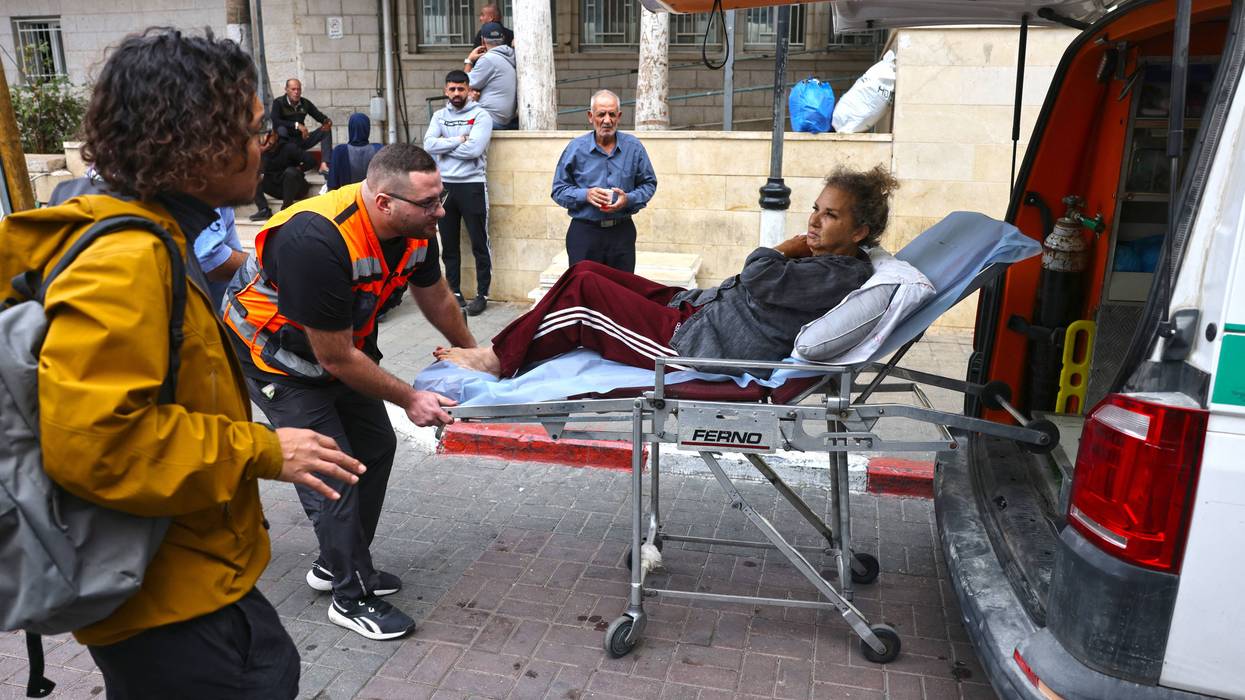
"You mean the footage of the Israeli terrorists beating her up isn't clear enough?" one critic sardonically asked.
Israeli Prime Minister Benjamin Netanyahu faced blistering criticism Friday after his office published a statement casting doubt on the circumstances surrounding a brutal attack earlier in the day by settlers in the illegally occupied West Bank that left an American journalist hospitalized.
"The facts surrounding the confrontation near Abu Falah, during which Washington Post photojournalist Heidi Levine was allegedly assaulted, remain unclear and are under investigation," Netanyahu's office said on social media.
As Common Dreams reported, Levine—a 63-year-old Jewish American by birth who has reported from war zones including Afghanistan, Kosovo, Iraq, Lebanon, Libya, and Syria—was covering Palestinian farmers desperately trying to harvest their olives when around 80 masked settler colonists descended upon them.
Armed with rocks, clubs, sticks, assault rifles, and the self-assured belief that their deity figure promised them all the land that was once ruled by Jewish kings millennia ago, the settlers set fire to the olive trees that are the backbone of Palestine's rural economy and a literal symbol of Palestinians' rootedness in their homeland.
The assailants fired guns and threw rocks at the olive harvesters, reportedly wounding at least two Palestinians. While documenting the attack, Levine—who, like other journalists killed or wounded by Israel, was clad in a helmet and a blue vest clearly marked "PRESS"—was set upon by settlers, knocked to the ground, and kicked dozens of times while her equipment was stolen.
"Israel unequivocally condemns violence against anyone—Jews, Arabs, Christians, or journalists," Netanyahu's office claimed. "Those responsible will be held accountable."
"But serious questions remain," the statement continued. "Reports indicate some 200 Arabs and far-left activists confronted approximately 40 Israeli youths. Footage shows masked individuals on both sides hurling objects, amid reports of fireworks fired at Jewish youths. Other footage appears to show Levine knocked down and immediately helped to her feet by the same unidentified individual."
"The investigation must establish the facts, including who initiated the violence," the office added. "We will not allow disputed incidents to be exploited to demonize the hundreds of thousands of law-abiding Jewish residents."
The colonization of the occupied Palestinian territories by Jewish settlers—many of them non-Israelis who are availing themselves of the ethnosupremacist and apartheid policy of allowing any Jew to live in a land whose Palestinian inhabitants have been ethnically cleansed from it for nearly 80 years—is inherently illegal under international law.
Washington Post executive editor Matt Murray pushed back on Netanyahu's statement on social media, saying: "To be clear: Some facts are neither in dispute nor unclear. Our photographer was clearly marked as press. She was clearly beaten. These are not partisan or risible statements, but indisputable. We urge a thorough investigation and accountability."
International observers also criticized Netanyahu's statement.
"They are actually trying to justify an American WaPo journalist being severely beaten by a mob of settler terrorists," US commentator Krystal Ball said on social media, using the syllabic abbreviation for the Post.
Irish journalist Barry Malone responded to Netanyahu's post on X, saying: "Hi. There's video. It's clear."
US physician Amira Dalton said, "Israel lies and then calls you an antisemite for calling out their lies."
The X account Israel Exposed, which has more than 400,000 followers, sardonically asked, "You mean the footage of the Israeli terrorists beating her up isn't clear enough?"
The Israeli veterans' group Breaking the Silence said that "you can see the settlers who attacked Heidi Levine, a journalist for The Washington Post. But what you can’t see is the state behind them: a state that funds them, arms them, and, above all, grants them near-total impunity for their actions. This violence does not happen in a vacuum. Israel enables it."
While Lt. Col. Ariella Mazor, chief international spokesperson for the Israel Defense Forces, claimed the military had sent battalions to the West Bank to contain the outbreak of violence, eyewitnesses said the IDF was involved in the attack on Abu Falah.
“The army did nothing to stop the settlers," Israeli journalist Oren Ziv, who was present during the attack, told The Washington Post.
That's because Israel's far-right government is unapologetically seeking to "finish the job of 1948," as Netanyahu once put it—a reference to the ethnic cleansing of more than 750,000 Palestinians during the creation of the modern Israeli state—and take all of Palestine.
"The entire land is ours," Israeli National Security Minister Itamar Ben-Gvir said earlier this month, in the lead-up to Israel's October 27 elections."This is our country."
Last month, Israeli Finance Minister Bezalel Smotrich vowed to do in the West Bank "what we did in Gaza," where three years of genocidal annihilation have left more than 250,000 Palestinians dead or wounded, nearly 2 million people forcibly displaced, and an estimated 70% of the territory under Israeli control.
According to the United Nations Office for the Coordination of Humanitarian Affairs, at least 1,138 Palestinians—at least 250 of them children—have been killed by Israeli soldiers and settlers in the West Bank since October 2023.
At least nine Americans have been killed by Israeli settlers and security forces in the West Bank since January 2022, including journalists, human rights activists, and Palestinian Americans visiting relatives.
Despite claims by Israel that perpetrators of such attacks will be held accountable, impunity is the general rule.
“Sadly, none of them will be prosecuted,” Levine said of her attackers. “I am sure of it.”
Multiple US senators demanded that Israel bring Levin's assailants to justice.
"The continued lack of accountability for settler violence in the West Bank has allowed attacks on innocent people, including multiple Americans, to go unanswered, and it is eroding what should be a strong alliance between the US and Israel," Sen. Catherine Cortez Masto (D-Nev.) said on social media. "Prime Minister Netanyahu isn't doing nearly enough to stop the violence."
Sen. Chris Van Hollen (D-Md.) also took to social media after Friday's attack, writing, "Today, another American citizen and journalist was brutalized by Israeli settlers attacking Palestinians in the West Bank."
"This repeated violence and brazen impunity for attacks against Americans and Palestinians alike are unacceptable," he added. "When will [President Donald] Trump and [Secretary of State Marco] Rubio DO SOMETHING?"
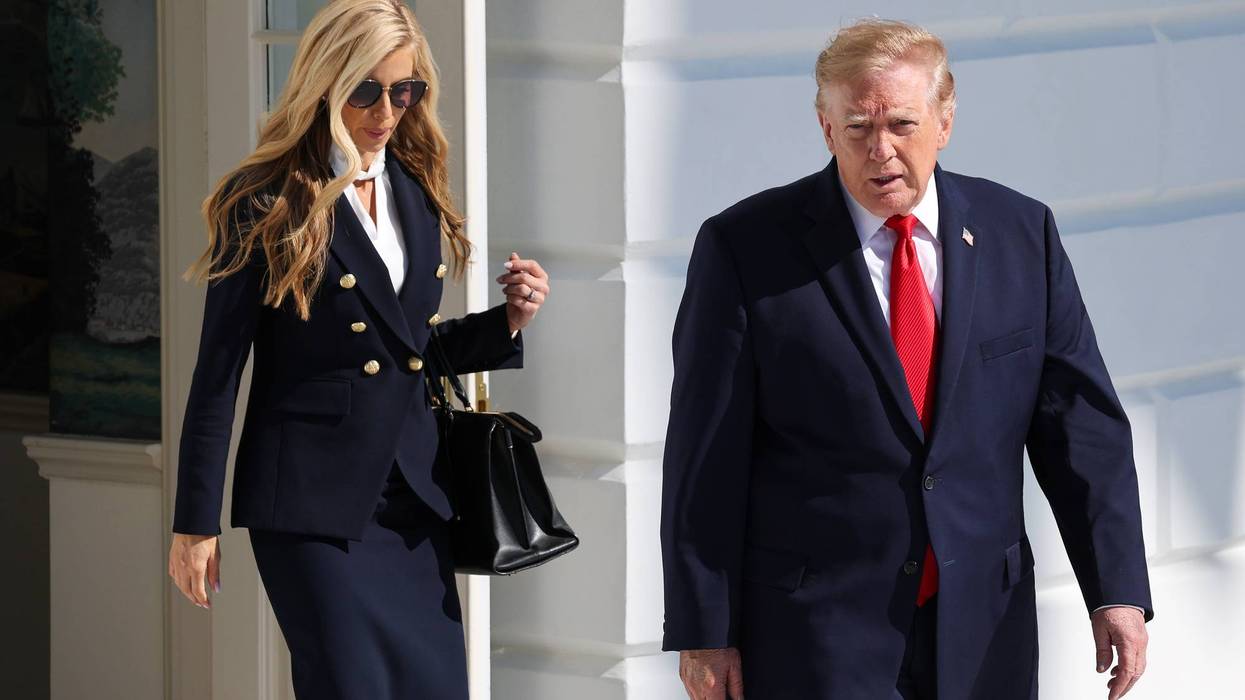
"Katie Zacharia wasn't fired because she lied," one Democratic strategist said. "It was because she was a bad liar. It's a key distinction.”
The tumultuous tenure of White House press secretary Katie Zacharia has already come to an end just three days after her first press briefing.
After his new hire shambled her way through yet another Fox News appearance the night before, President Donald Trump said on Friday that he'd suggested Zacharia "reconsider" her role as the top White House spokesperson.
"Maybe it's not for her," Trump said, suggesting Zacharia may continue working for him “in some form, but maybe a more pleasant form.”
Zacharia, who stepped into the role formerly held by Karoline Leavitt, lasted a total of five days in the job. That's less than half the tenure of Anthony Scaramucci—who departed his role as White House communications director after just 11 days during Trump's first term.
Her qualifications were in doubt from the moment Trump plucked her from an obscure role as a Fox News commentator for the highly visible job. Journalists dug up old posts in which she promoted the QAnon and Pizzagate conspiracies, as well as Trump's false claims that the 2020 election was stolen.
From the start of Zacharia's disastrous briefing on Tuesday, many observers predicted it could also be her last.
She was relentlessly panned after struggling to read through her fully scripted remarks (and at one point accidentally referring to her husband as "my president"). She cut the briefing short after just 14 minutes, taking only three questions, all from right-wing outlets.
It also became clear that, despite Trump's introduction of her as "an attorney," she'd never actually passed the bar exam and had misrepresented her credentials for years.
Asked by reporters earlier this week in which state she had passed the bar exam, she said, “When I moved to China" before later claiming not to have heard the question.
Even Fox News host Sean Hannity—a longtime Trump loyalist—challenged her explanation, confronting her Thursday with a report documenting “15 social media posts where you identify yourself as an attorney.”
“I think they were retweets,” Zacharia replied, arguing to a flummoxed Hannity that sharing the posts did not constitute endorsing the title.
While Zacharia's inability to do damage control appeared to do her in, Democratic strategist Mike Nellis emphasized that the problem was not her dishonesty—a trait that is practically a prerequisite to serve in the Trump administration.
"Katie Zacharia wasn't fired because she lied," Nellis wrote on social media. "It was because she was a bad liar. It's a key distinction.”
To some, Zacharia's tenure represented a disastrous culmination of Trump's willingness to eschew competence and experience for personal flattery and undying loyalty when appointing officials during his second term.
Zacharia said she got on Trump's radar by scheduling her TV appearances when she knew he'd be watching.
While other advisers questioned the pick, Zacharia's appointment was reportedly championed by Natalie Harp, Trump’s ever-present personal assistant and a fellow blonde conservative television personality.
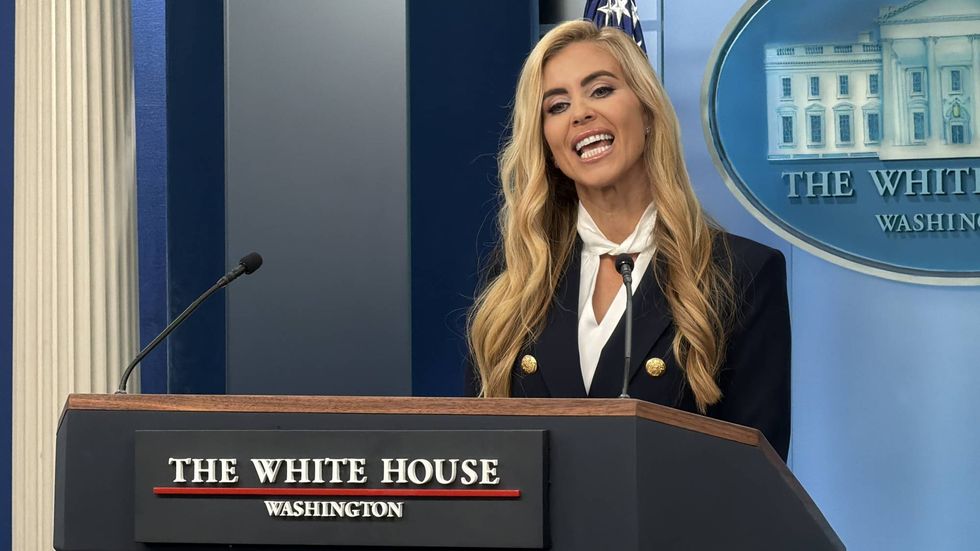 White House press secretary Katie Zacharia speaks during a news briefing in the James S. Brady Press Briefing Room of the White House on October 13, 2026, in Washington, DC. (Photo by Chip Somodevilla/Getty Images)
"She looks nice for him," said former Republican National Committee chairman Michael Steele on MS NOW. "She fits his idea of the blonde white female standing at that podium publicly pronouncing his noise in a way that makes him, when he's watching it, feel good."
Steele emphasized that with just weeks left before a midterm election widely viewed as a referendum on Trump, "the White House is voiceless."
"They do not have a press secretary in place," he said, "because the president picked an incompetent individual to do the job."
Though very few seemed to think Zacharia could turn things around, she did have one person in her corner—perhaps the only other person who could possibly understand her experience: Scaramucci.
While others bet she would not even last "one Scaramucci," The Mooch himself predicted—even after her disastrous Hannity appearance on Thursday—that "she will make it. I have the over."
Following news on Friday that she did not, in fact, make it, Scaramucci wrote: "Records are made to be broken. But I take no pleasure in other people's pain."
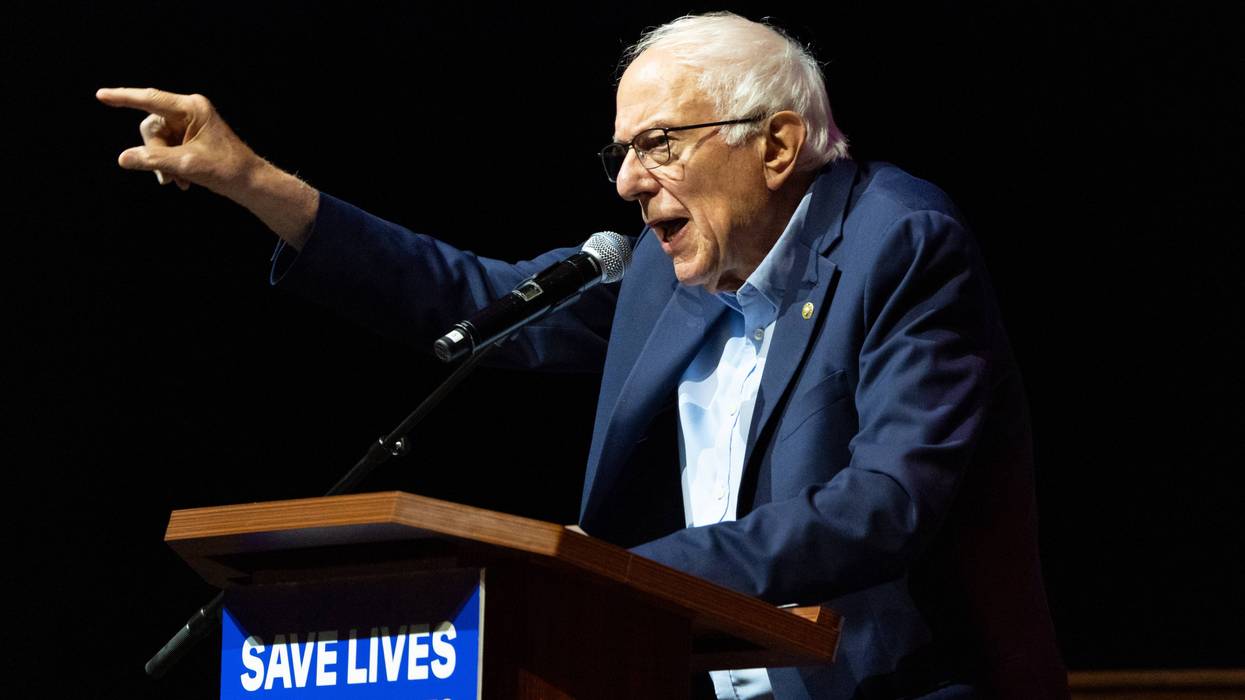
"We have to take Trump on, but we have to do more... You have to implement an agenda that works for the working class of this country."
While polls show Democrats are well positioned to make big gains in next month's midterm elections thanks to President Donald Trump's historic unpopularity, Sen. Bernie Sanders is warning the party that opposition to the president alone isn't enough to guarantee long-term political success.
MS NOW on Friday showed a preview clip of a longer interview with Sanders (I-Vt.) that is scheduled to air on Saturday where he outlines what he'd like to see the party do if it retakes Congress next month.
Sanders—who caucuses with Democrats and twice sought the party's presidential nomination—said it was essential for Democrats to win both the US House of Representatives and the Senate to put a check on Trump, whom he described as "the most dangerous president in the history of the United States."
But Sanders said merely denouncing Trump, however correct, "ain't good enough."
"We have to take Trump on," Sanders said. "But we have to do more... You have to implement an agenda that works for the working class of this country."
The interview with Sanders, conducted by MS NOW senior contributing editor Michele Norris, is part of an hourlong special scheduled to air on the cable news network at 8:00 pm Eastern time on Saturday.
The focus of the special will be on the 85-year-old Sanders' political career and his influence on a younger generation of politicians, two of whom—Rep. Alexandria Ocasio-Cortez (D-NY) and New York City Mayor Zohran Mamdani—will also be interviewed.
Previewing the special, Norris argued that the focus on Sanders is timely because he is "at the heart" of the upcoming 2026 midterm elections.
"He has inspired, endorsed, and supported a roster of progressive, left-leaning candidates who surprised the Democratic establishment in the primary and now face the biggest test yet this November," said Norris. "The stakes are enormous for him, for the Democratic Party, and for the country."