

SUBSCRIBE TO OUR FREE NEWSLETTER
Daily news & progressive opinion—funded by the people, not the corporations—delivered straight to your inbox.
5
#000000
#FFFFFF
To donate by check, phone, or other method, see our More Ways to Give page.
Daily news & progressive opinion—funded by the people, not the corporations—delivered straight to your inbox.

National Nurses United today raised a caution flag on the Trump administration's rush to promote a COVID-19 vaccine by late October or early November without assurances that the vaccine will meet the highest test of public safety as its top priority, not political considerations.
"Any vaccine that is developed and widely distributed must first undergo a full scientific evaluation," said NNU President Zenei Cortez, RN.
National Nurses United today raised a caution flag on the Trump administration's rush to promote a COVID-19 vaccine by late October or early November without assurances that the vaccine will meet the highest test of public safety as its top priority, not political considerations.
"Any vaccine that is developed and widely distributed must first undergo a full scientific evaluation," said NNU President Zenei Cortez, RN.
"With 184,000 U.S. lives lost to COVID-19 under the watch of a president and administration that have left people exposed and dying even when known prevention measures, as other nations have proven, are available, placing an insufficiently tested product on the market will surely look like a dangerous experiment on the American people," said NNU President Jean Ross, RN.
Nurses share a widespread concern of the timing of a pledge to have millions of vaccines distributed by late October or early November, said Ross.
NNU, she said, concurs with the concerns voiced by Saskia Popescu, an infection prevention epidemiologist, in the New York Times Wednesday about the "politicization of public health and potential safety ramifications" that "it's hard not to see this as a push for a pre-election vaccine."
"Any therapeutic intervention must first be subject to rigorous oversight," said NNU Executive Director Bonnie Castillo, RN. Those measures include "voluntary participation in clinical trials, assurances of close monitoring for adverse events, and inclusion of a vaccine injury compensation program."
Cortez said there are "multiple reasons for doubts about the rush to judgment on a vaccine."
She noted the months of President Trump's dismissal of greater availability of tests, promotion of masks and social distancing, the failure to fully invoke the Defense Production Act for mass production of personal protective equipment (PPE) and other needed equipment, and the drumbeat to end all limits on business and school reopenings. Pandemic relief bills also allotted billions in funding for big corporations instead of for increased safety measures.
In addition to the Trump administration's record on COVID-19, "there is the amply demonstrated corruption of the lead federal agencies on the vaccine," said Cortez.
"With both the Centers for Disease Control and Prevention (CDC) and the Food and Drug Administration (FDA), we have already seen far too many examples of the erosion of scientific integrity and the subversion of public health through political intervention and pressure by the Trump administration and corporate employers," said Cortez.
As far back as April, NNU has challenged revised CDC guidelines ignoring science and rolling back protective standards on PPE for nurses and other health care workers, hospital infection control measures, and encouragement of a premature return to work by infected staff.
Since then, Cortez noted, 1,500 health care workers, including more than 200 nurses, have died of COVID-19. And just last week, the CDC issued new guidelines proposing a reduction in testing, even for asymptomatic people exposed to the virus, converging with frequent statements by Trump denouncing COVID-19 testing.
Critics have also cited FDA overreliance on emergency use authorizations (EUAs) for tests and other decisions that circumvented full scientific review and regulation in conflict with a priority on public safety. And just last week, FDA Commissioner Stephen Hahn said the agency would consider an EUA or approval of a COVID-19 vaccine before completion of clinical trials.
"As anxious as the country is for health security and protection against COVID-19, we cannot subject people to greater risk to score political points for a president who has, for months, demonstrated his abandonment of public health and safety in the face of this terrible pandemic," Castillo said.
"We must have a vaccine, but one that meets all the scientific criteria for public safety. The last thing patients and the public need is a placebo cure that will end existing safety precautions and only accelerate the pain, suffering, and death from COVID-19," she said.
"Nurses, as the most trusted profession, understand the importance of trust," said Ross. "Whether it is listening to our patients or helping to guide them in decisions about their care, we know that trust is fundamental to achieving the best outcomes. It is no different when it comes to public health advocacy; trust in the scientific process is central to moving forward and successful implementation of any COVID-19 treatment or vaccine."
National Nurses United, with close to 185,000 members in every state, is the largest union and professional association of registered nurses in US history.
(240) 235-2000
"We will defeat the oligarchy and the political system that it maintains," said Graham Platner. "The politics of Susan Collins."
US Sen. Bernie Sanders on Sunday rallied in Orono, Maine with progressive Senate candidate Graham Platner, who called for transformative political change to reclaim the wealth that has been "stolen by corrupt politicians and the corporations that bought them."
Platner, who effectively locked up the Maine's US Senate Democratic primary after Gov. Janet Mills exited the race last month, placed five-term incumbent Republican Sen. Susan Collins among the corrupt lawmakers who have sold out workers and advanced the interests of the billionaire class, which is shelling out millions to protect Collins' seat.
"We will not just fight the oligarchy," Platner told an audience of 1,400 gathered at the University of Maine, the location of the 40th stop of Sanders' (I-Vt.) nationwide "Fighting Oligarchy" tour. "We will defeat the oligarchy and the political system that it maintains... The politics of Susan Collins. A politics that turns politicians into millionaires but tells you to be grateful for crumbs. It is a lie."
Platner declared that "we need a political revolution," something he said Sanders "has been fighting for for 60 years."
"When we beat back fascism, when we defend our democracy and our freedom, let it be a different kind of freedom," said Platner. "A freedom to not be condemned to scraps and struggle, but to live with the dignity and fulfillment that gives us the society we deserve."
Watch the full rally:
Sanders, who became the first US senator to endorse Platner last August when he was widely seen as a long shot to win the Democratic nomination, said that "what we're talking about"—from Medicare for All to a living wage to union rights for all workers—"is not radical."
"What is radical is when so few have so much," said Sanders. "What is radical is when billionaires control our political system."
Sunday's "Fight Oligarchy" rally came days after a survey showed Platner leading Collins—who has held her seat for nearly three decades—by seven percentage points among likely voters, who appear unfazed by an intensifying wave of attacks on Platner from pro-Collins super PACs and the National Republican Senatorial Committee.
"Susan Collins is spineless and corrupt," Platner wrote on social media ahead of the rally. "And in 163 days, we will defeat her."
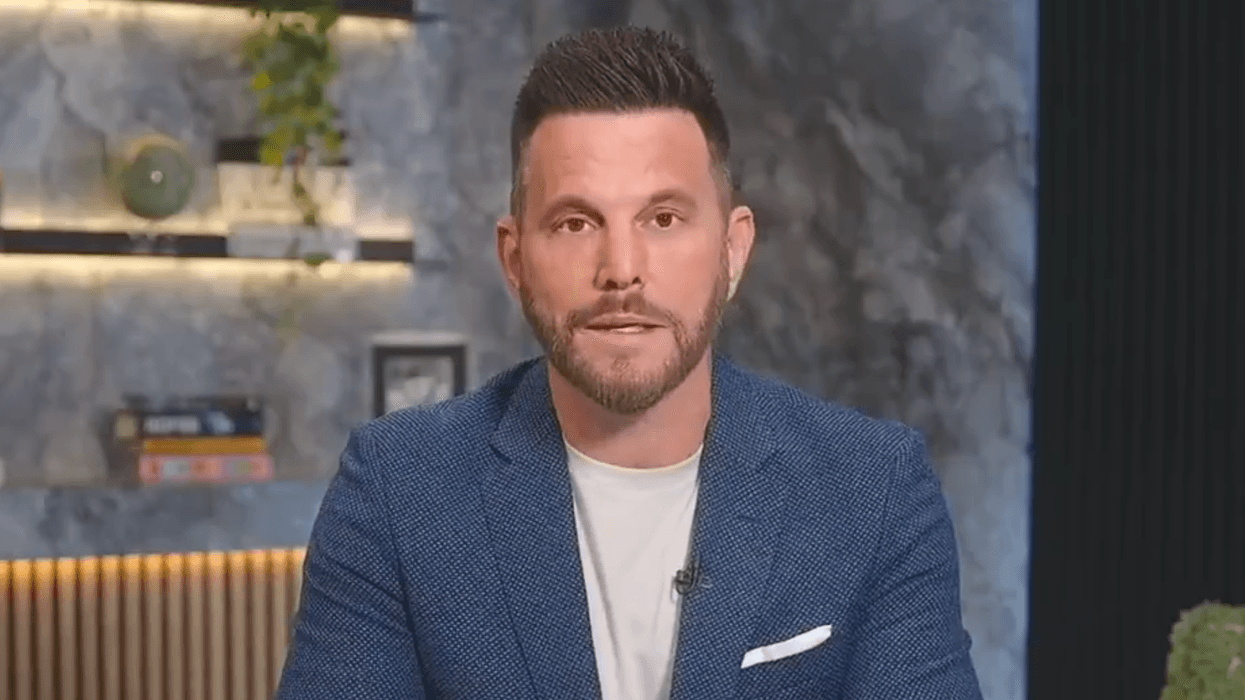
"He’s the Jim Cramer of Iran war predictions," said one critic.
Conservative commentator Dave Rubin, who for months has been a top booster of President Donald Trump's illegal war with Iran, was inundated with mockery on Sunday after a viral video exposed months' worth of his failed predictions about the conflict.
The video, which was posted on social media Saturday, begins with Rubin telling viewers to not listen to any of the prognostications being made by critics of the war, which Trump launched in late February without any authorization from Congress.
"I'm pretty good with predictions," Rubin says. "And my prediction here is that everything the media is now going to say about Iran—it's going to close the Strait of Hormuz, and energy prices are going to go crazy—none of this is going to come to pass."
Iran war: greatest hits from the last 12 weeks pic.twitter.com/9pgXyvmsgF
— Dave Rubin Clips II (Parody) - Retired Jan.20/2025 (@DaveClips) May 24, 2026
The video then cuts to Rubin wrongly predicting that gas prices during the conflict "will continue to come down," before switching to claims that Iran lacks the military capability to keep the Strait of Hormuz closed in the face of US military power.
"If the United States wants to keep the Strait of Hormuz open, which it does," says Rubin, "and Donald Trump says we'll escort ships through if we have to, it's going to stay open."
From there, the video shows Rubin hyping of the prospect of Iranian dissident Reza Pahlavi swooping in to take over the country after the war, and then getting fooled by a fake artificial intelligence-generated video of Iranians giving thanks to Israeli Prime Minister Benjamin Netanyahu for bombing their country.
The video compilation of Rubin's failed predictions drew immediate ridicule from critics.
"He’s the Jim Cramer of Iran war predictions," joked Krystal Ball.
Commentator Adam Mockler wrote of Rubin that "it’s brutal watching him make failed predictions week after week."
Journalist Glenn Greenwald argued that the video should be the last nail in the coffin of whatever credibility Rubin had left.
"Imagine having sat through and listened to all of this Israeli propaganda, which turned out to be (predictably and completely) false," commented Greenwald, "and then thinking there was some value in continuing to listen to this person."
The Bulwark's Tim Miller said that while he knew Rubin was "a smooth-brained hack," he still "couldn’t even fathom how bad these war takes would be."
Political analyst Omar Baddar, meanwhile, said the video should erase any doubt that Rubin is "the dumbest man on the internet."

The Trump administration last week sued Minnesota after it passed a law banning prediction markets from operating in the state.
A Sunday report in The New York Times revealed how the Trump administration is using a key government agency to shut down any efforts to regulate online betting markets such as Kalshi and Polymarket.
According to the Times, the administration has stacked the Commodity Futures Trading Commission (CFTC) with industry insiders who have systematically "mowed down" staffers at the agency who have expressed interest in providing oversight on prediction markets.
Among other things, the report documented how multiple officials at CTFC have been put on leave simply for asking questions about the betting markets' ties to members of President Donald Trump's family or for having past experience enforcing regulations related to cryptocurrencies.
What's more, the Times found that even being an industry insider isn't enough to guarantee good standing in the agency. Brian Quintenz, who was tapped by Trump to lead CTFC last year, saw his nomination withdrawn after he drew the ire of Cameron and Tyler Winklevoss for refusing to support their cryptocurrency exchange's complaint against the agency.
Revelations about industry insiders rolling over regulators at CTFC come as the Trump administration is fighting any attempts by states to regulate prediction markets.
As explained in a Thursday report from CNBC, the Trump administration is "fighting a multi-front battle to stop the state actions and assert its regulatory authority," with CTFC arguing that it is "the only entity that can regulate" betting platforms.
16 different states are engaged in legal proceedings against the platforms, and Minnesota last week passed a law to ban them outright, which immediately drew a lawsuit from the administration.
The new Minnesota law, which is scheduled to take effect in August, bans prediction markets "from hosting, creating or advertising in the state," according to ABC News.
In an interview with ABC, Minnesota state Rep. Emma Greenman (D-63B) said she authored the legislation because she has grown increasingly concerned about young people in the state seeing their finances drained from placing online bets.
"We're seeing studies come out that say [the companies] are targeting 18- to 21-year-olds," said Greenman, "and we are seeing gambling starting younger and younger."
CFTC Chair Michael Selig last month warned states against trying to regulate prediction markets, which he said would "circumvent the clear directive of Congress."
"Our message to Wisconsin is the same as to New York, Arizona, and others," said Selig. "If you interfere with the operation of federal law in regulating financial markets, we will sue you."