

SUBSCRIBE TO OUR FREE NEWSLETTER
Daily news & progressive opinion—funded by the people, not the corporations—delivered straight to your inbox.
5
#000000
#FFFFFF
To donate by check, phone, or other method, see our More Ways to Give page.
Daily news & progressive opinion—funded by the people, not the corporations—delivered straight to your inbox.
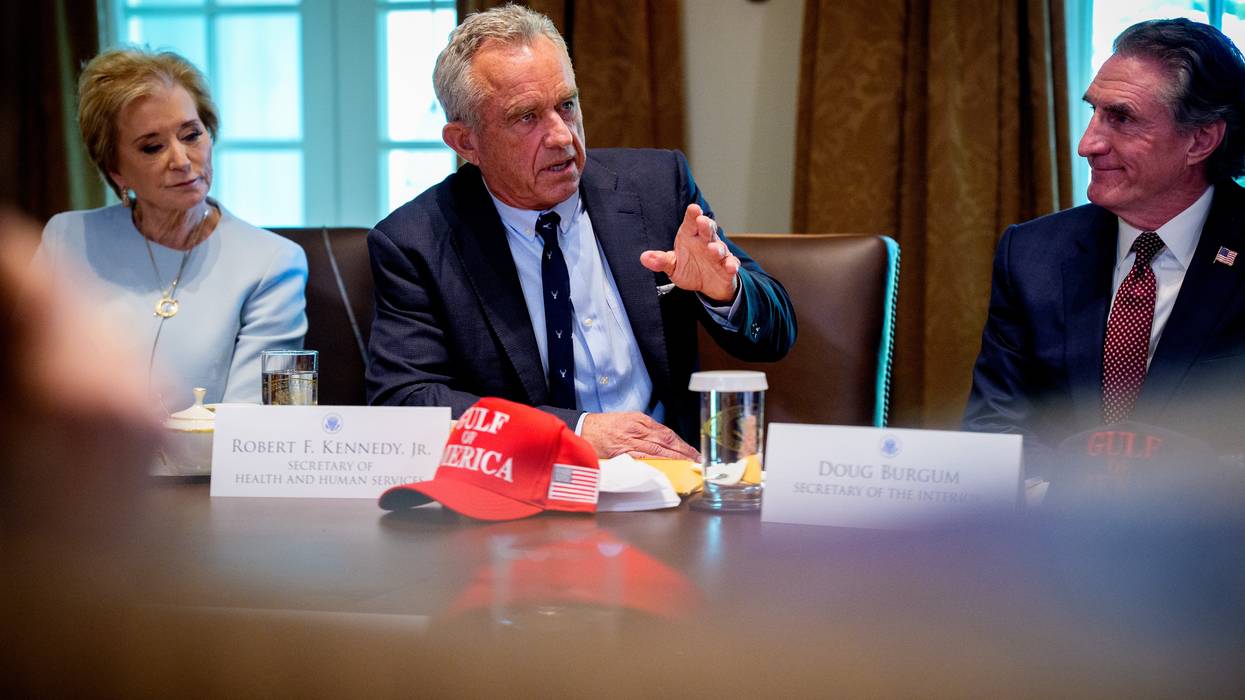
"This administration is not streamlining the federal government; they are sabotaging it and all of us," said New York Attorney General Letitia James.
A coalition of 20 attorneys general on Monday sued the U.S. Department of Health and Human Services, HHS Secretary Robert F. Kennedy Jr., and other Trump administration officials in federal court over cuts to the agency, arguing that "dismantling" and "paralyzing" it through terminations and reorganizations is an "unlawful effort" to undercut Congress.
The lawsuit focuses on a March 27 directive that unveiled sweeping changes to HHS, and the plaintiffs are requesting that the court declare the directive unlawful, arguing that it is unconstitutional and violates the Administrative Procedure Act.
"This administration is not streamlining the federal government; they are sabotaging it and all of us," said New York Attorney General Letitia James, one of the attorneys general leading the lawsuit, in a statement on Monday. "When you fire the scientists who research infectious diseases, silence the doctors who care for pregnant patients, and shut down the programs that help firefighters and miners breathe or children thrive, you are not making America healthy—you are putting countless lives at risk."
The lawsuit argues that prior to March 27 the administration had sought to "systematically deprive" HHS of necessary resources, but the March directive was an escalation of this effort, announcing the agency's intention to terminate thousands HHS employees, restructure 28 divisions down to 15, and reduce regional offices from 10 to 5.
"Secretary Kennedy refused to undertake this restructuring legally or carefully," according to the suit, which also highlights that the steep reductions in staff were not slated to yield significant savings.
"The March 27 directive came after scores of probationary employees were laid off and many employees took a buyout offer. None of these layoffs were necessary to accommodate a funding shortfall—Congress's appropriations have remained steady, or in many cases, grown in recent years. All told, 20,000 full-time employees—almost 25% of HHS headcount—would be terminated in a few months to save, by defendants' own estimate, less than 1% of HHS expenditures," according to the suit.
The attorneys general argue that cuts to HHS and its subagencies have prevented them from carrying out their "statutorily required functions." The lawsuit ticks through changes to various agencies within HHS and explains how the March 27 directive has made them unable to do their work.
At the Centers for Disease Control and Prevention (CDC), for example, some 2,400 employees were dismissed on April 1, according to the complaint.
Per the suit, all workers that handled Freedom of Information Act requests have been fired, as have members of the communication team. The cuts have reduced the Division of Global HIV & Tuberculosis's staff by roughly a quarter and also meant that infectious disease laboratories have either been shuttered or reduced their capacity.
"The closure and cuts to infectious diseases laboratories within CDC are perhaps the most egregious example of how the March 27 directive is destroying CDC's ability to meet its statutory mandates to investigate, detect, and identify diseases," according to the suit.
"Since day one, this president and his administration have attempted to illegally decimate agencies across the federal government upon which the American people rely," said Rhode Island Attorney General Neronha, who is also co-leading the suit, in a statement on Monday. "In a world where the next pandemic could be right around the corner, and cases of measles are on the rise, taking an axe to the agency responsible for the health and safety of Americans is wildly irresponsible."
In addition to attorneys general from Rhode Island and New York, the plaintiffs includes state attorneys general from Washington; Arizona; California; Colorado; Connecticut; Delaware; Washington, D.C.; Hawaii; Illinois; Maine; Maryland; Michigan; Minnesota; New Jersey; New Mexico; Oregon; Vermont; and Wisconsin.
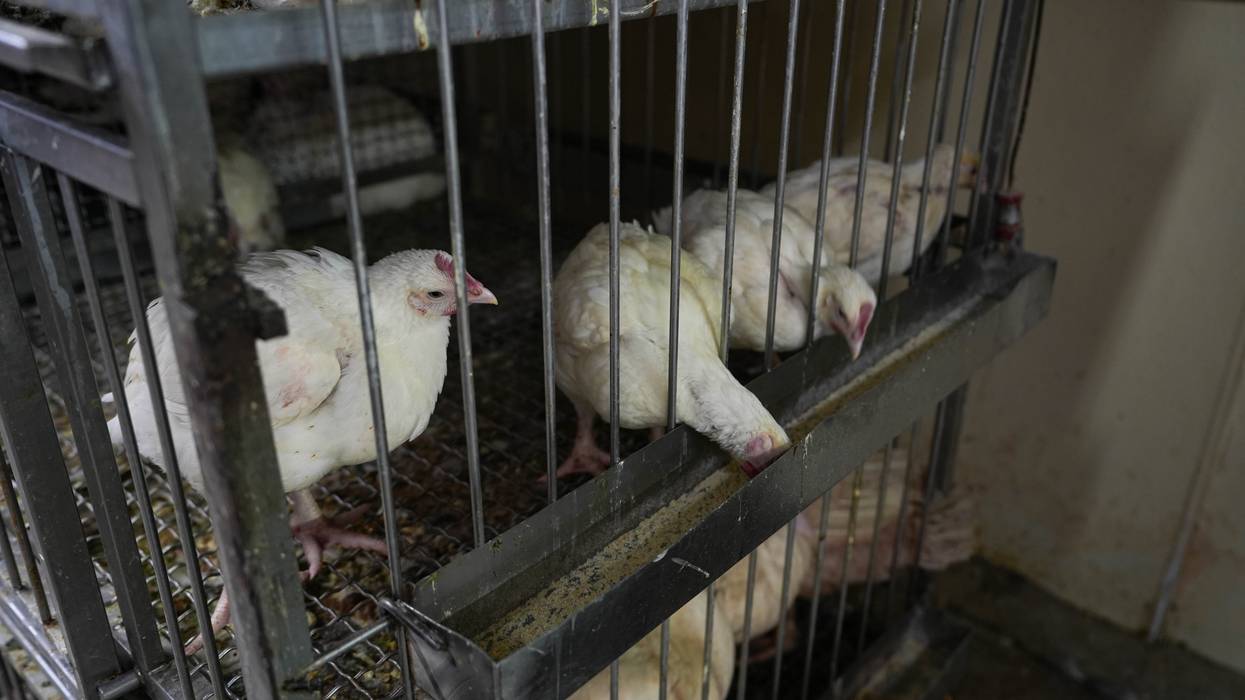
"New information and transmission countermeasures can and must be developed and shared as rapidly as the virus evolves," wrote the letter's authors.
A broad coalition of environmental, health, and animal groups is demanding greater transparency from the U.S. Centers for Disease Control and Prevention when it comes to disseminating information about H5N1, or bird flu, that has sickened hundreds of dairy cattle herds, killed millions of chickens, and also infected dozens of humans.
The Monday letter, which was signed by two staff members at the Center for Biological Diversity on behalf of a larger group that includes Earthjustice, the Animal Legal Defense Fund, the Institute for Agriculture and Trade Policy, and others, was sent to CDC acting Director Susan Monarez.
"New information and transmission countermeasures can and must be developed and shared as rapidly as the virus evolves," according to the letter, which says that it has been over a month since the CDC issued a regular update about its bird flu response activity.
On the CDC's "News & Spotlight" page on the section of its website dedicated to bird flu, no update has been posted since January 17. Prior to that date, the page featured regular updates, such as a post about the agency's accomplishments related to curbing bird flu in 2024-25.
Also, the CDC "appears to have delayed or denied the publication of key scientific research on avian influenza in its Morbidity and Mortality Weekly Report, including a study suggesting that infected house cats may be transmitting [highly pathogenic avian influenza] to humans," according to the letter. The letter links to February 6 reporting from The New York Times, which says that the CDC briefly posted but then took down a report that discussed cases of potential human-to-cat and cat-to-human transmission of bird flu.
That report now appears online and was posted as part of the CDC's Morbidity and Mortality Weekly Report for February 20.
"This is exactly the kind of information that concerns the public and should have been shared broadly—not withheld—so that Americans could avoid this route of infection and researchers and public health officials could understand and defeat this virus," the letter states.
According to the authors of the letter, publicizing data about bird flu is crucial, especially given reports of federal personnel cuts potentially impacting the government's bird flu response. Last week, the U.S. Department of Agriculture said it had sent termination letters to "several" staff working on the government's bird flu response, and that the agency was working to reverse the firings.
"The CDC should release to the public all information related to the avian influenza outbreak as soon as it is confirmed. This commitment to public transparency is essential to an effective, whole-of-society response to this growing disease threat," the letter concludes.
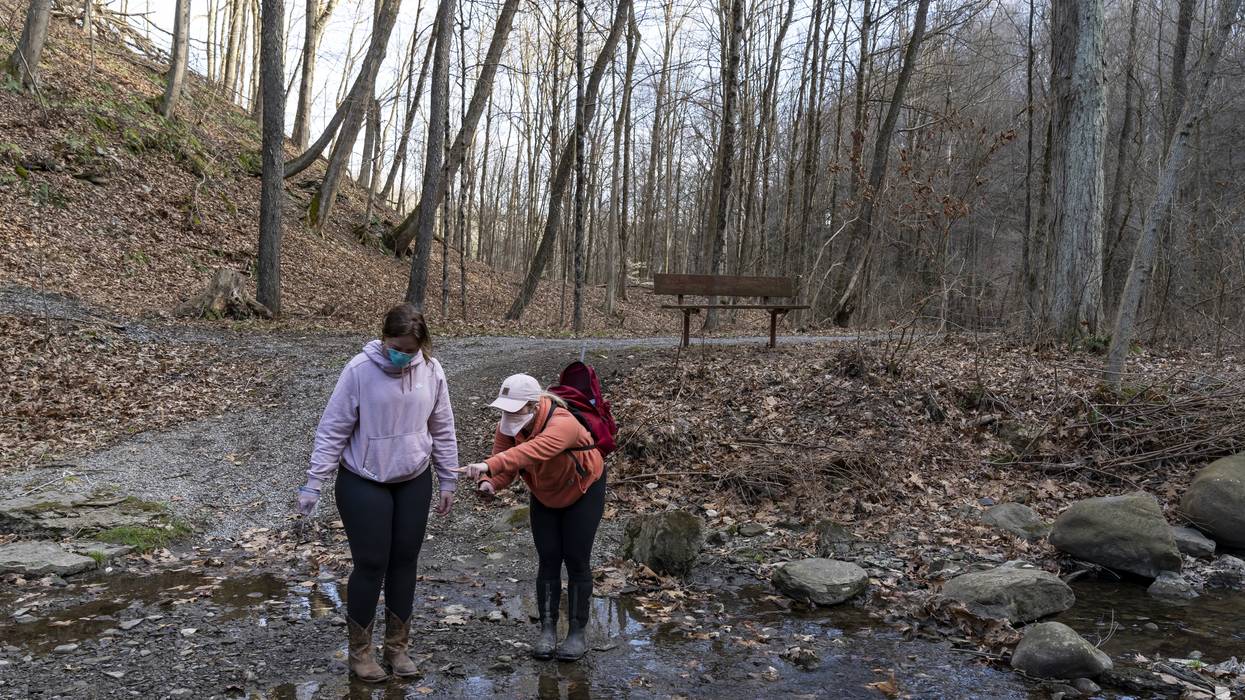
The reports add "confirmation that the symptoms reported by East Palestine residents are real and are associated with environmental exposures from the derailment and chemical fire," said one scientist.
Reports that several investigators with the U.S. Centers for Disease Control and Prevention became ill earlier this month when they visited East Palestine, Ohio offered the latest evidence on Friday that the air and water in the town is less safe than state officials and rail company Norfolk Southern have claimed, following the company's train derailment in February.
As CNN reported, seven physicians and officers from the CDC's Epidemic Intelligence Service traveled to East Palestine in early March, a month after a train carrying toxic chemicals including vinyl chloride derailed there.
The team reported developing symptoms including headaches, sore throats, coughing, and nausea while they were conducting their door-to-door assessment of public health risks.
The symptoms were similar to those reported by many East Palestine residents since the crash, and are consistent with the physical effects of exposure to vinyl chloride when it is burned, as it was by officials who conducted a controlled release following the derailment to avoid an explosion.
Despite reports from people in the area, who were briefly evacuated and then told just days after the accident that it was safe to return to East Palestine, state officials and Norfolk Southern representatives have insisted that no dangerous levels of contamination have been detected in air or water.
"We must stop playing Russian Roulette with our health and the environment," said environmental justice advocate Erin Brockovich Friday.
The report from CDC experts "adds confirmation that the symptoms reported by East Palestine residents are real and are associated with environmental exposures from the derailment and chemical fire," David Michaels, an epidemiologist and professor at the George Washington University School of Public Health and former head of the Occupational Safety and Health Administration, told CNN.
Norfolk Southern has removed roughly nine million gallons of contaminated wastewater from the site of the derailment so far. Chemicals spilled into local creeks and rivers after the derailment and eventually flowed into the Ohio River.
Residents have expressed frustration over officials' assurances as many have reported symptoms similar to those experienced by the CDC experts.
"They're all scientists," one East Palestine woman named Jami Cozza told a panel of state and federal experts at a town hall on March 2. "They're sitting up here telling us nothing's wrong. I want you to tell me why everybody in my community is getting sick."
The CDC told CNN that the Epidemic Intelligence Service team's symptoms have not persisted since they left East Palestine.
Purdue University engineering professor Andrew Whelton, who has conducted independent studies in East Palestine since the derailment, said on social media this week that he submitted a Freedom of Information Act request to the CDC, asking for documents regarding the investigators' illnesses.
"I think it is important for not only government officials to communicate with each other," Whelton told CNN, "but also to communicate their experiences with the public, so that everybody can understand what's going on, and how help needs to be brought to East Palestine and the surrounding areas."

"The agency must provide clear guidance to healthcare providers about the steps they can take now to ensure that all children have the medicine they need," said Rep. Ro Khanna.
U.S. Rep. Ro Khanna led several Democratic members of Congress in calling on the Food and Drug Administration to take more aggressive action to ensure families and healthcare providers have access to common over-the-counter medicines that have been depleted on drugstore shelves across the U.S. this winter.
Despite "round-the-clock efforts from manufacturers" of ibuprofen and acetaminophen, which can reduce fever and other symptoms for sufferers of the flu, respiratory syncytial virus (RSV), and Covid-19, "demand for these medicines is outpacing supply," wrote the lawmakers to FDA Commissioner Robert Califf.
Cases surged late last fall—earlier than in previous cold and flu seasons—leading to shortages, according to retailers and manufacturers. Politico reported last month that drug shortage crises can also be caused by supply disruptions resulting from "companies cutting corners" and shutting down manufacturing lines, misallocation of drug supplies across the country, and hoarding of drugs by wholesalers in anticipation of shortages.
The Centers for Disease Control and Prevention (CDC) is still reporting hundreds of thousands of new cases of Covid-19 per week, as well as hundreds of RSV cases. Seasonal flu activity is currently low nationally, but certain places across the country including New York City, New Mexico, and Washington, D.C. have reported recent case surges.
Honolulu-based journalist Nina Wu tweeted photos of nearly-empty cold medicine shelves on February 6.
Reps. Lisa Blunt Rochester (D-Del.) and Buddy Carter (R-Ga.) last month urged Congress to pass their bipartisan proposal to require the federal government to keep a six-month stockpile of 50 generic medications for common health conditions.
"As Congress works to find a legislative solution regarding rates of production, we believe that the FDA can take further actions to address this issue," wrote Khanna (D-Calif.) in Wednesday's letter, along with Reps. Barbara Lee (D-Calif.), Sara Jacobs (D-Calif.), Jamaal Bowman (D-N.Y.), Bennie Thompson (D-Miss.) and Troy Carter (D-La.).
The FDA has already issued guidance for healthcare providers and pharmacists directing them to make ibuprofen in-house if they have certain ingredients available, but the lawmakers said the agency should also:
Khanna noted in a statement to The Hill that his family has "experienced the impact of this shortage firsthand."
"The agency must provide clear guidance to healthcare providers about the steps they can take now to ensure that all children have the medicine they need," he said.

"Young people in the U.S. are collectively experiencing a level of distress that calls on us to act," reads the study.
Child development experts and other advocates said Monday that new federal data regarding the struggles of adolescents in the United States should serve as an urgent call to action, as teenage girls reported facing rising levels of sexual violence as well as suicidal thoughts and depression in a survey taken by the Centers for Disease Control and Prevention.
The CDC's biennial Youth Risk Behavior Survey, which was given to 17,000 teenagers at public and private high schools across the U.S. in 2021, found that nearly 1 in 3 adolescent girls seriously considered suicide that year—representing an increase of 60% over the previous decade.
Thirteen percent said they had attempted suicide in the past year, while 7% of boys reported the same, and 57% of girls said they felt persistently sad or hopeless almost every day for at least two weeks in a row—"a possible indication of the experience of depressive symptoms," according to the CDC report.
"If you think about every 10 teen girls that you know, at least one and possibly more has been raped, and that is the highest level we've ever seen."
Among teenagers the CDC identified as LGBQ+, 69% reported feeling persistent sadness for at least two weeks in a row. The study did not specifically address the challenges faced by transgender students.
Twenty-two percent of LGBQ+ adolescents said they had attempted suicide.
Kathleen Ethier, director of the CDC's Division of Adolescent and School Health, told The Washington Post that high rates of depression and suicidal ideation among teenage girls was "almost certainly" linked to another finding in the survey: 14% of girls reported that they had been forced to have sex—an increase of 27% since the last time the survey was taken in 2019.
The rate of sexual assault was even higher among LGBQ+ teenagers, with 20% reporting they had been forced to have sex.
Regarding the hopelessness and desperation evident among LGBQ+ teenagers, Dr. Scott Hadland, chief of adolescent medicine at Massachusetts General Hospital said he was "sadly" unsurprised, considering the wave of legislative attacks on transgender and gender-nonconforming Americans, including youths.
"When we legislate against LGBTQ+ teens & their families, they're listening, internalizing, and struggling," said Hadland.
Educator and advocate Cathy Davidson pointed out that depression, suicidal ideation, and increased sexual violence directed at girls all come amid "assaults on women's rights to their bodies" in state legislatures across the country. Dozens of abortion restrictions were imposed in 2021.
The study did not include an accounting of what is behind the rise in sexual violence against teens, be it violence happening at home, at school, or in intimate relationships.
"It's really important to disentangle the relationships between the perpetrators and the victim-survivors to better understand the reasons why," Heather Hlavka, an associate professor of criminology and law studies at Marquette University, told The Post.
The CDC's recommendations focused on what policymakers and schools can do to better support teenagers, including implementing quality health education, improving school-based services for students who are struggling, and increasing school connectedness by providing "with social and emotional learning programs in early grades and youth development programs in middle and high school" and "professional development to educators on classroom management."
"These data make it clear," reads the report, "that young people in the U.S. are collectively experiencing a level of distress that calls on us to act."
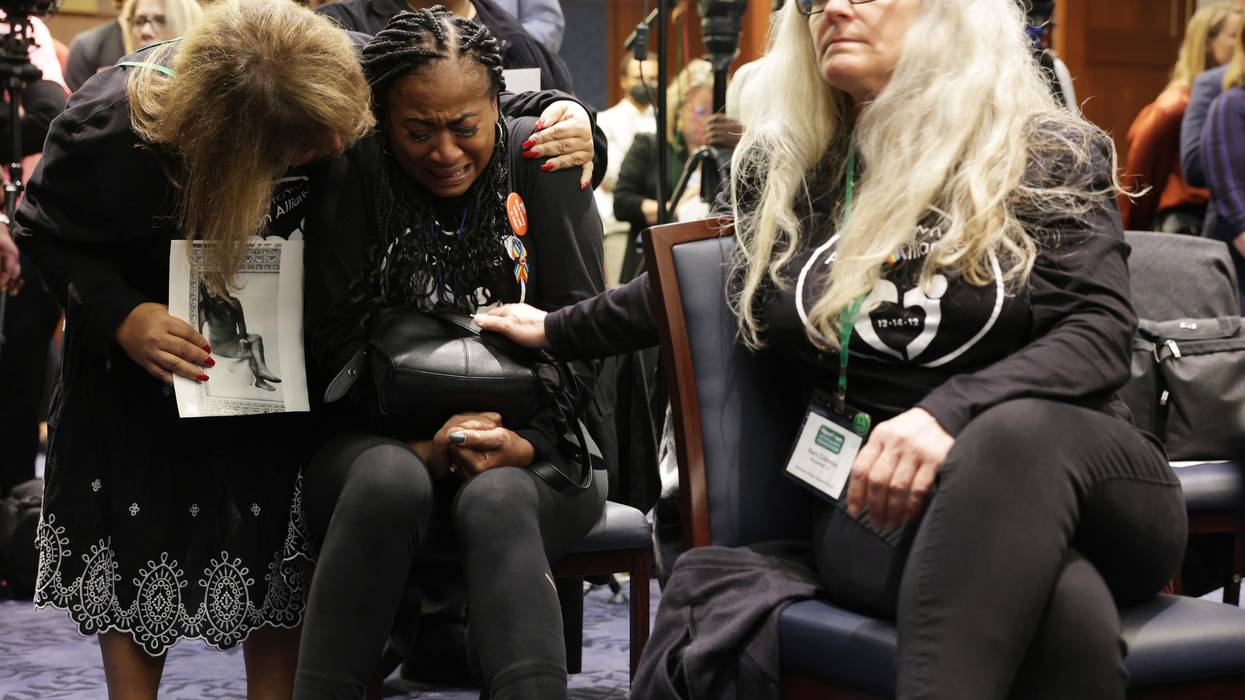
U.S. progressives marked the 10th anniversary of the Sandy Hook Elementary School massacre by renewing calls for gun control, with one reform advocate telling families of those slain in the nation's worst primary school shooting that "it is our national shame that we failed to take meaningful steps to protect your children."
"Instead of a moral reckoning, this country has seen an increase in mass shootings. The whole damn system is guilty as hell."
On December 14, 2012, a mentally ill 20-year-old armed with an assault-style semi-automatic rifle shot and killed his mother before murdering 20 first graders and six faculty members at the Newtown, Connecticut school before taking his own life as first responders arrived on the gruesome scene.
While gun control advocates pressed for reforms in the wake of the Sandy Hook slaughter, National Rifle Association CEO Wayne LaPierre, who still holds the position today, asserted that more guns in the form of armed guards at schools were part of the solution to a problem which he blamed on violent movies, video games, and music videos.
Since Sandy Hook, Democratic U.S. lawmakers have proposed dozens of gun control laws, with the vast majority failing to pass.
"Ten years ago today, 20 children and six educators at Sandy Hook Elementary School were shot and killed. We must never forget that horrific day," tweeted Sen. Bernie Sanders (I-Vt.). "It's time for Congress to pass the commonsense gun safety reforms the American people are demanding."
Rep. Barbara Lee (D-Calif.) tweeted that "it's been 10 years since Sandy Hook. Ten years and Republicans still offer no solution beyond thoughts and prayers. Our children deserve action."
Former Democratic Ohio congressional candidate Nina Turner wrote on Twitter: "It's been 10 years since the shooting at Sandy Hook Elementary occurred and instead of a moral reckoning, this country has seen an increase in mass shootings. The whole damn system is guilty as hell."
Since Sandy Hook, there have been 189 deadly school shootings in the United States, resulting in 279 deaths, according to the K-12 School Shooting Database. The advocacy group Sandy Hook Promise says that 12 children are killed and 32 more wounded by gunfire each day in the United States.
U.S. Centers for Disease Control and Prevention figures show that more than 250,000 people have been shot dead in the United States between 2016 and 2021. According to the Gun Violence Archive, there have been 42,199 U.S. gun deaths in 2022 alone, including 628 mass shootings.
"Today, gun violence has become the leading cause of death for children in the U.S.," noted the Institute for Policy Studies in a Twitter thread.
IPS continued:
Even within the U.S., gun deaths are highest in the states with the fewest gun restrictions... The same NRA lobbyists who profit off pushing more guns into the populace tell us that the answer to school shootings is to militarize schools. But we've seen that adding police to schools harms students--and *still fails* to prevent shootings.
The pro-gun lobby, one of the largest in the country, ignores these facts and spreads distortions by vastly outspending all of the gun safety orgs, while Congress looks on. Nearly $3 billion(!) is being spent annually on school security across the country without proven evidence that it promotes safety. Instead, we should invest in what we *know* promotes safety: Social and emotional support for students. And commonsense regulations on guns.
"From Sandy Hook to Parkland to Uvalde to Club Q, mass shootings are heartbreaking, too common, and entirely avoidable," IPS added. "Before we see any more tragedies, Congress must listen to the people and pass bold gun control now."
President Joe Biden--who earlier this year signed minor gun safety legislation in the wake of the Robb Elementary School massacre in Uvalde, Texas--marked the Sandy Hook anniversary by declaring a day of remembrance.
"We should have societal guilt for taking too long to deal with this problem," the president said in a statement. "We have a moral obligation to pass and enforce laws that can prevent these things from happening again."
At the time of the Sandy Hook shooting, Biden was vice president under then-President Barack Obama.
Biden added Wednesday that he is "determined" to sign a ban on assault weapons and high-capacity magazines, an unlikely outcome given Republicans will control the House of Representatives beginning next month.
"Enough is enough. Our obligation is clear," the president said. "We must eliminate these weapons that have no purpose other than to kill people in large numbers."

The World Health Organization and the U.S. Centers for Disease Control and Prevention warned Wednesday that tens of millions of children around the globe are "dangerously susceptible" to measles infection as vaccination against the deadly but preventable disease has steadily declined since the start of the Covid-19 pandemic.
"Behind every statistic in this report is a child at risk of a preventable disease."
In addition to coronavirus-related diversions of resources and disruptions to routine medical care, some public health experts are attributing the worsening measles threat to the intensified spread of anti-vaccine disinformation, led by right-wing science deniers from the United States.
A record high of almost 40 million children worldwide missed a measles vaccine dose in 2021, says a joint report from the WHO and the CDC. A whopping 25 million kids missed their first dose and another 14.7 million missed their second dose in what the agencies called "a significant setback in global progress towards achieving and maintaining measles elimination."
Globally, there were an estimated nine million cases and 128,000 deaths from measles in 2021, up from 7.5 million cases and 60,700 deaths in 2020. Nearly two dozen countries endured "large and disruptive outbreaks" last year, according to the WHO and the CDC.
"Declines in vaccine coverage, weakened measles surveillance, and continued interruptions and delays in immunization activities due to Covid-19, as well as persistent large outbreaks in 2022, mean that measles is an imminent threat in every region of the world," the agencies warned.
In the words of WHO Director-General Tedros Adhanom Ghebreyesus, "The paradox of the pandemic is that while vaccines against Covid-19 were developed in record time and deployed in the largest vaccination campaign in history, routine immunization programs were badly disrupted, and millions of kids missed out on lifesaving vaccinations against deadly diseases like measles."
As Tedros has long lamented, millions of children and adults in low-income nations have also been denied access to Covid-19 vaccines and treatments as a result of dose hoarding by rich countries and knowledge hoarding by Big Pharma--an ongoing injustice that has prolonged the pandemic and its damaging side effects.
"Getting immunization programs back on track is absolutely critical," said Tedros. "Behind every statistic in this report is a child at risk of a preventable disease."
The WHO and the CDC called the situation "grave." As the agencies explained:
Measles is one of the most contagious human viruses but is almost entirely preventable through vaccination. Coverage of 95% or greater of two doses of measles-containing vaccine is needed to create herd immunity in order to protect communities and achieve and maintain measles elimination. The world is well under that, with only 81% of children receiving their first measles-containing vaccine dose, and only 71% of children receiving their second measles-containing vaccine dose. These are the lowest global coverage rates of the first dose of measles vaccination since 2008, although coverage varies by country.
Stressing the need for "urgent global action," the report states: "Measles anywhere is a threat everywhere, as the virus can quickly spread to multiple communities and across international borders. No WHO region has achieved and sustained measles elimination. Since 2016, 10 countries that had previously eliminated measles experienced outbreaks and reestablished transmission."
It continues:
In 2021, nearly 61 million measles vaccine doses were postponed or missed due to Covid-19-related delays in immunization campaigns in 18 countries. Delays increase the risk of measles outbreaks, so the time for public health officials to accelerate vaccination efforts and strengthen surveillance is now. CDC and WHO urge coordinated and collaborative action from all partners at global, regional, national, and local levels to prioritize efforts to find and immunize all unprotected children, including those who were missed during the last two years.
"For three years, we have been sounding the alarm about the declining rates of vaccination and the increasing risk to children's health globally," said UNICEF immunization chief Ephrem Tekle Lemango. "Widening gaps in immunization coverage are letting measles--the most contagious yet vaccine-preventable killer disease--spread and cause illness and death."
"We have a short window of opportunity," Lemango added, "to urgently make up for lost ground in measles vaccination and protect every child."
CDC Director Rochelle Walensky, for her part, said that "the record number of children under-immunized and susceptible to measles shows the profound damage immunization systems have sustained during the Covid-19 pandemic."
"Measles outbreaks illustrate weaknesses in immunization programs," Walensky noted, "but public health officials can use outbreak response to identify communities at risk, understand causes of under-vaccination, and help deliver locally tailored solutions to ensure vaccinations are available to all."
When it comes to understanding the causes of declining measles vaccination rates, Peter Hotez, a professor of pediatrics at the Baylor College of Medicine and leader of the Texas Children's Hospital team applauded for developing a patent-free Covid-19 jab, argued that "rising anti-vaccine activism" must be considered a key factor alongside pandemic-driven social disruptions and reallocations of resources.
In a paper published earlier this year in the peer-reviewed journal Nature Reviews Immunology, Hotez wrote: "In the time of the Covid-19 pandemic, anti-vaccine activism in the USA accelerated, amplified, and formed an alliance with political groups and even extremists. An organized, well-funded, and empowered anti-science movement now threatens to spill over and threaten all childhood immunizations in the USA and globally."
According to Hotez:
A central concern is whether anti-vaccine activism from the USA will detrimentally effect the world's low- and middle-income countries (LMICs). For two decades, under the auspices of the 'Global Goals' (initially the 'Millennium Development Goals' followed by 'Sustainable Development Goals'), tremendous strides have been made in reducing deaths and morbidity from measles, polio, pertussis, and other dangerous illnesses that can be prevented by vaccination. The fear is that globalizing anti-vaccine activism might reverse these trends. A successful vaccine ecosystem led by Gavi, the Vaccine Alliance, and its United Nations partners, the World Health Organization (WHO) and UNICEF, is under threat.
Even before the emergence of Covid-19, the WHO listed vaccine hesitancy as one of the top 10 global health threats, including in LMICs. Now, in this time of the pandemic, the WHO notes further significant 'backsliding' of routine childhood immunizations.
"Anti-vaccine activism now costs human lives on scales that exceed global terrorism or other established threats," Hotez concluded. "We must recognize the depth and breadth of anti-vaccine activism and its detriment to global security."
A pair of studies from 2019 revealed that getting infected with measles is even more dangerous than scientists previously believed, underscoring the importance of vaccination.
Summarizing the research when it was published, The Washington Post reported: "In addition to the illness caused by the virus, a measles infection also takes a wrecking ball to the immune system. It destroys up to half of the existing antibodies that protect against other viruses and bacteria... That means people, especially children, who get measles become much more vulnerable to other germs that cause diseases such as pneumonia and influenza that they had previously been protected against."
"Measles is not a harmless illness, as some anti-vaccine activists falsely claim, but one with deadly consequences," the newspaper noted. While many people in the U.S., including doctors, "have never seen the consequences of the disease because it became so rare thanks to vaccination," the country nearly lost its measles elimination status in 2019 when outbreaks among unvaccinated populations in New York City led to more than 1,200 infections--the most since 1992. More than 50 cases have been detected nationwide so far this year.
Measles remains a life-threatening scourge around the world, especially for unvaccinated young children in low-income countries.
"Plummeting measles vaccination rates should set off every alarm," Elizabeth Cousens, president of the United Nations Foundation, said Wednesday. "Tens of millions of children are at risk of this deadly yet entirely preventable disease until we get global vaccination efforts back on track."
"There is no time to waste," she added. "We must work urgently to ensure lifesaving vaccines reach every last child."

Following growing activist pressure and criticism, the Biden administration on Thursday declared monkeypox a national public health emergency, a move that empowers federal agencies to better direct resources toward combating an outbreak that's infected thousands of Americans.
"When you have an outbreak, the most important thing is you have to act fast, you have to mobilize."
Speaking to reporters at an afternoon press briefing, U.S. Health and Human Services Secretary Xavier Becerra said the administration is "prepared to take our response to the next level in addressing this virus, and we urge every American to take monkeypox seriously."
The administration's move follows a July 23 World Health Organization global health emergency declaration and similar designations by U.S. states, counties, and cities including California, Illinois, New York, New York City, Los Angeles, San Diego, and San Francisco.
Thanking the Biden administration "for taking this critical step to fight monkeypox," Democratic New York Gov. Kathy Hochul said that "this will allow us to respond even more aggressively by increasing our testing, treatment, and vaccination efforts."
Infectious disease experts and activists have criticized what they say is the federal government's lack of urgency in responding to monkeypox, which has infected more than 6,600 people in the United States as of Wednesday, according to the U.S. Centers for Disease Control and Prevention. The Biden administration has come under fire for waiting more than three weeks after the first confirmed U.S. monkeypox cases before moving to procure vaccine stocks.
The New York Times reported Wednesday:
The government is now distributing about 1.1 million doses, less than a third of the 3.5 million that health officials now estimate are needed to fight the outbreak. It does not expect the next delivery, of half a million doses, until October. Most of the other 5.5 million doses the United States has ordered are not scheduled to be delivered until next year.
"What I expected to see would have been a more vigorous kind of a response based on lessons that we've learned from... Covid-19, as well as lessons we've learned from the HIV response," Dr. Wafaa El-Sadr, founder and director of the International Center for AIDS Care and Treatment Program at Columbia University Mailman School of Public Health, told Voice of America.
"When you have an outbreak, the most important thing is you have to act fast, you have to mobilize," he added, "and you have to rally all your assets to work together really quickly to be able to do what's needed."
Related Content

Following the lead of public health advocates, U.S. Sen. Kirsten Gillibrand (D-N.Y.) on Wednesday urged the Biden administration to invoke the Defense Production Act to boost production and distribution of monkeypox vaccines.
"Right now there are enough vaccines in the United States to cover one-third of the community generally currently most at risk," she said.
I have multiple sclerosis, a disease in which the immune system attacks the central nervous system. The myelin sheath that surrounds the nerve endings hardens during these attacks, preventing nerve impulses from traveling where they should. These hardened nerve endings, or lesions, accumulate on the brains and spinal cords of people with MS. Because the central nervous system regulates the other bodily systems, MS lesions can cause an endless list of debilitating symptoms including fatigue, numbness, spasticity, pain, incontinence, blindness, cognitive dysfunction, paralysis, difficulty swallowing and breathing, and death. MS is unpredictable, progressive, and there is no cure. Frankly, it's terrifying.
The horrors of chronic illness and disability under capitalism are too numerous to count, even in the best of times.
I have been on several medications to slow the progression of my MS. Some have worked for a time, others not at all. I currently receive infusions that eliminate B cells, making me immunocompromised. Because of my treatment, I did not form antibodies from any of the four Covid-19 vaccines I've received. The absence of B cells and antibodies leaves me without two of three pillars of immunity against Covid-19 and puts me at risk for severe illness or death. I am between a rock and a hard place, or more precisely, between protecting myself from a devastating, incurable neurological disease and a deadly and ever-mutating virus.
Such paradoxes aren't rare for vulnerable people in the United States. The horrors of chronic illness and disability under capitalism are too numerous to count, even in the best of times. And despite our country's intense political divisions, everyone seems to agree that in the worst of times, vulnerable people are casually expendable for the sake of the economy. Under the leadership of both Republicans and Democrats, public health policy in the US consistently espouses eugenics. The Biden administration's Covid-19 policy is no different: it culls sick, disabled, and immunocompromised people from the population as part of its pledge to "return to normal."
The Biden administration's failure to protect vulnerable people from Covid-19 is evident in CDC director Rochelle Walensky's comments from January 7, 2022: "The overwhelming number of deaths, over 75%, occurred in people who had at least four comorbidities. So really, these are people who were unwell to begin with. And yes, really encouraging news in the context of Omicron."
Walensky's comments caused widespread outrage in the disability community but they only hint at the magnitude of this administration's cruel and normalized failure to protect vulnerable lives. In response to our outrage, the CDC, Biden, and their Covid-minimizing pundits continue to insist that our deaths are unfortunate, but inevitable. At the same time, they wage an ongoing campaign to convince the public that implementing simple measures to protect us would be too great a burden. In lieu of protecting the high-risk community with substantive public health policy like universal masking, improved ventilation, and adequate isolation periods, the CDC has assured us that it is "committed to continuing the dialogue," and "working to help reduce health disparities... with initiatives including providing accessible materials and culturally relevant messages."
Even in the wake of Biden's own diagnosis, his administration maintains that it doesn't need to mandate policy that would prevent Covid-19 health disparities because it "has the tools" to fix them. Yet the CDC's accessibility toolkit for people with disabilities and the White House's latest fact sheet for managing BA.5, the now dominant variant, offer the high-risk community little more than a regurgitation of their vaccination-only strategy. This is a strategy that relies on outdated vaccines that don't provide protection for many immunocompromised people and that are more easily evaded as the virus evolves. The CDC and Biden frame non-pharmaceutical interventions like masking and distancing as an imperative for the vulnerable and a choice for everyone else. Of course, non-pharmaceutical interventions are far less effective when only some members of the community use them. And allowing personal choice to guide public health behavior conditions people to believe that good outcomes are possible whether they choose to participate in the interventions necessary to achieve those outcomes.
Two of the administration's pharmaceutical "tools," the Paxlovid test to treat program and the monoclonal antibody Evusheld, were broadcast as panaceas for high-risk people when they were rolled out in December. But shortages, confusing guidelines, and uneven distribution have made these treatments inaccessible to many in the high-risk population. Recent data on Evusheld shows it is markedly less effective against Omicron sub variants, and growing evidence suggests that a five-day course of Paxlovid may not be enough to clear some infections, contributing to relapsing Covid-19. Sick, disabled, and immunocompromised people have been left with nothing to rely on but our ability to navigate a system that is indifferent to our deaths.
Meanwhile, Biden and the CDC have worked very hard to convince Americans that the demise of vulnerable people is an acceptable byproduct of the expression of their civil liberties. They've reassured the well and abled public that a performative gesture of pity for their sick, disabled, and immunocompromised neighbors mitigates the impact of hanging out at a bar or going maskless to the grocery store. But Biden and the CDC have also worked very hard to conceal the risks that Covid-19 poses to well and abled people. Not only has the public been convinced that it's reasonable to return to "normal" at the peril of the vulnerable, they've also been convinced that it's reasonable to return to normal at their own peril.
In May 2021, Biden announced that the CDC no longer recommended masks for vaccinated people, despite the rise of the highly contagious Delta variant in India and the UK. Then, in July 2021, he claimed that vaccinated people would not get Covid-19, and in October 2021 he claimed that vaccinated people cannot spread Covid-19. Neither of those claims are true, but Biden's comments enabled vaccinated people to base their behavior on a (misinformed) assessment of their own safety rather than the safety of their communities. Given official permission, much of the public abandoned mitigations like masking and distancing which were previously understood to be a civic responsibility.
Earlier this year, the CDC changed its default map metric from "community transmission levels", which reflects current cases, to "community levels'', which reflects hospital admissions. But data on hospital admissions can lag by weeks, resulting in maps that obscure, unsurprisingly, transmission at the community level. Currently, 93.14% of the US is experiencing high community transmission levels and hospital admissions have been on the rise since April. Biden and the CDC have consistently claimed that we are in a "pandemic of the unvaccinated" while 40% of those who died in February and March 2022 were, in fact, vaccinated (15% and 18% boosted, respectively). And BA.5 is 4.2 times more vaccine resistant than BA.2, which was the dominant in February and March when the data was collected. It is unforgivable for our government to hide such vital information when we've already lost more than one million Americans to Covid-19.
Although the CDC has finally published findings that one in five people who get COVID-19 in the US will get Long Covid, data that should have set off alarms to put stronger protections in place has been largely ignored. Our government officials have made little effort to educate the public about the fact that even a mild case of Covid-19 can lead to potentially devastating, multi-organ, multi-system complications, including those of the heart, brain, and lungs. The Biden administration and the CDC have put the onus on individuals to assess risk without giving them adequate information to calculate that risk.
As guidance from our government continues to perpetuate the myth that the pandemic is over for anyone who wishes it to be, life-saving community mitigations have all but disappeared. Perhaps this administration's most horrific act of negligence is its refusal to acknowledge that abandoning these mitigations is what ensures the continuing cycle of death and suffering from Covid-19. It has been devastating to watch the public use our government's monstrous guidance as an excuse to devalue vulnerable lives. Ending public health protections because sick and disabled people are disproportionately dying from Covid-19 is, unquestionably, eugenics.
Unfortunately, in the US, eugenics isn't just a monstrous policy choice. It's an American ideal. The notion that individual choice can somehow be substituted for public health policy has been seamlessly integrated into our country's deep-rooted doctrine of exceptionalism. The "urgency of normal" to go to brunch has replaced the moral imperative to protect others from death and disability. This open disregard for human life has been presented by our government as a uniquely American obligation to respect each other's "choices". But having a neurological disease and compromised immune system during a pandemic is not a choice. Death and suffering have been normalized to such a horrific extent that the vulnerable are now expected remain "civil" when asking not to be disposed of so that others can keep social plans intact. The moral vacuum of the current moment is shocking.
Those at high risk have been left to fend for ourselves. Most of us are hiding at home, looking for a meaningful way to divide up the 20,400 hours and counting we've spent trying to dodge Covid-19. Many of us have been forced to forgo essential medical care, isolate ourselves from our families and social networks, and choose between our lives and our livelihoods. In the absence of any financial support, many high-risk people who've been told that they should stay home can't afford to do so. The physical, psychological, and financial stress is overwhelming.
In May, the Biden administration issued a statement that we could see 100 million Covid-19 cases this fall and winter due to a lack of funding. Days later, Biden urged states to spend "leftover" Covid-19 relief on funding the police. Biden and the CDC continue to acknowledge the rise in Covid-19 cases as if there is nothing that they, the arbiters of public health policy, can or should do about it.
Our government has abandoned its responsibility to protect its citizens by blaming its failures on the very individuals it was elected to protect. This has been at the core of the Biden administration's message: bad Covid-19 outcomes are the result of individuals' bad choices. But as recent history has shown us, the most vulnerable people in our society, despite behaving the most responsibly on an individual basis, suffer the most. Biden's faulty pretext normalizes suffering by attributing it to the moral failings of its victims. The moral failure is of those in power, not those who suffer under that power.
As we approach a winter in which one third of the U.S. population could contract Covid-19, I suspect that well and abled people will once again feel that their lives are threatened by the consequences of their irresponsible, albeit misguided, behavior. They will return to performative allyship, and to news feeds full of cliches like "we're all in this together." Public health relies on compassionate, collective commitment from the public. In our current moment, it relies on the public's commitment to holding those in power accountable. Until the public demands accountability from those in power and from one another, we are most certainly not in this together.
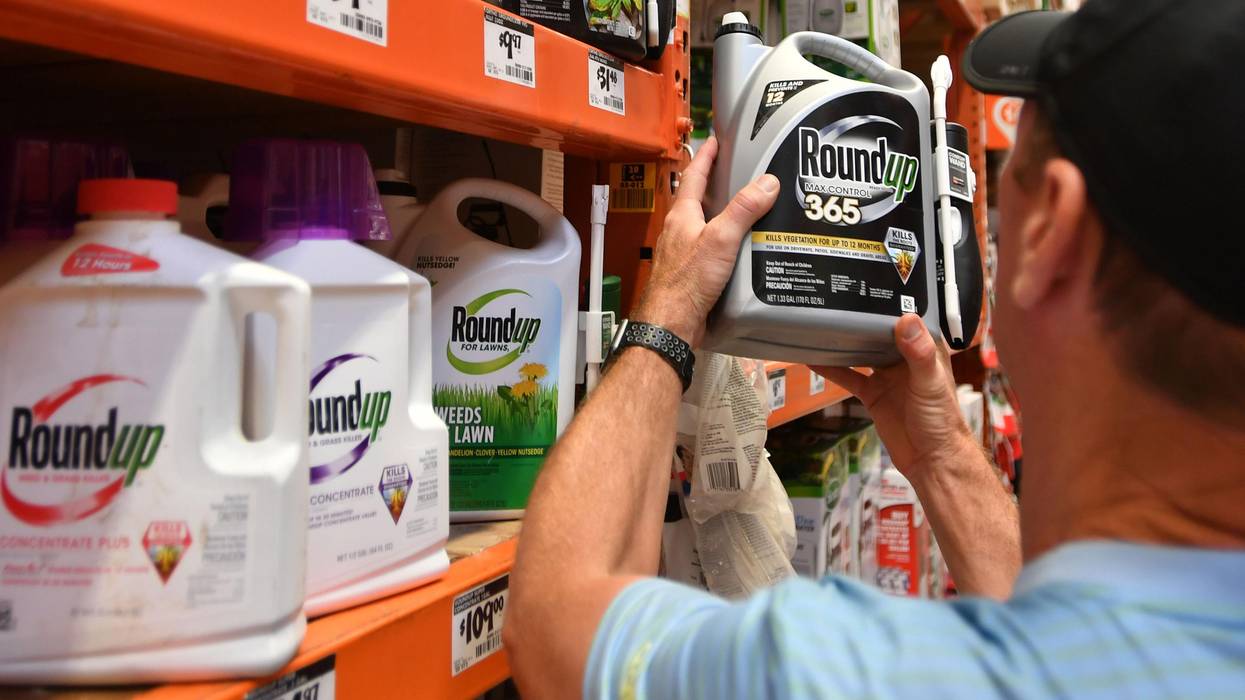
Environmental and public health advocates renewed calls to ban glyphosate after a recently published U.S. report revealed the cancer-linked herbicide--which is the active ingredient in Bayer's popular Roundup weedkiller--was found in the urine of more than 80% of study participants.
" Monsanto lobbyists achieved the full-scale poisoning of our planet for profit."
Of the 2,310 urine samples taken from children and adults for the U.S. Centers for Disease Control and Prevention's National Health and Nutrition Examination Survey, 1,885 contained detectable amounts of glyphosate.
"Ban glyphosate," tweeted the Massachusetts-based Berkshire Environmental Action Team in response to the study. "This chemical should not be in our bodies."
David Nickarz, an activist and former Green Party of Manitoba president, tweeted: "Roundup is polluting our bodies and giving us cancer. Why haven't we banned this stuff yet?"
According to The Guardian:
Both the amount and prevalence of glyphosate found in human urine has been rising steadily since the 1990s when Monsanto Co. introduced genetically engineered crops designed to be sprayed directly with Roundup, according to research published in 2017 by University of California San Diego School of Medicine researchers...
Residues of glyphosate have been documented in an array of popular foods made with crops sprayed with glyphosate, including baby food. The primary route of exposure for children is through the diet.
Last month, the U.S. 9th Circuit Court of Appeals ordered the Environmental Protection Agency to review its assessment that glyphosate likely poses "no unreasonable risk" to human health or the environment.
According to the EPA, there is "no evidence that glyphosate causes cancer in humans," a conclusion shared by the European Food Safety Authority--which nevertheless warns that the herbicide causes "serious eye damage" and is "toxic to aquatic life."
However, the World Health Organization's International Agency for Research on Cancer said in 2015 that glyphosate is "probably carcinogenic to humans," while researchers at the University of Washington published a 2019 study showing that using the herbicide increased the risk of non-Hodgkin's lymphoma by 41%.
In 2018 and 2019, three San Francisco-area juries ordered Monsanto--which was acquired by Bayer AG in 2018--to pay more than $2.3 billion dollars in combined damages for failing to adequately warn consumers about glyphosate's cancer risks, although all three judgments were later reduced on appeal.
In 2020, Bayer agreed to pay over $10 billion to settle claims that Roundup exposure caused plaintiffs' cancers. Bayer said the settlement affected 75% of Roundup-related litigation, which involved approximately 125,000 claims.
Bayer announced last July that it would end U.S. sales of its market-leading Roundup home and garden glyphosate-based herbicide by 2023.