

SUBSCRIBE TO OUR FREE NEWSLETTER
Daily news & progressive opinion—funded by the people, not the corporations—delivered straight to your inbox.
5
#000000
#FFFFFF
To donate by check, phone, or other method, see our More Ways to Give page.
Daily news & progressive opinion—funded by the people, not the corporations—delivered straight to your inbox.

On Wednesday, the leadership of the House of Representatives put off a final vote on the USA Freedom Reauthorization Act, moving to the brink of a vote on the legislation before abandoning plans when it became clear they may not have the numbers needed to pass the bill.
After a series of late developments over Memorial Day weekend and earlier this week, the legislation that had moved through all of the procedural steps to reach the floor this evening did not include in any form a bipartisan amendment offered by Reps. Zoe Lofgren (D-California) and Warren Davidson (R-Ohio).
On Wednesday, the leadership of the House of Representatives put off a final vote on the USA Freedom Reauthorization Act, moving to the brink of a vote on the legislation before abandoning plans when it became clear they may not have the numbers needed to pass the bill.
After a series of late developments over Memorial Day weekend and earlier this week, the legislation that had moved through all of the procedural steps to reach the floor this evening did not include in any form a bipartisan amendment offered by Reps. Zoe Lofgren (D-California) and Warren Davidson (R-Ohio).
Initial reports indicated the amended bill would prohibit the use of Section 215 of the Patriot Act for the warrantless surveillance of search and browser histories of people in the United States, tracking the language of a bipartisan amendment offered in the Senate by Sens. Ron Wyden (D-Oregon) and Steve Daines (R-Montana).
Free Press Action withdrew its initial support for the Lofgren-Davidson amendment, and for the passage of the underlying legislation, after it was confirmed on Wednesday that the amendment's language had been weakened by House Intelligence Committee Chair Adam Schiff (D-California). The compromised language failed to secure fundamental privacy protections for all people, especially immigrants. In the end, that weakened amendment was not attached to the final bill.
The final bill came under withering, last-minute criticism from the left and the right alike, as Congressional Progressive Caucus members and civil-liberties advocacy groups signaled their continued opposition to a version of the USA Freedom Reauthorization Act not improved significantly enough when compared to the bill that 75 Democrats and 60 Republicans voted against in March.
Free Press Action Government Relations Director Sandra Fulton made the following statement:
"While this isn't the end of the fight, the delay of the vote is a winning moment for civil-liberties advocates across the political spectrum, whose fierce opposition to tonight's failed version of the USA Freedom Reauthorization Act led to this latest twist.
"Before giving up on the vote this evening, Democratic House leadership seemed ready to abandon key Fourth Amendment protections for all people in the United States. That would have been a huge disappointment and a dangerous precedent. These protections are critical safeguards against a Trump administration known to use its powers to target marginalized communities and others the president regards as enemies.
"That's why the decision to delay the vote on passage tonight is great news, even if this is just a temporary reprieve and even though the debate will continue. When it does, it will start on very different terms. Democratic leadership needlessly chose to propose opening a massive loophole in the law with the weakened and then discarded version of the Lofgren-Davidson amendment. Accepting that watered-down amendment would have jeopardized the privacy rights of everyone.
"But thanks to pressure from civil-liberties groups, civil-rights champions, Congressional Progressive Caucus members in the Democratic Party, and Republican members--who had become more and more concerned about unchecked and unwarranted spying on people in the United States--this bill is off the table for now.
"While Free Press Action has fought these sweeping surveillance powers under Democratic and Republican administrations alike, they are particularly concerning in the era of Donald Trump and Bill Barr, who have proven to be a significant threat to communities of color, activists and other vulnerable people. The House's last-minute detour keeps alive the chance to take advantage of this moment, and to adopt strong surveillance law reforms that protect the privacy of all people."
Free Press was created to give people a voice in the crucial decisions that shape our media. We believe that positive social change, racial justice and meaningful engagement in public life require equitable access to technology, diverse and independent ownership of media platforms, and journalism that holds leaders accountable and tells people what's actually happening in their communities.
(202) 265-1490
"This Department of Justice investigation, sparked by calls for accountability in the face of violence, chaos, and the killing of Renee Good, does not seek justice," said Gov. Tim Walz.
The US Department of Justice on Tuesday subpoenaed top Minnesota officials, including Democratic Gov. Tim Walz, as part of the DOJ's investigation into alleged conspiracy to impede the thousands of federal immigration agents sent to the Twin Cities by President Donald Trump—a probe Walz has condemned as part of a broader trend of the administration "weaponizing the justice system."
Walz—who ran for vice president in 2024—was similarly critical of the grand jury subpoenas, which were also served to state Attorney General Keith Ellison, Minneapolis Mayor Jacob Frey, Saint Paul Mayor Kaohly Her, Hennepin County Attorney Mary Moriarty, and Ramsey County Attorney John Choi.
"Mr. President, Minnesota invites you to see our values in action," Walz began a lengthy statement shared on social media. "But let me be absolutely clear: The state of Minnesota will not be drawn into political theater. This Department of Justice investigation, sparked by calls for accountability in the face of violence, chaos, and the killing of Renee Good, does not seek justice."
"It is a partisan distraction," Walz declared, detailing how the flood of immigration agents is negatively impacting communities and arguing that the Trump administration should focus on "restoring trust, accountability, and real law and order, not political retaliation."
After US Immigration and Customs Enforcement's Jonathan Ross fatally shot Good earlier this month, Trump and others in his administration called the deceased 37-year-old mother of three a "domestic terrorist" and claimed the ICE officer was acting in self-defense, a narrative betrayed by numerous videos, eyewitness accounts, and detailed analyses of the shooting.
As protesters continued to fill Minnesota's streets, Ellison and the Twin Cities sued the US Department of Homeland Security—which includes Customs and Border Protection (CBP) and ICE—in hopes of ending what the attorney general called a "federal invasion." The ACLU quickly followed with a class action lawsuit aimed at ending DHS agents' unlawful stops and arrests.
In a Tuesday statement about the subpoena, Ellison noted the suit he recently filed on behalf of the state:
Less than two weeks ago, federal agents shot and killed a Minnesotan in broad daylight. Now, instead of seriously investigating the killing of Renee Good, Trump is weaponizing the justice system against any leader who dares stand up to him.
Today, my office has received a criminal grand jury subpoena from the Department of Justice. It is a subpoena for records and documents related to my office's work with respect to federal immigration enforcement, not for me personally. Everything about this is highly irregular, especially the fact that this comes shortly after my office sued the Trump administration to challenge their illegal actions within Minnesota.
Let's be clear about why this is happening: Donald Trump is coming after the people of Minnesota, and I'm standing in his way. I will not be intimidated, and I will not stop working to protect Minnesotans from Trump's campaign of retaliation and revenge."
Frey—who told ICE to "get the fuck out of Minneapolis" after Ross killed Good—said Tuesday that "when the federal government weaponizes its power to try to intimidate local leaders for doing their jobs, every American should be concerned."
"We shouldn't have to live in a country where people fear that federal law enforcement will be used to play politics or crack down on local voices they disagree with," he continued. "In Minneapolis, we won't be afraid. We know the difference between right and wrong, and, as mayor, I'll continue doing the job I was elected to do: keeping our community safe and standing up for our values."
News of the subpoenas came as Greg Bovino, commander at large for CBP, and Marcos Charles, executive associate director of ICE, defended federal agents' operations during a Tuesday afternoon press conference, with the former claiming that "what we do is legal, ethical, and moral."
Sharing a video of Bovino's remarks on social media, journalist Aaron Rupar simply said, "Bovino lies shamelessly."
An investor at Deutsche Bank said the US reliance on foreign debt is a “key weakness” that could be used as leverage against Trump’s aggression.
A Danish pension fund is selling off its US treasuries in the wake of President Donald Trump's repeated threats to annex its sovereign territory, Greenland.
The fund, known as AkademikerPension, said on Tuesday that it was selling off assets worth $100 million by the end of this month.
Its investment director, Anders Schelde, insisted that the decision was due to "poor US government finances," and had nothing to do with Trump's bellicose threats in recent weeks, which have led several European nations to move troops to the island and conduct military exercises in preparation for a US invasion.
But, he said, Trump's threats "didn't make it more difficult to take the decision."
The US president said over the weekend that he would institute tariffs on several European nations if the US did not acquire Greenland by February 1. He has previously said he would not rule out using military force to conquer the island if diplomatic means failed, and when asked about it again on Monday, replied "No comment."
Greenland's prime minister, Jens-Frederik Nielsen, responded on Monday that it would “not be pressured” and “stand firm on dialogue, on respect, and on international law.” A day later, Nielsen warned the people of Greenland to start preparing for a possible military invasion. He said, "It’s not likely there will be a military conflict, but it can’t be ruled out."
Trump's threats against Greenland have rattled markets in recent days, with CNBC reporting on Tuesday that bond prices have fallen along with stock prices and the value of the US dollar, as investors sell American assets that have long been considered among the safest investments.
While Denmark accounts for only a sliver, Europe collectively holds about 40% of foreign US Treasury holdings, which it could use as a choke point in the event of further escalation by Trump.
"Europeans hold roughly $10 trillion in US assets: around $6 trillion in US equities and roughly $4 trillion in Treasuries and other bonds," said Ipek Ozkardeskaya, senior analyst at Swissquote. "Selling those assets would pull the rug from under US markets."
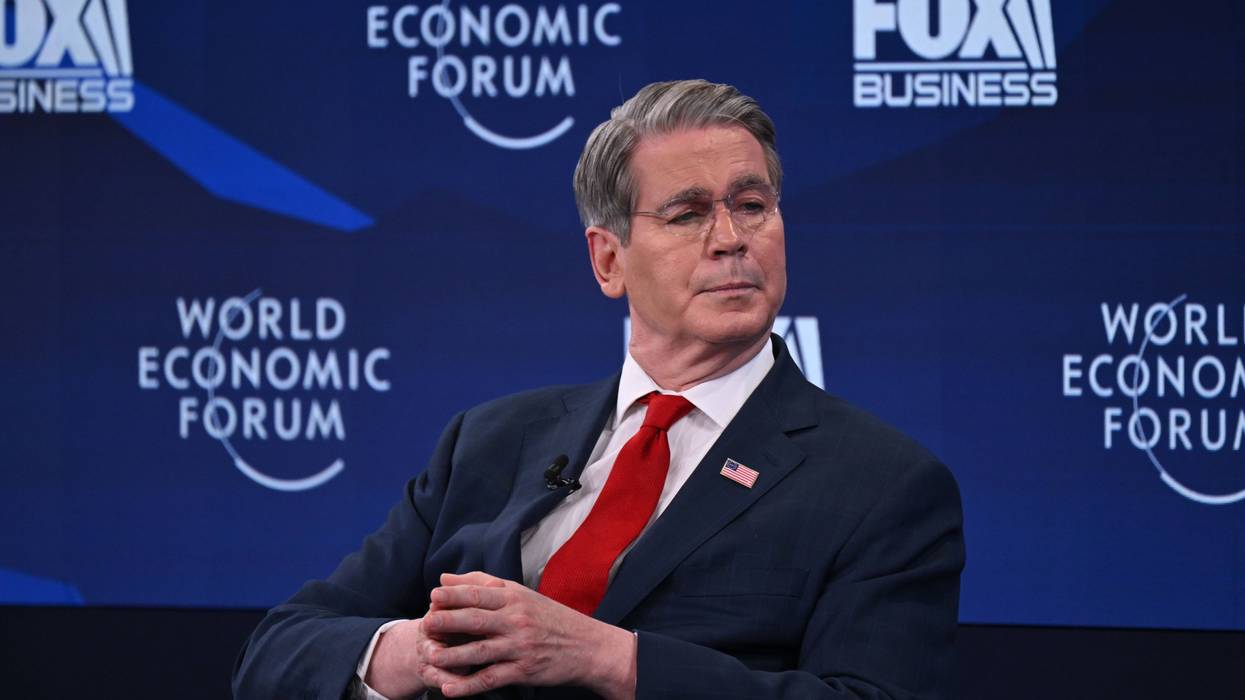
The idea of a wider European boycott of US bonds appears to have unnerved US Treasury Secretary Scott Bessent, who protested during remarks at the annual World Economic Forum summit in Davos that it "defies any logic" and urged European nations not to "listen to the media who are hysterical."
George Saravelos, head of FX research at Deutsche Bank, said if Trump is intent on shredding the long-standing US military alliance with Europe, it can return the favor by backing out of its role as America's number-one lender, which could trigger heightened inflation, dollar depreciation, and higher interest rates that make borrowing and spending more costly.
"For all its military and economic strength," Saravelos wrote, "the US has one key weakness: It relies on others to pay its bills via large external deficits."
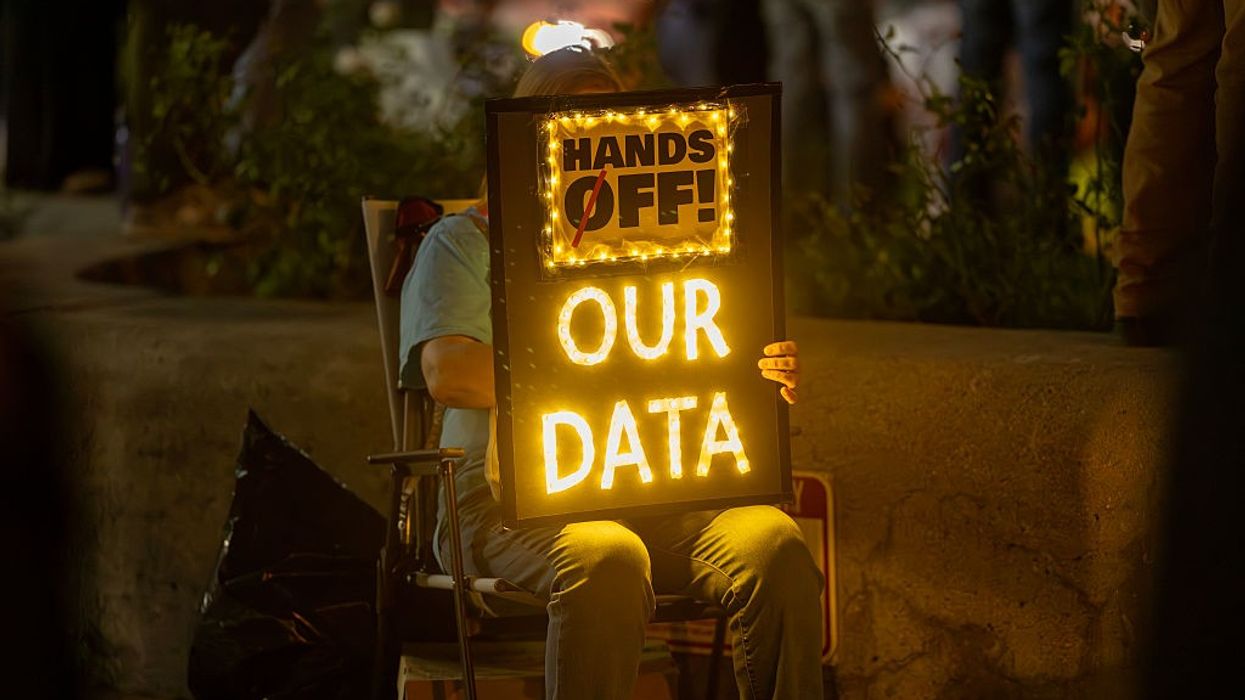
The DOJ filing also appeared to corroborate claims that DOGE employees improperly tried to make "a live copy of the country’s Social Security information" on a third-party cloud platform.
The US Department of Justice acknowledged last week that two members of the Department of Government Efficiency may have improperly accessed Social Security data at the request of an unidentified organization whose goal is challenging US election results.
In a court filing dated January 16, the DOJ revealed that the unidentified organization last March reached out to two DOGE employees, who were working at the Social Security Administration (SSA), and requested that they "analyze state voter rolls that the advocacy group had acquired."
"The advocacy group’s stated aim was to find evidence of voter fraud and to overturn election results in certain states," the DOJ wrote. "In connection with these communications, one of the DOGE team members signed a 'Voter Data Agreement,' in his capacity as an SSA employee, with the advocacy group."
The filing said that SSA has "not yet seen evidence that SSA data were shared with the advocacy group," but that it had reviewed emails indicating that "DOGE team members could have been asked to assist the advocacy group by accessing SSA data to match to the voter rolls."
The DOJ also revealed that the SSA in December 2025 made referrals of the two DOGE employees to the US Office of Special Counsel for possible violations of the Hatch Act, which bars federal government employees from using their positions for political purposes.
Politico, which first reported on the DOJ filing, noted that the disclosure "came as part of a list of 'corrections' to testimony by top SSA officials during last year’s legal battles over DOGE’s access to Social Security data," and also included revelations that "DOGE team members shared data on unapproved 'third-party' servers and may have accessed private information that had been ruled off-limits by a court at the time."
The admission that DOGE employees shared data on a third-party server bolsters an explosive whistleblower complaint filed in August from former SSA chief data officer Charles Borges, who alleged that DOGE officials have been responsible for “serious data security lapses” that “risk the security of over 300 million Americans’ Social Security data.”
At the heart of Borges’ complaint was an effort by DOGE employees to make “a live copy of the country’s Social Security information in a cloud environment” that “apparently lacks any security oversight from SSA or tracking to determine who is accessing or has accessed the copy of this data.”
Should hackers gain access to this copy of Social Security data, the Borges complaint warned, it could result in identity theft on an unprecedented scale and lead to the loss of crucial food and healthcare benefits for millions of Americans. In a worst-case scenario, the complaint said, the government may also have to give every American a new Social Security number “at great cost.”