July, 24 2019, 12:00am EDT

With FTC Settlement, Expect Facebook to Violate Privacy Again and Again
Statement of Robert Weissman, President, Public Citizen
WASHINGTON
Note: Today, the Federal Trade Commission (FTC) released the details of its settlement with Facebook.
Facebook repeatedly violated its privacy policy. In 2011, it entered into a consent decree in which it promised not to violate its privacy policy again. But it did - over and over again.
At the end of the day, the FTC's settlement amounts to Facebook remaking the promise to adhere to its own privacy policy, while reserving the right to change that policy at any time. Facebook users and the public should take no comfort in that.
In light of the company's extraordinary record of privacy violations and its unparalleled reach across the globe and into users' minds, elaborate procedural mechanisms that aim to ensure "compliance" are not going to do the trick.
Protecting Facebook users' privacy requires structural change, substantive policies and impositions of liability to end Facebook's improper and unprecedented corporate surveillance system.
The FTC settlement fails to deliver on those measures. It enables Facebook to escape genuine accountability for what it has done and leaves it likely that the company will betray its users yet again.
Structural change: Facebook has announced plans for two major shifts that pose massive risks to user privacy. The first is the integration of Facebook Messenger, Instagram and WhatsApp. The second is the launch of its new global, private currency, Libra. In light of Facebook's atrocious privacy record, the FTC should have demanded it drop these two plans, each of which pose novel and unprecedented threats to consumers' privacy.
Substantive policies: The bulk of the FTC settlement relies on elaborate processes to ensure Facebook complies with its own privacy policies. Based on Facebook's record, and the general limitations of corporate "compliance" systems, there is every reason to be skeptical that this will make a difference. But even if Facebook "complies," it is free to change its privacy policies unilaterally and at any time.
By contrast, the settlement does contain certain substantive requirements to protect user passwords. Other substantive provisions are, by and large, missing.
Commissioner Rohit Chopra explains that Facebook's reliance on behavioral advertising--targeted advertising based on specific information about individual users' actions - incentivizes Facebook to violate users' privacy interests. In light of Facebook's record of repeated privacy violations, the FTC settlement should have required an end to Facebook's behavioral advertising system. The company would still be able to sell advertising in targeted ways - but it would not have the incentive to track every users' click, every indication of their interests, thoughts, fantasies and proclivities.
Liability: The $5 billion fine imposed on Facebook is a large sum. But it is one readily absorbed by Facebook and not sufficient to deter the company from future wrongdoing. Equally important, it does not plainly disgorge from Facebook the ill-gotten gains resulting from its violations of its privacy policy and the 2011 consent decree.
As a company still led by its founder, who remains its largest shareholder, power at Facebook is concentrated in ways that are categorically different than other large, publicly traded corporations. Getting Facebook's attention should have required an imposition of personal liability on Mark Zuckerberg - not just to make him liable in the future for improper certifications, but as part of this settlement.
Public Citizen is a nonprofit consumer advocacy organization that champions the public interest in the halls of power. We defend democracy, resist corporate power and work to ensure that government works for the people - not for big corporations. Founded in 1971, we now have 500,000 members and supporters throughout the country.
(202) 588-1000LATEST NEWS

Hegseth Quietly Extends Middle East Troop Deployments Into 2027 as Iran War Drags On
Pentagon Secretary Pete Hegseth previously echoed President Donald Trump's claim that the Iran war, launched in late February, would be over quickly.
Sep 03, 2026
The Pentagon has reportedly extended Middle East deployments of American troops, fighter squadrons, and warships into next year as the deadly, expensive, and deeply unpopular Iran war drags on with no end in sight.
The Wall Street Journal reported late Wednesday that Pentagon Secretary Pete Hegseth—who, like President Donald Trump, insisted the Iran assault would be over swiftly—has decided that the US military will maintain a "presence of 50,000 troops in the region in part to give the president flexibility on next steps." The Pentagon "could also keep elements of the Army’s 82nd Airborne Division in the Middle East well into 2027," the Journal added, citing a letter that military leaders sent to families.
The Journal also reported that Trump, who has falsely called Iran a "dead" country, is "having discussions with senior aides about whether to declare the Iran war over," even as the bombings continue, American troops remain in the region, and the administration ratchets up economic sanctions.
" Trump administration seems to excel at bombing schools and weddings," Brian Finucane, senior adviser to the US Program at the International Crisis Group, wrote on Wednesday. "Winning the illegal and unnecessary war with Iran—not so much."
Hegseth has reportedly backed a plan that would involve "periodic" bombings of Iran in an attempt to keep ship traffic flowing through the Strait of Hormuz, a strategy that analysts say would lead to a "permanent state of war."
Trita Parsi, executive vice president of the Quincy Institute for Responsible Statecraft, argued earlier this week that Trump appeared to be leaning toward "maintaining a low-level conflict until the midterms—neither securing a diplomatic deal nor allowing the situation to deteriorate into full-scale war."
"Iranian officials say, both publicly and privately, that they expect the U.S. and Israel to resume the war after the midterms regardless of the impact of the D-Day sanctions," Parsi wrote. "Regional diplomats have largely reached the same conclusion. If sanctions weaken Iran over time while the global economy recovers and adjusts to the new reality in the Strait, a prolonged pause will work against Tehran. Iran may therefore decide to escalate dramatically, taking full advantage of Trump’s perceived vulnerability in the run-up to the elections."
Thousands of Iranians—including hundreds of children—and at least 18 US servicemembers have been killed during the war so far, and the conflict has cost the average American household $1,200 in extra costs as gas prices remain at record levels. Trump has said he doesn't "think about Americans’ financial situation" when he makes decisions pertaining to the Iran war.
The war is fueling the Trump administration's push for a record $1.5 trillion in military spending for the coming fiscal year—a budget demand that has intensified concerns of a "forever war" against Iran.
" Washington is betting that sustained military and economic pressure will eventually force Tehran to retreat," the National Iranian American Council wrote in a blog post on Wednesday. "Iran appears to be betting that it can survive long enough to force Washington to do the same. For ordinary Iranians, American servicemembers, and civilians across the region, the danger is that testing those two assumptions will require a much longer and more destructive war."
Keep ReadingShow Less
Trump 'Laying the Groundwork for Election Meddling' With DHS Hunt for Noncitizen Voters
"Trump is pulling DHS agents from human trafficking and terrorism cases to chase his made-up voter fraud conspiracies," said one congressman.
Sep 02, 2026
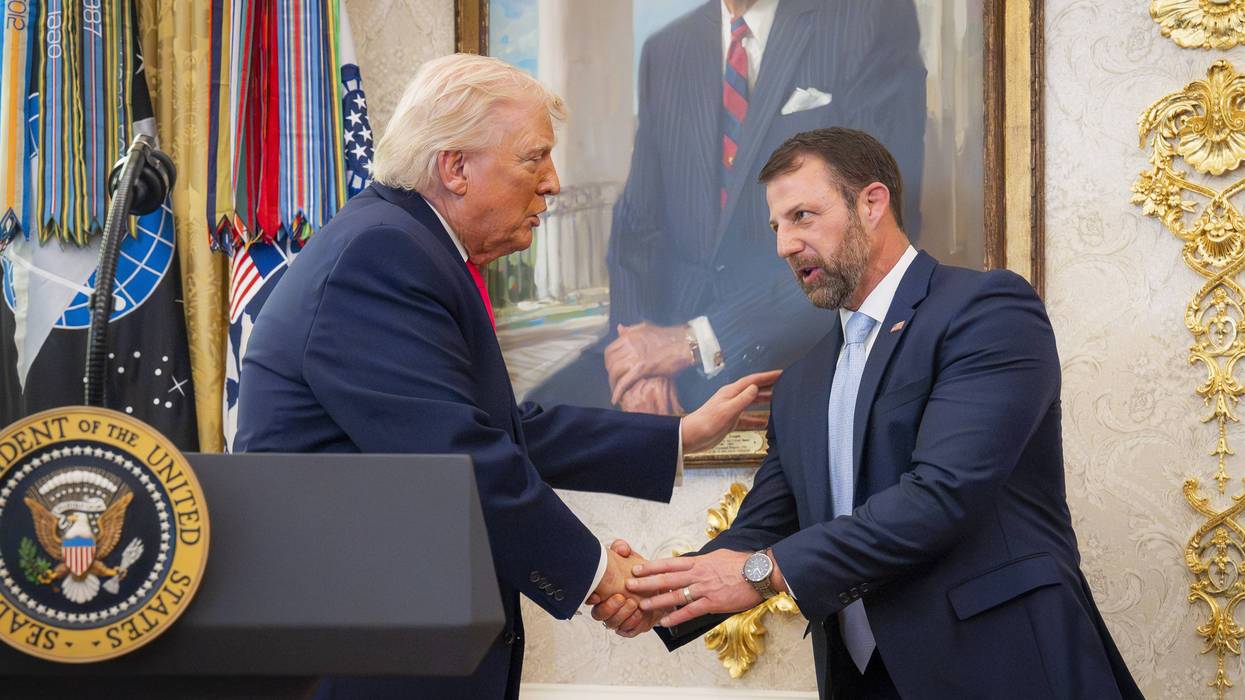
The New York Times' Wednesday reporting on a US Department of Homeland Security "blitz to find elusive voter fraud" by noncitizens is heightening fears that President Donald Trump will try to meddle in the country's midterm elections, which are just over two months away.
The newspaper revealed that as part of a "hunt for noncitizens among the nation's registered voters" internally called the Unlawful Voter Initiative, hundreds of DHS agents "are scouring voter rolls managed by the states, and are using personally identifiable information about individual voters, such as their dates of birth and partial Social Security numbers, to look them up on those rolls."
"In some cases, investigators are effectively posing as individual voters by plugging their names and personal information into public-facing websites run by the top election official in each state. Some of these sites declare they are meant for individual use, potentially raising privacy concerns," according to the Times, which reviewed related documents and training videos.
While DHS said in a statement that it "is committed to ensuring that only US citizens vote in US elections," and Trump and Homeland Security Secretary Markwayne Mullin "have made the integrity and security of our elections a top priority," the newspaper noted the "absence of evidence of widespread fraud," and that the department "is pulling agents from their normal duties, which include investigating such serious crimes as human trafficking and terrorism."
Trump infamously refused to accept his 2020 loss, launching various unsuccessful legal battles and even motivating some of his supporters to storm the US Capitol on January 6, 2021. Since returning to power last year, the president has imposed a mass detention and deportation campaign that has killed both immigrants and US citizens while pushing various policies that critics warn are intended to limit legitimate participation in elections, from photo identification requirements to restrictions on voting by mail.
Sharing the reporting on social media Wednesday, American Immigration Council senior fellow Aaron Reichlin-Melnick wrote: "In other words, hundreds of federal agents are being diverted away from their jobs going after serious criminals and instead told to find needles in a haystack—all to find evidence for Trump's predetermined conclusions. It's a great time to be a criminal in Trump's America."
Democrats on the US House of Representatives' Homeland Security Committee similarly declared that "instead of hunting terrorists and human traffickers, DHS is pulling agents away to investigate a conspiracy theory that has been debunked year after year."
A member of the panel, Rep. James Walkinshaw (D-Va.), also stressed that "Trump is pulling DHS agents from human trafficking and terrorism cases to chase his made-up voter fraud conspiracies."
"Even the conservative Heritage Foundation's data shows noncitizen voting is vanishingly rare," he highlighted, referring to the right-wing think tank's database that identifies around 100 cases of noncitizen voting since 2000.
Walkinshaw warned that "Trump is laying the groundwork for election meddling in November."
Daniel Delgado, who served as deputy assistant secretary for immigration policy at DHS during the Biden administration, emphasized that "every agent that's being forced into this witch hunt means one less agent working on critical missions like curbing the flow of fentanyl into the country, or stopping human trafficking and combating terrorism, etc. The administration is deliberately making America less safe."
Cynthia Travieso, executive vice president of state campaigns and programs at the nonprofit All Voting Is Local, ripped the "McCarthy-era-like hunt" as "a waste of resources and a desperate and pathetic attempt to control elections by scapegoating immigrants and spreading lies which can keep specific groups from voting, including Black, Brown, and new Americans."
Travieso continued:
This move by DHS to pull agents that investigate "such serious crimes as human trafficking and terrorism" is based on false claims and debunked conspiracy theories that put thousands of American voters at risk of losing their voter eligibility. Equally outrageous is that the effort also risks potential privacy breaches due to the unclear use of driver's license data, birth dates, and Social Security numbers. It's especially ironic that President Trump’s DHS is expanding its immigrant voter hunt at the same time as the US Postal Service's purported effort to sabotage vote-by-mail, which would harm naturalized citizens who vote by mail at a rate of nearly 8 percentage points higher than native-born citizens. This is part of the blueprint that demonstrates how badly the White House administration wants to control our elections.
States run elections, not the president and not DHS. State election officials have checks and balances in place to verify an individual's voter eligibility and keep voter rolls accurate, and they work incredibly hard to ensure that every eligible voter can vote and that every vote is counted.
Instead of fueling election conspiracy lies, the Trump administration should focus on protecting voters from barriers to the ballot. Any efforts otherwise are a desperate attempt to undermine the will of the people and sow confusion and distrust. We won't let them gaslight us.
Separately on Wednesday, the Coalition for Humane Immigrant Rights (CHIRLA) filed a lawsuit against DHS, Mullin, and US Attorney General Todd Blanche, accusing them of illegally targeting citizens who were not born in the United States to prevent them from lawfully voting.
"Naturalized citizens are Americans," CHIRLA executive director Angelica Salas said at a news conference in Los Angeles, according to Spectrum News. "They took the oath. They earned their citizenship, and they have the same rights as every other American citizen."
Keep ReadingShow Less

Trump Condemned for 200+ Extrajudicial Killings After Yearlong Murder Spree at Sea
"This is a make-believe armed conflict, but these are very real killings," said one legal expert.
Sep 02, 2026
Wednesday marked one year since President Donald Trump began bombing boats allegedly smuggling drugs in the Caribbean Sea and Pacific Ocean—a grim anniversary that sparked a fresh wave of condemnation from rights advocates across the United States and beyond.
"For a year now, the Trump administration has engaged in a terrifying, lawless killing campaign at sea and has yet to provide the public with anything beyond the most threadbare justifications," said Jeff Stein, staff attorney with ACLU's National Security Project, in a statement late Tuesday.
The ACLU and the Center for Constitutional Rights are suing over the administration's refusal to comply with a Freedom of Information Act request for a legal opinion authored by the US Department of Justice's Office of Legal Counsel (OLC) attempting to justify the strikes.
"These strikes have devastated countless families, terrified communities, and, by the administration's own admission, failed to achieve their purported goal of stopping drugs from entering into the United States," Stein said. "We urge leaders in both Congress and the executive branch to put an immediate end to these strikes before anyone else is killed."
Despite mounting outrage over the bombings, which have killed at least 227 people and, as Amnesty International USA's national director for government relations, Amanda Klasing, highlighted Monday, "are illegal under both international and US law," the Republican-controlled Congress has failed to pass any war powers resolutions intended to stop the campaign.
"The Trump administration has summarily killed more than 200 people over the course of the past year, bragging about these killings online and facing no accountability," Ida Sawyer, crisis, conflict, and arms director at Human Rights Watch, said Wednesday. "The victims and their loved ones deserve a full accounting of these operations, and justice for the grave harm they have suffered."
After a two-month pause in the bombings, the administration revived them last week, launching a pair of attacks that killed at least six people, according to social media posts and aerial footage from US Southern Command. The strikes followed SOUTHCOM's early August announcement of an expanded operation across Latin America called Joint Task Force Western Hemisphere.
As MS NOW noted Wednesday:
In September and October 2025, when the strikes began, US Southern Command, known as SOUTHCOM, linked three of the strikes to the Tren de Aragua and Ejército de Liberación Nacional criminal organizations. Most later strikes were described as targeting "a vessel operated by designated terrorist organizations."
But the military's most recent two announcements of strikes simply stated that "confirmed intelligence revealed the vessel’s active involvement in narco-trafficking."
Brian Finucane, a former State Department legal adviser who now advises the US Program at the International Crisis Group, told the outlet that "they are engaging in conduct that is widely regarded to be flagrantly illegal, criminal even, and have not offered anything approaching plausible legal rationale."
The OLC memo may be the administration's "permission slip," Finucane said, but it hasn't actually substantiated claims that the United States is engaged in an armed conflict with cartels that traffic drugs.
"This war framing on the part of the administration is really bogus," he added. "This is a make-believe armed conflict, but these are very real killings."
I don’t think there’s really even a colorable argument that this isn’t mass murder.theintercept.com/2026/09/02/m...
[image or embed]
— Chris Hayes (@chrislhayes.bsky.social) September 2, 2026 at 9:00 AM
Several Democrats in Congress, from House Minority Leader Hakeem Jeffries (NY) to Senate Minority Whip and Judiciary Committee Ranking Member Dick Durbin (Ill.), renewed their criticism of the boat bombings on Wednesday.
Sen. Ruben Gallego (D-Ariz.) said that "the most recent strike was four days ago. A year of killing, and this administration has never once come to Congress to justify any of it. This cannot become the way our country goes to war."
"The American people are already paying for one war they didn't want in the first place," he continued, nodding to the illegal six-month assault on Iran. "I fought in Iraq. I know what these wars cost, and I know who pays them. I will use every tool I have as a United States senator to stop this and to defend the Constitution."
House Armed Services Committee Ranking Member Adam Smith (D-Wash.) noted that "it remains unclear whether these operations have made any real difference in stopping illegal drugs from reaching the United States."
"This is especially true for fentanyl," he noted, which Trump and Defense Secretary Pete Hegseth "have repeatedly claimed is the reason for these extrajudicial killings even though we know that it is cocaine—not fentanyl—that is typically shipped via small boats from South America."
Smith also called out the Department of Defense for failing "to publicly provide the costs of these operations, both in terms of dollars and readiness," and declared that "never before in my over 20 years on this committee have I seen such a staggering lack of transparency on behalf of an administration and DOD to meaningfully inform Congress of the use of lethal military force."
However, with Republicans holding narrow majorities in Congress and mostly still refusing to truly challenge the administration on the boat strikes—and various other violent actions around the world—some campaigners are also stepping up pressure on other governments.
"The Trump administration has had complete impunity for this campaign of unlawful killings for a year, and has stated openly that it has no intention of stopping," said Sawyer. "Other countries should refrain from any cooperation on these strikes, and Congress should urgently work to rein in the deadly actions of an administration bent on violating international law."
Jamil Dakwar, director of ACLU's Human Rights Program, said that "the international community must do everything in its power to hold the Trump administration responsible for these extrajudicial killings that are blatant violations of international law."
"No other country should provide any assistance that could contribute to these unlawful US government killings," Dakwar added, calling for an "independent international investigation into this lawless campaign."
Keep ReadingShow Less
Jayapal and Wyden Demand Probe of 'Unlimited Surveillance' and Subpoena Abuses by Trump Agencies
Agencies have used their subpoena power "to surveil, intimidate, and suppress the free speech of ordinary citizens and even the free press," said the Democrats.
Sep 02, 2026
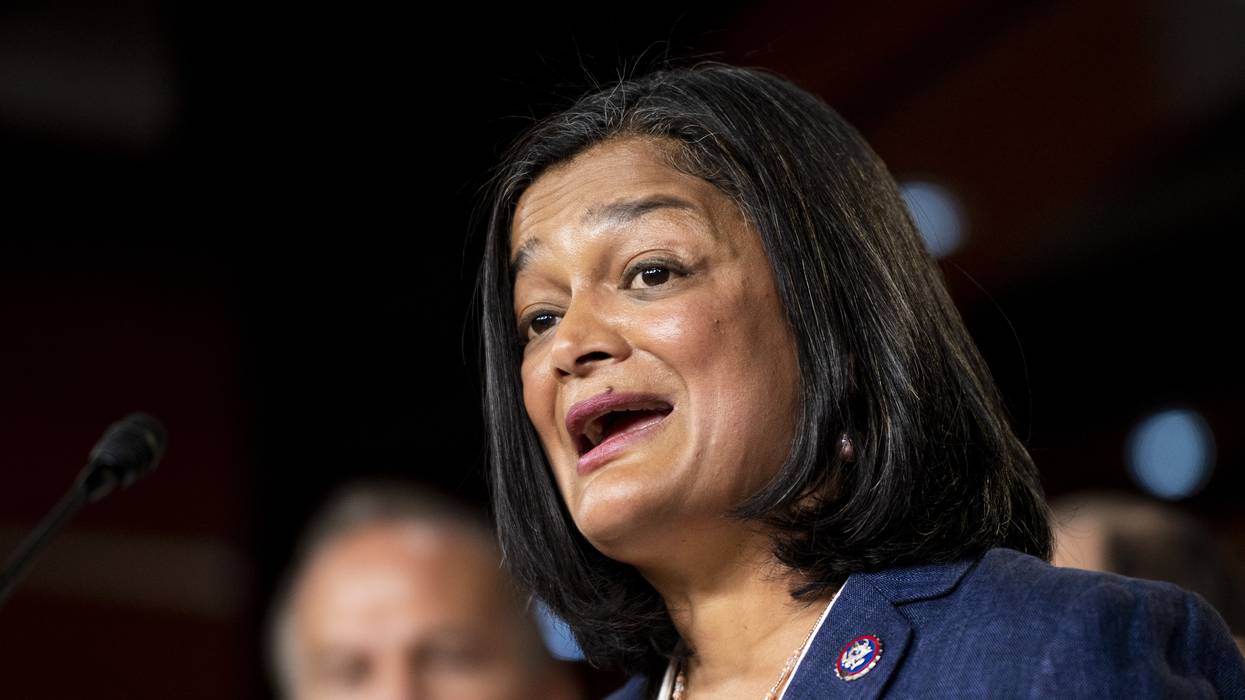
Under the Trump administration, said Rep. Pramila Jayapal and Sen. Ron Wyden this week, federal agencies' use of subpoena power to surveil Americans has become "institutionalized" in what the two Democrats called "brazen abuses of authority."
Jayapal (Wash.) and Wyden (Ore.) wrote to US Supreme Court Chief Justice John Roberts and the acting comptroller general of the Government Accountability Office (GAO), Orice Brown, regarding what they called federal agencies’ decades-long practice of attempting "to coerce indefinite silence from private companies that receive subpoenas for customer information."
While federal agencies have the congressionally vested authority to serve companies and service providers with administrative subpoeanas when they are seeking information about the provider's customer or client, the recipient generally maintains the "First Amendment right to notify their customers of the demand, allowing the actual targets of the subpoenas the opportunity to assert their own legal rights or challenge the demand in court," wrote Jayapal and Wyden.
If secrecy is required in a specific case, the agency can apply to a court for a time-limited nondisclosure order, but in the vast majority of cases, the lawmakers said in a statement, "the agencies may not gag recipients of subpoenas."
That appears to have changed under the Trump administration.
Wyden and Jayapal pointed to one incident from July 8, 2025, when Harvard University received three immigration subpoeanas from US Immigration and Customs Enforcement (ICE) regarding international students, which contained "boilerplate requests for silence."'
"The absurdity of this secrecy demand was demonstrated the very next day, when the Department of Homeland Security (DHS) issued a press release celebrating the very enforcement action it had just directed Harvard to keep secret," wrote the lawmakers.
Homeland Security Investigations (HSI), which operates under ICE, has summons authority only for records relating to customs issues such as illegal imports or unpaid customs dues.
However, HSI has used its subpoena power "to surveil, intimidate, and suppress the free speech of ordinary citizens and even the free press"—in one case trying to reveal the identity of an anonymous Instagram user who had criticized and publicized ICE operations, according to the lawmakers.
Earlier this week, The Guardian reported that HSI had used the subpoenas to secretly obtain six months' worth of phone records for Georgia Fort, a Minneapolis-based journalist who, along with former CNN anchor Don Lemon, was arrested in January for covering an anti-ICE protest at a church.
While the secrecy demands that come with subpoenas "carry no force of law," said the lawmakers, "their coercive effect is extremely successful. This leaves customers entirely in the dark about government incursions into their personal data."
Jayapal and Wyden noted that federal agencies were demanding secrecy from subpoenaed companies and third parties for decades before President Donald Trump took office.
For over four decades, they said, the Department of Justice (DOJ) "has treated extra-legal gag requests as standard operating procedure,
regularly instructing the recipients of grand jury subpoenas not to disclose the government's demands."
"Given the severe, asymmetric power dynamics between federal law enforcement and civilian businesses—particularly when the subpoena recipient is a business operating within a highly regulated industry—many corporate legal departments will naturally read an official prosecutorial 'request' for silence as an implied command, choosing compliance over risking scrutiny from federal regulators," wrote Wyden and Jayapal. "This coercive silence is particularly insidious because it targets corporate policies intended to protect consumers. For nearly every American industry, including telecommunications, technology, and healthcare, Congress has neither required nor prohibited notice of subpoenas. Absent a court order or statute saying otherwise, notice to customers is a protected exercise of free speech that furthers government transparency and customer privacy."
The lawmakers called on the GAO to conduct a comprehensive audit of the DOJ and DHS as well as the agencies they oversee regarding their use of gag requests in subpoenas.
Such an audit would "help ensure that agencies do not abuse their subpoena authorities at the expense of privacy and free speech rights," said Jayapal and Wyden.
Keep ReadingShow Less
Trump Commerce Secretary Once Said Data Centers ‘Suck Water,’ Now Scoffs That Such Concerns Are Just ‘Propaganda’
"Data centers don't use water," laughed Howard Lutnick during an interview. In fact, across seven states, they rely on about 3.4 trillion gallons of it per year.
Sep 02, 2026
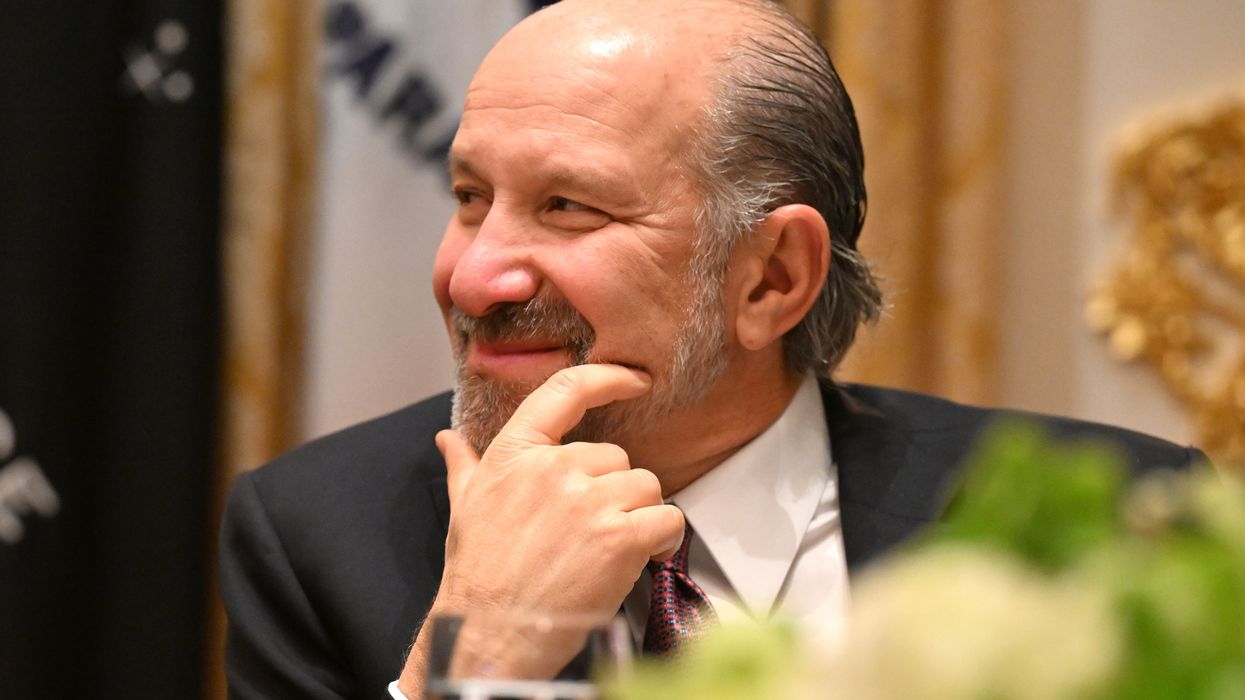
President Donald Trump's commerce secretary, Howard Lutnick, told a brazen lie on Wednesday while trying to defend the administration's support for rapid data center expansion amid growing public backlash from voters concerned about their extreme electricity and water use.
Asked on CNBC's "SquawkBox" about how politicians in both parties were responding to voter outrage, Lutnick laughed the concerns off.
"One of my favorite things is when people talk about data centers using water," Lutnick chuckled. "The number one product in America that uses water is cattle."
"I mean, data centers don't use water," Lutnick continued. "This is propaganda by our adversaries to try to slow us down."
Lutnick is correct that beef cattle production—which uses about 6 trillion gallons per year, according to the US Department of Agriculture—involves much greater amounts of water consumption than data centers.
But the contention that data centers "don't use water" is egregiously false. A report out Tuesday from the Pacific Institute, a nonprofit water policy research organization, found that data centers in the US directly use anywhere from 270 to 3.9 million gallons of water per day.
About 74% of that water, which is withdrawn from local sources near the data center, is consumed rather than returned to the same watershed, the report found.
The Lawrence Berkeley National Laboratory estimated that in 2023, US data centers directly consumed about 17 billion gallons of water. Since then, data center capacity in the US has more than doubled, according to the commercial real estate firm CBRE.
Water directly consumed by data centers also only represents a fraction of their overall demand. Most of the water being used is not directly pumped into the centers to cool servers, but is used for the power generation that supplies the centers.
A report out last month from the corporate sustainability organization Ceres found that across the seven US states that host about half of all US data centers—Virginia, Texas, California, Illinois, Georgia, Ohio, and Arizona—the facilities depend on 3.4 trillion gallons of freshwater for electricity generation per year.
Lutnick's comparison of national water use between data centers and cattle farming also overlooks that the effects are often concentrated heavily in the areas where data centers are located.
In Newton County, Georgia, for instance, families told The New York Times that shortly after Meta broke ground on a $750 million data center project in 2018, their taps began to run dry, and water rates soared. According to Meta's environmental data, the center withdrew about 146 megaliters, or 38.6 million gallons, of water in 2024.
In Fayette County, Georgia, residents complained of low water pressure only to find that a QTS data center had covertly used about 29 million gallons of water without paying for it, far exceeding the amount agreed upon during the planning process. The company was ultimately required to pay back nearly $150,000.
In New Carlisle, Indiana, about a dozen residents reported that their wells had gone dry during the construction of Amazon Web Services' massive data center campus. One resident told the Indy Star that she'd gone 18 months without running water and had to bathe using bottled water from the store.
Lutnick's claim doesn't just contradict the facts, but his own statements from just over a year ago on Fox News, as MeidasTouch senior digital editor Acyn Torabi noted.
Attempting to promote data centers as a vehicle for job growth, the secretary emphasized that "these AI things suck water" and that they will "need a plumber."
The Trump administration has made the rapid expansion of data centers central to its "AI Action Plan." But Trump and his team have struggled to sell the vision to voters, including in their own party.
A national survey by the Annenberg Public Policy Center last month found that 61% of voters oppose the construction of new data centers in their area. That included 69% of Democrats, but also 54% of Republicans, and 53% of independents.
Critics described Lutnick's dismissive remarks about voters' concerns as a sign of how out of touch the administration was with the public on this issue and how much their data center PR push is failing.
Rep. Seth Magaziner (D-RI) said it showed that "our government is being run by morons."
Keep ReadingShow Less
'We Are in a Constitutional Crisis': Congress Urged to Sue Trump to End Iran War
"Sitting and doing nothing is not an option and is eroding our democracy and system of checks and balances."
Sep 02, 2026
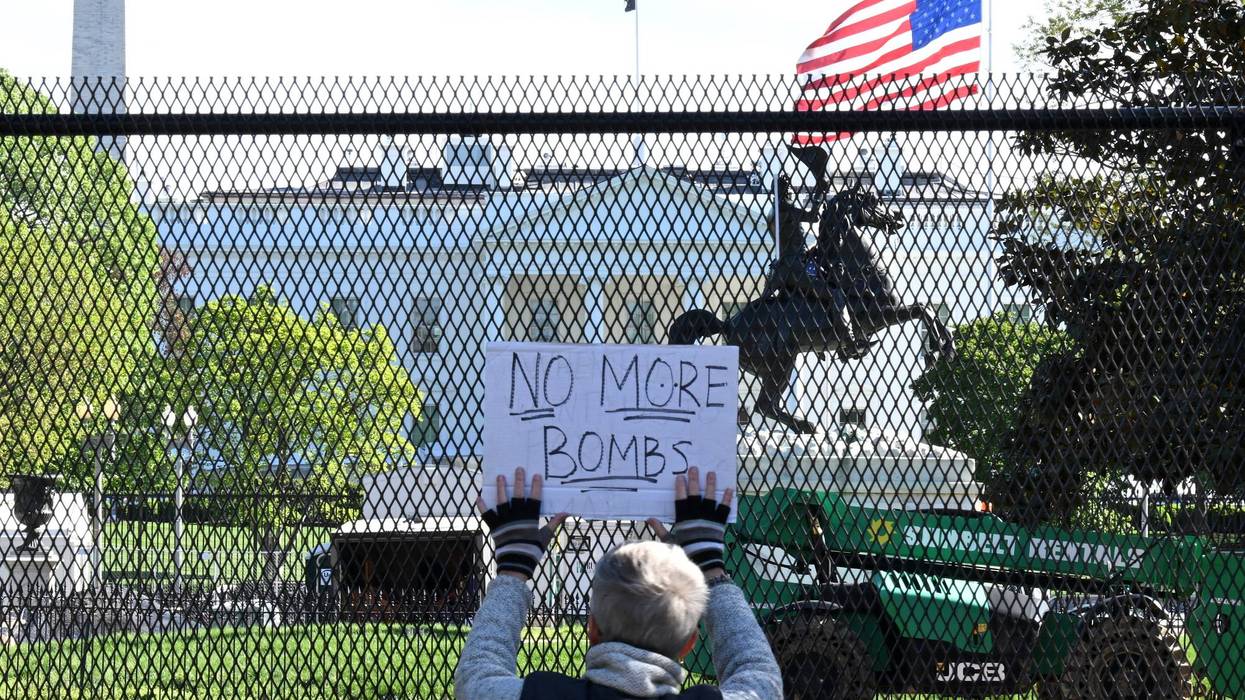
With no end in sight to President Donald Trump's illegal war with Iran, Congress is being urged to take legal action to bring the conflict to an end.
Jamal Abdi, executive director at National Iranian American Council (NIAC) Action, said on Wednesday that Congress must go to court to enforce the war powers resolution that passed in the House and the Senate earlier this year.
"We are in a constitutional crisis and our lawmakers cannot simply roll over or bide their time as Trump traps the country in an illegal forever war," said Abdi. "For the first time in US history, Congress has passed legislation mandating the president withdraw from the war, and now they must take him to court to enforce it."
Rep. Gregory Meeks (D-NY), ranking member of the House Foreign Affairs Committee, introduced a resolution in July that would compel House Speaker Mike Johnson (D-La.) to sue Trump and enforce the will of Congress to end the war.
However, Abdi argued that US lawmakers are not moving with the proper urgency to stop Trump from continuing his illegal attacks on Iran, which have been carried out for more than six months despite receiving no congressional authorization.
"Congress must assert its authority as a co-equal branch of government and sue to end the administration’s illegal war," Abdi emphasized. “We need urgent action, not more deliberation. Sitting and doing nothing is not an option and is eroding our democracy and system of checks and balances."
According to Politico congressional reporter Riley Rogerson, Meeks on Tuesday said that there are currently no plans to bring up a new war powers resolution, although he didn't rule out taking action.
"Democrats are unsure how long the House will be in before the midterms," wrote Rogerson, "which makes planning a challenge."
Johnson on Tuesday showed no appetite for getting Congress more involved in the conflict during a testy exchange with CNN reporter Manu Raju, who asked the Louisiana Republican if the American public should judge him for the negative impact the war has had on their personal finances.
Speaker Johnson defensive about his past projections about the Iran war, including repeatedly saying it’s just a skirmish that would be over in short order and cause just a “temporary blip” in gas prices.
More than six months in, asked him if the public should judge him on his… pic.twitter.com/0BpVaGy6xC
— Manu Raju (@mkraju) September 1, 2026
"That is one of the stupidest questions you've ever asked," Johnson replied.
"What, why is that stupid?" Raju asked.
"I have nothing to do with the prosecution of the war across the globe," Johnson said.
Article 1, Section 8 of the US Constitution states that Congress, not the president, has the power to declare war.
Keep ReadingShow Less
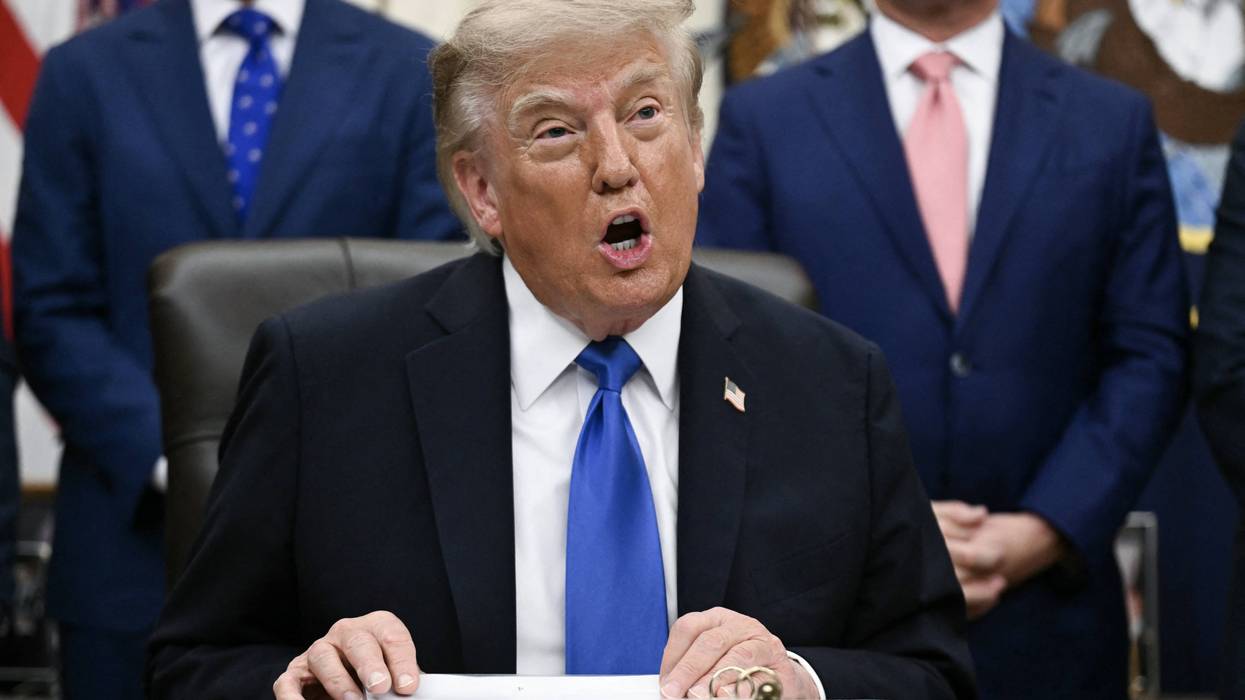
Trump Threatens to Rename Strait of Hormuz for Himself as War Pushes Diesel Prices Toward Record High
One petroleum industry analyst now projects potential record-breaking prices for diesel fuel by Labor Day.
Sep 02, 2026
More than six months after starting an illegal war with Iran, President Donald Trump is now threatening to rename the Strait of Hormuz, whose closure at the start of the conflict led to a global spike in energy prices.
In a Wednesday social media post, Trump falsely claimed that the strait is "under USA control" and then mused on whether to "change the name... to TRUMP STRAIT???"
"Like America itself, it would be 'hotter' than ever before!" the president added. "Thank you for your attention to this matter."
In reality—despite Trump's previous threats to declare the vital commercial waterway a US territory—the US does not have control of the Strait of Hormuz, through which roughly 20% of the world’s oil supply travels.
Al Jazeera reported on Wednesday that Iran's Persian Gulf Strait authority has added eleven more ships to its list of more than 50 vessels that are banned from traveling in the strait.
Iran's Islamic Revolutionary Guard Corps (IRGC) on Wednesday also claimed that two oil tankers that were traversing the strait caught fire after striking sea mines, according to Al Jazeera.
The price of Brent crude petroleum rose once again during Wednesday trading, climbing up over $95 per barrel. Data released Wednesday by the American Automobile Association (AAA) showed that the price of gas in the US has risen to $4.12 per gallon, while the price of diesel fuel has risen to $5.69 per gallon.
While most Americans deal with the price of gasoline on a daily basis, the price of diesel fuel might have an even larger impact on the overall economy given that diesel is used to power the vehicles that ship consumer goods in the US.
In a Wednesday social media post, petroleum industry analyst Patrick De Haan wrote that diesel prices are rising so quickly that "we could even break the all-time diesel record ($5.819/gal) by Labor Day."
Last month, Trump responded to collapsed trade talks with Canada by renaming Lake Ontario as "Lake America." Much like the illegal war with Iran, Trump's trade war with Canada is raising prices on goods paid for by US consumers.
Keep ReadingShow Less

'We Must Stop Trump’s Authoritarian Power Grab,' Sanders Says of Assault on Mail-In Voting
"The Trump administration is trying to use the United States Postal Service to decide who gets to vote in this year's election. Unacceptable."
Sep 02, 2026
Sen. Bernie Sanders warned Tuesday that President Donald Trump's attempt to leverage the US Postal Service to advance his assault on mail-in voting is part of a broader and intensifying "authoritarian power grab" that poses an existential threat to American democracy.
"The Trump administration is trying to use the United States Postal Service to decide who gets to vote in this year's election. Unacceptable," Sanders (I-Vt.) wrote after an anonymous federal official said in a whistleblower disclosure that USPS systems being hastily implemented at the president's direction—and in possible violation of court orders—could threaten the delivery of millions of ballots in the fast-approaching midterm elections.
Sanders said that Trump's assault on mail-in voting via the Postal Service is "blatantly unconstitutional," noting that the nation's founders empowered states to administer elections "precisely so that no authoritarian in Washington could ever seize that power for himself."
"Trump is trying to seize it anyway—in a blatant attempt to rig the election in his favor," the senator warned. "Trump knows this has nothing to do with the safety of mail-in ballots, because he himself has voted by mail in Florida twice this year. He knows mail-in voting is safe and secure."
"Voter fraud is not the problem," Sanders continued. "Trump's problem is that his agenda is deeply unpopular. He has waged illegal wars the American people did not ask for. He is throwing 15 million Americans off the healthcare they have and has made the largest cuts to education and nutrition assistance in history in order to pay for $1 trillion in tax breaks to the top 1% and his billionaire friends."
"He knows that when people vote, they will reject oligarchy and corporate greed. So instead of changing his policies, he is trying to decide which voters get to participate in elections this November," he added. "Too many Americans have fought and died to defend American democracy. We must stop Trump’s authoritarian power grab—before it is too late."
Trump Must Not Be Allowed to Prevent Millions of Americans from Voting
The Trump administration is trying to use the United States Postal Service to decide who gets to vote in this year's election. Unacceptable. We will not accept Trump’s authoritarianism.
Last month, the…
— Bernie Sanders (@BernieSanders) September 1, 2026
Following the USPS whistleblower disclosure, the investigative outlet ProPublica reported on Wednesday that top Postal Service officials have "expressed concerns" during recent internal meetings about how the new policies the agency is implementing in compliance with Trump's March executive order "could delay or block ballots from reaching large swaths of eligible voters for the upcoming midterms."
Days after the Postal Service published its final rule on new mail-in voting requirements, election clerks warned USPS officials that potentially millions of ballots could be impacted, according to ProPublica.
"An example was given of Maricopa County, Arizona, which often sends out more than 2 million ballots at a time in its initial mailing," the outlet reported. "USPS officials confirmed it was possible that one ballot with a bad barcode or wrong voter information within the more than 2 million ballots could delay the entire mailing, according to two people who attended the related committee meeting."
The USPS rule is currently blocked by a federal court, but the Trump administration is working to clear legal hurdles and implement the mail-in ballot restrictions ahead of the midterms.
In a letter to Postmaster General David Steiner on Tuesday, every Democratic member of the House Oversight Committee called for an immediate end to "this irresponsible and illegal scheme to implement the Trump administration’s plan to control our federal elections."
"The right of all Americans to have their votes counted is sacrosanct," the lawmakers wrote. "The Postal Service's current actions are putting clear obstacles in the way of that right."
Keep ReadingShow Less

In Call for 'Ethnic Cleansing,' Israeli Minister Says Only 'Solution' for Gaza Is for Palestinians to Leave
Defense Minister Israel Katz said Israel was “fully prepared” to begin permanently removing Palestinians from Gaza and was just waiting on President Donald Trump to give the OK.
Sep 02, 2026
Israel has plans drawn up to carry out US President Donald Trump's proposal to remove most of the Palestinian population from the Gaza Strip, according to its defense minister, Israel Katz.
Katz has been a fervent cheerleader for the proposal made by Trump last February to force roughly 2 million Palestinians to leave Gaza and be permanently relocated to other nations with no right to return home, before bulldozing what is left of Gaza after more than two years of relentless destruction by Israel, which has left the vast majority of the population displaced.
While Trump and his Israeli allies used the euphemism "voluntary migration" to describe the plan, United Nations officials, foreign governments, and human rights organizations have said it amounted to a plot for an illegal "ethnic cleansing."
Shortly after the plan was announced, Katz said he’d directed the Israeli military to begin devising a mechanism for the Palestinians' departure. However, forced displacement was ultimately not included in Trump’s 20-point “peace plan” agreed to last October.
During an interview on Wednesday with the Israeli news site Ynet and the newspaper Yedioth Ahronoth, Katz said that Israel was ready to begin removing Palestinians from the territory as soon as Trump gives the order.
"There is no real solution for Gaza in the end without this migration," Katz said.
He claimed that "80% [of Palestinians in Gaza] want to migrate; it’s checked constantly in surveys."
Katz did not cite which "surveys" he was referring to. But one May 2026 survey by Israel's Coordinator of Government Activities in the Territories, the Israeli body that administers civilian affairs in the occupied Palestinian territories, showed that nearly 80% of residents said they wanted additional information about mechanisms for relocating to a third country through Rafah or Kerem Shalom. The reported question did not establish that they wanted to leave permanently.
Other surveys of Gaza's residents conducted by independent pollsters have found that around half, or a majority of the population, want to stay in the territory despite the destruction and deprivation they face.
Katz said the Israeli government was "fully prepared to move [Palestinians] out if it becomes possible—by sea, by air, by every way possible."
"What’s delaying it is that the accepting countries want US support," Katz said. "Every country that is willing wants American backing. Currently, President Trump didn’t cancel this; he froze it. All the Arab countries came to him due to their pressure on this matter."
Katz said "the moment will come" when "it becomes clear that Hamas is not meeting its commitment" to the Phase 2 disarmament-and-withdrawal roadmap agreed to by the Palestinian militant group in July, building on the October 2025 ceasefire agreement reached between Hamas and Israel.
Israel has claimed that the deal required Hamas to totally disarm before Israel withdrew any troops it had advanced past last October's ceasefire line in violation of the agreement. The roadmap Hamas agreed to explicitly stated that Israel's withdrawal would occur at the same time as disarmament.
Then, Katz said, Israel "will get a green light to move forward militarily, territorially, and in other areas, and this thing will gain momentum."
Other figures in the government of Prime Minister Benjamin Netanyahu have spoken openly about the desire to force Palestinians out of Gaza and replace them with Jewish Israeli settlers. But Katz's statements on Wednesday were among the most concrete yet to indicate that a solid plan is in the works to carry out this goal.
“This is the Israeli defense minister admitting, completely and brazenly, that the official policy of the Israeli state is ethnic cleansing in Gaza,” said H.A. Hellyer, a senior associate fellow at the Royal United Services Institute in the United Kingdom. “But somehow we are expected to take seriously those who say it is not.”
Keep ReadingShow Less
'At a Breaking Point': Survey Shows Teachers Working Second Jobs, Spending Hundreds on Supplies
"They are battling education funding cuts, out-of-control Immigration and Customs Enforcement agents, limitations on what they can say, much less teach, and an affordability crisis," said one union leader.
Sep 02, 2026
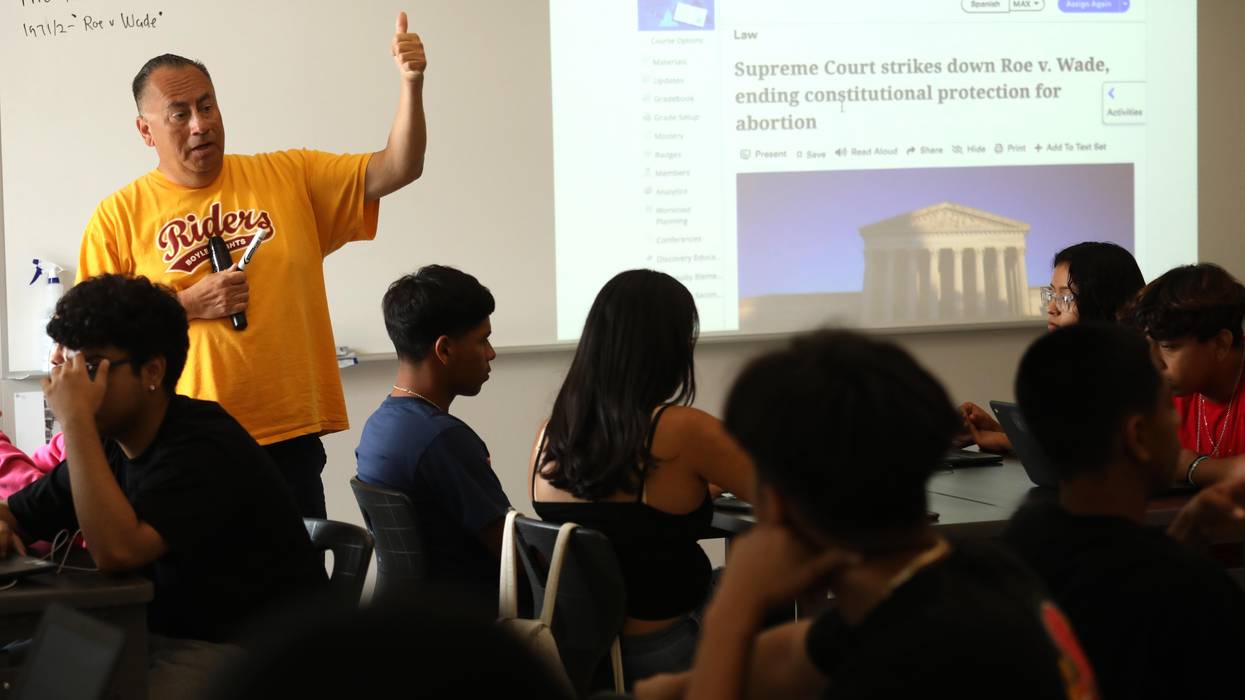
As the academic year kicks off, survey results released Wednesday by the second-largest teachers union in the United States show how educators are struggling because of underinvestment in schools and high prices under a Republican-controlled White House and Congress.
In the lead-up to classes resuming, Grow Progress last month surveyed 2,112 American Federation of Teachers (AFT) members who teach kindergarten through 12th grade about spending, stress, President Donald Trump's policies, and more.
The pollsters found that a majority of respondents anticipate spending at least $100 to $600 on supplies for their classrooms without being reimbursed. Over a quarter said that school funding issues shift costs to teachers, and supply prices keep rising.
While 61% said they are buying basic supplies, that's not all that teachers are shopping for this year. Nearly a third are spending on food, hygiene, and student care items, and around a quarter are purchasing specialized tools and accessibility supports as well as items for classroom setup, organization, and decor. Roughly a fifth are buying books and rewards for students.
Half of the teachers surveyed said they anticipate needing to buy food for their students at some point during this school year.
Over three-quarters of them reported seeing negative impacts of the Trump administration's policies in their schools and communities, with 61% selecting "very negative." They pointed to funding cuts and privatization of schooling, immigration enforcement that "traumatizes students and families," rising costs, vulnerable students losing support and protection, political pressure that restricts teaching and inclusion, and issues with bigotry and hostility.
Gasoline prices have stayed at record highs lately thanks to Trump's illegal war on Iran, which has responded by restricting traffic through the Strait of Hormuz, a key trade route. Just 15% of teachers said their commute will cost about the same this year, compared with 36% who expect it to be "a little more" and 47% worried it will be "much more."
A plurality—48%—blamed Trump and Republicans specifically for "the rising costs of groceries, gas, and other goods," while 28% pointed to government policies and leadership, 18% said tariffs and global instability, and 11% cited corporate greed and profiteering.
Prices for everything are climbing while the national debt races past $40 trillion. The bottom line? The current economy is not working for hardworking Americans. www.nytimes.com/2026/08/29/u...
[image or embed]
— AFT (@aft.org) September 2, 2026 at 9:45 AM
Asked to rank their stress level on a 1-10 scale, with 10 being extremely stressed, 62% selected somewhere in the 7-10 range.
Almost a third of teachers said they were somewhat or very likely to leave the profession in the next year. While over half of all respondents said they can't afford to lose their salary, pension, and benefits, and a quarter pointed to their love for teaching and students, nearly a fifth said the stress and workload make the job unsustainable.
"Teachers are at a breaking point," said AFT president Randi Weingarten said in a statement. "Many work more than one job to make ends meet, and they still dig into their pockets each year for basic classroom supplies, from books to art materials and even food for their students."
"They are battling education funding cuts, out-of-control Immigration and Customs Enforcement agents, limitations on what they can say, much less teach, and an affordability crisis that's making it even harder for working families to get by, let alone get ahead," she emphasized. "No wonder they're stressed and talking about leaving the profession. All of this is taking its toll."
The survey results followed a report released late last month by the Center for Economic and Policy Research and the Economic Policy Institute that suggests leaving the field could lead to a pay boost. Sylvia Allegretto, a senior economist at CEPR and research associate at EPI, found that "in 2025, the teacher pay penalty stood at an estimated 25.2%—meaning teachers earned about a quarter less than comparable college graduates in other professions."
"Inflation-adjusted weekly wages for public school teachers fell 6.2% over the last three decades, while wages for other college graduates rose 28.8% over the same period," according to the report. "Teachers typically receive better benefits packages than other professionals, but after accounting for the difference in benefits, teachers' total compensation penalty was 14.5% in 2025."
Allegretto said in a statement that "the decades-long teacher pay penalty has taken a heavy toll on public education. Yet, policymakers have failed to make the needed investments to reverse course. That failure is especially troubling in a country as wealthy as the United States, with more than enough resources for its public schools to be the envy of the world."
It's not just teachers who are contending with soaring costs as school resumes; parents and students are also facing high prices for academic supplies and other essentials, including food, fuel, healthcare, and housing, due to the Iran War, Trump's tariffs, and GOP cuts to key programs.
With the midterm elections just two months away, Senate Democrats on Wednesday released a roundup of recent reporting on how families are struggling with back-to-school season, and said that "as Trump continues to claim affordability is a 'hoax' and a 'con job,' Americans are feeling the strain of Trump's policies on their pocketbooks."
"Headlines from across the country this summer lay bare Trump's cost-of-living crisis as families get ready to send their kids back to school," Senate Democrats stressed. "Parents are worried about the cost of school supplies and their kids' lunches, gas prices are at an all-time high for August, and families' vacations had to be cut short as rising inflation and the cost of airfare hit wallets."
"Trump's attempts to pass the buck belie Americans' reality: His illegal war in Iran, his tariffs, and the rest of Republicans' failed economic policies have made life unaffordable for families nationwide," they added. "Because of President Trump and Republicans' broken promises, working families across the country are now paying more but getting less—and they're fed up."
Keep ReadingShow Less
See More
Most Popular