

SUBSCRIBE TO OUR FREE NEWSLETTER
Daily news & progressive opinion—funded by the people, not the corporations—delivered straight to your inbox.
5
#000000
#FFFFFF
To donate by check, phone, or other method, see our More Ways to Give page.
Daily news & progressive opinion—funded by the people, not the corporations—delivered straight to your inbox.

“It seems that this industry, in particular, values speed to market more than almost anything else."
A joint investigative report published by Floodlight and The Guardian on Thursday revealed that one of the largest planned artificial intelligence data centers on the East Coast is operating dozens of gas-powered generators without permits in a possible violation of federal law.
Using a thermal drone to take footage of the Microsoft-backed DataOne facility in Vineland, New Jersey last week, Floodlight determined that the data center was operating 45 generators at once.
The investigation noted that the generators were operating roughly one mile from two different schools, and that the gas-powered generators used as the facility "emit substantial amounts of health-harming air pollution linked to asthma, heart attacks, and even premature death."
Bruce Buckheit, who previously served as air enforcement chief at the Environmental Protection Agency (EPA), told Floodlight that DataOne is likely violating federal law with its unpermitted generators, and he said the government should make the facility pay a fine for "illegal emissions."
Buckheit added that DataOne's apparent disregard for regulations appeared to be a common trait in the AI industry.
“It seems that this industry, in particular, values speed to market more than almost anything else,” he said.
A New Jersey Department of Environmental Protection spokesperson told Floodlight that the agency is investigating DataOne's use of gas generators but has yet to reach "a full compliance determination."
Local residents told Floodlight that they have for months complained about the nonstop humming produced by the facility, which they suspect is being caused by the generators.
"It's just constant," resident Andrew Groetsch told Floodlight of the noise coming from the facility. "It never goes away."
DataOne, which is projected to cover 2.5 million square feet upon its completion, has long been controversial.
In an interview with NBC Philadelphia published earlier this month, Vineland resident Peggy Schumacher said that the noise from the data center has gotten so bad that it's making her neighborhood "unlivable."
"We are a mile away," Schumacher explained, "and the vibration in our house is horrible now."
Fellow Vineland resident Tallis West offered a similar description of living near DataOne in an interview with CBS News published in May.
"Outside is not even enjoyable to sit outside because of the noise sometimes," West said. "We can't enjoy being outside anymore."
Despite the objections of many local residents, the Vineland Planning Board earlier this month voted to approve the second phase of construction at the facility.
The tech industry's rapid buildout of AI data centers is getting major pushback from voters across the US, as residents issue complaints about both pollution and energy consumption that has been raising their utility bills.
Sen. Bernie Sanders (I-Vt.) and Rep. Alexandria Ocasio-Cortez (D-NY) earlier this year proposed a moratorium on new data center construction.
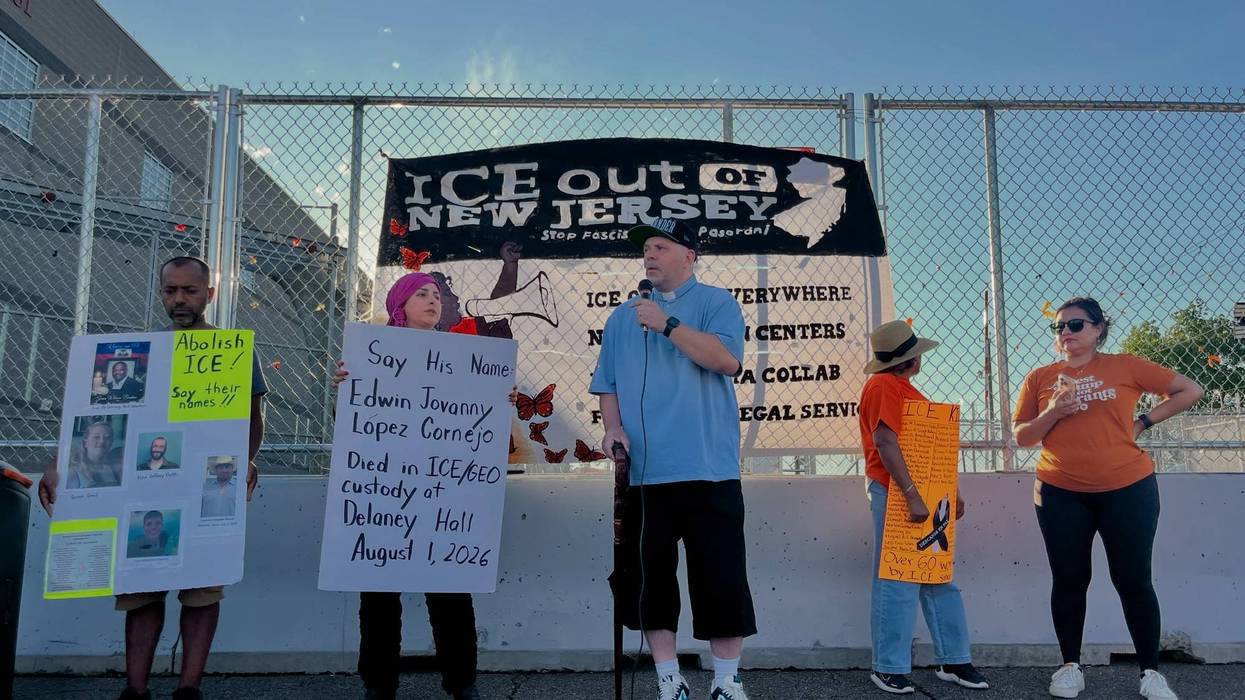
"I don't want my son's death to go unanswered. If justice isn't served, they'll just keep doing this, and there's no telling how many more people in this country we might lose."
The mother of a man who became the second immigrant held at the notorious Delaney Hall US Immigration and Customs Enforcement lockup in Newark, New Jersey to die in ICE custody said Monday that she believes her son's death was the result of medical negligence.
Longtime Plainfield resident Edwin Jovanny López Cornejo, a 41-year-old Salvadoran national who had reportedly entered the United States as a child, died Saturday at University Hospital. He had a 12-year-old daughter.
According to ICE, López Cornejo "experienced a medical emergency," and staff at Delaney Hall—which is run by prison profiteer GEO Group—"responded immediately and called 911 for emergency medical services."
However, in a video interview posted on Facebook by the immigrant justice group Movimiento Cosecha, López Cornejo's mother, María Cornejo said that her son had been prescribed medication for diabetes, high blood pressure, and seizures, and that she suspects that staff at Delaney Hall may not have given him his medicines during the six weeks he was held there.
Cornejo said Lopéz Cornejo called her the night before his death and said that something was wrong.
“He said his right hand and face were numb," she said. "He told me he was going to be examined, but I don’t know if he actually received care. I also don’t know if he was being given his medication.”
According to Cornejo, University Hospital informed her of her son's death, saying he arrived at the facility lifeless.
Congressman Bob Menendez (D-NJ) said ICE told him that López Cornejo was administered CPR during some of the 37 minutes it took for first responders to arrive.
"That is one of the reasons that I believe caused the death of my son, the negligence—that he wasn't given his medication that he had to take," Cornejo told Movimiento Cosecha.
ICE said that "while in custody, López Cornejo received proper medical care and was seen by medical professionals."
Numerous Democratic politicians from New Jersey and beyond called for the immediate closure of Delaney Hall, which has become a symbol of broader concerns about President Donald Trump's deadly anti-immigrant crackdown, detention in what some critics call concentration camps, aggressive enforcement, and prison profiteering.
Among them was recently elected progressive Congresswoman Analilia Mejia, who represents the district adjacent to the one in which Delaney Hall is located.
"My gravest concerns about conditions for medically vulnerable people at Delaney Hall are now confirmed," she wrote in a statement.
"Under these conditions, medically vulnerable people are being given death sentences due to the lack of care."
"This is not the first life we’ve lost inside that facility," Mejia continued, referring to Haitian national Jean Wilson Brutus, also 41, who collapsed and died there in December of what a medical examiner said was a lung blockage.
New Jersey’s own health inspectors have been denied full access, including the medical unit, again and again. If there’s nothing to hide, there’s no reason to keep them out," Mejia said.
"DHS must carry out a full, independent investigation," she demanded. "This family, and New Jersey, deserve real answers, justice, and accountability. Under these conditions, medically vulnerable people are being given death sentences due to the lack of care."
"Delaney Hall must be shut down," Mejia added. "Abolishing and replacing ICE is the only way to correct this—a system that lets this happen again and again cannot be reformed. It must be rebuilt around human dignity.”
At least 56 people have died while in ICE custody during Trump's second term.
Congresswoman Bonnie Watson Coleman (D-NJ) said that López Cornejo's "detention alone was an act of cruelty, and if he indeed was denied his medication as his family reports, the operators at Delaney Hall should be charged with homicide."
"A second person has died at the for-profit prison. Delaney Hall is a stain on our country. Its continued use is a daily reminder of the cruelty of our immigration and criminal justice systems. It should be shut down at once, and those responsible for its inhumane conditions should be investigated and tried.”
Delaney Hall has become one of the nation's most controversial immigration detention centers since reopening in 2025. Detainees have reported inadequate food, poor sanitation, overcrowding, retaliation for protests, and delayed access to medical treatment. Earlier this year, hunger strikes and demonstrations drew national attention, while lawmakers who repeatedly sought access to inspect conditions inside the facility were attacked along with protesters.
Democratic New Jersey Gov. Mikie Sherrill said she was "deeply disturbed" by López Cornejo's death.
"I have long opposed the use of private, for-profit prisons operating in a space that should be reserved for government,” Sherrill said in a statement. “Corporations should not have the right to monetize imprisoning people while avoiding public accountability. This is why we are fighting to close Delaney Hall, and why we will continue using every tool available to stop new private detention facilities—like the proposed facility in Roxbury—from opening their doors."
Newark Mayor Ras Baraka, a Democrat, released a statement on social media:
Civil rights and immigrant defense groups condemned López Cornejo's death.
"This tragedy is another devastating result of the rampant inhumane conditions at Delaney Hall and detention centers across the country, including the routine denial of proper medical care, sanitary conditions, and food," ACLU of New Jersey executive director Amol Sinha said in a statement.
"The Trump administration’s detention and deportation machine continues to terrorize and traumatize communities at an unprecedented level, yet numbers cannot encapsulate the grief and devastation that these abuses cause," Sinha added. "We demand accountability from ICE, the immediate closure of Delaney Hall, and an end to immigration detention once and for all.”
Jorge Torres, organizing director of the National Day Laborer Organizing Network, said that “Edwin Jeovanny López Cornejo should be alive today. His death was preventable, and his family deserves answers, accountability, and justice."
Cornejo told Movimiento Cosecha that she wants "justice" for her son.
“These men go around grabbing hard-working people,” she said of federal immigration enforcers. “This country moves forward because of immigrants... But they don’t see that. They only see the damage they are doing, but they don’t see the good things one does in this country.”
"I don't want my son's death to go unanswered," Cornejo added. "If justice isn't served, they'll just keep doing this, and there's no telling how many more people in this country we might lose."

"ICE shows up, and nothing but chaos.”
This is a developing story… Please check back for updates…
Less than a week after Republicans in Congress passed $70 billion in new funding for President Donald Trump's mass deportation campaign, an immigration agent reportedly shot at a fleeing vehicle in New Jersey on Monday.
According to the police department of Stafford Township, Immigration and Customs Enforcement "was attempting to apprehend a suspect when the suspect fled from the scene in a vehicle, striking [an ICE agent]" on Monday morning around 9:30 am near a Wawa convenience store.
ICE identified the suspect as a Peruvian national, Friedrich Castillo-Ormeno, whom the agency said was given a final order of removal on January 30. Aside from describing him as an "illegal alien," ICE provided no other information about his background or any criminal history.
On June 15, 2026, ICE law enforcement officers were conducting a targeted vehicle stop in Manahawkin, New Jersey to arrest Freidrich Castillo-Ormeno, an illegal alien from Peru who was released into our country under the Biden administration. He was given a final order of removal…
— U.S. Immigration and Customs Enforcement (@ICEgov) June 15, 2026
"The agent discharged his firearm at the vehicle, reportedly striking it," the Stafford police said. "The suspect fled the scene in the vehicle and has not been located at this time." Onlookers told NBC 10 Philadelphia that bullets struck the driver's van and may have blown out the back window.
The police added that “the agent reportedly sustained unknown injuries." According to Patch, officers went to the scene and performed first aid on the agent before transporting him for further treatment. Sources told NBC 10 Philadelphia that he is expected to make a full recovery.
"It is unknown if the suspect was injured at this time," the Stafford police said, adding that although Castillo-Ormeno fled the scene, “there is no reason to believe there is any concern for the public’s safety.”
Under the Department of Homeland Security's use-of-force policy, agents are not supposed to shoot at fleeing vehicles unless the officer believes they are at imminent risk of death or serious physical injury.
ICE said Castillo-Ormeno "weaponized his vehicle and struck an officer, resulting in the officer discharging his weapon."
According to Patch, local police are not conducting an investigation into the incident, and all further updates will come from the FBI.
Under Trump, the US Department of Justice has faced criticism for locking state and local investigators out of investigations into the shootings of US citizens Renee Good and Alex Pretti in Minneapolis earlier this year and spreading false information to justify their deaths.
Minnesota became the center of a national wave of resistance to ICE that ultimately pushed federal immigration agencies to retreat on some of their most extreme tactics, though the mass deportation push against immigrants largely without criminal histories has not subsided.
New Jersey has met ICE with its own share of pushback. Last month, US Sen. Andy Kim (D-NJ) was pepper-sprayed by federal agents outside the privately run Delaney Hall detention facility in Newark. Demonstrators had shown up in solidarity with hundreds of detainees who had gone on a hunger and labor strike to protest the squalid conditions in the facility, and protests have continued for weeks.
Although Stafford Township is overwhelmingly Republican, The Daily Beast found that in the immediate aftermath of Monday's reported shooting, some residents in a local Facebook group were wary about the tumult that ICE's presence could bring.
"Immigrants have been in Stafford for decades with no problems,” one resident wrote in a local Facebook group where the incident is being discussed. “They are respectful and hardworking. ICE shows up, and nothing but chaos.”
“Who shoots at a van?" wrote another Stafford resident, who added that "[ICE] training is brutal."

Sanders has said his endorsements are about "building a movement for the future" capable of not just taking on the GOP, but also the Democratic Party establishment.
Progressive candidates endorsed by Sen. Bernie Sanders swept to victory on Tuesday in Democratic primaries across the US.
In New Jersey, surgeon Adam Hamawy prevailed in the Democratic primary in the state's 12th Congressional District, while Rep. Analilia Mejia (D-NJ) easily defeated primary challengers in the state's 11th Congressional District by garnering more than 80% of the vote. Sanders (I-Vt.) endorsed both candidates.
Sanders-backed candidates in California also put in strong showings, with former San Francisco city supervisor Jane Kim advancing to the general election in the race to be the state's next insurance commissioner.
Political scientist Randy Villegas, meanwhile, is currently edging out rival Jasmeet Bains in the jungle primary in California's 22nd Congressional District, currently represented by Rep. David Valadao (R-Calif.).
And in Montana, former smokejumper and union leader Sam Forstag won the Democratic primary to represent the state's 1st Congressional District, where he'll face off against Republican Aaron Flint in the fall.
Sanders adviser Faiz Shakir on Wednesday took a victory lap in the wake of the results.
"Shaping up to be a clean sweep for Bernie’s endorsements last night," Shakir wrote in a social media post.
In an interview with The New York Times last month, Sanders said that his goal with the endorsements is "building a movement for the future" capable of not just taking on President Donald Trump's Republican Party, but also the Democratic Party establishment.
“Our effort is to lead a national movement against Trump’s authoritarianism and kleptocracy and unnecessary wars and his contempt for the Constitution,” Sanders told the Times. “But equally important, the American people need an alternative to the Democratic establishment, which is significantly dominated by big-money interests."

“I am going to Congress to fight for you—for healthcare, not bombs, to abolish ICE, and to unrig the economy once and for all,” Adam Hamawy told supporters.
Dr. Adam Hamawy, a retired US Army combat surgeon who in 2024 volunteered at a Gaza hospital amid Israel's genocidal assault, handily prevailed Tuesday in the Democratic primary race in New Jersey's 12th Congressional District after running on a message of "healthcare, not bombs."
"I am going to Congress to fight for you—for healthcare, not bombs, to abolish ICE, and to unrig the economy once and for all," said Hamawy, the heavy favorite to win in November in the deep-blue district. "I will never take money from corporate PACs or AIPAC. I will always vote my conscience—I will be beholden to no one."
Justice Democrats and IMEU Policy Project, progressive organizations that backed Hamawy with $200,000 in mail ads, celebrated his victory in the crowded primary, where the surgeon received nearly 10,000 more votes than the second-place candidate.
“Dr. Adam Hamawy’s heroism and commitment to human rights were at the heart of his campaign to end Washington’s bottomless budgets for war abroad and to invest in communities at home," the groups said in a joint statement. "Voters were drawn to Dr. Hamawy’s candidacy because he knows firsthand the reality of Israel’s genocide in Gaza like few do—having worked to save the lives of Palestinian children under bombardment and unimaginable conditions."
"His experience is necessary in Congress now more than ever, as too many of the people meant to represent us continue to look the other way while our tax dollars fund injustices here and abroad," they added. "Dr. Hamawy will not look away from injustice, because he is unbought and committed to building on his lifetime of service to chart a new path in our politics away from cruelty, and toward compassion for all.”
Hamawy's campaign was also backed by prominent progressive lawmakers, including US Sen. Bernie Sanders (I-Vt.), who celebrated his win in a social media post late Tuesday.
"Dr. Hamawy will be a strong progressive voice in the House and, as a physician, he understands our healthcare system is broken and we need Medicare for All," Sanders wrote.
Hamawy, who is running to fill the seat of retiring Rep. Bonnie Watson Coleman, has spoken openly about his experience volunteering at the European Hospital in southern Gaza, from which he was evacuated in May 2024 after Israeli authorities trapped him and his team in the besieged enclave.
"I have never in my career witnessed the level of atrocities and targeting of my medical colleagues as I have in Gaza," said Hamawy, who served in Iraq. US Sen. Tammy Duckworth (D-Ill.) credits Hamawy with saving her life after her helicopter was shot down in Iraq in 2004.
Speaking to supporters late Tuesday, Hamawy said that "for my whole life, I have tried to tackle the crises we face with my hands, treating patients."
"But I am a surgeon. I don’t like putting Band-Aids on bullet wounds," he continued. "It’s time for some preventative care. To get my patients—and all of us—the care they need, we are going to change the very system that’s hurting us."
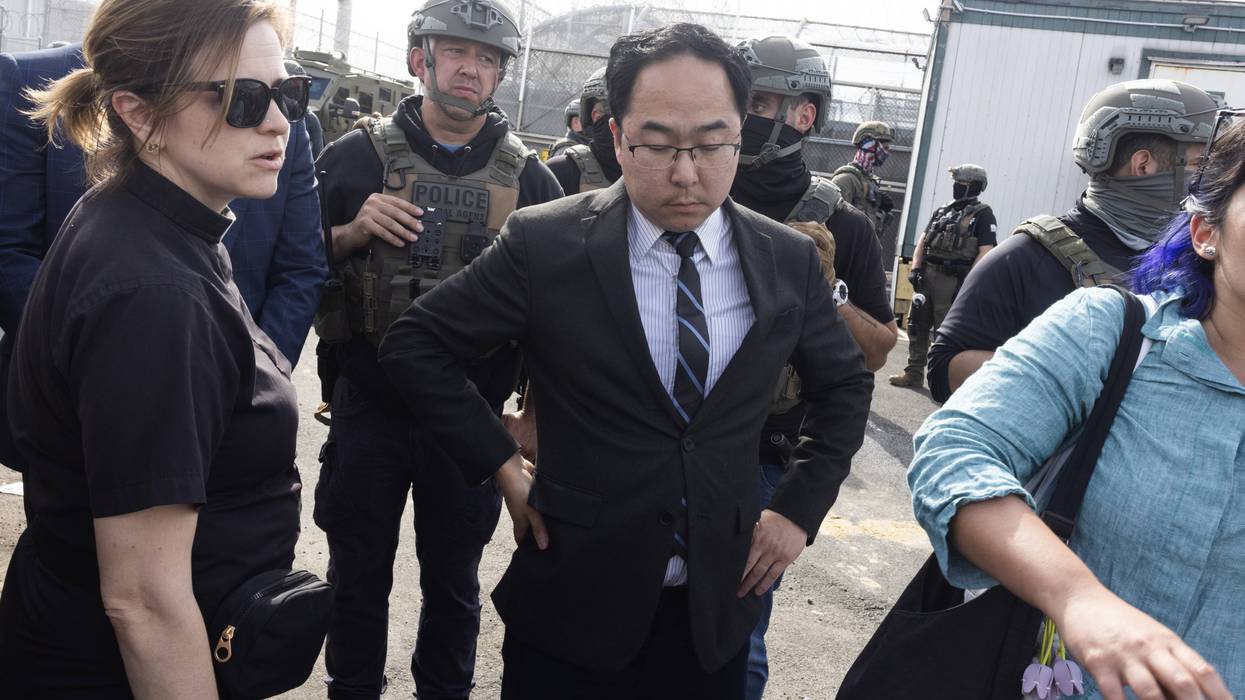
Sen. Andy Kim of New Jersey said federal immigration agents "poured gasoline on the fire" as protesters condemned appalling conditions inside the Delaney Hall detention facility.
A sitting US senator was pepper sprayed by federal immigration agents on Monday during a demonstration outside of the notorious Delaney Hall detention center in Newark, New Jersey, where migrants are engaged in a hunger strike to highlight deplorable conditions inside the facility and demand their release.
Sen. Andy Kim (D-NJ) said he rushed to the migrant detention center—which was reopened by the Trump administration last year—after learning of the hunger strike, which began late last week. Following Monday's protest, Kim wrote on social media that he saw "chaos" and "more of the same lawlessness we've see elsewhere around the country," alluding to horrific—and sometimes deadly—abuses by Immigration and Customs Enforcement Agents (ICE) in Minnesota, Georgia, Texas, and elsewhere.
"Instead of engaging with me and others about the poor conditions, ICE sent in an armored vehicle and a line of armed agents that only poured gasoline on the fire. Civilians were tackled and restrained, and agents fired pepper balls and spray into the crowd," said Kim. "Our country deserves accountability. Our country deserves the humane treatment of every person here. In fact, our Constitution demands this. What I witnessed and experienced today was shameful."
"Delaney Hall is a failure; it’s this administration’s failure," Kim added. "The only way to make this right for our communities is to shut it down and make sure the failures we’ve seen never happen again."
NJ.com reported that Kim, who was visiting the facility along with other New Jersey representatives including Democratic Gov. Mikie Sherrill, "initially tried to broker a temporary agreement between the demonstrators and federal agents, in which the agents would scale back tactical teams and immigrant advocates could inspect cars leaving the facility to see if detainees were inside."
Demonstrators had earlier expressed concern that ICE was planning to secretly transfer hunger strike participants to other detention facilities.
"But in the meantime, agents began pushing the crowd backward, firing less-lethal rounds containing an irritant toward the protesters and making several arrests," NJ.com continued. "At times, Kim stepped between the protestors and agents putting his arms up in a 'stop' motion as the scene grew chaotic. Later, Kim was among those who received first aid after being exposed to pepper spray."
The Department of Homeland Security (DHS), which oversees ICE, issued a statement characterizing protesters as "dangerous rioters" and claiming that "no individuals were directly struck by pepper ball projectiles."
DISGRACEFUL: ICE agents tear-gassed U.S. Senator Andy Kim at Delaney Hall detention facility in NJ today!
Kim was supporting hunger-striking detainees protesting spoiled food, no medical care & extreme heat when federal agents unleashed tear gas & pepper spray. Kim struggled to… pic.twitter.com/CyPQJCkW50
— Ed Krassenstein (@EdKrassen) May 26, 2026
Delaney Hall is run by the private prison corporation GEO Group under a $1 billion, 15-year contract with ICE.
The families of people detained at Delaney Hall have decried "dangerous conditions" inside the facility, alleging "medical neglect, lack of air conditioning, and lack of food—including rotten and spoiled meals." The ACLU of New Jersey noted earlier this year that "when food is provided—as it is not often supplied—people have reported that it is frozen or otherwise inedible, in small portions, and distributed at odd hours, which is particularly harmful for people who are diabetic and trying to maintain a stable blood sugar level."
After seeing the inside of the facility over the weekend, Kim wrote that "our government should focus on helping Americans afford their lives, not lock people up in for-profit detention centers where corporations like Geo Group and CoreCivic make billions."
"No profiting off of human misery," Kim added.

"This community came together in a way I never would've imagined to fight this thing," said one critic of the data center plan.
Leaders in the rural township of Andover, New Jersey are reversing course on a plan to allow for data center construction in their community after local residents angrily revolted against the project.
According to a Tuesday report from NJ.com, Andover Township Mayor Thomas Walsh Jr. has announced that the township council this week will hold votes on repealing two data center-related ordinances and on a proposed ban on the construction of data centers inside town borders.
While officials in Andover had initially been supportive of the data center project due to the revenue it would have brought into local government, furious opposition from residents convinced them to change course.
"We’ve had some discourse over a project that we were considering for the township that may have brought in quite a bit of revenue," Walsh said. "But we also agree that no project, no money is worth tearing it down at its seams."
Andover resident Ken Collins, an opponent of the data center, celebrated Walsh's decision to back down in an interview with News 10 New Jersey.
"I'm really astounded," Collins said. "I really can't believe this is happening. This community came together in a way I never would've imagined to fight this thing."
The township's reversal on data centers came days after a heated meeting in which one resident was forcibly removed by police after profanely berating local officials over their support for data center construction.
Andover police drew criticism after video showed the resident being body slammed to the ground while being removed, but Walsh said the officers' actions were completely defensible.
"[The police] showed great restraint all night, especially there,” Walsh said, according to News 12 New Jersey. “Those police officers, don’t forget, they don’t know what they’re in danger of. They think they’re in danger and they have to protect themselves."
Data centers have become political lightning rods in recent months, as residents across the country object to their massive resource consumption, which is leading to a major spike in utilities bills, as well as the noise pollution they generate.
Sen. Bernie Sanders (I-Vt.) and Rep. Alexandria Ocasio-Cortez (D-NY) earlier this year introduced a bill that would impose a nationwide moratorium on AI data center construction “until strong national safeguards are in place to protect workers, consumers, and communities, defend privacy and civil rights, and ensure these technologies do not harm our environment."
At the same time, Silicon Valley elites are planning to spend huge sums of money in this year’s midterm elections to prevent candidates who support AI regulation from winning public office.
Leading the Future—a super political action committee backed by venture capital firm Andreessen Horowitz, Palantir co-founder Joe Lonsdale, and other AI heavyweights—is spending at least $100 million to elect lawmakers who aim to pass legislation that would set a single set of AI regulations across the US, overriding any restrictions placed on the technology by state governments.
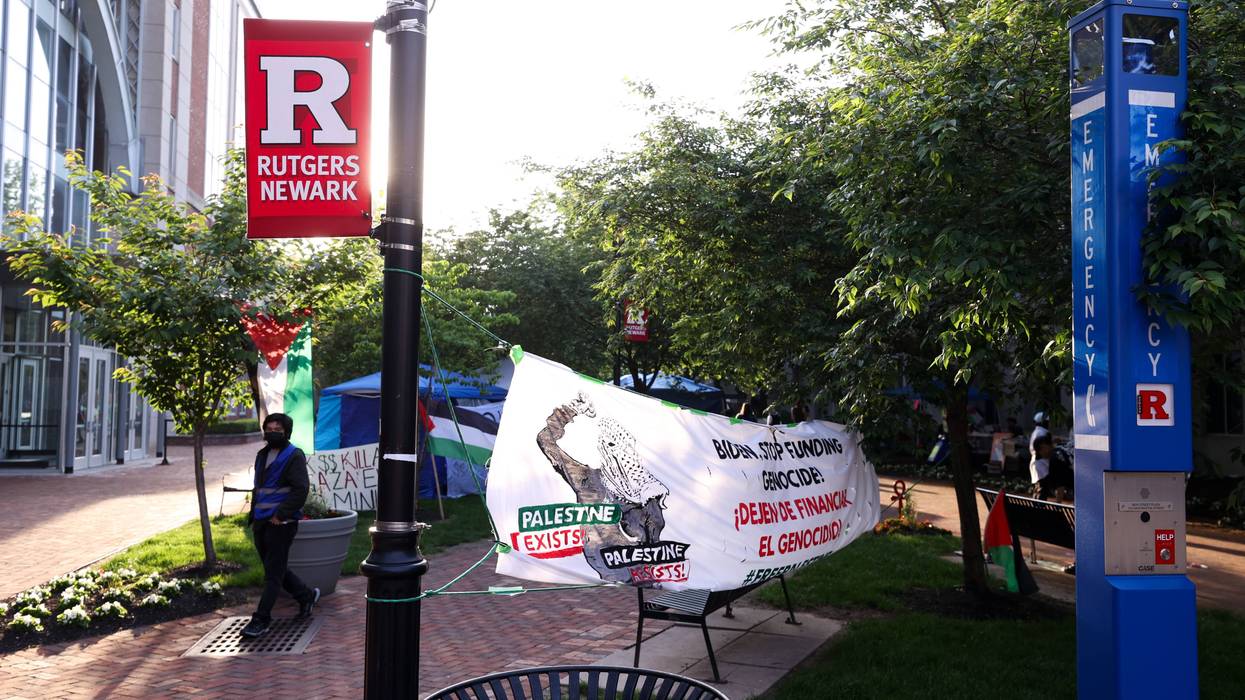
"The message Rutgers is sending to this class and everyone around the country is alarming," said Rami Elghandour. "Don't dare stand for anything. Don't dare speak up."
Faculty members at Rutgers University in New Jersey on Thursday were among those condemning the school's decision to rescind an invitation to Rami Elghandour, a biotech executive and producer of the Gaza-focused film The Voice of Hind Rajab, who had been invited to speak at the School of Engineering commencement next week.
Elghandour said the engineering school's dean, Alberto Cuitiño, had informed him that he was no longer scheduled to give the commencement address after a "few" students told the administration they would not attend the graduation in protest of Elghandour's online advocacy for Palestinian rights.
"Commencement season is here, and with it the usual cycle of silencing voices that stand up for human rights," said Waheed U. Bajwa, a professor at Rutgers in New Brunswick. "This one hits close to home... I publicly call on Rutgers to reverse this!"
Elghandour, a graduate of the engineering school, released a statement saying that the school had "decided that the feelings of a handful of students who said that my social media posts 'opposed their beliefs' were more important than the experience of the entire graduating class, the reputation of the school, the dignity and belonging of Arab and Muslim students, and the First Amendment."
Speaking to the New Jersey Globe, a spokesperson for the university cited a specific post that Elghandour wrote in April on the social media platform X, saying that Israel has "committed genocide" and is "running dungeons where they train dogs to sexually assault prisoners."
"Weapons embargo is the absolute minimum," said Elghandour. "Sanctions and diplomatic isolation are beyond justified."
Leading human rights organizations and Holocaust scholars are among those who have called Israel's assault on Gaza, which began in October 2023 in retaliation for a Hamas-led attack and has killed more than 72,000 Palestinians, a genocide.
Calls for the US to suspend military aid to Israel in light of the war are hardly a fringe view in the US; a Quinnipiac University poll released last August found that 60% of voters across all parties supported a suspension of aid.
Middle East Eye reported in December on Palestinian detainees' allegations that Israeli guards had used dogs to sexually assault them. Rights organizations including the Euro-Mediterranean Human Rights Monitor, the Palestinian Center for Human Rights, and the Council on American-Islamic Relations (CAIR) have also collected testimonies alleging such abuse.
Rutgers spokesperson Dory Devlin told the Globe that some students had accused Elghandour of making an "inflammatory claim" when they said they would not attend the graduation if he spoke.
"Rutgers chose me in part because of my humanitarian work,” said Elghandour in his statement. “They put my role as an executive producer for the Oscar-nominated The Voice of Hind Rajab front and center. They led with my social justice advocacy. Until it was inconvenient. That’s the difference between virtue signaling and principles. One withstands challenge. The other wilts in the slightest breeze.”
"The message Rutgers is sending to this class and everyone around the country is alarming," he added. "Don't dare stand for anything. Don't dare speak up."
He said he plans to record the speech he had been scheduled to give and post it online so students can still hear it.
Hank Kalet, a journalism professor at the school who serves as vice president of the Rutgers Adjunct Faculty Union, told the Globe that the university's actions met "the definition of viewpoint censorship.”
“We have somebody who is offering, in a public way on X, some opinions about genocide in Gaza and being retaliated against because of the opinions that he has,” said Kalet, who is Jewish. He told the outlet that he did not believe Elghandour to be antisemitic.
Naureen Akhter, public affairs director for CAIR-New Jersey, noted that Rutgers had recently hosted Israel Defense Forces soldiers on its campus as part of a national tour called "Triggered: The Ceaseless Tour."
“It is unconscionable that Rutgers rolls out the red carpet to soldiers engaged in genocide yet finds expression of pro-Palestine solidarity from one of their distinguished alumni so objectionable, they refuse to have him address graduates," said Akhter. “We call on Rutgers School of Engineering to reinstate Rami Elghandour as commencement speaker and approach issues of student safety and freedom of expression with more care.”
The Rutgers student body is no stranger to advocacy for Palestinian rights. As on other college campuses across the US, students held a sustained protest in the spring of 2024, demanding the school divest from companies that do business with Israel, terminate its relationship with Tel Aviv University, and take other steps to demonstrate solidarity with Palestinians.
Rutgers-Newark also defended its decision to host pro-Palestinian comedian Ramy Youssef at its 2025 commencement after a state lawmaker claimed his involvement would alienate Jewish students at the university.
The decision to cancel Elghandour's speech came days after the University of Michigan publicly apologized for a graduation speech by Professor Derek Peterson, who had applauded students who spoke out for Palestinian rights in campus protests, saying they exemplified the school's long history of social activism.
“I think [Palestine] is the moral issue of our time, and I believe it’s been used to undermine democratic institutions in the US,” Elghandour told The Guardian on Wednesday.
Bajwa said on social media that "everyone says they'd have stood against slavery, the Holocaust, segregation, and more."
"Easy to be righteous about the past," he said. "But what about now? What moral tests are you failing in your own time? That's the real test of courage."

In an era defined by authoritarian escalation and billionaire consolidation, many ask whether democracy can defend itself. No, it cannot. But organized neighbors can.
When I stepped into leadership as co-executive director of Popular Democracy in Action alongside Analilia Mejia in 2021, the central question we both set out to answer was not whether the far-right was consolidating power. That much was obvious. The question, as leaders of the largest progressive networks of base-building organizations in the country, was whether we could scale our power to meet it.
How do you build enough base and narrative power to confront a coordinated, well-funded, disciplined right-wing shift? How do you move beyond reactive mobilization and build durable organizing infrastructure? How do you prepare communities not just to resist authoritarianism, but to win governing power?
For years, our organization invested in answering those questions. We refined our organizing model through practice, experimentation, and hard-earned lessons. So when the opportunity arose last November for one of our own, Analilia Mejía, to run for the open seat in New Jersey’s 11th District left vacant by Mikie Sherrill’s successful gubernatorial bid, I understood it as more than a campaign. It was an opportunity to test our theory of change.
On Monday, as Analilia was sworn into the House of Representatives as New Jersey’s newest congresswoman, there were many reasons to celebrate. She beat her opponent by at least 20 points, running a whopping 12 points ahead of 2024 presidential margins, underscoring the strength of a people-powered campaign. Not only did our movement succeed in sending a champion for the working class to Congress, but we have proven that our organizing model could hold up under today’s political conditions and win.
Organizers often inherit an electoral culture built on urgency and amnesia. Consultants arrive late. Mailers flood inboxes. Relentless text and phone calls. Volunteers are recruited weeks before Election Day. Then everyone disappears until the next crisis.
We grew tired of repeating a cycle that left our people feeling mobilized in the moment and abandoned afterward. So we chose a different path.
This victory in NJ-11 required deep relationship building; message discipline; and courage from organizers, volunteers, and voters alike.
We built the Guardians of Democracy program, and through it Popular Democracy in Action and our affiliates invested in leadership development rooted in political education and hyperlocal relational organizing. At its core, Guardians is a civic infrastructure strategy—one that can be replicated, scaled, and paired with other leadership pipelines to deliver material wins for Black, brown, and working-class communities.
Participants ground themselves in a worker-centered history of America—from the Reconstruction Amendments to the Civil Rights Movement—connecting neighborhood organizing to a longer arc of struggle over who counts and who governs. After a series of trainings, they practice organizing where they live. Each participant receives a list of 100 of their closest neighbors, often on their own block. They learn to initiate organizing conversations, sustain relationships, and bring more people into their local campaigns.
The goal is simple and ambitious: Build neighborhood-based leaders during non-election years who could be activated when it matters most.
Over the last few years, we've trained 12,430 leaders across the country. We've mapped strategic geographies and have worked closely with our affiliates to refine the model: Train members deeply, anchor them locally, and maintain consistent outreach long before ballots are even printed.
This is the kind of quiet, patient, disciplined organizing infrastructure that can become an organization’s secret weapon.
In a crowded field of 13 candidates in NJ-11, with virtually no district-wide name recognition and a firm commitment to reject corporate PAC money, Analilia entered the race as a clear underdog. From the moment the seat opened, colleagues, movement peers, elected officials, and community leaders urged her to step forward. For me, her candidacy represented a proving ground. Could our organizing infrastructure pass this stress test?
As one of the first races of the 2026 midterm cycle, the outcome in NJ-11 carries significant weight in the broader narrative wars shaping this political moment. Would voters in a district long represented by establishment figures choose a movement candidate running unapologetically on Medicare for All, abolishing Immigration and Customs Enforcement (ICE), and taxing the wealthiest individuals and corporations?
Then there was the question on building power in strategic geographies: Could long-term relational organizing—rooted in political education and neighborhood leadership—overcome the gravitational pull of big money and name recognition?
Yes, yes, and yes.
Analilia’s victory in NJ-11 was powered by more than any single organization. Labor unions, local and national movement organizations, progressive elected leaders, and grassroots networks across the district consolidated quickly and decisively around her candidacy. Organizers who have been fighting for housing, healthcare, immigrant rights, and worker power recognized the stakes of this race and pulled their weight, aligning people and resources behind a shared vision.
But any honest accounting of this victory would be remiss to not center the extraordinary organizing efforts of Make the Road Action New Jersey (MRANJ).
For years, MRANJ has built deep relationships with working-class voters, immigrants, and communities of color across NJ-11. Their members are not seasonal volunteers. They are leaders formed through a common fight for housing, economic, and immigrant justice.
When Analilia’s campaign began, the organizing muscle was already there.
Over the course of the campaign, Make the Road Action NJ led a relentless, people-powered field operation—knocking 25,100 doors in freezing winter and spring sun alike, making 154,430 calls to voters across the district, and organizing 1,078 volunteer canvass shifts. Popular Democracy in Action supported this work by mobilizing our national network, deploying staff to coordinate volunteer operations in the district, hosting national phone banks, and aligning resources with the strategy on the ground. In the lead-up to the primary on February 5, we helped fund targeted outreach, including mobile billboards in key areas and a free party bus to the polls in Belleville to boost turnout.
But numbers alone do not tell the story.
What mattered was that many of the people knocking those doors were Guardians—leaders trained in prior years to organize their own neighborhoods. They were not strangers coming into the turf. They were familiar faces. They were neighbors.
Relational organizing is often dismissed as a buzzword. In practice, it is slow, trust-based work. It means your neighbor opens the door because they know you. It means you can have a conversation about rent hikes, losing your healthcare, or fear of ICE raids because of shared lived realities.
This is what years of investment in people looks like, and it went a long way in this campaign.
This victory in NJ-11 required deep relationship building; message discipline; and courage from organizers, volunteers, and voters alike. It required labor partners, grassroots organizations, and national networks pulling in the same direction. And it required the steady leadership of Make the Road Action New Jersey, whose long-term base building anchored the work on the ground.
During these last few months, I have seen firsthand the unique power of our network.
We proved that investing in hyperlocal leaders during non-election years must come first. We proved that narrative power and base building, developed patiently over time, can withstand the test of a competitive race. Most importantly, we proved that organized people can defeat better-funded opponents without surrendering their values.
In an era defined by authoritarian escalation and billionaire consolidation, many ask whether democracy can defend itself.
No, it cannot.
But organized neighbors can.
Analilia’s victory in NJ-11 is not the end of a story. It is evidence of what becomes possible when movements invest in long-term organizing models. For organizers across the country, the lesson is clear: If we want material gains—universal healthcare, immigrant rights, wages that keep up with inflation—we must invest in leadership, relationships, and narrative power long before the next fight reaches the ballot box.

"As a physician he understands firsthand that our current healthcare system is broken, that healthcare is a human right, and that we must pass Medicare for All."
US Sen. Bernie Sanders over the weekend endorsed New Jersey surgeon Dr. Adam Hamawy for Congress, citing the Democratic candidate's long record of saving lives in humanitarian disasters from 9/11 to Israel's US-backed destruction of Gaza, as well as his support for Medicare for All and willingness to take on the billionaire class.
“Dr. Adam Hamawy has saved lives with great courage and honor—he did it as a 9/11 first responder, as a combat trauma surgeon in Iraq, as a volunteer in hospitals under bombardment in Gaza, and in emergency rooms in New Jersey," Sanders (I-Vt.) said on social media.
"As a physician he understands firsthand that our current healthcare system is broken, that healthcare is a human right, and that we must pass Medicare for All," the senator continued. "Dr. Hamawy is prepared to fight for real campaign finance reform to stop billionaires from buying elections, and will not waste billions of taxpayer dollars on endless and illegal wars."
"Status quo politics is not working," Sanders added. "We need bold leaders like Dr. Hamawy in Congress. I am proud to endorse him and look forward to working with him after he is elected.”
Hamawy said he was "excited" by Sanders' endorsement.
"I am running to fund healthcare, not bombs, to abolish ICE, and to unrig our economy," he said. "In Congress, I'll fight right alongside Bernie to defeat fascism and deliver for working people."
"As a doctor, I am proud to fight alongside him for Medicare for All," Hamawy added. "As a veteran, I am grateful for his advocacy for our community and his leadership in fighting against endless wars. I am deeply honored to have earned his support.“
Hamawy, the son of immigrants from Egypt, is running for New Jersey's 12th Congressional District seat, currently held by retiring Democratic Rep. Bonnie Watson Coleman. He grew up in Old Bridge Township and is a graduate of Rutgers University and what is now Rutgers New Jersey Medical School.
The 46-year-old physician joined the United States Army Medical Corps and served during the US invasion and occupation of Iraq as a combat trauma surgeon. Hamawy—whose highest rank was lieutenant colonel—became nationally known after saving the life of then-Army helicopter pilot and current US Sen. Tammy Duckworth (D-Ill.) after her helicopter was shot down in Iraq in 2004. Duckworth later credited him with preventing her from becoming a triple amputee.
After leaving the Army, Hamawy volunteered in emergency and war zones including after the 2010 Haiti earthquake, during the Syrian Civil War, and the ongoing Gaza genocide—when he joined an international medical mission and performed roughly 120 surgeries, many on children wounded in Israeli attacks.
Hamawy and the other doctors on the team became trapped inside Gaza after Israel closed the Rafah border crossing with Egypt. Duckworth urged then-US President Joe Biden to secure the doctors' evacuation. According to reporting, Hamawy was one of three US doctors who refused to be evacuated from Gaza until non-American members of his medical team could also leave.
After returning stateside, Hamawy testified about conditions in Gaza, describing catastrophic shortages of medicine and other vital equipment and the high mortality rates among severely wounded civilians.
In addition to Sanders, Hamawy is endorsed by Duckworth, Reps. Ilhan Omar (D-Minn.) and Ro Khanna (D-Calif.), and progressive groups including Justice Democrats, Our Revolution, Veterans for Responsible Leadership, Council on American-Islamic Relations Action, and Track AIPAC.
While some pro-Palestine congressional incumbents and candidates including Reps. Jamaal Bowman (D-NY), Cori Bush (D-Mo.), and Kat Abughazaleh, a Palestinian American from Illinois, have been defeated amid a torrent of funding from groups like the American Israel Public Affairs Committee, others have won their races in recent elections, including Omar and Reps. Rashida Tlaib (D-Mich.), Summer Lee (D-Pa.), and Analilia Mejia (D-NJ), who was sworn into office last month.