To understand the importance of this and other defense errors, a brief recap of the trial is necessary. Testimony by David Pecker, chairman of American Media Inc. (AMI), publisher of the National Inquirer and other tabloids, and Trump attorney Michael Cohen, described a 15-month Trump-AMI conspiracy to suppress media stories, especially from women, that could damage Trump’s campaign. They aimed to spot prospective pieces and purchase them to prevent publication. Michael Cohen, known as Trump’s “fixer,” was AMI’s contact point with Trump.
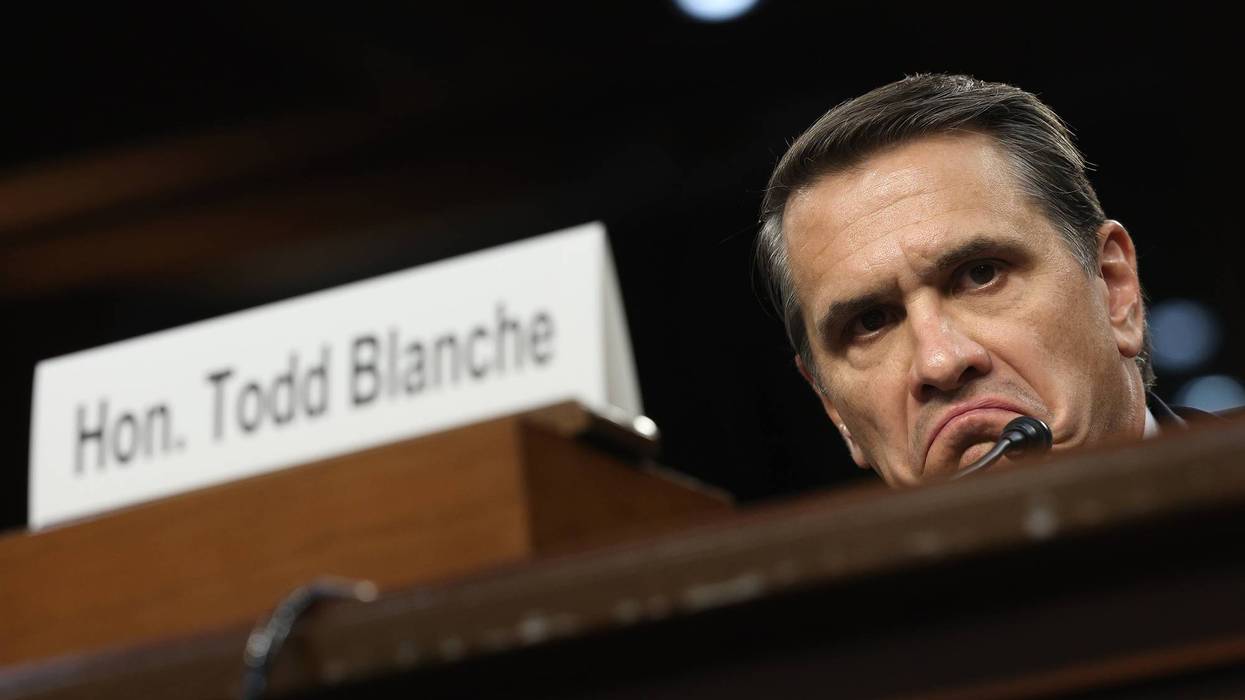
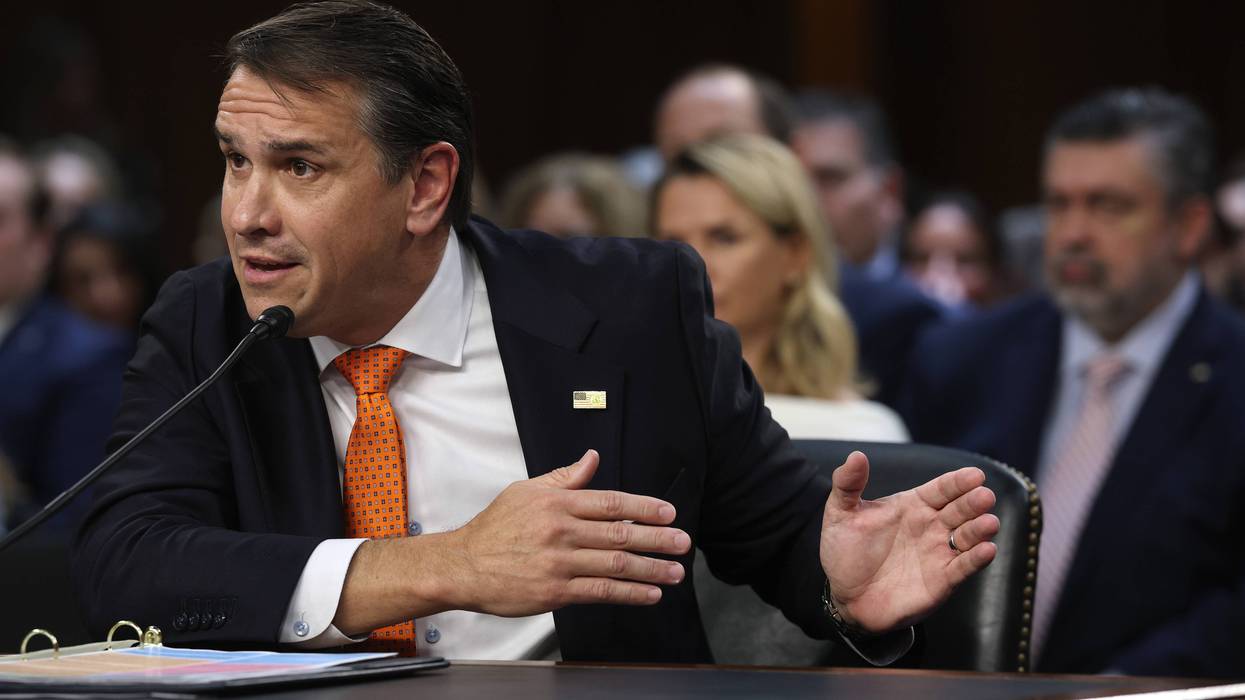
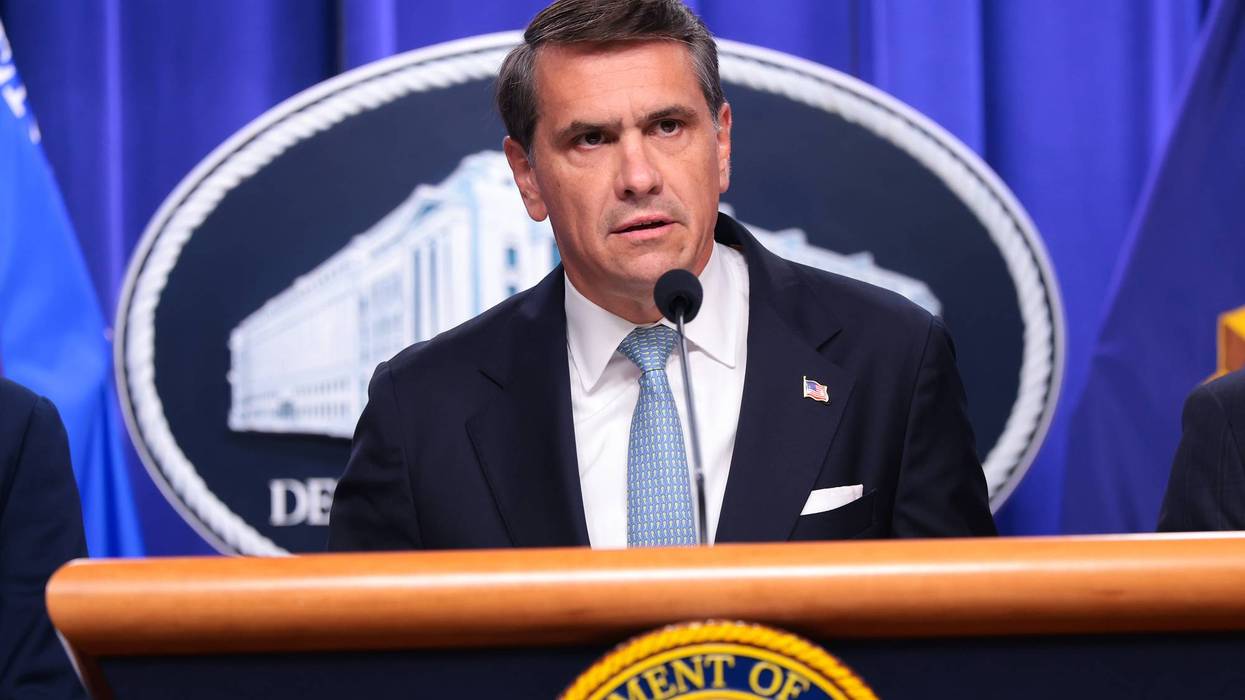
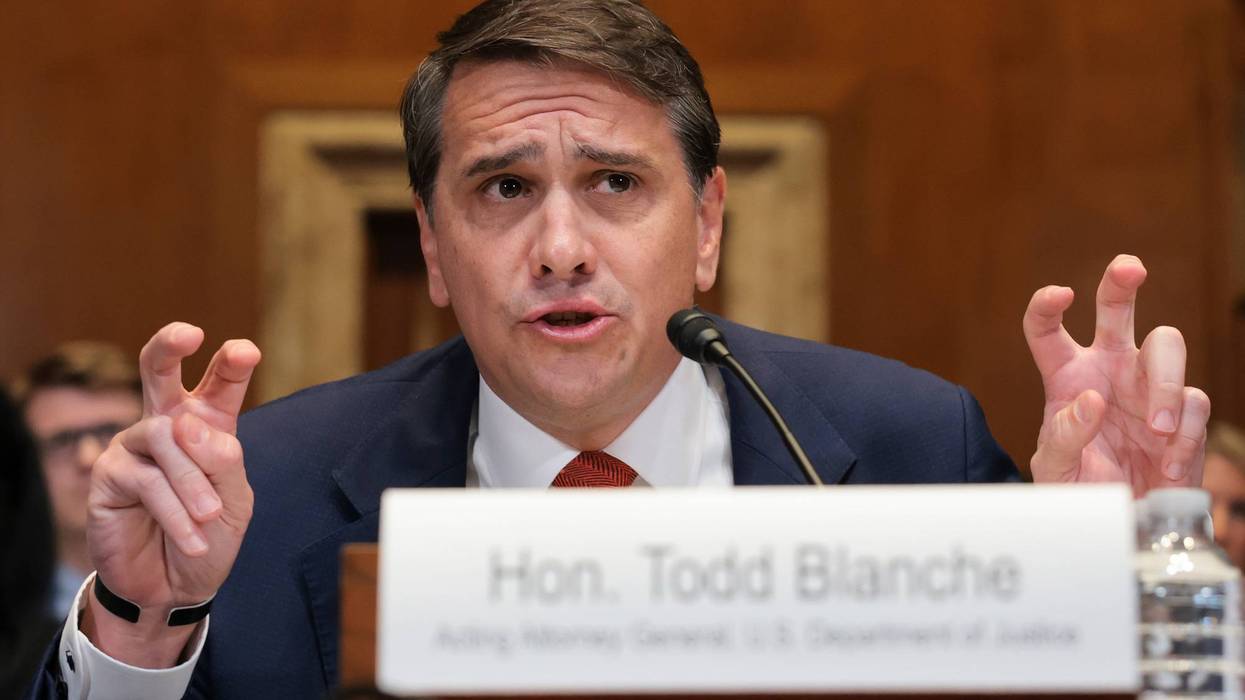
The liberal-progressive media rap on Todd Blanche has been that, under his leadership, the Justice Department... has been too subservient to Trump’s undemocratic, illegal, and unconstitutional tendencies. That’s true.
In early August 2016, AMI paid Karen McDougal $150,000 for her story of a past affair with Trump, which it did not plan to publish, and collateral services. There was an understanding that Trump would reimburse the company. In late October, AMI declined a similar deal with adult film star Stormy Daniels, passing the transaction to Cohen. He paid Daniels $130,000, expecting to be reimbursed by “The Boss.” These transactions violated FECA. They were expenditures coordinated with a political campaign, which are considered “in kind” contributions, and they either exceeded the contribution limit of $2,700 or were illegal corporate donations.
In cross-examinations, Blanche’s team sought to shake jurors’ confidence in the witnesses’ credibility. They suggested that Pecker’s damning account, reflecting a previous non-prosecution agreement with a US attorney, might have been motivated by his eagerness to complete his company’s sale of two tabloids. They brought out Cohen’s long history of lying and fraud, which resulted in his prosecution for multiple offenses under Trump’s administration.
But prosecutors offered compelling documentary evidence to corroborate their witnesses’ accounts. Pecker’s testimony was supported by his non-prosecution agreement. A Cohen-recorded September 6, 2016 phone call between Pecker and Trump revealed them discussing Trump’s projected reimbursement of AMI for McDougal’s story. “What do we have to pay? $150 [thousand]?” Trump inquired. (AMI later dropped its insistence that Trump repay it}. On October 26 Cohen wired funds transferred from his private bank account through his shell company, separate from the Trump Organization, to Daniels’ representative, Keith Davidson. In a recorded December 9 phone call, he complained to Davidson that Trump “was not even paying me the $130,000 back” (Pecker recalled Cohen speaking similarly to him in the November-December time frame). In a later call, Cohen told Davidson, “I can’t even tell you how many times [Trump] said to me I hate the fact that we did it [paid Daniels].”
Other documents were smoking guns for the base falsification of business records charges. They showed that Trump’s payments reimbursing Cohen for his 2016 payoff were purposely mischaracterized by the Trump Organization’s chief financial officer and controller as “retainers” for 2017 legal services. Trump himself signed nine checks with stubs reading “retainer.” And In a note to his 2018 financial disclosure report to the Office of Government Ethics, President Trump acknowledged that he reimbursed Cohen between $100,00 and $250,000 during 2017.
Facing strong headwinds, Blanche’s team headed to the charging conference. The first item on the agenda was the defense’s proposed jury instruction that Trump could be found guilty only if the violations of FECA in question were “willful.” “This is a big one for us,” Blanche co-counsel Emil Bove pleaded to the judge. Justice Merchan upheld his request.
But the defense had asked for too little. It had failed to put forth the legal definition of willfulness in FECA—acting with knowledge the conduct was unlawful—to guide the jury. According to virtually unreported defense documents posted on two legal websites, it initially requested such a definition in a written submission to the judge. But it inexplicably dropped it in a subsequent joint written submission with the prosecution. This was a serious, possibly fatal, error. Blanche was fully aware of the importance of properly defined willfulness in campaign finance law. Three years earlier, in defending Igor Fruman, a Trump supporter who was charged with soliciting foreign campaign contributions, he had negotiated a plea agreement under which the defendant admitted he “generally understood” foreign nationals were not allowed to make political donations.
Why did the defense drop the crucial definition? Was it overconfidence in its case, or a misplaced expectation that the judge would supply the missing language in his charge? Bove, co-counsel Susan Necheles, and Maxwell Gottschall, who is handling Trump’s appeal, all declined to respond to my inquiries about the proposed instructions.
As the Supreme Court has pointed out, “The word ‘willfully’ is sometimes said to be a word of many meanings, whose construction is often dependent on the context in which it appears.” According to legal scholars, in some statutory contexts it may merely “denote an act which is intentional, knowing or voluntary, as distinguished from accidental.” But in highly technical federal statutes where there is a “danger of ensnaring individuals in apparently innocent conduct,” courts have recognized that “proof that the defendant knew of the specific law prohibiting the conduct” is required. Such has been the case with campaign finance law according to the Justice Department, Federal Election Commission, and federal courts.
In a famous case bearing many similarities to Trump’s, former Senator and Democratic Vice-Presidential nominee John Edwards was charged with violating FECA by accepting excessive contributions through intermediaries to meet his secret pregnant mistress’ expenses during his 2008 presidential primary campaign. The judge instructed jurors that “willfulness” meant “Mr. Edwards acted with knowledge that his course of conduct was unlawful and with the intent to do something the law forbids.” Indeed, his lawyer led off his summation by suggesting that while Edwards might be presumed to know the figure for the FECA contribution limit, that was not true for “knowing that a third party paying for a mistress could be a campaign contribution.” The trial ended with a hung jury.
If Justice Merchan’s willfulness instruction was wanting, there was still a way for the defense to get the jury to consider Trump did not know he was breaking the law. In his summation, Blanche could have emphasized that the prosecution had failed to offer any specific evidence that Trump knew paying off alleged sexual partners for their silence was illegal (It had tried unsuccessfully to introduce an old 1999 media interview in which Trump commented that he was very experienced with campaign finance laws). Yet, rather than attempting to subtly influence jurors’ understanding of “willfully,” Blanche offered only the naked assertion, “There was no evidence of a willful violation of FECA.” He also clung to the thoroughly debunked retainer cover story, which may have damaged the credibility of his entire final argument.
None of this is to say that with a proper judicial definition of willfulness or better defense summation, Trump would have necessarily fared as well as Edwards. Even without specific evidence of Trump’s knowledge, jurors might possibly have inferred that his efforts to conceal his actions reflected not only his desire to protect his political reputation but also his consciousness of breaking the law. We’ll never know.
The liberal-progressive media rap on Todd Blanche has been that, under his leadership, the Justice Department (he has been deputy and acting attorney-general) has been too subservient to Trump’s undemocratic, illegal, and unconstitutional tendencies. That’s true. But the record of the hush money trial suggests Blanche exercised some agency in serving Trump, and sometimes behaved incompetently, jeopardizing Trump’s interests. And as a top Justice official, he continued to do so as in his error-ridden release of the Epstein files and public disrespect for the concerns of Epstein survivors, which generated bipartisan blowback against the Trump administration. Caveat emptor, Mr. President.