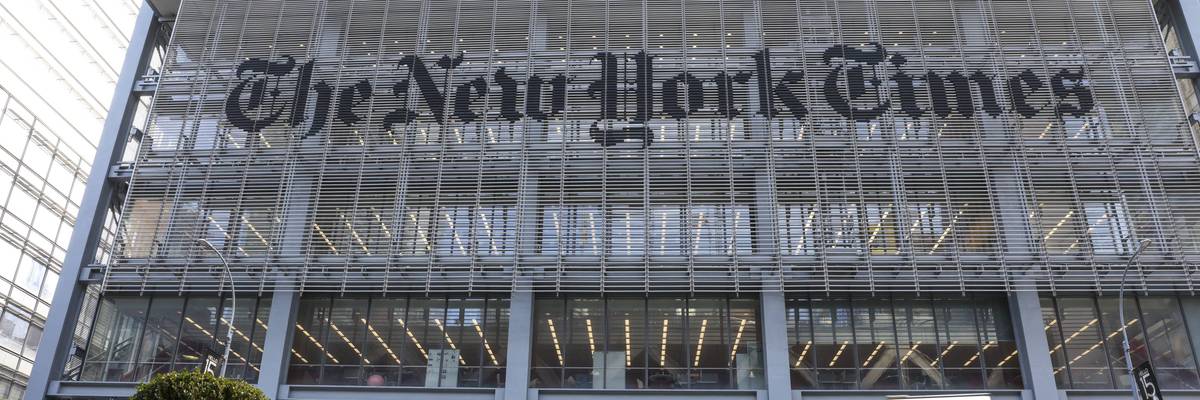
The New York Times logo is seen on the building’s facade in New York City on January 22, 2026.
'Fight and You Win': Free Press Advocates Cheer as Trump DOJ Withdraws Subpoenas of NYT Reporters
"We are pleased that the government finally conceded that the subpoenas violated the law, but they should never have been issued in the first place," said an attorney representing The New York Times.
The US Department of Justice on Thursday withdrew its subpoenas of New York Times reporters that were heavily criticized by free press advocates.
According to the Times, Deputy US Attorney Sean Buckley told US District Judge Arun Subramanian that "the government is prepared to unilaterally withdraw the subpoenas," which were issued earlier this month shortly after the paper published a story detailing security concerns about the luxury jet the Qatari government gave to President Donald Trump.
All Rise News reported that Buckley also told the court that the DOJ made a "mistake" when it issued subpoenas to phone companies for subscriber information and toll records for phone numbers used by one reporter’s mother and by two reporters’ spouses.
“That was an error,” Buckley said of the subpoenas related to reporters' family members. “It was a consequence of trying to move quickly.”
Eric Lipton, one of the Times journalists who had been subpoenaed, wrote in a social media post that he was "glad to hear" the government's decision to back down.
"Enormous thank you to the entire NYT legal team and outside counsel that has worked with such clarity and determination to challenge this," Lipton added, "from the moment we first heard FBI agents were starting to show up at our houses."
David McCraw, the top attorney representing the Times’ newsroom, called the DOJ's decision "an important affirmation of our country’s commitment to a free press."
"We are pleased that the government finally conceded that the subpoenas violated the law, but they should never have been issued in the first place," McCraw added. "The Times and our journalists will continue to report and seek the truth without fear or favor. We will not be deterred in the face of tactics like these."
The Reporters Committee for Freedom of the Press celebrated the DOJ's subpoena withdrawal, while crediting Subramanian for pointed questioning of government lawyers.
"Targeting reporters to appease the White House has reached a dead end once again in the federal courts," the group said. "Judge Subramanian saw DOJ’s effort clearly for what it was: a brazen and careless government overreach."
The Foundation for Individual Rights and Expression described the DOJ decision as a "welcome reversal," but warned that the dangers posed to the First Amendment by the Trump DOJ were not over.
"Withdrawing the subpoenas does not erase the chilling effect of issuing them in the first place, and the DOJ should not reissue them," the group said. "Journalists should not have to choose between protecting confidential sources and facing government threats. A free press depends on reporters being able to pursue the truth, and on sources being able to share information the public has a right to know."
John Schwartz, professor at the University of Texas at Austin School of Journalism and Media, said there was a practical lesson to be learned from how the Times handled the Trump administration's efforts to force its reporters into court.
"Fight and you win," wrote Schwartz. "Always punch the bullies in the nose."
We are at a crossroads
This country and this world are at a monumental crossroads. In a few short weeks, US voters will have an opportunity to beat back the forces of fascism and confront the billionaires who are rigging the economy, our media system, and our democracy, making it increasingly impossible for ordinary people to get by. We’re not just talking about the election. We’re talking about what must be done once these fascist elements are vanquished from power. We need a bolder set of solutions than what either major party has so far been willing to offer and a working-class movement ready to fight like hell for it. Trump didn't emerge from nowhere. The conditions that fueled MAGA authoritarianism were created by decades of radical neoliberal economic policies and a corrupt political system dominated by corporate interests. They slashed taxes on the super-rich, promising that the benefits would trickle down. They said giveaways to the corporate titans would make life more affordable for the rest of us. It was all bullshit. And when a bitter, betrayed populace searches for someone to blame, right-wing demagogues have little trouble finding scapegoats. People know when they're being lied to, but you won't hear any of this from the corporate media. Only independent journalism—powered and funded by people who believe in building a better world—can deliver truly trustworthy daily news. Our Fall Campaign is underway, and we need your help. To power our newsroom through the rest of the year, we need to raise $125,000 by midnight on October 31. So if you share our vision, please contribute whatever you can to sustain our work. |
The US Department of Justice on Thursday withdrew its subpoenas of New York Times reporters that were heavily criticized by free press advocates.
According to the Times, Deputy US Attorney Sean Buckley told US District Judge Arun Subramanian that "the government is prepared to unilaterally withdraw the subpoenas," which were issued earlier this month shortly after the paper published a story detailing security concerns about the luxury jet the Qatari government gave to President Donald Trump.
All Rise News reported that Buckley also told the court that the DOJ made a "mistake" when it issued subpoenas to phone companies for subscriber information and toll records for phone numbers used by one reporter’s mother and by two reporters’ spouses.
“That was an error,” Buckley said of the subpoenas related to reporters' family members. “It was a consequence of trying to move quickly.”
Eric Lipton, one of the Times journalists who had been subpoenaed, wrote in a social media post that he was "glad to hear" the government's decision to back down.
"Enormous thank you to the entire NYT legal team and outside counsel that has worked with such clarity and determination to challenge this," Lipton added, "from the moment we first heard FBI agents were starting to show up at our houses."
David McCraw, the top attorney representing the Times’ newsroom, called the DOJ's decision "an important affirmation of our country’s commitment to a free press."
"We are pleased that the government finally conceded that the subpoenas violated the law, but they should never have been issued in the first place," McCraw added. "The Times and our journalists will continue to report and seek the truth without fear or favor. We will not be deterred in the face of tactics like these."
The Reporters Committee for Freedom of the Press celebrated the DOJ's subpoena withdrawal, while crediting Subramanian for pointed questioning of government lawyers.
"Targeting reporters to appease the White House has reached a dead end once again in the federal courts," the group said. "Judge Subramanian saw DOJ’s effort clearly for what it was: a brazen and careless government overreach."
The Foundation for Individual Rights and Expression described the DOJ decision as a "welcome reversal," but warned that the dangers posed to the First Amendment by the Trump DOJ were not over.
"Withdrawing the subpoenas does not erase the chilling effect of issuing them in the first place, and the DOJ should not reissue them," the group said. "Journalists should not have to choose between protecting confidential sources and facing government threats. A free press depends on reporters being able to pursue the truth, and on sources being able to share information the public has a right to know."
John Schwartz, professor at the University of Texas at Austin School of Journalism and Media, said there was a practical lesson to be learned from how the Times handled the Trump administration's efforts to force its reporters into court.
"Fight and you win," wrote Schwartz. "Always punch the bullies in the nose."
- 'An Unmistakably Chilling Message': Trump DOJ Subpoenaed Phone Records of Journalists' Relatives ›
- Trump DOJ's Use of Subpoenas Against Journalists Is 'Straight Out of the Dictator's Playbook': Press Freedom Group ›
- 'Should Shock the Conscience': Trump Admin Escalates War on Press With Subpoena of New York Times Reporters ›
The US Department of Justice on Thursday withdrew its subpoenas of New York Times reporters that were heavily criticized by free press advocates.
According to the Times, Deputy US Attorney Sean Buckley told US District Judge Arun Subramanian that "the government is prepared to unilaterally withdraw the subpoenas," which were issued earlier this month shortly after the paper published a story detailing security concerns about the luxury jet the Qatari government gave to President Donald Trump.
All Rise News reported that Buckley also told the court that the DOJ made a "mistake" when it issued subpoenas to phone companies for subscriber information and toll records for phone numbers used by one reporter’s mother and by two reporters’ spouses.
“That was an error,” Buckley said of the subpoenas related to reporters' family members. “It was a consequence of trying to move quickly.”
Eric Lipton, one of the Times journalists who had been subpoenaed, wrote in a social media post that he was "glad to hear" the government's decision to back down.
"Enormous thank you to the entire NYT legal team and outside counsel that has worked with such clarity and determination to challenge this," Lipton added, "from the moment we first heard FBI agents were starting to show up at our houses."
David McCraw, the top attorney representing the Times’ newsroom, called the DOJ's decision "an important affirmation of our country’s commitment to a free press."
"We are pleased that the government finally conceded that the subpoenas violated the law, but they should never have been issued in the first place," McCraw added. "The Times and our journalists will continue to report and seek the truth without fear or favor. We will not be deterred in the face of tactics like these."
The Reporters Committee for Freedom of the Press celebrated the DOJ's subpoena withdrawal, while crediting Subramanian for pointed questioning of government lawyers.
"Targeting reporters to appease the White House has reached a dead end once again in the federal courts," the group said. "Judge Subramanian saw DOJ’s effort clearly for what it was: a brazen and careless government overreach."
The Foundation for Individual Rights and Expression described the DOJ decision as a "welcome reversal," but warned that the dangers posed to the First Amendment by the Trump DOJ were not over.
"Withdrawing the subpoenas does not erase the chilling effect of issuing them in the first place, and the DOJ should not reissue them," the group said. "Journalists should not have to choose between protecting confidential sources and facing government threats. A free press depends on reporters being able to pursue the truth, and on sources being able to share information the public has a right to know."
John Schwartz, professor at the University of Texas at Austin School of Journalism and Media, said there was a practical lesson to be learned from how the Times handled the Trump administration's efforts to force its reporters into court.
"Fight and you win," wrote Schwartz. "Always punch the bullies in the nose."
- 'An Unmistakably Chilling Message': Trump DOJ Subpoenaed Phone Records of Journalists' Relatives ›
- Trump DOJ's Use of Subpoenas Against Journalists Is 'Straight Out of the Dictator's Playbook': Press Freedom Group ›
- 'Should Shock the Conscience': Trump Admin Escalates War on Press With Subpoena of New York Times Reporters ›