SUBSCRIBE TO OUR FREE NEWSLETTER
Daily news & progressive opinion—funded by the people, not the corporations—delivered straight to your inbox.
5
#000000
#FFFFFF
To donate by check, phone, or other method, see our More Ways to Give page.
Daily news & progressive opinion—funded by the people, not the corporations—delivered straight to your inbox.
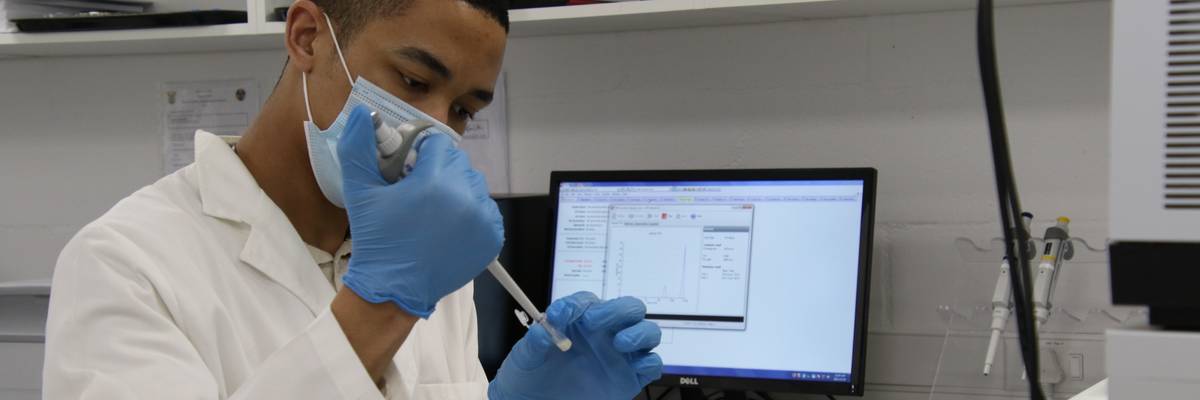
Researcher Emile Hendricks works in Afrigen's analytical laboratory in Cape Town, South Africa on December 10, 2021.
“Trump is exploiting African states’ urgent need to restore lifesaving health aid," said one campaigner.
US Department of State text messages detailing health agreements between the Trump administration and African nations have sparked fresh alarm among public health advocates, who warn that the coercive deals could allow the United States to secure access to virus samples and valuable data while failing to guarantee that countries providing them will receive vaccines, treatments, and other benefits in return.
Public Citizen said Thursday that it had analyzed documents concerning the Trump administration's terms for sharing pathogen data in health agreements with African nations. The consumer advocacy group described these terms as "unfair" and said that they threaten "to undermine the core equity bargain of the [World Health Organization's] Pandemic Agreement negotiations."
The conditions of the proposed deals, said Public Citizen, "would require African states to share viral samples and pathogen information with the US and allow the US to share that information with drugmakers, but provide no credible expectation of benefits in return or access to medical tools developed from those samples."
"This undercuts the federated proposal for viral sharing with access benefits put forward this month at WHO negotiations by the Africa+ Group, which includes all countries for which bilateral specimen agreements are available," Public Citizen added.
At the center of the controversy are agreements that tie US health assistance—which has been eviscerated by the Trump administration with widespread deadly consequences—to commitments involving disease surveillance, data sharing, and, in some cases, the exchange of pathogen samples.
Supporters argue the deals strengthen America's ability to detect and respond to emerging infectious diseases while providing partner countries with much-needed funding after devastating cuts to US aid. Public health advocates, however, contend the agreements shift power away from multilateral institutions and toward one-on-one negotiations in which lower-income countries have less leverage against the world's wealthiest and most powerful nation.
As Common Dreams reported last month, President Donald Trump's so-called “America First” approach to global health strategy is characterized by transactional agreements with African governments to restore some funding. Human rights advocates have raised concerns about the possibly coercive nature of this strategy.
“Trump is exploiting African states’ urgent need to restore lifesaving health aid and pushing them to give up a shot at real lifesaving medical access and equity, for which so many people have worked, bled, and died,” Peter Maybarduk, director of Public Citizen's Access to Medicines program, said Thursday in a statement. "African states at WHO have led the way in efforts to secure a fair deal and cooperation to fight pandemics, but individually, these states are vulnerable to Trump’s threats.”
Dear Common Dreams reader, It’s been nearly 30 years since I co-founded Common Dreams with my late wife, Lina Newhouser. We had the radical notion that journalism should serve the public good, not corporate profits. It was clear to us from the outset what it would take to build such a project. No paid advertisements. No corporate sponsors. No millionaire publisher telling us what to think or do. Many people said we wouldn't last a year, but we proved those doubters wrong. Together with a tremendous team of journalists and dedicated staff, we built an independent media outlet free from the constraints of profits and corporate control. Our mission has always been simple: To inform. To inspire. To ignite change for the common good. Building Common Dreams was not easy. Our survival was never guaranteed. When you take on the most powerful forces—Wall Street greed, fossil fuel industry destruction, Big Tech lobbyists, and uber-rich oligarchs who have spent billions upon billions rigging the economy and democracy in their favor—the only bulwark you have is supporters who believe in your work. But here’s the urgent message from me today. It's never been this bad out there. And it's never been this hard to keep us going. At the very moment Common Dreams is most needed, the threats we face are intensifying. We need your support now more than ever. We don't accept corporate advertising and never will. We don't have a paywall because we don't think people should be blocked from critical news based on their ability to pay. Everything we do is funded by the donations of readers like you. When everyone does the little they can afford, we are strong. But if that support retreats or dries up, so do we. Will you donate now to make sure Common Dreams not only survives but thrives? —Craig Brown, Co-founder |
US Department of State text messages detailing health agreements between the Trump administration and African nations have sparked fresh alarm among public health advocates, who warn that the coercive deals could allow the United States to secure access to virus samples and valuable data while failing to guarantee that countries providing them will receive vaccines, treatments, and other benefits in return.
Public Citizen said Thursday that it had analyzed documents concerning the Trump administration's terms for sharing pathogen data in health agreements with African nations. The consumer advocacy group described these terms as "unfair" and said that they threaten "to undermine the core equity bargain of the [World Health Organization's] Pandemic Agreement negotiations."
The conditions of the proposed deals, said Public Citizen, "would require African states to share viral samples and pathogen information with the US and allow the US to share that information with drugmakers, but provide no credible expectation of benefits in return or access to medical tools developed from those samples."
"This undercuts the federated proposal for viral sharing with access benefits put forward this month at WHO negotiations by the Africa+ Group, which includes all countries for which bilateral specimen agreements are available," Public Citizen added.
At the center of the controversy are agreements that tie US health assistance—which has been eviscerated by the Trump administration with widespread deadly consequences—to commitments involving disease surveillance, data sharing, and, in some cases, the exchange of pathogen samples.
Supporters argue the deals strengthen America's ability to detect and respond to emerging infectious diseases while providing partner countries with much-needed funding after devastating cuts to US aid. Public health advocates, however, contend the agreements shift power away from multilateral institutions and toward one-on-one negotiations in which lower-income countries have less leverage against the world's wealthiest and most powerful nation.
As Common Dreams reported last month, President Donald Trump's so-called “America First” approach to global health strategy is characterized by transactional agreements with African governments to restore some funding. Human rights advocates have raised concerns about the possibly coercive nature of this strategy.
“Trump is exploiting African states’ urgent need to restore lifesaving health aid and pushing them to give up a shot at real lifesaving medical access and equity, for which so many people have worked, bled, and died,” Peter Maybarduk, director of Public Citizen's Access to Medicines program, said Thursday in a statement. "African states at WHO have led the way in efforts to secure a fair deal and cooperation to fight pandemics, but individually, these states are vulnerable to Trump’s threats.”
US Department of State text messages detailing health agreements between the Trump administration and African nations have sparked fresh alarm among public health advocates, who warn that the coercive deals could allow the United States to secure access to virus samples and valuable data while failing to guarantee that countries providing them will receive vaccines, treatments, and other benefits in return.
Public Citizen said Thursday that it had analyzed documents concerning the Trump administration's terms for sharing pathogen data in health agreements with African nations. The consumer advocacy group described these terms as "unfair" and said that they threaten "to undermine the core equity bargain of the [World Health Organization's] Pandemic Agreement negotiations."
The conditions of the proposed deals, said Public Citizen, "would require African states to share viral samples and pathogen information with the US and allow the US to share that information with drugmakers, but provide no credible expectation of benefits in return or access to medical tools developed from those samples."
"This undercuts the federated proposal for viral sharing with access benefits put forward this month at WHO negotiations by the Africa+ Group, which includes all countries for which bilateral specimen agreements are available," Public Citizen added.
At the center of the controversy are agreements that tie US health assistance—which has been eviscerated by the Trump administration with widespread deadly consequences—to commitments involving disease surveillance, data sharing, and, in some cases, the exchange of pathogen samples.
Supporters argue the deals strengthen America's ability to detect and respond to emerging infectious diseases while providing partner countries with much-needed funding after devastating cuts to US aid. Public health advocates, however, contend the agreements shift power away from multilateral institutions and toward one-on-one negotiations in which lower-income countries have less leverage against the world's wealthiest and most powerful nation.
As Common Dreams reported last month, President Donald Trump's so-called “America First” approach to global health strategy is characterized by transactional agreements with African governments to restore some funding. Human rights advocates have raised concerns about the possibly coercive nature of this strategy.
“Trump is exploiting African states’ urgent need to restore lifesaving health aid and pushing them to give up a shot at real lifesaving medical access and equity, for which so many people have worked, bled, and died,” Peter Maybarduk, director of Public Citizen's Access to Medicines program, said Thursday in a statement. "African states at WHO have led the way in efforts to secure a fair deal and cooperation to fight pandemics, but individually, these states are vulnerable to Trump’s threats.”