SUBSCRIBE TO OUR FREE NEWSLETTER
Daily news & progressive opinion—funded by the people, not the corporations—delivered straight to your inbox.
5
#000000
#FFFFFF
To donate by check, phone, or other method, see our More Ways to Give page.
Daily news & progressive opinion—funded by the people, not the corporations—delivered straight to your inbox.

A screengrab shows the moment before US Southern Command fires on a boat in the eastern Pacific on Friday May 8, 2026.
"Drug suspects should be arrested and prosecuted, not summarily executed," a human rights expert said.
The Trump administration continued its illegal bombing of small boats in the Caribbean and eastern Pacific on Friday, killing two and leaving one survivor in its third such strike in five days.
US Southern Command announced the attack on social media, claiming that "intelligence confirmed the vessel was transiting along known narco-trafficking routes in the Eastern Pacific and was engaged in narco-trafficking operations."
"Under [President Donald] Trump's illegal orders, the US military conducted its third boat strike in five days against supposed drug smugglers, killing at least two. Each of these is a murder. Drug suspects should be arrested and prosecuted, not summarily executed," former Human Rights Watch executive director Kenneth Roth wrote on social media Saturday in response to the news.
Friday's strike marks the 57th by the Trump administration and raises the death toll from the boat-strike campaign, which experts say is illegal even if every boat targeted is ferrying drugs, to 192.
"Really absurdly, there’s been no impact on flows of drugs toward the United States."
"What do you call a US citizen who smuggles drugs, SOUTHCOM? A 'narco-terrorist'?" social media user Andrew Marinelli said in response to the Southern Command announcement. "If a US citizen [allegedly] drove drugs into Canada and they blew him away with a drone strike, would you accept it?"
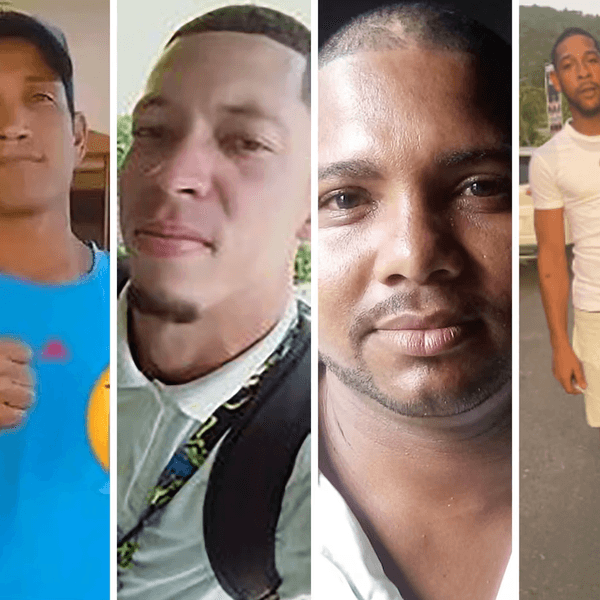
The administration has also not provided evidence for its claims that the boats belong to drug traffickers, and relatives of the victims say at least some of those killed were simply on the water to fish.
Friday's strike was notable in that it left behind a survivor and that US Southern Command said it had activated the US Coast Guard to conduct a search and rescue operation.
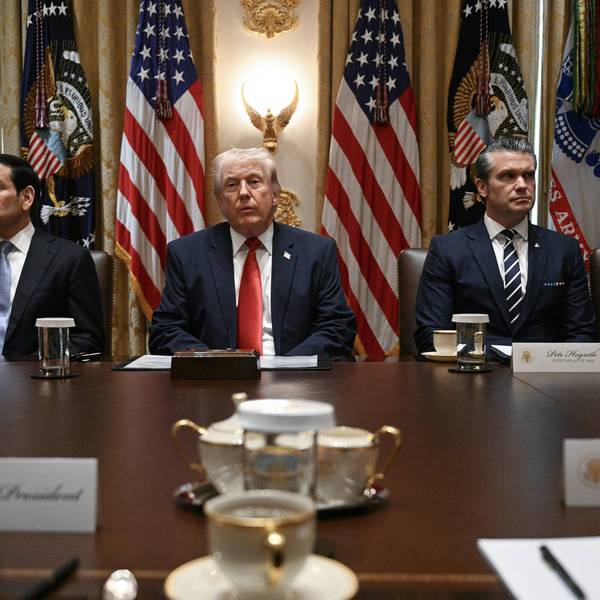
The announcement may reflect a response to backlash after news broke last year that, in the administration's first such strike, commanders had ordered a vessel bombed twice when it became clear there were survivors, in keeping with Pentagon chief Pete Hegseth's directive to "kill everybody."
Despite scrutiny, the campaign has continued and even escalated in the past few weeks. There have been three such bombings since the beginning of May, according to The Intercept: One on May 4 in the Caribbean that killed two, one on May 5 in the Pacific that killed three, and the Pacific strike on May 8 that killed two. The reported survivor remains missing.
While the Trump administration claims the strikes have dramatically reduced the flow of illegal drugs into the US, evidence reveals this is not the case, according to an Intercept analysis published May 4.
For example, Trump claimed that drugs entering the US by sea had decreased by 97%, but the administration's own data contradicts this claim, retired Rear Adm. William Baumgartner told The Intercept.
Adam Isacson, the director for defense oversight at human rights group Washington Office on Latin America, said, "Really absurdly, there’s been no impact on flows of drugs toward the United States,” noting that Customs and Border Protection seized 6,000 pounds more cocaine at all US borders in the seven months following the strikes than in the seven months before.
As Sanho Tree, who directs the Institute for Policy Studies' Drug Policy Project, put it, "It wouldn’t be the first time this administration just made up something out of whole cloth."
Dear Common Dreams reader, It’s been nearly 30 years since I co-founded Common Dreams with my late wife, Lina Newhouser. We had the radical notion that journalism should serve the public good, not corporate profits. It was clear to us from the outset what it would take to build such a project. No paid advertisements. No corporate sponsors. No millionaire publisher telling us what to think or do. Many people said we wouldn't last a year, but we proved those doubters wrong. Together with a tremendous team of journalists and dedicated staff, we built an independent media outlet free from the constraints of profits and corporate control. Our mission has always been simple: To inform. To inspire. To ignite change for the common good. Building Common Dreams was not easy. Our survival was never guaranteed. When you take on the most powerful forces—Wall Street greed, fossil fuel industry destruction, Big Tech lobbyists, and uber-rich oligarchs who have spent billions upon billions rigging the economy and democracy in their favor—the only bulwark you have is supporters who believe in your work. But here’s the urgent message from me today. It's never been this bad out there. And it's never been this hard to keep us going. At the very moment Common Dreams is most needed, the threats we face are intensifying. We need your support now more than ever. We don't accept corporate advertising and never will. We don't have a paywall because we don't think people should be blocked from critical news based on their ability to pay. Everything we do is funded by the donations of readers like you. When everyone does the little they can afford, we are strong. But if that support retreats or dries up, so do we. Will you donate now to make sure Common Dreams not only survives but thrives? —Craig Brown, Co-founder |
The Trump administration continued its illegal bombing of small boats in the Caribbean and eastern Pacific on Friday, killing two and leaving one survivor in its third such strike in five days.
US Southern Command announced the attack on social media, claiming that "intelligence confirmed the vessel was transiting along known narco-trafficking routes in the Eastern Pacific and was engaged in narco-trafficking operations."
"Under [President Donald] Trump's illegal orders, the US military conducted its third boat strike in five days against supposed drug smugglers, killing at least two. Each of these is a murder. Drug suspects should be arrested and prosecuted, not summarily executed," former Human Rights Watch executive director Kenneth Roth wrote on social media Saturday in response to the news.
Friday's strike marks the 57th by the Trump administration and raises the death toll from the boat-strike campaign, which experts say is illegal even if every boat targeted is ferrying drugs, to 192.
"Really absurdly, there’s been no impact on flows of drugs toward the United States."
"What do you call a US citizen who smuggles drugs, SOUTHCOM? A 'narco-terrorist'?" social media user Andrew Marinelli said in response to the Southern Command announcement. "If a US citizen [allegedly] drove drugs into Canada and they blew him away with a drone strike, would you accept it?"
The administration has also not provided evidence for its claims that the boats belong to drug traffickers, and relatives of the victims say at least some of those killed were simply on the water to fish.
Friday's strike was notable in that it left behind a survivor and that US Southern Command said it had activated the US Coast Guard to conduct a search and rescue operation.
The announcement may reflect a response to backlash after news broke last year that, in the administration's first such strike, commanders had ordered a vessel bombed twice when it became clear there were survivors, in keeping with Pentagon chief Pete Hegseth's directive to "kill everybody."
Despite scrutiny, the campaign has continued and even escalated in the past few weeks. There have been three such bombings since the beginning of May, according to The Intercept: One on May 4 in the Caribbean that killed two, one on May 5 in the Pacific that killed three, and the Pacific strike on May 8 that killed two. The reported survivor remains missing.
While the Trump administration claims the strikes have dramatically reduced the flow of illegal drugs into the US, evidence reveals this is not the case, according to an Intercept analysis published May 4.
For example, Trump claimed that drugs entering the US by sea had decreased by 97%, but the administration's own data contradicts this claim, retired Rear Adm. William Baumgartner told The Intercept.
Adam Isacson, the director for defense oversight at human rights group Washington Office on Latin America, said, "Really absurdly, there’s been no impact on flows of drugs toward the United States,” noting that Customs and Border Protection seized 6,000 pounds more cocaine at all US borders in the seven months following the strikes than in the seven months before.
As Sanho Tree, who directs the Institute for Policy Studies' Drug Policy Project, put it, "It wouldn’t be the first time this administration just made up something out of whole cloth."
The Trump administration continued its illegal bombing of small boats in the Caribbean and eastern Pacific on Friday, killing two and leaving one survivor in its third such strike in five days.
US Southern Command announced the attack on social media, claiming that "intelligence confirmed the vessel was transiting along known narco-trafficking routes in the Eastern Pacific and was engaged in narco-trafficking operations."
"Under [President Donald] Trump's illegal orders, the US military conducted its third boat strike in five days against supposed drug smugglers, killing at least two. Each of these is a murder. Drug suspects should be arrested and prosecuted, not summarily executed," former Human Rights Watch executive director Kenneth Roth wrote on social media Saturday in response to the news.
Friday's strike marks the 57th by the Trump administration and raises the death toll from the boat-strike campaign, which experts say is illegal even if every boat targeted is ferrying drugs, to 192.
"Really absurdly, there’s been no impact on flows of drugs toward the United States."
"What do you call a US citizen who smuggles drugs, SOUTHCOM? A 'narco-terrorist'?" social media user Andrew Marinelli said in response to the Southern Command announcement. "If a US citizen [allegedly] drove drugs into Canada and they blew him away with a drone strike, would you accept it?"
The administration has also not provided evidence for its claims that the boats belong to drug traffickers, and relatives of the victims say at least some of those killed were simply on the water to fish.
Friday's strike was notable in that it left behind a survivor and that US Southern Command said it had activated the US Coast Guard to conduct a search and rescue operation.
The announcement may reflect a response to backlash after news broke last year that, in the administration's first such strike, commanders had ordered a vessel bombed twice when it became clear there were survivors, in keeping with Pentagon chief Pete Hegseth's directive to "kill everybody."
Despite scrutiny, the campaign has continued and even escalated in the past few weeks. There have been three such bombings since the beginning of May, according to The Intercept: One on May 4 in the Caribbean that killed two, one on May 5 in the Pacific that killed three, and the Pacific strike on May 8 that killed two. The reported survivor remains missing.
While the Trump administration claims the strikes have dramatically reduced the flow of illegal drugs into the US, evidence reveals this is not the case, according to an Intercept analysis published May 4.
For example, Trump claimed that drugs entering the US by sea had decreased by 97%, but the administration's own data contradicts this claim, retired Rear Adm. William Baumgartner told The Intercept.
Adam Isacson, the director for defense oversight at human rights group Washington Office on Latin America, said, "Really absurdly, there’s been no impact on flows of drugs toward the United States,” noting that Customs and Border Protection seized 6,000 pounds more cocaine at all US borders in the seven months following the strikes than in the seven months before.
As Sanho Tree, who directs the Institute for Policy Studies' Drug Policy Project, put it, "It wouldn’t be the first time this administration just made up something out of whole cloth."