SUBSCRIBE TO OUR FREE NEWSLETTER
Daily news & progressive opinion—funded by the people, not the corporations—delivered straight to your inbox.
5
#000000
#FFFFFF
To donate by check, phone, or other method, see our More Ways to Give page.
Daily news & progressive opinion—funded by the people, not the corporations—delivered straight to your inbox.

Troy Jackson, the Democratic US Senate candidate for Maine, speaks in a photo shared on Facebook by his campaign on August 11, 2026.
"They're scared of a movement that demands Medicare for All, prescription drug coverage, and a government that everyday people can be proud of and know works for them."
Troy Jackson, the Maine Democrat running to unseat Republican US Sen. Susan Collins in November, took aim at Elon Musk and other billionaires Wednesday evening for supporting his GOP opponent directly or through a key super political action committee.
"Look, the billionaires in the country know whose side they're on, and it's not ours," Jackson, a former logger and state Senate president, said in a brief video shared on social media, including Musk's platform X.
Jackson—chosen as the Democratic nominee via a convention process last month, after primary winner Graham Platner left the race following a rape allegation that he denied—pointed to a $42 million investment in the contest from the Senate Leadership Fund (SLF), whose backers include Musk and various other right-wing megadonors.
"They're here to prop up Susan Collins because they want her to continue to be a rubber stamp and get their income tax cuts," Jackson said. "They're already out with an ad attacking me and my family, to try and make sure that they totally don't talk about the issues."
SLF's 30-second ad, which launched Wednesday, notes his son's lobbying work and smears Jackson as "another dirty politician."
According to Jackson: "They're scared of a movement that goes against the things that they want. They're scared of a movement that demands Medicare for All, prescription drug coverage, and a government that everyday people can be proud of and know works for them."
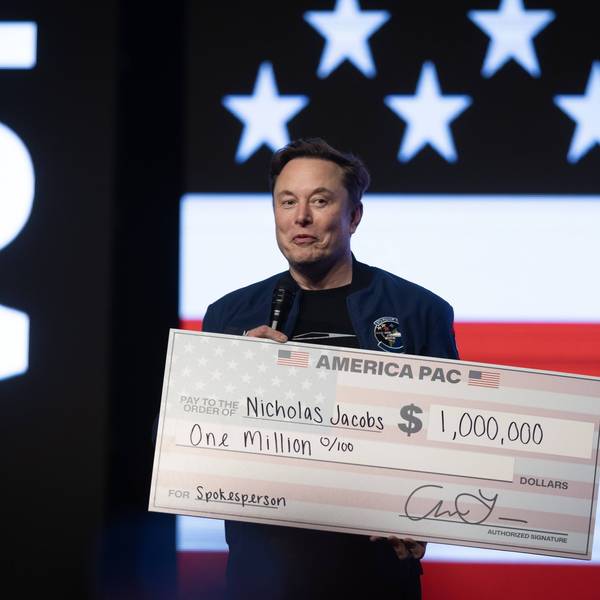
Wednesday isn't the first time Jackson—who previously ran for governor—has called out billionaires, specifically Musk. After The New York Times reported last month that through his America PAC, Musk intends to spend up to $120 million on a program to help elect Republicans in at least eight states, including Maine, Jackson released a video stressing that the billionaire "doesn't care about us. Really doesn't care about Susan. He cares about him."
"So I would say to you Elon: Maine and really the whole United States doesn't want your dirty money in our politics," Jackson continued. "You don't get to buy the government that you want. This is about all of us coming together and fighting for the government that we deserve, and you're not in it."
Musk became the world's first trillionaire in June, when his company SpaceX made its public market debut, but his current net worth is estimated at over $860 billion, according to the regularly updated Bloomberg and Forbes lists. His trillionaire status came after the early months of the second Trump administration, when Musk was the de facto leader of the Department of Government Efficiency.
Reuters reported Thursday that new data from the American Federation of Labor and Congress of Industrial Organizations shows how Musk's controversial compensation plans for SpaceX and Tesla are benefiting other chief executives. Fred Redmond, the AFL-CIO's secretary-treasurer, said that his pay "changes the dynamic when other CEO compensation plans come up, boards use it as a reference."
The average ratio of CEO to worker pay at S&P 500 companies rose from 285:1 in 2024 to 312:1 last year, excluding Musk's Tesla compensation. When that is included, the ratio becomes 5,387:1. Redmond told Reuters that "as we talk to our members, they're pissed off over what's happening to them, and they feel as though they should be more vocal in terms of calling attention to inequality."
Dear Common Dreams reader, It’s been nearly 30 years since I co-founded Common Dreams with my late wife, Lina Newhouser. We had the radical notion that journalism should serve the public good, not corporate profits. It was clear to us from the outset what it would take to build such a project. No paid advertisements. No corporate sponsors. No millionaire publisher telling us what to think or do. Many people said we wouldn't last a year, but we proved those doubters wrong. Together with a tremendous team of journalists and dedicated staff, we built an independent media outlet free from the constraints of profits and corporate control. Our mission has always been simple: To inform. To inspire. To ignite change for the common good. Building Common Dreams was not easy. Our survival was never guaranteed. When you take on the most powerful forces—Wall Street greed, fossil fuel industry destruction, Big Tech lobbyists, and uber-rich oligarchs who have spent billions upon billions rigging the economy and democracy in their favor—the only bulwark you have is supporters who believe in your work. But here’s the urgent message from me today. It's never been this bad out there. And it's never been this hard to keep us going. At the very moment Common Dreams is most needed, the threats we face are intensifying. We need your support now more than ever. We don't accept corporate advertising and never will. We don't have a paywall because we don't think people should be blocked from critical news based on their ability to pay. Everything we do is funded by the donations of readers like you. When everyone does the little they can afford, we are strong. But if that support retreats or dries up, so do we. Will you donate now to make sure Common Dreams not only survives but thrives? —Craig Brown, Co-founder |
Troy Jackson, the Maine Democrat running to unseat Republican US Sen. Susan Collins in November, took aim at Elon Musk and other billionaires Wednesday evening for supporting his GOP opponent directly or through a key super political action committee.
"Look, the billionaires in the country know whose side they're on, and it's not ours," Jackson, a former logger and state Senate president, said in a brief video shared on social media, including Musk's platform X.
Jackson—chosen as the Democratic nominee via a convention process last month, after primary winner Graham Platner left the race following a rape allegation that he denied—pointed to a $42 million investment in the contest from the Senate Leadership Fund (SLF), whose backers include Musk and various other right-wing megadonors.
"They're here to prop up Susan Collins because they want her to continue to be a rubber stamp and get their income tax cuts," Jackson said. "They're already out with an ad attacking me and my family, to try and make sure that they totally don't talk about the issues."
SLF's 30-second ad, which launched Wednesday, notes his son's lobbying work and smears Jackson as "another dirty politician."
According to Jackson: "They're scared of a movement that goes against the things that they want. They're scared of a movement that demands Medicare for All, prescription drug coverage, and a government that everyday people can be proud of and know works for them."
Wednesday isn't the first time Jackson—who previously ran for governor—has called out billionaires, specifically Musk. After The New York Times reported last month that through his America PAC, Musk intends to spend up to $120 million on a program to help elect Republicans in at least eight states, including Maine, Jackson released a video stressing that the billionaire "doesn't care about us. Really doesn't care about Susan. He cares about him."
"So I would say to you Elon: Maine and really the whole United States doesn't want your dirty money in our politics," Jackson continued. "You don't get to buy the government that you want. This is about all of us coming together and fighting for the government that we deserve, and you're not in it."
Musk became the world's first trillionaire in June, when his company SpaceX made its public market debut, but his current net worth is estimated at over $860 billion, according to the regularly updated Bloomberg and Forbes lists. His trillionaire status came after the early months of the second Trump administration, when Musk was the de facto leader of the Department of Government Efficiency.
Reuters reported Thursday that new data from the American Federation of Labor and Congress of Industrial Organizations shows how Musk's controversial compensation plans for SpaceX and Tesla are benefiting other chief executives. Fred Redmond, the AFL-CIO's secretary-treasurer, said that his pay "changes the dynamic when other CEO compensation plans come up, boards use it as a reference."
The average ratio of CEO to worker pay at S&P 500 companies rose from 285:1 in 2024 to 312:1 last year, excluding Musk's Tesla compensation. When that is included, the ratio becomes 5,387:1. Redmond told Reuters that "as we talk to our members, they're pissed off over what's happening to them, and they feel as though they should be more vocal in terms of calling attention to inequality."
Troy Jackson, the Maine Democrat running to unseat Republican US Sen. Susan Collins in November, took aim at Elon Musk and other billionaires Wednesday evening for supporting his GOP opponent directly or through a key super political action committee.
"Look, the billionaires in the country know whose side they're on, and it's not ours," Jackson, a former logger and state Senate president, said in a brief video shared on social media, including Musk's platform X.
Jackson—chosen as the Democratic nominee via a convention process last month, after primary winner Graham Platner left the race following a rape allegation that he denied—pointed to a $42 million investment in the contest from the Senate Leadership Fund (SLF), whose backers include Musk and various other right-wing megadonors.
"They're here to prop up Susan Collins because they want her to continue to be a rubber stamp and get their income tax cuts," Jackson said. "They're already out with an ad attacking me and my family, to try and make sure that they totally don't talk about the issues."
SLF's 30-second ad, which launched Wednesday, notes his son's lobbying work and smears Jackson as "another dirty politician."
According to Jackson: "They're scared of a movement that goes against the things that they want. They're scared of a movement that demands Medicare for All, prescription drug coverage, and a government that everyday people can be proud of and know works for them."
Wednesday isn't the first time Jackson—who previously ran for governor—has called out billionaires, specifically Musk. After The New York Times reported last month that through his America PAC, Musk intends to spend up to $120 million on a program to help elect Republicans in at least eight states, including Maine, Jackson released a video stressing that the billionaire "doesn't care about us. Really doesn't care about Susan. He cares about him."
"So I would say to you Elon: Maine and really the whole United States doesn't want your dirty money in our politics," Jackson continued. "You don't get to buy the government that you want. This is about all of us coming together and fighting for the government that we deserve, and you're not in it."
Musk became the world's first trillionaire in June, when his company SpaceX made its public market debut, but his current net worth is estimated at over $860 billion, according to the regularly updated Bloomberg and Forbes lists. His trillionaire status came after the early months of the second Trump administration, when Musk was the de facto leader of the Department of Government Efficiency.
Reuters reported Thursday that new data from the American Federation of Labor and Congress of Industrial Organizations shows how Musk's controversial compensation plans for SpaceX and Tesla are benefiting other chief executives. Fred Redmond, the AFL-CIO's secretary-treasurer, said that his pay "changes the dynamic when other CEO compensation plans come up, boards use it as a reference."
The average ratio of CEO to worker pay at S&P 500 companies rose from 285:1 in 2024 to 312:1 last year, excluding Musk's Tesla compensation. When that is included, the ratio becomes 5,387:1. Redmond told Reuters that "as we talk to our members, they're pissed off over what's happening to them, and they feel as though they should be more vocal in terms of calling attention to inequality."