SUBSCRIBE TO OUR FREE NEWSLETTER
Daily news & progressive opinion—funded by the people, not the corporations—delivered straight to your inbox.
5
#000000
#FFFFFF
To donate by check, phone, or other method, see our More Ways to Give page.
Daily news & progressive opinion—funded by the people, not the corporations—delivered straight to your inbox.
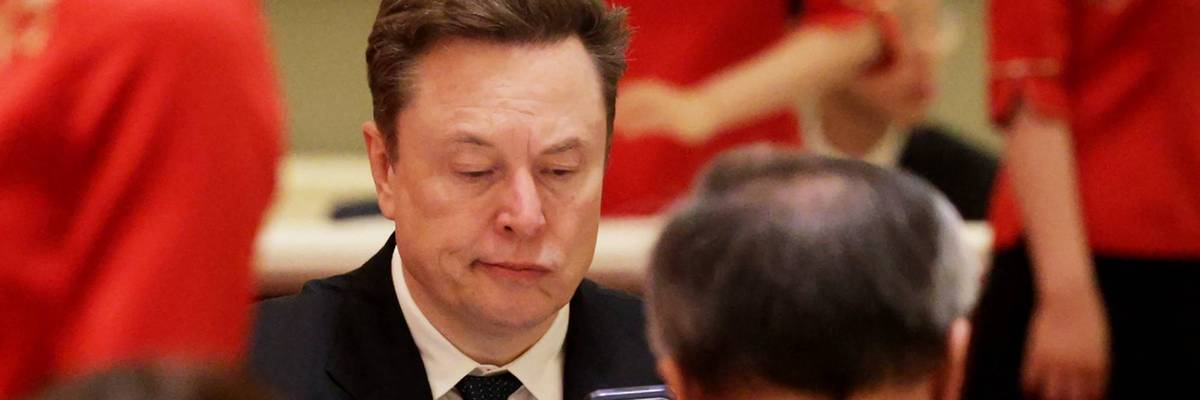
Tesla CEO Elon Musk attends a state banquet hosted by Chinese President Xi Jinping at the Great Hall of the People on May 14, 2026 in Beijing, China.
"Come with me on a reporting trip," said New York Times columnist Nicholas Kristof. "You'll see the dying children themselves."
As Elon Musk continues to claim that "not a single" child has died as a result of his foreign aid cuts at the beginning of the second Trump administration, journalists—including ones who witnessed the consequences of the policy firsthand—are correcting the record.
Since being called out by Rep. Ro Khanna (D-Calif.), who cited a journal's projection that 4.5 million children under 5 could die by 2030 as a result of the Department of Government Efficiency's (DOGE) sudden termination of most of the United States Agency for International Development's (USAID) programs—including an 88% cut to children's health aid awards—last year, the newly minted trillionaire has repeatedly asserted that the claim that he is responsible for the deaths of kids is "a total lie."
"There is not even a single dead child!" Musk wrote on his social media platform X last Monday. "If there were, it would be worldwide headline news!"
Multiple journalists have been quick to respond that, in fact, the deaths of children and other people directly attributed to the termination of USAID programs by the agency he headed have been widely documented by major news outlets.
"Independent analyses estimate that your actions to dismantle USAID and drastically reduce lifesaving foreign aid have already killed 700,000 people," wrote Atul Gawande, the former USAID global health chief and longtime New Yorker writer, who cited models from Boston University epidemiologist Brooke Nichols.
In a lengthy thread posted on Thursday, Gawande cited nearly two-dozen examples in which news outlets named people who died as a direct result of cuts to health programs they relied upon, including:
These are just a few of the numerous other examples cited by Gawande, who added that part of the reason verifying deaths has been challenging is that DOGE's cuts also "destroyed" USAID's data and auditing systems, which meant that figures and overall mortality effects would take another year to fully tally.
However, he said he and a team of reporters had already compiled individual reports of more than 1,200 people whose deaths can be directly attributed to the cuts.
Even after being presented with direct evidence to the contrary, Musk continued to insist on Sunday that critics of his cuts to USAID "cannot cite a single name of someone who died out of the 'millions' they falsely claim have died. Not a single name!"
New York Times columnist Nicholas Kristof, whose reporting on the impacts of the sudden aid cuts was a finalist for a Pulitzer Prize, responded that he could give Musk a list of "many, many names of people who have died because of your aid cuts."
He listed the names of just a few of the people whose cases he had witnessed firsthand, which are recounted in greater depth in his reports. As Kristoff wrote:"I could go on and on," Kristof continued, "In almost every village you go to in South Sudan, Uganda, Liberia, Sierra Leone or other countries I reported in, you find people dying because of aid cuts."
He issued a "challenge" to Musk: "Come with me on a reporting trip, and we'll talk to these moms and dads, and you'll see the dying children themselves. I think if you see the kids whose lives are at stake, maybe you'll change your mind."
Dear Common Dreams reader, It’s been nearly 30 years since I co-founded Common Dreams with my late wife, Lina Newhouser. We had the radical notion that journalism should serve the public good, not corporate profits. It was clear to us from the outset what it would take to build such a project. No paid advertisements. No corporate sponsors. No millionaire publisher telling us what to think or do. Many people said we wouldn't last a year, but we proved those doubters wrong. Together with a tremendous team of journalists and dedicated staff, we built an independent media outlet free from the constraints of profits and corporate control. Our mission has always been simple: To inform. To inspire. To ignite change for the common good. Building Common Dreams was not easy. Our survival was never guaranteed. When you take on the most powerful forces—Wall Street greed, fossil fuel industry destruction, Big Tech lobbyists, and uber-rich oligarchs who have spent billions upon billions rigging the economy and democracy in their favor—the only bulwark you have is supporters who believe in your work. But here’s the urgent message from me today. It's never been this bad out there. And it's never been this hard to keep us going. At the very moment Common Dreams is most needed, the threats we face are intensifying. We need your support now more than ever. We don't accept corporate advertising and never will. We don't have a paywall because we don't think people should be blocked from critical news based on their ability to pay. Everything we do is funded by the donations of readers like you. When everyone does the little they can afford, we are strong. But if that support retreats or dries up, so do we. Will you donate now to make sure Common Dreams not only survives but thrives? —Craig Brown, Co-founder |
As Elon Musk continues to claim that "not a single" child has died as a result of his foreign aid cuts at the beginning of the second Trump administration, journalists—including ones who witnessed the consequences of the policy firsthand—are correcting the record.
Since being called out by Rep. Ro Khanna (D-Calif.), who cited a journal's projection that 4.5 million children under 5 could die by 2030 as a result of the Department of Government Efficiency's (DOGE) sudden termination of most of the United States Agency for International Development's (USAID) programs—including an 88% cut to children's health aid awards—last year, the newly minted trillionaire has repeatedly asserted that the claim that he is responsible for the deaths of kids is "a total lie."
"There is not even a single dead child!" Musk wrote on his social media platform X last Monday. "If there were, it would be worldwide headline news!"
Multiple journalists have been quick to respond that, in fact, the deaths of children and other people directly attributed to the termination of USAID programs by the agency he headed have been widely documented by major news outlets.
"Independent analyses estimate that your actions to dismantle USAID and drastically reduce lifesaving foreign aid have already killed 700,000 people," wrote Atul Gawande, the former USAID global health chief and longtime New Yorker writer, who cited models from Boston University epidemiologist Brooke Nichols.
In a lengthy thread posted on Thursday, Gawande cited nearly two-dozen examples in which news outlets named people who died as a direct result of cuts to health programs they relied upon, including:
These are just a few of the numerous other examples cited by Gawande, who added that part of the reason verifying deaths has been challenging is that DOGE's cuts also "destroyed" USAID's data and auditing systems, which meant that figures and overall mortality effects would take another year to fully tally.
However, he said he and a team of reporters had already compiled individual reports of more than 1,200 people whose deaths can be directly attributed to the cuts.
Even after being presented with direct evidence to the contrary, Musk continued to insist on Sunday that critics of his cuts to USAID "cannot cite a single name of someone who died out of the 'millions' they falsely claim have died. Not a single name!"
New York Times columnist Nicholas Kristof, whose reporting on the impacts of the sudden aid cuts was a finalist for a Pulitzer Prize, responded that he could give Musk a list of "many, many names of people who have died because of your aid cuts."
He listed the names of just a few of the people whose cases he had witnessed firsthand, which are recounted in greater depth in his reports. As Kristoff wrote:"I could go on and on," Kristof continued, "In almost every village you go to in South Sudan, Uganda, Liberia, Sierra Leone or other countries I reported in, you find people dying because of aid cuts."
He issued a "challenge" to Musk: "Come with me on a reporting trip, and we'll talk to these moms and dads, and you'll see the dying children themselves. I think if you see the kids whose lives are at stake, maybe you'll change your mind."
As Elon Musk continues to claim that "not a single" child has died as a result of his foreign aid cuts at the beginning of the second Trump administration, journalists—including ones who witnessed the consequences of the policy firsthand—are correcting the record.
Since being called out by Rep. Ro Khanna (D-Calif.), who cited a journal's projection that 4.5 million children under 5 could die by 2030 as a result of the Department of Government Efficiency's (DOGE) sudden termination of most of the United States Agency for International Development's (USAID) programs—including an 88% cut to children's health aid awards—last year, the newly minted trillionaire has repeatedly asserted that the claim that he is responsible for the deaths of kids is "a total lie."
"There is not even a single dead child!" Musk wrote on his social media platform X last Monday. "If there were, it would be worldwide headline news!"
Multiple journalists have been quick to respond that, in fact, the deaths of children and other people directly attributed to the termination of USAID programs by the agency he headed have been widely documented by major news outlets.
"Independent analyses estimate that your actions to dismantle USAID and drastically reduce lifesaving foreign aid have already killed 700,000 people," wrote Atul Gawande, the former USAID global health chief and longtime New Yorker writer, who cited models from Boston University epidemiologist Brooke Nichols.
In a lengthy thread posted on Thursday, Gawande cited nearly two-dozen examples in which news outlets named people who died as a direct result of cuts to health programs they relied upon, including:
These are just a few of the numerous other examples cited by Gawande, who added that part of the reason verifying deaths has been challenging is that DOGE's cuts also "destroyed" USAID's data and auditing systems, which meant that figures and overall mortality effects would take another year to fully tally.
However, he said he and a team of reporters had already compiled individual reports of more than 1,200 people whose deaths can be directly attributed to the cuts.
Even after being presented with direct evidence to the contrary, Musk continued to insist on Sunday that critics of his cuts to USAID "cannot cite a single name of someone who died out of the 'millions' they falsely claim have died. Not a single name!"
New York Times columnist Nicholas Kristof, whose reporting on the impacts of the sudden aid cuts was a finalist for a Pulitzer Prize, responded that he could give Musk a list of "many, many names of people who have died because of your aid cuts."
He listed the names of just a few of the people whose cases he had witnessed firsthand, which are recounted in greater depth in his reports. As Kristoff wrote:"I could go on and on," Kristof continued, "In almost every village you go to in South Sudan, Uganda, Liberia, Sierra Leone or other countries I reported in, you find people dying because of aid cuts."
He issued a "challenge" to Musk: "Come with me on a reporting trip, and we'll talk to these moms and dads, and you'll see the dying children themselves. I think if you see the kids whose lives are at stake, maybe you'll change your mind."