5
#000000
#FFFFFF
To donate by check, phone, or other method, see our More Ways to Give page.
Daily news & progressive opinion—funded by the people, not the corporations—delivered straight to your inbox.
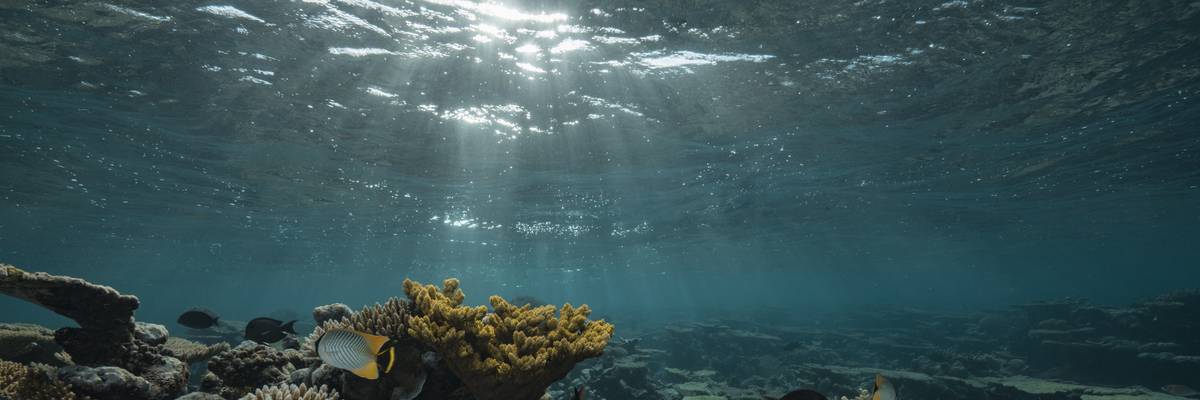
A coral reef around Taravai Island with many acropora corals is seen on February 16, 2018 in the Gambier Islands, French Polynesia.
"The ocean is transforming before our eyes: Warming, rising seas, and ecosystem degradation are interconnected signs of significant and long-term change."
The 10th annual Copernicus Ocean State Report, released Wednesday by a team of more than 100 international scientists, provided the latest reminder that, as one United Nations official said, "the ocean is one of the clearest indicators of the profound shifts" that the climate crisis is causing.
Data gathered by Mercator Ocean International, the nonprofit that produced the report, revealed "an ocean warming at an alarming pace, with far-reaching consequences for marine life, coastlines, and communities worldwide," said the group.
The study delivers ocean scientists' "starkest warning yet of the profound changes sweeping across the ocean, as a likely unprecedented El Niño takes shape in the Pacific," said Mercator, referring to the natural warming trend that is expected to be made more intense this year by planetary heating.
Drawing on four decades of data from satellites, buoys, sensors, and modeling, the scientists found that 2024 was marked by record-breaking marine heatwaves as well as an unprecedented extreme low sea level event, causing levels in the Bothnian Bay between Sweden and Finland to plunge 60 inches, bringing ferries to a halt for 18 hours.
Heatwaves in the Mediterranean and Black seas lasted more than 30 days and raised water temperatures by more than 8.3°F (4.6°C) above average.
“These are not isolated hot spells; they are occurring against a backdrop of sustained ocean warming that is changing the conditions marine ecosystems experience,” Blanca Fernández-Álvarez, a report author and a conresearcher at the Mediterranean Institute for Advanced Studies, told CNN.
But along with extreme events documented in the report, the scientists found unmistakable trends showing no sign of letting up, including persistent damage to marine life due to ocean heating fueled by continued oil and gas extraction.
Small island states—some of the countries least responsible for carbon emissions that are leading to record heat absorption by the oceans—face worsening, "overlapping pressures" including sea-level rise that could wipe out coastal and island communities and the growing threat of more intense tropical cyclones.
Over the last three decades, reads the report, "ongoing reorganization of marine ecosystems around the world" hasr been made clear by persistent changes in growth patterns of phytoplankton, which support food webs and carbon flows, in nearly 5% of the ocean.
Heat stress also contributed to coral bleaching in 84% of the world's reefs, threatening marine ecosystems as well as coastal communities that rely on reefs for protection and tourism.
"The ocean is transforming before our eyes: Warming, rising seas, and ecosystem degradation are interconnected signs of significant and long-term change," said Pierre Bahurel, director general of Mercator Ocean International.
As humans have continued to emit carbon and other greenhouse gases despite warnings from energy experts and scientists, the rate of ocean heating has doubled over the past two decades, causing sea surface temperatures to skyrocket to record highs in 2023, 2024, and this year.
In 2025, the report says, the ocean absorbed an additional 23 zettajoules—about 40 times the energy consumed by the entire world last year. The energy absorption is equivalent to 12 atomic bombs going off every second for one year.
The global mean sea level rose by 3.8 ± 0.3 millimeters each year between 1999-2025, and the ocean has become about 17% more acidic over the last four decades, wreaking havoc on crucial underwater ecosystems.
Peter Thomson, the UN secretary-general's special envoy for the ocean, emphasized that the dangers posed to the world's oceans by continued fossil fuel extraction have been made clear over 10 years of reports by Mercator, as well as other warnings from scientists.
"What it tells us is unmistakable: The ocean is changing, and those changes are reaching into the lives, livelihoods, and security of people everywhere," said Thomson. "We have the knowledge. We have the evidence. Now we need the political will to act."
Dear Common Dreams reader, It’s been nearly 30 years since I co-founded Common Dreams with my late wife, Lina Newhouser. We had the radical notion that journalism should serve the public good, not corporate profits. It was clear to us from the outset what it would take to build such a project. No paid advertisements. No corporate sponsors. No millionaire publisher telling us what to think or do. Many people said we wouldn't last a year, but we proved those doubters wrong. Together with a tremendous team of journalists and dedicated staff, we built an independent media outlet free from the constraints of profits and corporate control. Our mission has always been simple: To inform. To inspire. To ignite change for the common good. Building Common Dreams was not easy. Our survival was never guaranteed. When you take on the most powerful forces—Wall Street greed, fossil fuel industry destruction, Big Tech lobbyists, and uber-rich oligarchs who have spent billions upon billions rigging the economy and democracy in their favor—the only bulwark you have is supporters who believe in your work. But here’s the urgent message from me today. It's never been this bad out there. And it's never been this hard to keep us going. At the very moment Common Dreams is most needed, the threats we face are intensifying. We need your support now more than ever. We don't accept corporate advertising and never will. We don't have a paywall because we don't think people should be blocked from critical news based on their ability to pay. Everything we do is funded by the donations of readers like you. When everyone does the little they can afford, we are strong. But if that support retreats or dries up, so do we. Will you donate now to make sure Common Dreams not only survives but thrives? —Craig Brown, Co-founder |
The 10th annual Copernicus Ocean State Report, released Wednesday by a team of more than 100 international scientists, provided the latest reminder that, as one United Nations official said, "the ocean is one of the clearest indicators of the profound shifts" that the climate crisis is causing.
Data gathered by Mercator Ocean International, the nonprofit that produced the report, revealed "an ocean warming at an alarming pace, with far-reaching consequences for marine life, coastlines, and communities worldwide," said the group.
The study delivers ocean scientists' "starkest warning yet of the profound changes sweeping across the ocean, as a likely unprecedented El Niño takes shape in the Pacific," said Mercator, referring to the natural warming trend that is expected to be made more intense this year by planetary heating.
Drawing on four decades of data from satellites, buoys, sensors, and modeling, the scientists found that 2024 was marked by record-breaking marine heatwaves as well as an unprecedented extreme low sea level event, causing levels in the Bothnian Bay between Sweden and Finland to plunge 60 inches, bringing ferries to a halt for 18 hours.
Heatwaves in the Mediterranean and Black seas lasted more than 30 days and raised water temperatures by more than 8.3°F (4.6°C) above average.
“These are not isolated hot spells; they are occurring against a backdrop of sustained ocean warming that is changing the conditions marine ecosystems experience,” Blanca Fernández-Álvarez, a report author and a conresearcher at the Mediterranean Institute for Advanced Studies, told CNN.
But along with extreme events documented in the report, the scientists found unmistakable trends showing no sign of letting up, including persistent damage to marine life due to ocean heating fueled by continued oil and gas extraction.
Small island states—some of the countries least responsible for carbon emissions that are leading to record heat absorption by the oceans—face worsening, "overlapping pressures" including sea-level rise that could wipe out coastal and island communities and the growing threat of more intense tropical cyclones.
Over the last three decades, reads the report, "ongoing reorganization of marine ecosystems around the world" hasr been made clear by persistent changes in growth patterns of phytoplankton, which support food webs and carbon flows, in nearly 5% of the ocean.
Heat stress also contributed to coral bleaching in 84% of the world's reefs, threatening marine ecosystems as well as coastal communities that rely on reefs for protection and tourism.
"The ocean is transforming before our eyes: Warming, rising seas, and ecosystem degradation are interconnected signs of significant and long-term change," said Pierre Bahurel, director general of Mercator Ocean International.
As humans have continued to emit carbon and other greenhouse gases despite warnings from energy experts and scientists, the rate of ocean heating has doubled over the past two decades, causing sea surface temperatures to skyrocket to record highs in 2023, 2024, and this year.
In 2025, the report says, the ocean absorbed an additional 23 zettajoules—about 40 times the energy consumed by the entire world last year. The energy absorption is equivalent to 12 atomic bombs going off every second for one year.
The global mean sea level rose by 3.8 ± 0.3 millimeters each year between 1999-2025, and the ocean has become about 17% more acidic over the last four decades, wreaking havoc on crucial underwater ecosystems.
Peter Thomson, the UN secretary-general's special envoy for the ocean, emphasized that the dangers posed to the world's oceans by continued fossil fuel extraction have been made clear over 10 years of reports by Mercator, as well as other warnings from scientists.
"What it tells us is unmistakable: The ocean is changing, and those changes are reaching into the lives, livelihoods, and security of people everywhere," said Thomson. "We have the knowledge. We have the evidence. Now we need the political will to act."
The 10th annual Copernicus Ocean State Report, released Wednesday by a team of more than 100 international scientists, provided the latest reminder that, as one United Nations official said, "the ocean is one of the clearest indicators of the profound shifts" that the climate crisis is causing.
Data gathered by Mercator Ocean International, the nonprofit that produced the report, revealed "an ocean warming at an alarming pace, with far-reaching consequences for marine life, coastlines, and communities worldwide," said the group.
The study delivers ocean scientists' "starkest warning yet of the profound changes sweeping across the ocean, as a likely unprecedented El Niño takes shape in the Pacific," said Mercator, referring to the natural warming trend that is expected to be made more intense this year by planetary heating.
Drawing on four decades of data from satellites, buoys, sensors, and modeling, the scientists found that 2024 was marked by record-breaking marine heatwaves as well as an unprecedented extreme low sea level event, causing levels in the Bothnian Bay between Sweden and Finland to plunge 60 inches, bringing ferries to a halt for 18 hours.
Heatwaves in the Mediterranean and Black seas lasted more than 30 days and raised water temperatures by more than 8.3°F (4.6°C) above average.
“These are not isolated hot spells; they are occurring against a backdrop of sustained ocean warming that is changing the conditions marine ecosystems experience,” Blanca Fernández-Álvarez, a report author and a conresearcher at the Mediterranean Institute for Advanced Studies, told CNN.
But along with extreme events documented in the report, the scientists found unmistakable trends showing no sign of letting up, including persistent damage to marine life due to ocean heating fueled by continued oil and gas extraction.
Small island states—some of the countries least responsible for carbon emissions that are leading to record heat absorption by the oceans—face worsening, "overlapping pressures" including sea-level rise that could wipe out coastal and island communities and the growing threat of more intense tropical cyclones.
Over the last three decades, reads the report, "ongoing reorganization of marine ecosystems around the world" hasr been made clear by persistent changes in growth patterns of phytoplankton, which support food webs and carbon flows, in nearly 5% of the ocean.
Heat stress also contributed to coral bleaching in 84% of the world's reefs, threatening marine ecosystems as well as coastal communities that rely on reefs for protection and tourism.
"The ocean is transforming before our eyes: Warming, rising seas, and ecosystem degradation are interconnected signs of significant and long-term change," said Pierre Bahurel, director general of Mercator Ocean International.
As humans have continued to emit carbon and other greenhouse gases despite warnings from energy experts and scientists, the rate of ocean heating has doubled over the past two decades, causing sea surface temperatures to skyrocket to record highs in 2023, 2024, and this year.
In 2025, the report says, the ocean absorbed an additional 23 zettajoules—about 40 times the energy consumed by the entire world last year. The energy absorption is equivalent to 12 atomic bombs going off every second for one year.
The global mean sea level rose by 3.8 ± 0.3 millimeters each year between 1999-2025, and the ocean has become about 17% more acidic over the last four decades, wreaking havoc on crucial underwater ecosystems.
Peter Thomson, the UN secretary-general's special envoy for the ocean, emphasized that the dangers posed to the world's oceans by continued fossil fuel extraction have been made clear over 10 years of reports by Mercator, as well as other warnings from scientists.
"What it tells us is unmistakable: The ocean is changing, and those changes are reaching into the lives, livelihoods, and security of people everywhere," said Thomson. "We have the knowledge. We have the evidence. Now we need the political will to act."