

SUBSCRIBE TO OUR FREE NEWSLETTER
Daily news & progressive opinion—funded by the people, not the corporations—delivered straight to your inbox.
5
#000000
#FFFFFF
To donate by check, phone, or other method, see our More Ways to Give page.
Daily news & progressive opinion—funded by the people, not the corporations—delivered straight to your inbox.

"The ocean is transforming before our eyes: Warming, rising seas, and ecosystem degradation are interconnected signs of significant and long-term change."
The 10th annual Copernicus Ocean State Report, released Wednesday by a team of more than 100 international scientists, provided the latest reminder that, as one United Nations official said, "the ocean is one of the clearest indicators of the profound shifts" that the climate crisis is causing.
Data gathered by Mercator Ocean International, the nonprofit that produced the report, revealed "an ocean warming at an alarming pace, with far-reaching consequences for marine life, coastlines, and communities worldwide," said the group.
The study delivers ocean scientists' "starkest warning yet of the profound changes sweeping across the ocean, as a likely unprecedented El Niño takes shape in the Pacific," said Mercator, referring to the natural warming trend that is expected to be made more intense this year by planetary heating.
Drawing on four decades of data from satellites, buoys, sensors, and modeling, the scientists found that 2024 was marked by record-breaking marine heatwaves as well as an unprecedented extreme low sea level event, causing levels in the Bothnian Bay between Sweden and Finland to plunge 60 inches, bringing ferries to a halt for 18 hours.
Heatwaves in the Mediterranean and Black seas lasted more than 30 days and raised water temperatures by more than 8.3°F (4.6°C) above average.
“These are not isolated hot spells; they are occurring against a backdrop of sustained ocean warming that is changing the conditions marine ecosystems experience,” Blanca Fernández-Álvarez, a report author and a conresearcher at the Mediterranean Institute for Advanced Studies, told CNN.
But along with extreme events documented in the report, the scientists found unmistakable trends showing no sign of letting up, including persistent damage to marine life due to ocean heating fueled by continued oil and gas extraction.
Small island states—some of the countries least responsible for carbon emissions that are leading to record heat absorption by the oceans—face worsening, "overlapping pressures" including sea-level rise that could wipe out coastal and island communities and the growing threat of more intense tropical cyclones.
Over the last three decades, reads the report, "ongoing reorganization of marine ecosystems around the world" hasr been made clear by persistent changes in growth patterns of phytoplankton, which support food webs and carbon flows, in nearly 5% of the ocean.
Heat stress also contributed to coral bleaching in 84% of the world's reefs, threatening marine ecosystems as well as coastal communities that rely on reefs for protection and tourism.
"The ocean is transforming before our eyes: Warming, rising seas, and ecosystem degradation are interconnected signs of significant and long-term change," said Pierre Bahurel, director general of Mercator Ocean International.
As humans have continued to emit carbon and other greenhouse gases despite warnings from energy experts and scientists, the rate of ocean heating has doubled over the past two decades, causing sea surface temperatures to skyrocket to record highs in 2023, 2024, and this year.
In 2025, the report says, the ocean absorbed an additional 23 zettajoules—about 40 times the energy consumed by the entire world last year. The energy absorption is equivalent to 12 atomic bombs going off every second for one year.
The global mean sea level rose by 3.8 ± 0.3 millimeters each year between 1999-2025, and the ocean has become about 17% more acidic over the last four decades, wreaking havoc on crucial underwater ecosystems.
Peter Thomson, the UN secretary-general's special envoy for the ocean, emphasized that the dangers posed to the world's oceans by continued fossil fuel extraction have been made clear over 10 years of reports by Mercator, as well as other warnings from scientists.
"What it tells us is unmistakable: The ocean is changing, and those changes are reaching into the lives, livelihoods, and security of people everywhere," said Thomson. "We have the knowledge. We have the evidence. Now we need the political will to act."
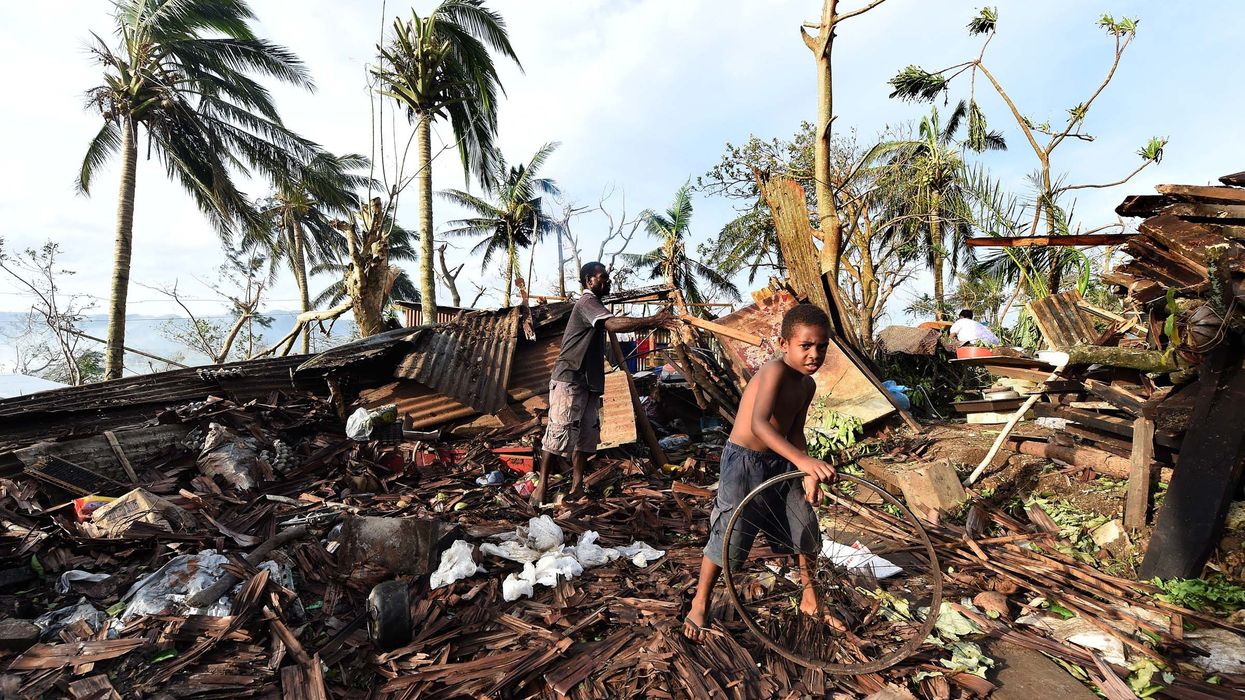
"This is a moment of generational change, one that is needed to safeguard our environment and signal to coming generations that the world is truly serious about doing so," said one legal expert on ecocide.
Campaigners against ecocide, the destruction of nature, applauded what one leader called a "key moment" in the fight to protect the natural world and communities that are most vulnerable to climate damage on Monday as three Pacific island nations proposed that the International Criminal Court formally recognize the crime.
Vanuatu, which first made a similar proposal in 2019, was joined by Samoa and Fiji in submitting the proposal to the ICC, which was established in 2002 to prosecute cases regarding genocide and crimes against humanity.
"Vanuatu considers it imperative that the international community takes this conversation seriously, and we warmly invite all member states to engage," said Ralph Regenvanu, special envoy for climate change and environment for Vanuatu, in a statement. "Legal recognition of severe and widespread environmental harm holds significant potential to ensure justice and, crucially, to deter further destruction."
The recognition of environmental and ecosystem destruction as a crime could allow the court to prosecute individuals accused of ecocide, such executives of pollution-causing companies whose activities are linked to planetary heating and the sea-level rise and intense storms small island nations increasingly face and officials of governments that continue to emit high levels of greenhouse gases.
Philippe Sands, a law professor at University College London and co-chair of an expert panel on the legal definition of ecocide, said that as drafted, the Rome Statute, which established the ICC, "cannot adequately address environmental harms" and must be changed to reflect "a growing recognition that severe environmental destruction deserves the same legal accountability as other grave international crimes that focus on the human."
"People clearly understand that the most severe forms of environmental destruction harm all of us, and that there is real deterrent potential in creating personal criminal liability for top decision-makers."
“There is a manifest gap in the statute of the ICC, and ecocide is now firmly on the agenda, a vital and necessary moment for an effective international law," said Sands. "This is a moment of generational change, one that is needed to safeguard our environment and signal to coming generations that the world is truly serious about doing so."
Sands told The Guardian that he is "100% certain" that ecocide will ultimately be recognized as an international crime, but with the matter tabled for a full discussion by the ICC at a later date, a long deliberation process is expected.
The Pacific nations introduced the proposal at the ICC days after the Global Commons Survey, conducted by Ipsos UK, found that 72% of people in G20 countries believe ecocide should be recognized as a crime.
Jojo Mehta, co-founder and CEO of Stop Ecocide International, said last week that "widespread civil society demand" has driven the European Union to recognize "conduct comparable to ecocide" as a "qualified" offense, and Belgium to adopt ecocide as a crime punishable by up to 20 years in prison and fines as high as $1.8 million.
"We're seeing significant policy shifts in favor of ecocide legislation at the domestic, regional, and international levels," said Mehta. "People clearly understand that the most severe forms of environmental destruction harm all of us, and that there is real deterrent potential in creating personal criminal liability for top decision-makers. Damage prevention is always the best policy, which is precisely what ecocide law is about."
Some of the world's biggest polluters, including the United States, China, and Russia, are not member states of the ICC, and could challenge the court's jurisdiction if accused of ecocide—but Mehta said Monday that "by establishing legal consequences, we create a guardrail that compels decision-makers to prioritize safety for people and planet, fundamentally altering how they approach their obligations."
"We also create a route to justice for the worst harms," she said, "whether they occur in times of conflict or in times of peace."
Regenvanu said Vanuatu has prioritized the recognition of ecocide as a crime after suffering significant climate damage for years, with the government already having relocated six towns due to irreversible sea level rise.
"Environmental and climate loss and damage in Vanuatu is devastating our island economy, submerging our territory, and threatening livelihoods. This tragedy is not unique to Vanuatu but is shared by many small island nations that, despite bearing the least responsibility for the crisis, suffer most from its impacts," said Regenvanu. "We urge ICC member states to take note of the very substantial civil society support for this initiative around the world as it moves forward in this crucial discussion."

"We had to add additional bleaching alert levels to appropriately categorize just how hot it was," said a coral reefs expert at the agency.
The phrase "off the charts" is no exaggeration in the National Oceanic and Atmospheric Administration's latest warning about a global coral bleaching event that scientists have linked to rising ocean temperatures and heat stress.
Derek Manzello, coordinator of NOAA's Coral Reef Watch Program, told reporters Thursday that about 60.5% of the world's coral reefs are now experiencing heat stress severe enough to cause bleaching, which can make the reefs more vulnerable to disease and harm the biodiversity they support.
Manzello said at the press briefing that after observing the first months of the coral bleaching event, which began in early 2023, NOAA changed its existing bleaching alert system because conditions were so abnormally warm in the Atlantic Ocean, Gulf of Mexico, and Caribbean Sea.
The agency's new bleaching alert system categorizes heat stress for coral reefs on a scale of 1-5, with Alert Level 5 representing ocean heat that could kill "approximately 80% or more of corals on a particular reef," Manzello said.
"We had to add additional bleaching alert levels to appropriately categorize just how hot it was," he said, with Level 5 "analogous to a Category 5 hurricane or cyclone."
"I hate that I have to keep using that word 'unprecedented.'... But, again, we are seeing unprecedented patterns again this year."
The world's oceans, Manzello, said, are going "crazy haywire."
In the Caribbean this year, heat stress off the coasts of Panama, Costa Rica, Nicaragua, and Colombia are now at levels that in previous years weren't seen until the summer months.
"I hate that I have to keep using that word 'unprecedented,'" Manzello told The New York Times. "But, again, we are seeing unprecedented patterns again this year."
The bleaching that took place last year resulted in coral mortality of at least 50% and as high as 93% in reefs off the coast of Huatulco, Mexico, according to a team of Mexican scientists.
In the Atlantic, fossil fuel-driven planetary heating has been exacerbated by El Niño—the natural phenomenon that causes warmer-than-normal ocean surface temperatures—and has caused the "most unprecedented and extreme" bleaching-level heat stress observed in the past year.
Manzello said 99.7% of reef areas in the Atlantic have experienced heat stress that could cause bleaching.
"The Atlantic Ocean has been off the charts," he said.
Scientists have recorded four global bleaching events since 1998 and have linked all of them to warmer ocean temperatures. Since 1950, the world has lost half of its coral reefs, according to a 2021 study.
Along with serving marine life, a quarter of which rely on coral reefs at some point in their life cycles, reefs also protect coasts from storms, whose growing severity in recent years scientists have also linked to planetary heating.
The current bleaching event has affected reefs off the coasts of at least 62 countries and territories.
Scientists earlier this year confirmed that 2023 was the hottest year in human history and the warmest year on record for the world's oceans, which absorb more than 90% of excess heat from greenhouse gas emissions.
"I am very worried about the state of the world's coral reefs," Manzello said. "We are seeing [ocean temperatures] play out right now that are very extreme in nature."
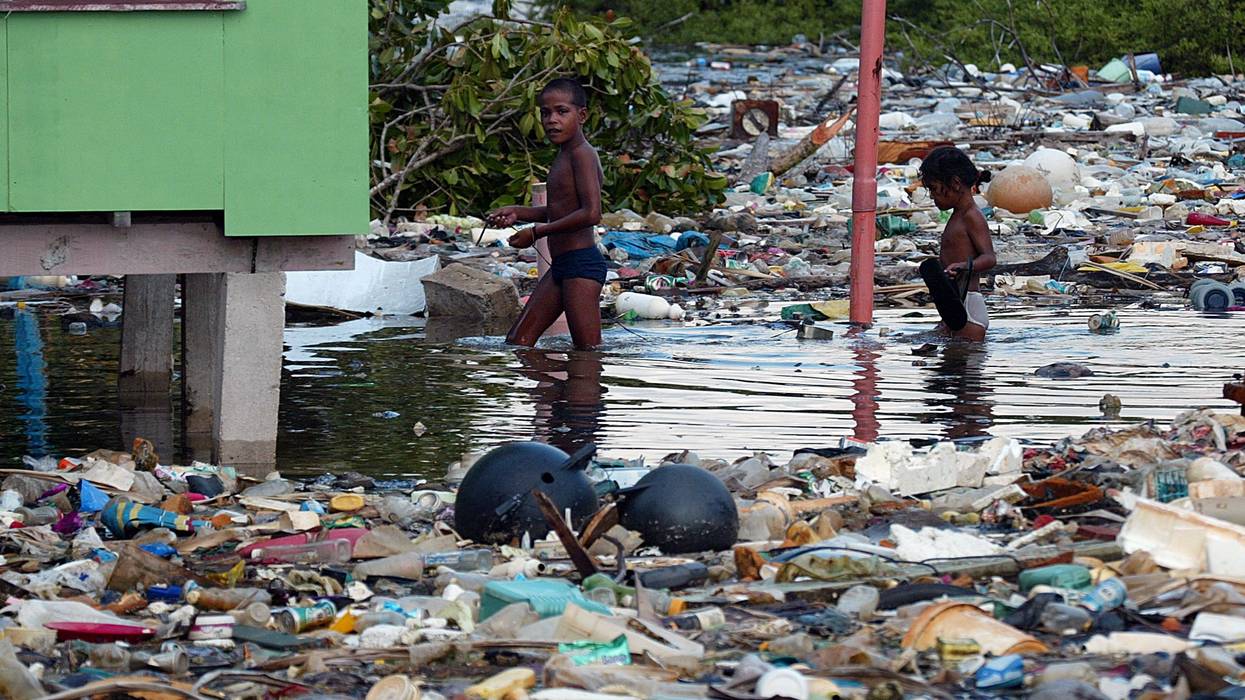
The growing global recognition of the human right to a clean environment "is up against an even more powerful force in the global economy, a system that is absolutely based on the exploitation of people and nature," said David Boyd.
After spending six years traveling the world in his role as the United Nations special rapporteur on human rights and the environment, Canadian law professor David Boyd said Tuesday that the growing global recognition of the right to a healthy environment gives him hope—but warned that with a world economy based on exploitation, campaigners face major challenges in ensuring environmental justice for all.
In his final interview as the U.N.'s top expert on the subject, Boyd told The Guardian that during his tenure, the international body's Human Rights Council formally recognized that a clean, healthy, and sustainable environment is a fundamental human right in 2021, and the U.N. General Assembly did the same in 2022.
"These are landmark advances in international human rights," Boyd said in a statement last month.
But with top fossil fuel producers including the United States arguing that the U.N. resolution is not legally binding, and refusing to join 161 other countries in enshrining the right to a healthy environment for their own citizens, Boyd said his experience as special rapporteur has shown him that "this powerful human right is up against an even more powerful force in the global economy, a system that is absolutely based on the exploitation of people and nature."
"I started out six years ago talking about the right to a healthy environment having the capacity to bring about systemic and transformative changes," Boyd told The Guardian. "And unless we change that fundamental [economic] system, then we're just re-shuffling deck chairs on the Titanic."
The environmental law expert said the failure of world leaders to universally agree to a "human rights-based approach" to the climate, biodiversity, and air pollution crises "has absolutely been the Achilles' heel" of international treaties like the Paris climate agreement, with no mechanisms forcing countries to rapidly draw down their greenhouse gas emissions to help avoid planetary heating above 1.5°C.
"It has driven me crazy in the past six years that governments are just oblivious to history. We know that the tobacco industry lied through their teeth for decades. The lead industry did the same. The asbestos industry did the same."
Governments pledged to phase out "inefficient" fossil fuel subsidies in 2021, but last year subsidies for the industry had risen by $2 million, hitting $7 trillion.
Fossil fuel and other industry lobbyists are still being welcomed to global summits on plastic pollution and the climate, Boyd pointed out.
"It just absolutely boggles my mind that anybody thinks they have a legitimate seat at the table," said Boyd. "It has driven me crazy in the past six years that governments are just oblivious to history. We know that the tobacco industry lied through their teeth for decades. The lead industry did the same. The asbestos industry did the same. The plastics industry has done the same. The pesticide industry has done the same."
Boyd's criticism "hits the nail on the head," said Mark Dummett, deputy program director of Amnesty International.
Boyd said a global grassroots movement is needed to dislodge "the diesel mafia," his term for "powerful interconnected business and political elites" who "are still becoming wealthy from the existing system."
Organizers must continue using "tools like human rights and public protest and every other tool in the arsenal of change-makers," he advised.
Boyd spent his time as special rapporteur traveling to countries including Portugal, the Maldives, Chile, and Fiji, where he spoke to people directly affected by plastic waste, rising sea levels, air pollution, extreme heat, and other climate impacts.
He went on his final mission to the Maldives, the world's lowest lying country, in April, finding "numerous atolls submerged under water, according to The Guardian.
"These islands are just like jewels scattered across the Indian Ocean, and yet for anyone who understands the science of climate change, it's just a heartbreaking place to visit because of sea level rise, storm surges, coastal erosion, acidification, rising ocean temperatures, and heatwaves," Boyd said of the Maldives, 80% of which scientists have said could be uninhabitable by 2050. "The future is really daunting for people in the Maldives... The climate emergency is an existential threat that overshadows all the other issues."
If people in the Maldives and around the world "don't have a living, healthy planet Earth, then all the other rights are just words on paper," said Boyd.
The outgoing rapporteur said environmental legal groups will likely increasingly file lawsuits against governments that aren't doing their part to mitigate the climate crisis—a tactic that the U.N. Environment Program said last year could be a key driver of change in climate policies.
"I expect in the next three or four years, we will see court cases being brought challenging fossil fuel subsidies in some petro-states," said Boyd. "These countries have said time and time again at the G7, at the G20, that they're phasing out fossil fuel subsidies. It's time to hold them to their commitment. And I believe that human rights law is the vehicle that can do that."
Last month, the European Court of Human Rights ruled that the Swiss government violated the human rights of senior citizens by refusing to abide by scientists' warnings and swiftly phase out fossil fuel production.
Environmental law expert Astrid Puentes Riaño stepped into Boyd's former role this month, saying she will prioritize "the implementation of the human right to a clean, healthy, and sustainable environment," following the U.N.'s formal recognition of the right.
The implementation of the right provides "a vital opportunity for greater understanding of the obligations of states to respect, protect, and fulfill this right, as well as the role of non-state actors," she said. "This will be my main task as rapporteur to be implemented through the reports, visits, communications, events and other activities to develop."
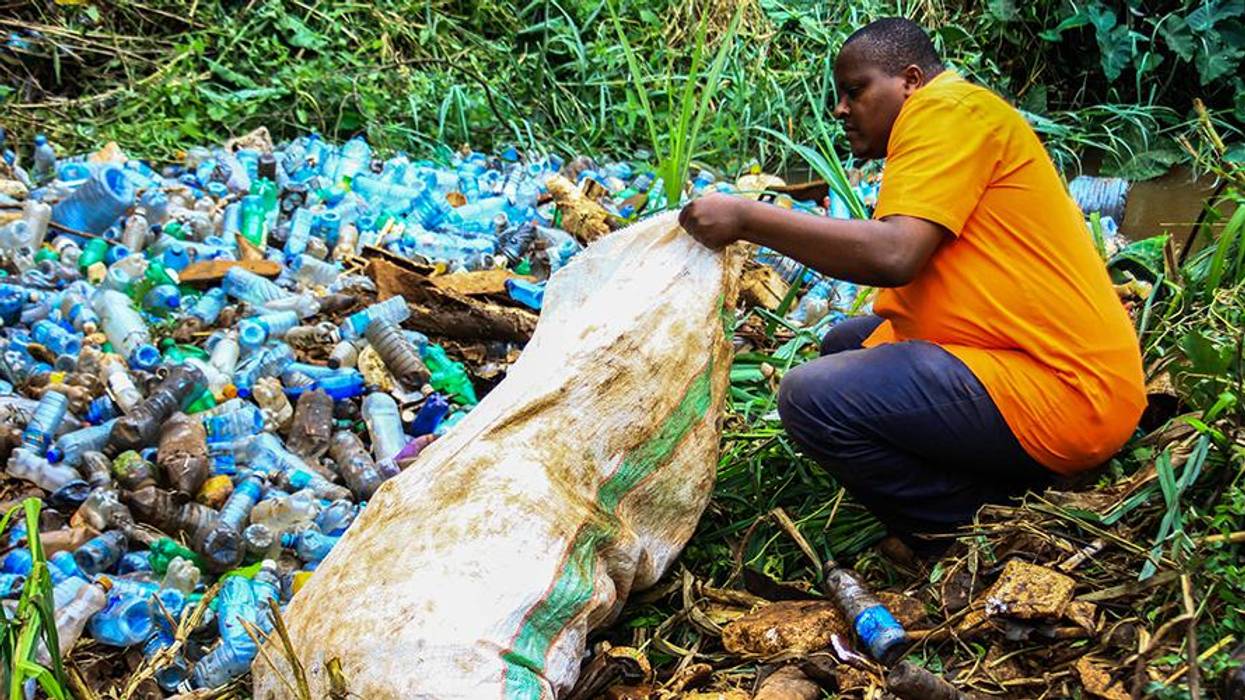
"Whether the treaty includes plastic production cuts is not just a policy debate," said one expert. "It's a matter of survival."
As worldwide government officials, civil society groups, and activists prepare to head to Ottawa, Canada for the fourth session of global plastics treaty negotiations, climate advocates urged attendees to keep in mind the new findings of scientists who showed Thursday that plastic production—not waste—is the main driver of the synthetic substances' planet-heating emissions.
The federally funded Lawrence Berkeley National Laboratory in Berkeley, California released a paper showing that the greenhouse gas emissions of the plastics industry are equivalent to those of about 600 coal-fired power plants and are four times higher than those of the airline sector.
Lobbyists for the plastics industry, along with countries that are home to the world's biggest fossil fuel polluters, have pushed for a plastics treaty that centers waste management and a "circular economy" in which waste plastic is used indefinitely to produce new synthetic products.
But the Lawrence Berkeley scientists found that 75% of the greenhouse gas emissions caused by plastics are released before the plastic compounds are even created by the polymerization process.
"Plastics' impact on the climate starts with extraction," said the Global Alliance for Incinerator Alternatives (GAIA) in a policy brief on the lab's findings. "To fully capture, measure, evaluate, and address the impacts of plastic pollution, assessment, and regulatory controls must consider the complete lifecycle, beginning with extraction."
According to Lawrence Berkeley's research, if plastic production remains at its current level, it could burn through roughly one-fifth the planet's remaining carbon budget, pushing the Earth closer to planetary heating that exceeds 1.5°C.
"To avoid breaching the 1.5°C limit set by the Paris [climate] agreement," said GAIA, "primary plastic production must decrease by at least 12% to 17% per year, starting in 2024."
To achieve that goal, said the Center for Financial Accountability on Thursday, fossil fuel-producing countries must stop treating the global plastics treaty "as a waste management treaty."
"While global leaders are trying to negotiate a solution to the plastic crisis, the petrochemical industry is investing billions of dollars in making the problem rapidly worse," said GAIA science and policy director Neil Tangri, a senior fellow at University of California, Berkeley. "We need a global agreement to stop this cancerous growth, bring down plastic production, and usher in a world with less plastic and less pollution."
At the third session of the the Intergovernmental Negotiating Committee (INC-3) last year, 143 plastics industry lobbyists registered to attend, prompting advocates to call for their exclusion from future summits.
On Sunday, ahead of the meetings set to take place from April 23-29, the Break Free From Plastic movement is planning to march through Ottawa, to demand "strong conflict of interest policies that protect the treaty negotiations and its implementation from the vested interests of industries that are profiting" from the growing plastic pollution crisis.
The campaigners will also demand a negotiation process that respects the rights of Indigenous people, a treaty that supports "non-toxic reuse systems" and rejects a "circular economy" model, and limiting and reducing plastic production a "non-negotiable requirement to end plastic pollution."
Dr. Jorge Emmanuel, a co-author of GAIA's policy brief and a research fellow at Siliman University in the Philippines, said the climate impacts that have already hit his country illustrate the need for a strong global plastics treaty.
"The Philippines is on the frontlines of both climate change and plastic pollution," said Emmanuel. "Heatwaves, powerful typhoons, and flooding are getting worse, and the petrochemical industry has displaced our traditional systems with mountains of plastic that poison our communities."
"Whether the treaty includes plastic production cuts is not just a policy debate," he added. "It's a matter of survival."

The Philippine weather service said the risk of heatstroke was elevated as temperature reached nearly 110°F in some parts of the country.
Schools across the Philippines on Tuesday were forced to close as the country recorded continuing extreme heat that residents have faced since at least Saturday.
Bloomberg reported that more than a thousand primary and secondary schools shut down, including dozens in the capital city of Manila, as health authorities raised alarm about potential heatstroke and heat exhaustion for students and teachers.
The Philippine heat index takes into account not only the actual temperature, but also humidity, which can make hot weather feel even more sweltering.
Dozens of schools across the capital city of Manila were affected by authorities' decision to close schools until the extreme heat subsides.
Officials in the southern island of Mindanao told Agence France-Presse that in-person classes were being suspended or shortened over the next two weeks.
The Philippine Atmospheric, Geophysical, and Astronomical Services Administration (PAGASA) raised alarm about the danger of heat cramps, heat exhaustion, and heatstroke as the heat index reached 42°C (107.6°F) on Tuesday and was expected to surge to 43°C (109.4°F).
Heatstroke can cause sufferers to lose consciousness and experience confusion and in some cases convulsions, and can be deadly.
"At the Pagadian City Pilot School one kindergarten student and two in the elementary school suffered nosebleeds," Dahlia Paragas, regional education ministry official for Zamboanga province in Mindanao, told AFP. "All of them are back at home in stable condition and were advised to avoid exposure to the sunlight."
High humidity is unusual for April, which along with March and May are typically the driest months in much of the Philippines.
AFP reported that conditions in the country have been exacerbated by El Niño, which is occurring this year and along with the underlying trend of fossil fuel-driven planetary heating has resulted in hotter ocean and atmospheric temperatures.
As Common Dreams reported last May, a World Meteorological Organization report found that more than 90% of people killed by extreme weather events including extreme heat, droughts, and wildfires have lived in the Global South.
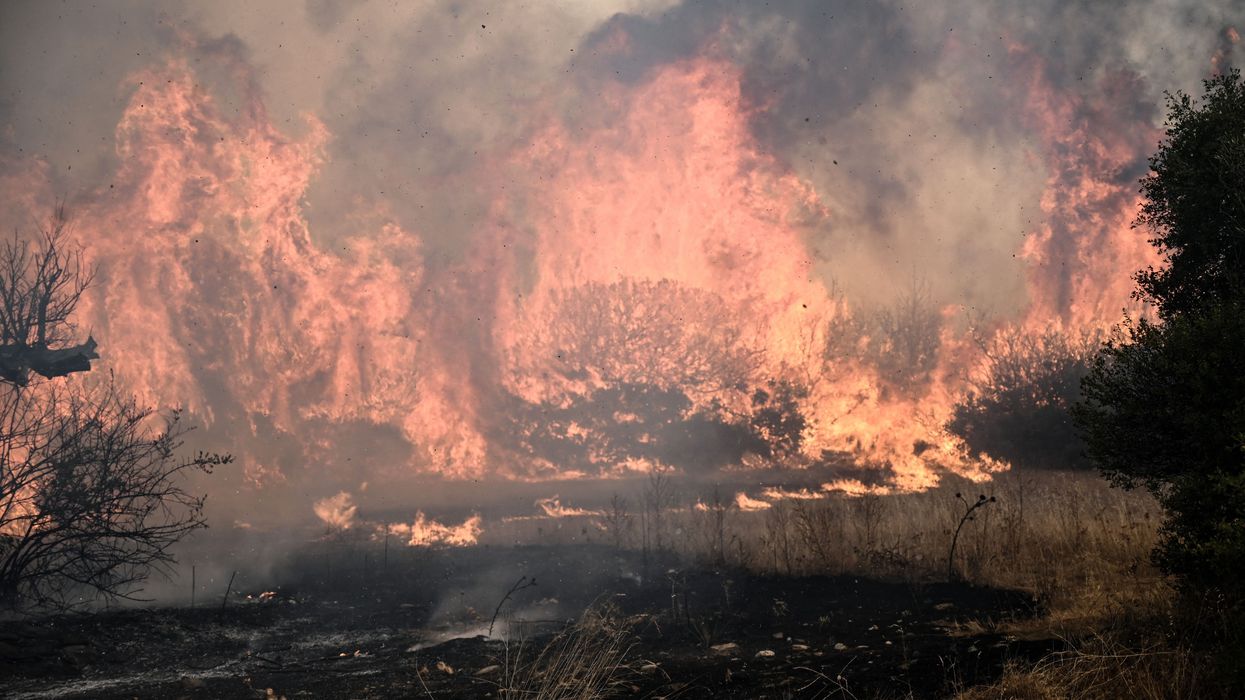
"Heat isn't a new phenomenon," said Global Witness. "But as the planet gets hotter because of human-caused emissions, scientists are detecting more heat-related deaths."
A new report released Wednesday details how the emissions of just five big fossil fuel companies could lead to 11.5 million premature deaths by 2100 as continued oil and gas extraction and consumption heats the planet and sparks extreme heatwaves across the globe.
The analysis by Global Witness focused on the emissions of Shell, TotalEnergies, ExxonMobil, BP, and Chevron—all of which have "defied calls from scientists to rapidly reduce emissions and continue to increase oil and gas production."
ExxonMobil and Chevron have announced investments of more than $100 billion in new oil and gas reserves in recent months, even as the companies eye 2050 as the year they'll reach net zero emissions. The United Nations' Global Stocktake last September showed the five companies targeted in the report "are forecast to spend a staggering $3.1 trillion by 2050, on both existing and new oil and gas extraction"—despite the fact that the U.N. and the International Energy Agency have both warned that no new extraction is compatible with limiting global temperature rise to 1.5°C.
Global Witness cross-referenced the oil companies' plans with research out of Columbia University, which estimated that every 1 million metric tonnes of carbon dioxide emitted in 2020 will cause 226 excess heat-related deaths over the next 80 years.
The analysis "suggests that these five companies will dig up oil and gas, which when burned, will add 51 billion tonnes of carbon dioxide emissions to the atmosphere between now and 2050," said Global Witness. "Using Columbia's mortality cost of carbon methodology, we calculate that emissions from the supermajors' oil and gas would kill an additional 11.5 million people due to heat by 2100."
Global Witness focused on heat-related deaths specifically; a study by Greenpeace Southeast Asia and the Center for Research on Energy and Clean Air in 2020 found that air pollution from fossil fuel combustion was responsible for 4.5 million premature deaths worldwide each year.
Global Witness notes that the deaths of at least 61,000 people were linked to "searing heat across Europe" in 2022, and recent heatwaves have proven deadly in the United States, China, and South America in the past two years.
"Heat isn't a new phenomenon," said Global Witness. "But as the planet gets hotter because of human-caused emissions, scientists are detecting more heat-related deaths."
Extreme heat puts people—particularly children, elderly people, pregnant people, and outdoor workers—at risk for heat stroke, heart attacks, and exhaustion.
"Behind these figures are people," noted the group, pointing to the deaths of 72-year-old Gwendolyn Osborne in Chicago during a record-breaking heatwave in 2022 and of a 13-year-old girl who suffered deadly heat stroke in Japan last summer. "These are just a few stories from the massive and growing wave of heat-caused deaths around the world. Unless the supermajors change course quickly, the death toll will be comparable to some of history's most brutal wars."
The companies have an opportunity to save millions of lives, Global Witness noted, as the Columbia research found that with dramatically reduced emissions, the death toll from the oil giants' emissions would be cut by more than half.
Global Witness included in its analysis the companies' scope 3 emissions, which are produced when people and entities use the firms' products.
When approached by the organization, TotalEnergies objected to the inclusion of scope 3 emissions, saying fossil fuel companies are only responsible for scope 1 (the direct emissions from their facilities) and 2 (emissions from the company's use of electricity, heat, and other utilities).
The companies' net zero pledges for 2050 pertain only to scopes 1 and 2.
Global Witness compared TotalEnergies's claim to those of drug dealers who say "they aren't to blame for drug addictions" or arms dealers who "claim that they don't kill people—that they're simply supplying people with products they want."
"Oil and gas companies are solely responsible for digging up these fossil fuels, and they're doing it eyes wide open in the face of a mountain of evidence documenting the suffering and death that fossil fuels cause, while failing to make even the most basic investments in green energy," said the group.
The analysis came as The Guardian reported on consumer advocacy group Public Citizen's campaign to hold fossil fuel companies legally liable for people's deaths from extreme temperatures, climate-related hunger and disease, flooding, and wildfires.
Public Citizen has been holding events at Yale, Harvard, and New York University to discuss the idea with legal experts, and has reportedly gained some traction.
"Once I read it, I thought that it was more compelling than I had guessed it would be," former Department of Justice prosecutor Cindy Cho told The Guardian of Public Citizen's proposal. "I think that prosecutors should actively consider pursuing the theory, especially if they walk into the investigation with an understanding of the intense challenges."
Global Citizen compared the millions of deaths the oil firms are projected to cause to a chemical spill.
"When a company spills lethal chemicals into a river, and harms people, we hold it legally responsible," said the group. "The American chemical company DuPont has paid out hundreds of millions of dollars for polluting drinking water with chemicals. Will this responsibility extend to carbon emissions, which we can increasingly link to the deaths of millions of people? Certainly, it's an argument the supermajors and their legal teams will be extremely concerned about."
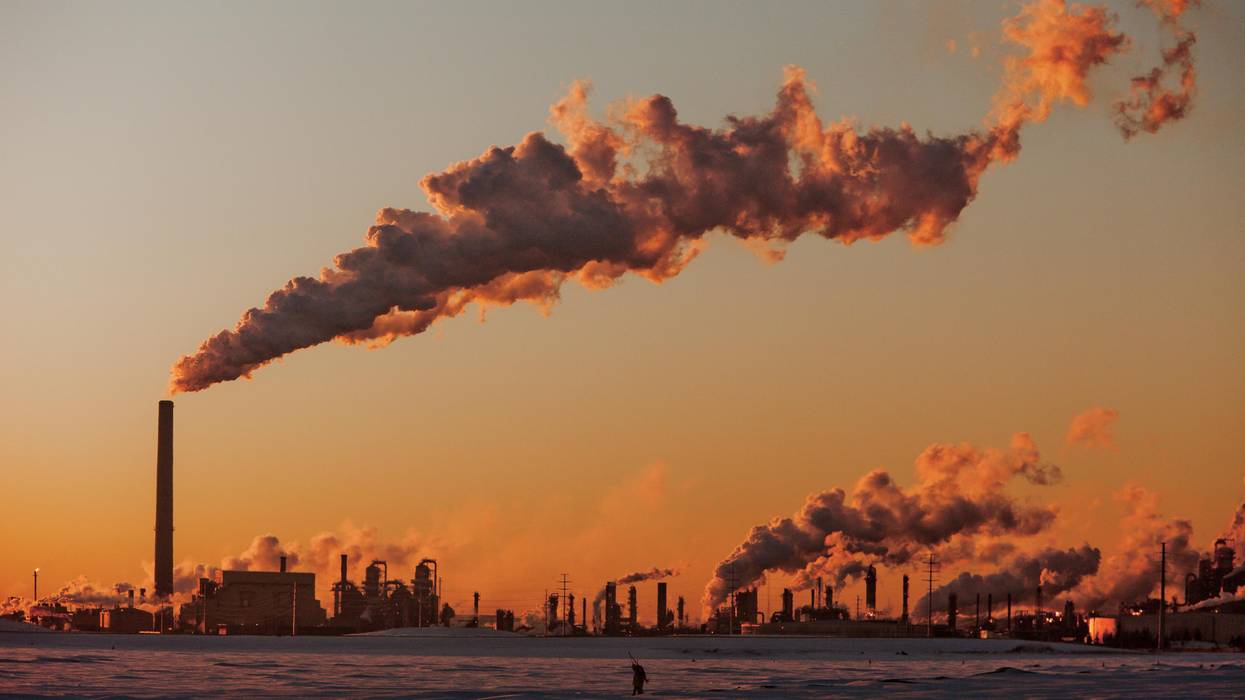
The Anthropocene is classified as a geological "event" at this point—as are mass extinctions and rapid expansions of biodiversity.
The idea underpinning scientists' push to recognize the current time period as a new geological epoch called the Anthropocene dates back more than 100 years, but on Tuesday, a committee of experts voted down the proposal to officially declare a new age defined by human beings' impact on the Earth.
The panel, organized by the International Union of Geological Sciences (IUGS), was tasked with weighing whether the Holocene—the epoch that began at the close of the last ice age, more than 11,000 years ago—has ended, and if so, when precisely the Anthropocene began.
Another group, the Anthropocene Working Group (AWG), had previously posed that an Anthropocene—an epoch during which "the scale and character of human activities have become so great as to compete with natural geological and geophysical forces," as British geologist Robert Lionel Sherlock argued in 1922—began in the mid-20th century.
Around that period, the U.S. and other countries began testing nuclear weapons while fossil fuel production began ramping up significantly, intensifying planetary heating, ocean acidification, and other climate impacts.
AWG presented geological evidence compiled at Crawford Lake in Canada, where radioactive isotopes dating back to the 1950s are embedded in the lake bed, to argue in favor of an Anthropocene that began decades ago.
Several members of the IUGS committee found that the time period proposed began too recently and "failed to capture the earlier impact of humans during, say, the development of farming or the onset of the Industrial Revolution," as Yale Environment 360 noted.
AWG members Simon Turner of University College London and Colin Waters of the University of Leicester told New Scientist Tuesday that the voting result was "very disappointing given the huge contribution by AWG to develop our case."
"All these lines of evidence indicate that the Anthropocene, though currently brief, is—we emphasize—of sufficient scale and importance to be represented on the Geological Time Scale," they said.
The academics who opposed recognizing a new geological epoch in the 12-4 vote are among the scientists who "prefer to describe the Anthropocene as an 'event,' not an 'epoch,'" The New York Times reported.
Geological "events" don't appear on the official Geological Time Scale, "yet many of the planet's most significant happenings are called events, including mass extinctions, rapid expansions of biodiversity, and the filling of Earth's skies with oxygen 2.1 to 2.4 billion years ago," according to the Times.
Michael Mann, director of the Center for Science, Sustainability, and the Media at University of Pennsylvania, called the disagreement over the terminology "a tempest in a teapot" that won't stop scientists from identifying the current time period as one in which humans are significantly and negatively impacting the planet.
While the scientific community is not yet labeling the current time period as a new epoch, committee member Jan Piotrowski of Aarhus University in Denmark told the Times, "Our impact is here to stay and to be recognizable in the future in the geological record."
"There is absolutely no question about this," Piotrowski said.
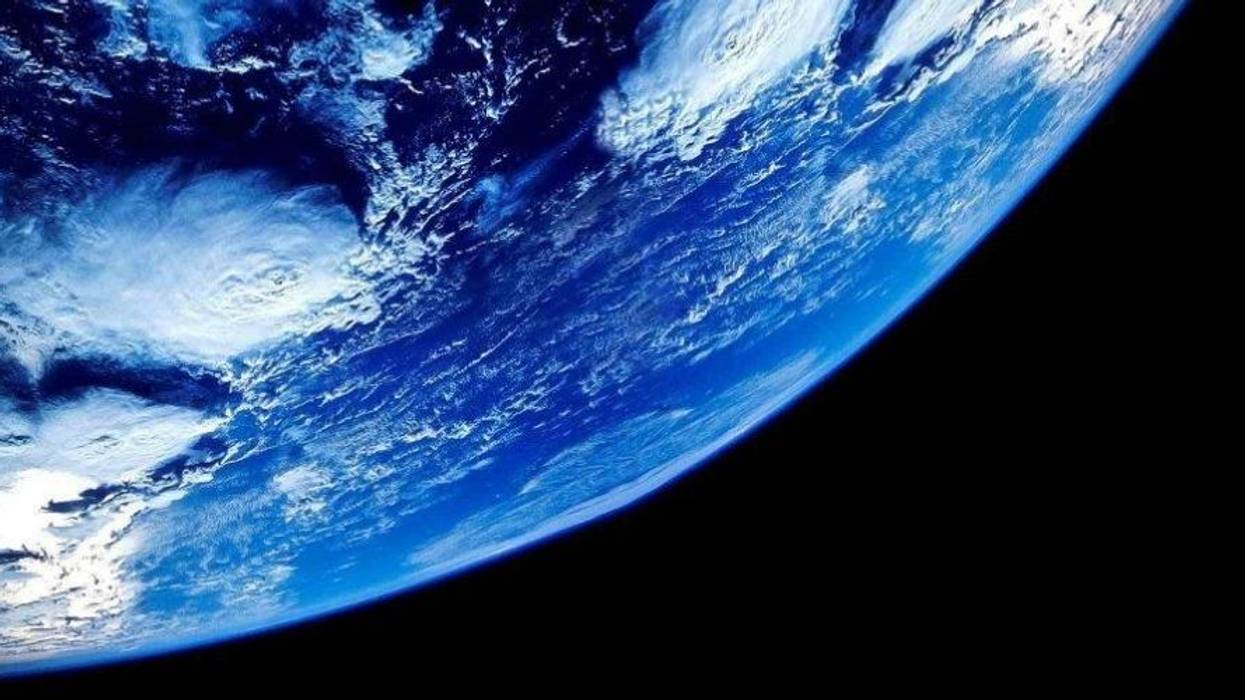
"This update on planetary boundaries clearly depicts a patient that is unwell," said one scientist.
Scientists behind a new study on the crossing of the Earth's "planetary boundaries" on Wednesday likened the planet to a sick patient, warning that six out of nine barriers that ensure the Earth is a "safe operating space for humanity" have now been breached.
Researchers at the University of Copenhagen, the Potsdam Institute for Climate Impact Research (PIK), and other international institutions analyzed 2,000 studies to update a planetary boundary framework developed in 2009 by the Stockholm Resilience Center, completing the first "complete check-up of all nine processes and systems that determine the stability and resilience of the planet."
The boundaries for climate change and land use have been broken for decades as extractive industries have razed forests and planet-heating fossil fuel emissions have significantly increased since preindustrial times.
The "novel entities" boundary—pertaining to the accumulation of synthetic pollution from substances such as microplastics, pesticides, and nuclear waste—was quantified for the first time in the study, which was published in Science Advances.
Freshwater change—both "green" freshwater in soil and vegetation and "blue" freshwater in bodies of water—has also been breached, along with biogeochemical flows, or the flow of nitrogen and phosphorus into the environment, which can create ocean dead zones and algal blooms.
"We don't know how long we can keep breaching these key boundaries before combined pressures lead to irreversible change and harm."
The study marked the first time researchers quantified a control variable for the "biosphere integrity" boundary, which they found was breached long before the framework was introduced—in the late 19th century as the Industrial Revolution and other factors accelerated the destruction of the natural world.
Co-author Wolfgang Lucht called biosphere integrity "the second pillar of stability for our planet" next to climate change, and warned the pillar is being destabilized by humans "taking out too much biomass, destroying too much habitat, deforesting too much land. Our research shows that mitigating global warming and saving a functional biosphere for the future should go hand in hand."
"This update on planetary boundaries clearly depicts a patient that is unwell, as pressure on the planet increases and vital boundaries are being transgressed," said Johan Rockström, director of PIK. "We don't know how long we can keep breaching these key boundaries before combined pressures lead to irreversible change and harm."
The boundaries for atmospheric aerosol loading, or air pollution, and ocean acidification, are both close to being crossed, while the atmospheric ozone boundary is currently well below the "zone of increasing risk," due to global initiatives within the Montreal Protocol, adopted in 1987.
The fact that the boundary for ozone depletion was once "headed for increasing regional transgressions" and slowly recovered, said co-author Katherine Richardson of the University of Copenhagen, shows that it is possible to bring the planet back from the boundaries that it's close to crossing or that have been breached to a lesser degree, such as freshwater change.
"We can think of Earth as a human body, and the planetary boundaries as blood pressure," said Richardson. "Over 120/80 does not indicate a certain heart attack but it does raise the risk and, therefore, we work to reduce blood pressure."
The boundaries that have reached the highest risk level are biosphere integrity, climate change, novel entities, and biogeochemical flows.
The update to the framework "may serve as a renewed wake-up call to humankind that Earth is in danger of leaving its Holocene-like state," reads the study, referring to relatively stable state the planet was in between the end of the last ice age—10,000 years ago—until the start of the Industrial Revolution.
The study, said global grassroots climate action campaign Extinction Rebellion, offered the latest evidence that policymakers must do everything in their power to "just stop oil"—ending approval for fossil fuel projects, subsidies for oil and gas companies, and policies that slow down a transition to renewable energy.
"We are not separate from the Earth," said the group. "We ignore these warnings at our peril."

“This will only get worse until there is a global reduction in greenhouse gas emissions," said one expert.
A coral reef forecast released by scientists in the United States this week projects high levels of heat stress for reefs across the Caribbean and off the coasts of several Central and South American countries in the coming months, prompting alarm among experts regarding a potential threat to reefs throughout the planet's oceans.
The Coral Reef Watch project at the National Oceanic and Atmospheric Administration (NOAA) found that reefs throughout the Caribbean and the southern Atlantic and Pacific Oceans have a 90% chance of heat stress over the next four months, necessitating an alert level of 2.
Under Alert Level 2, scientists say severe bleaching as well as coral reef mortality are likely.
Derek Manzello, coordinator of Coral Reef Watch, told The Guardian Friday that by continuing to extract fossil fuels for energy and adding to planet-heating greenhouse gas emissions, humans are conducting "essentially a big field experiment."
"I don't think any of these places have seen heat stress like this before," Manzello told The Guardian.
University of California, Davis atmospheric sciences student Colin McCarthy called the projection for the next four months "shocking."
"Virtually all North American coral reefs could face bleaching in the next four months," he said on social media.
Warmer water causes the algae in a coral reef's tissues to be expelled, leaving the reef with a bleached appearance. The algae is coral's primary food source and its loss makes the reef more susceptible to disease and mortality—harming the marine species that depend on the reef.
Coral reefs provide a habitat for more than a quarter of all marine species.
NOAA's forecast comes days after the Copernicus Climate Change Service, the climate agency of the European Union, released a report on unprecedented high temperatures in the world's oceans.
The average daily global ocean surface temperature reached 20.96°C (69.7°F) last week, breaking 2016's previous record of 20.95°C.
Late last month, researchers found that the ocean 40 miles south of the Miami coast in Florida reached 101.1°F, near a site where scientists detected "100% coral mortality."
"We are marching towards a Caribbean-wide coral bleaching event in the next month if things don't change," Manzello told The Guardian.
The loss of coral reefs would have catastrophic consequences for fishing industries across the world, coastlines that depend on reefs to act as a buffer against powerful storms—which are becoming more common as a result of the climate crisis—and advances in medical science, as experts have used reefs to research new medications and treatments for diseases including cancer and Alzheimer's.
In NOAA's 7-day outlook for the world's coral reefs on Friday, the vast majority of the oceans were at least under a "watch" for bleaching. Large swaths of the South Pacific were under Alert Level 1 or 2.
“This will only get worse until there is a global reduction in greenhouse gas emissions," Manzello told The Guardian. "The big fear is there will be catastrophic mortality."