SUBSCRIBE TO OUR FREE NEWSLETTER
Daily news & progressive opinion—funded by the people, not the corporations—delivered straight to your inbox.
5
#000000
#FFFFFF
To donate by check, phone, or other method, see our More Ways to Give page.
Daily news & progressive opinion—funded by the people, not the corporations—delivered straight to your inbox.
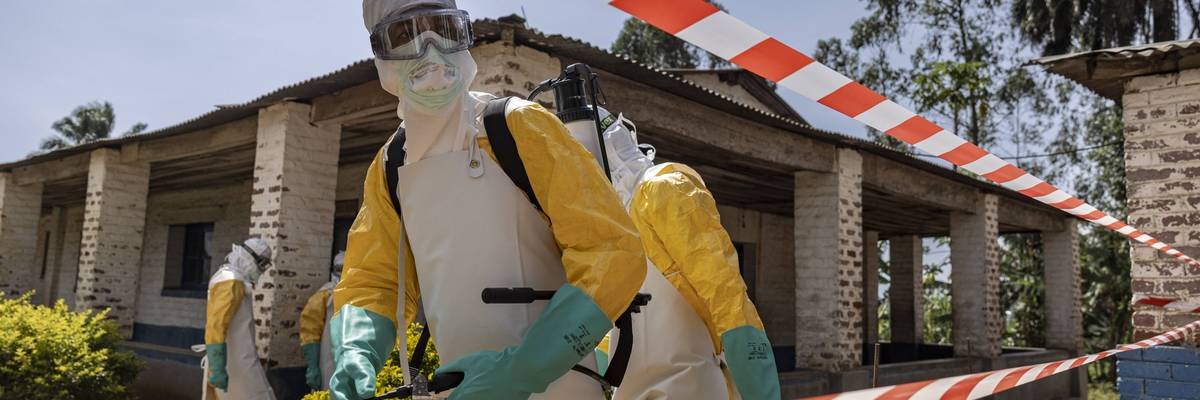
A member of the Médecins Sans Frontières Ebola response team disinfects a restricted area outside the General Referral Hospital of Mongbwalu during outbreak preparedness and infection prevention activities on May 26, 2026 in Mongbwalu, Democratic Republic of Congo.
"We need to massively step up our response," said one senior UN official, while another stressed that "Ebola feeds on delay, fear, and hunger."
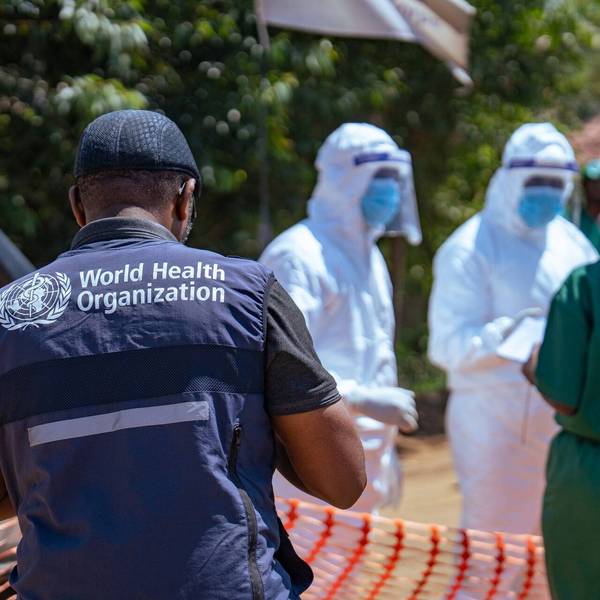
As the official death toll from the Ebola epidemic in the Democratic Republic of Congo topped 1,500, United Nations officials called for a dramatic expansion of humanitarian assistance to combat what's now the fastest-spreading outbreak of the deadly disease ever recorded.
The DRC's Health Ministry on Friday confirmed more than 3,400 infections and at least 1,556 deaths since the outbreak was declared in May. The ministry said the fatality rate during the current epidemic is 44%.
The epidemic is caused by the rare Bundibugyo strain of the Ebola virus, which has spread across multiple DRC provinces, with the vast majority of cases concentrated in Ituri Province. Unlike the Zaire strain from previous outbreaks, there is currently no approved vaccine or treatment for the Bundibugyo virus.
The current epidemic has killed more people faster than any previous outbreak, including in 2014-16, when more than 28,000 infections and over 11,000 deaths were reported.
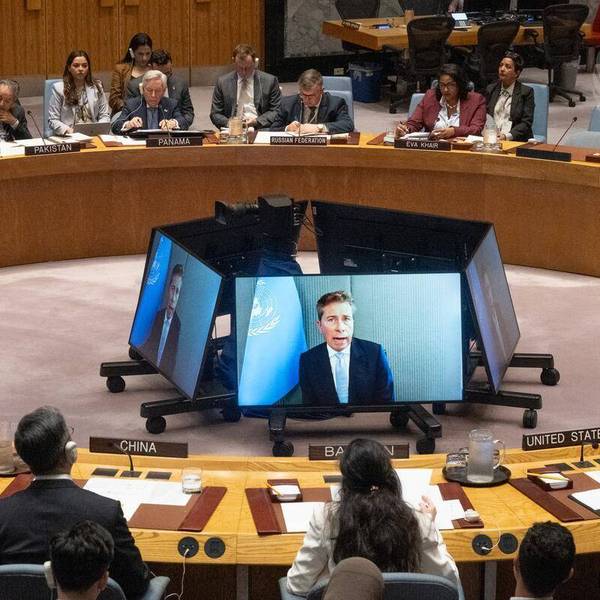
"In the last 24 hours, 50 people have died of Ebola in the Democratic Republic of the Congo and the number of cases is growing exponentially, doubling every 20 days,” senior United Nations aiEbola coordinator Julien Harneis said during a Wednesday press conference in New York.
“So, in support of the government, I'm calling that we step up, across the response, the United Nations, nongovernmental organizations, member states,” Harneis continued. "We need to massively step up our response, be it in terms of supplies, specialized supplies like personal protective equipment, staff, specialized medical staff, and logistics as well.”
Harneis spoke at the press conference with acting UN World Food Program Executive Director Carl Skau, who said that "Ebola feeds on delay, fear, and hunger."
“Stopping this outbreak requires all hands on deck and communities at the center," he continued. "Food assistance is frontline Ebola containment. It helps families stay home, supports safe isolation, builds trust with communities, and keeps health teams moving. We know what works; what we need now is the speed and resources to scale it before this outbreak outruns the response.”
Skau noted that around 10 million people are suffering from acute food insecurity in the eastern DRC, with 3 million of those in an Integrated Food Security Phase Classification (IPC)-designated "emergency"—one step away from famine.
“You cannot force people to choose between hunger and health,” he said.
Compounding the crisis, a growing number of Ebola patients are dying outside of treatment centers. Officials said that more than 60% of recent Ebola deaths have occurred in communities, increasing the risk of further transmission through unsafe caregiving and burial practices.
Health workers also continue to endure attacks by armed groups, which have forced aid organizations to suspend operations in some of the hardest-hit areas of the epidemic.
Some experts also pointed to US President Donald Trump’s ideologically driven decision to withdraw the US from the World Health Organization, his administration’s dismantling of the US Agency for International Development, and reduced funding for the US Centers for Disease Control and Prevention’s global public health efforts as adversely affecting the response to the current Ebola epidemic, especially when compared with outbreaks in 2014 and 2019.
Meanwhile, health officials in neighboring Uganda this week declared an end to the country's Bundibugyo outbreak after no new cases were reported for a month. Twenty people were infected, and three died, in Uganda.
Dear Common Dreams reader, It’s been nearly 30 years since I co-founded Common Dreams with my late wife, Lina Newhouser. We had the radical notion that journalism should serve the public good, not corporate profits. It was clear to us from the outset what it would take to build such a project. No paid advertisements. No corporate sponsors. No millionaire publisher telling us what to think or do. Many people said we wouldn't last a year, but we proved those doubters wrong. Together with a tremendous team of journalists and dedicated staff, we built an independent media outlet free from the constraints of profits and corporate control. Our mission has always been simple: To inform. To inspire. To ignite change for the common good. Building Common Dreams was not easy. Our survival was never guaranteed. When you take on the most powerful forces—Wall Street greed, fossil fuel industry destruction, Big Tech lobbyists, and uber-rich oligarchs who have spent billions upon billions rigging the economy and democracy in their favor—the only bulwark you have is supporters who believe in your work. But here’s the urgent message from me today. It's never been this bad out there. And it's never been this hard to keep us going. At the very moment Common Dreams is most needed, the threats we face are intensifying. We need your support now more than ever. We don't accept corporate advertising and never will. We don't have a paywall because we don't think people should be blocked from critical news based on their ability to pay. Everything we do is funded by the donations of readers like you. When everyone does the little they can afford, we are strong. But if that support retreats or dries up, so do we. Will you donate now to make sure Common Dreams not only survives but thrives? —Craig Brown, Co-founder |
As the official death toll from the Ebola epidemic in the Democratic Republic of Congo topped 1,500, United Nations officials called for a dramatic expansion of humanitarian assistance to combat what's now the fastest-spreading outbreak of the deadly disease ever recorded.
The DRC's Health Ministry on Friday confirmed more than 3,400 infections and at least 1,556 deaths since the outbreak was declared in May. The ministry said the fatality rate during the current epidemic is 44%.
The epidemic is caused by the rare Bundibugyo strain of the Ebola virus, which has spread across multiple DRC provinces, with the vast majority of cases concentrated in Ituri Province. Unlike the Zaire strain from previous outbreaks, there is currently no approved vaccine or treatment for the Bundibugyo virus.
The current epidemic has killed more people faster than any previous outbreak, including in 2014-16, when more than 28,000 infections and over 11,000 deaths were reported.
"In the last 24 hours, 50 people have died of Ebola in the Democratic Republic of the Congo and the number of cases is growing exponentially, doubling every 20 days,” senior United Nations aiEbola coordinator Julien Harneis said during a Wednesday press conference in New York.
“So, in support of the government, I'm calling that we step up, across the response, the United Nations, nongovernmental organizations, member states,” Harneis continued. "We need to massively step up our response, be it in terms of supplies, specialized supplies like personal protective equipment, staff, specialized medical staff, and logistics as well.”
Harneis spoke at the press conference with acting UN World Food Program Executive Director Carl Skau, who said that "Ebola feeds on delay, fear, and hunger."
“Stopping this outbreak requires all hands on deck and communities at the center," he continued. "Food assistance is frontline Ebola containment. It helps families stay home, supports safe isolation, builds trust with communities, and keeps health teams moving. We know what works; what we need now is the speed and resources to scale it before this outbreak outruns the response.”
Skau noted that around 10 million people are suffering from acute food insecurity in the eastern DRC, with 3 million of those in an Integrated Food Security Phase Classification (IPC)-designated "emergency"—one step away from famine.
“You cannot force people to choose between hunger and health,” he said.
Compounding the crisis, a growing number of Ebola patients are dying outside of treatment centers. Officials said that more than 60% of recent Ebola deaths have occurred in communities, increasing the risk of further transmission through unsafe caregiving and burial practices.
Health workers also continue to endure attacks by armed groups, which have forced aid organizations to suspend operations in some of the hardest-hit areas of the epidemic.
Some experts also pointed to US President Donald Trump’s ideologically driven decision to withdraw the US from the World Health Organization, his administration’s dismantling of the US Agency for International Development, and reduced funding for the US Centers for Disease Control and Prevention’s global public health efforts as adversely affecting the response to the current Ebola epidemic, especially when compared with outbreaks in 2014 and 2019.
Meanwhile, health officials in neighboring Uganda this week declared an end to the country's Bundibugyo outbreak after no new cases were reported for a month. Twenty people were infected, and three died, in Uganda.
As the official death toll from the Ebola epidemic in the Democratic Republic of Congo topped 1,500, United Nations officials called for a dramatic expansion of humanitarian assistance to combat what's now the fastest-spreading outbreak of the deadly disease ever recorded.
The DRC's Health Ministry on Friday confirmed more than 3,400 infections and at least 1,556 deaths since the outbreak was declared in May. The ministry said the fatality rate during the current epidemic is 44%.
The epidemic is caused by the rare Bundibugyo strain of the Ebola virus, which has spread across multiple DRC provinces, with the vast majority of cases concentrated in Ituri Province. Unlike the Zaire strain from previous outbreaks, there is currently no approved vaccine or treatment for the Bundibugyo virus.
The current epidemic has killed more people faster than any previous outbreak, including in 2014-16, when more than 28,000 infections and over 11,000 deaths were reported.
"In the last 24 hours, 50 people have died of Ebola in the Democratic Republic of the Congo and the number of cases is growing exponentially, doubling every 20 days,” senior United Nations aiEbola coordinator Julien Harneis said during a Wednesday press conference in New York.
“So, in support of the government, I'm calling that we step up, across the response, the United Nations, nongovernmental organizations, member states,” Harneis continued. "We need to massively step up our response, be it in terms of supplies, specialized supplies like personal protective equipment, staff, specialized medical staff, and logistics as well.”
Harneis spoke at the press conference with acting UN World Food Program Executive Director Carl Skau, who said that "Ebola feeds on delay, fear, and hunger."
“Stopping this outbreak requires all hands on deck and communities at the center," he continued. "Food assistance is frontline Ebola containment. It helps families stay home, supports safe isolation, builds trust with communities, and keeps health teams moving. We know what works; what we need now is the speed and resources to scale it before this outbreak outruns the response.”
Skau noted that around 10 million people are suffering from acute food insecurity in the eastern DRC, with 3 million of those in an Integrated Food Security Phase Classification (IPC)-designated "emergency"—one step away from famine.
“You cannot force people to choose between hunger and health,” he said.
Compounding the crisis, a growing number of Ebola patients are dying outside of treatment centers. Officials said that more than 60% of recent Ebola deaths have occurred in communities, increasing the risk of further transmission through unsafe caregiving and burial practices.
Health workers also continue to endure attacks by armed groups, which have forced aid organizations to suspend operations in some of the hardest-hit areas of the epidemic.
Some experts also pointed to US President Donald Trump’s ideologically driven decision to withdraw the US from the World Health Organization, his administration’s dismantling of the US Agency for International Development, and reduced funding for the US Centers for Disease Control and Prevention’s global public health efforts as adversely affecting the response to the current Ebola epidemic, especially when compared with outbreaks in 2014 and 2019.
Meanwhile, health officials in neighboring Uganda this week declared an end to the country's Bundibugyo outbreak after no new cases were reported for a month. Twenty people were infected, and three died, in Uganda.