

SUBSCRIBE TO OUR FREE NEWSLETTER
Daily news & progressive opinion—funded by the people, not the corporations—delivered straight to your inbox.
5
#000000
#FFFFFF
To donate by check, phone, or other method, see our More Ways to Give page.
Daily news & progressive opinion—funded by the people, not the corporations—delivered straight to your inbox.
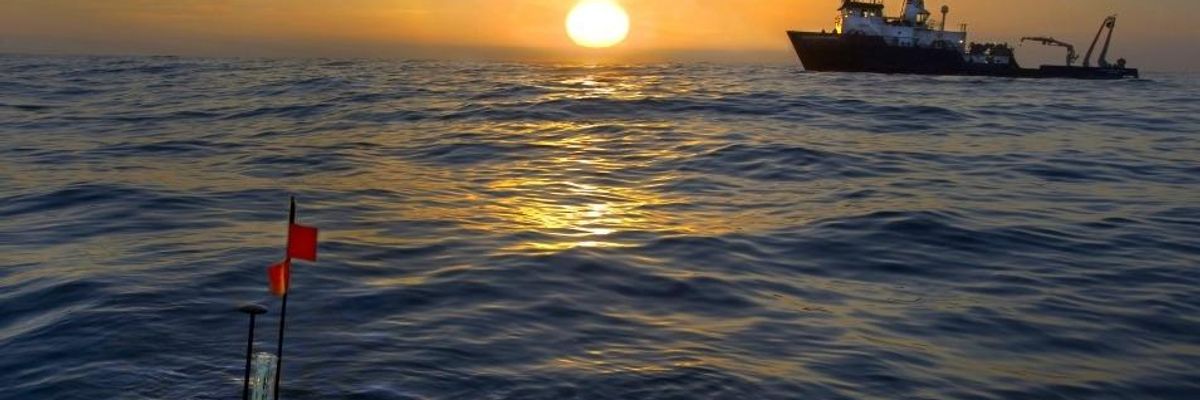
A carbon explorer searches for data on global warming. (Photo: Berkeley Lab/Flickr/cc)
As global weather experts warned Monday that the world's oceans are "under threat like never before," more than 3,000 scientists, politicians, and other public figures had endorsed an open letter urging national governments to "recognize the critical importance of our ocean and blue carbon in the fight against the climate emergency."
"Our political leaders must recognize the urgency of the climate crisis and take truly bold, transformative action to reach a global zero carbon economy."
--Steve Trent, EJF
Led by the Environmental Justice Foundation (EJF) and backed by 66 partner groups, the letter (pdf) calling on world leaders to "put marine ecosystems at the heart of climate policy" is now open to public signature and will be presented to governments before November's United Nations Climate Change Conference (COP26) in Glasgow.
"Nature-based solutions like restoration and protection of marine habitats will both help us meet global decarbonization goals and prevent the worst impacts of global heating while also protecting the lives and livelihoods of the three billion people who depend on marine biodiversity around the world," said Steve Trent, executive director of the London-based EJF. "Our political leaders must recognize the urgency of the climate crisis and take truly bold, transformative action to reach a global zero carbon economy."
"Our ocean gives us every second breath . It absorbs around a third of the CO2 we pump out, and has taken in over a nuclear bomb's worth of heat every second for the past 150 years," the letter says. "It underpins our climate system and keeps our planet habitable: It is the blue beating heart of our planet."
"Yet, when it comes to inclusion in climate policies, marine habitats are often neglected. A healthy ocean, teeming with life, is a vital tool in the bid to tackle global heating: more than half of biological carbon capture is stored by marine wildlife," the groups note, highlighting the power of mangrove forests, seagrass meadows, and the wildlife of the open sea.
"The COP26 climate talks and COP15 biodiversity talks this year will be the most important meetings for generations. They will set us on the road to either a sustainable future for humanity or conflict, suffering, and mass extinctions," the letter continues, urging world leaders to take three specific actions:
The letter comes about a month after a U.N. report warned that Nationally Determined Contribution (NDC) pledges--or plans to reduce planet-heating emissions--that parties to the Paris climate agreement have unveiled so far ahead of COP26 are dramatically inadequate on the whole. As Common Dreams reported, U.N. Secretary-General Antonio Guterres called the findings "a red alert for our planet."
Letter signatory Richard Unsworth, a marine scientist and co-founder of Project Seagrass, said Monday that "there is real hope: protection and restoration of habitats like seagrass meadows can be a key part of the solution in tackling climate change. But the missing piece has been the fundamental long-term support from the government."
"If we're going to fight climate change and face up to the associated problems of food security," he said, "then we need to restore our oceans, and that involves real government support as part of a genuine green deal for the environment."
Other signatories include including Pavel Kabat, Intergovernmental Panel on Climate Change (IPCC) assessment reports lead author and inaugural research director of the U.N. World Meteorological Organization (WMO); human rights barrister Baroness Helena Kennedy; University of Exeter marine conservation professor Brendan Godley; wildlife filmmaker Gordon Buchanan; actor Joanna Lumley; and politicians from the United Kingdom, Germany, Indonesia, Taiwan, and beyond.
"We don't want more empty promises from our politicians, we need them to face the climate emergency and take action now, rather than continuing to pass the responsibility on to future generations."
--Finlay Pringle, youth climate activist
British Green MP Caroline Lucas emphasized that policies and action reflecting the importance of marine ecosystems "to both people and planet" must be "additional to--and not instead of--decarbonization on land."
Echoing recent messages from fellow youth climate campaigners across the globe, 13-year-old Finlay Pringle, another signatory, said that "talking and doing nothing is not acceptable anymore. We don't want more empty promises from our politicians, we need them to face the climate emergency and take action now, rather than continuing to pass the responsibility on to future generations."
The letter was released as the WMO prepared for World Meteorological Day, which on Tuesday will celebrate "the ocean, our climate, and weather" while raising awareness about scientific findings regarding growing threats, including a landmark IPCC report on the world's seas and frozen regions.
"Ocean heat is at record levels because of greenhouse gas emissions, and ocean acidification continues unabated. The impact of this will be felt for hundreds of years because the ocean has a long memory," said WMO Secretary-General Petteri Taalas in a statement Monday. "Ice is melting, with profound repercussions for the rest of the globe, through changing weather patterns and accelerating sea level rise."
"In 2020, the annual Arctic sea ice minimum was among the lowest on record, exposing Polar communities to abnormal coastal flooding, and stakeholders such as shipping and fisheries, to sea ice hazards," he added, also noting that "warm ocean temperatures helped fuel a record Atlantic hurricane season, and intense tropical cyclones in the Indian and South Pacific Oceans."
Dear Common Dreams reader, It’s been nearly 30 years since I co-founded Common Dreams with my late wife, Lina Newhouser. We had the radical notion that journalism should serve the public good, not corporate profits. It was clear to us from the outset what it would take to build such a project. No paid advertisements. No corporate sponsors. No millionaire publisher telling us what to think or do. Many people said we wouldn't last a year, but we proved those doubters wrong. Together with a tremendous team of journalists and dedicated staff, we built an independent media outlet free from the constraints of profits and corporate control. Our mission has always been simple: To inform. To inspire. To ignite change for the common good. Building Common Dreams was not easy. Our survival was never guaranteed. When you take on the most powerful forces—Wall Street greed, fossil fuel industry destruction, Big Tech lobbyists, and uber-rich oligarchs who have spent billions upon billions rigging the economy and democracy in their favor—the only bulwark you have is supporters who believe in your work. But here’s the urgent message from me today. It's never been this bad out there. And it's never been this hard to keep us going. At the very moment Common Dreams is most needed, the threats we face are intensifying. We need your support now more than ever. We don't accept corporate advertising and never will. We don't have a paywall because we don't think people should be blocked from critical news based on their ability to pay. Everything we do is funded by the donations of readers like you. When everyone does the little they can afford, we are strong. But if that support retreats or dries up, so do we. Will you donate now to make sure Common Dreams not only survives but thrives? —Craig Brown, Co-founder |
As global weather experts warned Monday that the world's oceans are "under threat like never before," more than 3,000 scientists, politicians, and other public figures had endorsed an open letter urging national governments to "recognize the critical importance of our ocean and blue carbon in the fight against the climate emergency."
"Our political leaders must recognize the urgency of the climate crisis and take truly bold, transformative action to reach a global zero carbon economy."
--Steve Trent, EJF
Led by the Environmental Justice Foundation (EJF) and backed by 66 partner groups, the letter (pdf) calling on world leaders to "put marine ecosystems at the heart of climate policy" is now open to public signature and will be presented to governments before November's United Nations Climate Change Conference (COP26) in Glasgow.
"Nature-based solutions like restoration and protection of marine habitats will both help us meet global decarbonization goals and prevent the worst impacts of global heating while also protecting the lives and livelihoods of the three billion people who depend on marine biodiversity around the world," said Steve Trent, executive director of the London-based EJF. "Our political leaders must recognize the urgency of the climate crisis and take truly bold, transformative action to reach a global zero carbon economy."
"Our ocean gives us every second breath . It absorbs around a third of the CO2 we pump out, and has taken in over a nuclear bomb's worth of heat every second for the past 150 years," the letter says. "It underpins our climate system and keeps our planet habitable: It is the blue beating heart of our planet."
"Yet, when it comes to inclusion in climate policies, marine habitats are often neglected. A healthy ocean, teeming with life, is a vital tool in the bid to tackle global heating: more than half of biological carbon capture is stored by marine wildlife," the groups note, highlighting the power of mangrove forests, seagrass meadows, and the wildlife of the open sea.
"The COP26 climate talks and COP15 biodiversity talks this year will be the most important meetings for generations. They will set us on the road to either a sustainable future for humanity or conflict, suffering, and mass extinctions," the letter continues, urging world leaders to take three specific actions:
The letter comes about a month after a U.N. report warned that Nationally Determined Contribution (NDC) pledges--or plans to reduce planet-heating emissions--that parties to the Paris climate agreement have unveiled so far ahead of COP26 are dramatically inadequate on the whole. As Common Dreams reported, U.N. Secretary-General Antonio Guterres called the findings "a red alert for our planet."
Letter signatory Richard Unsworth, a marine scientist and co-founder of Project Seagrass, said Monday that "there is real hope: protection and restoration of habitats like seagrass meadows can be a key part of the solution in tackling climate change. But the missing piece has been the fundamental long-term support from the government."
"If we're going to fight climate change and face up to the associated problems of food security," he said, "then we need to restore our oceans, and that involves real government support as part of a genuine green deal for the environment."
Other signatories include including Pavel Kabat, Intergovernmental Panel on Climate Change (IPCC) assessment reports lead author and inaugural research director of the U.N. World Meteorological Organization (WMO); human rights barrister Baroness Helena Kennedy; University of Exeter marine conservation professor Brendan Godley; wildlife filmmaker Gordon Buchanan; actor Joanna Lumley; and politicians from the United Kingdom, Germany, Indonesia, Taiwan, and beyond.
"We don't want more empty promises from our politicians, we need them to face the climate emergency and take action now, rather than continuing to pass the responsibility on to future generations."
--Finlay Pringle, youth climate activist
British Green MP Caroline Lucas emphasized that policies and action reflecting the importance of marine ecosystems "to both people and planet" must be "additional to--and not instead of--decarbonization on land."
Echoing recent messages from fellow youth climate campaigners across the globe, 13-year-old Finlay Pringle, another signatory, said that "talking and doing nothing is not acceptable anymore. We don't want more empty promises from our politicians, we need them to face the climate emergency and take action now, rather than continuing to pass the responsibility on to future generations."
The letter was released as the WMO prepared for World Meteorological Day, which on Tuesday will celebrate "the ocean, our climate, and weather" while raising awareness about scientific findings regarding growing threats, including a landmark IPCC report on the world's seas and frozen regions.
"Ocean heat is at record levels because of greenhouse gas emissions, and ocean acidification continues unabated. The impact of this will be felt for hundreds of years because the ocean has a long memory," said WMO Secretary-General Petteri Taalas in a statement Monday. "Ice is melting, with profound repercussions for the rest of the globe, through changing weather patterns and accelerating sea level rise."
"In 2020, the annual Arctic sea ice minimum was among the lowest on record, exposing Polar communities to abnormal coastal flooding, and stakeholders such as shipping and fisheries, to sea ice hazards," he added, also noting that "warm ocean temperatures helped fuel a record Atlantic hurricane season, and intense tropical cyclones in the Indian and South Pacific Oceans."
As global weather experts warned Monday that the world's oceans are "under threat like never before," more than 3,000 scientists, politicians, and other public figures had endorsed an open letter urging national governments to "recognize the critical importance of our ocean and blue carbon in the fight against the climate emergency."
"Our political leaders must recognize the urgency of the climate crisis and take truly bold, transformative action to reach a global zero carbon economy."
--Steve Trent, EJF
Led by the Environmental Justice Foundation (EJF) and backed by 66 partner groups, the letter (pdf) calling on world leaders to "put marine ecosystems at the heart of climate policy" is now open to public signature and will be presented to governments before November's United Nations Climate Change Conference (COP26) in Glasgow.
"Nature-based solutions like restoration and protection of marine habitats will both help us meet global decarbonization goals and prevent the worst impacts of global heating while also protecting the lives and livelihoods of the three billion people who depend on marine biodiversity around the world," said Steve Trent, executive director of the London-based EJF. "Our political leaders must recognize the urgency of the climate crisis and take truly bold, transformative action to reach a global zero carbon economy."
"Our ocean gives us every second breath . It absorbs around a third of the CO2 we pump out, and has taken in over a nuclear bomb's worth of heat every second for the past 150 years," the letter says. "It underpins our climate system and keeps our planet habitable: It is the blue beating heart of our planet."
"Yet, when it comes to inclusion in climate policies, marine habitats are often neglected. A healthy ocean, teeming with life, is a vital tool in the bid to tackle global heating: more than half of biological carbon capture is stored by marine wildlife," the groups note, highlighting the power of mangrove forests, seagrass meadows, and the wildlife of the open sea.
"The COP26 climate talks and COP15 biodiversity talks this year will be the most important meetings for generations. They will set us on the road to either a sustainable future for humanity or conflict, suffering, and mass extinctions," the letter continues, urging world leaders to take three specific actions:
The letter comes about a month after a U.N. report warned that Nationally Determined Contribution (NDC) pledges--or plans to reduce planet-heating emissions--that parties to the Paris climate agreement have unveiled so far ahead of COP26 are dramatically inadequate on the whole. As Common Dreams reported, U.N. Secretary-General Antonio Guterres called the findings "a red alert for our planet."
Letter signatory Richard Unsworth, a marine scientist and co-founder of Project Seagrass, said Monday that "there is real hope: protection and restoration of habitats like seagrass meadows can be a key part of the solution in tackling climate change. But the missing piece has been the fundamental long-term support from the government."
"If we're going to fight climate change and face up to the associated problems of food security," he said, "then we need to restore our oceans, and that involves real government support as part of a genuine green deal for the environment."
Other signatories include including Pavel Kabat, Intergovernmental Panel on Climate Change (IPCC) assessment reports lead author and inaugural research director of the U.N. World Meteorological Organization (WMO); human rights barrister Baroness Helena Kennedy; University of Exeter marine conservation professor Brendan Godley; wildlife filmmaker Gordon Buchanan; actor Joanna Lumley; and politicians from the United Kingdom, Germany, Indonesia, Taiwan, and beyond.
"We don't want more empty promises from our politicians, we need them to face the climate emergency and take action now, rather than continuing to pass the responsibility on to future generations."
--Finlay Pringle, youth climate activist
British Green MP Caroline Lucas emphasized that policies and action reflecting the importance of marine ecosystems "to both people and planet" must be "additional to--and not instead of--decarbonization on land."
Echoing recent messages from fellow youth climate campaigners across the globe, 13-year-old Finlay Pringle, another signatory, said that "talking and doing nothing is not acceptable anymore. We don't want more empty promises from our politicians, we need them to face the climate emergency and take action now, rather than continuing to pass the responsibility on to future generations."
The letter was released as the WMO prepared for World Meteorological Day, which on Tuesday will celebrate "the ocean, our climate, and weather" while raising awareness about scientific findings regarding growing threats, including a landmark IPCC report on the world's seas and frozen regions.
"Ocean heat is at record levels because of greenhouse gas emissions, and ocean acidification continues unabated. The impact of this will be felt for hundreds of years because the ocean has a long memory," said WMO Secretary-General Petteri Taalas in a statement Monday. "Ice is melting, with profound repercussions for the rest of the globe, through changing weather patterns and accelerating sea level rise."
"In 2020, the annual Arctic sea ice minimum was among the lowest on record, exposing Polar communities to abnormal coastal flooding, and stakeholders such as shipping and fisheries, to sea ice hazards," he added, also noting that "warm ocean temperatures helped fuel a record Atlantic hurricane season, and intense tropical cyclones in the Indian and South Pacific Oceans."

