SUBSCRIBE TO OUR FREE NEWSLETTER
Daily news & progressive opinion—funded by the people, not the corporations—delivered straight to your inbox.
5
#000000
#FFFFFF
To donate by check, phone, or other method, see our More Ways to Give page.
Daily news & progressive opinion—funded by the people, not the corporations—delivered straight to your inbox.
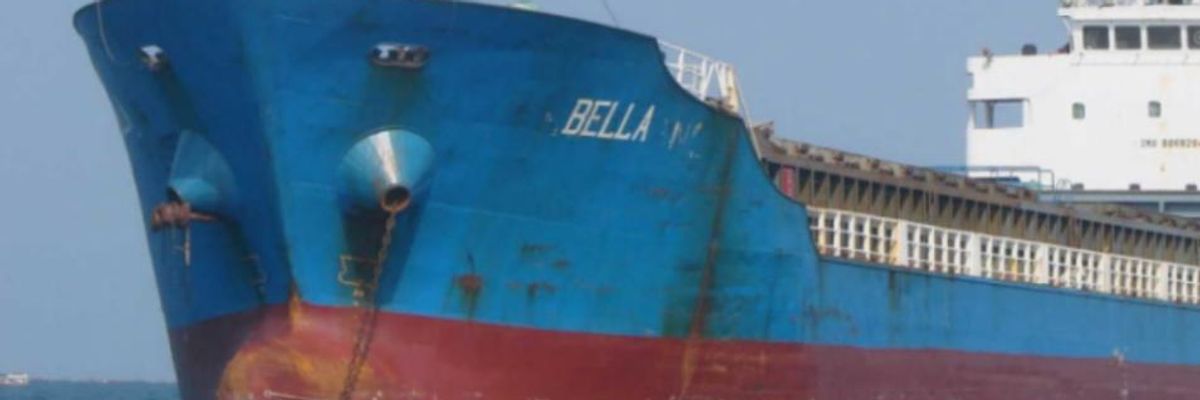
The U.S. government seized the cargo of four ships, including the Bella, the U.S. Justice Department confirmed Friday. (Photo: DOJ)
In an escalation of President Donald Trump's sanction regimes against Iran and Venezuela, the Wall Street Journal reported Thursday that the U.S. has for the first time confiscated cargo from four ships that federal prosecutors allege were transporting 1.1 million barrels of Iranian gasoline to the South American country.
The seizure, confirmed Friday by the U.S. Justice Department, comes after federal prosecutors filed a civil-forfeiture complaint in July claiming that the sale was set up Mahmoud Madanipour, an Iranian businessman with supposed ties to his country's Islamic Revolutionary Guard Corps (IRGC), which last year the Trump administration designated a foreign terrorist organization.
"At the time, sanctions experts thought it would be impossible to enforce the U.S. court order in international waters," according to the Associated Press, which also reported on the seizure, citing a pair of unnamed American officials who agreed to discuss the development with the news agency only if granted anonymity.
A senior U.S. official told the Associated Press that no military force was used in the seizures and that the ships weren't physically confiscated. Rather, U.S. officials threatened ship owners, insurers, and captains with sanction to force them to hand over their cargo, which now becomes U.S. property, the official said.
The Journal, however, reported that "the four vessels--Luna, Pandi, Bering, and Bella--were seized at sea in recent days and are now en route to Houston," where they will be met by senior Trump administration officials. The newspaper, which also cited unnamed American government sources, noted that a spokesperson for the U.S. Justice Department declined to comment.
Challenging any suggestion that the seizure was a win for Trump's "maximum pressure" campaign targeting Tehran, Iran's ambassador to Venezuela, Hojad Soltani, tweeted in response to the Journal report Thursday that neither the ships nor their owners are Iranian--though he did not address whether the fuel came from his country.
"This is another lie and act of psychological warfare perpetrated by the U.S. propaganda machine," Soltani wrote in Spanish. "The terrorist #Trump cannot compensate for his humiliation and defeat by Iran using false propaganda."
On Friday, the Justice Department released a statement announcing "the successful disruption of a multimillion dollar fuel shipment" by the IRGC to Venezuela, and said it represented the "largest-ever seizure of fuel shipments from Iran."
The department confirmed that the U.S. government "confiscated the cargo from all four vessels, totaling approximately 1.116 million barrels of petroleum," and "with the assistance of foreign partners, this seized property is now in U.S. custody." The statement did not not comment on the locations of the ships.
Russ Dallen, a Miami-based partner at brokerage Caracas Capital Markets who follows vessel movements, told the AP that the captains of the four ships shut off their tracking devices weeks ago. The news agency reported that the locations of the ships and their cargoes are not currently known.
The Bella, Bering, Pandi, and Luna "were originally part of a flotilla of nine tankers, including five Iranian vessels, which were escorted by an Iranian naval intelligence ship," according to the Journal. "The four privately owned vessels began peeling off from the flotilla after U.S. authorities contacted the owners of the ships."
Venezuela's defense ministry announced in late May that it would begin using Navy warships to escort Iranian fuel tankers to port due to concerns about U.S. government interference. As Common Dreams reported, Venezuelan President Nicolas Maduro said at the time that "we're ready for whatever, whenever."
A few days after that announcement in May, Iranian President Hassan Rouhani cautioned the United States against interfering with the floatilla, warning in a statement that "if our tankers in the Caribbean or anywhere in the world face any problems caused by the Americans, they will face problems as well."
Those five Iranian tankers ultimately reached Venezuela--which, although rich in crude reserves, doesn't produce enough refined gasoline to meet its domestic demands.
Reporting on the U.S. seizure Thursday came after the American military said that the Iranian navy on Wednesday boarded the MT Wila, a Liberian-flagged oil tanker, near the Strait of Hormuz and held the ship for about five hours before releasing it. The U.S. military's Central Command released a black-and-white video of the incident.
"Iranian state television later on Thursday acknowledged the brief seizure, referring to the operation as a routine inspection without elaborating," according to the AP.
The Justice Department suggested in its Friday statement that the Iranian navy's action was "an apparent attempt to recover the seized petroleum, but was unsuccessful."
Trump has repeatedly escalated tensions with Iran since ditching a nuclear deal negotiated under his predecessor in May 2018. The Trump administration in January assassinated Iranian Gen. Qasem Soleimani. Last month, a U.S. military fighter jet conducted "an inspection" of an Iranian commercial plane over Syrian airspace, prompting the aircraft's captain to swiftly drop altitude, which led to several injuries among passengers.
Last week, after State Department Iran Envoy Brian Hook resigned, Trump appointed Special Representative for Venezuela Elliott Abrams to simultaneously serve in both roles. Abrams, as Common Dreams noted, is "a notorious warmonger and supporter of Latin American death squads who was convicted in 1991 of withholding information from Congress during the Iran-Contra scandal."
Dear Common Dreams reader, It’s been nearly 30 years since I co-founded Common Dreams with my late wife, Lina Newhouser. We had the radical notion that journalism should serve the public good, not corporate profits. It was clear to us from the outset what it would take to build such a project. No paid advertisements. No corporate sponsors. No millionaire publisher telling us what to think or do. Many people said we wouldn't last a year, but we proved those doubters wrong. Together with a tremendous team of journalists and dedicated staff, we built an independent media outlet free from the constraints of profits and corporate control. Our mission has always been simple: To inform. To inspire. To ignite change for the common good. Building Common Dreams was not easy. Our survival was never guaranteed. When you take on the most powerful forces—Wall Street greed, fossil fuel industry destruction, Big Tech lobbyists, and uber-rich oligarchs who have spent billions upon billions rigging the economy and democracy in their favor—the only bulwark you have is supporters who believe in your work. But here’s the urgent message from me today. It's never been this bad out there. And it's never been this hard to keep us going. At the very moment Common Dreams is most needed, the threats we face are intensifying. We need your support now more than ever. We don't accept corporate advertising and never will. We don't have a paywall because we don't think people should be blocked from critical news based on their ability to pay. Everything we do is funded by the donations of readers like you. When everyone does the little they can afford, we are strong. But if that support retreats or dries up, so do we. Will you donate now to make sure Common Dreams not only survives but thrives? —Craig Brown, Co-founder |
In an escalation of President Donald Trump's sanction regimes against Iran and Venezuela, the Wall Street Journal reported Thursday that the U.S. has for the first time confiscated cargo from four ships that federal prosecutors allege were transporting 1.1 million barrels of Iranian gasoline to the South American country.
The seizure, confirmed Friday by the U.S. Justice Department, comes after federal prosecutors filed a civil-forfeiture complaint in July claiming that the sale was set up Mahmoud Madanipour, an Iranian businessman with supposed ties to his country's Islamic Revolutionary Guard Corps (IRGC), which last year the Trump administration designated a foreign terrorist organization.
"At the time, sanctions experts thought it would be impossible to enforce the U.S. court order in international waters," according to the Associated Press, which also reported on the seizure, citing a pair of unnamed American officials who agreed to discuss the development with the news agency only if granted anonymity.
A senior U.S. official told the Associated Press that no military force was used in the seizures and that the ships weren't physically confiscated. Rather, U.S. officials threatened ship owners, insurers, and captains with sanction to force them to hand over their cargo, which now becomes U.S. property, the official said.
The Journal, however, reported that "the four vessels--Luna, Pandi, Bering, and Bella--were seized at sea in recent days and are now en route to Houston," where they will be met by senior Trump administration officials. The newspaper, which also cited unnamed American government sources, noted that a spokesperson for the U.S. Justice Department declined to comment.
Challenging any suggestion that the seizure was a win for Trump's "maximum pressure" campaign targeting Tehran, Iran's ambassador to Venezuela, Hojad Soltani, tweeted in response to the Journal report Thursday that neither the ships nor their owners are Iranian--though he did not address whether the fuel came from his country.
"This is another lie and act of psychological warfare perpetrated by the U.S. propaganda machine," Soltani wrote in Spanish. "The terrorist #Trump cannot compensate for his humiliation and defeat by Iran using false propaganda."
On Friday, the Justice Department released a statement announcing "the successful disruption of a multimillion dollar fuel shipment" by the IRGC to Venezuela, and said it represented the "largest-ever seizure of fuel shipments from Iran."
The department confirmed that the U.S. government "confiscated the cargo from all four vessels, totaling approximately 1.116 million barrels of petroleum," and "with the assistance of foreign partners, this seized property is now in U.S. custody." The statement did not not comment on the locations of the ships.
Russ Dallen, a Miami-based partner at brokerage Caracas Capital Markets who follows vessel movements, told the AP that the captains of the four ships shut off their tracking devices weeks ago. The news agency reported that the locations of the ships and their cargoes are not currently known.
The Bella, Bering, Pandi, and Luna "were originally part of a flotilla of nine tankers, including five Iranian vessels, which were escorted by an Iranian naval intelligence ship," according to the Journal. "The four privately owned vessels began peeling off from the flotilla after U.S. authorities contacted the owners of the ships."
Venezuela's defense ministry announced in late May that it would begin using Navy warships to escort Iranian fuel tankers to port due to concerns about U.S. government interference. As Common Dreams reported, Venezuelan President Nicolas Maduro said at the time that "we're ready for whatever, whenever."
A few days after that announcement in May, Iranian President Hassan Rouhani cautioned the United States against interfering with the floatilla, warning in a statement that "if our tankers in the Caribbean or anywhere in the world face any problems caused by the Americans, they will face problems as well."
Those five Iranian tankers ultimately reached Venezuela--which, although rich in crude reserves, doesn't produce enough refined gasoline to meet its domestic demands.
Reporting on the U.S. seizure Thursday came after the American military said that the Iranian navy on Wednesday boarded the MT Wila, a Liberian-flagged oil tanker, near the Strait of Hormuz and held the ship for about five hours before releasing it. The U.S. military's Central Command released a black-and-white video of the incident.
"Iranian state television later on Thursday acknowledged the brief seizure, referring to the operation as a routine inspection without elaborating," according to the AP.
The Justice Department suggested in its Friday statement that the Iranian navy's action was "an apparent attempt to recover the seized petroleum, but was unsuccessful."
Trump has repeatedly escalated tensions with Iran since ditching a nuclear deal negotiated under his predecessor in May 2018. The Trump administration in January assassinated Iranian Gen. Qasem Soleimani. Last month, a U.S. military fighter jet conducted "an inspection" of an Iranian commercial plane over Syrian airspace, prompting the aircraft's captain to swiftly drop altitude, which led to several injuries among passengers.
Last week, after State Department Iran Envoy Brian Hook resigned, Trump appointed Special Representative for Venezuela Elliott Abrams to simultaneously serve in both roles. Abrams, as Common Dreams noted, is "a notorious warmonger and supporter of Latin American death squads who was convicted in 1991 of withholding information from Congress during the Iran-Contra scandal."
In an escalation of President Donald Trump's sanction regimes against Iran and Venezuela, the Wall Street Journal reported Thursday that the U.S. has for the first time confiscated cargo from four ships that federal prosecutors allege were transporting 1.1 million barrels of Iranian gasoline to the South American country.
The seizure, confirmed Friday by the U.S. Justice Department, comes after federal prosecutors filed a civil-forfeiture complaint in July claiming that the sale was set up Mahmoud Madanipour, an Iranian businessman with supposed ties to his country's Islamic Revolutionary Guard Corps (IRGC), which last year the Trump administration designated a foreign terrorist organization.
"At the time, sanctions experts thought it would be impossible to enforce the U.S. court order in international waters," according to the Associated Press, which also reported on the seizure, citing a pair of unnamed American officials who agreed to discuss the development with the news agency only if granted anonymity.
A senior U.S. official told the Associated Press that no military force was used in the seizures and that the ships weren't physically confiscated. Rather, U.S. officials threatened ship owners, insurers, and captains with sanction to force them to hand over their cargo, which now becomes U.S. property, the official said.
The Journal, however, reported that "the four vessels--Luna, Pandi, Bering, and Bella--were seized at sea in recent days and are now en route to Houston," where they will be met by senior Trump administration officials. The newspaper, which also cited unnamed American government sources, noted that a spokesperson for the U.S. Justice Department declined to comment.
Challenging any suggestion that the seizure was a win for Trump's "maximum pressure" campaign targeting Tehran, Iran's ambassador to Venezuela, Hojad Soltani, tweeted in response to the Journal report Thursday that neither the ships nor their owners are Iranian--though he did not address whether the fuel came from his country.
"This is another lie and act of psychological warfare perpetrated by the U.S. propaganda machine," Soltani wrote in Spanish. "The terrorist #Trump cannot compensate for his humiliation and defeat by Iran using false propaganda."
On Friday, the Justice Department released a statement announcing "the successful disruption of a multimillion dollar fuel shipment" by the IRGC to Venezuela, and said it represented the "largest-ever seizure of fuel shipments from Iran."
The department confirmed that the U.S. government "confiscated the cargo from all four vessels, totaling approximately 1.116 million barrels of petroleum," and "with the assistance of foreign partners, this seized property is now in U.S. custody." The statement did not not comment on the locations of the ships.
Russ Dallen, a Miami-based partner at brokerage Caracas Capital Markets who follows vessel movements, told the AP that the captains of the four ships shut off their tracking devices weeks ago. The news agency reported that the locations of the ships and their cargoes are not currently known.
The Bella, Bering, Pandi, and Luna "were originally part of a flotilla of nine tankers, including five Iranian vessels, which were escorted by an Iranian naval intelligence ship," according to the Journal. "The four privately owned vessels began peeling off from the flotilla after U.S. authorities contacted the owners of the ships."
Venezuela's defense ministry announced in late May that it would begin using Navy warships to escort Iranian fuel tankers to port due to concerns about U.S. government interference. As Common Dreams reported, Venezuelan President Nicolas Maduro said at the time that "we're ready for whatever, whenever."
A few days after that announcement in May, Iranian President Hassan Rouhani cautioned the United States against interfering with the floatilla, warning in a statement that "if our tankers in the Caribbean or anywhere in the world face any problems caused by the Americans, they will face problems as well."
Those five Iranian tankers ultimately reached Venezuela--which, although rich in crude reserves, doesn't produce enough refined gasoline to meet its domestic demands.
Reporting on the U.S. seizure Thursday came after the American military said that the Iranian navy on Wednesday boarded the MT Wila, a Liberian-flagged oil tanker, near the Strait of Hormuz and held the ship for about five hours before releasing it. The U.S. military's Central Command released a black-and-white video of the incident.
"Iranian state television later on Thursday acknowledged the brief seizure, referring to the operation as a routine inspection without elaborating," according to the AP.
The Justice Department suggested in its Friday statement that the Iranian navy's action was "an apparent attempt to recover the seized petroleum, but was unsuccessful."
Trump has repeatedly escalated tensions with Iran since ditching a nuclear deal negotiated under his predecessor in May 2018. The Trump administration in January assassinated Iranian Gen. Qasem Soleimani. Last month, a U.S. military fighter jet conducted "an inspection" of an Iranian commercial plane over Syrian airspace, prompting the aircraft's captain to swiftly drop altitude, which led to several injuries among passengers.
Last week, after State Department Iran Envoy Brian Hook resigned, Trump appointed Special Representative for Venezuela Elliott Abrams to simultaneously serve in both roles. Abrams, as Common Dreams noted, is "a notorious warmonger and supporter of Latin American death squads who was convicted in 1991 of withholding information from Congress during the Iran-Contra scandal."