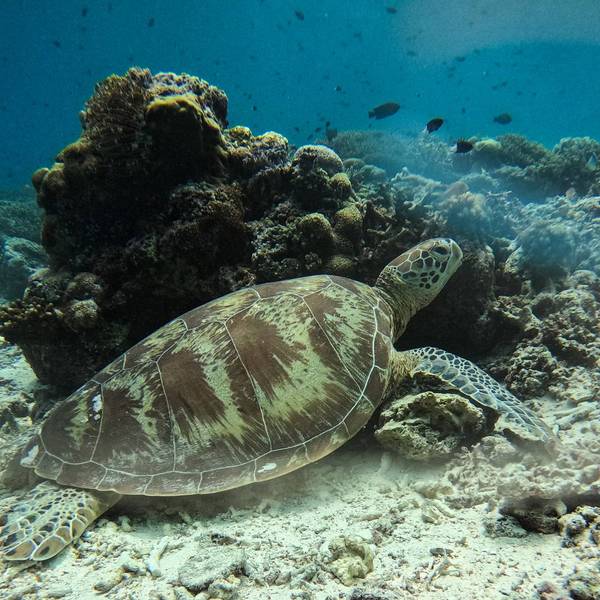

The United Nations reported on Friday that declining biodiversity is threatening food systems worldwide. (Photo: David Lewis/Flickr/cc)
'Terrifying': Rapid Loss of Biodiversity Placing Global Food Supplies at Risk of 'Irreversible Collapse'
"This should be at the top of every news bulletin and every government's agenda around the world."
A groundbreaking report by the United Nations highlighting the rapid, widespread loss of many of the world's plant and animal species should be on the front page of every newspaper in the world, argued climate action and food access advocates on Friday.
The global grassroots organization Slow Food was among the groups that called for far greater attention by world leaders to the "debilitating" loss of biodiversity and the disastrous effects the decline is having on food system, which was outlined in a first-of-its kind report by the Food and Agriculture Organization of the United Nations (FAO).
"This should be at the top of every news bulletin and every government's agenda around the world," said Slow Food in a statement. "Time is running out, we must turn things around within the next 10 years or risk a total and irreversible collapse."
"Consider biodiversity as a global puzzle. Losing too many pieces makes the picture incomplete. Thus, biodiversity loss for food and agriculture represents a big risk for food security." --Bernard Lehmann, Swiss agriculture secretary
According to FAO's study of 91 countries around the world, the loss of thousands of plant and animal species is affecting air and water quality, tree and plant health, and worsening the spread of disease among livestock--all with dangerous implications for the human population and humans' food sources.
"Less biodiversity means that plants and animals are more vulnerable to pests and diseases. Compounded by our reliance on fewer and fewer species to feed ourselves, the increasing loss of biodiversity for food and agriculture puts food security and nutrition at risk," said Jose Graziano da Silva, FAO's director-general.
"Consider biodiversity as a global puzzle," Switzerland's secretary of state for agriculture, Bernard Lehmann, said Friday. "Losing too many pieces makes the picture incomplete. Thus, biodiversity loss for food and agriculture represents a big risk for food security."
Along with the report, FAO shared a video on Twitter outlining the dire implications of biodiversity loss.
"Today only nine crops account for 66 percent of total crop production," the organization said. "Our forests are shrinking. As they disappear so do the plants, insects, and animals they host...Now is the time to act."
According to FAO, at least 24 percent of nearly 4,000 wild food species, including plants, fish, and mammals, are declining in abundance--but the report is likely giving a best-case scenario of the crisis, as the status of more than half of wild food species is unknown.
Changes in land and water management, pollution, the warming of the globe and the climate crisis are among the factors that FAO is blaming for the catastrophic loss of biodiversity.
Declining plant biodiversity on working farms has meant that out of 6,000 plant species that can be cultivated for food, fewer than 200 are used significantly as food sources. The report pointed to The Gambia as a country where the loss of wild food sources has led the population to rely heavily on industrially-processed foods.
Of more than 7,700 breeds of livestock worldwide, more than a quarter are at risk for extinction, according to FAO, while nearly a third of fish species have been overfished and about half have reached their sustainable level, meaning humans must immediately stop driving them toward extinction in order to save the species.
In the United Kingdom, MP Caroline Lucas of the Green Party pronounced FAO's findings "terrifying" and demanded that governments take notice immediately to save world food sources.
Leaders must incentivize the use of sustainable practices for farming, Lucas argued, as well as pushing for a worldwide ban on dangerous pesticides like neonicotinoids, which have threatened the world's pollinators and in turn have put at risk every third bite of food that humans take.
Combating the loss of biodiversity "relies on combining modern knowledge and technology with its traditional counterparts, and redefining our approach to agriculture and food production, placing the preservation of biodiversity and ecology on equal footing with profit and productivity," said Slow Food. "On every level, from small-scale farmers and producers, to the highest levels of government, and through regulations like those in the EU Common Agricultural Policy (CAP), must be geared towards a food system that protects biodiversity."
We are at a crossroads
This country and this world are at a monumental crossroads. In a few short weeks, US voters will have an opportunity to beat back the forces of fascism and confront the billionaires who are rigging the economy, our media system, and our democracy, making it increasingly impossible for ordinary people to get by. We’re not just talking about the election. We’re talking about what must be done once these fascist elements are vanquished from power. We need a bolder set of solutions than what either major party has so far been willing to offer and a working-class movement ready to fight like hell for it. Trump didn't emerge from nowhere. The conditions that fueled MAGA authoritarianism were created by decades of radical neoliberal economic policies and a corrupt political system dominated by corporate interests. They slashed taxes on the super-rich, promising that the benefits would trickle down. They said giveaways to the corporate titans would make life more affordable for the rest of us. It was all bullshit. And when a bitter, betrayed populace searches for someone to blame, right-wing demagogues have little trouble finding scapegoats. People know when they're being lied to, but you won't hear any of this from the corporate media. Only independent journalism—powered and funded by people who believe in building a better world—can deliver truly trustworthy daily news. Our Fall Campaign is underway, and we need your help. To power our newsroom through the rest of the year, we need to raise $125,000 by midnight on October 31. So if you share our vision, please contribute whatever you can to sustain our work. |
A groundbreaking report by the United Nations highlighting the rapid, widespread loss of many of the world's plant and animal species should be on the front page of every newspaper in the world, argued climate action and food access advocates on Friday.
The global grassroots organization Slow Food was among the groups that called for far greater attention by world leaders to the "debilitating" loss of biodiversity and the disastrous effects the decline is having on food system, which was outlined in a first-of-its kind report by the Food and Agriculture Organization of the United Nations (FAO).
"This should be at the top of every news bulletin and every government's agenda around the world," said Slow Food in a statement. "Time is running out, we must turn things around within the next 10 years or risk a total and irreversible collapse."
"Consider biodiversity as a global puzzle. Losing too many pieces makes the picture incomplete. Thus, biodiversity loss for food and agriculture represents a big risk for food security." --Bernard Lehmann, Swiss agriculture secretary
According to FAO's study of 91 countries around the world, the loss of thousands of plant and animal species is affecting air and water quality, tree and plant health, and worsening the spread of disease among livestock--all with dangerous implications for the human population and humans' food sources.
"Less biodiversity means that plants and animals are more vulnerable to pests and diseases. Compounded by our reliance on fewer and fewer species to feed ourselves, the increasing loss of biodiversity for food and agriculture puts food security and nutrition at risk," said Jose Graziano da Silva, FAO's director-general.
"Consider biodiversity as a global puzzle," Switzerland's secretary of state for agriculture, Bernard Lehmann, said Friday. "Losing too many pieces makes the picture incomplete. Thus, biodiversity loss for food and agriculture represents a big risk for food security."
Along with the report, FAO shared a video on Twitter outlining the dire implications of biodiversity loss.
"Today only nine crops account for 66 percent of total crop production," the organization said. "Our forests are shrinking. As they disappear so do the plants, insects, and animals they host...Now is the time to act."
According to FAO, at least 24 percent of nearly 4,000 wild food species, including plants, fish, and mammals, are declining in abundance--but the report is likely giving a best-case scenario of the crisis, as the status of more than half of wild food species is unknown.
Changes in land and water management, pollution, the warming of the globe and the climate crisis are among the factors that FAO is blaming for the catastrophic loss of biodiversity.
Declining plant biodiversity on working farms has meant that out of 6,000 plant species that can be cultivated for food, fewer than 200 are used significantly as food sources. The report pointed to The Gambia as a country where the loss of wild food sources has led the population to rely heavily on industrially-processed foods.
Of more than 7,700 breeds of livestock worldwide, more than a quarter are at risk for extinction, according to FAO, while nearly a third of fish species have been overfished and about half have reached their sustainable level, meaning humans must immediately stop driving them toward extinction in order to save the species.
In the United Kingdom, MP Caroline Lucas of the Green Party pronounced FAO's findings "terrifying" and demanded that governments take notice immediately to save world food sources.
Leaders must incentivize the use of sustainable practices for farming, Lucas argued, as well as pushing for a worldwide ban on dangerous pesticides like neonicotinoids, which have threatened the world's pollinators and in turn have put at risk every third bite of food that humans take.
Combating the loss of biodiversity "relies on combining modern knowledge and technology with its traditional counterparts, and redefining our approach to agriculture and food production, placing the preservation of biodiversity and ecology on equal footing with profit and productivity," said Slow Food. "On every level, from small-scale farmers and producers, to the highest levels of government, and through regulations like those in the EU Common Agricultural Policy (CAP), must be geared towards a food system that protects biodiversity."