

SUBSCRIBE TO OUR FREE NEWSLETTER
Daily news & progressive opinion—funded by the people, not the corporations—delivered straight to your inbox.
5
#000000
#FFFFFF
To donate by check, phone, or other method, see our More Ways to Give page.
Daily news & progressive opinion—funded by the people, not the corporations—delivered straight to your inbox.
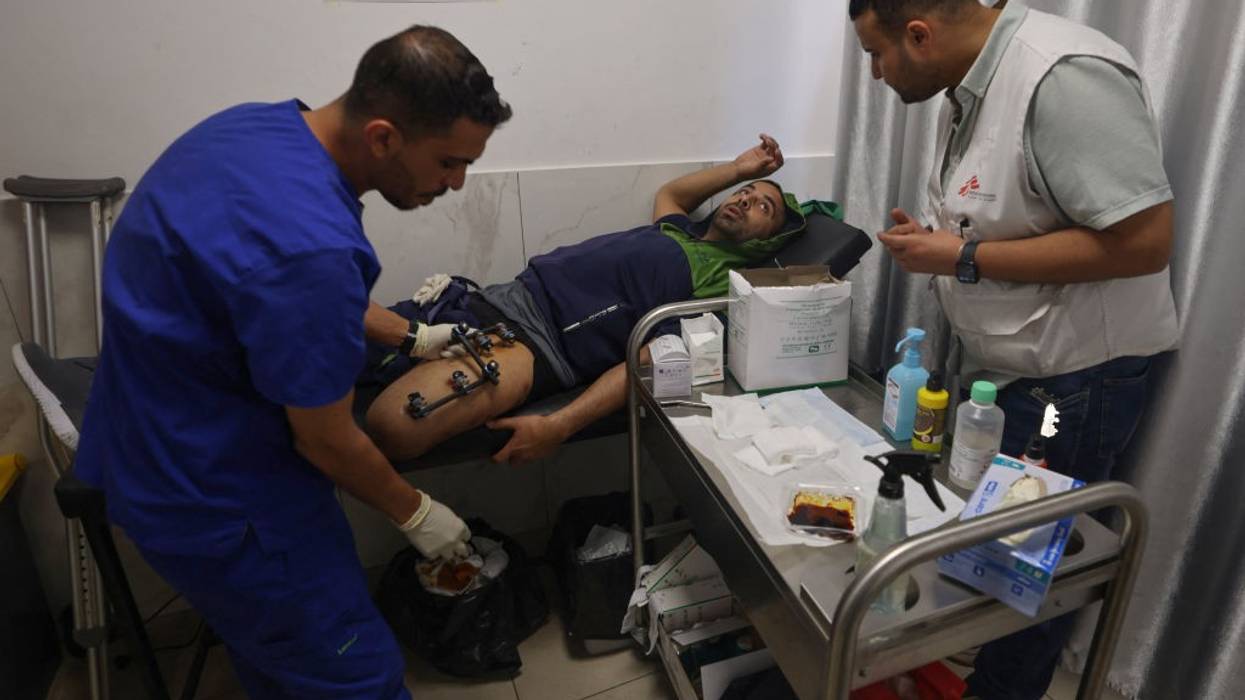
"Support for Israel requires you to be against everything good in this world, like an organization which sends doctors to conflict areas to save human lives," said one observer.
Doctors Without Borders on Saturday condemned allegations made by a British pro-Israel lobby group, which called on Home Secretary Shabana Mahmood to investigate and potentially proscribe the group, whose medical providers and other humanitarian workers provide lifesaving aid in 70 countries and have worked in Palestine during Israel's assault there.
As The Telegraph reported, UK Lawyers for Israel (UKFLI) wrote to Mahmood as well as the Charity Commission and Fundraising Regulator, calling on the Labour government to investigate Doctors Without Borders, also known by its French name, Médecins Sans Frontières (MSF).
The group claimed at least two of MSF's workers who were killed by Israeli forces, physiologist Fadi Al Wadiya and driver Nasser Hamdi Abdelatif Al Shalfouh, had connections to terrorist groups in Gaza.
Palestine Islamic Jihad published a poster earlier this year naming Wadiya as a "martyr commander," and UKFLI claimed Al Shalfouh was a sniper for a Hamas battalion.
MSF acknowledged the poster regarding Wadiya in February and said the medical group "had no indication that Fadi Al Wadiya might have been involved in military activity of any kind prior to his killing by the Israeli Forces."
“If the Israeli authorities had any reliable information about Fadi’s involvement in military activity, they never shared it with MSF either prior to his killing or when we reached out immediately after he was killed to ask for clarifications around the circumstances of his death," the group added. “We would never knowingly employ people engaging in military activity. Any employee who engages in military activity would pose a danger to our staff and patients.”
UKFLI sent its report on MSF to Mahmood asking her to ban the group, as the Labour government proscribed the protest group Palestine Action last year, labeling it a terrorist group under the Terrorism Act. The government took that action after members of the group vandalized planes at a military base.
The designation put Palestine Action on the same legal footing as Al Qaeda in the UK and made membership of the group—or even expressions of support for it—punishable by up to 14 years in prison.
The demand for the same designation for MSF, said former British Army general Charlie Herbert, was "absolutely grotesque."
MSF doctors and healthcare workers have treated thousands of Palestinians in Gaza since Israel began its onslaught there in October 2023 in retaliation for a Hamas-led attack. At least 15 people working with the organization have been killed by Israeli forces. The group is also currently providing humanitarian and medical aid in Sudan as the civil war there has displaced millions of people and collapsed the healthcare system; in Yemen as the conflict between the Houthis and Saudi-backed government troops has escalated; and in the Democratic Republic of Congo, which is facing an Ebola outbreak as well as humanitarian crises exacerbated by years of conflict.
"I work in aid, and when people ask who to support I always say MSF," said researcher and activist Philip Proudfoot. "MSF, wherever I’ve been, are right there on the front, in dangerous conditions, in isolated outposts, providing life-saving support. They’re heroes. UK lawyers for Israel are not fit to wash their scrubs."
US-based researcher Shaiel Ben-Ephraim said the report by UKLFI demonstrates that "support for Israel requires you to be against everything good in this world, like an organization which sends doctors to conflict areas to save human lives."
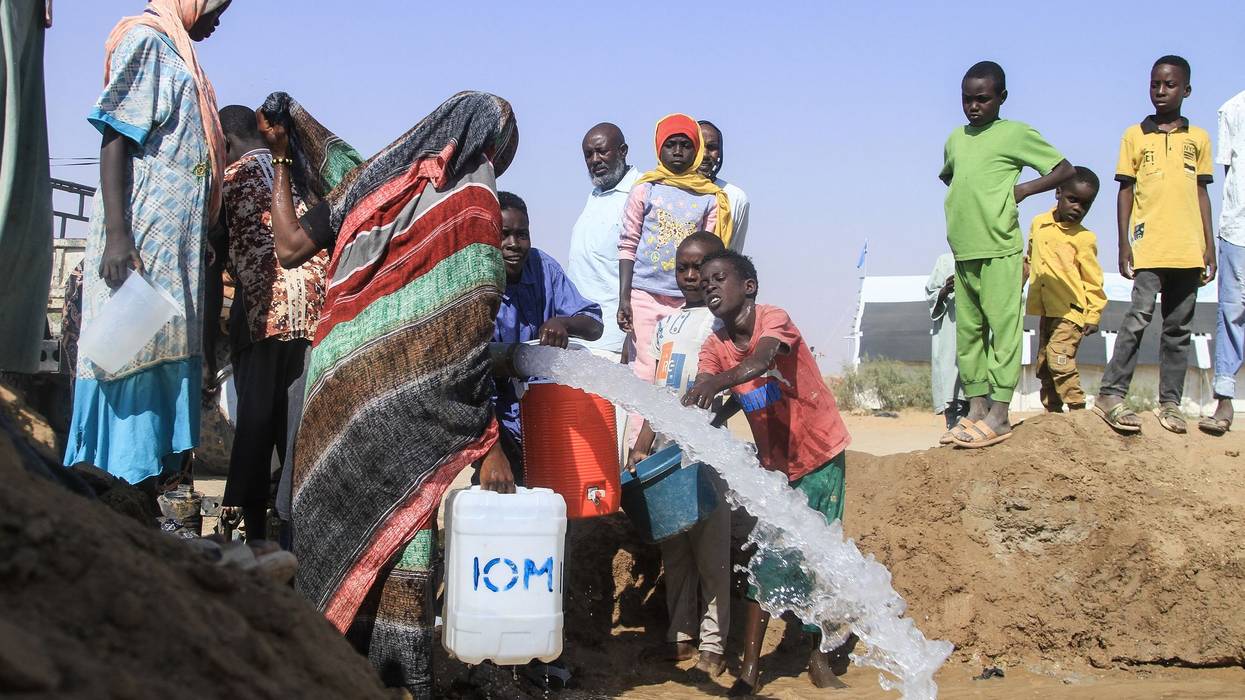
"War is driving Sudan’s needs; funding cuts are shrinking the response."
The renowned humanitarian group Doctors Without Borders said Tuesday that the Trump administration's destruction of the US Agency for International Development has contributed to the collapse of the war-torn nation's healthcare system, forcing clinics to close and leaving millions of people without access to lifesaving treatment.
The organization, known internationally as Médecins Sans Frontières (MSF), said the closure of USAID last year at the behest of President Donald Trump and the world's richest man, Elon Musk, left many healthcare providers in Sudan "unable to find alternative funding to continue providing services," leaving facilities with no option but to shut down in the midst of a worsening humanitarian catastrophe.
"War is driving Sudan’s needs; funding cuts are shrinking the response,” Muhammad Ibrahim, MSF's head of mission in Sudan, said in a statement on Tuesday. “MSF’s work in Sudan is privately funded. But when funding disappears from other health services, clinics close, patients have fewer places to go, and pressure shifts to the facilities that remain, including ours.”
MSF said its hospital in Um Rakuba, a refugee camp in eastern Sudan, is now "the only lifeline left" for locals and refugees.
"The cuts here go well beyond healthcare," emphasized Fabrizio Locuratolo, MSF humanitarian affairs manager. "Food rations are shrinking and protection programs are being dismantled, pulling away the last safety nets and leaving refugees completely exposed.”
The dismantling of USAID by Musk's wrecking crew at the so-called US Department of Government Efficiency has already killed hundreds of thousands of people—most of them children—according to experts tracking the impacts on humanitarian aid around the world. Musk and the Trump administration have continued to deny that the aid cuts have killed any children.
A study published in The Lancet earlier this year estimated that the gutting of USAID—whose surviving programs were mostly transferred to the US State Department—could result in more than 14 million additional deaths by the end of the decade. The US Department of Agriculture took over USAID's Food for Peace program—and subsequently omitted Sudan from the list of countries that would receive shipments of US grain.
MSF said Tuesday that "just as health providers faced the impending removal of US support, many European governments also reduced their assistance to people in Sudan."
The results have been horrific. MSF said that "malaria and malnutrition cases are already rising despite limited rainfall, ahead of the peak of the rainy season—and we expect numbers to increase as the rain intensifies."
"In August, our teams admitted 191 children under five with severe malnutrition to our inpatient feeding center, and nearly 22% also tested positive for malaria," the group said Tuesday. "The UN reports that 825,000 children under five are expected to suffer severe acute malnutrition and 19.5 million people faced crisis-level hunger earlier this year. Yet the UN’s $2.87 billion response plan is barely 41 per cent funded, and 37 per cent of Sudan’s health facilities are estimated to be completely out of service."
"As world leaders gather at the UN General Assembly, governments and institutional donors must protect funding for essential health services in Sudan and provide flexible transitional financing where facilities are at risk of closure," the organization pleaded.
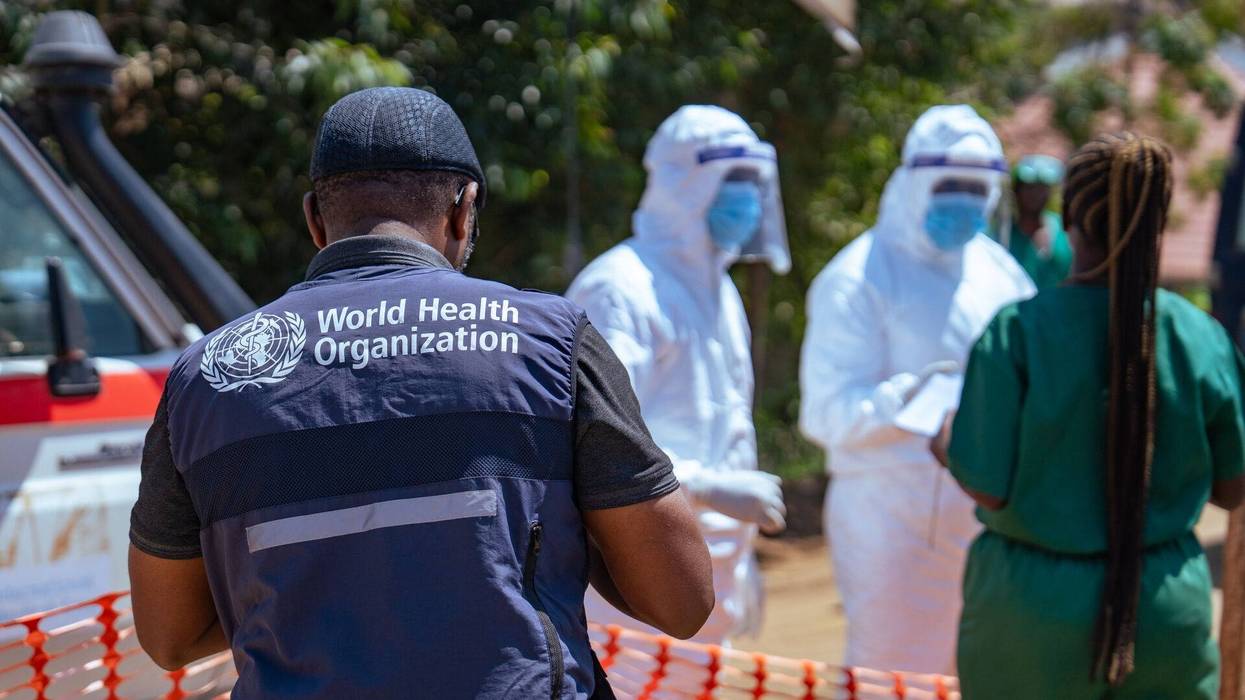
In just under 100 days, the epidemic has killed over 2,500 people and is "now covering an area that is bigger than France."
It's been nearly 100 days since authorities in the Democratic Republic of Congo declared the Ebola outbreak and, as a key United Nations humanitarian official said Friday, the disease has now killed over 2,500 people and continues to rapidly spread.
"The Ebola outbreak is growing exponentially," said the UN's senior Ebola coordinator, Julien Harneis. "In the last three months, 2,500 people have died, and half of those in the last 20 days."
"The epidemic is spreading widely," he continued. "It's now covering an area that is bigger than France."
Harneis acknowledged the outbreak's toll on healthcare providers, with 160 having contracted Ebola—43 of whom have died. He said that "apart from the threat from the virus, healthcare workers and frontline workers have been attacked by youths, ambulances have been burned and stoned, and the healthcare facilities have been attacked."
"Conditions on the ground are extremely difficult," the official said, "but we will continue deploying all the humanitarian and medical assistance needed until the job is done."
"We're only covered for the next weeks, and very soon funding will run out," he noted. "Every delay in funding and implementation makes this epidemic more deadly, more difficult to stop and more expensive. So, we need that international support immediately."
As the outbreak has worsened, US President Donald Trump has faced renewed global criticism for withdrawing from the World Health Organization (WHO), dismantling the US Agency for International Development, and cutting public health funds.
Harneis nodded to those moves on Friday, according to UN News:
Although the United States has contributed $80 million to the DRC government to boost bed capacity and safe burial practices, among other support, cuts to aid work—especially in the last two years—have reduced the capacity of humanitarian organizations by more than 30%, he added.
Despite these challenges, multiple specialist UN agencies continue to work alongside the DRC authorities to push back Ebola. They include the World Health Organization, the World Food Program, the UN Children's Fund (UNICEF), the UN migration agency (IOM) and partners including Médecins Sans Frontières.
"This epidemic continues to spread, moving faster than the response can keep up," Dr. Javid Abdelmoneim, international president of Médecins Sans Frontières (MSF), also known as Doctors Without Borders, said in a Friday statement. "Treatment centers remain essential for saving lives, but this response needs more than extra beds."
"It needs better detection, safe isolation for sick people and their contacts, and support to health workers," Abdelmoneim said. "People seeking care in existing health facilities also need to be protected from infection. Crucially, the response must be built with communities, not around them."
Trish Newport, the group's emergency program manager in Ituri province, said that UN agencies, humanitarian organizations, and the Congolese Ministry of Health "must urgently expand" training and support so that workers and community leaders can "help detect cases early, refer people safely, reinforce infection prevention and control, and protect themselves and others from infection."
WHO said Thursday that "Ituri province remains the epicenter, but ongoing transmission, spread to new areas, a high case fatality ratio (47%), and increasing infections among healthcare workers indicate that the outbreak remains severe and difficult to control."
"Imported cases have been reported in Uganda, France, and Germany, demonstrating the potential for international spread, although no sustained transmission has occurred outside the DRC," the agency continued. "The overall risk remains very high in the DRC, high for neighboring countries, particularly those sharing land borders with the DRC, and low at the regional and global levels, where preparedness and rapid detection measures are helping to prevent wider spread."
While the DRC infections are being caused by the Bundibugyo virus, the government recently requested a release of Ervebo vaccines from the global stockpile, given that, as WHO explained Thursday, "early laboratory and animal data suggest it may provide some protection."
The UN agency said that the International Coordinating Group on Vaccine Provision, which manages the stockpile, informed the DRC of an immediate initial release of 70,000 doses, including 50,000 for frontline and health workers, and 20,000 "for a Phase 3 clinical trial to understand the impact of the vaccine on the Bundibugyo virus."
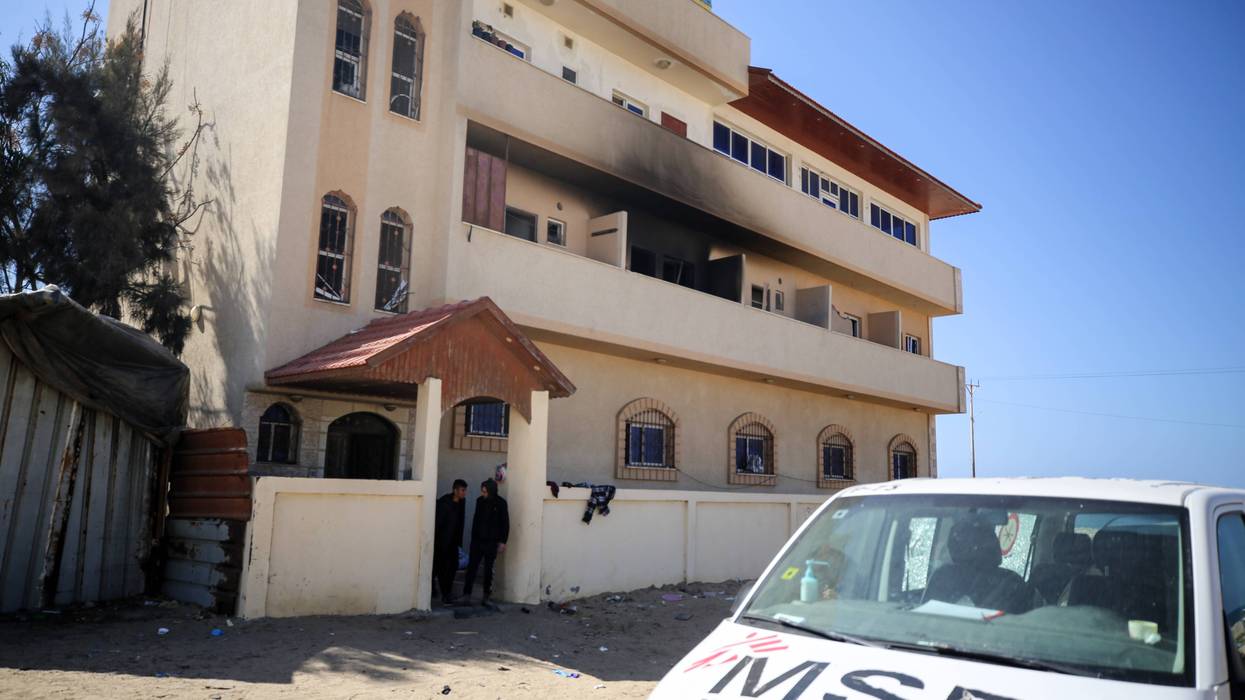
"This is not justice," said the healthcare charity. "Two years of silence, followed by closures that raise more questions than they answer, is unacceptable."
The international healthcare charity Médecins Sans Frontières on Thursday joined the humanitarian group World Central Kitchen in demanding that an "impartial investigative body" examine deadly Israeli attacks on its staffers in Gaza, following the Israeli military's announcement that it was closing the cases without opening a criminal investigation.
MSF, also known in English as Doctors Without Borders, noted that the decision by the Israeli military advocate general (MAG) did "not come as a surprise" and was "the predictable output of a military apparatus investigating itself."
The Israel Defense Forces and Prime Minister Benjamin Netanyahu's government, said the France-based organization, have proven themselves "unwilling to respond to the extent of violations that may amount to war crimes emerging from Gaza," with Israeli officials continuing to insist that the IDF has been targeting Hamas with its bombardment of Gaza—despite the fact that the death toll of more than 73,000 Palestinians includes at least 22,000 women and 20,000 children and that healthcare facilities, schools, and at least 92% of residential buildings have been destroyed or damaged in attacks.
In addition, said MSF, 15 staff members of the healthcare organization have been killed by Israeli forces since they began bombarding Gaza in retaliation for a Hamas-led attack in October 2023, including two who were killed in multiple attacks on an aid convoy in Gaza City in November 2023 and two who were killed in a strike on an MSF shelter in Khan Younis in February 2024.
"There is no military objective that justifies the wholesale sacrifice of civilians. And there is no internal military review that can substitute for genuine, independent, and impartial accountability."
MSF submitted those cases to the MAG for review, but along with an attack that killed seven World Central Kitchen (WCK) aid workers in April 2024, the military said there was no suspicion of criminal conduct in the assaults on MSF workers.
"This is not justice," said MSF. "Two years of silence, followed by closures that raise more questions than they answer, is unacceptable."
"MSF staff and their family members are dead. Their names are known," the group continued. "Their locations were shared. Their vehicles were identified. We have always maintained that all elements point to a clear responsibility of the Israeli army for the deadly attacks. And yet, those responsible for their deaths have declined to pursue any criminal investigation."
The decision by the MAG makes clear, said the group, that "there is no prospect of accountability within the Israeli legal system for the killing of our staff, just as there has been no accountability for Israel's ongoing genocide against Palestinians."
Following the MAG's announcement on Wednesday, World Central Kitchen issued a statement condemning Israel's "account of the deaths of our seven colleagues on April 1, 2024."
"We fundamentally disagree with their decision about criminal investigations into the IDF airstrikes that killed our team," said WCK. "There has never been any excuse or justification for the attacks, and there is nothing in this account that does so. The decision is inconsistent with the full truth and deeply offensive."
Israeli authorities did not issue a warning to WCK before it attacked the aid organization's convoy, which was traveling through what was supposed to be a deconflicted zone when it was struck.
"At the time of the lethal attacks, the IDF knew that our team in Gaza was unarmed and posing a threat to nobody. It had full visual clarity on our clearly marked humanitarian vehicles during the extended, multiple airstrikes. It knew our team’s movements, identities, and activities in advance," said WCK. "We continue to demand truth and justice for our team and their families. We continue to demand an independent commission to investigate the airstrikes because the IDF cannot credibly investigate its own conduct. And we continue to grieve the loss of our friends."
MSF stressed that Israel's decision to "close" the cases of the attacks "must be understood in their proper context: In Gaza, tens of thousands of Palestinians have been killed. Healthcare facilities have been destroyed. Humanitarian convoys have been struck. Journalists, medical personnel, UN personnel, and aid workers have been killed in numbers unprecedented in any recent conflict."
"MSF reaffirms what we have stated since the beginning of this violence: There is no military objective that justifies the wholesale sacrifice of civilians," said the group. "And there is no internal military review that can substitute for genuine, independent, and impartial accountability."
"To our colleagues we have lost," MSF added, "and to the countless civilians and humanitarian workers who have perished in Gaza: We will not let your deaths be filed away as procedural inevitabilities. You deserved protection. You deserve justice."
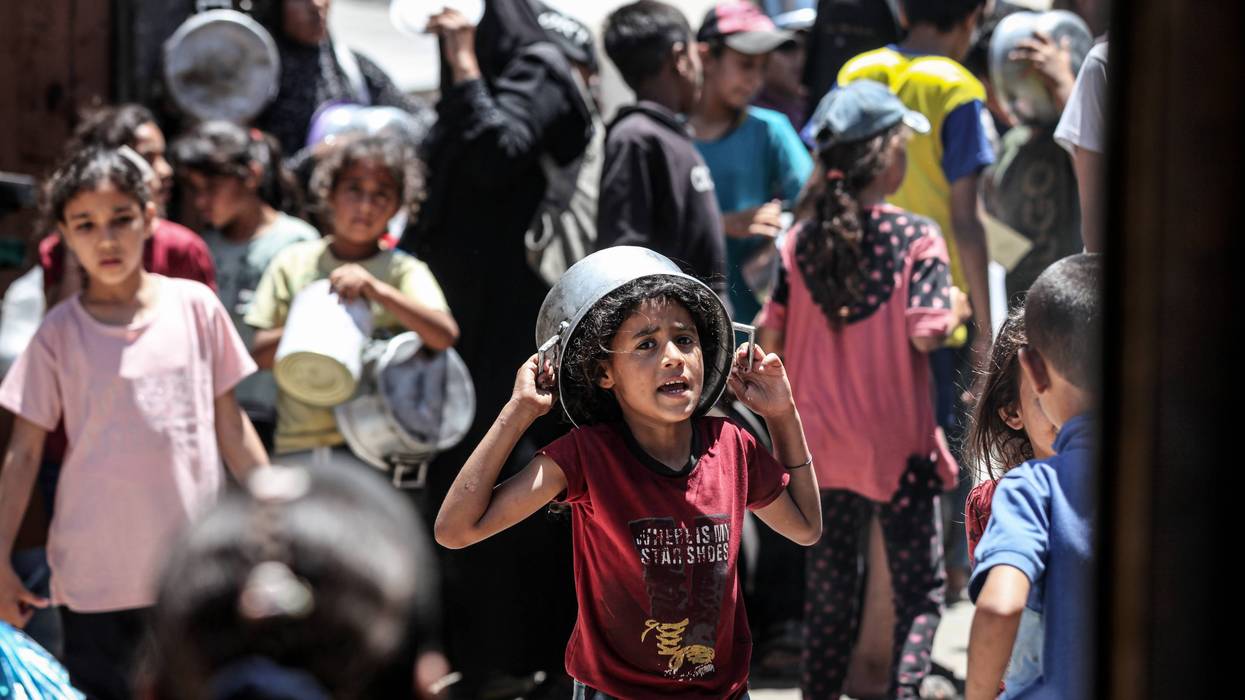
"What we are witnessing in Gaza is not a series of isolated shortages, it is a policy of attrition by design."
The renowned humanitarian group Doctors Without Borders said Wednesday that the Israeli government is still restricting the entry of engine oil and generator parts to the Gaza Strip, imperiling life-saving hospital functions and other essential services in the decimated territory.
Doctors Without Borders, known internationally as Médecins Sans Frontières (MSF), noted that Gaza's remaining healthcare system relies "almost entirely" on generators, "with most electricity cut by Israeli authorities and much of the electrical infrastructure destroyed." The group said that in some Gaza facilities, its teams barely have sufficient engine oil to last a month and have been forced to "buy engine oil at the local market at exorbitant prices."
Filipe Ribeiro, MSF's head of mission in Palestine, said that "what we are witnessing in Gaza is not a series of isolated shortages, it is a policy of attrition by design."
"For more than two years, we have observed Israel's policies restricting the entry of supplies," said Ribeiro. "These policies do not merely delay aid; they dismantle the very systems people rely on to survive."
Israel's continued restriction of supplies comes as the country's military, which is armed by the United States, keeps up its deadly bombing of the strip despite a purported ceasefire deal that took effect in October 2025. Israeli attacks have killed more than 1,200 people in Gaza since the start of the ceasefire agreement. The Israeli government, headed by Prime Minister Benjamin Netanyahu, has rejected a US-backed plan for Hamas disarmament in exchange for Israeli withdrawal from Gaza.
Earlier this week, a group of United Nations experts condemned Israel's recent "strikes on hospitals and shelters, the killing of police officers and UN-contracted staff, attacks on fishers, and abductions and abuses by armed groups reportedly collaborating with the Israeli military, as well as the killing of humanitarian workers, who through their work protecting and promoting fundamental human rights, are human rights defenders."
"These restrictions have become increasingly far-reaching, also preventing the entry of routine items ranging from ointments for skin diseases to rubber seals needed for medical sterilization equipment."
According to MSF, Israel's sustained attacks and obstruction of supplies "extend far beyond hospitals."
"Without engine oil, all transport services could stop, including much-needed water trucks during the peak of summer heat, ambulances, buses transporting medical staff to work, and trucks delivering humanitarian supplies," the group said. "Bakeries and flour mills also rely on generators, meaning food production could also be affected."
MSF characterized Israel's continued obstruction of engine oil and spare generator parts as "one piece of a larger pattern of structural violence imposed by Israeli authorities to intentionally restrict access to vital services and supplies as part of the ongoing genocide against Palestinians in Gaza."
"These restrictions have become increasingly far-reaching, also preventing the entry of routine items ranging from ointments for skin diseases to rubber seals needed for medical sterilization equipment," the group said. "The shortages now impact virtually every aspect of life in Gaza, leaving hospitals and humanitarian organizations without basic supplies."
Ribeiro said in a statement that "the items change, but the logic remains the same: reducing people to conditions in which life becomes untenable, and dignity is systematically stripped away through the denial of the most ordinary, most essential goods."
"This is not bureaucracy," he added. "It is a deliberate effort to make existence itself impossible."
"A ceasefire should ensure that hostilities are paused, weapons are silenced, and that people are safe from strikes across the strip."
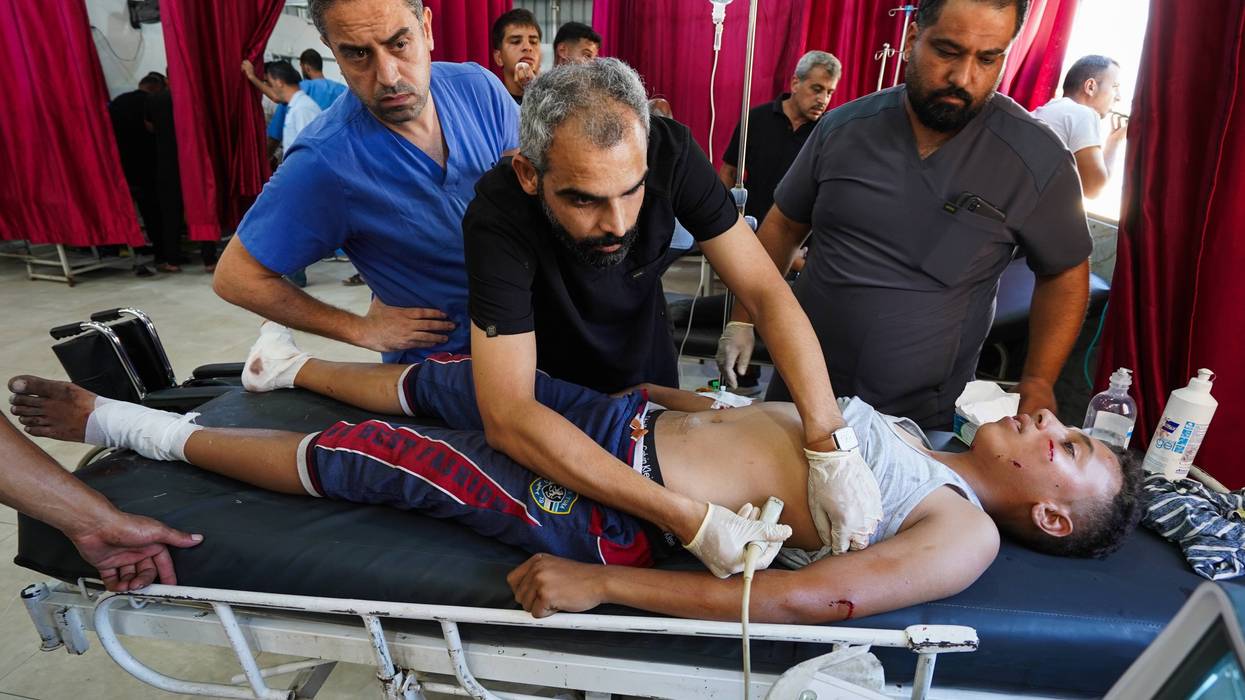
Nearly 10 months into a "ceasefire" in the Gaza Strip, as Israel on Tuesday killed at least one Palestinian man with an airstrike on the Nuseirat refugee camp, Doctors Without Borders declared that "the wounds of war are not only unhealed—they are still being inflicted."
"This is not a ceasefire," said the medical charity, also known as Médecins Sans Frontières (MSF), in a statement. "It is a continuation of the genocide, calibrated to be violent enough to keep Palestinians suffering every day, yet silent enough to avoid stirring international outrage."
Israeli forces have killed more than 73,300 Palestinians in Gaza and wounded over 174,009 since the Hamas-led October 7, 2023 attack on Israel—with global experts warning the true toll is likely far higher. Local authorities have documented at least 1,200 deaths and 3,900 injuries since the ceasefire was agreed to over nine months ago.
Experts with the United Nations and others around the world have denounced the Israeli assault and blockade as a genocide, and South Africa is leading a related case at the International Court of Justice. The International Criminal Court has also issued arrest warrants for Israeli Prime Minister Benjamin Netanyahu and his former defense minister, Yoav Gallant, over the mass slaughter.
Nearly all of Gaza's roughly 2 million survivors have been forcibly displaced, starved, or sickened. MSF said that "the destruction of homes has not stopped with the announcement of the ceasefire. Sudden and arbitrary orders for people to flee their homes and shelters continue to be used as a tool of psychological warfare by Israeli forces."
Rajaa Jendiya, who was widowed in the "flour massacres," is living in a tent at a school-turned-displacement camp with her children. She told Middle East Eye that she often takes them to the hospital because of illnesses.
"Inside and around the school, you often see sewage water overflowing, while rubbish accumulates, attracting flies and insects," Jendiya said. "These conditions become even worse with the heat, and many times my children have developed skin diseases."
In such makeshift shelters across Gaza, "scabies, respiratory infections, rat bites, and other diseases are rife," according to MSF.
Accessing healthcare has also become difficult in the coastal strip, as Israel has killed and detained Palestinian medical providers, and bombed civilian infrastructure such as hospitals, including in the months since the ceasefire deal was reached.
As MSF detailed Tuesday:
On July 16, an Israeli strike near an MSF clinic in Al-Mawasi sent four injured people to our teams. The following day, two apartment buildings housing our staff in Gaza City were struck without warning, trapping families inside as explosions shattered windows. In one building, rubble and bodies crashed into the lower-floor apartment of an MSF staff member.
The same day, MSF teams in Deir al-Balah, central Gaza, treated 12 people—seven of whom were children—who were injured after Israeli forces struck a funeral in Al-Nuseirat. In total, this strike killed eight people and injured 20. Among those killed was the 21-year-old son of an MSF staff member. Our colleague got the news while working in another emergency room.
"These were not isolated incidents," the organization stressed, "but merely a snapshot of 48 hours in Gaza."
Israel has also limited the flow of food and medicine into the war-torn territory. Calling out the country for using humanitarian assistance "as an instrument of oppression," MSF emphasized that "the Israeli state has an obligation under international law to ensure Palestinians in Gaza have access to aid, regardless of political negotiations, military agreements, or conduct of hostilities."
Since October, when the Israel Defense Forces controlled about half of Gaza, the "yellow line" indicating IDF occupation has kept shifting, to push Palestinians into "an ever-shrinking area," MSF explained. "Today, almost 2 million Palestinians are confined to approximately 30% of the strip."
After speaking with residents in Deir al-Balah, Khan Younis, Rafah, and Gaza City's Zeitoun, Tuffah, and Shejaia neighborhoods, Reuters reported Tuesday that "Israeli forces have advanced the yellow block markers during the past 10 days, triggering new waves of displacement in areas already devastated by months of conflict."
While loading bags and mattresses onto a truck in Zeitoun, Assem Dawla told the news agency: "The whole war is displacement, displacement. You can't stay anywhere without [Israel] telling you, 'Get out of here, we want to come in.'"
Staying near the yellow line comes with risks. MSF said that "just this week, one mother told our teams that her 14-year-old son, who has Down syndrome, was shot five times by Israeli snipers near the yellow line while he was playing near his home."
"A ceasefire should ensure that hostilities are paused, weapons are silenced, and that people are safe from strikes across the strip," the group asserted. "Using it as a weapon of war and reinforcing the confinement to a fraction of Gaza cannot be justified."
"This station was one of the most important remaining sources of clean water in Gaza City," said an activist who has used it to supply desperate families.
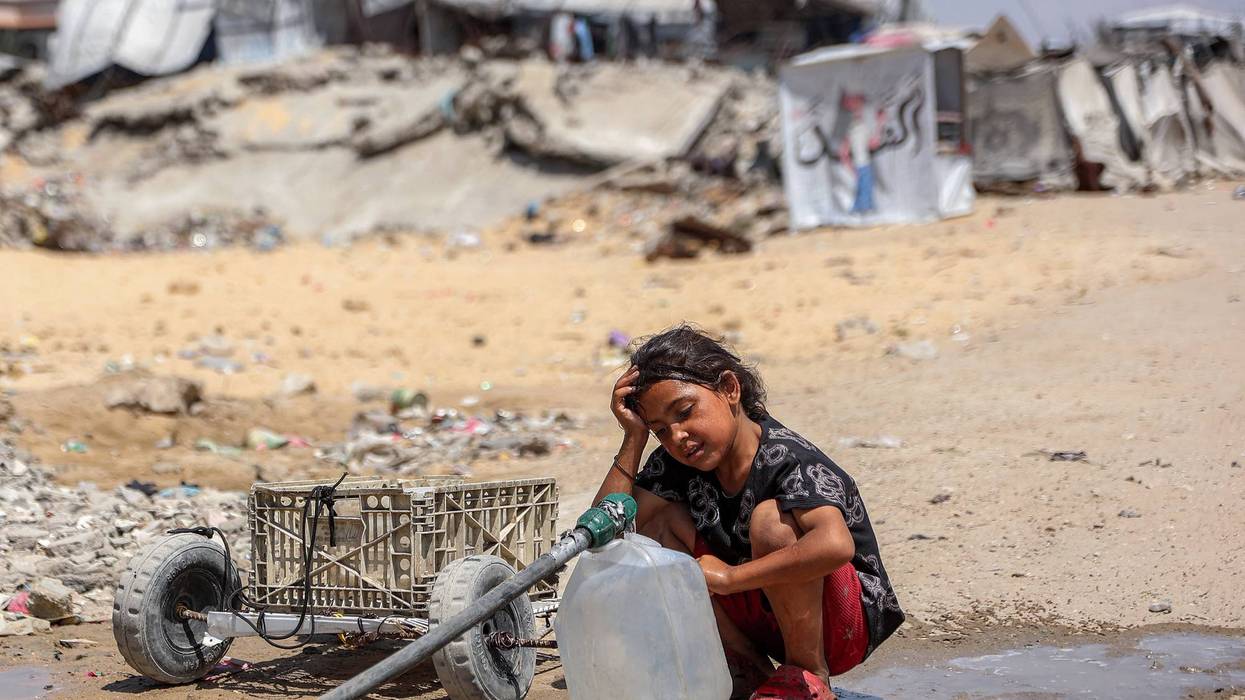
As Gaza is gripped by a water crisis, Israel has reportedly attacked a facility that provided safe drinking water to thousands of families in Gaza City.
Tamer Nahed, a journalist and activist with the recently created humanitarian group Sake For Gaza, reported via social media on Monday that his group had been forced to suspend its efforts to provide clean water to some of Gaza's most dangerous areas after the facility they partnered with was "directly struck, resulting in the deaths of several people and injuries to others working there."
Middle East Eye reported on Monday that the attack, east of Gaza City, "struck a gathering of displaced people in front of a water refilling station" and killed two people as Israel shelled the city early on Monday.
The Palestinian outlet Al-Quds said the attack "directly targeted civilians as they stood in front of a water filling station" in the Al-Samar area, and was "part of a series of attacks launched by the occupation forces against civilian gatherings and vital facilities in the besieged areas of the Gaza Strip, exacerbating the already deteriorating humanitarian crisis."
Under international law, deliberately attacking civilian facilities or those that are essential for survival, like water facilities, is considered a war crime.
Israel has destroyed or damaged nearly 90% of water and sanitation infrastructure in Gaza, according to Doctors Without Borders (MSF), which says the military has used water as a "weapon" in its genocidal war against Gaza.
The group has documented the military firing upon clearly marked trucks and destroying boreholes and desalination plants relied on by thousands of residents. The group has also documented attacks on civilians accessing clean water.
A late-May report from the UN Children's Fund (UNICEF) found that around 82% of families in Gaza remain water insecure, and up to 70% are unable to collect even six liters of water per person each day. A person needs between 50 and 100 liters of water per day to meet their most basic needs, according to the World Health Organization.
Monday's attack came less than an hour after Nahed announced that the group's 11th truck had "reached one of Gaza’s most dangerous areas, carrying 5,000 liters of fresh drinking water."
The group had been attempting to send one truck per day to families living in tent cities, many of whom have been forced to rely on groundwater and contaminated water in order to survive, leading to serious illness.
Nahed said he and his team "truly risked our lives to reach this place, as it is located very close to military deployment areas, and the road was extremely dangerous at every moment."
He called the attack on the water supply facility "very heartbreaking news" and said as a result, "we have been forced to suspend our water distribution project until further notice."
"This station was one of the most important remaining sources of clean water in Gaza City and served as a lifeline for thousands of families, especially after most other water stations had stopped operating," he said. "We are deeply saddened by the loss of life and by the suspension of a project that was providing clean drinking water to people enduring these extremely difficult conditions."
Monday's attacks were some of the latest of Israel's near-daily strikes despite October's ceasefire agreement. Israel has expanded its control over the Gaza Strip in recent months, with Prime Minister Benjamin Netanyahu saying last week that the military “will not withdraw from the territory" as the agreement requires.
He added on Sunday that unless Hamas fully disarms, there also would be "no reconstruction in Gaza without dismantling and demilitarizing the strip."
Netanyahu described the occupation zone as a "new Gaza envelope inside of Gaza," a term that could refer to permanent occupation or annexation, as the term "Gaza envelope" refers to the communities inside Israeli territory near the Gaza border.
Other ministers in Israel's far-right government, including Finance Minister Bezalel Smotrich, have called for Israel to complete the "conquest" of Gaza and move Israeli settlers to replace the Palestinian population.
A recent proposal by the "Board of Peace," led by US President Donald Trump, conditioned the entry of basic humanitarian supplies, including shelter-building material, reconstruction aid, and other life essentials, on the total disarmament of Palestinian militant groups.
Last week, the United Nations Office for the Coordination of Humanitarian Affairs (OCHA) warned that “the continued expansion of areas under Israeli control in Gaza since the ceasefire agreement in October 2025 is intensifying risks to civilians and further constraining humanitarian efforts."
“Humanitarian access remains severely constrained due to restrictions on movement, which results in delays or pauses in lifesaving activities,” the statement said. “Some partners have had to scale down or temporarily suspend lifesaving activities, particularly following the killing of service providers in those areas. This has affected up to thousands of families in the vicinity.”
"Every six months, we might get a food parcel once. It's barely enough," said one mother. "We are forced to eat whatever is in front of us."
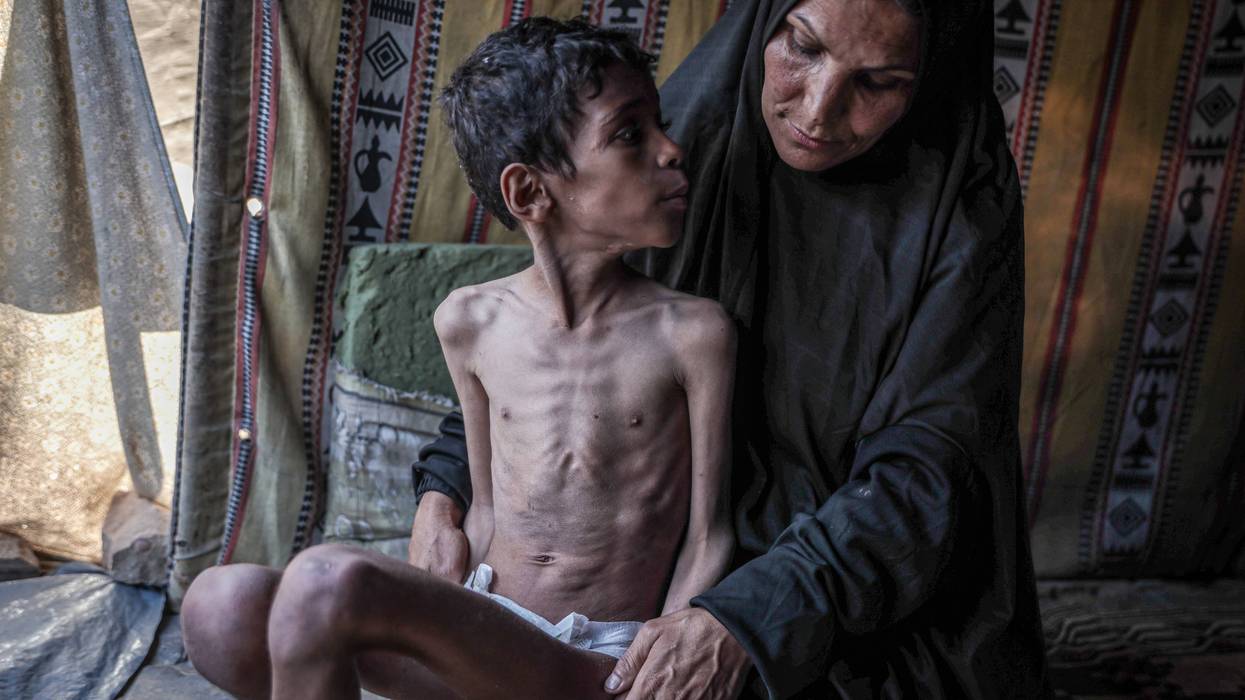
A ceasefire was declared between Israel and Hamas seven months ago, but just as the deal has not stopped the killing of hundreds of Palestinians in Gaza, it has failed to alleviate the acute malnutrition crisis that was created when Israel began blocking almost all humanitarian aid in October 2023.
The international aid group Doctors Without Borders, also known by its French name, Médecins Sans Frontières (MSF), on Wednesday accused Israel of imposing a "manufactured malnutrition crisis" that is proving particularly devastating for pregnant and breastfeeding women, newborns, and infants.
At four clinics operated by MSF in Gaza between late 2024 and early 2026, medical teams found higher levels of miscarriage among mothers who experienced malnutrition.
The group also analyzed data on 201 mothers of newborns who required treatment in neonatal intensive care units at Nasser Hospital in Khan Younis and Al-Helou Hospital in Gaza City between June 2025 and this past January. More than half of the mothers had been affected by malnutrition at some point in their pregnancy.
Ninety percent of the babies had been born prematurely and 84% had low birth weight.
"Neonatal mortality was twice as high among infants born to mothers affected by malnutrition compared to those born to mothers without malnutrition," said MSF.
Samar Abu Mustafa, a displaced mother from Abasan al-Kabira, said she was diagnosed with malnutrition while pregnant with her 3-month-old baby.
"I don't know how I will provide diapers and milk, nor how I will provide food for my other daughters. There is no income and no support," said Abu Mustafa. "There is nothing apart from food parcels from the World Food Program and community kitchens. Every six months, we might get a food parcel once. It's barely enough. It is all rice and lentils. We are forced to eat whatever is in front of us."
"For a long time, we haven't eaten anything nutritious and the baby does not get enough milk from me, so I am forced to provide formula, but I don’t have money for it," she said. "I have just one remaining can of milk."
Mercè Rocaspana, MSF's medical referent for emergencies, emphasized that malnutrition in the exclave was "almost nonexistent" before Israel began bombarding Gaza and blocking humanitarian aid—an action Israeli and US officials persistently claimed Israel was not taking before the ceasefire was reached, even as the number of deaths from starvation climbed to nearly 500.
“The malnutrition crisis is entirely manufactured,” said Rocaspana. "For two and a half years, the systematic blockade of humanitarian aid and commercial goods, on top of insecurity, have severely restricted access to food and clean water. Healthcare facilities have been forced out of service and living conditions have profoundly deteriorated. As a result, vulnerable groups of people are at heightened risk of malnutrition.”
Before the war, there were no dedicated therapeutic medical feeding units in Gaza's hospitals, but MSF teams admitted more than 500 infants under six months of age to outpatient feeding programs between October 2024-December 2025—programs that the bombardment has made impossible for many families to complete.
"Of those admitted, 91% were at risk of poor growth and development. By December, 200 infants were no longer in the program—only 48% of them were cured, while 7% died, another 7% were referred to a program for older children, and a staggering 32% defaulted due in part to insecurity and displacement."
The 20-point ceasefire agreement stipulated that at least 600 aid trucks must enter Gaza daily and that border crossings must be reopened, but as Common Dreams reported in April, five leading aid groups gave "humanitarian aid access" a failing grade in a scorecard rating conditions in Gaza six months after the deal was reached.
Israel was still restricting deliveries, and food items sold in Gaza were anywhere from 3% to 233% more expensive than they were before the war started.
Al Jazeera's Hind Khoury reported Thursday that only 150 aid trucks are being allowed in daily.
Last week, the United Nations Office for the Coordination of Humanitarian Affairs said that while there's been a 72% increase in the amount of humanitarian aid reaching Palestinians in Gaza since the ceasefire was brokered, 11% of coordinated humanitarian missions are still being denied.
"Many lives have been saved in Gaza because of scaled up humanitarian effort since the ceasefire. But much more to do: We need to sustain access, protection of civilians, neutrality, and partnership," said Tom Fletcher, UN under-secretary general for humanitarian affairs.
Gaza: Six months into the ceasefire, hunger continues to shape daily life and malnutrition levels remain high.@WFP is on the ground supporting those most in need, but aid alone is not enough for full recovery. pic.twitter.com/gABZySEjFI
— United Nations (@UN) May 6, 2026
Sahar Nafez Salem, who lives with her children in a tent in Khan Younis, told MSF that her family has been relying on a charity kitchen to eat.
"We eat lunch from it and save some for dinner," she said. "We try to manage getting lunch for our poor children every Friday, so we can bring them joy, but all week long, almost everything is from charity kitchens... The last time I received aid was during Ramadan... There is rice and lentils... Other things, like vegetables, are expensive. We can't get them all the time. So sometimes we go without vegetables for months."
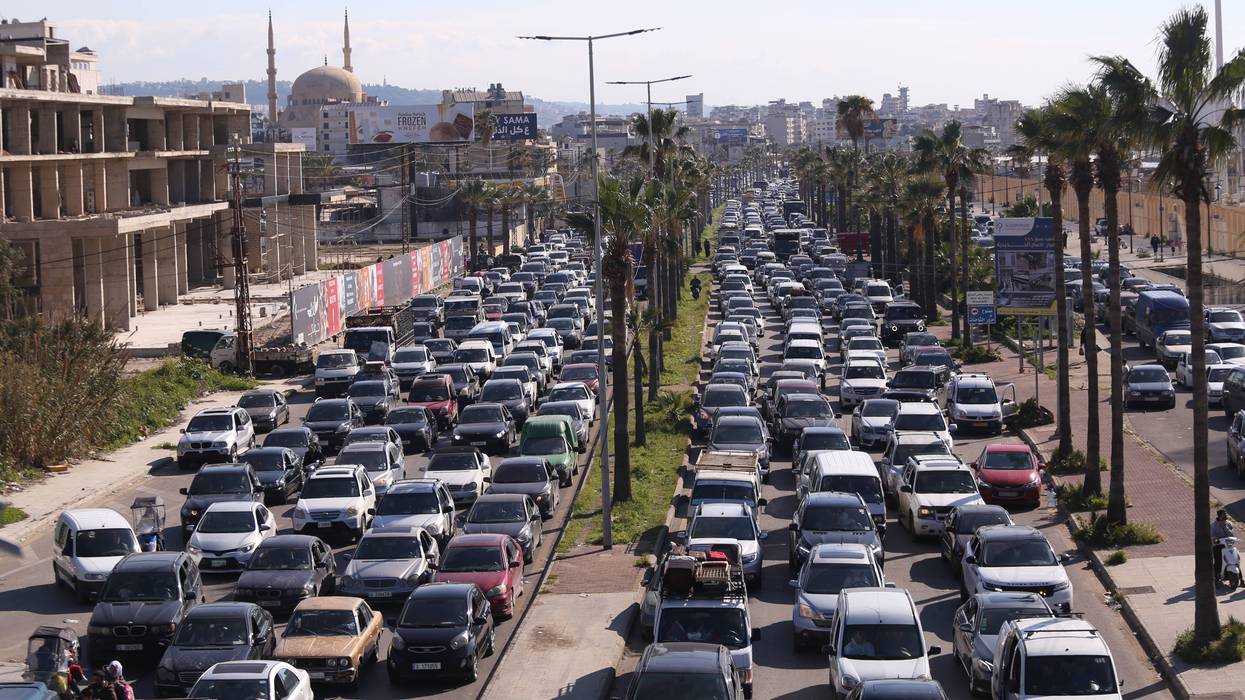
As it pushes further into Lebanon, Israel ordered around 200,000 people living south of the Litani River to "immediately" flee.
Israel ordered residents in southern Lebanon to "immediately" leave their homes as it advanced troops further into the country on Wednesday, prompting "serious concern" from the United Nations as its assault on the country ramps up.
"Residents of southern Lebanon—you must move immediately to areas north of the Litani River," Israeli military spokesperson Avichay Adraee posted in Arabic on X as Israel escalated a campaign of airstrikes and moved troops into several villages.
The region south of the Litani River spans hundreds of square kilometers and makes up about 9% of Lebanon's total territory, according to the Associated Press.
Around 200,000 people live in the area south of the river, which has served as the beginning of a buffer zone between Israel and Hezbollah since Israel's withdrawal from Lebanon in 2006 as part of United Nations Resolution 1701.
On Monday, Israel's Defense Minister Israel Katz said that he and Prime Minister Benjamin Netanyahu "have approved for the military to advance and seize additional controlling areas in Lebanon and to defend the border settlements from there."
According to Nora Ingdal, Save the Children’s Country Director for Lebanon, evacuation orders given by Israel as it entered villages in the past three days have created a situation of "pure chaos" for civilians forced to flee their homes.
Lebanon's Ministry of Social Affairs reported that about 58,000 people, including an estimated 16,000 children, had already been displaced as of Tuesday.
"Our team is hearing cases of children across Lebanon sleeping in cars, on cold pavements, and in partially damaged classrooms with cracks in the walls, while parents are sitting on the side of the streets crying, exhausted from little sleep after being unable to get into proper shelters with their children," Ingdal said.
Sana Kawtharani, a community health educator for Doctors Without Borders, described the impossible choice that over 12,000 people had to make after being ordered to leave the town of Sarafand on Tuesday, after having sought shelter there earlier.
"We know how hard it is to leave our home, our people, our villages, and our memories," Kawtharani said. "Around us in the neighborhood, some were forced to leave because they have children and elderly who are terrified by the sound of Israeli shelling."
"They carried what they could and left in cars, not knowing where they were going," she said. "There are children, the elderly, and the sick stuck on the road in very harsh conditions."
Israeli attacks in Lebanon since 2023 have killed more than 4,000 people and injured more than 16,000, according to the Lebanese health ministry, which says most of the victims have been civilians. More than 370 have been killed since a ceasefire in November 2024.
"This war began 15 months ago, and until today, it hasn't stopped," Kawtharani said. "Every day there is shelling, despite everything we hear about a ceasefire, but this has not been implemented on the ground."
Israel’s evacuation order for all of southern Lebanon came following an intensification of airstrikes overnight around Beirut the previous evening, which killed at least 12 people according to state media.
On Tuesday, Israel also reportedly carried out another "double-tap" strike in the Tyre district of southern Lebanon, killing three paramedics with the World Health Organization (WHO) and injuring six more who were in the process of helping others wounded in a previous strike.
Though Lebanon was already being struck by Israel on a near-daily basis despite the 2024 ceasefire, hostilities exploded over the weekend following Israel and the United States' attack on Iran, sparking retaliatory strikes on Israel from the Iranian-aligned militia Hezbollah.
According to Middle East Eye, Israel had authorized a barrage of strikes on Lebanon even before the first retaliatory rockets and drones were fired by Hezbollah following the killing of Iranian Supreme Leader Ayatollah Ali Khamenei on Saturday.
Israel has not reported any deaths from Hezbollah's attacks, though two soldiers sustained moderate injuries on Wednesday from anti-tank fire in southern Lebanon.
According to Lebanese authorities, Israeli strikes on dozens of sites across the country have killed at least 72 people and wounded 437 as of Wednesday.
Lebanese media reported on Wednesday that Israeli troops have pushed into the town of Khiam, which is roughly six kilometers from Israel’s border, marking their furthest advance into the country since the war broke out in 2024.
The United Nations Interim Force in Lebanon (UNIFIL), the peacekeeping force that has operated in southern Lebanon for nearly 50 years, said on Wednesday that it had “serious concern” about Israel’s order “demanding evacuation of the civilian population from UNIFIL’s area of operations to north of the Litani River.”
UNIFIL said on Wednesday that “peacekeepers observed today several [Israel Defense Forces] movements and military activities, including near El Khiam, Beit Lif, Yaroun, Houla, Kfar Kila, Kherbeh, and Kfar Shouba. All of these are happening while Israeli airstrikes and other air activities continue.”
It said these actions "not only violate Resolution 1701, but also Lebanon’s sovereignty and territorial integrity."
What emerges is a coherent strategy: first, producing dependency through siege, destruction, and institutional dismantling; then, weaponizing that dependency by controlling or withdrawing the means of staying alive.
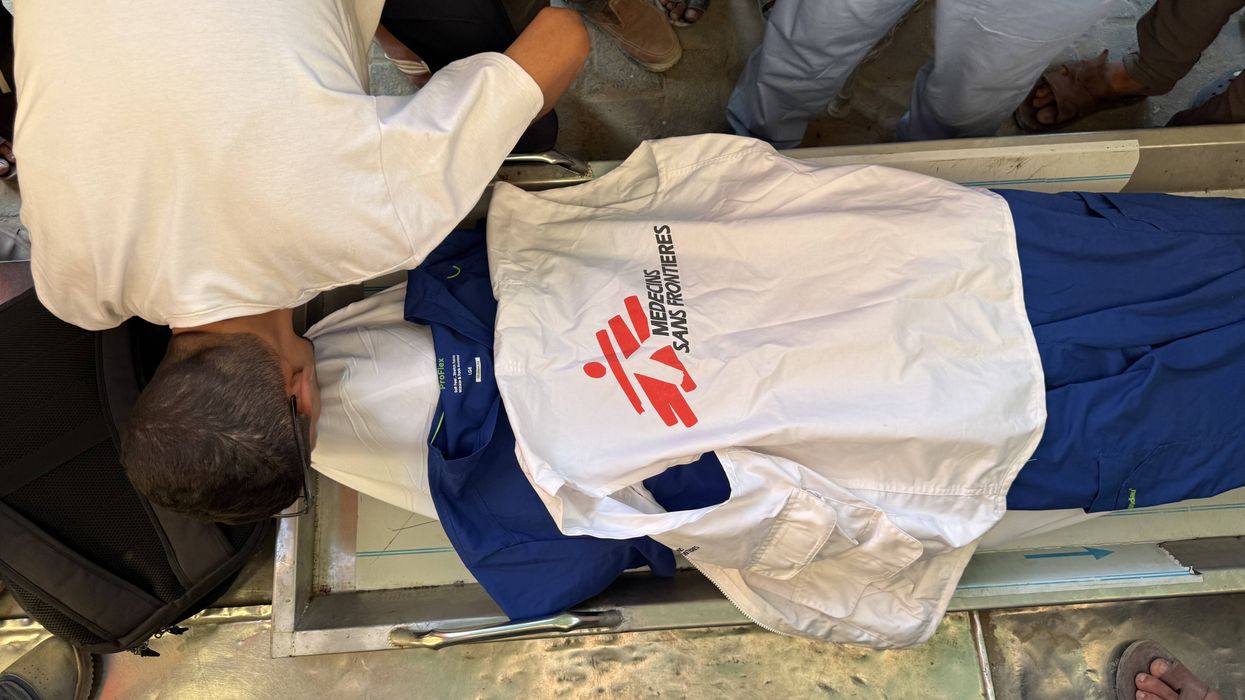
Israel’s decision to halt the operations of 37 international aid groups marks a dangerous escalation in its ongoing genocidal campaign, which has destroyed Gaza’s capacity to sustain life through bombardment and siege, and now moves to deprive survivors of the last remaining forms of assistance.
While framed as an administrative measure, this latest move cannot be understood in isolation. It is the culmination of a longer process that has unfolded over the past two years, as Israel has systematically dismantled the humanitarian and medical infrastructure sustaining Gaza’s civilian population.
By defunding and delegitimizing The United Nations Relief and Works Agency for Palestine Refugees in the Near East (UNRWA), the primary agency tasked with aiding Palestinian refugees; and by leveling accusations against humanitarian and health personnel, in the absence of meaningful global pushback, Israel has further entrenched a longstanding system of weaponized aid.
While the Israeli government initially framed the suspension of aid groups as being linked to their failure to comply with new registration requirements, it later noted in a statement that the process was “intended to prevent the exploitation of aid by Hamas, which in the past operated under the cover of certain international aid organizations, knowingly or unknowingly.”
Such criteria not only regulate aid work; they effectively silence dissent, conditioning the ability to deliver humanitarian assistance on political conformity.
Israel has long accused Hamas of exploiting humanitarian aid, despite such claims having repeatedly been debunked, including by senior Israeli military officials themselves.The new regulatory framework extends well beyond technical compliance. It introduces explicitly political and ideological conditions for aid delivery, disqualifying organisations that have supported boycotts of Israel or engaged in “delegitimization campaigns.”
Such criteria not only regulate aid work; they effectively silence dissent, conditioning the ability to deliver humanitarian assistance on political conformity.
The dismantling of UNRWA was a critical test case. For decades, the agency served as the backbone of civilian life for Palestinian refugees, providing healthcare, education, food assistance, and social services, under conditions of Israeli occupation and siege.
After October 7, 2023, Israel intensified its efforts to recast UNRWA not as a humanitarian agency operating under an international mandate, but as a political problem to be neutralized.
Allegations that a limited number of UNRWA employees were affiliated with Hamas, or involved in the October 7 attacks, were rapidly generalized into claims about the organisation as a whole. These claims triggered sweeping donor suspensions—including the immediate freezing of US funding, among UNRWA’s largest sources of support—illustrating how fast states are willing to act on evidence-free allegations from Israel, whose overall goal is to avoid global scrutiny of its crimes.
The persecution of UNRWA thus demonstrated how easily a central pillar of the humanitarian system can be dismantled, setting the stage for what would come next, as Israel launched a broader attack on international aid groups operating in Gaza.
In the months that followed, Israel blocked UNRWA’s operations on the ground and passed legislation criminalizing its activities across historic Palestine.
The response from the international community was striking in its weakness: While some donors ultimately resumed funding to UNRWA, no binding enforcement mechanisms were activated, nor were any serious political costs imposed on Israel.
The persecution of UNRWA thus demonstrated how easily a central pillar of the humanitarian system can be dismantled, setting the stage for what would come next, as Israel launched a broader attack on international aid groups operating in Gaza.
The consequences of this latest move are devastating. For decades, such organizations have provided essential services, amid the systematic degradation of civilian infrastructure and repeated assaults on healthcare in Gaza. Groups like Doctors Without Borders and Medical Aid for Palestinians offer vital resources for emergency and trauma care, along with other key services to sustain Gaza’s fragile health system, at a time when many hospitals are damaged or out of service.
The centrality of international aid groups to Gaza’s survival is itself a measure of the depth of destruction imposed on Palestinian society. Such actors have long operated in spaces where Palestinian institutions have been dismantled, and political solutions deferred.
In the absence of an end to Israel’s occupation and siege, their presence has become one of the few remaining buffers against total collapse. In the context of an ongoing genocide and the destruction of the infrastructure required to sustain life in Gaza, stripping away the remaining humanitarian presence amounts to a direct assault on survival itself.
The Israeli government has sought to downplay the impact of the suspensions by asserting that the targeted organisations “did not bring aid into Gaza throughout the current ceasefire, and even in the past their combined contribution amounted to only about 1% of the total aid volume.”
In Gaza, where Israel has already destroyed the material conditions of life, the suspension of humanitarian operations completes this logic.
But this calculation of material aid fails to capture the nature of the work and services these groups have provided, including specialized medical care, trauma surgery, rehabilitation for injured and disabled people, psychosocial and mental health services, and sustained institutional support to keep Gaza’s collapsing health system functioning.
In 2025 alone, Doctors Without Borders carried out nearly 800,000 outpatient consultations and treated more than 100,000 trauma cases in Gaza, while Medical Aid for Palestinians made many critical interventions, including through expanded cancer care in the territory’s north.
Israel’s 1% calculation, which has not been independently verified, reduces humanitarian impact to quantitative supply indicators, rather than lifesaving capacity. To present these organizations as marginal is not a factual assessment, but a narrative designed to normalize their removal.
What emerges is a coherent strategy: first, producing dependency through siege, destruction, and institutional dismantling; then, weaponizing that dependency by controlling or withdrawing the means of survival.
In Gaza, where Israel has already destroyed the material conditions of life, the suspension of humanitarian operations completes this logic. This is not a failure of humanitarianism, but part of a broader genocidal strategy, where the regulation and withdrawal of aid is used to render survival itself increasingly impossible.