SUBSCRIBE TO OUR FREE NEWSLETTER
Daily news & progressive opinion—funded by the people, not the corporations—delivered straight to your inbox.
5
#000000
#FFFFFF
To donate by check, phone, or other method, see our More Ways to Give page.
Daily news & progressive opinion—funded by the people, not the corporations—delivered straight to your inbox.
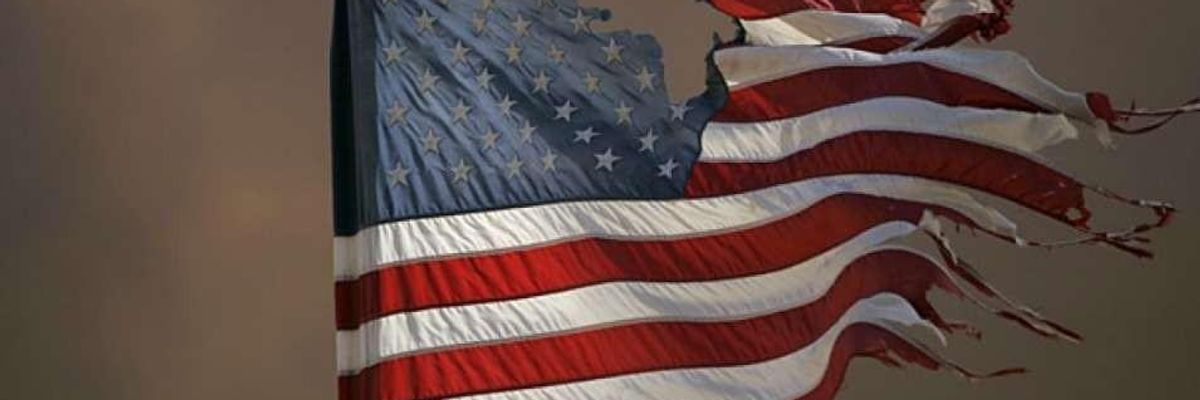
We Americans must reform our political system, both to ensure the basic right to vote and democratic representation. (Photo: urbantimes.co)
The assault on the US Capitol by President Donald Trump's supporters, incited by Trump himself, was the predictable outcome of his four-year-long assault on democratic institutions, aided and abetted by so many in the Republican Party. And no one can say that Trump had not warned us: he was not committed to a peaceful transition of power. Many who benefited as he slashed taxes for corporations and the rich, rolled back environmental regulations, and appointed business-friendly judges knew they were making a pact with the devil. Either they believed they could control the extremist forces he unleashed, or they didn't care.
Where does America go from here? Is Trump an aberration, or a symptom of a deeper national malady? Can the United States be trusted? In four years, will the forces that gave rise to Trump, and the party that overwhelmingly supported him, triumph again? What can be done to prevent that outcome?
Trump is the product of multiple forces. For at least a quarter-century, the Republican Party has understood that it could represent the interests of business elites only by embracing anti-democratic measures (including voter suppression and gerrymandering) and allies, including the religious fundamentalists, white supremacists, and nationalist populists.
Of course, populism implied policies that were antithetical to business elites. But many business leaders spent decades mastering the ability to deceive the public. Big Tobacco spent lavishly on lawyers and bogus science to deny their products' adverse health effects. Big Oil did likewise to deny fossil fuels' contribution to climate change. They recognized that Trump was one of their own.
Then, advances in technology provided a tool for rapid dissemination of dis/misinformation, and America's political system, where money reigns supreme, allowed the emerging tech giants freedom from accountability. This political system did one other thing: it generated a set of policies (sometimes referred to as neoliberalism) that delivered massive income and wealth gains to those at the top, but near-stagnation everywhere elsewhere. Soon, a country on the cutting edge of scientific progress was marked by declining life expectancy and increasing health disparities.
The neoliberal promise that wealth and income gains would trickle down to those at the bottom was fundamentally spurious. As massive structural changes deindustrialized large parts of the country, those left behind were left to fend largely for themselves. As I warned in my books The Price of Inequality and People, Power, and Profits, this toxic mix provided an inviting opportunity for a would-be demagogue.
As we have repeatedly seen, Americans' entrepreneurial spirit, combined with an absence of moral constraints, provides an ample supply of charlatans, exploiters, and would-be demagogues. Trump, a mendacious, narcissistic sociopath, with no understanding of economics or appreciation of democracy, was the man of the moment.
The immediate task is to remove the threat Trump still poses. The House of Representatives should impeach him now, and the Senate should try him some time later, to bar him from holding federal office again. It should be in the interest of the Republicans, no less than the Democrats, to show that no one, not even the president, is above the law. Everyone must understand the imperative of honoring elections and ensuring the peaceful transition of power.
But we should not sleep comfortably until the underlying problems are addressed. Many involve great challenges. We must reconcile freedom of expression with accountability for the enormous harm that social media can and has caused, from inciting violence and promoting racial and religious hatred to political manipulation.
The US and other countries have long imposed restrictions on other forms of expression to reflect broader societal concerns: one may not shout fire in a crowded theater, engage in child pornography, or commit slander and libel. True, some authoritarian regimes abuse these constraints and compromise basic freedoms, but authoritarian regimes will always find justifications for doing what they will, regardless of what democratic governments do.
We Americans must reform our political system, both to ensure the basic right to vote and democratic representation. We need a new voting rights act. The old one, adopted in 1965, was aimed at the South, where disenfranchisement of African-Americans had enabled white elites to remain in power since the end of Reconstruction following the Civil War. But now anti-democratic practices are found throughout the country.
We also need to decrease the influence of money in our politics: no system of checks and balances can be effective in a society with as much inequality as the US. And any system based on "one dollar, one vote" rather than "one person, one vote" will be vulnerable to populist demagogy. After all, how can such a system serve the interests of the country as a whole?
Finally, we must address the multiple dimensions of inequality. The striking difference between the treatment of the white insurrectionists who invaded the Capitol, and the peaceful Black Lives Matter protesters this summer once again showed to those around the world the magnitude of America's racial injustice.
Moreover, the COVID-19 pandemic has underscored the magnitude of the country's economic and health disparities. As I have repeatedly argued, small tweaks to the system won't be enough to make large inroads in the country's ingrained inequalities.
How America responds to the attack on the Capitol will say a lot about where the country is headed. If we not only hold Trump accountable, but also embark on the hard road of economic and political reform to address the underlying problems that gave rise to his toxic presidency, then there is hope of a brighter day. Fortunately, Joe Biden will assume the presidency on January 20. But it will take more than one person--and more than one presidential term--to overcome America's longstanding challenges.
Dear Common Dreams reader, It’s been nearly 30 years since I co-founded Common Dreams with my late wife, Lina Newhouser. We had the radical notion that journalism should serve the public good, not corporate profits. It was clear to us from the outset what it would take to build such a project. No paid advertisements. No corporate sponsors. No millionaire publisher telling us what to think or do. Many people said we wouldn't last a year, but we proved those doubters wrong. Together with a tremendous team of journalists and dedicated staff, we built an independent media outlet free from the constraints of profits and corporate control. Our mission has always been simple: To inform. To inspire. To ignite change for the common good. Building Common Dreams was not easy. Our survival was never guaranteed. When you take on the most powerful forces—Wall Street greed, fossil fuel industry destruction, Big Tech lobbyists, and uber-rich oligarchs who have spent billions upon billions rigging the economy and democracy in their favor—the only bulwark you have is supporters who believe in your work. But here’s the urgent message from me today. It's never been this bad out there. And it's never been this hard to keep us going. At the very moment Common Dreams is most needed, the threats we face are intensifying. We need your support now more than ever. We don't accept corporate advertising and never will. We don't have a paywall because we don't think people should be blocked from critical news based on their ability to pay. Everything we do is funded by the donations of readers like you. When everyone does the little they can afford, we are strong. But if that support retreats or dries up, so do we. Will you donate now to make sure Common Dreams not only survives but thrives? —Craig Brown, Co-founder |
The assault on the US Capitol by President Donald Trump's supporters, incited by Trump himself, was the predictable outcome of his four-year-long assault on democratic institutions, aided and abetted by so many in the Republican Party. And no one can say that Trump had not warned us: he was not committed to a peaceful transition of power. Many who benefited as he slashed taxes for corporations and the rich, rolled back environmental regulations, and appointed business-friendly judges knew they were making a pact with the devil. Either they believed they could control the extremist forces he unleashed, or they didn't care.
Where does America go from here? Is Trump an aberration, or a symptom of a deeper national malady? Can the United States be trusted? In four years, will the forces that gave rise to Trump, and the party that overwhelmingly supported him, triumph again? What can be done to prevent that outcome?
Trump is the product of multiple forces. For at least a quarter-century, the Republican Party has understood that it could represent the interests of business elites only by embracing anti-democratic measures (including voter suppression and gerrymandering) and allies, including the religious fundamentalists, white supremacists, and nationalist populists.
Of course, populism implied policies that were antithetical to business elites. But many business leaders spent decades mastering the ability to deceive the public. Big Tobacco spent lavishly on lawyers and bogus science to deny their products' adverse health effects. Big Oil did likewise to deny fossil fuels' contribution to climate change. They recognized that Trump was one of their own.
Then, advances in technology provided a tool for rapid dissemination of dis/misinformation, and America's political system, where money reigns supreme, allowed the emerging tech giants freedom from accountability. This political system did one other thing: it generated a set of policies (sometimes referred to as neoliberalism) that delivered massive income and wealth gains to those at the top, but near-stagnation everywhere elsewhere. Soon, a country on the cutting edge of scientific progress was marked by declining life expectancy and increasing health disparities.
The neoliberal promise that wealth and income gains would trickle down to those at the bottom was fundamentally spurious. As massive structural changes deindustrialized large parts of the country, those left behind were left to fend largely for themselves. As I warned in my books The Price of Inequality and People, Power, and Profits, this toxic mix provided an inviting opportunity for a would-be demagogue.
As we have repeatedly seen, Americans' entrepreneurial spirit, combined with an absence of moral constraints, provides an ample supply of charlatans, exploiters, and would-be demagogues. Trump, a mendacious, narcissistic sociopath, with no understanding of economics or appreciation of democracy, was the man of the moment.
The immediate task is to remove the threat Trump still poses. The House of Representatives should impeach him now, and the Senate should try him some time later, to bar him from holding federal office again. It should be in the interest of the Republicans, no less than the Democrats, to show that no one, not even the president, is above the law. Everyone must understand the imperative of honoring elections and ensuring the peaceful transition of power.
But we should not sleep comfortably until the underlying problems are addressed. Many involve great challenges. We must reconcile freedom of expression with accountability for the enormous harm that social media can and has caused, from inciting violence and promoting racial and religious hatred to political manipulation.
The US and other countries have long imposed restrictions on other forms of expression to reflect broader societal concerns: one may not shout fire in a crowded theater, engage in child pornography, or commit slander and libel. True, some authoritarian regimes abuse these constraints and compromise basic freedoms, but authoritarian regimes will always find justifications for doing what they will, regardless of what democratic governments do.
We Americans must reform our political system, both to ensure the basic right to vote and democratic representation. We need a new voting rights act. The old one, adopted in 1965, was aimed at the South, where disenfranchisement of African-Americans had enabled white elites to remain in power since the end of Reconstruction following the Civil War. But now anti-democratic practices are found throughout the country.
We also need to decrease the influence of money in our politics: no system of checks and balances can be effective in a society with as much inequality as the US. And any system based on "one dollar, one vote" rather than "one person, one vote" will be vulnerable to populist demagogy. After all, how can such a system serve the interests of the country as a whole?
Finally, we must address the multiple dimensions of inequality. The striking difference between the treatment of the white insurrectionists who invaded the Capitol, and the peaceful Black Lives Matter protesters this summer once again showed to those around the world the magnitude of America's racial injustice.
Moreover, the COVID-19 pandemic has underscored the magnitude of the country's economic and health disparities. As I have repeatedly argued, small tweaks to the system won't be enough to make large inroads in the country's ingrained inequalities.
How America responds to the attack on the Capitol will say a lot about where the country is headed. If we not only hold Trump accountable, but also embark on the hard road of economic and political reform to address the underlying problems that gave rise to his toxic presidency, then there is hope of a brighter day. Fortunately, Joe Biden will assume the presidency on January 20. But it will take more than one person--and more than one presidential term--to overcome America's longstanding challenges.
The assault on the US Capitol by President Donald Trump's supporters, incited by Trump himself, was the predictable outcome of his four-year-long assault on democratic institutions, aided and abetted by so many in the Republican Party. And no one can say that Trump had not warned us: he was not committed to a peaceful transition of power. Many who benefited as he slashed taxes for corporations and the rich, rolled back environmental regulations, and appointed business-friendly judges knew they were making a pact with the devil. Either they believed they could control the extremist forces he unleashed, or they didn't care.
Where does America go from here? Is Trump an aberration, or a symptom of a deeper national malady? Can the United States be trusted? In four years, will the forces that gave rise to Trump, and the party that overwhelmingly supported him, triumph again? What can be done to prevent that outcome?
Trump is the product of multiple forces. For at least a quarter-century, the Republican Party has understood that it could represent the interests of business elites only by embracing anti-democratic measures (including voter suppression and gerrymandering) and allies, including the religious fundamentalists, white supremacists, and nationalist populists.
Of course, populism implied policies that were antithetical to business elites. But many business leaders spent decades mastering the ability to deceive the public. Big Tobacco spent lavishly on lawyers and bogus science to deny their products' adverse health effects. Big Oil did likewise to deny fossil fuels' contribution to climate change. They recognized that Trump was one of their own.
Then, advances in technology provided a tool for rapid dissemination of dis/misinformation, and America's political system, where money reigns supreme, allowed the emerging tech giants freedom from accountability. This political system did one other thing: it generated a set of policies (sometimes referred to as neoliberalism) that delivered massive income and wealth gains to those at the top, but near-stagnation everywhere elsewhere. Soon, a country on the cutting edge of scientific progress was marked by declining life expectancy and increasing health disparities.
The neoliberal promise that wealth and income gains would trickle down to those at the bottom was fundamentally spurious. As massive structural changes deindustrialized large parts of the country, those left behind were left to fend largely for themselves. As I warned in my books The Price of Inequality and People, Power, and Profits, this toxic mix provided an inviting opportunity for a would-be demagogue.
As we have repeatedly seen, Americans' entrepreneurial spirit, combined with an absence of moral constraints, provides an ample supply of charlatans, exploiters, and would-be demagogues. Trump, a mendacious, narcissistic sociopath, with no understanding of economics or appreciation of democracy, was the man of the moment.
The immediate task is to remove the threat Trump still poses. The House of Representatives should impeach him now, and the Senate should try him some time later, to bar him from holding federal office again. It should be in the interest of the Republicans, no less than the Democrats, to show that no one, not even the president, is above the law. Everyone must understand the imperative of honoring elections and ensuring the peaceful transition of power.
But we should not sleep comfortably until the underlying problems are addressed. Many involve great challenges. We must reconcile freedom of expression with accountability for the enormous harm that social media can and has caused, from inciting violence and promoting racial and religious hatred to political manipulation.
The US and other countries have long imposed restrictions on other forms of expression to reflect broader societal concerns: one may not shout fire in a crowded theater, engage in child pornography, or commit slander and libel. True, some authoritarian regimes abuse these constraints and compromise basic freedoms, but authoritarian regimes will always find justifications for doing what they will, regardless of what democratic governments do.
We Americans must reform our political system, both to ensure the basic right to vote and democratic representation. We need a new voting rights act. The old one, adopted in 1965, was aimed at the South, where disenfranchisement of African-Americans had enabled white elites to remain in power since the end of Reconstruction following the Civil War. But now anti-democratic practices are found throughout the country.
We also need to decrease the influence of money in our politics: no system of checks and balances can be effective in a society with as much inequality as the US. And any system based on "one dollar, one vote" rather than "one person, one vote" will be vulnerable to populist demagogy. After all, how can such a system serve the interests of the country as a whole?
Finally, we must address the multiple dimensions of inequality. The striking difference between the treatment of the white insurrectionists who invaded the Capitol, and the peaceful Black Lives Matter protesters this summer once again showed to those around the world the magnitude of America's racial injustice.
Moreover, the COVID-19 pandemic has underscored the magnitude of the country's economic and health disparities. As I have repeatedly argued, small tweaks to the system won't be enough to make large inroads in the country's ingrained inequalities.
How America responds to the attack on the Capitol will say a lot about where the country is headed. If we not only hold Trump accountable, but also embark on the hard road of economic and political reform to address the underlying problems that gave rise to his toxic presidency, then there is hope of a brighter day. Fortunately, Joe Biden will assume the presidency on January 20. But it will take more than one person--and more than one presidential term--to overcome America's longstanding challenges.