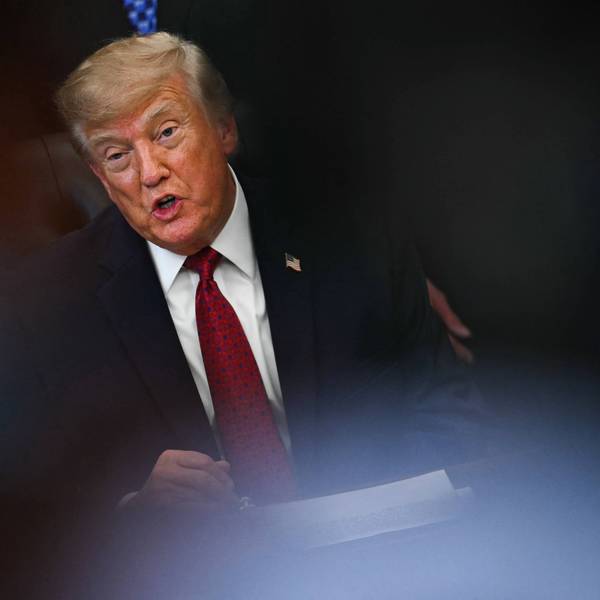
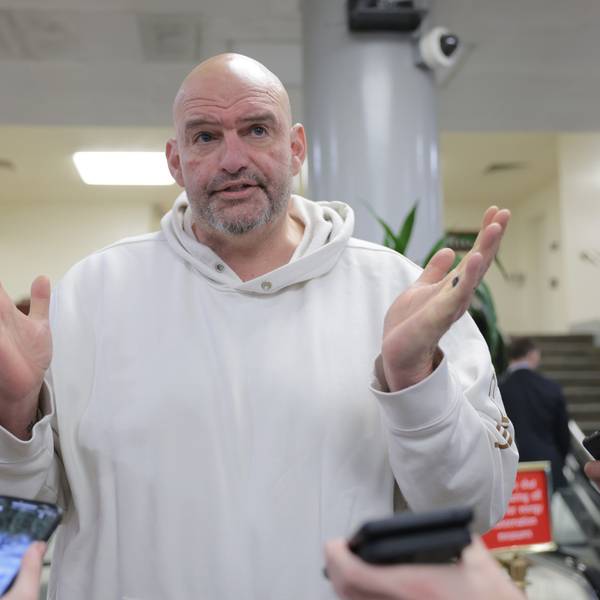

"What was missing--from the national convention, from the halls of Congress, from the party as a whole--was any official stance against war. By which I mean, today's wars," writes Koehler. (Screenshot/ Democratic National Convention - August 17, 2020)
War, Peace and the Democrats
The party itself still stands firmly in the middle of nowhere.
"There's something happening here/What it is ain't exactly clear . . ."
Or is it?
Day one of the Democratic National (virtual) Convention. Bernie Sanders had just told his supporters: "Together we have moved this country in a bold new direction," pointing out that "all of us . . .yearn for a nation based on the principles of justice, love and compassion."
Then Michelle Obama spoke: "Empathy: that's something I've been thinking a lot about lately. The ability to walk in someone else's shoes; the recognition that someone else's experience has value, too. . . ." But now our children "see our leaders labeling fellow citizens enemies of the state while emboldening torch-bearing white supremacists. They watch in horror as children are torn from their families and thrown into cages, and pepper spray and rubber bullets are used on peaceful protestors for a photo-op."
And then day one concludes with a Billy Porter rendition of the Buffalo Springfield classic, "For What It's Worth," with Stephen Stills himself on the guitar. And instantly, as the first notes fill the air, the '60s leap into the present moment . . . my God, that time of hope and change (at least for the boomers watching all this)! As Porter sings, background images of chaos and unrest swirl-- and then a peace symbol pops up, hovers for ten seconds for all the world to see.
Huh? A peace symbol? Suddenly the orchestrated nonsense pulled me back to reality. This was the DNC, apparently "reaching out" to the former hippies (and Bernie voters), the ones who marched against the Vietnam War, acknowledging with a quick shrug, yeah, you were right then. That was a hellish disaster. But c'mon, we're the new Democrats: progressives and centrists and independents. We embrace empathy and compassion, and we all hate Trump.
The point, so it seemed, was to reduce the peace symbol to an icon of nostalgia for the good old days--the days of weed and Woodstock and dancing naked in the streets. After five-plus decades, it's finally safe to welcome those good old days into the party. But what was missing--from the national convention, from the halls of Congress, from the party as a whole--was any official stance against war. By which I mean, today's wars.
"There's a man with a gun over there/Telling me I got to beware/I think it's time we stop, children, what's that sound/Everybody look what's going down . . ."
Yes, there are progressive, antiwar Democrats out there, gaining power, getting elected to office, almost winning presidential primaries--scaring the bejesus out of the Democratic establishment--but the party itself still stands firmly in the middle of nowhere, fully in favor of empathy and compassion and yet, somehow, fully supportive of the endless wars most of its own voters hate and utterly unwilling to challenge the bloated and ever-expanding defense budget.
Citing the analysis of William Hartung and Many Smithberger, the Milwaukee Independent described that budget thus: "As of 2019, the annual Pentagon base budget, plus war budget, plus nuclear weapons in the Department of Energy, plus military spending by the Department of Homeland Security, plus interest on deficit military spending, and other military spending totaled $1.25 trillion . . ."
This is untouchable money--not just to Trump and the Republicans but to most congressional Democrats.
Indeed, as Alexander Sammon points out in the American Prospect, Democratic majorities were crucial this summer to the defeat of three separate bills, introduced by progressive Democrats, to reduce military spending and/or undo the militarization of police departments. These included amendments in both the Senate and the House to the National Defense Authorization Act, diverting 10 percent of the Department of Defense budget to health care, education and jobs; as well as a Senate proposal to end the 1033 Program, which allows the Pentagon to transfer military gear to the police. The amendment's defeat in the House was especially an outrage, Sammon notes, in that the Dems hold a majority in the House and could have passed it.
"If Democrats are going to enact anything that resembles their own agenda," Sammon writes, "they're going to have to aim way higher than cutting defense to near Obama-era highs. Taking military spending not to pre-Trump but to pre-9/11 levels should be a starting point. Democratic voters abhor the War on Terror; it's what helped deliver Obama the presidency back in 2008. It's incumbent on Joe Biden to deliver on that preference, not just to end engagements in Iraq and Afghanistan but to bring an end to the bloated defense budgets of the War on Terror era. His silence on the proposal even in the thick of a campaign against Trump sends a troubling message."
War, militarism, and the insanely bloated defense budget are never--never!--addressed with serious political pragmatism. Thus to see a peace symbol, the icon of a world beyond war, flicker meaninglessly for ten titillating seconds at the Democratic convention, was . . . well, discombobulating.
The world is slowly changing, but there's nothing here to celebrate. Consider another piece of related news: As Common Dreams recently reported, 11 Democratic senators are demanding accountability from the Pentagon for refusing to specify what measures it's taking to ensure the safety, from Covid-19, of the 40 men still indefinitely detained at Guantanamo Bay. The Pentagon's refusal to give any details bolsters the case for shutting the place down, according to the senators.
All of which throws me into a frenzy of, once again, discombobulation. There was zero national debate about opening Gitmo--an American torture site for detainees with no rights whatsoever--but the national discussion about whether or not to shut it down has been going on, pathetically and absurdly, for two decades. Maybe the place is cruel and pointless, but, well, we can't just shut it down because of logic and morality.
Why not?
If only the Democratic Party--not just a few outliers, but the party as a whole, acting with the full force of the voters it represents--were capable of asking that question. And demanding an answer.
We are at a crossroads
This country and this world are at a monumental crossroads. In a few short weeks, US voters will have an opportunity to beat back the forces of fascism and confront the billionaires who are rigging the economy, our media system, and our democracy, making it increasingly impossible for ordinary people to get by. We’re not just talking about the election. We’re talking about what must be done once these fascist elements are vanquished from power. We need a bolder set of solutions than what either major party has so far been willing to offer and a working-class movement ready to fight like hell for it. Trump didn't emerge from nowhere. The conditions that fueled MAGA authoritarianism were created by decades of radical neoliberal economic policies and a corrupt political system dominated by corporate interests. They slashed taxes on the super-rich, promising that the benefits would trickle down. They said giveaways to the corporate titans would make life more affordable for the rest of us. It was all bullshit. And when a bitter, betrayed populace searches for someone to blame, right-wing demagogues have little trouble finding scapegoats. People know when they're being lied to, but you won't hear any of this from the corporate media. Only independent journalism—powered and funded by people who believe in building a better world—can deliver truly trustworthy daily news. Our Fall Campaign is underway, and we need your help. To power our newsroom through the rest of the year, we need to raise $125,000 by midnight on October 31. So if you share our vision, please contribute whatever you can to sustain our work. |
"There's something happening here/What it is ain't exactly clear . . ."
Or is it?
Day one of the Democratic National (virtual) Convention. Bernie Sanders had just told his supporters: "Together we have moved this country in a bold new direction," pointing out that "all of us . . .yearn for a nation based on the principles of justice, love and compassion."
Then Michelle Obama spoke: "Empathy: that's something I've been thinking a lot about lately. The ability to walk in someone else's shoes; the recognition that someone else's experience has value, too. . . ." But now our children "see our leaders labeling fellow citizens enemies of the state while emboldening torch-bearing white supremacists. They watch in horror as children are torn from their families and thrown into cages, and pepper spray and rubber bullets are used on peaceful protestors for a photo-op."
And then day one concludes with a Billy Porter rendition of the Buffalo Springfield classic, "For What It's Worth," with Stephen Stills himself on the guitar. And instantly, as the first notes fill the air, the '60s leap into the present moment . . . my God, that time of hope and change (at least for the boomers watching all this)! As Porter sings, background images of chaos and unrest swirl-- and then a peace symbol pops up, hovers for ten seconds for all the world to see.
Huh? A peace symbol? Suddenly the orchestrated nonsense pulled me back to reality. This was the DNC, apparently "reaching out" to the former hippies (and Bernie voters), the ones who marched against the Vietnam War, acknowledging with a quick shrug, yeah, you were right then. That was a hellish disaster. But c'mon, we're the new Democrats: progressives and centrists and independents. We embrace empathy and compassion, and we all hate Trump.
The point, so it seemed, was to reduce the peace symbol to an icon of nostalgia for the good old days--the days of weed and Woodstock and dancing naked in the streets. After five-plus decades, it's finally safe to welcome those good old days into the party. But what was missing--from the national convention, from the halls of Congress, from the party as a whole--was any official stance against war. By which I mean, today's wars.
"There's a man with a gun over there/Telling me I got to beware/I think it's time we stop, children, what's that sound/Everybody look what's going down . . ."
Yes, there are progressive, antiwar Democrats out there, gaining power, getting elected to office, almost winning presidential primaries--scaring the bejesus out of the Democratic establishment--but the party itself still stands firmly in the middle of nowhere, fully in favor of empathy and compassion and yet, somehow, fully supportive of the endless wars most of its own voters hate and utterly unwilling to challenge the bloated and ever-expanding defense budget.
Citing the analysis of William Hartung and Many Smithberger, the Milwaukee Independent described that budget thus: "As of 2019, the annual Pentagon base budget, plus war budget, plus nuclear weapons in the Department of Energy, plus military spending by the Department of Homeland Security, plus interest on deficit military spending, and other military spending totaled $1.25 trillion . . ."
This is untouchable money--not just to Trump and the Republicans but to most congressional Democrats.
Indeed, as Alexander Sammon points out in the American Prospect, Democratic majorities were crucial this summer to the defeat of three separate bills, introduced by progressive Democrats, to reduce military spending and/or undo the militarization of police departments. These included amendments in both the Senate and the House to the National Defense Authorization Act, diverting 10 percent of the Department of Defense budget to health care, education and jobs; as well as a Senate proposal to end the 1033 Program, which allows the Pentagon to transfer military gear to the police. The amendment's defeat in the House was especially an outrage, Sammon notes, in that the Dems hold a majority in the House and could have passed it.
"If Democrats are going to enact anything that resembles their own agenda," Sammon writes, "they're going to have to aim way higher than cutting defense to near Obama-era highs. Taking military spending not to pre-Trump but to pre-9/11 levels should be a starting point. Democratic voters abhor the War on Terror; it's what helped deliver Obama the presidency back in 2008. It's incumbent on Joe Biden to deliver on that preference, not just to end engagements in Iraq and Afghanistan but to bring an end to the bloated defense budgets of the War on Terror era. His silence on the proposal even in the thick of a campaign against Trump sends a troubling message."
War, militarism, and the insanely bloated defense budget are never--never!--addressed with serious political pragmatism. Thus to see a peace symbol, the icon of a world beyond war, flicker meaninglessly for ten titillating seconds at the Democratic convention, was . . . well, discombobulating.
The world is slowly changing, but there's nothing here to celebrate. Consider another piece of related news: As Common Dreams recently reported, 11 Democratic senators are demanding accountability from the Pentagon for refusing to specify what measures it's taking to ensure the safety, from Covid-19, of the 40 men still indefinitely detained at Guantanamo Bay. The Pentagon's refusal to give any details bolsters the case for shutting the place down, according to the senators.
All of which throws me into a frenzy of, once again, discombobulation. There was zero national debate about opening Gitmo--an American torture site for detainees with no rights whatsoever--but the national discussion about whether or not to shut it down has been going on, pathetically and absurdly, for two decades. Maybe the place is cruel and pointless, but, well, we can't just shut it down because of logic and morality.
Why not?
If only the Democratic Party--not just a few outliers, but the party as a whole, acting with the full force of the voters it represents--were capable of asking that question. And demanding an answer.
"There's something happening here/What it is ain't exactly clear . . ."
Or is it?
Day one of the Democratic National (virtual) Convention. Bernie Sanders had just told his supporters: "Together we have moved this country in a bold new direction," pointing out that "all of us . . .yearn for a nation based on the principles of justice, love and compassion."
Then Michelle Obama spoke: "Empathy: that's something I've been thinking a lot about lately. The ability to walk in someone else's shoes; the recognition that someone else's experience has value, too. . . ." But now our children "see our leaders labeling fellow citizens enemies of the state while emboldening torch-bearing white supremacists. They watch in horror as children are torn from their families and thrown into cages, and pepper spray and rubber bullets are used on peaceful protestors for a photo-op."
And then day one concludes with a Billy Porter rendition of the Buffalo Springfield classic, "For What It's Worth," with Stephen Stills himself on the guitar. And instantly, as the first notes fill the air, the '60s leap into the present moment . . . my God, that time of hope and change (at least for the boomers watching all this)! As Porter sings, background images of chaos and unrest swirl-- and then a peace symbol pops up, hovers for ten seconds for all the world to see.
Huh? A peace symbol? Suddenly the orchestrated nonsense pulled me back to reality. This was the DNC, apparently "reaching out" to the former hippies (and Bernie voters), the ones who marched against the Vietnam War, acknowledging with a quick shrug, yeah, you were right then. That was a hellish disaster. But c'mon, we're the new Democrats: progressives and centrists and independents. We embrace empathy and compassion, and we all hate Trump.
The point, so it seemed, was to reduce the peace symbol to an icon of nostalgia for the good old days--the days of weed and Woodstock and dancing naked in the streets. After five-plus decades, it's finally safe to welcome those good old days into the party. But what was missing--from the national convention, from the halls of Congress, from the party as a whole--was any official stance against war. By which I mean, today's wars.
"There's a man with a gun over there/Telling me I got to beware/I think it's time we stop, children, what's that sound/Everybody look what's going down . . ."
Yes, there are progressive, antiwar Democrats out there, gaining power, getting elected to office, almost winning presidential primaries--scaring the bejesus out of the Democratic establishment--but the party itself still stands firmly in the middle of nowhere, fully in favor of empathy and compassion and yet, somehow, fully supportive of the endless wars most of its own voters hate and utterly unwilling to challenge the bloated and ever-expanding defense budget.
Citing the analysis of William Hartung and Many Smithberger, the Milwaukee Independent described that budget thus: "As of 2019, the annual Pentagon base budget, plus war budget, plus nuclear weapons in the Department of Energy, plus military spending by the Department of Homeland Security, plus interest on deficit military spending, and other military spending totaled $1.25 trillion . . ."
This is untouchable money--not just to Trump and the Republicans but to most congressional Democrats.
Indeed, as Alexander Sammon points out in the American Prospect, Democratic majorities were crucial this summer to the defeat of three separate bills, introduced by progressive Democrats, to reduce military spending and/or undo the militarization of police departments. These included amendments in both the Senate and the House to the National Defense Authorization Act, diverting 10 percent of the Department of Defense budget to health care, education and jobs; as well as a Senate proposal to end the 1033 Program, which allows the Pentagon to transfer military gear to the police. The amendment's defeat in the House was especially an outrage, Sammon notes, in that the Dems hold a majority in the House and could have passed it.
"If Democrats are going to enact anything that resembles their own agenda," Sammon writes, "they're going to have to aim way higher than cutting defense to near Obama-era highs. Taking military spending not to pre-Trump but to pre-9/11 levels should be a starting point. Democratic voters abhor the War on Terror; it's what helped deliver Obama the presidency back in 2008. It's incumbent on Joe Biden to deliver on that preference, not just to end engagements in Iraq and Afghanistan but to bring an end to the bloated defense budgets of the War on Terror era. His silence on the proposal even in the thick of a campaign against Trump sends a troubling message."
War, militarism, and the insanely bloated defense budget are never--never!--addressed with serious political pragmatism. Thus to see a peace symbol, the icon of a world beyond war, flicker meaninglessly for ten titillating seconds at the Democratic convention, was . . . well, discombobulating.
The world is slowly changing, but there's nothing here to celebrate. Consider another piece of related news: As Common Dreams recently reported, 11 Democratic senators are demanding accountability from the Pentagon for refusing to specify what measures it's taking to ensure the safety, from Covid-19, of the 40 men still indefinitely detained at Guantanamo Bay. The Pentagon's refusal to give any details bolsters the case for shutting the place down, according to the senators.
All of which throws me into a frenzy of, once again, discombobulation. There was zero national debate about opening Gitmo--an American torture site for detainees with no rights whatsoever--but the national discussion about whether or not to shut it down has been going on, pathetically and absurdly, for two decades. Maybe the place is cruel and pointless, but, well, we can't just shut it down because of logic and morality.
Why not?
If only the Democratic Party--not just a few outliers, but the party as a whole, acting with the full force of the voters it represents--were capable of asking that question. And demanding an answer.