SUBSCRIBE TO OUR FREE NEWSLETTER
Daily news & progressive opinion—funded by the people, not the corporations—delivered straight to your inbox.
5
#000000
#FFFFFF
To donate by check, phone, or other method, see our More Ways to Give page.
Daily news & progressive opinion—funded by the people, not the corporations—delivered straight to your inbox.
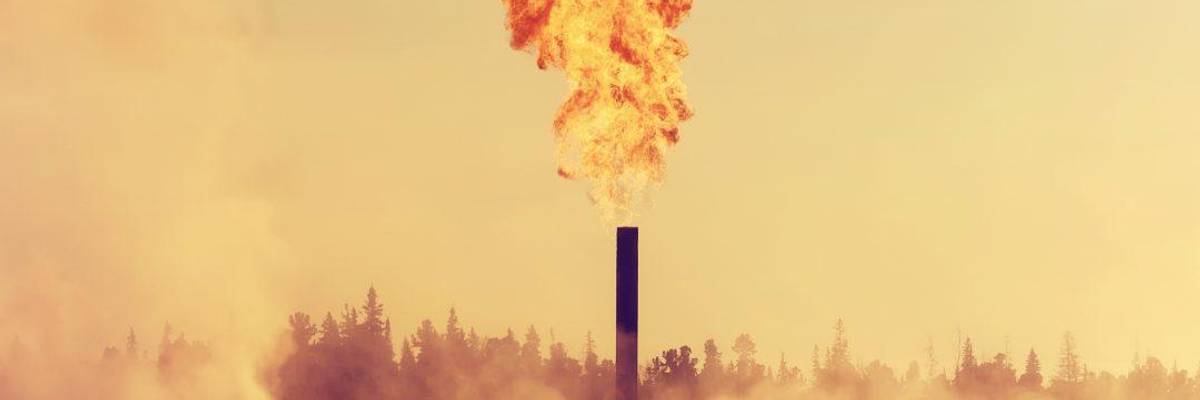
We all face harm from fracking's impact on the climate. (Photo: Shutterstock)
Science. Evidence. Facts. Do these even matter anymore in U.S. policy? They should -- especially when it comes to issues that affect our health and environment, like fracking.
Concerned Health Professionals of New York and my organization, Physicians for Social Responsibility, recently released a remarkable compendium of research on the subject. It summarizes and links to over 1,500 articles and reports and has become the go-to source for activists, health professionals, and others seeking to understand fracking.
The new studies we looked at expose serious threats to health, justice, and the climate.
A 2018 study in the Journal of Health Economics, for instance, found that the babies of Pennsylvania mothers living within 1.5 miles of gas wells had increased incidence of low birth weight. Babies with low birth weight (under 5.5 pounds) are over 20 times more likely to die in infancy than babies with healthy birth weight.
Babies exposed in utero to fracking are likely to face additional challenges throughout their lives. They may suffer long-term neurologic disability, impaired language development and academic success, and increased risk of chronic diseases, including cardiovascular disease and diabetes.
Other researchers are finding that fracking wells and associated infrastructure are disproportionately sited in non-white, indigenous, or low-income communities.
A study published this year in Ecological Economics analyzed the socio-demographics of people living near drilling and fracking operations in four high-fracking states: Colorado, Oklahoma, Pennsylvania, and Texas. It found strong evidence that minorities, especially African Americans, disproportionately live near fracking wells.
They don't just face disproportionate exposure to toxic emissions, leaks, and spills. They also have fewer resources -- like health insurance, medical services, or income security -- that would help them protect their health.
But you don't have to live near wells and pipelines to be at risk. We all face harm from fracking's impact on the climate.
So-called "natural gas" is 85-95 percent methane, a short-lived but highly potent greenhouse gas. Over its first 20 years in the atmosphere, methane traps about 86 times more heat than carbon dioxide. That 20-year timeframe matters: Scientists tell us that's about the time we have to slash our greenhouse gas emissions and begin pulling carbon out of the atmosphere.
Unfortunately, as the research we collected finds, methane leakage rates from drilling and fracking operations have "greatly exceed" earlier estimates. A 2018 analysis of methane leaks across the U.S. found leakage rates to be 60 percent higher than reported by the EPA. A 2019 study in southwestern Pennsylvania found some gas emissions to have been underreported by a factor of five.
Overall, how bad is fracking? The Compendium states that "public health risks from unconventional gas and oil extraction are real, the range of adverse environmental impacts wide, and the negative economic consequences considerable."
It concludes: "Our examination of the peer-reviewed medical, public health, biological, earth sciences, and engineering literature uncovered no evidence that fracking can be practiced in a manner that does not threaten human health."
The logical conclusion is that, for health, justice, and a livable world, the time to stop using fracked gas is now.
This country and this world are at a monumental crossroads. US voters have an opportunity to beat back the forces of fascism and confront the billionaires who are rigging the economy, our media system, and our democracy, making it increasingly impossible for ordinary people to get by. We’re not just talking about the election. We’re talking about what must be done once these fascist elements are vanquished from power. We need a bolder set of solutions than what either major party has so far been willing to offer and a working-class movement ready to fight like hell for it. Trump didn't emerge from nowhere. The conditions that fueled MAGA authoritarianism were created by decades of radical neoliberal economic policies and a corrupt political system dominated by corporate interests. They slashed taxes on the super-rich, promising that the benefits would trickle down. They said giveaways to the corporate titans would make life more affordable for the rest of us. It was all bullshit. And when a bitter, betrayed populace searches for someone to blame, right-wing demagogues have little trouble finding scapegoats. People know when they're being lied to, but you won't hear any of this from the corporate media. Only independent journalism—powered and funded by people who believe in building a better world—can deliver truly trustworthy daily news. If you share our vision, please contribute whatever you can to sustain our work. |
Science. Evidence. Facts. Do these even matter anymore in U.S. policy? They should -- especially when it comes to issues that affect our health and environment, like fracking.
Concerned Health Professionals of New York and my organization, Physicians for Social Responsibility, recently released a remarkable compendium of research on the subject. It summarizes and links to over 1,500 articles and reports and has become the go-to source for activists, health professionals, and others seeking to understand fracking.
The new studies we looked at expose serious threats to health, justice, and the climate.
A 2018 study in the Journal of Health Economics, for instance, found that the babies of Pennsylvania mothers living within 1.5 miles of gas wells had increased incidence of low birth weight. Babies with low birth weight (under 5.5 pounds) are over 20 times more likely to die in infancy than babies with healthy birth weight.
Babies exposed in utero to fracking are likely to face additional challenges throughout their lives. They may suffer long-term neurologic disability, impaired language development and academic success, and increased risk of chronic diseases, including cardiovascular disease and diabetes.
Other researchers are finding that fracking wells and associated infrastructure are disproportionately sited in non-white, indigenous, or low-income communities.
A study published this year in Ecological Economics analyzed the socio-demographics of people living near drilling and fracking operations in four high-fracking states: Colorado, Oklahoma, Pennsylvania, and Texas. It found strong evidence that minorities, especially African Americans, disproportionately live near fracking wells.
They don't just face disproportionate exposure to toxic emissions, leaks, and spills. They also have fewer resources -- like health insurance, medical services, or income security -- that would help them protect their health.
But you don't have to live near wells and pipelines to be at risk. We all face harm from fracking's impact on the climate.
So-called "natural gas" is 85-95 percent methane, a short-lived but highly potent greenhouse gas. Over its first 20 years in the atmosphere, methane traps about 86 times more heat than carbon dioxide. That 20-year timeframe matters: Scientists tell us that's about the time we have to slash our greenhouse gas emissions and begin pulling carbon out of the atmosphere.
Unfortunately, as the research we collected finds, methane leakage rates from drilling and fracking operations have "greatly exceed" earlier estimates. A 2018 analysis of methane leaks across the U.S. found leakage rates to be 60 percent higher than reported by the EPA. A 2019 study in southwestern Pennsylvania found some gas emissions to have been underreported by a factor of five.
Overall, how bad is fracking? The Compendium states that "public health risks from unconventional gas and oil extraction are real, the range of adverse environmental impacts wide, and the negative economic consequences considerable."
It concludes: "Our examination of the peer-reviewed medical, public health, biological, earth sciences, and engineering literature uncovered no evidence that fracking can be practiced in a manner that does not threaten human health."
The logical conclusion is that, for health, justice, and a livable world, the time to stop using fracked gas is now.