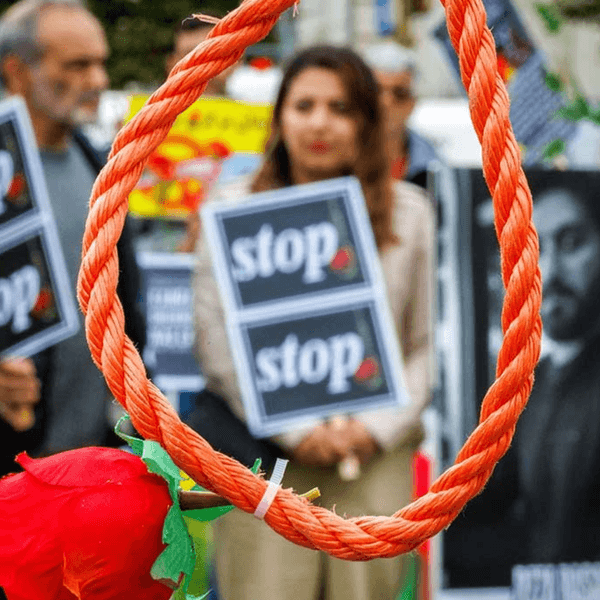

On March 28, the Supreme Court refused to hear the death penalty case of Troy Anthony Davis. It was his last appeal. Davis has been on Georgia's death row for close to 20 years after being convicted of shooting to death off-duty police officer Mark MacPhail in Savannah. Since his conviction, seven of the nine non-police witnesses have recanted their testimony, alleging police coercion and intimidation in obtaining the testimony. Despite the doubt surrounding his case, Troy Anthony Davis could be put to death within weeks.
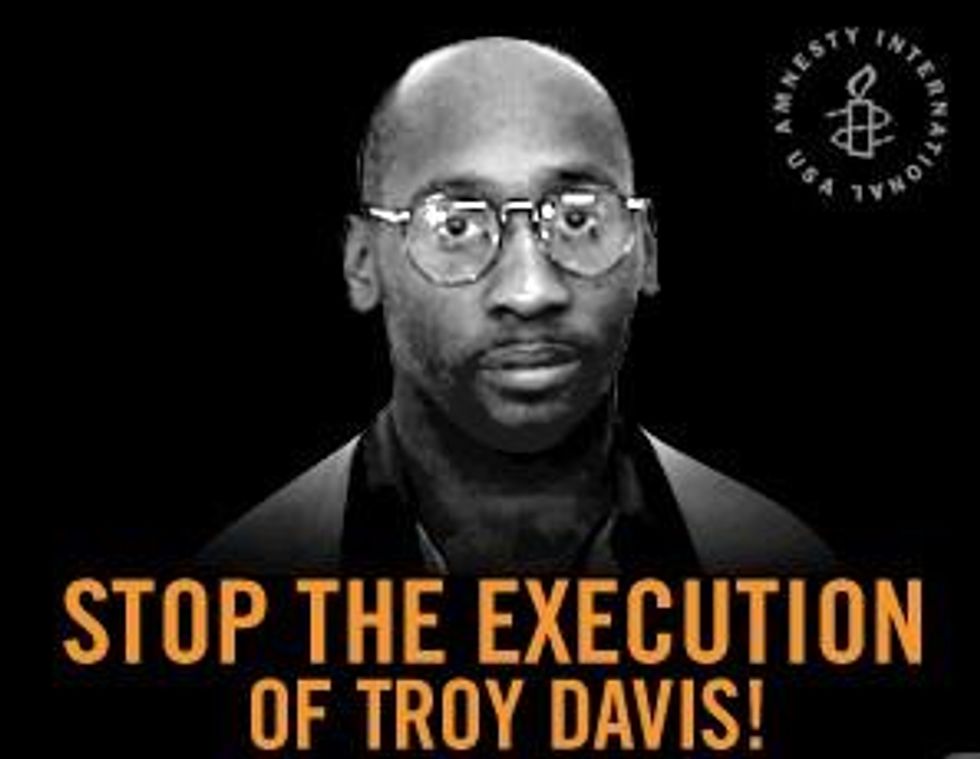
Davis is now at the mercy of the Georgia State Board of Pardons and Parole, which could commute his sentence to life without parole. It will be a tough fight, despite widespread national and international support for clemency from figures such as Pope Benedict XVI, Archbishop Desmond Tutu and former President Jimmy Carter.
Davis' sister, Martina Correia, has tirelessly campaigned for justice for her brother. In response to the Supreme Court decision, she told me: "We were really shocked and appalled yesterday when we received the news ... no one wants to look at the actual innocence, and no one wants to look at the witness recantation as a real strong and viable part of this case, even though new witnesses have come forward. There needs to be a global mobilization about Troy's case, and the fact that in the United States it's not unconstitutional to execute an innocent person needs to be addressed once and for all by the U.S. Supreme Court."
Correia brings up a significant but little-known fact about death penalty law in the U.S., namely, that current court precedent allows the execution of innocent people. Remarkably, the Supreme Court, in a 1993 opinion, suggested that "actual innocence" is not a sufficient cause to be let free. The court only cares if the legal rules are followed, while acknowledging that innocent people could still be convicted and put to death. In such cases, a prisoner could appeal for executive clemency. It seems the court has not yet learned what many states have, that the death penalty system is broken beyond repair.
Illinois recently became the 16th state in the U.S. to outlaw the death penalty. Gov. Pat Quinn, after signing the bill into law, said, "I have concluded that our system of imposing the death penalty is inherently flawed ... it is impossible to devise a system that is consistent, that is free of discrimination on the basis of race, geography or economic circumstance, and that always gets it right." He follows an earlier Illinois governor, Republican George Ryan, who commuted the death sentences of 120 death row prisoners in that state.
Both Illinois governors bring to mind former Supreme Court Justice Harry A. Blackmun, who wrote, in a dissenting opinion in 1994 after the court denied yet another death row inmate's last appeal, "From this day forward, I no longer shall tinker with the machinery of death."
Tinkering with the machinery of death is just what some states seem to be doing. Thiopental is one of the three drugs used in the lethal "cocktail" administered in most executions in this country. Hospira, the last U.S.-based company to make sodium thiopental, quit making the controlled drug, creating a national shortage. States began scrambling to keep their death chambers well-stocked. When California borrowed a similar drug from Arizona, California Undersecretary of Corrections and Rehabilitation Scott Kernan wrote in an email, "You guys in AZ are life savers ..."
Georgia, it turns out, seems to have illegally imported its supply from a dubious, London-based company called Dream Pharma Ltd., run by a husband and wife out of a rented space in the back of a driving school. Georgia is not currently licensed by the Drug Enforcement Administration to import controlled substances, so the DEA recently confiscated the state's thiopental supply. Pending an investigation, Georgia will not have this key ingredient and will not be able to execute Davis or any other death row inmate.
On the same day that the Supreme Court denied Davis' appeal, Amnesty International issued its annual report on the death penalty. The United States remains among the world's leading executioners, along with China, Iran, Saudi Arabia, Yemen and North Korea.
In addition to leading the fight for her brother, Martina Correia has been fighting for her own life. The day of the court decision was the 10th anniversary of her ongoing battle against breast cancer. Her face adorns the mobile mammography van that helps save the lives of poor women in Savannah. The National Breast Cancer Coalition named her and former House Speaker Nancy Pelosi "Women Who Get It Right." Correia, with customary humility, feels she won't have earned the title until her brother's life is saved as well.
Denis Moynihan contributed research to this column.
On March 28, the Supreme Court refused to hear the death penalty case of Troy Anthony Davis. It was his last appeal. Davis has been on Georgia's death row for close to 20 years after being convicted of shooting to death off-duty police officer Mark MacPhail in Savannah. Since his conviction, seven of the nine non-police witnesses have recanted their testimony, alleging police coercion and intimidation in obtaining the testimony. Despite the doubt surrounding his case, Troy Anthony Davis could be put to death within weeks.
Davis is now at the mercy of the Georgia State Board of Pardons and Parole, which could commute his sentence to life without parole. It will be a tough fight, despite widespread national and international support for clemency from figures such as Pope Benedict XVI, Archbishop Desmond Tutu and former President Jimmy Carter.
Davis' sister, Martina Correia, has tirelessly campaigned for justice for her brother. In response to the Supreme Court decision, she told me: "We were really shocked and appalled yesterday when we received the news ... no one wants to look at the actual innocence, and no one wants to look at the witness recantation as a real strong and viable part of this case, even though new witnesses have come forward. There needs to be a global mobilization about Troy's case, and the fact that in the United States it's not unconstitutional to execute an innocent person needs to be addressed once and for all by the U.S. Supreme Court."
Correia brings up a significant but little-known fact about death penalty law in the U.S., namely, that current court precedent allows the execution of innocent people. Remarkably, the Supreme Court, in a 1993 opinion, suggested that "actual innocence" is not a sufficient cause to be let free. The court only cares if the legal rules are followed, while acknowledging that innocent people could still be convicted and put to death. In such cases, a prisoner could appeal for executive clemency. It seems the court has not yet learned what many states have, that the death penalty system is broken beyond repair.
Illinois recently became the 16th state in the U.S. to outlaw the death penalty. Gov. Pat Quinn, after signing the bill into law, said, "I have concluded that our system of imposing the death penalty is inherently flawed ... it is impossible to devise a system that is consistent, that is free of discrimination on the basis of race, geography or economic circumstance, and that always gets it right." He follows an earlier Illinois governor, Republican George Ryan, who commuted the death sentences of 120 death row prisoners in that state.
Both Illinois governors bring to mind former Supreme Court Justice Harry A. Blackmun, who wrote, in a dissenting opinion in 1994 after the court denied yet another death row inmate's last appeal, "From this day forward, I no longer shall tinker with the machinery of death."
Tinkering with the machinery of death is just what some states seem to be doing. Thiopental is one of the three drugs used in the lethal "cocktail" administered in most executions in this country. Hospira, the last U.S.-based company to make sodium thiopental, quit making the controlled drug, creating a national shortage. States began scrambling to keep their death chambers well-stocked. When California borrowed a similar drug from Arizona, California Undersecretary of Corrections and Rehabilitation Scott Kernan wrote in an email, "You guys in AZ are life savers ..."
Georgia, it turns out, seems to have illegally imported its supply from a dubious, London-based company called Dream Pharma Ltd., run by a husband and wife out of a rented space in the back of a driving school. Georgia is not currently licensed by the Drug Enforcement Administration to import controlled substances, so the DEA recently confiscated the state's thiopental supply. Pending an investigation, Georgia will not have this key ingredient and will not be able to execute Davis or any other death row inmate.
On the same day that the Supreme Court denied Davis' appeal, Amnesty International issued its annual report on the death penalty. The United States remains among the world's leading executioners, along with China, Iran, Saudi Arabia, Yemen and North Korea.
In addition to leading the fight for her brother, Martina Correia has been fighting for her own life. The day of the court decision was the 10th anniversary of her ongoing battle against breast cancer. Her face adorns the mobile mammography van that helps save the lives of poor women in Savannah. The National Breast Cancer Coalition named her and former House Speaker Nancy Pelosi "Women Who Get It Right." Correia, with customary humility, feels she won't have earned the title until her brother's life is saved as well.
Denis Moynihan contributed research to this column.
On March 28, the Supreme Court refused to hear the death penalty case of Troy Anthony Davis. It was his last appeal. Davis has been on Georgia's death row for close to 20 years after being convicted of shooting to death off-duty police officer Mark MacPhail in Savannah. Since his conviction, seven of the nine non-police witnesses have recanted their testimony, alleging police coercion and intimidation in obtaining the testimony. Despite the doubt surrounding his case, Troy Anthony Davis could be put to death within weeks.
Davis is now at the mercy of the Georgia State Board of Pardons and Parole, which could commute his sentence to life without parole. It will be a tough fight, despite widespread national and international support for clemency from figures such as Pope Benedict XVI, Archbishop Desmond Tutu and former President Jimmy Carter.
Davis' sister, Martina Correia, has tirelessly campaigned for justice for her brother. In response to the Supreme Court decision, she told me: "We were really shocked and appalled yesterday when we received the news ... no one wants to look at the actual innocence, and no one wants to look at the witness recantation as a real strong and viable part of this case, even though new witnesses have come forward. There needs to be a global mobilization about Troy's case, and the fact that in the United States it's not unconstitutional to execute an innocent person needs to be addressed once and for all by the U.S. Supreme Court."
Correia brings up a significant but little-known fact about death penalty law in the U.S., namely, that current court precedent allows the execution of innocent people. Remarkably, the Supreme Court, in a 1993 opinion, suggested that "actual innocence" is not a sufficient cause to be let free. The court only cares if the legal rules are followed, while acknowledging that innocent people could still be convicted and put to death. In such cases, a prisoner could appeal for executive clemency. It seems the court has not yet learned what many states have, that the death penalty system is broken beyond repair.
Illinois recently became the 16th state in the U.S. to outlaw the death penalty. Gov. Pat Quinn, after signing the bill into law, said, "I have concluded that our system of imposing the death penalty is inherently flawed ... it is impossible to devise a system that is consistent, that is free of discrimination on the basis of race, geography or economic circumstance, and that always gets it right." He follows an earlier Illinois governor, Republican George Ryan, who commuted the death sentences of 120 death row prisoners in that state.
Both Illinois governors bring to mind former Supreme Court Justice Harry A. Blackmun, who wrote, in a dissenting opinion in 1994 after the court denied yet another death row inmate's last appeal, "From this day forward, I no longer shall tinker with the machinery of death."
Tinkering with the machinery of death is just what some states seem to be doing. Thiopental is one of the three drugs used in the lethal "cocktail" administered in most executions in this country. Hospira, the last U.S.-based company to make sodium thiopental, quit making the controlled drug, creating a national shortage. States began scrambling to keep their death chambers well-stocked. When California borrowed a similar drug from Arizona, California Undersecretary of Corrections and Rehabilitation Scott Kernan wrote in an email, "You guys in AZ are life savers ..."
Georgia, it turns out, seems to have illegally imported its supply from a dubious, London-based company called Dream Pharma Ltd., run by a husband and wife out of a rented space in the back of a driving school. Georgia is not currently licensed by the Drug Enforcement Administration to import controlled substances, so the DEA recently confiscated the state's thiopental supply. Pending an investigation, Georgia will not have this key ingredient and will not be able to execute Davis or any other death row inmate.
On the same day that the Supreme Court denied Davis' appeal, Amnesty International issued its annual report on the death penalty. The United States remains among the world's leading executioners, along with China, Iran, Saudi Arabia, Yemen and North Korea.
In addition to leading the fight for her brother, Martina Correia has been fighting for her own life. The day of the court decision was the 10th anniversary of her ongoing battle against breast cancer. Her face adorns the mobile mammography van that helps save the lives of poor women in Savannah. The National Breast Cancer Coalition named her and former House Speaker Nancy Pelosi "Women Who Get It Right." Correia, with customary humility, feels she won't have earned the title until her brother's life is saved as well.
Denis Moynihan contributed research to this column.