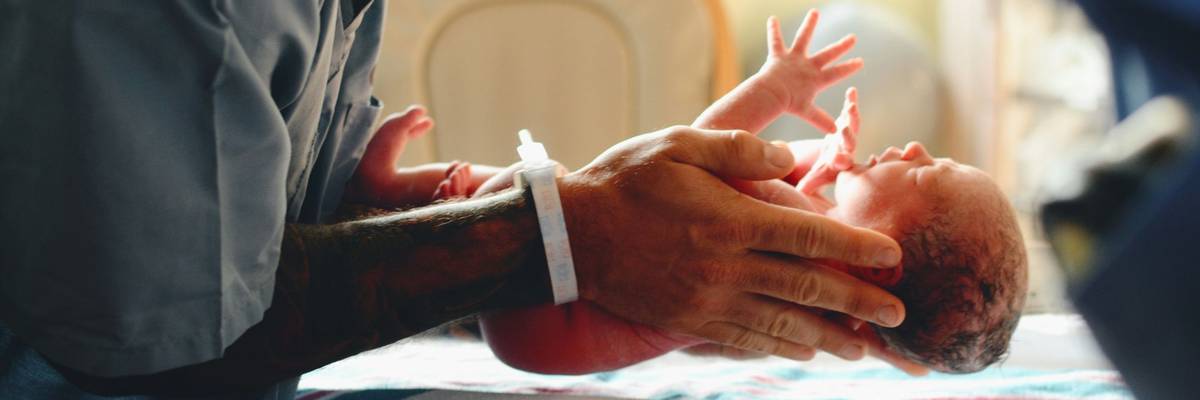
A medical worker is seen putting a newborn baby on a scale.
'A Tragedy in the Making': CDC Panel Votes to Adjust Hepatitis B Vaccine Policy for Newborns
"This unfounded change to the childhood vaccine schedule will only lead to entirely preventable disease outbreaks in the years ahead," said the consumer advocacy group Public Citizen.
Sen. Bernie Sanders, ranking member of the top US Senate committee on public health, demanded on Friday that Health and Human Services Secretary Robert F. Kennedy Jr. explain to lawmakers why experts he convened had scrapped a policy that one academic recently called "one of the most significant public health achievements in US child health over the past several decades."
The Advisory Committee on Immunization Practices (ACIP), said Sanders, "in strong disagreement with the medical and scientific community, voted to end a decades-long recommendation that newborns receive the hepatitis B vaccine. This vaccine saves lives."
Since 1991, when the Centers for Disease Control and Prevention (CDC) adopted a policy of recommending the hepatitis B vaccine for all newborn babies in the US, the number of children who test positive for the disease has plummeted by 99%, from nearly 20,000 annually to the single or low-double digits.
On Friday, ACIP—whose 17 previous members were all fired and replaced by Kennedy—voted to potentially erase that progress, which, as Kelly Gebo, dean of the George Washington University Milken Institute School of Public Health, said this week, has "prevented tens of thousands of deaths, and remains a safe, effective, and essential measure."
The panel voted 8-3 that women who test negative for hepatitis B should work with their healthcare provider to decide "when and if" their children will be vaccinated against the virus, which causes an infection of the liver and can be transmitted through blood or other bodily fluids. The disease can cause a chronic infection and eventually lead to cirrhosis, liver failure, or liver cancer.
Under the new guidance, parents will be advised to “consider vaccine benefits, vaccine risks, and infection risks” and administer the shot at two months of age at the earliest.
At Stat News, Helen Branswell noted that while the revised policy, as stated, is only a recommendation in cases of a pregnant person who is at low risk for hepatitis B, the across-the-board recommendation helped ensure babies would not slip "through the safety net meant to protect them against infection at birth."
"All pregnant people are supposed to be tested for hepatitis B during pregnancy," wrote Branswell. "But testing doesn’t always occur, some test results are faulty, and some pregnant people become infected later in pregnancy, after being tested."
The ACIP members who voted to change the policy repeated claims made by Kennedy throughout the debate—that babies in general are at low risk and that hepatitis largely affects sex workers, drug users, and people from countries with high hepatitis B rates.
But critics of the decision said it will place unvaccinated infants at risk of being exposed to the virus, especially since as many as 70% of the roughly 2 million Americans who have hepatitis B are not aware of their diagnosis.
James Campbell, vice chair of the American Academy of Pediatrics’ infectious diseases committee, told Stat News about a 15-year-old girl he cared for who had not been vaccinated against hepatitis B in infancy because she was not believed to be at risk. She developed a chronic infection and ultimately died after two failed liver transplants.
“This is a very dangerous decision. It will certainly cause harm,” Campbell told Stat News.
Consumer advocacy group Public Citizen added that the vote is a "tragedy in the making."
In Massachusetts, Democratic Gov. Maura Healey indicated she plans to take action to circumvent ACIP's new guidelines and ensure parents are given the data about hepatitis B infection and the benefits and safety of the vaccine that's been recommended for more than three decades.
"RFK, that panel, they are not doing their jobs," Healey told CNN on Thursday night, ahead of the vote. "And in the face of that, as governor, I'm going to do mine, which is to take actions to make available science-based information. To give people real truth, real information, not conspiracy theories or ideologies, and we're going to continue to make available vaccines that people want."
Kennedy has spread misinformation about the measles vaccine and angered senators from both sides of the aisle earlier this year when the Food and Drug Administration, under his leadership, limited access to Covid-19 vaccines—leading Senate Health, Education, Labor, and Pensions Committee Chair Bill Cassidy (R-La.) to accuse him of "denying people vaccine" after Kennedy had pledged he would not restrict Americans' ability to be immunized.
Cassidy, a physician, grilled Kennedy during his confirmation hearing about his plans for vaccine policies—but ultimately voted in favor of his confirmation.
On Friday, Cassidy said ACIP's new recommendation for the hepatitis B vaccine was "a mistake" and urged CDC Director Jim O'Neill to retain "the current, evidence-based approach."
But Charles Idelson, former communications strategist at National Nurses United, said Cassidy and the other senators who voted to confirm Kennedy to serve as the nation's top health official "own him."
"If you had the political courage to back up this position," said Idelson, "you would surely now call for Kennedy to resign for his lies to you, for his malfeasance, for his reckless advocacy of conspiracy theories, and for endangering the health of all Americans."
On Friday, Aaron Siri, a lawyer who specializes in vaccine injury cases, was scheduled to present to ACIP regarding the broader childhood vaccine schedule and potential changes to recommendations.
We are at a crossroads
This country and this world are at a monumental crossroads. In a few short weeks, US voters will have an opportunity to beat back the forces of fascism and confront the billionaires who are rigging the economy, our media system, and our democracy, making it increasingly impossible for ordinary people to get by. We’re not just talking about the election. We’re talking about what must be done once these fascist elements are vanquished from power. We need a bolder set of solutions than what either major party has so far been willing to offer and a working-class movement ready to fight like hell for it. Trump didn't emerge from nowhere. The conditions that fueled MAGA authoritarianism were created by decades of radical neoliberal economic policies and a corrupt political system dominated by corporate interests. They slashed taxes on the super-rich, promising that the benefits would trickle down. They said giveaways to the corporate titans would make life more affordable for the rest of us. It was all bullshit. And when a bitter, betrayed populace searches for someone to blame, right-wing demagogues have little trouble finding scapegoats. People know when they're being lied to, but you won't hear any of this from the corporate media. Only independent journalism—powered and funded by people who believe in building a better world—can deliver truly trustworthy daily news. Our Fall Campaign is underway, and we need your help. To power our newsroom through the rest of the year, we need to raise $125,000 by midnight on October 31. So if you share our vision, please contribute whatever you can to sustain our work. |
Sen. Bernie Sanders, ranking member of the top US Senate committee on public health, demanded on Friday that Health and Human Services Secretary Robert F. Kennedy Jr. explain to lawmakers why experts he convened had scrapped a policy that one academic recently called "one of the most significant public health achievements in US child health over the past several decades."
The Advisory Committee on Immunization Practices (ACIP), said Sanders, "in strong disagreement with the medical and scientific community, voted to end a decades-long recommendation that newborns receive the hepatitis B vaccine. This vaccine saves lives."
Since 1991, when the Centers for Disease Control and Prevention (CDC) adopted a policy of recommending the hepatitis B vaccine for all newborn babies in the US, the number of children who test positive for the disease has plummeted by 99%, from nearly 20,000 annually to the single or low-double digits.
On Friday, ACIP—whose 17 previous members were all fired and replaced by Kennedy—voted to potentially erase that progress, which, as Kelly Gebo, dean of the George Washington University Milken Institute School of Public Health, said this week, has "prevented tens of thousands of deaths, and remains a safe, effective, and essential measure."
The panel voted 8-3 that women who test negative for hepatitis B should work with their healthcare provider to decide "when and if" their children will be vaccinated against the virus, which causes an infection of the liver and can be transmitted through blood or other bodily fluids. The disease can cause a chronic infection and eventually lead to cirrhosis, liver failure, or liver cancer.
Under the new guidance, parents will be advised to “consider vaccine benefits, vaccine risks, and infection risks” and administer the shot at two months of age at the earliest.
At Stat News, Helen Branswell noted that while the revised policy, as stated, is only a recommendation in cases of a pregnant person who is at low risk for hepatitis B, the across-the-board recommendation helped ensure babies would not slip "through the safety net meant to protect them against infection at birth."
"All pregnant people are supposed to be tested for hepatitis B during pregnancy," wrote Branswell. "But testing doesn’t always occur, some test results are faulty, and some pregnant people become infected later in pregnancy, after being tested."
The ACIP members who voted to change the policy repeated claims made by Kennedy throughout the debate—that babies in general are at low risk and that hepatitis largely affects sex workers, drug users, and people from countries with high hepatitis B rates.
But critics of the decision said it will place unvaccinated infants at risk of being exposed to the virus, especially since as many as 70% of the roughly 2 million Americans who have hepatitis B are not aware of their diagnosis.
James Campbell, vice chair of the American Academy of Pediatrics’ infectious diseases committee, told Stat News about a 15-year-old girl he cared for who had not been vaccinated against hepatitis B in infancy because she was not believed to be at risk. She developed a chronic infection and ultimately died after two failed liver transplants.
“This is a very dangerous decision. It will certainly cause harm,” Campbell told Stat News.
Consumer advocacy group Public Citizen added that the vote is a "tragedy in the making."
In Massachusetts, Democratic Gov. Maura Healey indicated she plans to take action to circumvent ACIP's new guidelines and ensure parents are given the data about hepatitis B infection and the benefits and safety of the vaccine that's been recommended for more than three decades.
"RFK, that panel, they are not doing their jobs," Healey told CNN on Thursday night, ahead of the vote. "And in the face of that, as governor, I'm going to do mine, which is to take actions to make available science-based information. To give people real truth, real information, not conspiracy theories or ideologies, and we're going to continue to make available vaccines that people want."
Kennedy has spread misinformation about the measles vaccine and angered senators from both sides of the aisle earlier this year when the Food and Drug Administration, under his leadership, limited access to Covid-19 vaccines—leading Senate Health, Education, Labor, and Pensions Committee Chair Bill Cassidy (R-La.) to accuse him of "denying people vaccine" after Kennedy had pledged he would not restrict Americans' ability to be immunized.
Cassidy, a physician, grilled Kennedy during his confirmation hearing about his plans for vaccine policies—but ultimately voted in favor of his confirmation.
On Friday, Cassidy said ACIP's new recommendation for the hepatitis B vaccine was "a mistake" and urged CDC Director Jim O'Neill to retain "the current, evidence-based approach."
But Charles Idelson, former communications strategist at National Nurses United, said Cassidy and the other senators who voted to confirm Kennedy to serve as the nation's top health official "own him."
"If you had the political courage to back up this position," said Idelson, "you would surely now call for Kennedy to resign for his lies to you, for his malfeasance, for his reckless advocacy of conspiracy theories, and for endangering the health of all Americans."
On Friday, Aaron Siri, a lawyer who specializes in vaccine injury cases, was scheduled to present to ACIP regarding the broader childhood vaccine schedule and potential changes to recommendations.
Sen. Bernie Sanders, ranking member of the top US Senate committee on public health, demanded on Friday that Health and Human Services Secretary Robert F. Kennedy Jr. explain to lawmakers why experts he convened had scrapped a policy that one academic recently called "one of the most significant public health achievements in US child health over the past several decades."
The Advisory Committee on Immunization Practices (ACIP), said Sanders, "in strong disagreement with the medical and scientific community, voted to end a decades-long recommendation that newborns receive the hepatitis B vaccine. This vaccine saves lives."
Since 1991, when the Centers for Disease Control and Prevention (CDC) adopted a policy of recommending the hepatitis B vaccine for all newborn babies in the US, the number of children who test positive for the disease has plummeted by 99%, from nearly 20,000 annually to the single or low-double digits.
On Friday, ACIP—whose 17 previous members were all fired and replaced by Kennedy—voted to potentially erase that progress, which, as Kelly Gebo, dean of the George Washington University Milken Institute School of Public Health, said this week, has "prevented tens of thousands of deaths, and remains a safe, effective, and essential measure."
The panel voted 8-3 that women who test negative for hepatitis B should work with their healthcare provider to decide "when and if" their children will be vaccinated against the virus, which causes an infection of the liver and can be transmitted through blood or other bodily fluids. The disease can cause a chronic infection and eventually lead to cirrhosis, liver failure, or liver cancer.
Under the new guidance, parents will be advised to “consider vaccine benefits, vaccine risks, and infection risks” and administer the shot at two months of age at the earliest.
At Stat News, Helen Branswell noted that while the revised policy, as stated, is only a recommendation in cases of a pregnant person who is at low risk for hepatitis B, the across-the-board recommendation helped ensure babies would not slip "through the safety net meant to protect them against infection at birth."
"All pregnant people are supposed to be tested for hepatitis B during pregnancy," wrote Branswell. "But testing doesn’t always occur, some test results are faulty, and some pregnant people become infected later in pregnancy, after being tested."
The ACIP members who voted to change the policy repeated claims made by Kennedy throughout the debate—that babies in general are at low risk and that hepatitis largely affects sex workers, drug users, and people from countries with high hepatitis B rates.
But critics of the decision said it will place unvaccinated infants at risk of being exposed to the virus, especially since as many as 70% of the roughly 2 million Americans who have hepatitis B are not aware of their diagnosis.
James Campbell, vice chair of the American Academy of Pediatrics’ infectious diseases committee, told Stat News about a 15-year-old girl he cared for who had not been vaccinated against hepatitis B in infancy because she was not believed to be at risk. She developed a chronic infection and ultimately died after two failed liver transplants.
“This is a very dangerous decision. It will certainly cause harm,” Campbell told Stat News.
Consumer advocacy group Public Citizen added that the vote is a "tragedy in the making."
In Massachusetts, Democratic Gov. Maura Healey indicated she plans to take action to circumvent ACIP's new guidelines and ensure parents are given the data about hepatitis B infection and the benefits and safety of the vaccine that's been recommended for more than three decades.
"RFK, that panel, they are not doing their jobs," Healey told CNN on Thursday night, ahead of the vote. "And in the face of that, as governor, I'm going to do mine, which is to take actions to make available science-based information. To give people real truth, real information, not conspiracy theories or ideologies, and we're going to continue to make available vaccines that people want."
Kennedy has spread misinformation about the measles vaccine and angered senators from both sides of the aisle earlier this year when the Food and Drug Administration, under his leadership, limited access to Covid-19 vaccines—leading Senate Health, Education, Labor, and Pensions Committee Chair Bill Cassidy (R-La.) to accuse him of "denying people vaccine" after Kennedy had pledged he would not restrict Americans' ability to be immunized.
Cassidy, a physician, grilled Kennedy during his confirmation hearing about his plans for vaccine policies—but ultimately voted in favor of his confirmation.
On Friday, Cassidy said ACIP's new recommendation for the hepatitis B vaccine was "a mistake" and urged CDC Director Jim O'Neill to retain "the current, evidence-based approach."
But Charles Idelson, former communications strategist at National Nurses United, said Cassidy and the other senators who voted to confirm Kennedy to serve as the nation's top health official "own him."
"If you had the political courage to back up this position," said Idelson, "you would surely now call for Kennedy to resign for his lies to you, for his malfeasance, for his reckless advocacy of conspiracy theories, and for endangering the health of all Americans."
On Friday, Aaron Siri, a lawyer who specializes in vaccine injury cases, was scheduled to present to ACIP regarding the broader childhood vaccine schedule and potential changes to recommendations.