

SUBSCRIBE TO OUR FREE NEWSLETTER
Daily news & progressive opinion—funded by the people, not the corporations—delivered straight to your inbox.
5
#000000
#FFFFFF
To donate by check, phone, or other method, see our More Ways to Give page.
Daily news & progressive opinion—funded by the people, not the corporations—delivered straight to your inbox.
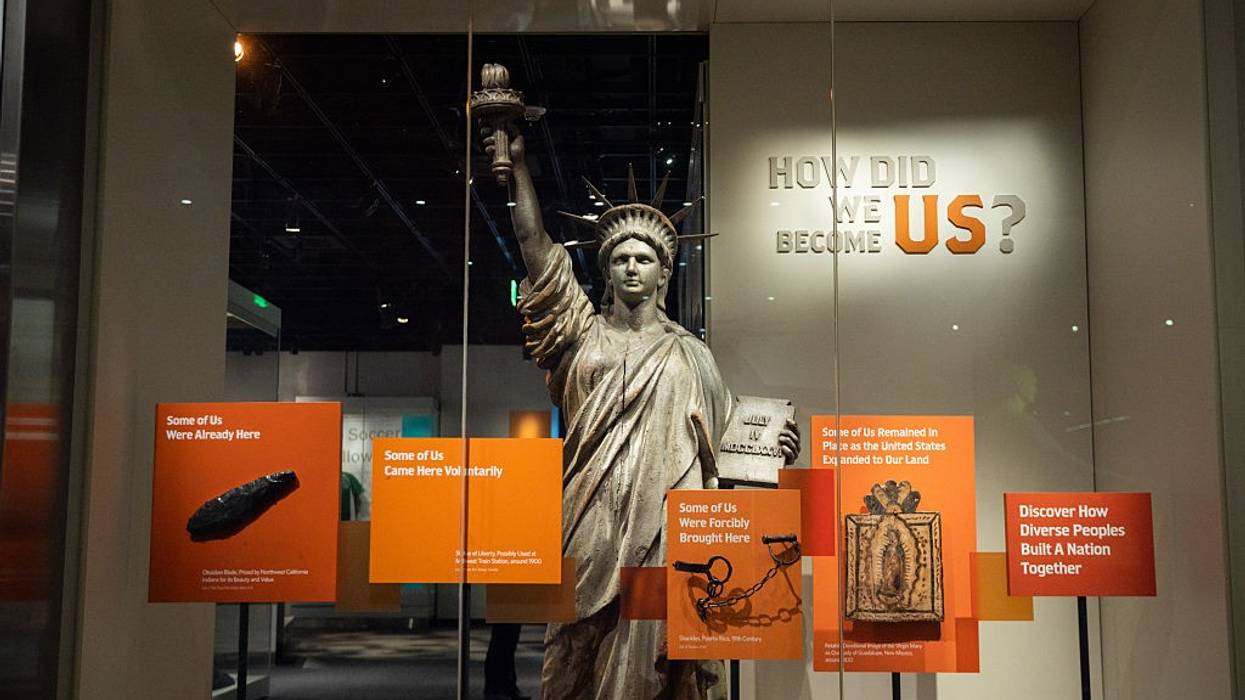
Instead of warning Americans away, we should safeguard exhibits, lesson plans, and art that tell diverse histories. They help us understand our country better.
In a recent, high-profile dispute, the president castigated the Smithsonian’s National Museum of American History for failing to “present American history as a shared national inheritance to be taught and celebrated.” His showdown with its director, Anthea Hartig, followed a contentious House subcommittee hearing at which Republicans openly chastised her for similar reasons. The White House has now directed that the National Park Service install signage outside the building warning visitors of alleged inaccuracies within.
Many of the museum’s current exhibits commemorate the country’s diverse histories in honor of the American semiquincentennial. The president is wrong that these displays pander and divide. Rather, they educate Americans on often overlooked events in our own country.
Take my wheelhouse, Asian American and Pacific Islander (AAPI) history. It gets the Smithsonian treatment in an exhibit canvassing Filipino American history from the 1910s to the 1970s. In fact, Asian Americans have been here since before the Declaration of Independence—from the crew of a Spanish expedition in 1587 to a mid-1700s settlement in the swamplands near New Orleans. I bet your school textbooks never taught that.
A robust American education requires that we preserve more of these stories: in museums, in the classroom, and in broader popular culture. To our credit, we are beginning to do so. Five years ago, Illinois passed the first state-level mandate to teach AAPI history in classrooms. Since then, local pilot programs and legislation in 23 states have expanded AAPI history in K-12 social-studies curricula. These efforts have accompanied moves in many school districts to teach diverse content, including Black, women’s, and LGBTQ+ histories.
Whatever one’s political leanings, having more information about our shared past allows us to draw more educated conclusions about our present.
Still, 55% of Americans cannot name a single event or policy related to Asian Americans. That means more than lacking familiarity with a racial group. Without knowing the past, and how diverse communities influenced it, we cannot fully understand many of today’s legal institutions and enforcement activities.
For example, immigration enforcement at our Southern border first became a priority during the era of Chinese Exclusion. To skirt detention at Angel Island, new arrivals from China increasingly entered the country via Mexico. Around 1904, mounted federal agents began patrolling the border in response. Over time, their duties expanded from immigration to general law enforcement. In conjunction with the Texas Rangers, they engaged in confrontations, sometimes fatal, with Tejanos and others accused of smuggling illicit goods.
The border, it hardly requires pointing out, haunts national politics still, with mass detention, visas, and the status of sanctuary cities dominating the news cycle. The construction of a physical border wall, meanwhile, threatens to disrupt our relations with Native American tribes and jeopardize our national parks.
Other links between past and present abound. For example, many contemporary labor movements share DNA with those that AAPI workers led. The American History Museum’s exhibit on Filipino Americans explores the decades-long organizing work of Larry Itliong, which culminated in his leadership of the 1965 Delano grape strike alongside Cesar Chavez. The latter is a household name, and the former should be.
Similarly, the movie Sinners brought attention to the role of Chinese American grocers in the Mississippi Delta during Jim Crow. They played complex roles in their local communities, testing and fortifying racial hierarchies in turn. They sold goods to Black patrons on credit, breaking the dominance of extractive plantation commissaries. But they also brought legal challenges that reinforced the premise of “separate but equal,” such as a suit in which they argued for their children’s admission into white schools while accepting the need for separate Black schools. How Chinese American families lived in and navigated the political climate of the postbellum South sheds light on little-known facets of the region’s economy and institutions.
I learned about all these events as an adult, reading texts on my own (such as Erika Lee’s The Making of Asian America). And far from diminishing my patriotism, as the president apparently fears, each of these stories has strengthened my belief in the resilience of all Americans—and in the idea that America itself is a collective project.
Instead of warning Americans away, we should safeguard exhibits, lesson plans, and art that tell diverse histories. They help us understand our country better. Whatever one’s political leanings, having more information about our shared past allows us to draw more educated conclusions about our present. Democracies rely on informed citizens. And the way to build an informed citizenry is to treat diverse histories as a vital part of our national inheritance.
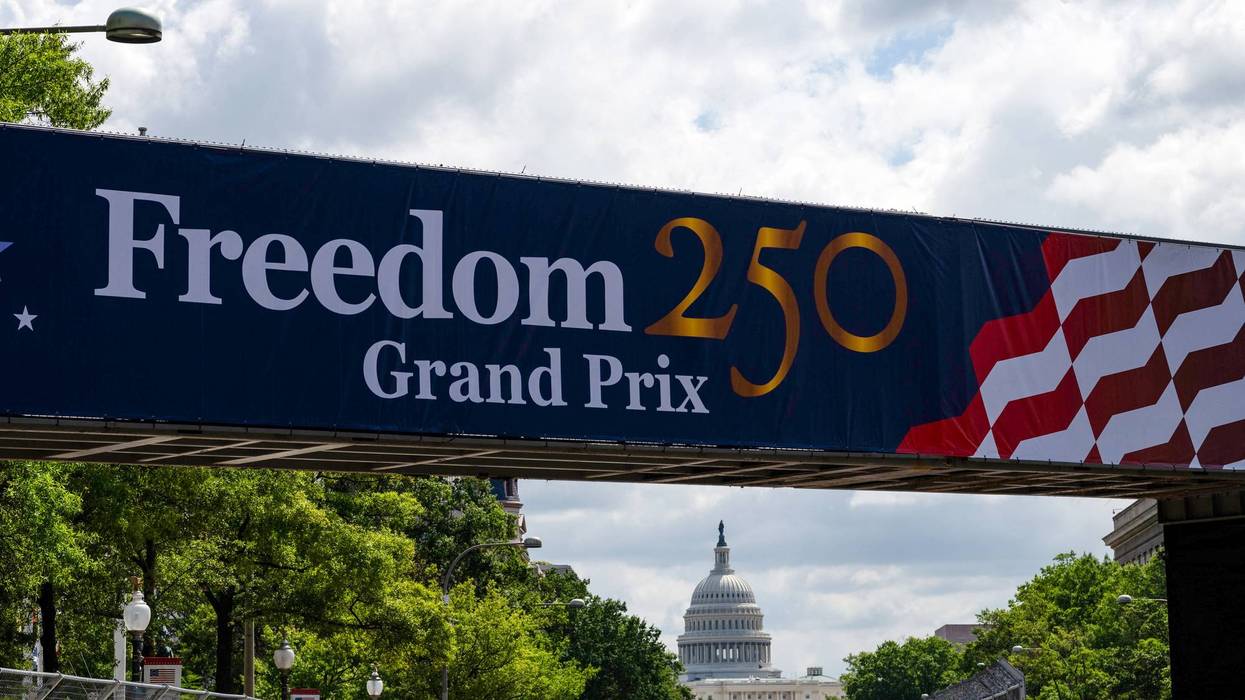
Trump is perfectly willing to risk the destruction of the nation's most priceless cultural assets to create a public spectacle that honors him, and almost assuredly puts carloads more of our money in his pocket.
This weekend, President Donald Trump is turning the heart of our democracy into a taxpayer-funded racetrack. Through an executive order, the administration mandated the "Freedom 250 Grand Prix"—an IndyCar street circuit winding directly through the National Mall. We are being told this is a celebration of America. But earlier this year, IndyCar quietly launched and then hastily deleted a new piece of official merchandise: a gauche, blatantly racist T-shirt. This is exactly what the current administration is substituting for our national heritage.
Trump is perfectly willing to risk the destruction of the nation's most priceless cultural assets to create a public spectacle that honors him, and almost assuredly puts carloads more of our money in his pocket.
Let me be clear: Live athletic competition can be a great cultural unifier, and celebrating America should be a joyous occasion. But this race is a fabricated, exhaust-choked spectacle designed entirely to feed Trump's obsession with personal grandeur. And it’s the public who is paying for everything and likewise the liability falls right into the lap of the public. We are being forced to subsidize a 200-mile-per-hour vanity project with an estimated cultural liability of up to $183 billion.
When you map the racecourse, the sheer negligence becomes terrifying. The circuit wraps directly around the National Gallery of Art, the National Archives, the Hirshhorn Museum and Sculpture Garden, the National Air and Space Museum, and the National Museum of the American Indian. If a catastrophic, high-speed crash were to occur—scattering carbon-fiber shrapnel and burning ethanol fuel, or triggering a massive structural fire—the cultural devastation would be irreversible. The vibration of the race alone has already forced the National Gallery of Art to remove paintings from the wall. But not everything can be protected like that.
Replacing the pinnacle of global art, foundational Indigenous artifacts, and the physical documents of our democracy with the cheap, offensive aesthetics of a racist IndyCar T-shirt is the ultimate manifestation of Trump’s corrupt worldview.
By forcing this race onto the Mall, the administration is playing Russian roulette with irreplaceable artifacts of American art and history. They are risking the original Declaration of Independence and the Constitution at the National Archives. They are endangering Leonardo da Vinci’s "Ginevra de' Benci"—the only da Vinci painting on public view in the Americas. They are threatening the 1903 Wright Flyer and the Apollo 11 Command Module.
And there is incredible risk of damage to the over 2,500 square feet of priceless, New Deal-era buon fresco murals physically bound into the walls of the Wilbur J. Cohen building, which could be obliterated by structural shockwaves or water damage from emergency fire suppression.
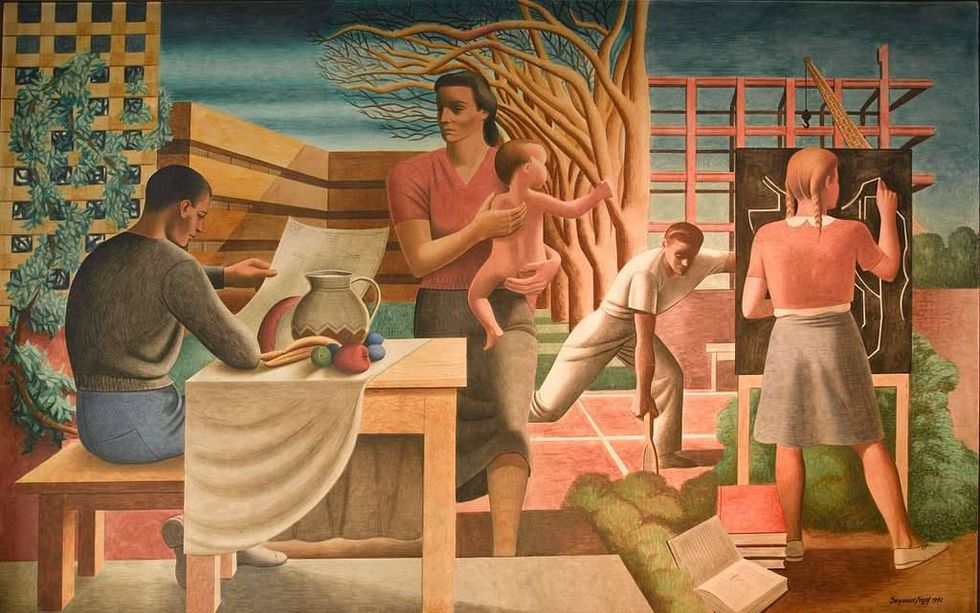
Mary Okin, assistant director of the Living New Deal, told WTOP: “Given how important these artworks are, there should be all kinds of protections taken, and also a case made that this race should not happen here. I don’t think a race like this would ever happen under other administrations, because it’s just foolish and reckless.”
Replacing the pinnacle of global art, foundational Indigenous artifacts, and the physical documents of our democracy with the cheap, offensive aesthetics of a racist IndyCar T-shirt is the ultimate manifestation of Trump’s corrupt worldview. Public goods hold no value to this administration unless they can be leveraged for a fleeting television broadcast.
We cannot allow an administration that knows the price of everything and the value of nothing to destroy the American legacy for a weekend of noise.
While US presidential history isn't short on scandals, self-enrichment corruption under Trump 2.0 is—to borrow his pet refrain—“like nothing we’ve ever seen before.”
Does Teapot Dome ring a bell?
Generations of high school history teachers taught Teapot Dome as an outrageous episode of unprecedented and still unsurpassed corruption. A 1960s US history textbook is typical:
Death mercifully claimed [President Warren G.] Harding on August 2, 1923, before the worst of the scandals came to light, that involving the naval oil reserves at Teapot Dome, Wyoming, and Elk Hills, California. These reserves had been transferred to private control on noncompetitive bidding by Secretary of the Interior [Albert B.] Fall, after Harding had moved control of them from the Navy Department to the Interior Department. Fall’s transfer of the reserves, which had raised suspicions, created a furor when it was discovered that Fall had obtained a $100,000 interest-free loan, $233,000 in Liberty Bonds, and a herd of blooded cattle in the transaction. Fall was indicted, prosecuted, and sentenced to a year in prison and a fine of $100,000. The Secretary of the Navy, who was guilty of stupidity in permitting the original transfer, was forced to resign.
“The worst of the scandals”? One hundred thousand dollars in 1923 would be worth about $2 million today. Those Liberty Bonds would be worth $4.5 million. Measured against the Trump 2.0 regime, the scale of this corruption is small potatoes.
To be sure, in the century between Teapot Dome and Trump 2.0 other presidents engaged in less-than-upright behavior. The Internal Revenue Service (IRS) found that Nixon owed substantial back taxes, leading to his famous "I am not a crook" speech (and the Watergate burglary led him to resign). Lyndon Johnson ordered the Federal Communications Commission (FCC) to give preferential treatment to his wife’s radio and TV stations. Over 120 of Ronald Reagan’s appointees resigned because of indictments, convictions, or being under a cloud, until then the largest number of corruption cases of any administration in US history (though nothing stuck to the original “Teflon President”). Bill Clinton invited political donors to sleep in the White House’s Lincoln Bedroom. Republican allegations that Joe Biden engaged in “egregious” corruption never panned out, though his son Hunter did parlay family connections into profitable business partnerships abroad. During Trump 1.0, the president’s main self-enrichment schemes involved millions that government agencies, public officials from Congress, the executive branch, and state and foreign governments, lobbyists, corporate bigwigs, and political campaigns spent at his hotels and golf courses and some modest pay-for-access schemes like hiking Mar-A-Lago membership dues.
Self-enrichment corruption under Trump 2.0, however, is—to borrow his pet refrain—“like nothing we’ve ever seen before.” Here’s a non-exhaustive catalog, limited to self-enrichment schemes involving the president and his family and cronies (many machinations occur behind the scenes). A full treatment of corruption that did not involve direct self-enrichment would include partisan gerrymandering; voter suppression measures; gutting regulation and oversight mechanisms; extorting universities, law firms, and news media; no-bid contracts for campaign donors’ companies; destroying the government registry of anonymous shell companies; and bogus investigations of political opponents and voting rights and civil rights organizations. Such a list would require not an opinion column, but an encyclopedia or a new wing of the Museum of Political Corruption. Some of the bullying efforts did end up enriching President Donald Trump, as when Paramount paid him $16 million (plus $20 million of additional advertising commitments) for the supposedly deceptive editing of a 2024 Kamala Harris interview. Shortly thereafter, the FCC approved Paramount’s $8 billion merger with Skydance, bringing CBS News into the right-wing media ecosystem (A subsequent merger with Warner Brothers is on hold, but could do the same with CNN).
As during Trump 1.0, under 2.0 foreign entities and political groups directed funds to Trump-owned properties. Events like the Saudi-backed LIV Golf tournament held at one of Trump's Florida clubs resulted in massive payouts. Trump continues to rake in millions in name licensing. He leaned on Amazon founder Jeff Bezos to pay tens of millions for a documentary about Melania that bombed at the box office.
When the Trump 2.0 administration facilitates the use of offshore financial paradises to shield corporate profits from taxation, services get cut and the rest of us must pay higher taxes to make up the difference.
Government watchdogs tracked hundreds of major donors who funneled money into inaugural and political action committees, vanity projects like the White House ballroom, and Trump family cryptocurrency ventures. Many received ambassadorial, cabinet, and other high-level appointments. The crypto initiatives—which generated an estimated $2.3 billion for the family and at least $3.8 billion in losses for retail investors—are vehicles for foreign and corporate interests to buy favors, such as regulatory rollbacks, tariff relief, and government contracts. Days before Trump’s second inauguration, the Emirati royal family took a 49% stake—$500 million—in World Liberty Financial. Not long after, the Trump administration green-lit the sale to the UAE of Nvidia AI chips, a deal that netted $187 million for the Trumps and $31 million for the family of Trump's Middle East envoy Steve Witkoff. Shortly before the Trump administration eased sanctions on his family’s businesses, Indian billionaire Mukesh Ambani invested at least $100 million in a struggling Texas startup, America First Refining, which had secretly given Donald Trump Jr. a financial stake.
Emblematic of the mixing of business with Middle East policy—directed by Witkoff and Trump son-in-law, Jared Kushner—himself from a notoriously corrupt family—was Qatar’s “donation” of a pimped-out 747 jet worth $400 million as a new, fancier Air Force One and eventual exhibit at Trump’s planned presidential library. Since 2025, Trump’s adult sons raked in millions from war industry start-ups. A Washington Post investigation found these firms generated “at least $3.2 billion in direct government business since the sons invested and an additional $3.1 billion in future contract options. Some have gained coveted spots on shortlists of preapproved contractors that can bid exclusively on up to nearly $200 billion in future work.”
The Trump Organization pursued over 20 overseas projects, many tied to foreign state investments. A $1.5 billion golf resort in Vietnam that may throw 4,000 farmers off their land drew scrutiny when the US lowered threatened tariffs shortly after the project broke ground. Kushner’s plans to build a multibillion-dollar resort in a protected natural reserve in Albania have backfired in the face of massive public resistance and accusations that the Miami-based businessman who sold Kushner the land may have acquired it with laundered drug money and forged deeds.
Corrupt pardons are another way Trump 2.0 benefits and normalizes bribery. Beneficiaries include money launderer Changpeng Zhou of Binance, who cut a deal with World Liberty Financial (which this month received conditional approval to become a bank); narco and former Honduran President Juan Orlando Hernández, whose pardon likely buttressed a pro-Trump candidate in that country’s election; and New York Mayor Eric Adams, who received various emoluments from the Turkish government and promised to cooperate with Trump on immigration enforcement. Court decisions and public outrage may have killed the proposed $1.776 billion "anti-weaponization" fund to compensate political allies. But the resolution of Trump’s $10 billion IRS lawsuit—clear collusion between the plaintiff and the government he runs—granted him and his family members and companies immunity from all federal tax audits and liabilities for returns filed prior to May 19, 2026, a gift likely worth between $100 and $600 million. While a court struck this down, Trump is appealing.
Under Trump 2.0, insider trading and pump-and-dump schemes proliferated. Trump purchased more than $1 million in Dell stock not long before the Pentagon awarded a $9.7 billion contract to the Texas-based computer company. Three months before White House advisers pressed the Pentagon to loan $620 million to Vulcan Elements, Donald Trump Jr.’s venture capital firm took an undisclosed stake in the North Carolina-based rare earths start-up. Another federally financed rare earths deal that Commerce Secretary Howard Lutnick negotiated with Kazakhstan netted Lutnick and Trump businesses millions in fees and profits. Trump Jr. also invested in a drone manufacturer, Unusual Machines, and received an additional 200,000 shares for serving as an adviser. The day the company announced his appointment, its stock nearly doubled, making him millions of dollars.
During the on-again off-again war against Iran and the on-again off-again trade wars, Trump’s comments and social media messages about impending “deals,” attacks, or tariffs provided ample opportunities for insiders to speculate on oil futures, stocks, and prediction markets. Trump has reportedly traded individual stocks on which he possibly had insider information. Trump Media even pitched a $100,000-per-month data feed —“Truth API” —to deliver banks and trading outfits “the fastest” access to influential Truth Social posts, a bargain for large-scale market cheaters.
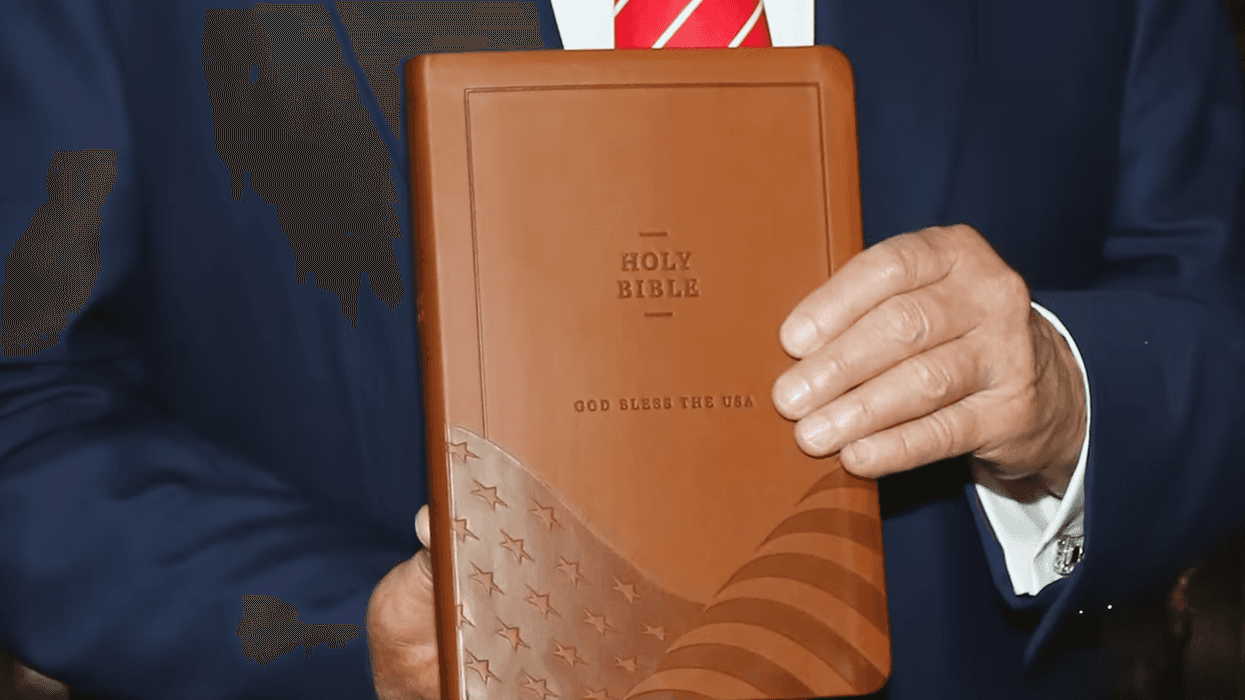
And since all that grift doesn’t sate Trump’s infinite need for more wealth, he ratcheted up sales of overpriced caps, watches, gold-colored cell phones, autographed Bibles, gold sneakers, bathrobes, fragrances, pickleball paddles, keychains, fake gold playing cards, and assorted other branded merch, trashing all previous norms about tasteful, dignified, and ethical presidential behavior.
The New York Times, The Wall Street Journal, The New Yorker, and books such as Barbara McQuade’s The Fix: Saving America from the Corruption of a Mob-Style Government have covered the Trump 2.0 grift in greater detail than is possible here. What they often fail to emphasize sufficiently, however, are the myriad connections between this thievery and harms that average Americans experience.
When the Trump 2.0 administration facilitates the use of offshore financial paradises to shield corporate profits from taxation, services get cut and the rest of us must pay higher taxes to make up the difference. The same is true for billionaires who don’t pay taxes. Tariffs hit Americans in their pocketbooks, as have skyrocketing energy prices resulting from the Iran War and demand from new data centers and crypto farms.
When the Trump regime finally ends —as it inevitably will—how many of us will remember the details of its record-breaking corruption? How many of us will demand accountability?
When Meta’s Mark Zuckerberg agreed to pay Trump $25 million to settle a dispute over the suspension of his Facebook page in the aftermath of January 6, to reinstate the page and eschew fact-checking on the platform, and to donate $1 million to Trump’s 2025 inaugural bash, it exposed Americans to increased disinformation, while depriving them of the tools needed to detect it.
When the president illegally refuses to spend funds Congress appropriated, it undermines government programs, including those that serve the most vulnerable Americans, such as Medicaid and Supplemental Nutrition Assistance Program recipients, veterans, and Social Security disability and retirement beneficiaries.
Probably the worst aspect of Trump 2.0 is the restructuring of government institutions and the entire economy to serve private interests, whether by scrapping regulations that expose us to toxins, financial predators, and dangerous workplaces or by rewriting history to erase painful aspects of our history and the contributions of minorities, women, immigrants, and other groups the regime detests. Elevating loyalty over competence facilitates this reengineering of governance to favor the mega rich and exacerbates domestic and geopolitical tensions.
In 2018, Steve Bannon famously articulated a key Trump stratagem, “to flood the zone with shit.” The intention was to deploy spectacle and disinformation to overwhelm and exhaust the media and citizenry, sow chaos and confusion, deflect and distract from real problems, erase memory, and assure that nobody would hold the powerful to account. Bannon is out, though still bloviating in the manosphere, but the shit flood continues. When the Trump regime finally ends —as it inevitably will—how many of us will remember the details of its record-breaking corruption? How many of us will demand accountability?
Maybe Teapot Dome didn’t ring a bell. How many of us recall our high school history courses, anyway? The New Republic recently summed up the contemporary significance of that ancient scandal: “For a long time, Harding’s administration had a serious claim to the title of ‘most corrupt’... Harding’s ghost must be grateful to Team Trump.”
Public institutions belong to the people they were created to serve, not to the ambitions of those temporarily entrusted with their care.
As we celebrate the 250th anniversary of America, it’s essential that we look to the past for lessons on how we should move forward during politically turbulent times marked by Americans holding little trust in historically respected institutions, including the federal government.
In 1796, our nation’s first president, George Washington, published his farewell address and in it, he declined to run for a third term despite many Americans wanting him to remain president indefinitely. Washington wanted to be clear that being president was not a lifetime appointment and that America was not a monarchy.
In this address, he also gave us a lesson that too many leaders seem to forget today: that the things we lead do not belong to us. Stewardship is the real assignment.
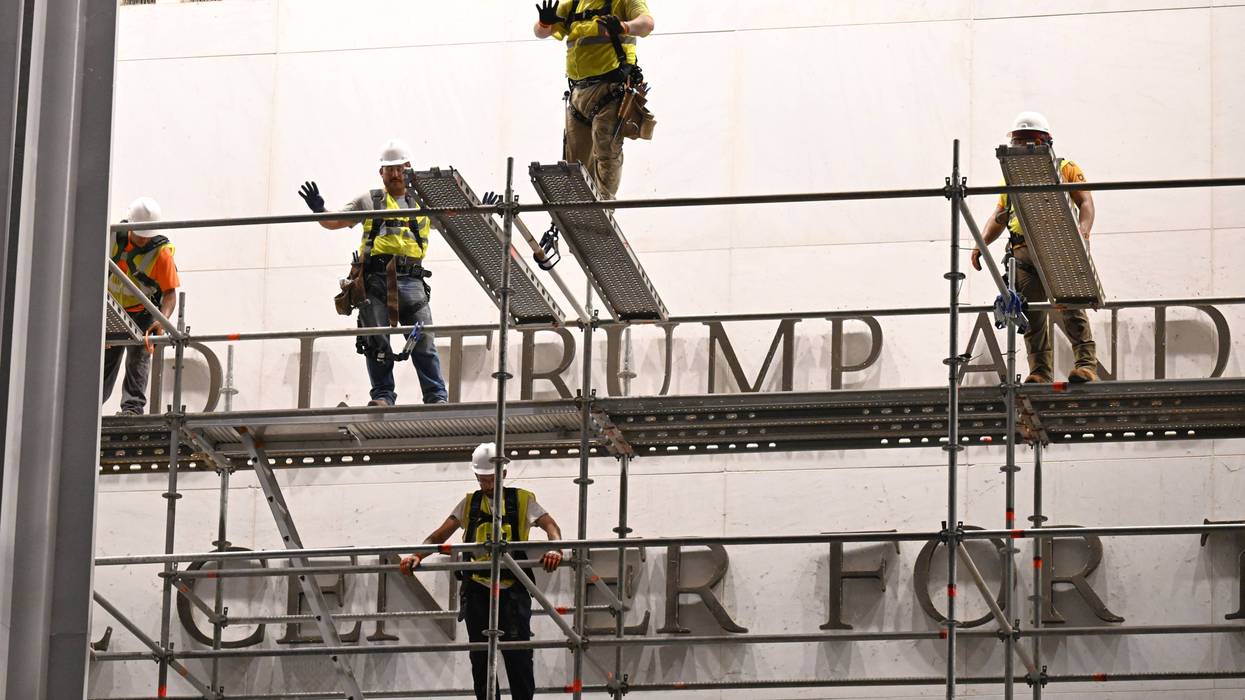
Recently, when a federal court ordered President Donald Trump’s name removed from the John F. Kennedy Center for the Performing Arts, it did more than settle a legal dispute. It served as a reminder that public institutions belong to the people they were created to serve, not to the ambitions of those temporarily entrusted with their care.
As we look ahead to the next 250 years of our nation, America’s leaders must understand that their job is not to leave their name on an institution, but to leave the institution stronger than they found it.
I learned this lesson when I served on the President’s Advisory Committee on the Arts. As an appointee of President Barack Obama in 2011 and later as chair of the committee, I had the privilege of working alongside artists, educators, philanthropists, and public servants who understood that institutions endure only when leaders respect the purpose for which they were created.
The Kennedy Center was established by Congress as a living memorial to President John F. Kennedy. Its mission was never to advance the ambitions of a particular board, administration, or political figure. It was created to serve the American people.
For more than 50 years, it has welcomed families, students, artists, and visitors from every corner of the nation. It has remained open through changing administrations, economic downturns, and periods of national division. Its purpose has endured because generations of leaders understood that they were caretakers of something larger than themselves.
Today, we see conservatives engaging in a hostile takeover of many of our nation’s key institutions by pushing an ideological agenda that refuses to tell the full, and complicated, story of our nation’s history.
At Smithsonian museums, references to President Trump’s two first-term impeachments have been removed, and the Trump administration issued an executive order that would review and remove exhibits from the Smithsonian Institution that contradict the administration’s distorted view of American history.
In our education system, higher education institutions are threatened with lawsuits and funding cuts for policies and programs that ensure all students have the opportunity to succeed. In states across the country, including Georgia, we have witnessed the passage of laws that restrict an honest and full teaching of our nation’s history—failing to give our children a true understanding of our nation and how we’ve overcome moments of grave injustice.
The understanding that President Washington had in 1796 that our nation’s institutions should not be reshaped in the image of our leadership seems increasingly absent from public life. Too often, leadership is confused with ownership and the focus shifts from mission to personality. Stewardship to control.
Strong leaders do not ask only what they have the power to do. They ask what responsibility requires of them. They understand that power is not permission, popularity is not wisdom, and institutions entrusted to their care are not personal possessions to be reshaped according to their preferences. Institutions thrive when leaders serve the mission. They struggle when the mission begins serving the leader.
When the distinction between serving an institution and owning it disappears, public trust begins to erode. That lesson has remained true since the inception of our nation, and it will remain true for the next 250 years. Once that trust is lost, it can take generations to rebuild.
As workers continue removing the lettering from the Kennedy Center façade, they are carrying out a court order.
But they are also delivering a reminder.
Public institutions belong to the people they were created to serve, not to the ambitions of those temporarily entrusted with their care.
As we look ahead to the next 250 years of our nation, America’s leaders must understand that their job is not to leave their name on an institution, but to leave the institution stronger than they found it.
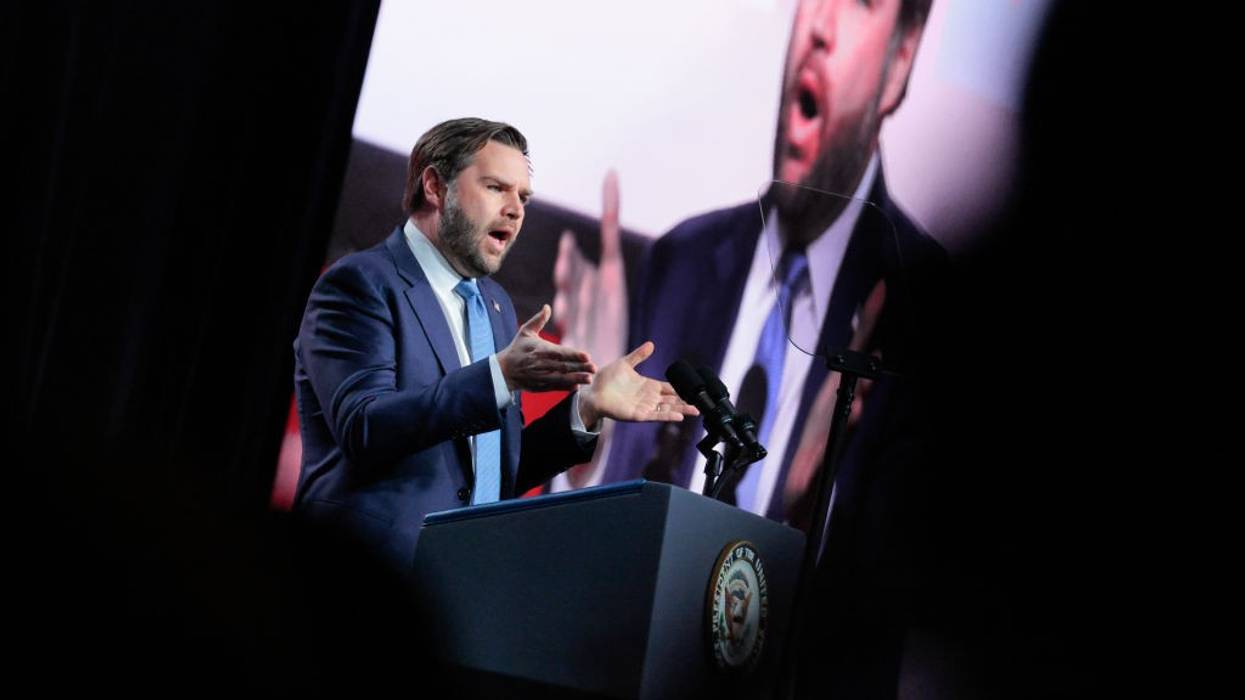
On June 25, Vice President JD Vance told his audience at the Richard M. Nixon Presidential Library and Museum that Nixon got a bum rap. The uncontested historical record proves otherwise.
The Watergate scandal revealed President Richard Nixon’s contempt for the Constitution and his systematic abuse of power. At the time, it was one of the darkest chapters in US history, resulting in the first-ever resignation of an American president.
But on June 25, Vice President JD Vance told his audience at the Richard M. Nixon Presidential Library and Museum that Nixon got a bum rap. The uncontested historical record proves otherwise. Vance’s contrary view demonstrates the depths to which he and President Donald Trump have taken the country.
Vance claimed that Nixon was the victim of a “deep state” conspiracy.
“If you look at the story of how the deep state took down Richard Nixon,” Vance continued, “it’s not all that different from what the same groups of people, the same institutions, tried to do to Donald Trump in the first Trump administration.”
But the supposed “deep state” actors to which Vance referred consisted of Nixon’s top advisers who turned on him, the most conservative Republicans in Congress, a unanimous US Supreme Court, and two intrepid reporters at The Washington Post.
Timothy Naftali, a historian at Columbia University’s School of International Public Affairs and the former director of the Nixon library, told The New York Times: “We have more than enough information from the Nixon era to know that there was no intelligence conspiracy against Richard Nixon. He brought his house of cards down upon himself.”
“You can hear him suborn perjury on the tapes,” Naftali told The Washington Post. “He’s telling an intermediary, what to tell someone who’s about to be interviewed by the FBI, what to say and what not to say. You can hear Nixon being told that money had been found to hire teamsters to go and break the bones of demonstrators. That’s all illegal.”
Prof. Naftali observed that, curiously, Vance had likened Trump to a president who had directed the CIA to subvert the Constitution.
“It’s not as if [Watergate] is a matter of partisan interpretation,” Naftali said. “The evidence is overwhelming. If [Vance] does know all of this, he’s telegraphing the kind of president he hopes to be.”
Vance also claimed that Watergate would have been a 12-hour news story today. He may be correct, but that does not diminish the seriousness of Nixon’s crimes.
As prof. Naftali observed, “It’s not that Nixon looks better in retrospect, it’s that we look worse.”
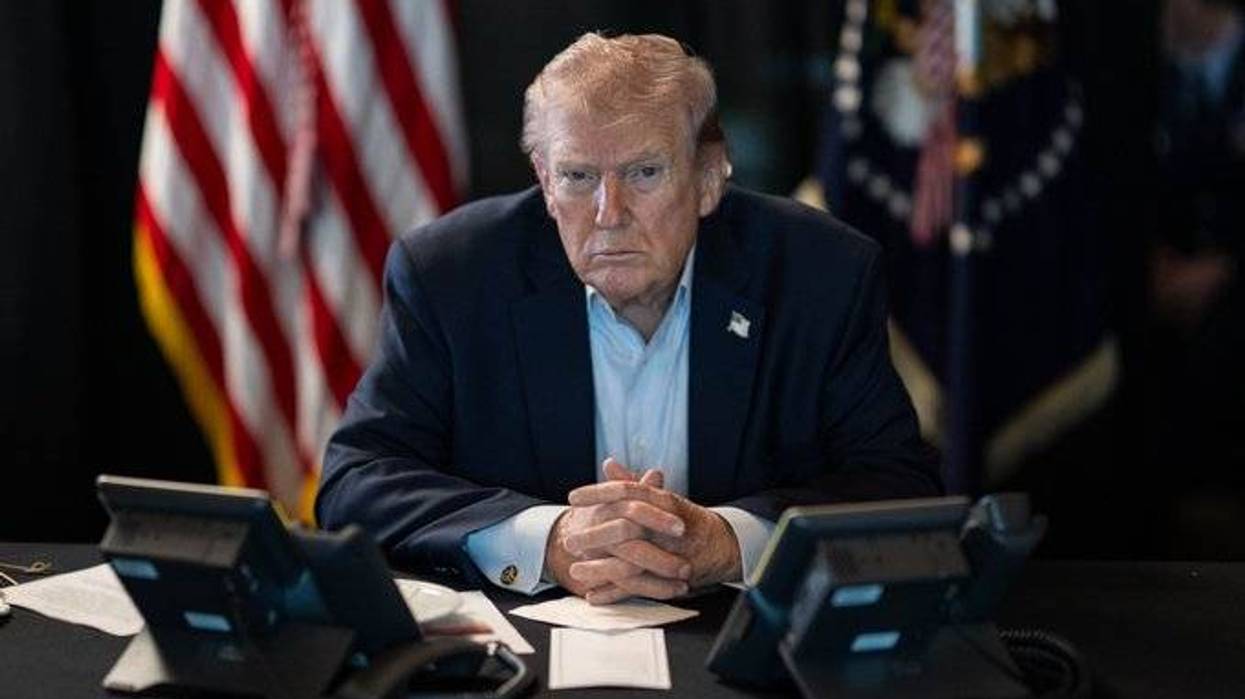
At every turn, Trump has tried to erode US democracy and the good of the people during his second term.
Donald Trump is the biggest failure in recent US presidential history. With the nation’s 250th birthday coming up, here’s a quick comparison to other US leaders.
He single-handedly tanked the economy with high prices resulting from tariffs and the Iran War. Trump’s defunding government agencies and scientific research, along with hyperinflation, has created an impossible job market (the uptick of unemployment nearly one percentage point over the past few years obfuscates the real job market). He has also gone after a national core value, democracy, attacking free speech whether in libraries, education, or protesting on behalf of Palestinian rights. The Lincoln Memorial reflecting pool is a clear symbol of his failed leadership: Trump tried to turn it blue for July 4th, but instead it became green with algae.
While LBJ oversaw an immoral, ruthless, and ultimately failed war in Vietnam, at least he passed civil rights legislation and poverty-reducing Great Society policies.
George W. Bush undertook a reckless war against Iraq; although unjust, one of the main objectives—to overthrow Saddam Hussein—was met, even if afterwards creating a liberal democracy failed miserably and, ultimately, led to ISIS ruling across swathes of the Middle East. Domestically, Bush governed during a recession in his first term that resulted from the dot-com bubble bursting, but he did not fundamentally attack the democratic core of United States, although the Patriot Act presaged the Trump era.
Because of Donald Trump’s monumental failure as a wannabe dictator, MAGA is fracturing and progressives are rising.
Joe Biden oversaw the post-Covid period during which inflation costs, which rose under Trump I during the pandemic, continued to rise because of international supply chain bottlenecks and the Ukraine War. He also gave the green light to the Israeli genocide in Gaza, a policy that Trump continued during his second term. However, Biden’s domestic policies and legislation included the forgiveness of student loan debt, a bipartisan infrastructure bill, and the Inflation Reduction Act, the latter of which included the largest investment in clean energy in US history.
Ronald Reagan conducted covert wars against Latin American governments and his neoliberal policies ultimately helped lead to Trump. However, his negotiations with Mikhail Gorbachev and the Intermediate-Range Nuclear Forces Treaty were instrumental in leading to the end of the Cold War.
Barack Obama, like Reagan, got into his own covert wars, through supporting Islamist factions in the Syrian Civil War and expanding drone strikes. He also was responsible for creating chaos after his “leading from behind” regime change war against Libyan leader Muammar Gaddafi. Yet, domestically, he passed Obamacare, which led to an additional 17 million Americans having health insurance. He also helped pull the economy out of the Great Recession.
President Bill Clinton, a scandal-plagued presidency during the pre-9/11 era, oversaw a healthy economy, but represented the Democratic Party’s embrace of neoliberalism and “tough on crime,” “super predator” policies. While flawed and foreshadowing what was to come, he would not be considered a failed president.
Jimmy Carter, a leader during stagflation and the Iran Hostage Crisis, has been perceived as a failed president. While his handling of each problem could have been improved, he did not create stagflation, which came about from a mix of high oil prices and the Fed’s stimulative economic policies. His offering asylum and medical treatment for the last shah of Iran in the US was in line with US imperial policy. Despite his crimes against the Iranian people and the new Iranian government’s demand that he be returned to Iran to receive justice, Carter refused.
Lastly, Richard Nixon, the most corrupt recent American leader before Trump, authorized the burglary to increase his chances of winning reelection and, after a cove-rup, resigned in shame. He also expanded the failed Vietnam War to Cambodia and Laos, though he had campaigned on ending the conflict. Yet, he created the Environmental Protection Agency and reestablished ties with China, though to do so turned a blind eye to Pakistan’s genocide against a nascent Bangladesh. Nixon did attempt to curtail democracy but nowhere near as systematically as Donald Trump has during his second term.
At every turn, Trump has tried to erode US democracy and the good of the people during his second term. While campaigning to end both inflation and the Ukraine War, he has not ended the war and caused prices to skyrocket thanks to his tariffs and his immoral and illegal war against Iran. He has redirected taxpayer money from the Supplemental Nutrition Assistance Program, the US Agency for International Development (predicted to cause the deaths of 4.5 million children under 5 years old), and scientific and medical research to fund tax cuts for billionaires, expand the brutal Immigration and Customs Enforcement agency by a factor of nine, and now seeks $1.5 trillion in Department of Defense funding (that’s $10K a year per taxpayer if divided evenly).
His Iran War caused about 3,500 Iranian deaths and 4,300 Lebanese deaths. While the US and Iran have a ceasefire, Israel isn’t abiding by it. As of this writing, Trump is still threatening the complete destruction of Iran, which is not ideal if you are honestly negotiating for peace.
From a US imperial perspective, the war has failed on every front: The Iranian regime is more powerful than ever; the Iranian population has largely gotten behind its government during the war; Iran controls the Strait of Hormuz now; Iran acts as a check on Israeli use of force in Lebanon; and the US bases, from which American forces retreated from during the fighting, may be closed in the Gulf countries and move to Israel. For those who relish in military victories, it is a loss for America.
Donald Trump may be up there as the biggest loser in history, but for now, it’s safe to say that he is the biggest failure in recent American presidential history.
There is an upside to utter failure though. While establishment Democrats have offered tepid criticism against Trump’s authoritarianism and immoral wars, progressives have made headway whether it’s the Mamdani-backed progressives winning their primaries in New York, Graham Platner winning the primary in Maine, or Sen. Chris Van Hollen (D-Md.)'s use of “genocide” to describe Israel’s systematic destruction of Gaza. Even Tucker Carlson has condemned his past Islamophobia and vociferously condemns the Israeli genocide in Gaza and the decimation of southern Lebanon and Beirut.
Because of Donald Trump’s monumental failure as a wannabe dictator, MAGA is fracturing and progressives are rising. Anti-Trump protests have broken record numbers and anti-ICE demonstrations at places like Delaney Hall are pushing back as strong as ever.
Surely, just before the 250th anniversary of the US, these are things worth celebrating.
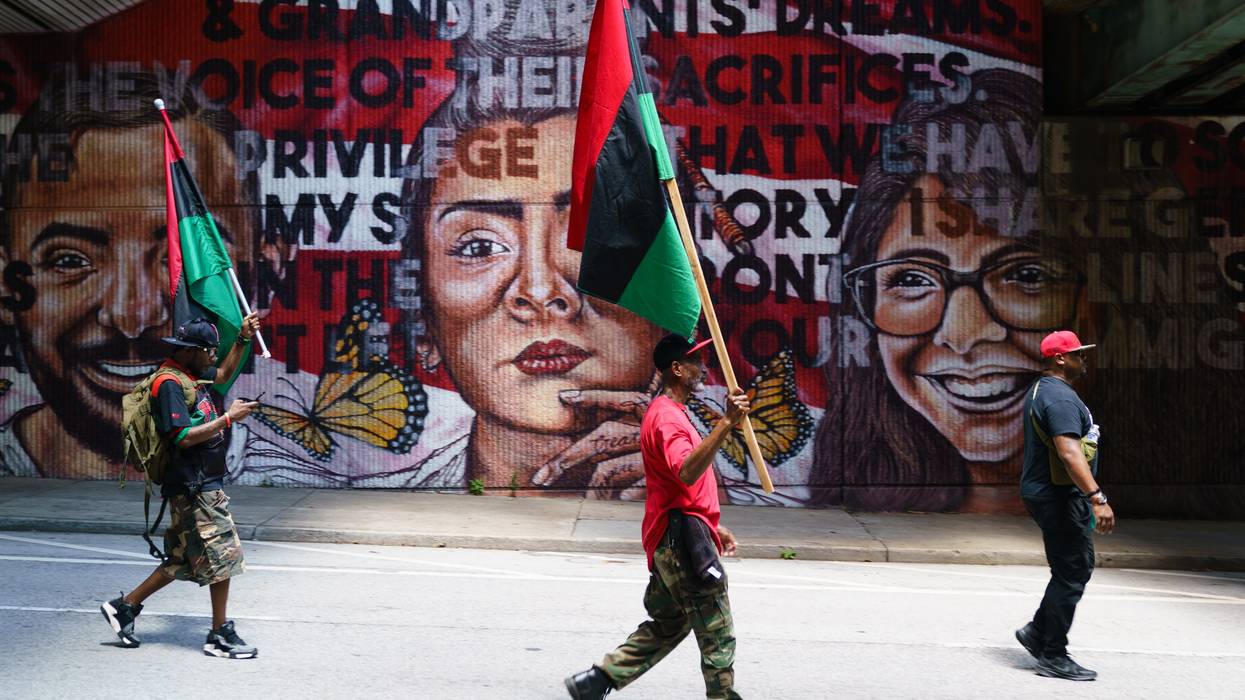
Freedom does not become real simply because it is declared. It becomes real because someone carries it into the world. Someone teaches it. Someone protects it. Someone organizes around it. Someone refuses to let it disappear.
As Juneteenth approaches, I find myself thinking about anniversaries.
Not because I am particularly sentimental about dates, but because anniversaries reveal something about how societies remember. They tell us which stories we choose to elevate, which contradictions we learn to live with, and which truths we have become comfortable leaving unresolved.
This year, those questions feel particularly urgent.
Communities across the country will gather to celebrate Juneteenth, commemorating the moment enslaved Black people in Galveston, Texas learned they were free more than two years after the Emancipation Proclamation had been signed. At the same time, the nation is preparing to commemorate its 250th anniversary, renewing familiar conversations about liberty, democracy, independence, and freedom. There is something meaningful about those two anniversaries sitting so close together. One asks us to remember the promise of freedom. The other asks us to remember the distance between a promise and its fulfillment.
Every democratic gain we now celebrate exists because ordinary people organized, challenged existing systems, imagined alternatives, and demanded that the nation become more than it was.
For many people, Juneteenth is understood as a story about delayed freedom. That is certainly true. But the older I get, the more I think it is also a story about delayed meaning. The people in Galveston were legally free long before they knew they were free. The law had changed. Their status had changed. On paper, their relationship to the nation had changed.
Yet their lived reality had not. The declaration existed, but the meaning had not yet reached them. That distinction matters because we often talk about freedom as though it becomes real the moment it is declared. We assume that once a law is passed, a court issues a ruling, or a right is recognized, the work is complete. History tells a different story.
Again and again, America has demonstrated that there is often a gap between what institutions proclaim and what people experience. The abolition of slavery did not end racial hierarchy. The passage of the Voting Rights Act did not end voter suppression. Legal victories did not eliminate the need for organizing, education, resistance, or vigilance. Rights may be secured in law, but they must still be carried into communities, institutions, and everyday life. Juneteenth reminds us of that reality. It reminds us that freedom is not simply a legal condition. It is also a social condition, a cultural condition, and a lived condition. It becomes meaningful only when people can actually experience it.
That lesson feels particularly relevant today.
Across the country, we are witnessing renewed debates about democracy, citizenship, rights, belonging, and power. We are watching efforts to restrict voting access, weaken public institutions, narrow how history is taught, and redefine who gets to participate fully in public life. At the same time, many Americans are being encouraged to believe that these concerns are exaggerated, that racism and inequality belong primarily to the past, and that the nation's democratic project is largely complete. What concerns me is not simply the political debate itself. It is the historical amnesia that often accompanies it. Too often, we remember progress while forgetting the struggle that produced it. We celebrate outcomes while ignoring the generations of people who fought to make those outcomes possible. We remember milestones but forget movements. We remember victories but forget the conditions that made those victories necessary in the first place.
In doing so, we begin to mistake progress for permanence. Juneteenth offers a corrective.
It reminds us that democracy has never been self-executing. Freedom has never expanded automatically. Rights have never sustained themselves. Every democratic gain we now celebrate exists because ordinary people organized, challenged existing systems, imagined alternatives, and demanded that the nation become more than it was. That is why I find myself thinking differently about the conversations surrounding America's 250th anniversary. I am less interested in celebrating a polished national mythology than I am in wrestling honestly with the tension at the center of the American story. The United States was founded on extraordinary democratic ideals while simultaneously denying many people access to them. Those contradictions are not incidental to our history. They are central to understanding it.
Yet Juneteenth is not ultimately a story about contradiction. It is a story about persistence. It is a story about Black people who continued reaching for freedom even when freedom arrived late. It is a story about Black people who expanded democracy even when democracy excluded them. It is a story about generations of Black Americans who carried hope, memory, responsibility, and struggle across time so that future generations might inherit possibilities they themselves were denied. That is what I find myself celebrating this year.
Not a perfect nation, completed democracy, or a tidy story of inevitable progress.
I am celebrating the people who carried the work forward anyway. The people who understood that freedom does not become real simply because it is declared. It becomes real because someone carries it into the world. Someone teaches it. Someone protects it. Someone organizes around it. Someone refuses to let it disappear.
The lesson of Juneteenth is not that freedom finally arrived. The lesson is that even after freedom was declared, someone still had to carry the news.
And generations later, someone still has to carry the meaning.
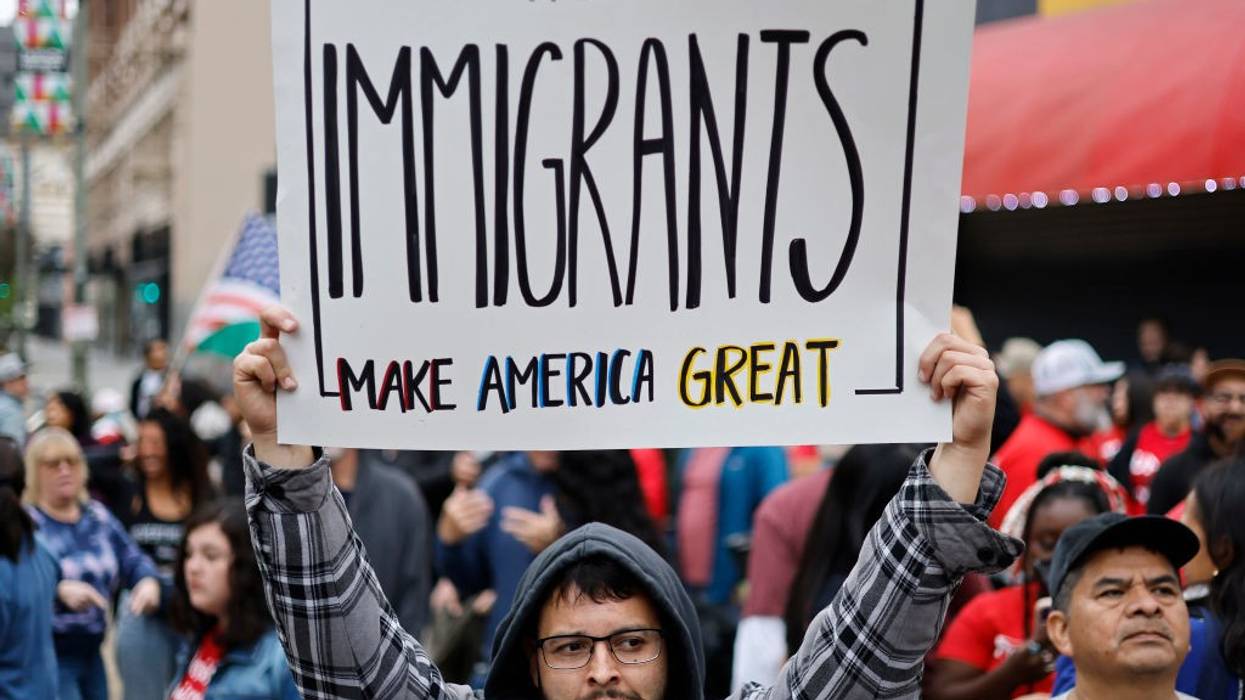
Amid Trumpian attacks on immigrants and erasure of history, it is more important than ever that we stop and examine the record of who we are and how we got to where we are as a country and an American people.
June is National Immigration Heritage Month, a time to celebrate the diverse peoples and cultures that have made America great.
This year–when not only immigration and cultural diversity are being challenged, but also the complex history of our country is being erased–it is more important than ever that we stop and examine the record of who we are and how we got to where we are as a country and an American people.
First, we should never forget that this country was born with two “original sins”: slavery and genocide. The current administration in Washington wants to rewrite our history by eliminating mention of negative events and practices that defined our past, focusing instead on the “greatness and industriousness” of our founders and their “glorious victories.” In reality, there would be no America if not for the surplus wealth created by the labor of enslaved people across the South and the riches accrued by those who benefited from the theft of Indigenous peoples’ lands.
Nor should it be forgotten (although it is) that the Declaration of Independence names one reason for the War of Independence against the British Empire as the American settlers’ grievance that King George would not defend them against “merciless Indian Savages,” who were resisting having their lands taken from them. And, of course, we fought a civil war not so much to end the deplorable practice of human slavery, but to rein in the power and independence of the Southern states.
What would be American food, fashion, music, art, humor, literature, diplomacy, and so much more be without the contributions of African Americans, the Chinese, Italian, Greek, Polish, Irish, Jewish, Latino, and Arab immigrants (and so many more)?
As the country grew and with the industrial age upon us, the need to build infrastructure to transport people and goods, mine coal for power; and operate factories opened the doors to new immigrants from countries far afield. Chinese built railroads; Irish dug canals; Irish and Eastern and Central Europeans worked in the mines, and they were joined in the mines and factories by Italians, Greeks, and Arabs.
As needed as these new immigrants were for America to grow and prosper, their very presence, growing numbers, and unique cultures provoked a backlash among the earlier northwest European settlers who had come to see themselves as the original and “real Americans.” The “new immigrants” were demeaned, discriminated against, and subjected to state and vigilante violence.
Tragically, we see the same pattern of behaviors playing out today as Americans are confronting our newest immigrants. In a brilliant paper written a decade and a half ago for the Immigration Policy Center, Jeffrey Kaye examines the immigration history of one town in Pennsylvania. He notes that when the Irish, Italian, and Eastern and Central Europeans were first moving into the community, newspaper articles and speeches by City Council members described the Irish as “drunkards,” the Slavs as “peculiar,” the Hungarians as “ignorant, immoral, and filthy,” and the Italians as “the most disreputable.” All were subjected to derision for their “queer languages” and not fitting in. The tragic irony is that one century later, the descendants of these same groups are now saying the very same things about the newest immigrants who were mostly from Latin American countries.
Forgotten in this history of miserable repetition are the lessons we should have learned and the benefits we accrued along the way. We now know that the early English settlers in New York and the eastern colonies learned lessons in governance and agriculture from the Native Americans, and yet they referred to them as “savages.” And we know that it was the hard work, for no wages, that brought wealth to white Southern landowners who nevertheless demeaned Blacks as lazy and shiftless. Much the same can be said about the immigrants of the industrial age. Despite the bigotry and violence they endured, we can ask, “Where would America be today if not for the hard work and inventiveness of these immigrant communities?” Further, what would be American food, fashion, music, art, humor, literature, diplomacy, and so much more be without the contributions of African Americans, the Chinese, Italian, Greek, Polish, Irish, Jewish, Latino, and Arab immigrants (and so many more)?
The lesson here is a simple one: We should never forget that what makes America great is its diversity and its capacity to absorb so many peoples and cultures. What threatens our greatness is when we forget this and stupidly attempt to fabricate our history and “whitewash” our culture.
"The message is clear. American history no longer includes all Americans."
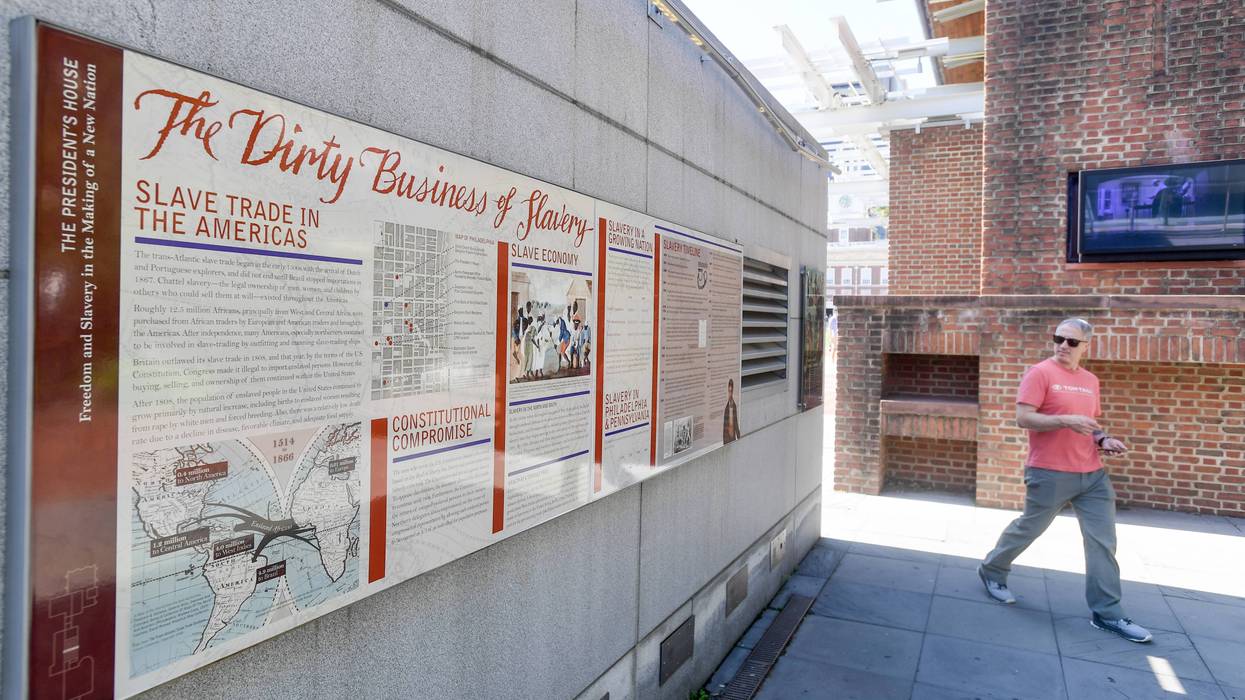
The city of Philadelphia has sued the US Department of the Interior and the National Park Service after officials were filmed dismantling exhibits on slavery at the President's House historical site at Independence Park on Thursday.
The lawsuit, filed in federal court by the office of Mayor Cherelle Parker, says “the National Park Service has removed artwork and informational displays" from the site, where George Washington lived as president from 1790 until 1797, in order to follow an executive order signed by President Donald Trump in March, which requires national parks, museums, and monuments to portray an "uplifting" message about American history.
The President's House monument, unveiled in 2010, contained information about nine enslaved people whom Washington brought with him to the nation's "first White House," and Washington's history as a slaveowner. By the time of his death in 1799, there were more than 300 enslaved people at his estate in Mount Vernon, Virginia.
Information about the President's House site and its ties to slavery still remains online. It states:
Washington brought some of his enslaved Africans to this site and they lived and toiled with other members of his household during the years that our first president was guiding the experimental development of the young nation toward modern, republican government...
The president's house in the 1790s was a mirror of the young republic, reflecting both the ideals and contradictions of the new nation. The house stood in the shadow of Independence Hall, where the words "All men are created equal" and "We the People" were adopted, but they did not apply to all who lived in the new United States of America.
A monument acknowledging this history, however, appears to have run afoul of the portion of Trump's order requiring the Interior Secretary to see that sites "do not contain descriptions, depictions, or other content that inappropriately disparage Americans past or living."
As BillyPenn.com reported:
Starting after 3 pm, placards were ripped from the wall around the site with crowbars as people walked by, some heading to the Liberty Bell Center. Signs were unbolted from the poles overlooking the dig site where America’s first “White House” had stood until 1832. They were stacked together alongside a wall, and then taken away around 4:30 pm in a park service truck. No indication was provided where the signs and exhibition parts will go
One of the employees, who did not give his name, told the Philadelphia Inquirer that his supervisor had instructed him to take down the monuments earlier that day.
“I’m just following my orders,” the employee repeatedly said.
In a statement to the Washington Post, Interior Department spokesperson Elizabeth Peace later confirmed that the placards were indeed removed in accordance with the order.
"The president has directed federal agencies to review interpretive materials to ensure accuracy, honesty, and alignment with shared national values,” she said. “Following completion of the required review, the National Park Service is now taking action to remove or revise interpretive materials in accordance with the order."
The city of Philadelphia says it was not given notice about the placards being removed. The lawsuit says their removal was "arbitrary and capricious" and says the “defendants have provided no explanation at all for their removal of the historical, educational displays at the President’s House site, let alone a reasoned one."
In a Facebook post, criminal defense attorney Michael Coard, who pushed for the monument's creation for nearly a decade, called its destruction "historically outrageous and blatantly racist."
It is the latest example of Trump's order being used to justify the removal of monuments related to slavery and Black history in the United States.
The infamous 1863 "Scourged Back" image—a picture of an enslaved man's back with severe whip scars that was used to promote the end of slavery during the Civil War—was removed from the Fort Pulaski National Monument in Georgia in September, along with other information about slavery.
The administration has also removed more than 20 displays at the Smithsonian Museum of American History, some of which dealt with slavery, civil rights, and race relations, a move that came after Trump lamented that the museum put so much focus on "how bad Slavery was."
The National Park Service also deleted information about abolitionist activist Harriet Tubman and many references to slavery from its webpage about the Underground Railroad for months last year, before restoring it following public backlash.
Pages on the Arlington Cemetery website that recognize the contributions of Black and Hispanic soldiers have also been removed.
The order has also led to the removal or alteration of numerous monuments, museum exhibits, and web pages recognizing the achievements or struggles of other racial minority groups, women, LGBTQ+ people, and Native Americans.
In a statement to NBC News, Philadelphia City Council President Kenyatta Johnson said, "Removing the exhibits is an effort to whitewash American history."
"History cannot be erased simply because it is uncomfortable," he added. "Removing items from the President’s House merely changes the landscape, not the historical record."
Daniel Pearson, a columnist for the Philadelphia Inquirer, said: "The message is clear. American history no longer includes all Americans."
The world’s richest man believes it is “treason” to teach students the plain fact that the United States was built on stolen Native American land.
Self-proclaimed "free speech absolutist" Elon Musk believes schoolteachers should be "imprisoned" for educating students on topics that portray America negatively—including the nation's history of racism and the displacement of Native Americans.
The world's richest man, who was a prolific donor to President Donald Trump and a member of his administration, expressed this desire in a post on his social media app X on Thursday in response to a survey of high school students from 2022 conducted by the right-wing Manhattan Institute, about whether they had been taught concepts labeled as part of "critical social justice."
The post Musk replied to specifically emphasized that, according to the poll, 45% of students said they had been taught that "America was built on stolen land," while another 22% said they'd heard it from an adult at school.
Any even cursory retelling of US history makes such a statement beyond dispute. Since the arrival of European settlers in what would become the United States, Native Americans have been subject to over 300 years of well-documented forced migration policies, wars of extermination, and coercive treaties codifying their dispossession from lands they lived on for centuries.
In 2021, a year before the survey was conducted, researchers examined the first comprehensive dataset quantifying the forced removal of Native Americans and found that Indigenous people had lost approximately 99% of the lands they historically occupied.
The poll showed that students had also been taught other ideas about America that, while politically contentious, are also well-founded by US history and ongoing realities of legal and economic inequality—including that "America is a systemically racist country," that "white people have white privilege," and that "America is a patriarchal society."
With state-level bans on what it calls "critical race theory," "gender ideology," and other supposedly "divisive concepts" in public education, the right has in recent years been systematically chipping away at classroom discussions related to the uglier parts of US history and resulting ongoing inequality. Meanwhile, the second Trump administration has sought to use federal funds to coerce public schools into adopting his standards for "patriotic education."
But Musk, who donated an unprecedented $290 million to Trump to help him reclaim the presidency in 2024, thinks merely banning students from learning negative things about the country is not enough.
"Teaching people to hate America fundamentally destroys patriotism and the desire to defend our country," he wrote. "Such teachings should be viewed as treason and those who do it imprisoned."
The irony was immediately apparent to many. Musk's call comes just days after he claimed that by pushing to ban his platform X over its proliferation of nonconsensual artificially generated pornography, including of children, the United Kingdom “want[s] to suppress free speech.”
Musk has on numerous previous occasions emphasized the importance of the First Amendment of the US Constitution, which guarantees the right to free expression.
"You can't claim to care about the First Amendment if you believe this," responded Billy Binion, a reporter for the libertarian news outlet Reason." Treason is a capital offense. Imprisoning or executing people for their words is impossible to reconcile with any understanding of free speech. Incoherent and un-American."
The billionaire has long claimed to be one of free speech's foremost defenders, but often only in cases involving his ideological allies.
Since he took over the social media platform formerly known as Twitter in 2022, those who have criticized him, reported negative news stories about him, or promoted causes he disagrees with—particularly Palestinian or LGBTQ+ rights—have often had their accounts suspended or their content’s reach limited.
In recent weeks, echoing rhetoric from the Trump administration about deporting tens of millions of nonwhite American citizens, Musk has spiraled further into explicit calls for the ethnic cleansing of the United States, endorsing posts stating that white people must “reclaim our nations” or “be conquered, enslaved, raped, and genocided” and that “if white men become a minority, we will be slaughtered,” necessitating “white solidarity.”
"Obviously, the whole Elon-is-a-free-speech-absolutist thing is long dead," wrote Alex Griswold, a spokesperson for the Foundation for Individual Rights and Expression, commonly known as FIRE. "But it goes beyond that to the point that he is significantly more censorial than the median American."
Pam Fessler, a former news correspondent for NPR wrote that "People who call for the imprisonment of those who teach facts are the ones who 'hate' America."