

SUBSCRIBE TO OUR FREE NEWSLETTER
Daily news & progressive opinion—funded by the people, not the corporations—delivered straight to your inbox.
5
#000000
#FFFFFF
To donate by check, phone, or other method, see our More Ways to Give page.
Daily news & progressive opinion—funded by the people, not the corporations—delivered straight to your inbox.
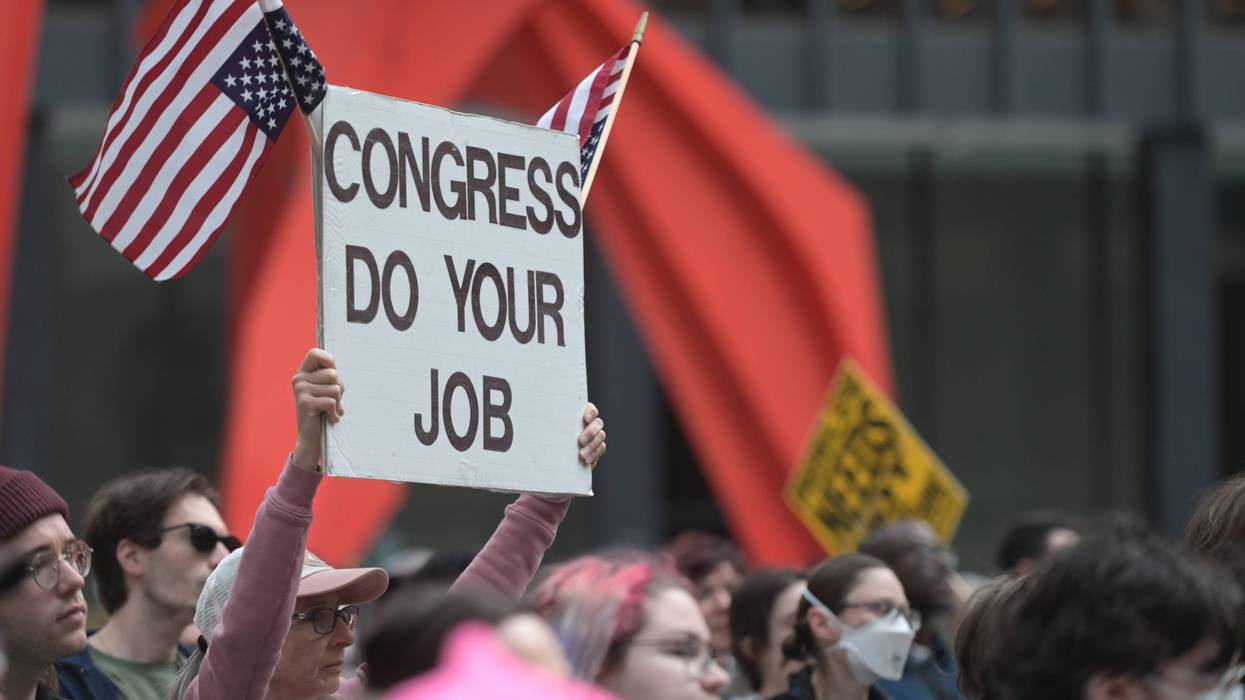
"If Donald Trump won’t dig us out of this hole, Congress must step into the breach and exercise its constitutional authority over matters of war and peace," the minority leader said.
For the fifth time since President Donald Trump launched the Iran War in February, US senators on Wednesday voted down a resolution that would have blocked Trump from continuing his joint assault with Israel on the Mideast nation.
Upper chamber lawmakers voted 51-46 against SJ Res. 114, Sen. Tammy Baldwin's (D-Wis.) war powers resolution. Kentucky Republican Rand Paul joined Democrats in voting for the resolution, while John Fetterman of Pennsylvania was the only Democrat to oppose it. Three senators—Chuck Grassley (R-Neb.), Dave McCormick (R-Pa.), and Mark Warner (D-Va.)—did not vote.
Wednesday's vote marked the fifth time that an Iran war powers resolution has failed to pass the Senate this year. On March 4, Fetterman helped upper chamber Republicans sink one such measure introduced by Paul and Sen. Tim Kaine (D-Va.). Two weeks later, senators came within three votes of passing a similar resolution introduced by Sen. Cory Booker (D-NJ), a rejection repeated days later in a follow-up vote. Last week, Fetterman again crossed the aisle to help defeat a fourth resolution introduced by disabled combat veteran Tammy Duckworth (D-Ill.).
In remarks delivered on the Senate floor before Wednesday's vote, Minority Leader Chuck Schumer (D-NY) said: "Every day, we hear new promises from the Trump administration that victory has been achieved, that peace is at hand, that costs are starting to come down. And every day, we see the opposite. Trump can talk all he wants, but nothing will change until he realizes that this war needs to end."
Donald Trump has been offering empty promises to end his war for weeks.At 5 PM, Senate Democrats will offer his Senate Republican puppets a FIFTH chance to do just that with a vote on our War Powers Resolution.
[image or embed]
— Chuck Schumer (@schumer.senate.gov) April 22, 2026 at 1:48 PM
"And if Donald Trump won’t dig us out of this hole, Congress must step into the breach and exercise its constitutional authority over matters of war and peace," Schumer added. "Democrats will continue to force votes on our resolutions every week until Senate Republicans see reason."
On Tuesday, Rep. Ro Khanna (D-Calif.) introduced a fresh Iran war powers resolution, reportedly in coordination with the Congressional Progressive Caucus. Khanna and Rep. Thomas Massie (R-Ky.) previously introduced the first of three failed Iran war powers resolutions in the lower chamber.
Responding to Wednesday's vote, Fetterman told Fox News host Sean Hannity that "Iran must be so excited by the American media and the Democratic Party," adding that Iranian leaders must be thinking, "as long as we can hang on... more and more people [will] continue to vote against the Trump administration."
As US and Israeli attacks on Iran—which have left more than 30,000 people dead or wounded, according to Iranian and international officials—are paused for a truce extension pending the outcome of negotiations, the Trump administration announced Wednesday that US Navy Secretary John Phelan is resigning "effective immediately." The administration gave no reason for the move.
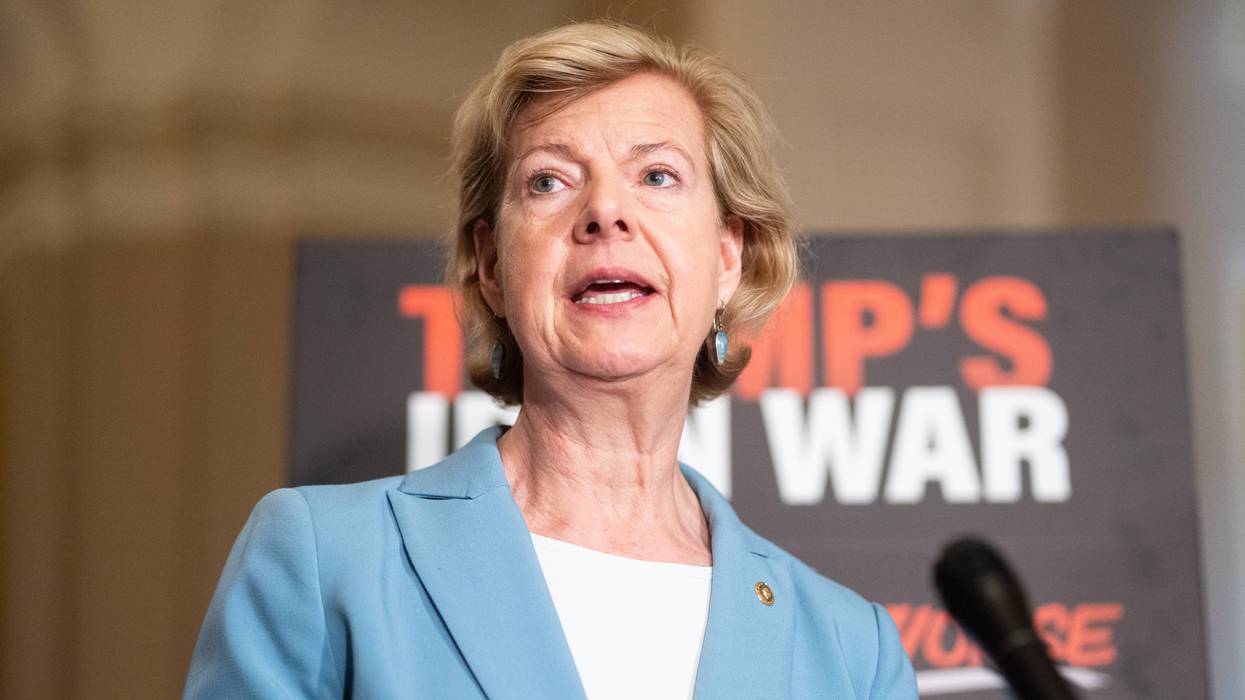
“This war has simply been a disaster, and there is absolutely no reason we should go full steam ahead back into it," says Sen. Tammy Baldwin.
Opponents of the US-Israeli assault on Iran are urging like-minded Americans to call their senators ahead of Wednesday afternoon's expected vote on yet another bid to curb President Donald Trump's power to continue waging his war.
Sen. Tammy Baldwin (D-Wis.) said she will force a vote Wednesday on a war powers resolution "to end Trump’s illegal war of choice in Iran."
“The ceasefire, which is being broken left and right, expires in less than two days, and Congress now must do its job," Baldwin said in a Monday statement referring to Trump's extended truce. "This war has simply been a disaster, and there is absolutely no reason we should go full steam ahead back into it."
TODAY Senate Democrats will force a vote on a War Powers Resolution to assert Congressional authority over Donald Trump’s reckless war in Iran for the FIFTH timeWill Senate Republicans finally step and exercise their constitutional responsibility?Via @warren.senate.gov
[image or embed]
— Senate Democrats (@democrats.senate.gov) April 22, 2026 at 10:16 AM
Baldwin noted Tuesday that 13 US service members "are dead and hundreds more are injured, gas and fertilizer prices are tthrough the roof, and we have already spent an untold amount of taxpayer money—but it certainly is in the tens of billions of dollars."
US-Israeli bombing has also killed or wounded more than 30,000 Iranians, many of them civilians, including hundreds of children, according to officials in Tehran and international organizations.
The National Iranian American Council (NIAC) urged Americans to "call your senator" ahead of Wednesday's vote.
NIAC said that "lawmakers who have defended Trump’s decision to go to war with Iran without congressional approval argue the president can legally wage the conflict for 60 days before needing authorization" under the War Powers Act of 1973, which was enacted during the Nixon administration toward the end of the US war on Vietnam, Cambodia, and Laos.
"That 60-day clock is now almost up, just one week remains," the group added. "As that clock winds down, last week’s House and Senate votes make one thing clear: Support for reining in the war is growing, but not yet enough to force action. That leaves members, especially Republicans who have largely resisted these efforts, facing increasing pressure as the legal deadline comes into view."
Baldwin argued Monday that "diplomacy is the only way out of this mess—and that is where every ounce of attention of this administration should be, not threatening to commit war crimes."
Trump's threats have ranged from destroying Iranian power plants and bridges to genocidal destruction of Iran's entire civilization. Threatening to commit genocide and war crimes is a crime.
Baldwin said Monday that "the only question will be whether my Republican colleagues want to own the consequences" of Trump's war "raging on, or they will step up for the American people and put an end to this life-taking, cost-raising chaos.”
Every Republican senator with the exception of libertarian Rand Paul of Kentucky has voted against previous Iran war powers resolutions, the last of which was defeated in a 47-52 vote on April 15, with right-wing Pennsylvania Democrat John Fetterman the only Democrat to vote against the measure.
There have been four failed attempts in the House and Senate to pass Iran war powers resolutions.
In addition to Iran, members of Congress have tried—and failed—to pass multiple war powers resolutions limiting Trump’s attacks on Venezuela, whose president was kidnapped during a brief US invasion in January.
Correction: This article originally cited an incorrectly dated news article about Reps. Ro Khanna (D-Calif.) and Thomas Massie (R-Ky.) saying they would try to force a vote on an Iran war powers resolution.
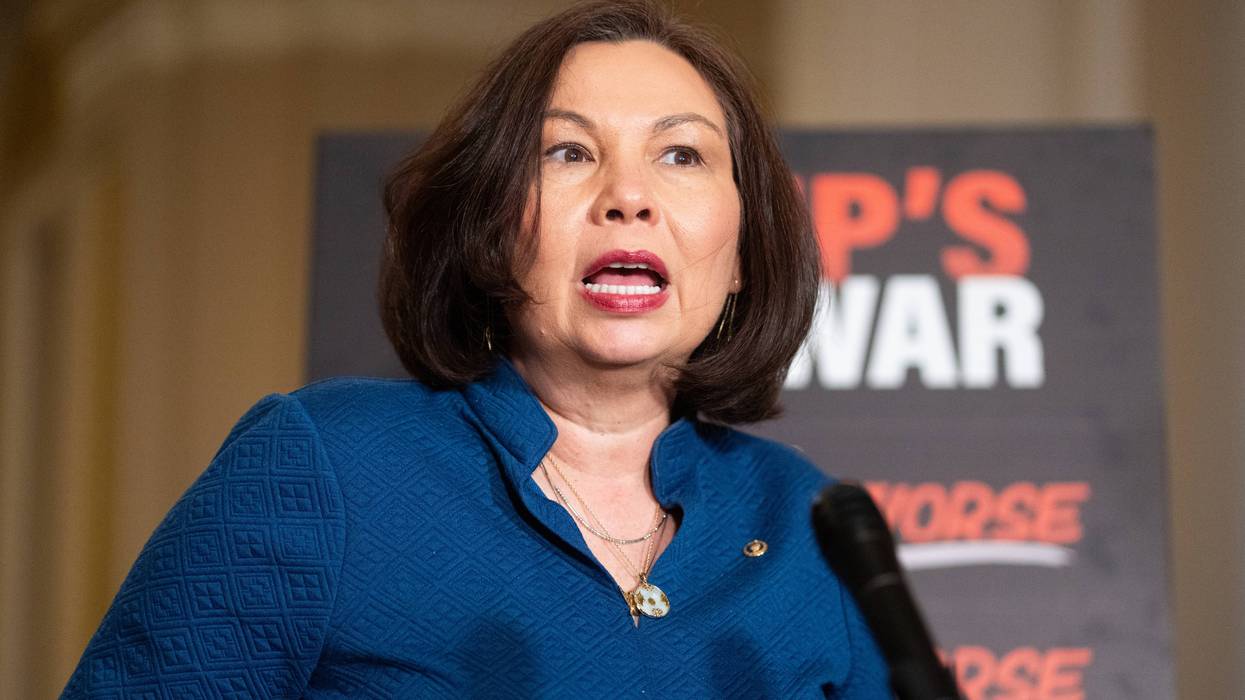
"Trump’s war of choice in Iran is a moral tragedy and economic disaster playing out before our eyes. It is only making the United States and the world less safe," said Sen. Ed Markey.
Senate Republicans on Wednesday once again narrowly stymied a Democrat-led resolution aimed at reining in President Donald Trump's power to wage war against Iran.
Although the war launched by the US and Israel in late February has killed more than 1,700 civilians and sparked a global fuel crisis that has sent prices skyrocketing, that was not enough for 52 Republican senators—every one except libertarian Sen. Rand Paul (R-Ky.)—who voted to back the president even as the war further erodes his approval rating.
The Democratic caucus was similarly unified, with every member voting for the war powers resolution except the pro-Israel hawk Sen. John Fetterman (D-Pa.).
It was the fourth war powers resolution to fail in the Senate since Trump launched the war on February 28, The last measure in late March fell short by a nearly identical margin.
Sen. Cynthia Lummis (R-Wyo.) called Democrats' continued attempts to check Trump's war powers "exhausting" in comments to reporters on Tuesday. "Doing a war powers resolution just undermines the president. I don’t believe [the Democrats] would do that if the president had a ‘D’ behind his name.”
After more than two weeks of delay, a similar bill will be brought to the floor in the House of Representatives on Thursday. Its sponsor, Rep. Gregory Meeks (D-NY), the ranking member of the House Foreign Affairs Committee, said it has a good chance of passing.
But without a similar bill passing the Senate, it would remain a purely symbolic gesture, with no ability to limit Trump's power as he sends thousands more troops to the region immediately after saying the war was "close to over."
"Trump’s war of choice in Iran is a moral tragedy and economic disaster playing out before our eyes. It is only making the United States and the world less safe," said Sen. Ed Markey (D-Mass.) after voting for the war powers resolution. “We have seen thousands of civilian deaths in Iran and Lebanon. More than 100 Iranian schoolgirls were killed by American weapons, and 13 American servicemembers were killed, and hundreds have been injured."
He added, "This dangerous, unnecessary, and expensive war has cost American taxpayers around $50 billion so far, with the Trump administration seeking hundreds of billions of dollars more as part of a $1.5 trillion military budget."
Sen. Tammy Duckworth (D-Ill.), an Army National Guard veteran who sponsored the blocked resolution, suggested in her remarks before the vote that Republicans who opposed the resolution would be putting "Trump’s ego first" ahead of American interests and enabling more "chaos."
The two-week ceasefire agreement is set to expire on April 21. A week later, the war will hit the 60-day mark, after which troops must be withdrawn unless their deployment is approved by Congress, though the White House can request a 30-day extension by citing "national security" concerns.
According to Politico, some Republicans—even those who voted against the war powers resolution on Wednesday—have indicated that the 60-day mark may be a turning point for them.
Sen. Thom Tillis (R-NC), who is retiring after the next election, said that the administration "has got to start answering questions" about the war's trajectory, especially as it requests tens of billions of dollars in emergency funding.
Duckworth, on the other hand, said she has seen more than enough.
"After one half-assed day of so-called 'negotiations,' he’s whipsawed to his next idea: a dangerous, complex, partial military blockade of the Strait of Hormuz—once again launching a risky new front in this war at our service members’ expense… with no justification, explanation, or even ‘concept of a plan’ of how to get to an end-state," she said.
She added, "As our troops continue to sacrifice whatever is asked of them, we senators need to do the absolute minimum required of us."
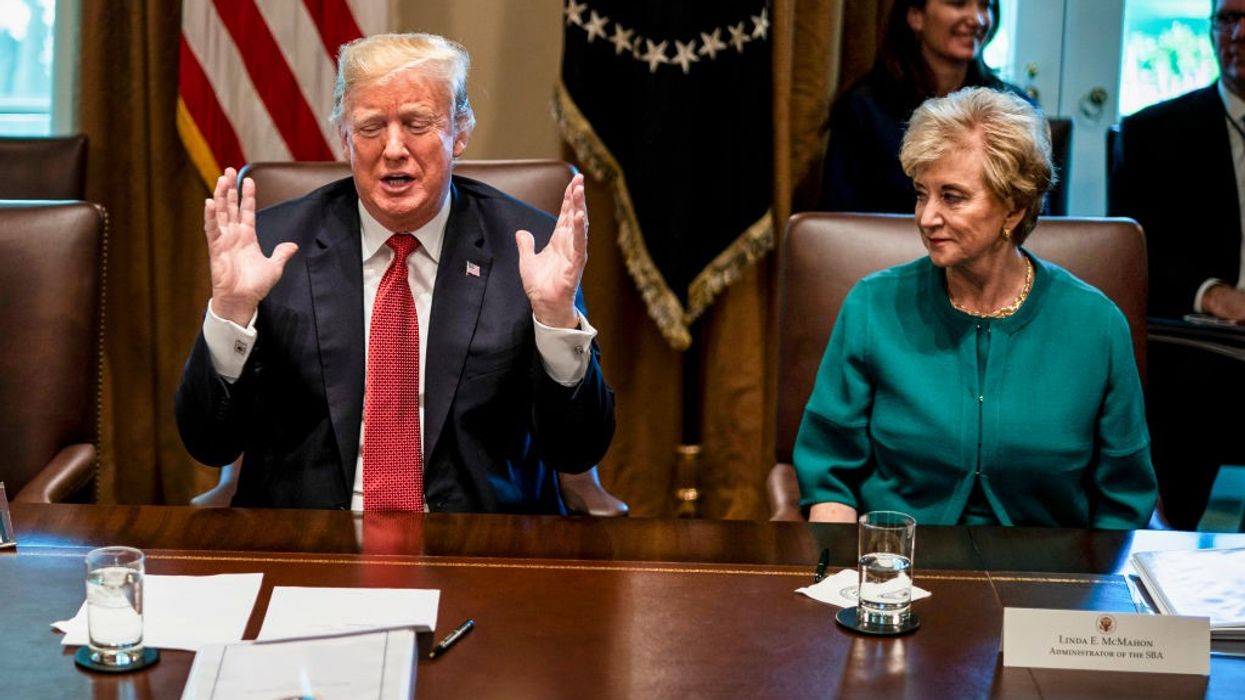
"We will not stand by and allow the impact that dismantling the Department of Education would have on the nation's students, parents, borrowers, educators, and communities."
U.S. Sen. Bernie Sanders on Thursday led five members of Congress in a warning against the Trump administration's plan to "unilaterally dismantle" the Department of Education and demanded answers from the acting head of the agency about recent moves "to put federal workers on administrative leave, coerce employees into leaving their jobs, provide access to students' sensitive data, and illegally freeze vital funding."
"Over the course of two weeks, the Trump administration issued sweeping executive orders and sought to broadly and illegally freeze federal financial assistance," the lawmakers—Sanders (I-Vt.), Sen. Patty Murray (D-Wash.), Sen. Tammy Baldwin (D-Wis.), Rep. Bobby Scott (D-Va.), and Rep. Rosa DeLauro (D-Conn.)—wrote in a letter to acting Education Secretary Denise Carter.
"Federal employees have been targeted, in some cases for simply following the law. Elon Musk is attempting to shut down the work of entire agencies while gaining access to some of the federal government's most far-reaching and sensitive data systems. Media reports indicate a similar effort may be underway at the Department of Education," the lawmakers noted.
The letter continues:
The Department [of Education] has been a target of President [Donald] Trump and his unelected advisers since even prior to his inauguration. And recently, the department has put workers on administrative leave for attending trainings promoted by former Secretary Betsy DeVos, once touted among results achieved by the department, and coerced employees into leaving their jobs. Workers at the department—like those across the government—have been made to fear their jobs will be reclassified so that they lose employment protections. Some staff from the entity referred to as the Department of Government Efficiency have reportedly gained access to internal department data systems, including financial aid systems that include personally identifiable information on millions of students. These actions appear to be part of a broader plan to dismantle the federal government until it is unable to function and meet the needs of the American people.
"We will not stand by and allow this to happen to the nation's students, parents, borrowers, educators, and communities," the lawmakers stressed. "Congress created the department to ensure all students in America have equal access to a high-quality education and that their civil rights are protected no matter their ZIP code."
"We urge you to provide information on the steps the department is taking to ensure the continuity of programs that Americans depend on, the ability of the department to effectively administer programs for their intended purposes without waste, fraud, and abuse, and the safeguards in place to protect student data privacy," the legislators added.
Specifically, the letter asks for a list of officials "who have been granted access to personally identifiable or sensitive information," an "explanation of all steps the department has taken to protect" such data, the names of "all individuals placed on administrative leave or terminated" since Trump took office and all department communications to such employees, and confirmation that the department "has not frozen, paused, impeded, blocked, canceled, or terminated any awards or obligations since January 20."
The lawmakers' letter came on the same day that nearly 100 Democratic members of the House of Representatives wrote to Carter requesting a meeting to discuss "reports that the Trump administration has plans to illegally dismantle or drastically reduce" the Department of Education via executive order.
Both letters came ahead of next week's scheduled Senate confirmation hearing for Linda McMahon, a top fundraiser for Trump's campaign whom the president subsequently nominated for education secretary. McMahon—a billionaire who led the Small Business Administration during Trump's first term—is expected to face tough questions from Democratic senators about what one campaigner called her "documented history of enabling sexual abuse of children and sweeping sexual violence under the rug" during her tenure as World Wrestling Entertainment CEO.
The very future of the Department of Education is uncertain, as Trump has repeatedly vowed to abolish the agency, which was established during the administration of President Jimmy Carter in 1979.
"I told Linda, 'Linda, I hope you do a great job and put yourself out of a job,'" Trump quipped earlier this week.

"We do not need to spend almost a trillion dollars on the military, while half a million Americans are homeless and children go hungry," said Sen. Bernie Sanders.
The United States Senate overwhelmingly passed an $895 billion military funding bill on Wednesday as critics blasted what many called misplaced spending priorities and highly controversial provisions that ban gender-affirming health coverage for children of active-duty service members and prohibit the Pentagon from citing casualty figures issued by the Gaza Ministry of Health.
Senators voted 85-14 for the National Defense Authorization Act (NDAA) for fiscal year 2025. The following senators voted against the legislation: Tammy Baldwin (D-Wis.), Cory Booker (D-N.J.), Mike Braun (R-Ind.), Andy Kim (D-N.J.), Mike Lee (R-Utah), Ed Markey (D-Mass.), Jeff Merkley (D-Ore.), Rand Paul (R-Ky.), Bernie Sanders (I-Vt.), Adam Schiff (D-Calif.), Debbie Stabenow (D-Mich.), Elizabeth Warren (D-Mass.), Peter Welch (D-Vt.), and Ron Wyden (D-Ore.). Sen. JD Vance (R-Ohio), the vice president-elect, did not vote on the bill.
"We do not need to spend almost a trillion dollars on the military, while half a million Americans are homeless and children go hungry," Sanders explained earlier this month.
The peace group CodePink said it was "disappointed" by the Senate's passage of the NDAA, "which allocates nearly $1 trillion in taxpayer dollars to weapons and warfare while essential services like healthcare, education, food, and housing remain underfunded."
"Half of the budget will go directly to the pockets of private military companies in the form of contracts and weapons deals," the group continued. "On top of the massive topline and the large allocation to private companies, the Pentagon has never been able to pass an audit. Much like every Pentagon budget before, this money will be largely unaccounted for, with very little transparency."
"This budget is a huge slap in the face to working-class families who are struggling to make ends meet," CodePink added.
An amendment introduced on Monday by Baldwin and co-sponsored by two dozen of her Democratic colleagues "to remove language that would strip away service members' parental rights to access medically necessary healthcare for their transgender children" failed to pass.
Speaking on the Senate floor on Tuesday, Baldwin said that Congress has "broken" its commitment to the troops "because some Republicans decided that gutting the rights of our service members to score cheap political points was more worthy."
"We're talking about parents who are serving our country in uniform, having the right to consult their family's doctor and get the healthcare they want and need for their transgender children," she added. "Some folks poisoned this bill and turned their backs on those in service and the people that we represent."
Olivia Hunt, director of federal policy at Advocates for Trans Equality, said in a statement Wednesday that "every military family deserves respect and access to essential healthcare—free from the interference of political agendas."
Hunt continued:
Denying lifesaving, medically necessary care to trans members of military families creates profound hardships, forcing service members to make impossible choices between their duty and the health and well-being of their loved ones. Politicizing access to evidence-based healthcare undermines the principles of fairness, dignity, and respect that our nation aspires to. No one should have to choose between their duty and protecting their family.
By passing this harmful legislation, the Senate has failed our service members and their families. This decision prioritizes political gamesmanship over the dignity, rights, and well-being of those who serve our nation and sets a dangerous precedent of governmental overreach into decisions that should remain between doctors and families.
Some advocates including Hunt want President Joe Biden to veto the bill.
"If signed by the president, the passage of the NDAA will mark the first piece of federal legislation to restrict access to medically necessary healthcare for transgender adolescents," Hunt added. "It would be heartbreaking for an administration that has sought to advance the rights of LGBTQI+ Americans more than any other to date, to enact a law that would endanger countless trans youth. We urge President Biden to take a strong stance for trans youth and their families and veto this bill."
Congress has passed the NDAA, which contained a provision banning the coverage of gender affirming care for the children of active duty military. This is the first anti-LGBTQ bill to pass congress in almost 3 decades but certainly won't be the last. This will be Biden's legacy.
— Alejandra Caraballo ( @esqueer.net) December 18, 2024 at 10:02 AM
Human Rights Campaign president Kelley Robinson said that "President Biden has the power to put a stop to this cruelty."
"He should make good on his promises to protect LGBTQ+ Americans, defend military service members and their families, and ensure this country's politics reflect the best of who we are," Robinson added. "President Biden must veto this bill."
The NDAA also contains a provision prohibiting the Department of Defense from officially citing "fatality figures that are derived by United States-designated terrorist organizations" or governmental entities or organizations that rely upon such data. Critics say the measure is meant to censor the truth about Israel's 14-month assault on Gaza, which has left more than 162,000 Palestinians dead, maimed, or missing. Various United Nations agencies, international charities and rights groups, and even the Israeli military and U.S. State Department have cited Gaza Health Ministry casualty figures, which have been deemed accurate—and likely an undercount—by experts around the world, including Israeli military intelligence and U.S. officials.
"In other words," Security Policy Reform Institute co-founder Stephen Semler said of the provision, "it's effectively a ban on talking about deaths in Gaza."

The financiers are spending big on candidates that will preserve the carried interest tax deduction, which allows them to pay a lower 23.8% tax rate on the capital gains passed on to them as compensation rather than the top income tax rate of up to 40.8%.
Eleven of the top 50 individual contributors to political campaigns this election cycle work in the finance industry—specifically in private equity—and are betting big on congressional and presidential candidates who will protect one very special federal tax break worth billions of dollars to them: the carried interest loophole.
So far this election cycle, these 11 private equity billionaires have already contributed more than double the amount that more than 147 private equity firms pumped into federal elections in all of the 2016 election cycle. Private equity—which largely entails rich investors buying and selling companies—is only a part of a larger finance industry that includes hedge funds, securities firms, banks, and investment companies and managers.
This loophole, of course, is not the only tax perk that private equity firms favor. They also push to keep the tax rate on capital gains much lower than the tax rate on ordinary income.
Finance—securities and investments—tops the list of industries giving the most money to date this round, with more than $1 billion in contributions to candidates, parties, and PACs, according to the nonpartisan political funding tracker Open Secrets.
The 11 private equity leaders have contributed more than $223 million to congressional and presidential candidates and the super PACs that support them, accounting for almost 20% of all money contributed by thousands of companies in the finance sector, according to Open Secrets data. During the 2016 election cycle, the Center for Media and Democracy (CMD) reported that the 147 private equity firms it analyzed contributed $92 million to candidates and super PACs.
The carried interest tax deduction allows private equity investment managers to pay a lower 23.8% tax rate on the capital gains passed on to them as compensation rather than the top income tax rate of up to 40.8% they would pay on the same amount if it were considered wage or salary income.
“Carried interest is a form of compensation paid to investment executives like private equity, hedge fund and venture capital managers,” CNBC explains. “The managers receive a share of the fund’s profits—typically 20% of the total—which is divided among them proportionally. The profit is called carried interest, and is also known as ‘carry’ or ‘profits interest.’”
The $223-million investment these 11 private equity billionaires are making in campaign contributions in hopes of keeping the loophole intact will save the industry an estimated $14 billion in taxes over 10 years, as Senate Democrats pointed out in 2022 when they were forced to let go of legislation to get rid of it.
This loophole, of course, is not the only tax perk that private equity firms favor. They also push to keep the tax rate on capital gains much lower than the tax rate on ordinary income. And some private equity managers have other public policy interests, like billionaire Jeffery Yass, the largest individual donor this election cycle, who gives millions of dollars to school choice groups and other conservative causes.
On April 15, 2024, Sen. Tammy Baldwin (D-Wis.) introduced the Carried Interest Fairness Act (S. 4123), which she co-sponsored with 14 other senators, in order to eliminate the tax loophole, something that Democrats have long sought to fix. The proposed legislation treats the buying and selling of companies as ordinary income if that is a firm’s primary business. “By closing the carried interest loophole, we’ll make our tax code fairer for working families, cut the deficit, and ensure that those at the top of the food chain aren’t exploiting the system to further enrich themselves,” Baldwin said in a press release.
While 90% of the private equity contributions made so far this election cycle have gone to Republicans or the PACs that support them, not every Democrat is opposed to eliminating the loophole.
Before Sen. Kyrsten Sinema (I-Ariz.) left the party to become an independent in 2022, she “courted private equity titans and received the maximum allowed amount from the PACs of leading private equity firms such as The Carlyle Group, along with the industry’s trade organization, the American Investment Council (AIC),” CMD reported.
Private equity billionaires have dramatically increased their spending since Sinema decided not to run for reelection this year.
In 2017, as part of then-President Donald Trump’s Tax Cuts and Jobs Act, the length of time needed to trigger the long-term capital gains tax was raised from one year to three just for private equity. The loophole itself was kept in the bill because of fierce industry lobbying, even though Trump groused that those who took the tax break were “getting away with murder.”
Former President Barack Obama and President Joe Biden both pledged to get rid of the unfair tax loophole. Obama never followed through, and Biden dropped the loophole fix from the Inflation Reduction Act due to opposition from Sinema. Anti-tax zealot Grover Norquist compares the situation to a dog chasing a bus. “You didn’t mean to catch the bus, you meant to whine about the bus,” he famously said.
Vice President Kamala Harris, the presumptive Democratic nominee for president, has made few comments so far on private equity and has not yet expressed her views about the carried interest loophole.

"We launched an investigation into big drug companies because the prices they were charging for inhalers just didn't add up," said Sen. Tammy Baldwin. "And looks like we were right."
Starting in June, the German pharmaceutical giant Boehringer Ingelheim will cap co-pays for its inhalers at $35 for U.S. patients—a decision that came just two months after members of a Senate panel led by Sen. Bernie Sanders launched an investigation into inhaler price gouging.
Combivent Respimat, one of Boehringer Ingelheim's inhaler products, carries a list price of around $500 in the U.S. That's roughly 70 times what the company charges for the same product in France, where patients can get the inhaler for $7.
Boehringer Ingelheim said Thursday that it plans to reduce the list prices of some of its inhalers.
Sanders (I-Vt.), chair of the Senate Health, Education, Labor, and Pensions (HELP) Committee, called the company's moves "very positive steps in the right direction" and demanded that other major inhaler manufacturers "take similar action."
"A Vermont resident recently told my office that she has to pay $320 per month for Boehringer Ingelheim's Spiriva HandiHaler. As a result of today's decision, she could save more than $3,000 a year on the inhaler that she needs to breathe," Sanders said in a statement Thursday. "If Boehringer Ingelheim can take action to cap the cost of inhalers at $35 in the United States and lower the list price of some of the inhalers it manufactures, these other companies can do the same."
In January, Sanders and other Senate HELP Committee members announced a probe into "the extremely high prices" that Boehringer Ingelheim, AstraZeneca, and other companies charge for their inhalers.
"We launched an investigation into big drug companies because the prices they were charging for inhalers just didn't add up," Sen. Tammy Baldwin (D-Wis.), a member of the HELP panel, wrote on social media Thursday. "And looks like we were right."
We launched an investigation into big drug companies because the prices they were charging for inhalers just didn’t add up.
And looks like we were right.
I’m glad to see some of the price gouging end and proud to help lower costs for Wisconsin families. pic.twitter.com/QluMNCSwJA
— Sen. Tammy Baldwin (@SenatorBaldwin) March 7, 2024
Boehringer Ingelheim was also facing scrutiny from the Federal Trade Commission (FTC). In November, the agency said it believes some of the company's patents "may have been improperly listed in the Orange Book," which includes products the agency deems safe and effective.
"Patents improperly listed in the Orange Book may delay lower-cost generic drug competition," the FTC wrote in a letter to Boehringer Ingelheim. "By listing their patents in the Orange Book, brand drug companies may benefit from an automatic, 30-month stay of FDA approval of competing generic drug applications."
On Wednesday, as Reuters reported, a class-action lawsuit filed in federal court by the Massachusetts Laborers' Health and Welfare Fund accused Boehringer Ingelheim of "improperly submitting patents to the U.S. Food and Drug Administration to delay generic competition and inflate prices for its lung disease drugs Combivent Respimat and Spiriva Respimat."
"As a result of Boehringer's wrongful Orange-Book-listing scheme, there [are], to this day, no affordable generic versions of either Combivent Respimat or Spiriva Respimat," the lawsuit states. "Payors must continue to pay for expensive brand-name products, instead of affordable generic products that should have been available years ago. This has caused payors, including the plaintiff, to suffer many millions, if not billions, of dollars in overcharges over the past three years."
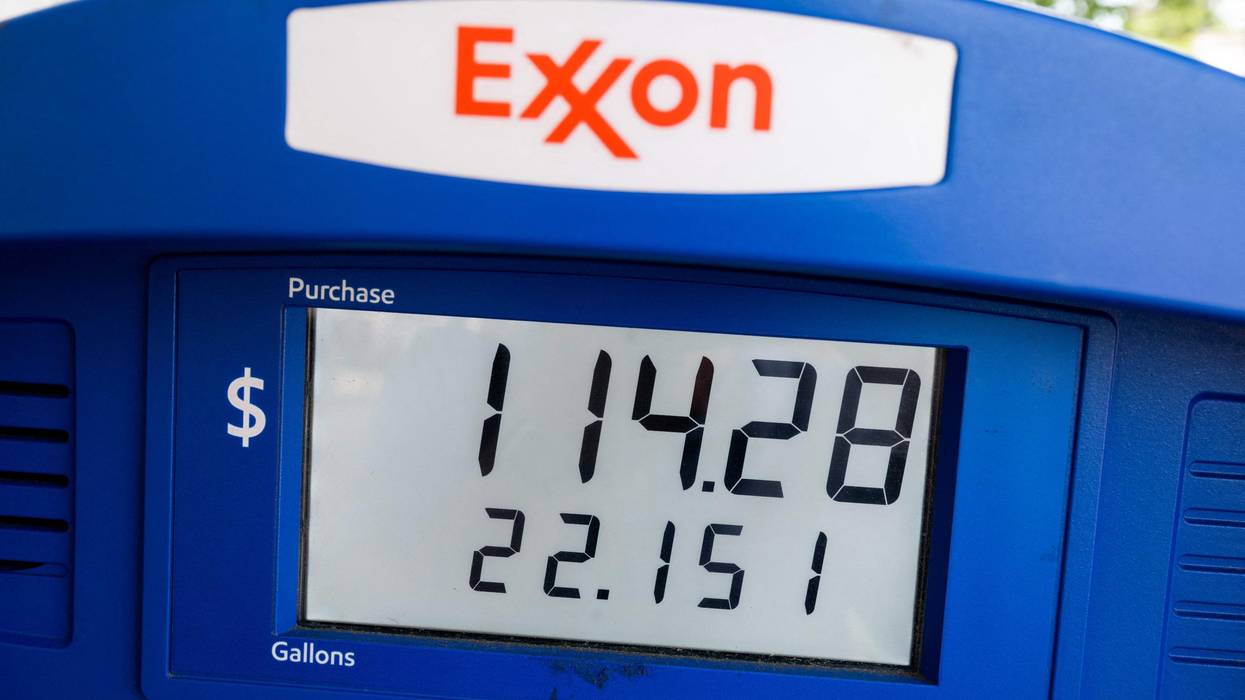
In the wake of new federal data showing that U.S. inflation rose again in May after decelerating slightly the previous month, progressive lawmakers, economists, and union leaders on Friday tried to hammer home their argument that corporate profiteering is a major driver of the price hikes that are eroding workers' modest wage gains and heightening economic pain nationwide.
"While families are feeling the sting of soaring energy costs, oil and gas companies are cheering the nearly $100 billion in profits they've already made this year off families' pain at the pump," said Dr. Rakeen Mabud, chief economist at the Groundwork Collaborative.
"The same corporations that are making record profits while busting workers' unions are raising prices on working families."
"It's past time for Congress to pass an excess profits tax to stop the outrageous war profiteering by Big Oil," Mabud added, referring to the benefits the U.S. fossil fuel industry has reaped from Russia's assault on Ukraine.
The narrative that corporate greed is one of the key culprits behind inflation, which is now at a 40-year high, resonates greatly with the U.S. public, according to recent survey data. A poll conducted last month by Data for Progress showed that 71% of all U.S. voters blame corporate profit-seeking for rising inflation.
But despite the argument's popularity--and alignment with data showing that record-high corporate profits are a disproportionate contributor to inflation--the Biden administration has been increasingly hesitant to deploy it in recent months even as inflationary pressures persist and businesses' net incomes grow exponentially in some sectors.
During an event hosted by The New York Times on Thursday, Treasury Secretary Janet Yellen outright rejected the notion that corporate greed is to blame for inflation, saying, "Demand and supply is largely driving inflation."
Federal Reserve Chair Jerome Powell, meanwhile, has openly suggested that wage increases are part of the problem, telling reporters during a press conference last month that the country needs to "get wages down" in order to tackle inflation.
While progressive economists have acknowledged that a number of factors, from supply chain issues caused by the pandemic to the war in Ukraine, are pushing inflation to levels not seen in decades, they have nevertheless maintained that corporate profiteering is a significant culprit.
"Corporations are using inflation as an excuse to raise their prices, hurting workers and consumers while they enjoy record profits," Robert Reich, the former secretary of the U.S. Labor Department, wrote last month. "Prices are surging--but let's be clear: corporations are not raising prices simply because of the increasing costs of supplies and labor. They could easily absorb these higher costs, but instead they are passing them on to consumers and even raising prices higher than those cost increases."
Mary Kay Henry, president of the Service Employees International Union, echoed Reich on Friday.
"Make no mistake: the same corporations that are making record profits while busting workers' unions are raising prices on working families," Henry wrote on Twitter. "If our nation's leaders are serious about addressing inflation, they'll hold these big corporations accountable for their price gouging."
In recent weeks, as inflation numbers have remained stubbornly high and corporate executives have continued boasting about their profits, congressional Democrats have put forth several proposals aimed at combating price gouging and reining in excess profits via taxation.
Led by Rep. Ro Khanna (D-Calif.) in the House and Sen. Sheldon Whitehouse (D-R.I.), a group of Democrats and Sen. Bernie Sanders (I-Vt.) introduced legislation in March that would hit large and highly profitable oil companies with "a per-barrel tax equal to 50% of the difference between the current price of a barrel of oil and the pre-pandemic average price per barrel between 2015 and 2019."
While the White House has signaled it would be willing to support a windfall profits tax on Big Oil, Democrats' bill has not received a vote in the House or Senate.
Last month, Sens. Elizabeth Warren (D-Mass.) and Tammy Baldwin (D-Wis.) along with Rep. Jan Schakowsky (D-Ill.) unveiled a measure that would empower federal regulators to crack down on corporate price gouging. Warren has specifically called out the meat industry for its pricing practices throughout the pandemic.
"Giant corporations are using inflation as a cover story to jack up prices and pad profits," Warren tweeted Friday. "Let's pass my bill to crack down on corporate price gouging. And let's pass our windfall profits tax on Big Oil, which includes rebate checks for Americans struggling with gas prices."
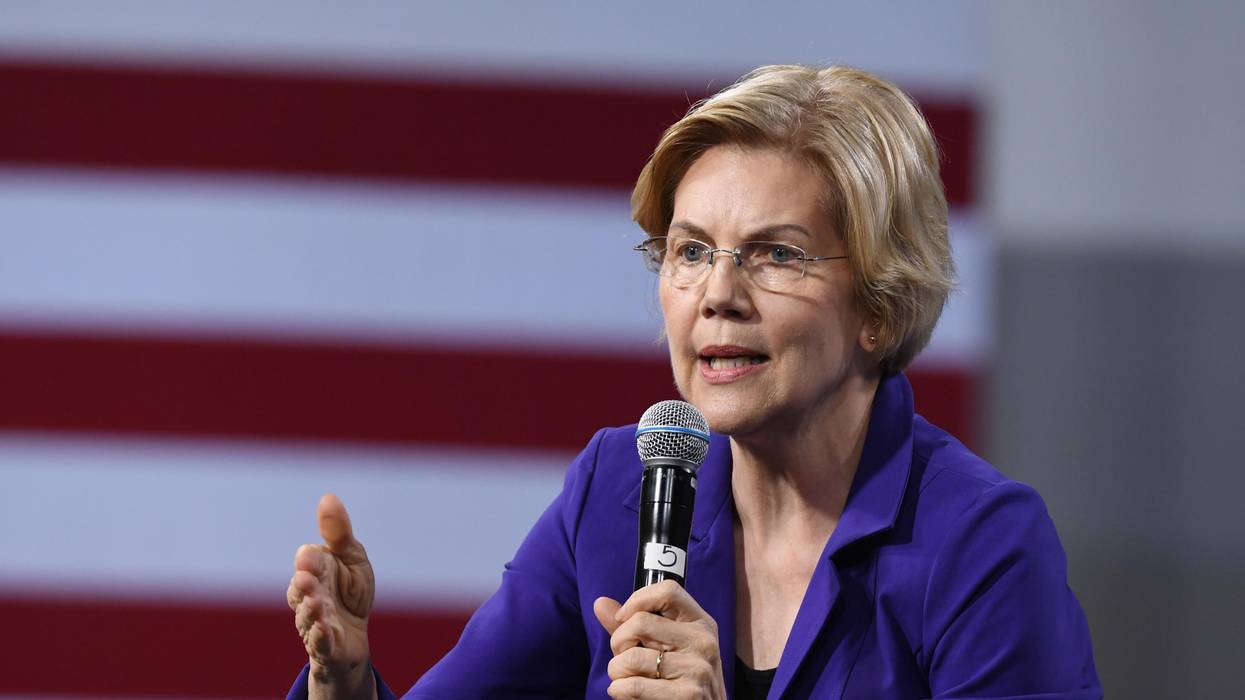
Sen. Elizabeth Warren on Thursday led the introduction of new legislation that would enable federal regulators to forcefully crack down on corporate price gouging, a practice that progressive lawmakers and economists say has played a major role in driving U.S. inflation to a 40-year high.
According to a one-page summary released by Warren's office, the Price Gouging Prevention Act of 2022 would "prohibit the practice of price gouging during all abnormal market disruptions--including the current pandemic--by authorizing the Federal Trade Commission (FTC) and state attorneys general to enforce a federal ban against unconscionably excessive price increases, regardless of a seller's position in a supply chain."
The summary notes that the bill would also "create a rebuttable presumption of price gouging against firms that exercise unfair leverage and companies that brag about increasing prices during periods of inflation" and require "public companies to transparently disclose and explain changes in their cost of goods sold, gross margins, and pricing strategies in their quarterly [Securities and Exchange Commission] filings."
"Corporations have price gouged consumers for extra profits--and gotten away with it--for too long," Warren (D-Mass.) wrote in a Twitter post on Thursday.
Warren introduced the new bill alongside Sen. Tammy Baldwin (D-Wis.), who said in a statement that the measure would "shine a light on price hikes and help prevent big corporations from exploiting a period of inflation to gouge consumers with higher costs."
Rep. Jan Schakowsky (D-Ill.) introduced companion legislation in the House.
Rakeen Mabud, chief economist at the Groundwork Collaborative, applauded the new bill as an "important" step toward reining in corporate profiteering and argued that "a federal price gouging statute would help curtail this exploitative behavior."
The legislation comes a day after federal data showed that while inflation eased slightly in April, consumer prices were up 8.3% last month compared to a year earlier.
In a recent analysis, Josh Bivens of the Economic Policy Institute argued that "the rise in inflation has not been driven by anything that looks like an overheating labor market--instead it has been driven by higher corporate profit margins and supply-chain bottlenecks."
Lindsay Owens, executive director of the Groundwork Collaborative, similarly argued in a New York Times op-ed last week that "plain old corporate profiteering" is a key culprit behind price hikes nationwide.
"Companies that historically might have kept prices low to pick up profit by gaining additional market share are instead using the cover of inflation to raise prices and increase profits," Owens wrote. "Consumers are now expecting higher prices at the checkout line, and companies are taking advantage. The poor and those on fixed incomes are hit the hardest."