

SUBSCRIBE TO OUR FREE NEWSLETTER
Daily news & progressive opinion—funded by the people, not the corporations—delivered straight to your inbox.
5
#000000
#FFFFFF
To donate by check, phone, or other method, see our More Ways to Give page.
Daily news & progressive opinion—funded by the people, not the corporations—delivered straight to your inbox.
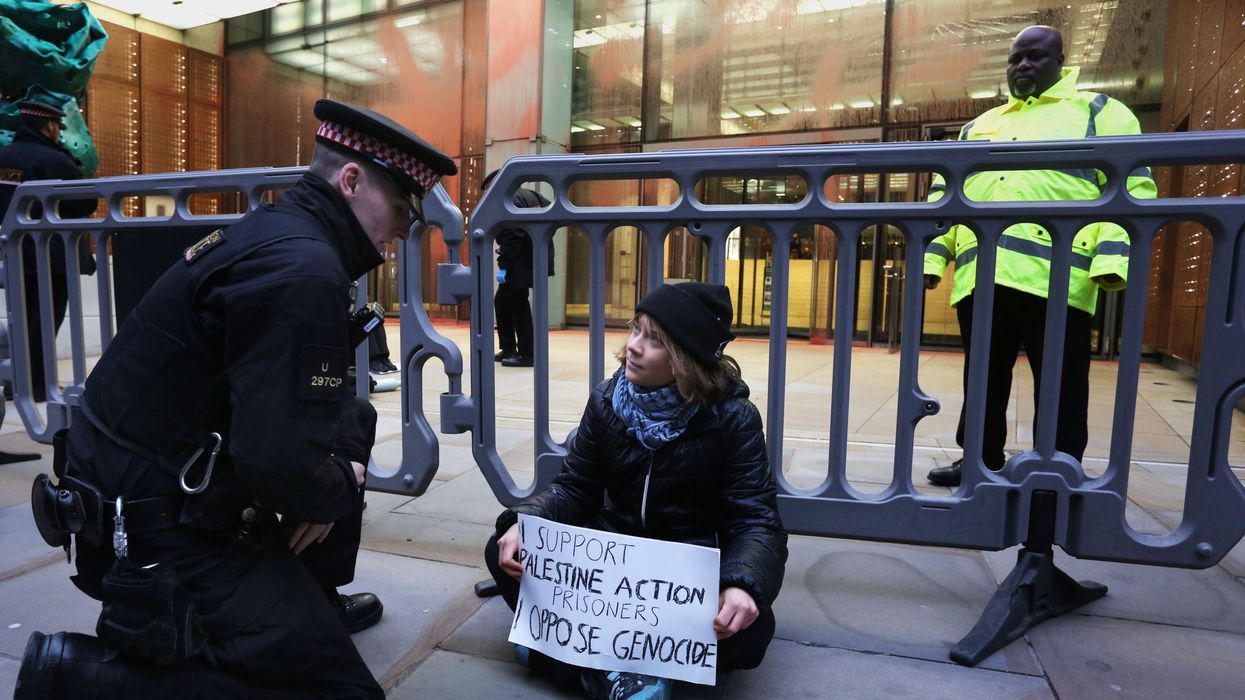
Palestine Action, the direct-action network founded in the UK in 2020 by Huda Ammori and Richard Barnard, is built on a simple theory of change: If governments won’t stop arming Israel, activists will go after the companies that do it for them.
For nearly three years, foreign ministries in Washington, London, and Brussels have debated arms embargoes on Israel in committee rooms, largely without result. Meanwhile, a much less formal network of ordinary people has been trying to accomplish the same goal from the ground up—one factory gate, one shareholder register, and one pension fund at a time.
Palestine Action, the direct-action network founded in the UK in 2020 by Huda Ammori and Richard Barnard, is built on a simple theory of change: If governments won’t stop arming Israel, activists will go after the companies that do it for them. Its central target has been Elbit Systems, Israel’s largest weapons manufacturer, which supplies the bulk of the drones, munitions, and surveillance equipment used in Gaza and the West Bank.
But the network’s real innovation is how it maps the entire supply chain—not just Elbit’s factories, but the banks that hold its shares, the recruiters that staff it, the cleanroom contractors that service its subsidiaries, and the local landlords who rent it space. Every link has become a pressure point.
Palestine Action isn’t a single organization so much as a constellation. Its hub-and-spoke structure includes a UK core, plus franchises, affiliates, and offshoots that have adopted its name, its tactics, or both. These affiliates include Unity of Fields, formerly Palestine Action US, and sympathetic cells in Canada, France, and Germany.
A war sustained by a transnational arms and finance network, in other words, is being contested by an equally transnational, but far more improvised, citizen network.
Tactics range widely. Some are the kinds of action that make headlines: blockading factory entrances, occupying rooftops, spray-painting military aircraft. Others are quieter and far more replicable by an average person—researching a company’s supply relationships, showing up to a shareholder meeting, filing a public-records request on a pension fund’s holdings, or simply refusing to bank with an institution that finances the war.
This second track has produced some of the most durable wins. In 2026, for instance, Urbana, Illinois became the first Illinois city to bar its pension investments from the top 100 global arms producers; Burbank, California divested from Caterpillar and Honeywell after a local coalition campaign; and the state of Maryland’s pension fund sold off 85% of its Israeli bond holdings—about $62 million—after more than a year of sustained pressure. None of those campaigns required anyone to climb a fence.
Palestine Action’s campaign against Elbit’s UK operations has been credited with forcing the closure of the company’s London headquarters, the cancellation of Ministry of Defence contracts, and the loss of its UK recruitment partner. Barclays bank—long a target of Palestine Solidarity Campaign’s parallel boycott—stopped holding shares in Elbit in 2024, something campaigners point to as evidence that sustained pressure, even short of full divestment, moves institutional money.
None of this has stopped the war. But it has made doing business with Israel’s arms industry measurably more expensive and more reputationally toxic, which is precisely the mechanism that sanctions and embargoes are supposed to achieve when foreign ministries won’t act.
In July 2025, the UK government proscribed Palestine Action as a terrorist organization under the Terrorism Act 2000, making membership or expressed support punishable by up to 14 years in prison. A High Court panel ruled in February 2026 that the ban was disproportionate and unlawful, noting that only a small fraction of the group’s actions met the legal definition of terrorism, and that ordinary criminal law was already available to prosecute any violence. The government appealed, and in June 2026 the Court of Appeal reversed that ruling and upheld the ban. More than 1,600 people have been arrested in the UK simply for expressing support for the group since the proscription took effect, and four activists convicted only of criminal damage at an Elbit factory were sentenced on the basis of a “terrorist connection.”
That is a genuinely severe legal environment, and it is specific to the UK. Direct action involving property damage or blockades carries real prosecutorial risk anywhere, including the United States, where Unity of Fields and similar groups are not proscribed but individual activists can and do face criminal charges for actions like the 2023 blockade of Elbit’s Cambridge, Massachusetts office.
The boycott, divestment, and shareholder-pressure (BDS) track—writing to a pension board, organizing a bank boycott, supporting BDS-endorsed campaigns—carries none of that risk and remains fully legal free speech and civic organizing in the United States and most of Europe. The two tracks get conflated constantly, including by the UK government itself, but they are not the same thing. This kind of conflation is exactly what makes proscription such a blunt instrument: it criminalizes a banner alongside a blockade.
Much of this network’s actual leverage comes from single, unglamorous decisions. Huda Ammori didn’t wait for a government to act; she and a handful of others started a campaign against one company in 2020 that has since reshaped how a much larger movement thinks about supply chains. The Boycat app, the closest thing the BDS movement has to an official target list, exists because someone decided that consumer choice needed better information, not more slogans. A single city council member willing to bring a divestment resolution to a vote in Urbana did something no protest outside a factory could: moved actual pension dollars.
None of that required anyone to risk a UK terrorism charge. It required deciding that a supply chain is not too complicated, or too far away, to trace and interrupt.
A war sustained by a transnational arms and finance network, in other words, is being contested by an equally transnational, but far more improvised, citizen network. The citizen network’s most effective tool so far hasn’t been confrontation, it’s been documentation. Knowing exactly which bank, which pension fund, which subcontractor is implicated—and saying so publicly and persistently—has moved more money than any single blockade. This tactic is the most likely one to still be legal, and successful, in the near future.
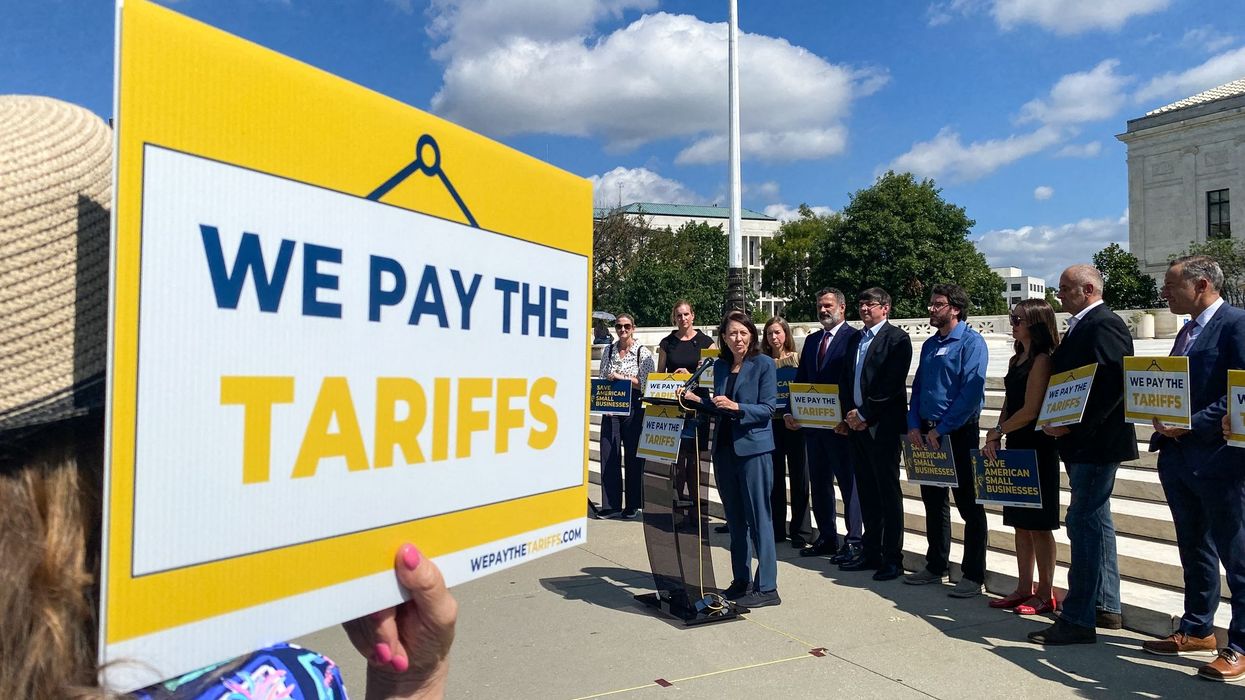
The rising costs that small business owners are paying for imports due to President Donald Trump’s trade tariffs, a tax on American consumers and businesses, is roiling mom-and-pop shops across the US.
According to the Pew Research Center, Americans have big trust in small businesses versus big corporations.
Mom-and-pop shops will need that positive vibe and more as they approach the make-or-break year end business season, beginning with Small Business Saturday on November 29. While small business owners can’t compete on prices with larger companies, there are other factors in play such as personal service. Nevertheless, prices of goods and services do matter, so the rising costs that small business owners are paying for imports due to President Donald Trump’s trade tariffs, a tax on American consumers and businesses, is roiling mom-and-pop shops across the US.
On April 2, 2025, Trump announced that he was via tariffs “enacting fair trade policies that will restore our workforce, rebuild our economy, and finally put America First.” According to Small Business Administration Administrator Kelly Loeffler, mom-and-pop shops would reap a bounty of benefits from tariffs on imports from global trading partners: “Small businesses will no longer be crushed by foreign governments and unfair trade deals. Instead, we will put American industry, workers, and strength FIRST.”
How are these claims working out on Main Street? We turn to Fabrice Moschetti, owner of Moschetti Artisan Roasters, in Vallejo, California. Imported coffee he buys from Brazil was tariff-free until the president imposed a baseline “reciprocal tariff” of 10% on imported goods globally, then increased tariffs on Brazilian imports another 40% in July because the government of Brazil was prosecuting its past President Jair Bolsonaro, awaiting a 27-year prison sentence on appeal currently after conviction for planning a military coup against his successor, Brazilian President Luiz Inácio Lula da Silva.
"At this point, we've transitioned from working for profits to working for tariffs. We are just in business to pay off our tariff debt."
It’s been a struggle to find an adequate supply of coffee, according to Moschetti, forcing him to truck it in from cities such as Seattle versus the nearby Port of Oakland. "It's been difficult to tell the mom-and-pop owner-operators who we work with that our prices are increasing 40%," he says.
While Trump recently rolled back the 40% tariffs on coffee imports from Brazil, tariffs on imports from other global trading partners remain in place. Two examples of tariff-price hikes on imports are bags and cups made abroad in China.
Dan Anthony is the executive director of We Pay the Tariffs (WPT), a Washington, DC-based coalition of small businesses. Its aim is to advocate for policies that address the negative impacts of tariffs.
Strength in numbers is a political strategy that confronts the money-power of big banks, corporations, and the wealthy. It’s a strategy that faces enormous obstacles, economically and politically.
Meanwhile, presidential tariffs totaled $120 billion paid on US imports from March to August 2025, according to Anthony. That $120 billion compares with the spending on the National School Lunch Program and related programs for 12 months.
Joann Cartiglia is the owner-operator of The Queen's Treasures in Ticonderoga, New York. Her doll accessories and toy company is struggling with tariff-driven inventory shortages as the make-or-break holiday season approaches, according to Cartiglia. American companies paid $1.2 billion in tariffs on toy imports for the year ending in August 2025, a spike of 22.3% from 0% the past year, according to WPT, based on Census data. Meanwhile, toy imports grew 0.1% between August 2024 and August 2025.
Jared Hendricks is the owner of Village Lighting Co. in West Valley City, Utah. "We're approaching a $1 million in tariffs this year that weren't in the budget,” he says, “weren't in the forecast, and frankly, weren't in the cash flow, so we had to finance that. At this point, we've transitioned from working for profits to working for tariffs. We are just in business to pay off our tariff debt."
Currently, import prices are rising and small businesses are struggling. Anne Zimmerman is founder and owner of Zimmerman & Co. CPAs Inc. in Cleveland and Cincinnati, Ohio, and cochair of Small Business for America’s Future. The group’s new survey of 1,048 small business owners shows that 74% of them do not think that they will remain open in 2026.
“Congress needs to focus on policies that will actually help us,” Zimmerman says in a statement. “That means extending the Affordable Care Act tax credits so businesses and their employees aren’t hit with massive healthcare cost spikes. The Supreme Court needs to strike down these tariff policies that are crushing small businesses.”
What’s needed to make the Minerals Security Partnership work on the ground
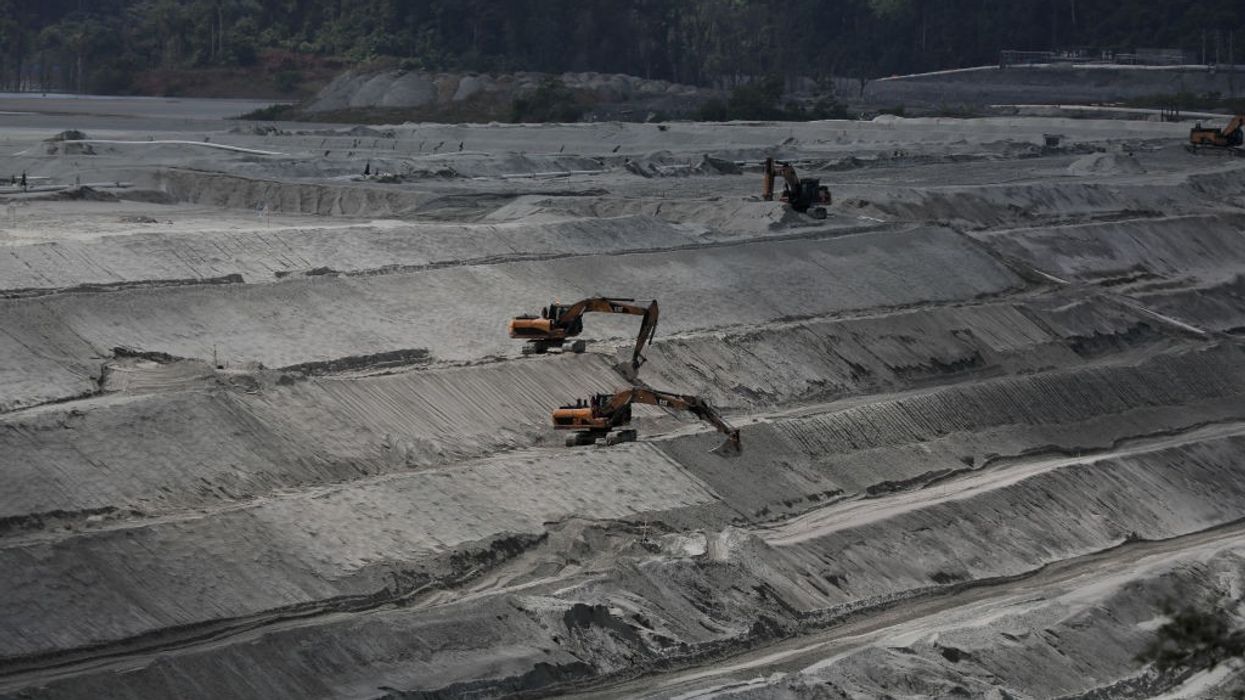
Azure waters and exotic islands are not the only attractions of Cabo Delgado in Mozambique. The province is home to the largest graphite reserve globally, prompting Syrah Resources’ Twigg to open the Balama mine. This is one of the dozen projects across the world chosen by the Minerals Security Partnership to secure and diversify the supply of raw materials.
The energy transition is dependent on critical minerals such as lithium and copper as the world electrifies transport and shifts to renewables. With most minerals currently controlled by China, many western countries are playing catch up. The Minerals Security Partnership (MSP), whose members include Australia, Canada, India, the U.S. and many European countries, is central to this effort.
History is full of not-so-pretty attempts by western nations to capture minerals supply chains, as many living in the Global South know first hand. So how can this partnership offer a truly different value proposition centered on sustainability and deliver truly responsible projects?
Despite some effort, the current situation in the extractive industries is far from adequate. A recent report by the International Energy Agency notes that while governance in the minerals sector has somewhat improved, progress on water and greenhouse gas emissions is at best stagnating. (Add to this a deeply felt mistrust among communities and companies and you quickly realize how complicated the matters are.)
But it does not have to be this way. Most technologies for safer tailings management or better water treatment, rules for robust anti-corruption and human rights due diligence, and practices to engage communities and co-govern with Indigenous peoples all exist. They just need to be applied and upheld consistently. This is where the new minerals partnership can bring real value.
Yet right now the MSP principles lack any such concrete requirements. That’s a big omission. For example in the case of Cabo Delgado, concerns around involuntary resettlement of nearby communities and local value proposition abide. MSP-supported projects like this one will be judged as much by the volumes of critical minerals they supply as by their environmental and social stewardship.
The good news is that the MSP does not have to reinvent the wheel. The answer lies in applying the human right and environmental due diligence practices as stipulated in the Organization for Economic Co-operation and Development’s (OECD) guidelines. The EU has recently done exactly that in its new battery law. This will require tracing, addressing and mitigating all manner of social and environmental risks, alongside upholding global treaties such as on Free, Prior and Informed Consent.
Any global miner, refiner, or recycler whose cobalt, graphite, lithium, and nickel are found in batteries on the European market will already have to track and mitigate all manner of social and environmental risks from 2026, including forced labor, water pollution, and biodiversity. MSP member countries can simply uplift these provisions into the partnership projects.
Setting strong and transparent standards is the first step. These need to also be implemented so that they bring difference on the ground.
This means that the minerals partnership needs to quickly move from vision to a pipeline of responsible projects on the ground. So the focus should be on coordinating with local governments to bring local value and infrastructure, on engaging local communities to have a social license to operate and on bringing in finance instructions to make the projects happen.
Given how far ahead China is, there is no time to waste. A laser sharp focus to scale responsibly managed projects across the world is necessary to build a more diverse supply chain. But this should also come with better environmental stewardship and advancing the rights and livelihoods of those impacted, breaking from past behavior.
The Minerals Security Partnership shows global governments are waking up to the challenge of securing critical minerals responsibly. But whether projects like the Balama mine will become largest suppliers of quality graphite and raise the local community out of poverty will depend on how quickly responsible mining practices are scaled up on the ground.

"It's one thing for corporations to pass reasonable increased costs to consumers," said one analyst. "It's another for them to line their coffers by exploiting Americans who are just trying to get by."
Inflation has eased over the last two years, and with supply chains no longer struggling to keep up with demand and companies' business costs stabilizing, an analysis out Thursday asks: Why haven't American households seen the benefits of a more secure economy, with the prices of consumer goods and services falling?
The answer, said economic justice think tank Groundwork Collaborative, is that high prices linked to the coronavirus pandemic were never just the result of higher labor and production costs—but were partially caused by corporations' deliberate price gouging.
When the pandemic upended the U.S. economy, said the group, "businesses jumped on the opportunity to pass these costs on to consumers—and added a little extra to pad their profits."
"The worst part?" said the group. "They're still doing it."
Groundwork analyzed corporate earnings reports starting in 2021, focusing on numerous industries in which consumers were facing sky-high prices.
"This research revealed CEOs openly bragging to their shareholders about their ability to raise prices beyond their rising costs to increase profits," said Groundwork. "To justify these moves, CEOs hid behind the cover of supply chain issues and the economic turmoil caused by the pandemic."
"The fundamental question we need to ask ourselves is whether we want an economy where corporations can exploit pandemics, supply chain crises, and wars at the expense of American workers and families, or an economy where corporations are put in check, allowing everyone to thrive?"
More than two years later, executives from companies including Kimberly-Clark, General Mills, and PepsiCo have continued to "be explicit about how they have [raised prices] and will continue to do so even as inflation comes down and supply chains normalize," Groundwork warned, with the companies benefiting from rising profits as working families struggle to afford necessities.
Groundwork found that corporate profits—not labor and other business costs—drove 53% of price increases in the second and third quarters of 2023. In the four decades preceding the pandemic, profits drove just 11% of price growth.
Business costs have risen by about 1% since early 2023—and in some sectors, input costs have gone down due to drops in prices for transportation, warehousing, and fuel. Yet prices for consumers have gone up by 3.4% in the same time period.
Groundwork Collaborative used the example of the U.S. diaper industry, in which just two companies—Procter & Gamble (P&G) and Kimberly-Clark—control 70% of the domestic market.
Families are paying an average of 30% more for diapers than they were in 2019—and from 2021-23, high prices were partially linked to the soaring cost of wholesale wood pulp, a component of diapers.
Wood pulp prices went up by 87% over those two years, but over the past year, prices have dropped by 25%.
Still, reported Groundwork, "using their pricing power, P&G and Kimberly-Clark have kept diaper prices high for American families, allowing their profit margins to expand considerably."
In earnings calls with shareholders, executives at the two companies said their skyrocketing profits—an $800 million windfall in P&G's case—were attributed to declining input costs and high prices.
Mike Hsu, CEO of Kimberly-Clark, told investors the company has "a lot of opportunity to [expand margins over time] between what we're doing on the revenue side and also on the cost side."
Other companies have also been clear in recent months about their plans to keep prices high to pad their profits, with PepsiCo chief financial officer Hugh Johnson telling shareholders the company may "increase margins during the course of the year" as its costs decrease, after the company raised consumer prices by about 15%.
"It's one thing for corporations to pass reasonable increased costs to consumers. It's another for them to line their coffers by exploiting Americans who are just trying to get by," said Liz Pancotti, strategic adviser for Groundwork and a co-author of the report. "It's time to rein in corporate price gouging—or families will continue to pay the price."
The group noted that Congress will consider expiring provisions from the 2017 corporate tax cuts pushed by former President Donald Trump over the next year.
Congress "must take a hard look at the corporate tax," said Groundwork. "Our tax code should support a robust and equitable economy, not incentivize profiteering."
"The fundamental question we need to ask ourselves," reads the report, "is whether we want an economy where corporations can exploit pandemics, supply chain crises, and wars at the expense of American workers and families, or an economy where corporations are put in check, allowing everyone to thrive?"
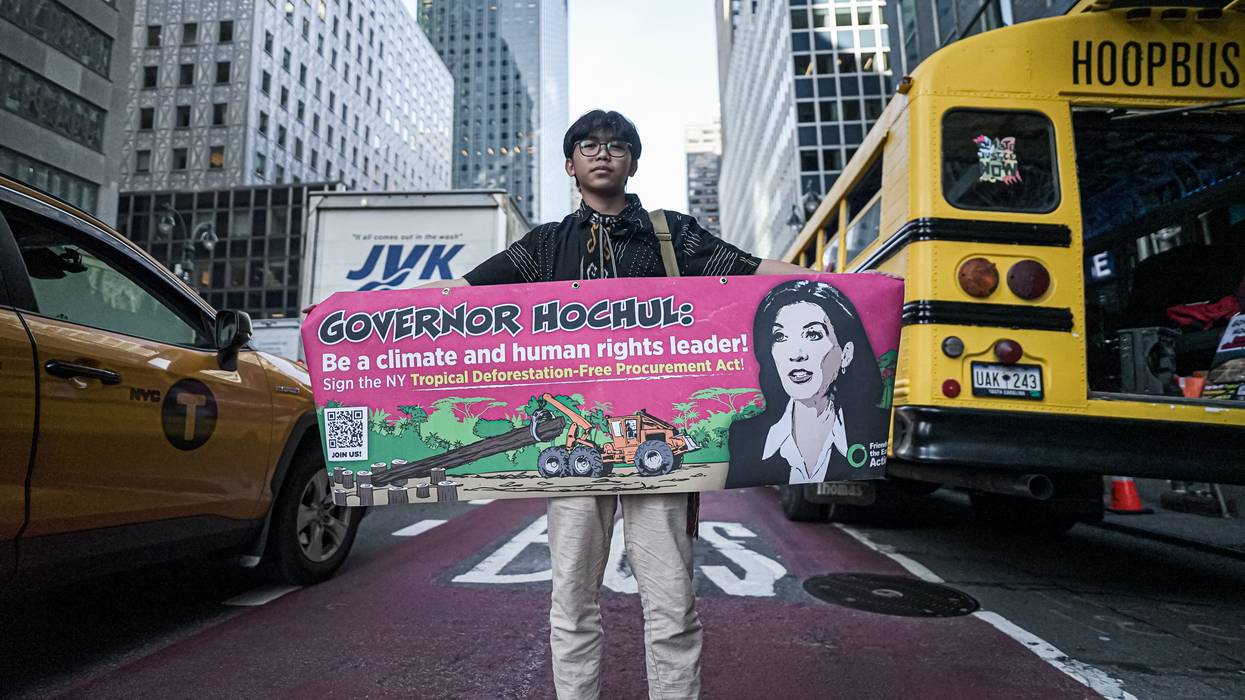
An act awaiting Gov. Hochul’s signature would require any company that supplies state agencies with “forest-risk commodities” to know and show that its entire supply chain is not linked to tropical deforestation.
When confronting the climate emergency, rampant consumption of fossil fuels is top of mind—and rightly so—as tens of thousands of activists recently reminded us in the streets of New York City. But the second leading driver of the climate crisis is the rapid destruction of our planet’s forests. Global deforestation is also a major cause of the extinction crisis and is linked to a wave of violence against Indigenous and local land defenders across the tropics. That’s why a powerful group of Indigenous leaders and climate justice organizers recently used the stage of New York’s Climate Week to build momentum for the New York Tropical Deforestation-Free Procurement Act.
With this groundbreaking piece of legislation, New York Governor Kathy Hochul has the chance to lead the state, and the entire country, down a historic path towards climate justice. The bill already passed both houses in the state legislature and now simply awaits the governor’s signature. If signed into law, any company that supplies New York state agencies with products that contain “forest-risk commodities”—palm oil, soy, paper, beef, coffee, and others—will be required to know and show that its entire supply chain is not linked to tropical deforestation, forest degradation, or human rights abuses in the tropical countries where most of these commodities are produced.
The time we have left to mitigate that risk is running out; urgent action is needed at all levels.
The bill’s lead sponsor, State Senator Liz Krueger, recently co-authored an op-ed in the New York Daily News alongside Amazonian Indigenous leader Juan Carlos Jintiach, highlighting that deforestation has catastrophic impacts on frontline communities while also driving the climate emergency: Some 15% of greenhouse gas emissions are caused by converting natural forests to industrial farmland. Conversely, and not coincidentally, the regions with intact tropical forests are also home to the world’s greatest biocultural diversity. This means not only that demarcating Indigenous territories is critical to protecting forests, but that Indigenous peoples and local communities in the world’s forested regions are—still—under constant threat of violence for protecting the very lands and forests we all need to maintain climate stability. That’s why the Indigenous leaders in this video have expressly called for Gov. Hochul to sign the bill.
As part of our efforts during Climate Week, a group of climate activists from Borneo to Brazil to the Bronx hopped onto the Hoop Bus, a school bus decked out with a basketball hoop, murals, and colorful banners, for a tour around Manhattan—including a stop at Governor Hochul’s office. There, we delivered over 650,000 petition signatures urging her to sign the bill. After about an hour of waiting (and several calls to political insiders), the governor’s office sent down a representative to collect the signatures and meet with representatives of the Global Alliance of Territorial Communities, which brings together some of the world’s most powerful federations of Indigenous peoples.
Earlier in the week, I also participated in a press conference in front of the New York Stock Exchange to warn Wall Street to avoid buying stock in JBS, the world’s largest meat company, and a notorious perpetrator of both deforestation and massive methane emissions. To forge a food system that can move us away from climate emergency, it’s critical to understand the intersection of agriculture—especially monoculture plantations and industrial livestock—and deforestation. Land cleared for cattle grazing accounts for 40% of deforestation worldwide; as The New York Times reported a few days ago, one study found that JBS alone produces more emissions each year than all of Italy. That’s why we hit the streets of New York to tell Wall Street to steer clear of JBS—and yet another reason this piece of legislation sitting on Governor Hochul’s desk is so important.
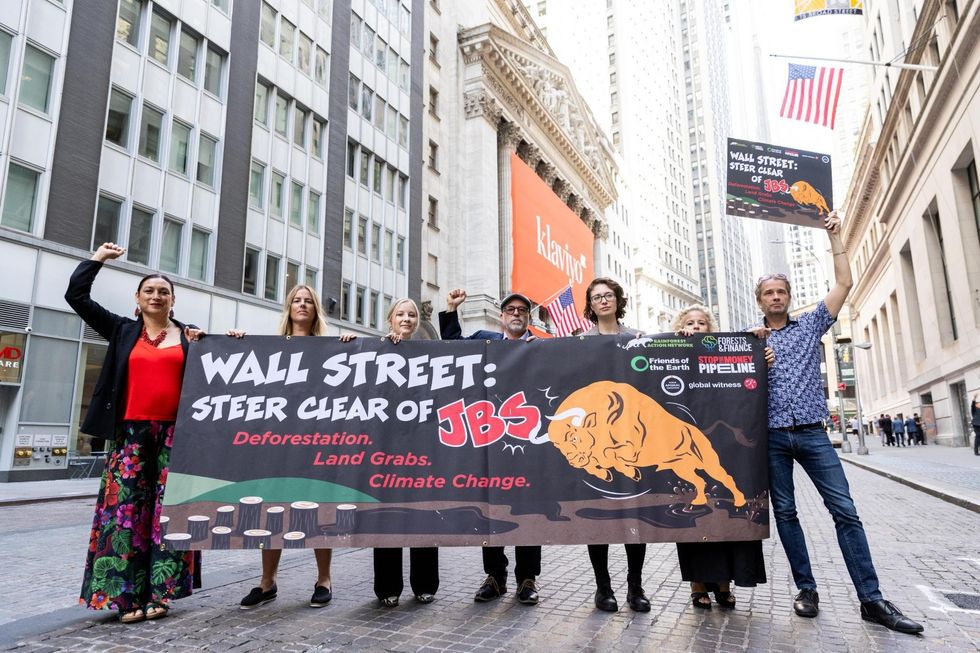 Protesters call on Wall Street to stop investing in JBS.(Photo: Friends of the Earth)
Legislation similar to the New York Tropical Deforestation-Free Procurement Act has already passed in the European Union, so multinational companies are already facing the need to shift their practices to meet new legal frameworks. In a sign of how serious E.U. lawmakers are about advancing this regulation, Manuel Carmona Yebra, counselor for Environment and Oceans for the Delegation of the E.U. to the U.S., published an op-ed in the Albany Times Union voicing strong support for the NY bill: “By aligning our approach to deforestation across the Atlantic and globally, we can become trailblazers of a healthier, innovative, and more competitive green economy,” the E.U. policymaker wrote.
With every new climate disaster that floods the subways of New York or incinerates the forests of Canada or California, its clear that the short and long-term costs of inaction are far greater than the cost of re-deploying state tax dollars to deal with the crisis at its roots. Even Wall Street—the engine of the New York economy—now understands that climate risk is economic risk. To drive that point home, earlier this year, 72 global investors representing $2.5 trillion in assets delivered a letter to the NY legislature and the governor supporting the bill.
The time we have left to mitigate that risk is running out; urgent action is needed at all levels. Governor Hochul herself recently signed legislation she called “a monumental step forward in our mission to protect New Yorkers from the impacts of climate change and extreme weather events.” But such legislation only mitigates the damage; Governor Hochul has yet to take any action to actually prevent the massive storms to come. The New York Tropical Deforestation-Free Procurement Act would do precisely that.
The legislation would hold businesses, big and small, accountable for their environmental practices, ensuring they do not contribute to tropical forest degradation, while also mobilizing resources to help smaller and women- and minority-owned companies make their supply chains greener and more resilient. The bill also closes a loophole in an existing state law that would ban state purchasing of precious tropical hardwood timber, which is still used in New York’s boardwalks, railroad ties, and marine pilings, despite the increased availability of more durable and cost-effective materials. As the world’s 10th largest economy, and a true microcosm of the world’s diversity, it’s past time for New York to step up to the challenge.
With this piece of legislation, Governor Hochul has the opportunity not only to forge a sensible climate action pathway for the rest of the country, but also to score a huge political win. After all, what’s more popular than saving the rainforest?

As part of his ongoing effort to rid auto supply chains of human rights and environmental abuses, the Oregon Democrat wants leather car seat manufacturer Lear to explain its sourcing practices.
U.S. Sen. Ron Wyden on Monday asked the Lear Corporation, the world's largest manufacturer of leather car seats, to answer questions about its transnational supply chain, which has "potential links" to illegal deforestation and forced labor in the Brazilian Amazon.
In his letter to Lear CEO Ray Scott, Wyden (D-Ore.), chair of the Senate Finance Committee, said the information he is seeking will aid the panel's ongoing probe of the effectiveness of current policies aimed at combating human rights and environmental abuses in the supply chains of products sold in the United States.
"Lear sources 70% of its leather supply from Brazil," Wyden wrote, citing a recent report from the Environmental Investigation Agency, a U.S.-based nonprofit. "There, Lear predominantly does business with JBS S.A., Vancouros Comercio de Couros LTDA, and Viposa S.A., hide producers known to source cattle from areas of the Amazon that have been illegally used for cattle production and which receive weak oversight from the Brazilian government."
"A 2021 New York Times exposé revealed that Lear's major direct suppliers each source cattle from illegally deforested ranches in protected areas of the Amazon," Wyden continued. "These ranches evade supply chain monitoring by moving cattle repeatedly over their lifetimes from illegal to legal ranches in a process known as 'cattle laundering.' In addition to encouraging deforestation, illegal ranching in the Amazon drives violent land grabs and human rights abuses subject to weak oversight by Brazilian law enforcement, which often fails to enforce environmental and human rights laws."
According to Wyden: "Such abuses include the prevalent use of slave labor to deforest ranching areas. Since 1995, more than 1,300 laborers have been discovered working in slavery conditions to clear forest, and this number is likely a significant underestimate due to laborers' fears of retaliation, including murder. In 2022, the United States Department of Labor Bureau of International Affairs listed cattle as one of the products Brazil is producing by forced labor or child labor."
Over the past two years, Wyden has been investigating the relationship between cattle ranching and deforestation in the Brazilian Amazon.
"This investigation is focused on the business practices of JBS S.A., which has allowed illegal deforestation to enter its cattle supply chain through indirect suppliers who engage in cattle laundering," the senator explained. "By complicating their supply chains, JBS's indirect suppliers are able to source cattle from ranches that engage in illegal land occupation and deforestation. In June 2023, the Finance Committee held a hearing on this investigation and pushed multinational beef producer JBS to stop turning a blind eye as parts of its supply chains burn down the Amazon, push the world toward climate catastrophe, and undercut American ranchers who play by the rules on international trade."
The reports and articles Wyden cited in his letter were published in 2022 and earlier, when Brazil was governed by Jair Bolsonaro. Illegal deforestation soared under the far-right former president, who turned a blind eye to the violence that logging, mining, and agribusiness companies used to repress environmental defenders.
Deforestation has fallen since leftist Brazilian President Luiz Inácio Lula da Silva took office in January and quickly restored efforts to crack down on clear-cutting and resumed the formal recognition of Indigenous lands, which has been shown to improve forest outcomes.
However, Lula still faces immense challenges, including strong opposition from corporate interests and right-wing Brazilian lawmakers. In addition, Bolsonaro's funding cuts weakened monitoring and enforcement to such a degree that organized crime groups are now deeply entrenched in the Amazon.
In the U.S., Section 307 of the Tariff Act of 1930 prohibits the importation of goods produced using forced labor. In 2016, U.S. Customs and Border Patrol's authority to prevent forced labor from entering the nation's supply chains was strengthened when Wyden worked with Sen. Sherrod Brown (D-Ohio) to pass an amendment to the Trade Facilitation and Trade Enforcement Act.
Alluding to that legislation, Wyden asked Lear to answer a series of questions about its leather supply chains so that the Senate Finance Committee can better evaluate existing attempts to curb forced labor, including:
Wyden asked the Michigan-headquartered company to provide the requested information by August 7 at the latest.

The fact that big brands don't source garments directly makes it harder to investigate exploitative labor practices.
On April 24, 2013, a multistory garment factory complex in Bangladesh called Rana Plaza collapsed, killing more than 1,000 workers and injuring another 2,500. It remains the worst accident in the history of the apparel industry and one of the deadliest industrial accidents in the world.
Several factories inside the complex produced apparel for Western brands, including Benetton, Primark, and Walmart, shining a spotlight on the unsafe conditions in which a sizable portion of Americans' cheap clothing is produced. The humanitarian tragedy hit home as wealthy nations' shoppers wrestled with their own complicity and called for reforms–but a decade later, progress is still patchy.
As a professor of operations and supply chain management, I believe it is important to understand how the complex and fragmented supply chains that are the norm in the clothing industry create conditions where unsafe conditions and abuse can flourish–and make it difficult to assign responsibility for reforms.
Rana Plaza was not the first garment industry accident in Bangladesh. While the government had stringent building codes "on the books," they were rarely enforced. Most workers lacked the information and power to demand safe working conditions.
Yet the fact that the Rana Plaza collapse was not only a humanitarian crisis, but a public relations crisis, prompted swift action by international organizations and Western brands and clothing retailers. A campaign for full and fair compensation for families of victims was launched immediately, facilitated by the International Labor Organization, a U.N. agency. Within a few months, two initiatives were designed to bring garment factories in Bangladesh up to international standards: the European-led Accord for Fire and Building Safety, and the American-led Alliance for Bangladesh Worker Safety.
While the two initiatives differed in some important ways, both shared the common goal: to improve building and fire safety by leveraging the purchasing power of the member companies.
While the two initiatives differed in some important ways, both shared the common goal: to improve building and fire safety by leveraging the purchasing power of the member companies. In other words, Western brands would insist that production partners get up to standard or take their business elsewhere.
Altogether, the two agreements covered about 2,300 supplier factories. The coalitions conducted factory inspections to identify structural and electrical deficiencies and developed plans for factories to make improvements. The initiatives also laid the groundwork to form worker safety committees and to train workers to recognize, solve, and prevent health and safety issues. Member companies set aside funds for inspections and worker training, negotiated commercial terms, and facilitated low-cost loans for factory improvements.
Both were five-year agreements: The Alliance was sunsetted in 2018, whereas the Accord operated for a few more years before handing operations over to the locally created Readymade Sustainability Council in June 2020.
The onus and expense of making these improvements, however, were largely to be borne by the suppliers–a substantial financial burden for many factories, especially considering the low cost and slim profit margins of the clothes they were producing.
Under the Alliance and the Accord, thousands of factories were inspected for building and fire safety, identifying problems such as lack of fire extinguishers and sprinkler systems, improper fire exits, faulty wiring, and structural issues. At the end of five years, both initiatives reported that 85%-88% of safety issues were remediated. Around half of the factories completed more than 90% of initial remediation, while over 260 of the original 2,300 factories under the initiatives were suspended from contracting with member companies.
Overall, I believe that these initiatives have been successful in bringing safety issues to the forefront.
In addition, more than 5,000 beneficiaries, including injured workers and dependents of victims, were compensated through the Rana Plaza Arrangement, receiving an average of about U.S. $6,500.
Overall, I believe that these initiatives have been successful in bringing safety issues to the forefront. In terms of infrastructure improvements, however, while there has been decent progress, much still needs to be done; for example, the initiatives covered just about one-third of all the garment factories in Bangladesh. Importantly, neither addressed company sourcing practices.
To understand why so much apparel manufacturing takes place in substandard conditions, we need to understand the underlying economic forces: extensive outsourcing to countries with low wages in the quest to meet demand for more–and cheaper–clothing to sell to customers in the West.
In the 1960s, the average American family spent 10% of its income on clothing, buying 25 pieces of apparel–almost all of it made in the United States. Fifty years later, around the time of the Rana Plaza disaster, the average household was spending only about 3.5% of its income on clothing–but buying three times as many items, 98% of which were imported.
In the 1960s, the average American family spent 10% of its income on clothing, buying 25 pieces of apparel–almost all of it made in the United States.
Over these decades, low-income countries in Asia and Latin America started producing more garments and textiles. Apparel production is labor-intensive, meaning these countries' lower wages were a huge attraction to brands and retailers, who gradually started shifting their sourcing.
On a $30 shirt, for example, a typical retailer markup is close to 60%. The factory makes a profit of $1.15, and the worker makes barely 18 cents. Were a similar shirt produced in the U.S., labor costs would be closer to $10.
As labor costs rose in China, Bangladesh became a very appealing alternative. Garment exports now account for 82% of the country's export total, and the industry employs four million people, about 58% of whom are women.
The growth of this sector has reduced poverty significantly and also empowered women. To meet the rapid growth of the apparel industry, however, many buildings were converted to factories as quickly as possible, often without requisite permits.
A common way that foreign companies source products from low-cost countries like Bangladesh is through intermediaries or agents. For example, when a brand places a large order with an authorized factory, the factory in turn may subcontract part of the production to smaller factories, often without informing the brand.
This highly competitive environment, with people at each step of the process looking for the lowest price and no guarantee of longer-term relationships, gives suppliers incentives to cut corners–particularly when under extreme pressure to deliver on time. This can translate into exploitative labor practices or unsafe conditions that violate local laws, but enforcement capacity is weak.
In their constant quest for lower prices, buyers may turn a blind eye to these practices.
In their constant quest for lower prices, buyers may turn a blind eye to these practices. The supply chain's opaqueness, especially when brands do not source directly, makes it difficult to investigate and remediate these practices. Since the 1990s, international scrutiny of labor conditions has grown, but reform efforts largely ignored building and fire safety, the prime reason for the Rana Plaza collapse. Because multiple buyers would often use the same factory, no single buyer felt obligated to invest in the supplier to ensure better conditions.
Garments traverse a complex global supply network by the time they reach stores thousands of miles away. Workers are caught in this web, exploited by factory management that is seldom held responsible by governments either unwilling or unable to enforce laws. Western brands escape the scrutiny of their governments by outsourcing production to low-cost countries and absolve themselves of direct responsibility. And consumers, eager for a bargain, shop for the lowest price.
This complex system makes it hard to assign ethical responsibility, because everyone, and therefore no one, is guilty.
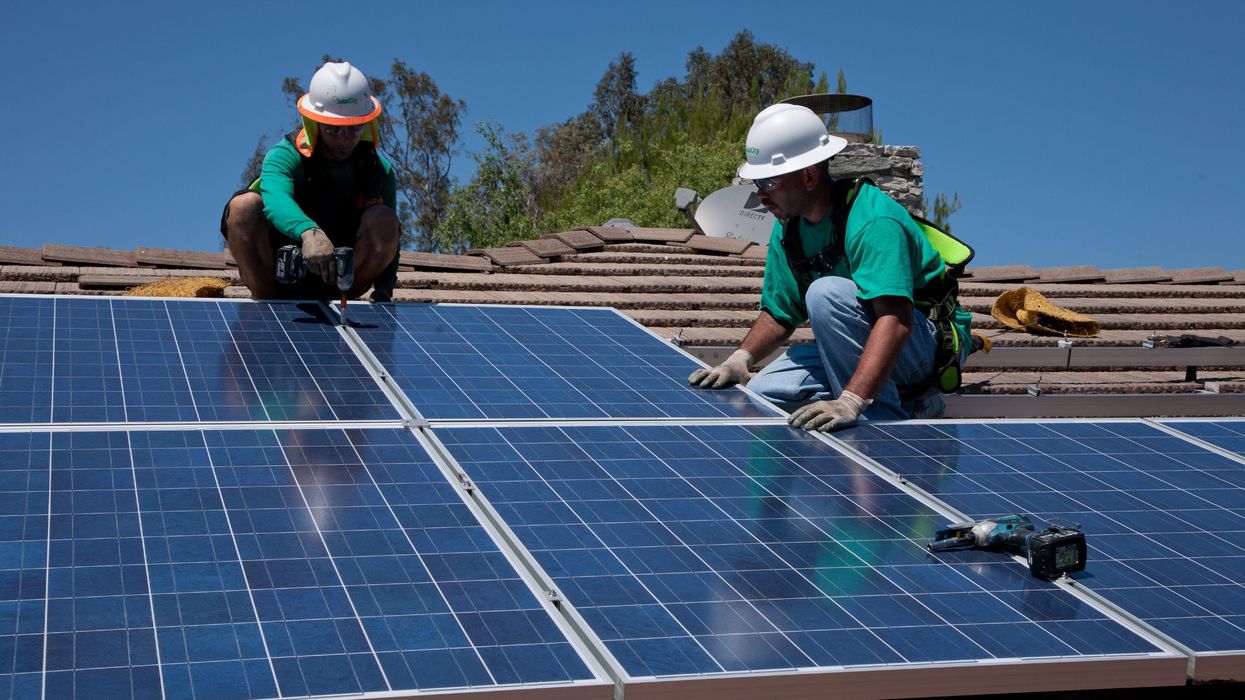
"We're talking about new clean energy technology markets worth hundreds of billions of dollars as well as millions of new jobs," said the head of the International Energy Agency—if countries implement their climate pledges.
Clean energy manufacturing jobs will more than double by the end of the decade if countries worldwide live up to their climate and energy pledges, according to a report published Thursday by the International Energy Agency.
"The energy world is at the dawn of a new industrial age—the age of clean energy technology manufacturing—that is creating major new markets and millions of jobs but also raising new risks, prompting countries across the globe to devise industrial strategies to secure their place in the new global energy economy," the IEA report—entitled Energy Technology Perspectives 2023—asserts.
The publication is a "comprehensive analysis of global manufacturing of clean energy technologies today—such as solar panels, wind turbines, EV batteries, electrolyzers for hydrogen, and heat pumps—and their supply chains around the world, as well as mapping out how they are likely to evolve as the clean energy transition advances in the years ahead."
According to the paper:
The global market for key mass-manufactured clean energy technologies will be worth around $650 billion a year by 2030—more than three times today's level—if countries worldwide fully implement their announced energy and climate pledges. The related clean energy manufacturing jobs would more than double from six million today to nearly 14 million by 2030—and further rapid industrial and employment growth is expected in the following decades as transitions progress.
The report cautions that "at the same time, the current supply chains of clean energy technologies present risks in the form of high geographic concentrations of resource mining and processing as well as technology manufacturing."
For example, the three largest producers of technologies like solar panels, wind turbines, electric vehicle batteries, electrolyzers, and heat pumps "account for at least 70% of manufacturing capacity for each technology—with China dominant in all of them."
"Meanwhile, a great deal of the mining for critical minerals is concentrated in a small number of countries," the analysis states. "The Democratic Republic of Congo produces over 70% of the world's cobalt, and just three countries—Australia, Chile, and China—account for more than 90% of global lithium production."
IEA executive director Fatih Birol said in a statement that the new global energy economy "has become a central pillar of economic strategy and every country needs to identify how it can benefit from the opportunities and navigate the challenges."
"We're talking about new clean energy technology markets worth hundreds of billions of dollars as well as millions of new jobs," Birol continued. "The encouraging news is the global project pipeline for clean energy technology manufacturing is large and growing. If everything announced as of today gets built, the investment flowing into manufacturing clean energy technologies would provide two-thirds of what is needed in a pathway to net-zero emissions."
"The current momentum is moving us closer to meeting our international energy and climate goals—and there is almost certainly more to come," he added.
"The encouraging news is the global project pipeline for clean energy technology manufacturing is large and growing."
Birol also stressed that "the world would benefit from more diversified clean technology supply chains."
"As we have seen with Europe's reliance on Russian gas, when you depend too much on one company, one country, or one trade route—you risk paying a heavy price if there is disruption," he noted, referring to Russia's ongoing war against Ukraine.
An analysis of U.S. federal data published earlier this month by the sustainable energy development nonprofit SUN DAY Campaign concluded that wind and solar alone could generate more electricity in the United States than nuclear and coal in 2023.
A separate report released this week by the Rhodium Group, a New York-based nonpartisan research firm, found that while U.S. carbon emissions rose for the second straight year in 2022, renewable energy surpassed coal as a power source in the United States for the first time in more than 60 years.

As data released Thursday shows inflation kept climbing in September even after the U.S. Federal Reserve raised interest rates yet again, progressives reiterated that the nation's central bank is ill-equipped to tackle the root causes of rising prices and urged Congress to rein in corporate greed before further rate hikes throw millions of people out of work and help crash the global economy.
"It's time for Chair Powell and the Fed to step aside and for Congress to step in."
According to the Bureau of Labor Statistics, the overall consumer price index (CPI) rose 0.4% last month and is up 8.2% from a year earlier. The monthly increase was driven by soaring rent, grocery, and healthcare prices. The annual rate of change has been fueled largely by historic spikes in the cost of food and energy, which critics attribute to price gouging and the destabilizing effects of the Covid-19 pandemic, the war in Ukraine, and the climate crisis on global supply chains.
Core CPI, which excludes food and energy, increased 0.6% for a second consecutive month and is up 6.6% compared with last year, reaching its highest level since 1982.
"Today's inflation report is proof of what we've been saying for months: Raising interest rates isn't working," Rakeen Mabud, chief economist at the Groundwork Collaborative, said in a statement.
"Supply chain bottlenecks, a volatile global energy market, and rampant corporate profiteering can't be solved by additional rate hikes," Mabud continued. "The Fed's overly aggressive actions are shoving our economy to the brink of a devastating recession."
While core CPI reached a 40-year high last month, corporate profit margins are also at record levels.
As Sarah Baron, campaign director for the advocacy group Unrig Our Economy, detailed in a Wednesday column at OtherWords, companies are boosting their profits by keeping prices artificially high:
General Mills hiked its prices five times since June of 2021 alone, and the company saw its net earnings climb 31% to $820 million in the first quarter of the 2023 fiscal year. Darden Restaurants, the company which owns popular chains such as Olive Garden and Longhorn Steakhouse, saw its net sales increase by $140 million to over $2.4 billion in the first quarter of FY 2023. As AutoZone saw record sales growth over the past two years, with net income increasing to $810 million, their CEO admitted the company is not racing to lower prices. Instead, they boosted their shareholder handouts by spending $1 billion on stock buybacks during the quarter, bringing their total to $4.4 billion during FY 2022.
During Monday's meeting of the National Association for Business Economics, Fed Vice Chair Lael Brainard acknowledged that "large increases in retail trade margins in several sectors" is a significant factor behind surging prices.
"The return of retail margins to more normal levels," said Brainard, "could meaningfully help reduce inflationary pressures in some consumer goods."
Nevertheless, Fed Chair Jerome Powell has indicated that the central bank's plan for reducing prices is to depress consumer demand by continuing to raise interest rates to drive up unemployment and push down wages.
Thursday's CPI report has only intensified expectations of further rate hikes, with investors anticipating more turbulence in financial markets. Meanwhile, Labor Department data also published Thursday shows that jobless claims rose last week for the second consecutive week, and researchers are warning of more impending layoffs.
Provoking a recession that causes an estimated 1.5 million Americans to lose their jobs by the end of next year and undermines the bargaining power of labor is, according to Powell's estimation, acceptable if it tames inflation.
But as Mabud and others have argued, including in front of House lawmakers last month, the blunt instrument of interest rate hikes leaves the underlying causes of supply shortages and profiteering unaddressed.
It is possible to curb skyrocketing prices without hurting workers by intentionally plunging the nation--and potentially the world--into a recession, progressives contend, if Congress takes action.
"The inflation crisis we're facing today is due to decades of deregulation and privatization--resulting in brittle supply chains that can't handle shifts in our economy without supply shortages and bottlenecks," Mabud recently told members of the House Committee on Oversight and Reform. "A ruthless pursuit of efficiency and short-term profits... left us vulnerable to profiteering and price increases."
"Giant corporations' control over our supply chains has supplanted the functioning, resilient system we could have built through robust public investment and free and fair competition," she continued. "Big corporations are getting away with pushing up prices to fatten their profit margins, and families are quite literally paying the price. It's time to rein them in."
During the same hearing, former U.S. Labor Secretary Robert Reich urged Congress and the Biden administration to confront corporate profiteering directly through a windfall profits tax of the sort introduced months ago by Sen. Bernie Sanders (I-Vt.), stronger antitrust enforcement, and temporary price controls.
In her Thursday statement, Mabud said, "Now that Fed officials are finally recognizing the role of profiteering, it's time for Chair Powell and the Fed to step aside and for Congress to step in."
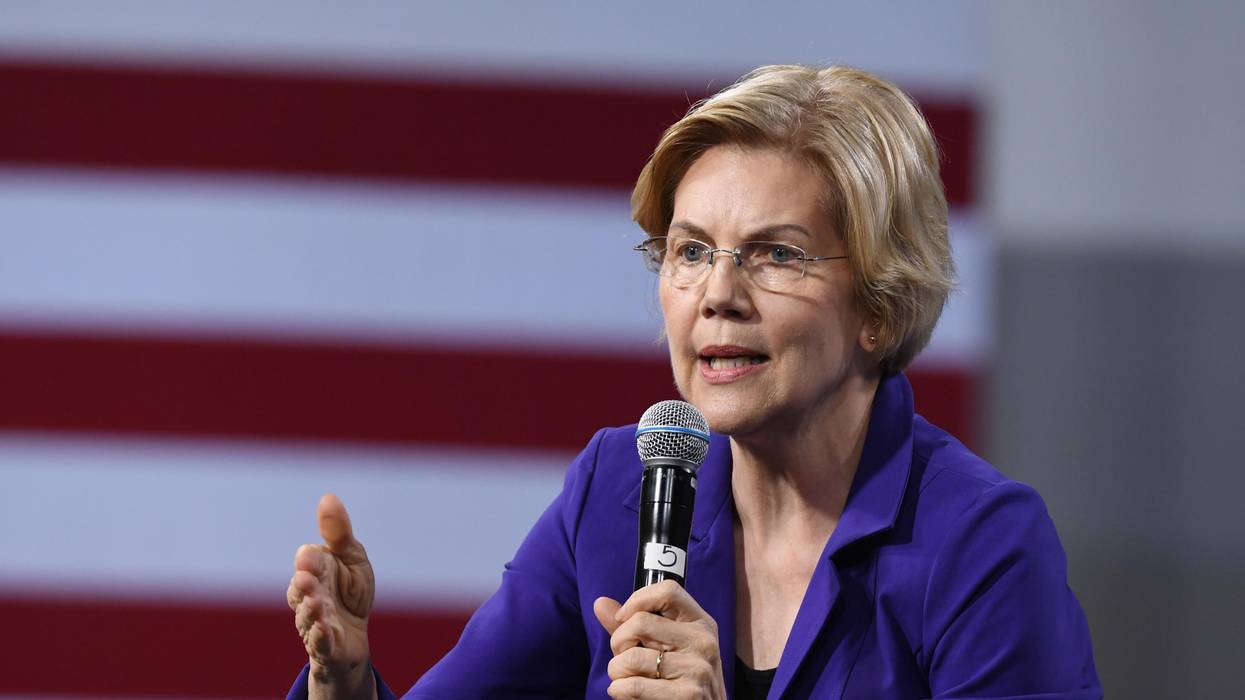
Sen. Elizabeth Warren on Thursday led the introduction of new legislation that would enable federal regulators to forcefully crack down on corporate price gouging, a practice that progressive lawmakers and economists say has played a major role in driving U.S. inflation to a 40-year high.
According to a one-page summary released by Warren's office, the Price Gouging Prevention Act of 2022 would "prohibit the practice of price gouging during all abnormal market disruptions--including the current pandemic--by authorizing the Federal Trade Commission (FTC) and state attorneys general to enforce a federal ban against unconscionably excessive price increases, regardless of a seller's position in a supply chain."
The summary notes that the bill would also "create a rebuttable presumption of price gouging against firms that exercise unfair leverage and companies that brag about increasing prices during periods of inflation" and require "public companies to transparently disclose and explain changes in their cost of goods sold, gross margins, and pricing strategies in their quarterly [Securities and Exchange Commission] filings."
"Corporations have price gouged consumers for extra profits--and gotten away with it--for too long," Warren (D-Mass.) wrote in a Twitter post on Thursday.
Warren introduced the new bill alongside Sen. Tammy Baldwin (D-Wis.), who said in a statement that the measure would "shine a light on price hikes and help prevent big corporations from exploiting a period of inflation to gouge consumers with higher costs."
Rep. Jan Schakowsky (D-Ill.) introduced companion legislation in the House.
Rakeen Mabud, chief economist at the Groundwork Collaborative, applauded the new bill as an "important" step toward reining in corporate profiteering and argued that "a federal price gouging statute would help curtail this exploitative behavior."
The legislation comes a day after federal data showed that while inflation eased slightly in April, consumer prices were up 8.3% last month compared to a year earlier.
In a recent analysis, Josh Bivens of the Economic Policy Institute argued that "the rise in inflation has not been driven by anything that looks like an overheating labor market--instead it has been driven by higher corporate profit margins and supply-chain bottlenecks."
Lindsay Owens, executive director of the Groundwork Collaborative, similarly argued in a New York Times op-ed last week that "plain old corporate profiteering" is a key culprit behind price hikes nationwide.
"Companies that historically might have kept prices low to pick up profit by gaining additional market share are instead using the cover of inflation to raise prices and increase profits," Owens wrote. "Consumers are now expecting higher prices at the checkout line, and companies are taking advantage. The poor and those on fixed incomes are hit the hardest."