

SUBSCRIBE TO OUR FREE NEWSLETTER
Daily news & progressive opinion—funded by the people, not the corporations—delivered straight to your inbox.
5
#000000
#FFFFFF
To donate by check, phone, or other method, see our More Ways to Give page.
Daily news & progressive opinion—funded by the people, not the corporations—delivered straight to your inbox.

"If a US role were to be confirmed, the strike would rank among the worst cases of civilian casualties in decades of US conflicts in the Middle East."
US investigators reportedly believe that American forces were behind the bombing of an Iranian girls' school that killed more than 160 people—mostly young children—during the initial wave of attacks launched Saturday by President Donald Trump in coordination with the Israeli military.
Citing two unnamed officials, Reuters reported Thursday that US military investigators have found it is "likely" that American forces were responsible for the deadly strike on the school in the southern Iranian town of Minab, though the investigation has not yet been completed. Schools are protected under international law, and targeting them is a war crime.
"Reuters was unable to determine more details about the investigation, including what evidence contributed to the tentative assessment, what type of munition was used, who was responsible, or why the U.S. might have struck the school," the outlet noted. "The officials, who spoke on condition of anonymity to discuss sensitive military matters, did not rule out the possibility that new evidence could emerge that absolves the U.S. of responsibility and points to another responsible party in the incident."
"If a US role were to be confirmed," Reuters added, "the strike would rank among the worst cases of civilian casualties in decades of US conflicts in the Middle East."
HuffPost's Akbar Shahid Ahmed echoed Reuters' reporting, writing that Pentagon officials "told Congress in multiple briefings this week that they believed the US was most likely responsible (though probe ongoing)."
The reporting came on the heels of a New York Times analysis that concluded the US was "most likely to have carried out the strike," given that American forces were simultaneously bombarding an adjacent Iranian naval base. The Times also rejected the claim that an Iranian missile hit the elementary school.
"The strikes were first reported on social media shortly after 11:30 am local time," the Times reported. "An analysis of those posts—as well as bystander photos and videos captured within an hour of the strikes—helps corroborate that the school was hit at the same time as the naval base. One video, pinpointed by geolocation experts, showed several large plumes of smoke billowing from the area of the base and the school."
Beth Van Schaack, a former State Department official who currently teaches at Stanford University’s Center for Human Rights and International Justice, told the Times that "given the US' intelligence capabilities, they should have known that a school was in the vicinity."
Trump administration officials have said very little about the Iranian school strike in their triumphant rhetoric about the war, which Pentagon Secretary Pete Hegseth hailed as the "most lethal, most complex, and most precise aerial operation in history." Hegseth has also openly dismissed what he's called "stupid rules of engagement," rejecting constraints on US forces that are designed to prevent the killing of civilians.
Asked about the school strike during a March 4 press conference, Hegseth responded: "All I know—all I can say is that we're investigating that. We, of course, never target civilian targets, but we're taking a look and investigating that."
US Secretary of State Marco Rubio referred reporters to the Pentagon when asked about the attack, but added that "the United States would not target, deliberately target, a school," in purported contrast to the Iranian government, which Rubio claimed is "deliberately targeting civilians" because "they are a terroristic regime."
Two first responders to the scene of the attack, as well as a parent of one of the killed children, told Middle East Eye earlier this week that the school was hit by two strikes, a possible "double-tap" attack. An Al Jazeera investigation concluded the attack on the school was likely deliberate.
Jeremy Konyndyk, president of Refugees International, called the school attack "a horrific US war crime, up there with My Lai," referring to US soldiers' massacre of Vietnamese civilians in 1968. The US military initially covered up the massacre.
"In a sane world, Hegseth would resign, Congress would hold immediate hearings and establish an investigation, and the US would come clean," Konyndyk wrote on social media. "None of that is likely, so international mechanisms should kick in, including the [International Criminal Court]. And Hegseth should probably talk to a lawyer."
On Thursday, as US and Israeli officials vowed to ramp up their assault on Iran, two boys' schools southwest of Tehran were reportedly bombed.
"The targeting of civilians, educational facilities, and medical institutions constitutes a grave violation of international humanitarian law and human rights law," a group of United Nations experts said earlier this week.
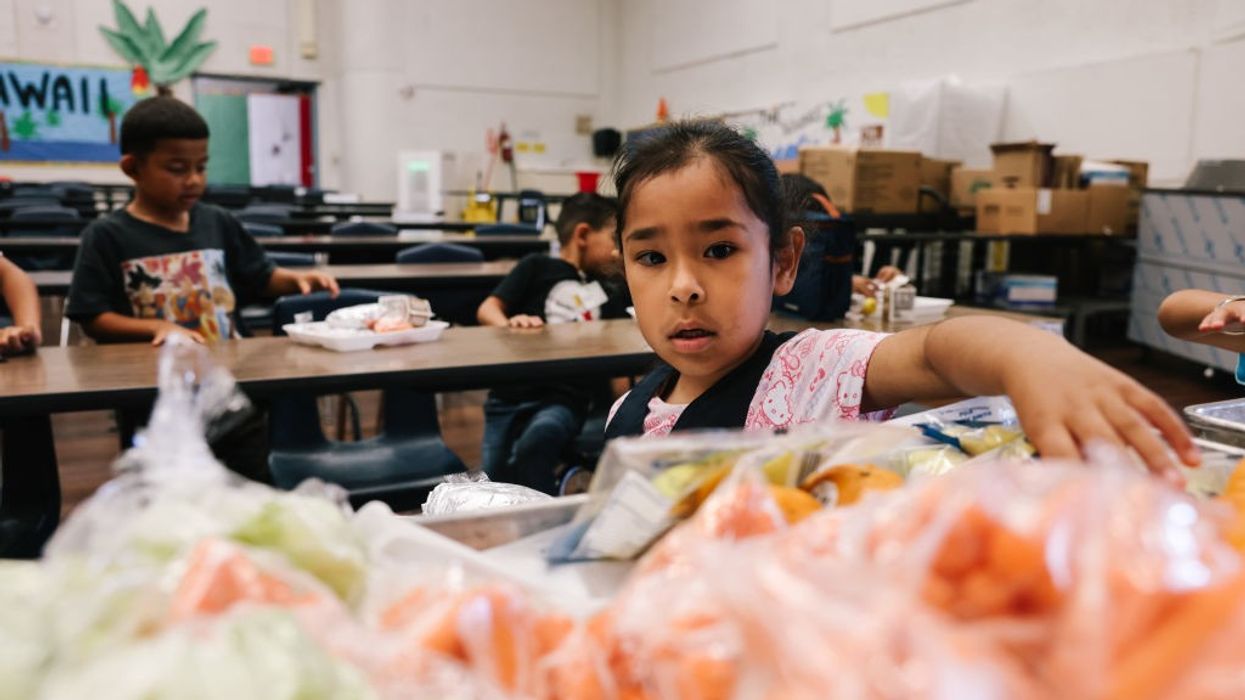
The Republican Party's proposed cuts to nutrition assistance for children, said one analyst, "would be part of legislation that would give massive tax cuts to the wealthiest people and businesses."
The Trump administration and Republicans in Congress are waging a multi-front war on nutrition benefits for children, with the U.S. Department of Agriculture moving this week to end programs that provided over $1 billion in funding for schools and charity organizations to buy food from local farmers as GOP lawmakers simultaneously take aim at school meal programs as part of an effort to fund tax breaks for the wealthy.
Schools and farmers are "bracing for impact," as The Washington Post put it, after the USDA axed the Local Food Purchase Assistance Cooperative Agreement Program and the Local Food for Schools Cooperative Agreement Program as part of a purported effort to "return to long-term, fiscally responsible initiatives."
The Local Food for Schools Program, according to the USDA, "no longer effectuates agency priorities."
The decision to kill the programs could be disastrous for schools, childcare facilities, and other organizations that were expecting federal funding this year. Politico observed that "roughly $660 million that schools and childcare facilities were counting on to purchase food from nearby farms" has been terminated by the Trump administration.
"Trump and Elon Musk have declared that feeding children and supporting local farmers are no longer 'priorities,'" Democratic Massachusetts Gov. Maura Healey said in a statement, noting that her state was set to receive $12.2 million "to provide local healthy food to childcare programs and schools, and to create new procurement relationships with local farmers and small businesses."
"Instead of strengthening our food supply chain and supporting students and food banks, the Trump White House wants cuts, chaos, and cruelty."
Rep. Shontel Brown (D-Ohio), vice ranking member of the House Agriculture Committee, said that "the Trump administration is proving to be bad for farmers, bad for children, and bad for people in need."
Food insecurity rose for the second consecutive year in 2024, and roughly 14 million children in the U.S. are food insecure, according to the nonprofit Feeding America.
"Instead of strengthening our food supply chain and supporting students and food banks, the Trump White House wants cuts, chaos, and cruelty," said Brown. "These two programs were a win-win for farmers and communities, and it is incredibly short-sighted to abruptly end them."
Congressional Republicans, meanwhile, are pushing for deep cuts to the Supplemental Nutrition Assistance Program and Medicaid that "could make it harder for schools to operate meal programs and for families to obtain free or reduced-price school meals, Summer EBT, or benefits through the Special Supplemental Nutrition Program for Women, Infants, and Children (WIC)."
That's according to an analysis published Wednesday by the Center on Budget and Policy Priorities (CBPP), which noted that "school meal programs and Summer EBT use SNAP and Medicaid data to automatically enroll children."
"If low-income families with children lose their SNAP and/or Medicaid benefits, they would have to complete a school meal application instead of being automatically enrolled," CBPP warned. "In addition to diminished access to meals during the school year, families who are unable to successfully navigate the application process would no longer be automatically enrolled in Summer EBT. Families with children who lose SNAP and/or Medicaid would also lose their adjunctive income eligibility for WIC."
Zoë Neuberger, a senior fellow at CBPP, said that "as families struggle to keep up with the rising cost of food, Republicans in Congress are looking at making it harder for millions of children in families with low incomes to get free meals at school."
"Worse yet, the proposed cuts would be part of legislation that would give massive tax cuts to the wealthiest people and businesses," said Neuberger. "Congress should instead focus on removing red tape for schools and families so parents can afford groceries and children can get the meals they need for healthy development."
The School Nutrition Association (SNA), a national nonprofit whose members help provide meals to schools across the U.S., is sounding the alarm about three specific proposals that Republicans are weighing as they craft their sprawling reconciliation package:
"These proposals would cause millions of children to lose access to free school meals at a time when working families are struggling with rising food costs," SNA president Shannon Gleave warned in a statement earlier this week. "Meanwhile, short-staffed school nutrition teams, striving to improve menus and expand scratch-cooking, would be saddled with time-consuming and costly paperwork created by new government inefficiencies."

"We cannot vaccinate children and families who have to flee for safety," said a spokesperson for the U.N. Relief and Works Agency for Palestine Refugees in the Near East.
The Israeli military killed nearly a dozen people Sunday in its latest bombing of a school-turned-shelter in the Gaza Strip, an attack that came amid limited pauses aimed at allowing relief workers to vaccinate Palestinian children against reemergent polio.
Israel's strike on the Safad school in Gaza City killed at least 11 people, including a woman and a girl, a spokesperson for Gaza's civil defense agency told Agence France-Presse.
The Israeli military claimed it was targeting a "Hamas command center" inside the school, which—like other Gaza schools that remain standing—was being used as a shelter for people displaced by Israel's nearly 11-month assault.
Philippe Lazzarini, commissioner-general of the United Nations Relief and Works Agency for Palestine Refugees in the Near East (UNRWA), said Monday that Israeli bombing has damaged or destroyed more than 70% of the schools it runs in the enclave.
"The vast majority of our schools are now overcrowded shelters with hundreds of thousands of displaced families. They cannot be used for learning," Lazzarini continued. "With no cease-fire, children are likely to fall prey to exploitation including child labor and recruitment into armed groups. We have seen this way too often in conflicts around the world, let’s not repeat it in Gaza."
"A cease-fire is a win for all: it will allow respite for civilians, the release of the hostages, and a flow of much-needed basic supplies including for learning," he added.
A school shelter in Gaza City was hit by an Israeli military air strike as a ‘pause’ in attacks began in other areas in Gaza under an agreement to allow a polio vaccination campaign. pic.twitter.com/Brl4ubHkjC
— Al Jazeera English (@AJEnglish) September 2, 2024
The deadly attack came at the start of three days of localized humanitarian pauses to allow U.N. aid workers to vaccinate Palestinian children against polio amid growing fears of a mass outbreak of the infectious disease that has no known cure.
Last month, Gaza health officials detected the first polio case in more than two decades, heightening the urgency of a large-scale vaccination campaign—an effort made highly difficult by the Israeli military's relentless bombing and destruction of Gaza's healthcare infrastructure.
UNRWA said early Monday that its teams were able to vaccinate roughly 87,000 children on the first day of negotiated pauses even as Israeli airstrikes continued across the besieged enclave.
The Euro-Mediterranean Human Rights Monitor said in a statement Sunday that "Israeli aircraft and tanks continue to bomb the central Gaza Strip, the area where the polio vaccination campaign has begun."
"Along with the ongoing shelling in various parts of the strip, these Israeli military attacks have coincided with the peak of families' movement with their children towards the designated vaccination centers," the group said. "Some of these attacks have even targeted locations near the vaccination centers, endangering the progress of the vaccination process that is required to stop the poliovirus from spreading among Palestinian children in the besieged enclave."
Louise Wateridge, a senior communications officer for UNRWA, told the BBC on Monday morning that "we cannot vaccinate children who are fearing for their lives."
"We cannot vaccinate children and families who have to flee for safety," said Wateridge as explosions rang out in the background. "We need these children to be able to come to the vaccination centers and receive these vaccines safely. And that's not possible when there's fighting like there is now."
"Remember that each one of those numbers is one person, a child who has been forever changed by what's happened."
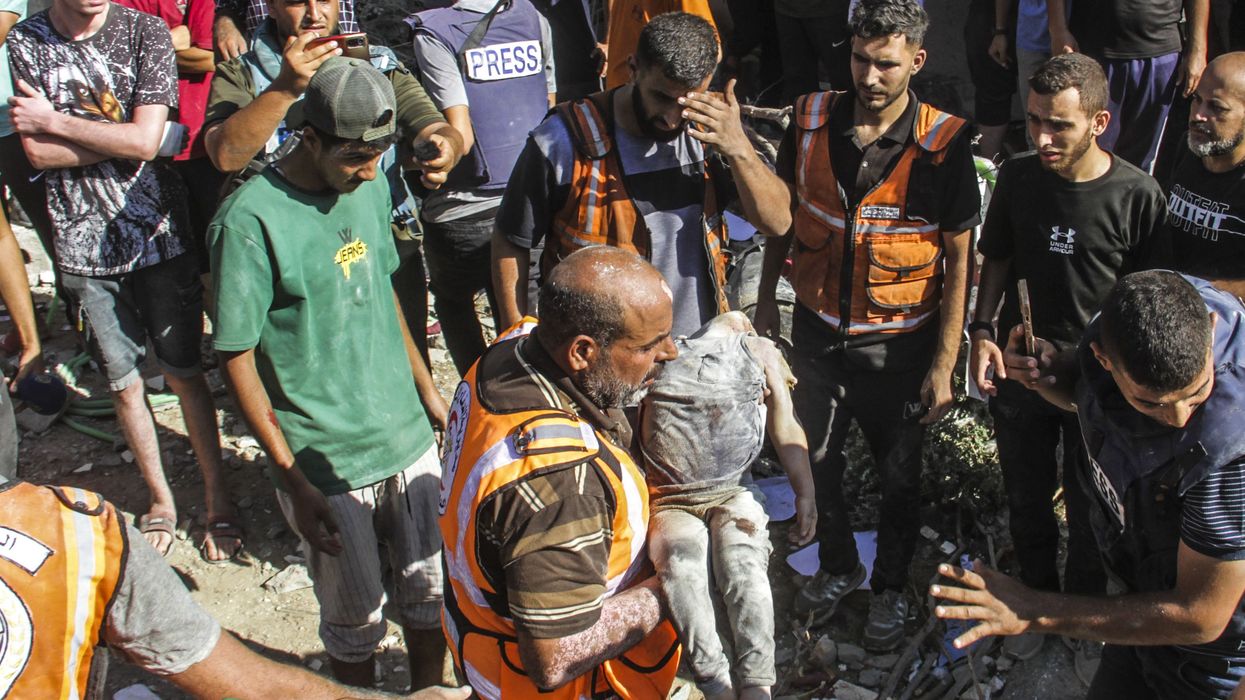
Israeli forces killed dozens of displaced Palestinians—mostly children—on Sunday with attacks on a pair of United Nations-run schools in the Gaza Strip as diplomats in the region worked to prevent all-out war from breaking out in the aftermath of Israel's latest assassination spree.
Al Jazeera reported that 80% of the roughly 30 people killed in the Israeli attacks on two schools in Gaza City were children. The strikes came shortly after Israel's military bombed a hospital complex in central Gaza, killing at least five people.
"This is beyond horror now," David Shoebridge, an Australian senator, wrote in response to the attacks on schools-turned-shelters.
Tareq Abu Azzoum of Al Jazeera noted that rescue teams were still searching the rubble of the two schools for survivors on Monday.
"At least 16 Palestinians are still missing, including children, under the remnants of these areas that were targeted by Israel without any prior warning," Azzoum wrote. "Civil defense crews have been using only their bare hands in order to look for survivors. They have been saying that sometimes the process for recovering and pulling out victims can take days simply because there isn't enough fuel to operate the vast majority of bulldozers, and due to the Israeli attacks on bulldozers at the municipal facilities, used in the initial months of the war to rescue victims."
🚑Palestine Red Crescent teams transported several martyrs and injured individuals following the Israeli occupation’s airstrikes on the Al-Nasr and Hassan Salama schools in northwest #Gaza City.
📷Footage by volunteer Yousef Khader. pic.twitter.com/eZMKHnqNVP
— PRCS (@PalestineRCS) August 4, 2024
Israel's monthslong war on the Gaza Strip has devastated the territory's children, killing more than 14,000, wounding more than 12,000, and leaving over 20,000 missing. The physical toll has been compounded by what one Gaza mother recently described as the "complete psychological destruction" of the enclave's youth.
Becky Platt, a British pediatric nurse who recently returned from Gaza after a stint at a field hospital there, wrote Monday that "the psychological distress that I witnessed among children and young people is like nothing I'd ever seen before."
"It's very easy to be overwhelmed by the numbers when we watch the news or read about what's happening in Gaza," Platt continued. "Remember that each one of those numbers is one person, a child who has been forever changed by what's happened. Then multiply that one child by thousands. That's the work that needs to be done."
Israel's attacks came after a round of cease-fire talks in Cairo concluded without a deal to end the assault on Gaza. Critics, including some Israeli officials, believe Israeli Prime Minister Benjamin Netanyahu is actively sabotaging cease-fire talks in a bid to remain in power.
Axios reported Sunday that "Israeli officials and families of hostages are concerned Netanyahu, who recently toughened his demands and presented new conditions for a hostage and cease-fire deal, sent the delegation [to Cairo] only to create an appearance of negotiations to relieve some of the pressure from" U.S. President Joe Biden, who has called for a cease-fire while continuing to provide military support for the war on Gaza.
" Hamas rejected Netanyahu's new conditions, which include forming an international mechanism to prevent weapons transfers from southern Gaza to the north," according to Axios. "Israeli officials say this and other new demands are making a deal impossible."
Meanwhile, diplomats are trying to prevent the region from descending into full-scale military conflict following Israel's assassination of a Hezbollah commander and Hamas' political leader.
Iran's supreme leader has reportedly ordered an attack on Israel in retaliation for the killing of Hamas political chief Ismail Haniyeh, and U.S. Secretary of State Antony Blinken told G7 nations on Sunday that Iran's military response could begin as soon as Monday.
Late last week, the Pentagon announced it would "deploy additional fighter jets and Navy warships to the Middle East" as lawmakers and anti-war campaigners warned of deepening U.S. involvement in the regional war.
"Americans do not want to fight another war in the Middle East," Jamal Abdi, president of the National Iranian American Council, said last week, "and the path out of the unimaginable death and destruction in Gaza that threatens to engulf the region is through a cease-fire."
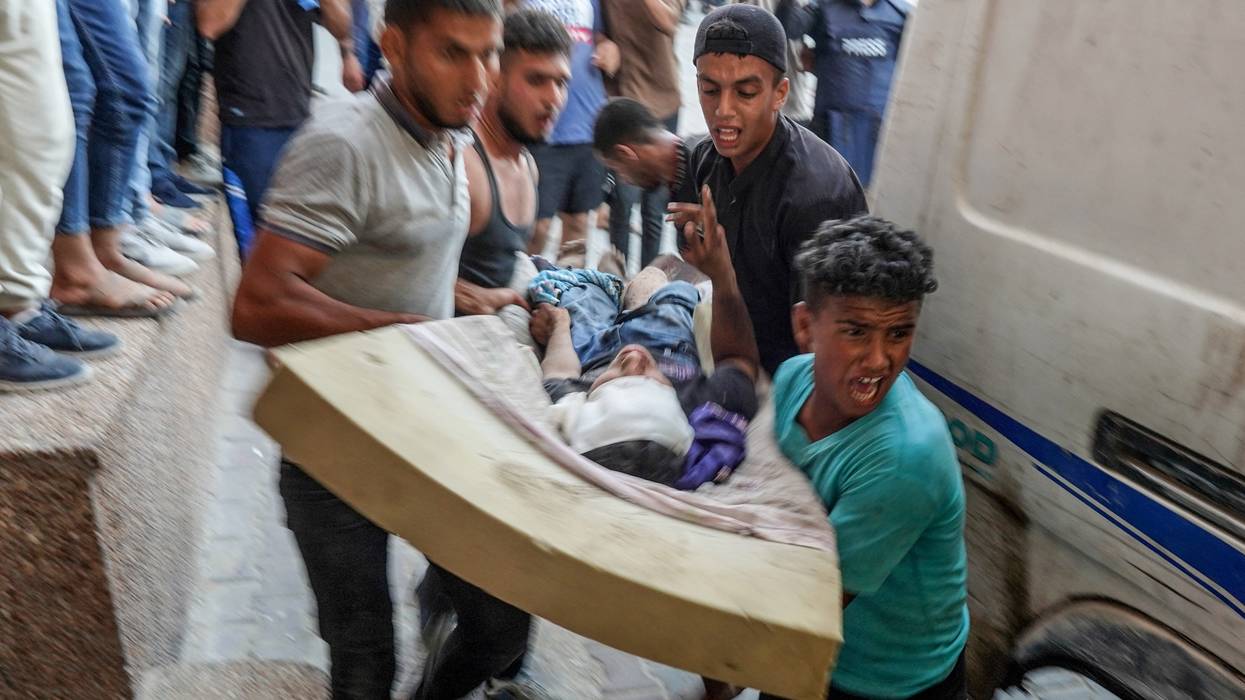
"Schools have gone from safe places of education and hope for children to overcrowded shelters and often ending up a place of death and misery," said UNRWA's commissioner-general.
Israeli forces killed dozens of people Tuesday in an airstrike on a school-turned-refugee camp in the southern Gaza Strip, the fourth school Israel's military has bombed in as many days as the country continues its massive assault on the enclave's starving population.
At least 29 people were killed and dozens more were wounded in Tuesday's attack, including women and children—who have made up roughly two-thirds of those killed in Israel's latest assault on Gaza, which began following a Hamas-led attack in October. The death toll from Tuesday's attack is expected to rise, as many of those injured were reportedly in critical condition and taken to the under-resourced and overwhelmed Nasser Hospital.
The Israel Defense Forces (IDF) acknowledged carrying out the airstrike—which hit the entrance of the school—but claimed to be targeting a Hamas militant "adjacent" to the complex. The IDF, whose internal investigations rarely result in accountability for atrocities, said the "incident is under review."
Video footage posted to social media shows displaced Palestinians playing in the schoolyard when the airstrike hit, sparking panic and chaos.
(Warning: The footage is graphic.)
🚨HORRIBLE: Footage shows the final moments of displaced people at Abasan School in eastern Khan Younis/south #Gaza Strip , playing football in the schoolyard before the Israeli army bombed them, resulting in a horrific massacre that killed dozens and injured hundreds. pic.twitter.com/tyXN2hJI48
— Nour Naim| نُور (@NourNaim88) July 9, 2024
Citing witnesses, the BBC reported that "the area was teeming with displaced people at the time" of the airstrike, which "resulted in widespread destruction and the deaths of women and children."
"Body parts were scattered across the site and many people staying in tents outside the school were also injured," the British outlet reported. "Ayman Al-Dahma, 21, told the BBC there had been as many as 3,000 people packed into the area at the time, which he said housed a market and residential buildings. Describing the number of casualties as 'unimaginable,' he said he had seen people whose limbs had been severed by the blast."
Tuesday's attack marked the fourth time in four days that the IDF has attacked a school in the Gaza Strip, according to Agence France-Presse. Over the weekend, Israeli forces killed more than a dozen Palestinians in an attack on a United Nations-run school in central Gaza.
Most of Gaza's education infrastructure has been damaged or completely destroyed by Israeli forces, and the schools still standing are being used to shelter those displaced by the IDF assault, which is now in its 10th month. The United Nations estimates that 90% of Gaza's population has been internally displaced since October, with some displaced up to 10 times.
Canadians for Justice and Peace in the Middle East called the IDF's latest attack "a horrific massacre," adding, "Annihilation is the point."
"Nothing can justify Canada's failure to act," the group wrote on social media.
Canada is one of a number of major countries that have supplied weaponry to the Israeli government as it has carried out its utter devastation of the Gaza Strip, nearly all of which is now uninhabitable.
The United States and Germany together provided 99% of the arms Israel imported last year, according to the Stockholm International Peace Research Institute. Germany's Foreign Office called Wednesday's attack "unacceptable" and demanded a swift investigation.
"People seeking shelter in schools getting killed is unacceptable. Civilians, especially children, must not get caught in the crossfire," the foreign office said. "The repeated attacks on schools by the Israeli army must stop."
Philippe Lazzarini, commissioner-general of the U.N. Relief and Works Agency for Palestine Refugees in the Near East (UNRWA), said Wednesday that "schools have gone from safe places of education and hope for children to overcrowded shelters and often ending up a place of death and misery."
"Nine months in, under our watch, the relentless, endless killings, destruction, and despair continue. Gaza is no place for children," he added. "The blatant disregard of international humanitarian law cannot become the new normal... Cease-fire now before we lose what is left of our common humanity."
"It's not just happening in Oklahoma; we're seeing it from Texas to West Virginia, from Florida to Idaho," said one church-state separation advocate.
Advocates for the separation of church and state said Thursday that they plan to take all necessary steps to stop Christian nationalists across the country "from trampling the religious freedom of public school children and their families" after Oklahoma school superintendent Ryan Walters became the latest right-wing leader to mandate Christian teachings in schools.
Walters announced Thursday that "immediate and strict compliance is expected" for a new policy mandating that public schools teach the Christian Bible as part of the state curriculum.
Including the religious text in class materials is necessary "to teach our kids about the history of this country, to have a complete understanding of Western civilization, to have an understanding of the basis of our legal system," said Walters. "We're talking about the Bible, one of the most foundational documents used for the Constitution and the birth of our country."
The announcement came days after Republican Gov. Jeff Landry of Louisiana signed into state law a new policy requiring all public school classrooms to display the Ten Commandments by 2025.
U.S. House Speaker Mike Johnson (R-La.) endorsed the policy on Wednesday, saying, "I think there's a number of states trying to look to do the same thing, and I don't think it's offensive in any way." Last weekend, former president and presumptive Republican presidential nominee Donald Trump also expressed support for the requirement, saying it could be "the first major step in the revival of religion, which is desperately needed in our country."
Americans United for Separation of Church and State, which has launched a legal challenge against the Louisiana law, said Thursday that Walters' policy is "textbook Christian nationalism" and "a transparent, unconstitutional effort to indoctrinate and religiously coerce public school students."
"This nation must recommit to our foundational principle of church-state separation before it's too late. Public education, religious freedom and democracy are all on the line."
"Public schools are not Sunday schools," said Rachel Laser, president and CEO of Americans United. "Oklahoma Superintendent Ryan Walters has repeatedly made clear that he is incapable of distinguishing the difference and is unfit for office."
"Walters is abusing the power of his public office to impose his religious beliefs on everyone else's children," continued Laser. "Not on our watch. Americans United is ready to step in and protect all Oklahoma public school children and their families from constitutional violations of their religious freedom."
Laser noted that the organization is already challenging Walters and other Oklahoma officials who are pushing to open the first publicly funded religious charter school, which was blocked by the state Supreme Court this week.
That effort, Walters' announcement, and Louisiana's Ten Commandments law all illustrate that "Christian nationalism is on the march across this country," said Laser.
"It's not just happening in Oklahoma; we're seeing it from Texas to West Virginia, from Florida to Idaho," she said. "Christian nationalists and their lawmaker allies want to replace school counselors with religious chaplains; allow teachers and coaches to pray with students; teach Creationism in science classes; and ban books and censor curricula that feature LGBTQ+ people and racial and religious minorities."
"Americans United will do everything in our power to stop Christian nationalists like Ryan Walters from trampling the religious freedom of public school children and their families," added Laser. "This nation must recommit to our foundational principle of church-state separation before it's too late. Public education, religious freedom and democracy are all on the line."
The Freedom From Religion Foundation (FFRF) also said it would take "any necessary steps" to stop Walters from imposing the Bible teaching requirement on Oklahoma educators.
"Walters' concern should be the fact that Oklahoma ranks 49th in education," said FFRF Co-President Dan Barker. "Maybe education would improve if Oklahoma's superintendent of education spent his time promoting education, instead of religion."
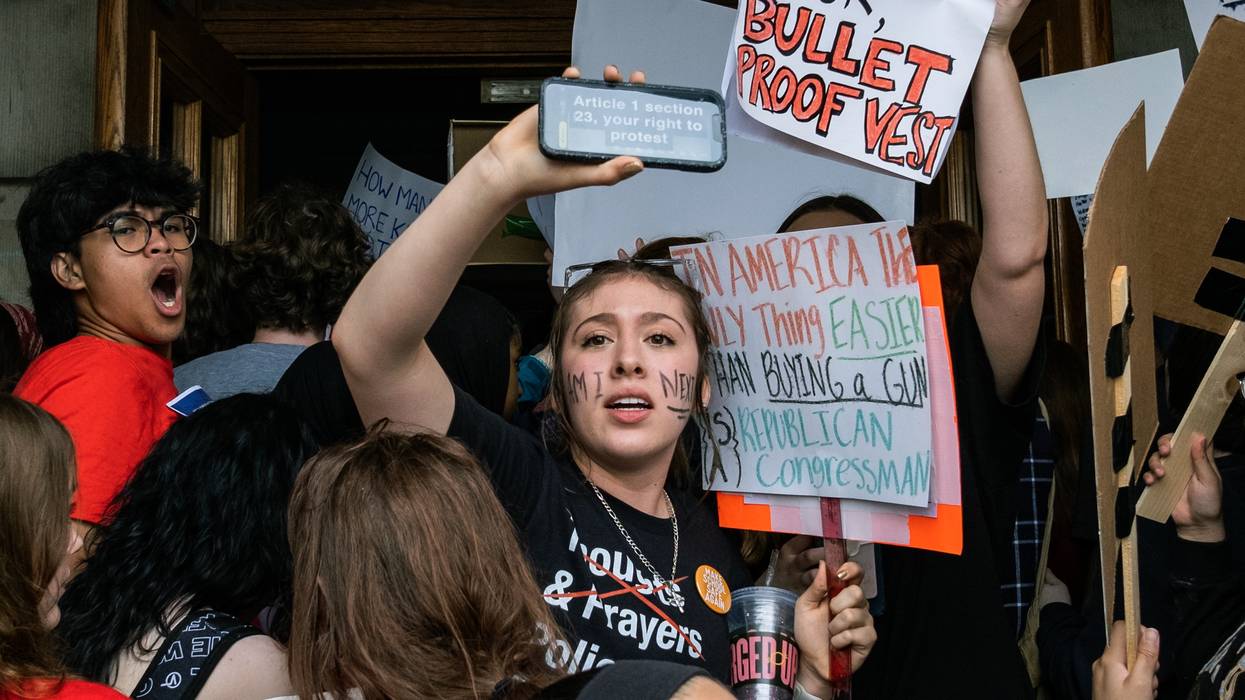
"Instead of protecting kids," said one Democratic lawmaker, "they've protected guns again."
A Democratic leader in the Tennessee House on Tuesday warned that a bill pushed through by Republicans to permit teachers to carry concealed handguns was "nothing but a bad disaster and tragedy waiting to happen," after the GOP cut off a debate and refused to include amendments that aimed to add safety measures to the legislation.
House Bill 1202 passed in a 68-28 vote, and Republican Gov. Bill Lee, who has never vetoed legislation, is expected to sign it, clearing the way for the state to require school districts to allow teachers to carry firearms without notifying students' parents.
According to The Tennessean, the legislation does not allow schools or school districts to opt out of the program and requires administrators "to consider every individual who wants to carry."
The legislation was passed just over a year after a shooting at the Covenant School in Nashville killed six people, including three children.
"Our children's lives are at stake," said House Democratic Caucus Chair John Ray Clemmons (D-55).
After last year's shooting, the Tennessee Legislature garnered national attention when Republicans voted to expel expel state Reps. Justin Jones (D-52) and Justin Pearson (D-86) for joining outraged students in a chant for gun control during a protest. Jones and Pearson were soon reinstated.
Following Tuesday's vote on arming teachers, Republicans voted to bar Jones from speaking in House proceedings for two days after he was accused of committing three rules violations, including recording on the chamber's floor—something a GOP member was also accused of doing.
Jones applauded Tennessee residents for speaking out against H.B. 1202 in the House chamber.
"Despite my Republican colleagues' best effort, the power of the people cannot and will not be stopped," said the lawmaker.
The GOP ended the debate over the legislation after one teacher, Lauren Shipman-Dorrance, cried out from the viewing section. Shipman-Dorrance was removed by state troopers on orders from House Speaker Cameron Sexton (R-25).
After the bill passed overwhelmingly—despite four Republicans who joined the Democrats and three who abstained—the remaining protesters chanted, "Blood on your hands!" before the GOP ordered state troopers to remove them.
Sarah Shoop Neumann, whose children attend Covenant Day School, delivered a letter with more than 5,300 signatures to the House on Monday demanding that lawmakers defeat the bill and warning that the legislation "ignores research that shows the presence of a gun increases the risks posed to children."
Shoop Neumann told The Tennessean that the bill's passage was "disgraceful."
"We worked with the Senate and representative sponsors of this bill to make it even a little bit safer—anything, really—and I'm utterly disappointed that that was not taken into consideration," she told the outlet.
Kris Brown, president of gun violence prevention group Brady, pointed out that "multiple teachers were armed at [the Covenant School], yet that was not enough to stop six children and school employees from being murdered."
"The Tennessee Legislature has just dishonored all who were killed at the Covenant School shooting last year by choosing to promote the proliferation of firearms in classrooms," said Brown. "H.B. 1202 is especially egregious as it has no safe storage requirements, meaning firearms could potentially fall into a child's hands."
"If we want to be free of this uniquely American crisis, we cannot continue to perpetuate the deadly norms that got us here by adding more unsecured firearms in spaces where children should be safe to learn and grow," she added. "We urge Gov. Lee to veto this bill and ask him to work alongside us, teachers, and gun safety advocates to craft meaningful reforms across the Volunteer State."
Democrats proposed amendments to require that teachers lock up their handguns and only remove them during a security breach, that teachers be held civilly liable for using their guns, and that schools inform parents if guns are on campus, but the GOP rejected all of the proposals.
"I can assure you these people have never experienced an actual working high school classroom or they wouldn't be passing this nonsense," said one Tennessee teacher. "A child will die because of this."
Pearson said the passage of the bill marked "an awful day for Tennessee, our kids, our teachers, and communities."
"Instead of protecting kids," said the lawmaker, "they've protected guns again."

The Philippine weather service said the risk of heatstroke was elevated as temperature reached nearly 110°F in some parts of the country.
Schools across the Philippines on Tuesday were forced to close as the country recorded continuing extreme heat that residents have faced since at least Saturday.
Bloomberg reported that more than a thousand primary and secondary schools shut down, including dozens in the capital city of Manila, as health authorities raised alarm about potential heatstroke and heat exhaustion for students and teachers.
The Philippine heat index takes into account not only the actual temperature, but also humidity, which can make hot weather feel even more sweltering.
Dozens of schools across the capital city of Manila were affected by authorities' decision to close schools until the extreme heat subsides.
Officials in the southern island of Mindanao told Agence France-Presse that in-person classes were being suspended or shortened over the next two weeks.
The Philippine Atmospheric, Geophysical, and Astronomical Services Administration (PAGASA) raised alarm about the danger of heat cramps, heat exhaustion, and heatstroke as the heat index reached 42°C (107.6°F) on Tuesday and was expected to surge to 43°C (109.4°F).
Heatstroke can cause sufferers to lose consciousness and experience confusion and in some cases convulsions, and can be deadly.
"At the Pagadian City Pilot School one kindergarten student and two in the elementary school suffered nosebleeds," Dahlia Paragas, regional education ministry official for Zamboanga province in Mindanao, told AFP. "All of them are back at home in stable condition and were advised to avoid exposure to the sunlight."
High humidity is unusual for April, which along with March and May are typically the driest months in much of the Philippines.
AFP reported that conditions in the country have been exacerbated by El Niño, which is occurring this year and along with the underlying trend of fossil fuel-driven planetary heating has resulted in hotter ocean and atmospheric temperatures.
As Common Dreams reported last May, a World Meteorological Organization report found that more than 90% of people killed by extreme weather events including extreme heat, droughts, and wildfires have lived in the Global South.
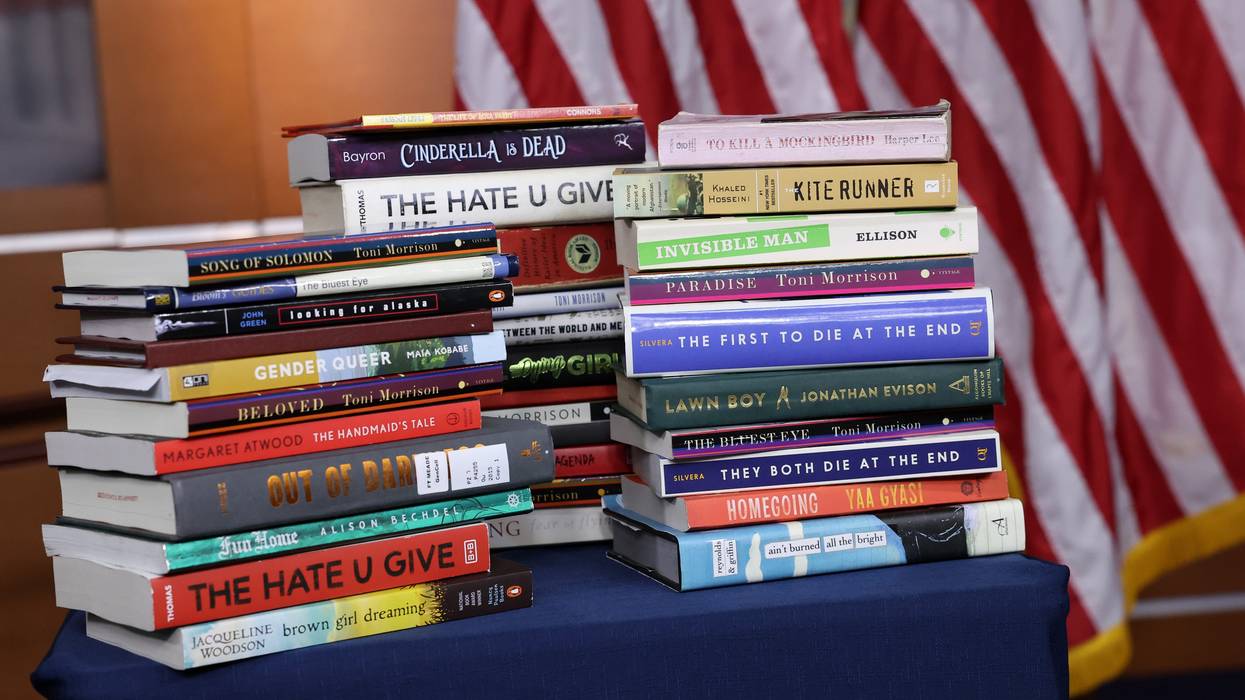
"When we ban books, we're closing off readers to people, places, and perspectives," said the American Library Association. "But when we stand up for stories, we unleash the power that lies inside every book."
A coalition of publishers, teacher and librarian groups, and other advocates on Sunday kicked off this year's Banned Books Week by rallying behind the freedom to read amid an alarming surge in right-wing book bans across the United States.
For over 40 years, the annual Banned Books Week—whose theme this year is Let Freedom Read—has united writers, publishers, booksellers, educators, librarians, and readers "in shared support of the freedom to seek and to express ideas, even those some consider unorthodox or unpopular," as the American Library Association (ALA) put it.
"When we ban books, we're closing off readers to people, places, and perspectives. But when we stand up for stories, we unleash the power that lies inside every book," the ALA said. "We liberate the array of voices that need to be heard and the scenes that need to be seen. Let freedom read!"
As of August 31, the ALA's Office for Intellectual Freedom has documented 695 attempts this year to remove a total of 1,915 titles from public and school libraries. Last year, the group counted 1,269 attempts to censor library books and other resources—the highest number of ban efforts since the ALA started tracking them over 20 years ago and nearly double the previous year's tally.
ALA said that of the record 2,571 unique titles targeted for censorship, most were by or about LGBTQ+ people and Black, Indigenous, and people of color.
"This is a dangerous time for readers and the public servants who provide access to reading materials," ALA Office for Intellectual Freedom director Deborah Caldwell-Stone said in a statement. "Readers, particularly students, are losing access to critical information, and librarians and teachers are under attack for doing their jobs."
For this year's Banned Books Week, PEN America and We Believe led a joint statement signed by more than three dozen publishers and advocacy groups.
The statement begins: "We believe in the freedom to read. Schools and libraries are critical places to kindle imaginations and spark a lifelong love of learning. Students deserve classrooms and school libraries that help them be successful. We believe stories matter. Books can be powerful, compelling, insightful, and enjoyable. Literature has endless value and should be publicly accessible to all."
"We believe in the freedom to learn," the signers continued. "Students need access to accurate history. Students deserve the chance to understand their world and everyone in it. Growing up is hard enough. Classrooms and school libraries should be spaces where all students feel they belong."
"We believe teachers and librarians deserve respect," the statement continues. "Schools and libraries are staffed by trained professionals who make informed decisions about educational materials. Their assessments should be respected and not subject to political pressure, threats, or intimidation."
"We believe parents are partners in education," the publication asserts. "Parents have long had a voice in schools. When a parent, student, or teacher requests or objects to a book, they should have their concerns heard and considered. However, one parent's views or one group of parents' views should not restrict access to books for all."
"We believe in clear, consistent, transparent policies around reviewing books," the advocates added. "Books must not be removed from shelves just because they are challenged. Evaluations of books must be based on facts and the merits, considered by decision-makers who have read the book in its entirety."
PEN America recorded a 33% surge in book bans at U.S. K-12 public schools during the 2022-23 academic year over the previous school year. The group noted 3,362 incidents involving 1,557 unique titles. Over 40% of these bans happened in Florida, where Republican Gov. Ron DeSantis—a 2024 presidential candidate—is waging a war on public education.
According to PEN America, the single-most censored title during the last school year was Maia Kobabe's Gender Queer, a graphic memoir recounting the transgender author's journey from adolescence to adulthood. The book has been banned in dozens of school districts, often following pressure from far-right activists like Florida-based Moms for Liberty.
"If I'd had a book to read like this, specifically, when I was like a freshman in high school, it would have saved me years of questioning and confusion about my identity," Kobabe said in defense of the award-winning work.
A survey published last week by EveryLibrary Institute and Book Riot found that nearly three-quarters of U.S. parents agree or somewhat agree that book bans by public libraries infringe on their right to make choices for their children.
This week, PEN America and We Believe are also leading a letter for concerned citizens to sign and send to state governors and lawmakers to urge them to "fight back against book bans."
The letter begins, "Did you know that 4 in 5 Americans say they would be less likely to support a candidate in 2024 who is in favor of implementing book bans, according to a new poll from Ipsos and We Believe?"
"America's children are our future. Preparing them to lead and succeed in our increasingly diverse and complicated world starts with protecting their freedom to read, learn, and grow," the letter states. "Our nation's strength has always come from the free flow of speech and ideas. We should be modeling these ideals for our kids—not ripping books from their shelves."
The popular anti-censorship campaign has sparked at least one effort to ban Banned Books Week. However, the growing censorship threat has also spurred action to protect the freedom to read. Earlier this year, Illinois became the first state to prohibit public libraries from banning books.
"I refuse to let a dangerous strain of white nationalism determine whose histories are told in Illinois," Democratic Gov. JB Pritzker said after signing the legislation. "Because what these book bans in libraries really are about is censorship—marginalizing people, ideas, and facts."
At the national level, Rep. Jamie Raskin (D-Md.) and Sen. Brian Schatz (D-Hi.) last week reintroduced a resolution recognizing Banned Books Week and condemning "the escalating attacks on books and freedom of expression in the United States."
"The escalating crisis of book bans across our country in recent years is a direct attack on First Amendment rights and should concern everyone who believes freedom of expression and the freedom to read are essential for a strong democracy," Raskin said. "The sinister efforts to remove books from our schools and libraries are a hallmark of authoritarian regimes."
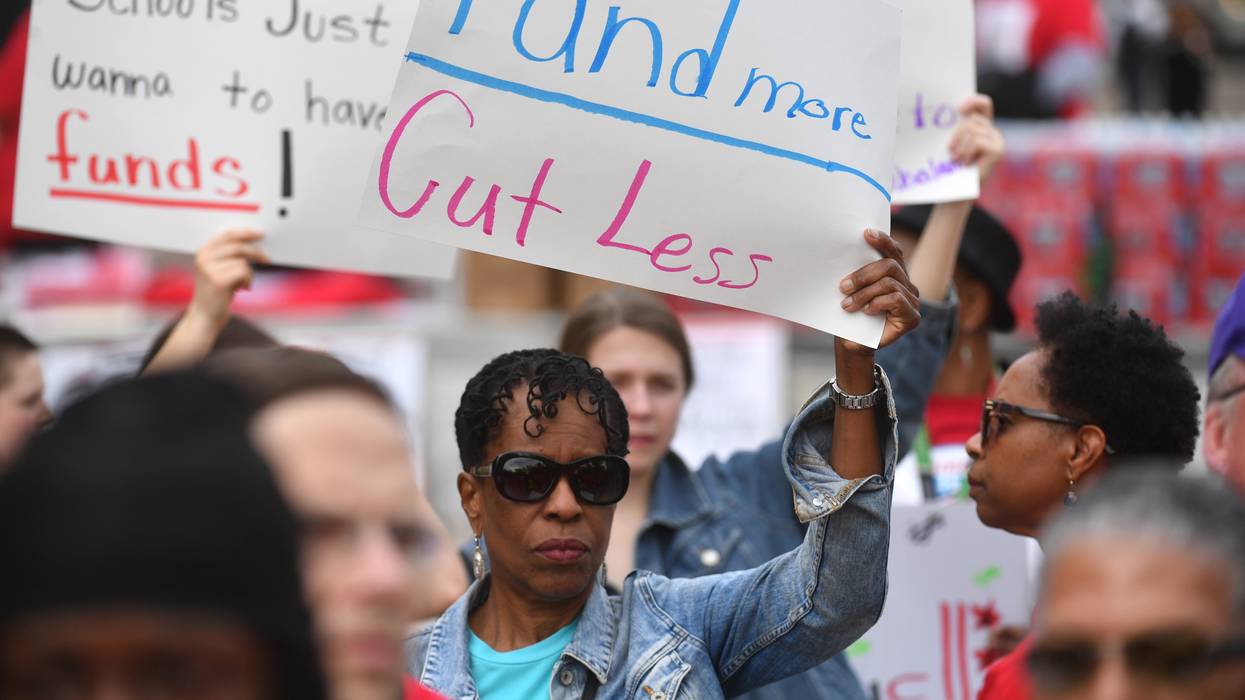
Most schools don't get enough money, and the money they do get is not distributed fairly.
This year marks the 50th anniversary of San Antonio Independent School District v. Rodriguez, the landmark 5-4 Supreme Court decision that held that education is not a fundamental right protected by the U.S. Constitution. The decision dashed hopes that the historic Brown v. Board of Education ruling that ended legal segregation in 1954 would be followed by a sustained federal commitment to making education equality a reality.
Demetrio Rodriguez was a sheet metal worker and a member of the Edgewood Concerned Parent Association when he became the lead plaintiff in the case. He thought his three children were being shortchanged by wide disparities in schooling across the sprawling San Antonio school district and the state of Texas. Parents hoped the case would clearly establish a federal right to education.
Instead, the San Antonio decision closed the federal treasury to advocates of funding equity and set the stage for decades of legal battles over 50 state school finance systems that provide sharply different levels of education to students from different class, race, and community backgrounds. Those court battles, and the organizing and advocacy they generated, made some significant gains. But today the U.S. school funding landscape remains littered with unequal and inadequate state funding systems and is in urgent need of transformation. One recent national survey found that “unequal opportunity is a universal feature of state school finance systems.”
Still, there is reason for hope. Activists and advocates are reaping the lessons of a half-century of funding battles and planning the next wave. In February, Pennsylvania’s system of funding schools, one of the most unfair in the country, was declared illegal after a 10-year court battle, opening up a debate over how to reform it (see below). Also encouraging, researchers, organizers, and policy advocates are developing notions of what “transformative justice in school funding” could look like.
The process of remaking school funding in the United States begins with understanding how the current system reproduces inequality instead of eradicating it.
In most countries the right to education is enshrined in the national constitution and supported by a centralized, national funding system. The patchwork U.S. system of local property taxes and 50 separate state funding systems makes it an outlier. As with voting rights, the lack of strong federal protections provides room for less transparent and less equitable state and local systems.
The absence of a federal guarantee of basic educational rights can be traced to the country’s historic fault lines. While Horace Mann was organizing “common schools” in Massachusetts in the 1800s, public education didn’t exist in most parts of the country, and even aspiring to literacy was a crime for most Black people. Arguably, public education got its biggest boost from Reconstruction when multiracial legislatures in the South supported the establishment of public schools and Radical Republicans in Congress demanded that clauses guaranteeing universal access to free public education be added to state constitutions as a condition of re-admission to the union.
But the end of Reconstruction and the consolidation of Jim Crow culminated in the “separate but equal” era of Plessy v. Ferguson, and states’ rights — including “local control” of schools — became central components of segregation in the United States. A federal takeover of school funding never happened for the same reasons that federal efforts to end segregation, even after the Brown decision, were weak and indecisive: The structures of white supremacy and class privilege were stronger than society’s democratic and egalitarian impulses.
Some retrospectives marking the anniversary of San Antonio noted how these same factors were reflected in the court’s decision. Chalkbeat reporter Matt Barnum offered evidence that four of the justices in the 5-4 majority (all recent Nixon appointees) were swayed by “an influential cadre of social scientists [who] claimed it didn’t matter how much money schools spent. In fact, maybe schools weren’t actually a key factor in what students learned. Maybe — most insidiously — poor children of color weren’t likely to succeed in school no matter how well funded their schools.”
Barnum recounts how such ideas were “spreading, appearing in academic journals and publications” like the Atlantic, the Washington Post, and the New York Times. He cites the sympathetic attention given to eugenicists like Berkeley psychologist Arthur Jensen, who argued that IQ was largely fixed at birth and to Daniel Patrick Moynihan, the Harvard academic and presidential advisor who urged “benign neglect” toward issues of racial justice and who emphasized the “pathology” of Black families. Even liberal scholars like James Coleman, whose seminal “Coleman Report” was directly authorized by the Civil Rights Act of 1964, identified “the home” and “the cultural influences immediately surrounding the home” rather than schools or money as the source of education disparities. “The racist notion that children in poverty could not benefit from additional or even equal resources may well have influenced the court’s decision,” Barnum writes.
He speculates further that pushback to Brown led the court to back away from asserting federal responsibility over funding policy for every school in the nation. “Enforcing desegregation,” he writes, “had prompted a furious backlash and a host of practical difficulties that engulfed the court in litigation for decades to come. Deciding for the plaintiffs in the Rodriguez case, [Justice Lewis] Powell wrote, would have led to an ‘unprecedented upheaval in public education.’”
The abdication of federal responsibility for equalizing school funding meant the focus returned to the states. Each state constitution includes language establishing a system of free, universal public education, and since 1973, there have been school funding cases in 48 of the 50 states parsing exactly what that constitutional promise requires. About half have declared existing funding systems illegal or inadequate and mandated a variety of corrective measures or “remedies.”
Typically, these cases have focused on “equity gaps” in funding across districts that can be traced to wide gaps in per-pupil spending and to finance systems that rely heavily on unequal property tax bases to fund schools. These gaps translate into daily injustices for students in the form of fewer curricular resources and course offerings, less prepared and supported staff, subpar facilities, and fewer support services.
Local property taxes still supply about 44 percent of all school funds. State support varies, but on average provides about 48 percent. The federal government’s overall share of education spending, despite the huge impact of federal policies like No Child Left Behind, is still only about 8 percent.
Since the distribution of property in the United States is grossly unequal and communities are sharply segregated by race and class, it’s inevitable that schools heavily dependent on property taxes will be unequal. In fact, with more than 13,000 school districts, the reliance on property taxes is a sorting mechanism for class and race privilege and allows pockets of “elite schooling” to exist within the public system.
Relying on local property taxes serves the agenda of the conservative forces that dominate state and local governments in several ways. When communities must assume growing fiscal burdens for schools by more heavily taxing local residential and commercial property, it creates strong pressure for austerity. When school budget referendums are presented like sacrificial lambs to hard-pressed local taxpayers, who never get to vote on tax abatements for real estate developers or whether the U.S. Department of Defense should build another aircraft carrier, the budget process is driven not by what schools and children need, but by how to keep the tax rate flat. The reliance on property tax funding works at one level to protect privilege and at another as a vise to squeeze local budgets.
At the same time, the per-pupil amounts schools receive in most states are not based on reliable estimates of the staff, programs, and resources needed to provide a quality education for all children. Instead, they are political decisions made by state and local officials based on budgetary pressures and spending priorities.
More recently, school funding cases have focused on “adequacy gaps” between what school funding systems provide and what state and federal education standards demand of schools. The recent lawsuit in Pennsylvania documented a $4.6 billion gap between what the state funding system provided and what its own cost studies said was necessary to allow students to meet state standards. Expert witnesses testified that Pennsylvania’s wealthiest districts spent $4,800 more per student than poorer ones. The court ruled there was “no rational basis” for such disparities that violated the state constitution’s promise of a “thorough and efficient” education for all.
But as New Jersey’s Education Law Center (ELC-NJ) has pointed out, “Law books are filled with wonderful paper victories that have never been implemented.” Although glaring disparities in school funding have persuaded judges to order reform, it’s been difficult to prevent governors and state legislators from limiting the impact of court orders. Restrained by separation-of-powers concerns and a conservative political climate, courts have given states wide latitude to proceed with half measures and evasive action — and seemingly endless delay.
There is an old joke about school funding lawsuits that “they’re like a Russian novel, long and boring and by the end, everyone’s dead.” The recent Pennsylvania decision came after 10 years of litigation and may still be appealed. Newly elected Gov. Josh Shapiro says working out a remedy could take years. Generations of Keystone State students have spent their entire school lives in a system that violates their rights with “no rational basis.”
Still, decades of legal challenges at the state level have won significant victories, especially when combined with strong campaigns of advocacy and organizing. Where funding challenges have been successful, disparities have narrowed and spending levels in poorer districts have improved. A 2022 Economic Policy Institute report summarized the impact of funding reforms stemming from successful court challenges. It found improvements in test scores, graduation rates, and “educational attainment” (i.e., years of completed schooling), along with “higher adult wages and reduced odds of adult poverty” for students in affected districts. It also found “improvements to schools themselves — increased teacher salaries, reduced student-to-teacher ratios, higher school quality.”
The most successful funding cases can lead to dramatic improvements. New Jersey’s Abbott case produced court mandates that established full-day public pre-K for 3- and 4-year-olds, class size limits of 15 through 3rd grade, and state responsibility for 100 percent of the cost of facilities projects in the state’s poorest districts. In Massachusetts and New York, pressure from court challenges compelled the legislatures to add billions to state school budgets.
Even in deep red Kansas, a combination of six state supreme court decisions and a sustained grassroots campaign for funding justice succeeded in defeating Gov. Sam Brownback’s “red state experiment.” Brownback had turned the state’s school funding system into a patchwork system of “block grants” and the legislature repeatedly balked at providing needed resources. In 2013, a lone parent and a single teacher began a 60-mile trek from the Shawnee Mission school district to the capitol in Topeka to publicize the need for better school funding. The walks grew into an annual event eventually drawing hundreds of parents, teachers, and students. One parent carried a brick from a long-closed public school attended by his father and grandfather. “Kansas schools are kind of important to my family,” he told a reporter. The Kansas Education Association, the state PTA, and the grassroots citizens group Game on for Kansas Schools built a statewide campaign that eventually changed the composition of the legislature and drove Brownback from office. More than a billion dollars in cuts were reversed and hundreds of millions in new resources added to the state education budget.
To be sure, such gains are precarious, subject to erosion and reversal. The watchword for funding battles even when victorious, says ELC-NJ, must be “We won. Now keep fighting.”
As of 2020, 23 states spend above the national per-pupil average ($15,450) 27 spend less. In some states, equity suits have led to “weighted student formulas” that drive more resources to districts with greater populations of students with extra needs. Nineteen states have “progressive” funding formulas that provide more resources to higher poverty districts. Twelve states have flat formulas and 17 are regressive, providing more resources to wealthier districts than poorer ones.
Decades of funding litigation have established that the state is responsible for meeting the educational promises enshrined in state constitutions and that, legally, districts are creatures of the state. Where overreliance on local property taxes to fund schools creates inequality, it is the legal responsibility of the state to address it.
One metric that reflects the long-term threat state budget austerity poses to school funding justice has been a steady decline in “state effort,” the percentage of a state’s economic activity that goes to support K–12 programs. In 39 states, average state effort in 2020 was less than it was before the fiscal crisis of 2009. Even as state economies recovered, education spending didn’t return to previous levels. This amounted to an “austerity tax” in which state legislatures refused to raise the funds necessary to support public services like education. If states had simply maintained their pre-recession effort levels, schools would have received nearly $750 billion in additional revenue.
And then there are the school funding formulas. These hopelessly complicated equations are typically understood by only a few researchers, attorneys, and bureaucrats in each state. But they nevertheless determine the allocation of billions of dollars and are endlessly subject to manipulation and underfunding.
For example, Pennsylvania stopped using its school funding formula to distribute state aid in 1992. Instead, aid was based on whatever districts had received the previous year, regardless of increases or decreases in enrollment or other factors. “Hold harmless” provisions protected some districts from sharp cuts while depriving others of redistributed resources. In 2008, the state adopted a new formula based on a legislative cost study of what it would take to actually meet state standards. But the state never funded the new formula at the projected levels and, again, suspended its use in 2011 after the fiscal crisis. In 2016, the legislature adopted yet another formula that allocated funds more fairly, but only a fraction of total state education aid is distributed according to its provisions. Now, pending a possible appeal of the court ruling, a new remedy phase will try to untangle the mess of overlapping systems that keep Pennsylvania schools strapped and underfunded.
In his first budget, unveiled a month after the Pennsylvania court ruling, Gov. Shapiro proposed a 7.8 percent increase in education spending, but also ended the Level Up program that directed additional funds to the poorest districts, including Philadelphia. Shapiro promised more reform to come, but the advocates and attorneys who brought the case said in a statement, “This year’s proposed education budget does not do enough to meet the standard set by our state constitution and the urgency of this moment.”
Even where progressive funding formulas are in place, there are multiple ways schools can be stripped of resources. Pennsylvania districts made $2.6 billion in charter school payments for 2020–21, with $1 billion going to dubious cyber charter schools. The same year corporate tax abatements cost schools in New York state $1.8 billion in lost revenue. In 27 states, voucher programs divert public funds to support private tuition and other non-public expenses. As articles elsewhere in this issue explain, underfunded schools and districts are also caught in an increasing web of debt that siphons funds from classrooms to financial institutions. Combined with austerity budgets and the slim prospects of dramatically expanded federal investment anytime soon, the current school funding system provides a shaky foundation for educational equity and adequacy, let alone social justice.
Almost 20 years ago, educator and scholar Gloria Ladson-Billings put the year-to-year shortfalls in school funding in context. She spoke of an accumulated “education debt” with “historical, economic, sociopolitical, and moral” dimensions. Rather than a one-year budget “deficit,” she argued, the U.S. “education debt” was akin to the “national debt” amassed cumulatively over the country’s long and unequal history. (For comparison, the federal budget deficit for FY2022 was $1,375 billion. The “national debt” was $30.93 trillion.)
Ladson-Billings used this analogy to reframe the achievement gap as the inevitable outcome of unequal treatment over centuries. The analogy holds for funding as well.
Today’s “education debt” includes the untold costs of Jim Crow schooling; the social, moral, and economic costs of the exclusion and underserving of immigrant and non-English-speaking students; and the degradation of Native education through racist mission schools and later boarding schools and laws that prevented the use of Native languages in Indigenous schools.
“Taken together,” Ladson-Billings said in her famous 2006 address, “the historic, economic, sociopolitical, and moral debt that we amassed toward Black, Brown, Yellow, and Red children seems insurmountable. . . . The images should remind us that the cumulative effect of poor education, poor housing, poor health care, and poor government services create a bifurcated society that leaves more than its children behind.”
As long as public education survives, there will be struggles over funding it. To build on the efforts since San Antonio and win future victories, school funding campaigns will need to find multiple pathways forward, including some new ones.
Fifty years of school funding litigation have shown that state courts and legislatures are both highly political and subject to popular pressure. To succeed, fair funding coalitions must mobilize ever-broader bases of parents, students, and communities. They must also strengthen communication and coordination across the legal, legislative, and public engagement sides of such efforts.
One way to do that is to begin building out campaigns before the lawsuits are even filed. Public hearings and community speak-outs about the daily, on-the-ground effects of inadequate and unequal school funding can help build public support and create a compelling record that can be used in court. Similarly, sustained public conversation facilitated by advocacy groups and coalition partners, about how new resources should be used and the many ways public education can be improved, can begin building grassroots awareness and statewide networks that can support and shape future “remedies.”
In New York, advocacy groups led by parents and organizers from communities of color built statewide campaigns that have pursued such strategies and endured over the long haul. The Campaign for Fiscal Equity (CFE) and the Alliance for Quality Education have led efforts that have stretched from the 1993 filing of a court challenge to a landmark agreement by state officials to provide more than $4 billion in new education funding by 2024. “From the outset of the filing of the litigation,” wrote one of the group’s founding members, “CFE has involved thousands of citizens throughout the state in an extensive deliberative process to help develop the positions that the plaintiffs presented to the court in the trial and to prepare the ground for successful implementation of a final court order. . . . The realization that their input might help determine the outcome of this major constitutional issue intrigued and excited many of the education advocates, parents, teachers, administrators, school board members, and other community members that CFE sought to engage in this public dialogue.”
In several successful campaigns, the state teacher unions have played a pivotal role. The Washington Education Association funded a court challenge with a special dues assessment approved by the membership. The Massachusetts Teachers Association provided funding and institutional support for legal, research, organizing, and public engagement efforts.
“After five decades advocating for school finance reform, [there is] an urgent need to deepen understanding of how differing strategies — from litigation to research to grassroots organizing to communicating with the public — can combine to achieve successful school funding reform in the states,” says ELC-NJ.
The fight for funding justice will also need new vision. In the face of expanding voucher and privatization efforts, continued austerity, and the pervasive social inequality that threatens the premises of public education, school funding campaigns need to tie demands for better resources to a more powerful vision of what schools can be. Ultimately, it is not enough to demand “adequacy to meet state standards.”
Realizing this, some researchers and policy advocates have begun to outline a vision of transformative school funding that builds on the work social justice educators have done to develop “culturally sustaining” curriculum and pedagogy. In Our Children Can’t Wait, a new volume of essays edited by Joseph Bishop, the head of UCLA’s Center for the Transformation of Schools, researchers Oscar Jiménez-Castellanos, Danielle Farrie, and David M. Quinn outline a framework that
means changing the focus from remedies that compensate for perceived deficits of marginalized groups and communities and instead creating systems that build on and sustain the linguistic and cultural diversity in school communities. . . . The foundation of this work is that students’ success is dependent on teaching and curriculum that both values students’ cultural knowledge and experiences and gives them the tools to critically assess the world around them.
In terms of school finance, this means expanding notions of the “additional” resources that students need to succeed. Instead of programs and services that focus narrowly on students’ ability to meet state benchmarks, an asset-based model would focus on programs that build on students’ existing talents, explore and deepen their understandings of their own culture through literacy and art and provide them with the tools they need to critically engage with the social and political systems surrounding them.
Not surprisingly, there are as yet few well-developed examples of transformative justice in school finance. But such aspirational, community-based, student-centered, anti-racist, and culturally sustaining engagement must become a prominent feature of school funding campaigns if the promise of transformative school finance is to be realized.
In the final analysis, U.S. school funding mirrors — and reproduces — the social and economic inequality we see all around us. The details are complicated, but the heart of the matter is simple: Most schools don’t get enough money, and the money they do get is not distributed fairly.
At bottom, the struggle for funding justice in education raises two questions: Will we provide schools with the resources they need to make democratic, social justice, anti-racist education possible; and will we provide those resources to all children, or only some children? The answers will go a long way toward shaping our future.