

SUBSCRIBE TO OUR FREE NEWSLETTER
Daily news & progressive opinion—funded by the people, not the corporations—delivered straight to your inbox.
5
#000000
#FFFFFF
To donate by check, phone, or other method, see our More Ways to Give page.
Daily news & progressive opinion—funded by the people, not the corporations—delivered straight to your inbox.

The perils of unprincipled, performative so-called "resistance."
Wow, seriously? The Democrats are caving yet again? What was all that suffering and harm for, those 40-plus days of anxiety and uncertainty, all the lost Supplemental Nutrition Assistance Program benefits, jobs, and income, the swelling lines at food banks and unemployment offices? After all that, Senate Minority Leader Chuck Schumer enables a centrist cave-in by corporate Democrats, right as President Donald Trump and Republicans acknowledge they are “getting killed” politically by the shutdown and the erasure of essential benefits?
Democrats and progressives everywhere are shouting and screaming—WTF! And rightly so.
Just a week ago, the Democrats appeared ascendant, having run the electoral table on November 4. The “abundance” crowd was agog about the party’s “Big Tent” coalition, ranging from a democratic socialist mayor in New York City to centrist wins in Virginia and New Jersey. Now, that tent has caved, precisely because it is too big and lacks any core pillars. To paraphrase the great Joan Didion, the center cannot (and did not) hold.
Most of what I’d call the Enabling Eight who spearheaded the Democrats’ cave-in are established centrists or about to retire. Sens. John Fetterman (D-Pa.), Maggie Hassan (D-N.H.), Jeanne Shaheen (D-N.H.), Jacky Rosen (D-Nev.), and Angus King (I-Maine) are all center-right politicians who might as well be “moderate” Republicans. House Speaker Mike Johnson (R-La.) proclaimed that these cave-in enablers chose “principle over their personal politics”—but it’s likely the opposite. None of the senators who were likely deputized to vote Yes are up for reelection, most are in swing states, and put their political calculus above the principle of protecting healthcare for millions of Americans.
As Jeet Heer summed up in The Nation: “At a moment when the elections had left Republicans on the ropes, Democrats caved in exchange for a couple of months of government funding and a vote on healthcare that they are bound to lose, if Republicans even hold one. It’s hard to see that as much of a deal at all.” By agreeing to the capitulation, that handful of centrist Democratic Senators “are validating the cynical view that the shutdown was simply a stunt to hurt Republicans in the off-cycle elections.”
From the Mamdani miracle in New York City on November 4 to the Enabling Eight in the US Senate just six days later, the Democratic Party’s huge internal contradictions have been on full display.
Adding further injury to the insult, Robert Reich pointed out, “There’s no guarantee that Trump’s White House will go along. In fact, it’s clear that the White House will dig in on all sorts of programs Democrats support.” Now that they’ve willingly erased their own leverage, Democrats have zero bargaining power on anything. In the name of ending the harm of the shutdown, they voluntarily squandered their one shot at forcing Republican concessions and lessening harm to millions of Americans. It’s not only shameful, but also downright bizarre and pathetic.
You could see the Democrats’ cave coming from a mile away. Not only have they caved so many times before—there was never a clear winnable strategy, beyond punishing Republicans politically for their attacks on healthcare, food stamps, and other essential human life supports. The Democrats exacted their little pound of flesh with some hopeful wins on November 4—then they folded up their tent and squandered whatever inspirational energy and momentum those wins gained.
Sunday, as news of the collapse broke over social media, former Ohio state Rep. Nina Turner crystallized it cogently: “Tonight is a glaring reminder that gerrymandering this spineless party into power isn’t a viable fight for democracy. It further erodes democracy while allowing Democrats in Congress to have even less of a backbone. Fight for fair maps. Organize the working class.”
Indeed, the cave-in reveals the precarity of the Democrats’ generally tepid and wavering resistance. Even when they have resisted, it’s been tactical and lacking any inspiring core principles. There is a real danger in the Democrats relying on gerrymandering, redistricting, and performative “resistance” that sells out both constituents and principles. Voters and activists must keep demanding a party that inspires, engages, and mobilizes working-class power. Don’t let unprincipled, unreliable centrism be the Democrats’ “Big Tent” pillar.
The Democratic Party has proven itself unable and unwilling to be a real opposition party. When the “opposition party” keeps flailing and failing, what do we do? Just keep electing more of them? Plow yet more time, energy, money, heart, and soul into a party that continues to squander it all?
Is this the “end of the Democrats” as a Newsweek column surmised? Certainly not in the immediate term—but it’s yet another final straw for many. At the very moment that Democrats seemed, at last, ready to stand up and fight the hideously fascistic Trump administration, and just as they seized momentum and some political capital, they threw it down the drain.
Indivisible, which has been reliably supportive of Democrats, is sounding the alarm, “launching the biggest Democratic primary program we’ve ever run,” cofounder Ezra Levin announced, adding, “The only path to a real opposition party is through a cleansing primary season.” That fight has already begun with fast-spreading calls for Schumer to step aside as Senate minority leader and will rapidly pick up steam as more candidates jump into the fray.
The same energy and exasperation with the establishment that powered Mamdani to victory is now erupting over the Democrats’ cave.
Even one of the more prominent November 4 victories is problematic and should cause us to demand better. California’s Prop. 50, essentially a voter-approved temporary redistricting to counter Texas’ less-democratic gerrymandering, while perhaps necessary in the moment, is merely a tactical move that offers voters nothing beyond electoral chess or checkers. The party needs to embrace a bold, economic populist vision and program that can inspire and mobilize working-class, middle-class, and lower-income voters—something substantially more than just defending a foundering healthcare system and food assistance that barely keeps people going.
Tactical redistricting and fighting to preserve a fragile and insufficient status quo cannot be the Democrats’ calling cards. It’s time for another progressive uprising within and beyond the Democratic Party. Remember Bernie Sanders’ (I-Vt.) “political revolution?” It seems a distant memory amid the necessary, urgent focus on combating Trump’s vicious and vile fascism and racism.
Zohran Mamdani’s remarkable victory in New York City has reignited progressive hopes nationwide. Polling shows Mamdani’s policies resonate far beyond the Big Apple. In a recent YouGov survey of voters nationwide, 69% supported raising taxes on corporations and millionaires; 66% supported implementing free childcare for every child ages 6 weeks to 5 years; 65% supported freezing rent for lower-income tenants; and 56% supported raising the minimum wage to $30 by 2030.
A “big tent” may sound nice and may be necessary up to a point—every winning campaign involves a coalition, not just a core base—but it depends on who the tent is for and how big and broad it is. Stretched too wide and thin, lacking a core foundation, a “big tent” can easily collapse when its pillars are so malleable.
This problem goes beyond the shutdown and affects the identity of the party itself. When you have a party with such vast disagreements within it, ranging from fiscal conservatives and neoliberals to progressives—what does the party stand for, beyond the most basic notions of democracy? How can the party stand for and with working-class people when many of its leaders promote policies that alienate those voters?
In the short-term, it may be enough for the Democrats to unite around protecting democracy and the Constitution, but that will not be a lasting coalition unless the party offers real economic solutions and vision. On economic policy, the differences between democratic socialists and corporate neoliberals or fiscal conservatives are nearly as wide as those with the GOP. We are talking about the difference between whether we tax corporations and the rich fairly to address poverty, homelessness, hunger, and other critical human needs. We are talking about the difference between a healthcare plan that enables corporate profits and one that prioritizes human needs.
In the space of one week, we’ve seen the perils of the Democrats’ ill-defined, precariously erected “Big Tent.” From the Mamdani miracle in New York City on November 4 to the Enabling Eight in the US Senate just six days later, the Democratic Party’s huge internal contradictions have been on full display. Whether or how these contradictions get resolved, and for whose benefit, remains an open question and an ongoing battle. As the midterms hurtle closer, we should be wary of re-erecting a Democratic tent whose wobbly center cannot hold.
On the more hopeful side of this ledger, there is a political wildfire afoot nationwide—some are calling it a Democratic “Tea” Party. Millions are fed up, not only with Trump but with the stultifying Democratic establishment. The same energy and exasperation with the establishment that powered Mamdani to victory is now erupting over the Democrats’ cave. The surging energies of the 7 million people who marched nationwide in the latest “No Kings” protests have intensified pressure on the Democrats to mount a more serious and sustained resistance to Trump. While the cave has collapsed the party’s momentary momentum, it could now give rise to greater progressive uprising and a rebellion tilting toward that political revolution.
One can, and should, hope.

Help family farmers and other rural folks defend a strong public U.S. Postal Service from the Trump administration’s attacks.
Since 1775 when Benjamin Franklin became the very first postmaster general, the United States Postal Service has faithfully fulfilled the many lofty goals that are now inscribed outside the entrance of the U.S. Postal Museum in Washington D.C.: “Bond of the Scattered Family; Enlarger of the Common Life; Carrier of News and Knowledge; Instrument of Trade and Commerce.”
Affordable universal reliable communication is not something many people can take for granted. In fact, the USPS was such a great American idea (like our national park system) that it has since been replicated across the globe. Under the pretense that the USPS is “bankrupt,” though, President Donald Trump and other neoliberal free marketeers are hellbent on imposing an austerity program and ultimately privatizing this vital public service.
During Trump’s last stint in the White House, USPS was forced to shutter half of its mail processing centers, leading to longer delivery times, and 10% of the nation’s post offices, mostly in rural towns, were put on the auction block. Despite such, the USPS continues to have some of the highest public approval ratings of any federal government agency. After all, who else can you trust to make sure you get your seed orders or drug prescriptions in a timely fashion?
Now is the time to speak up and insure the proud iconic eagle of the USPS is not replaced by some anemic vulture version.
How did this quite preventable (and orchestrated) mugging of the USPS come about? Well, one needs to go back a few decades when the government first opened the door for corporate competitors to undermine the viability of the USPS. At just 73 cents to deliver a first class letter, USPS rates remain among the lowest in the industrialized world. Given the surge in packages, accelerated by the pandemic, private outfits like Fedex and Amazon are now allowed to mooch off the USPS’ amazing efficiency to help deliver their own packages (saving themselves up to 75%). Contrary to some naysayers, the USPS does not get a dime from U.S. taxpayers—it provides a valuable public service at cost to consumers. So attacks on the USPS claiming it is “horribly wasteful” are just flat out wrong.
The USPS is also hamstrung from taking advantage of other ways to expand its services that many people, especially rural folks, desperately need. For example, the USPS still offers money orders, but many other countries’ postal systems offer a much wider range of popular financial services such as checking and savings accounts, even low-interest loans. One recent study found that the USPS could earn an extra $8-9 billion per year just by providing basic banking options to the millions of Americans who now subsist on the fringes of the financial system. It is no surprise that Wells Fargo is drooling over the possible demise of USPS (as revealed in a recently leaked internal memo), since they hardly want any other option for those now subject to their predatory lending practices.
Now is the time to speak up and insure the proud iconic eagle of the USPS is not replaced by some anemic vulture version. Family Farm Defenders is among dozens of organizations that have joined the Grand Alliance to Save Our Public Postal Service. And just like many family farmers rely upon cooperatives for their collective bargaining against agribusiness, postal workers also deserve to have their labor rights respected as fully unionized federal employees. Please contact your elected officials to insure the future of USPS as a vital public good, and next time you are at the post office thank the workers for their essential service! As the unofficial motto of the USPS goes: “Neither snow, nor rain, nor heat, nor gloom of night stays these couriers from the swift completion of their appointed rounds.” Neither should DOGE!
If we don't defeat fascism today, we set our progressive movement back during a moment of history in which we don't have a minute to spare.
It is both complicated and simple.
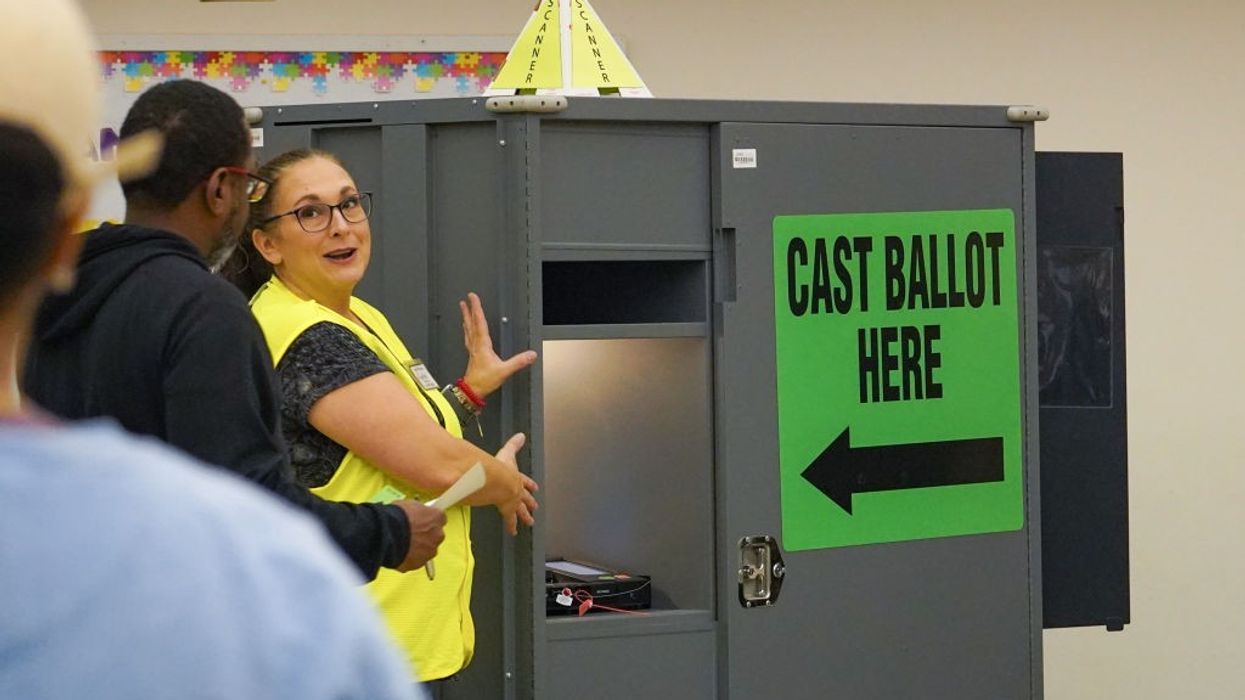
Liberation is not voting. Voting is a tool. Liberation is the ability to lawfully declare and defend the full humanity of everyone. This election is not about liberation. No single election can or ever will be. This election is about defense and blocking the most immediate threat to our survival so our social movements can continue to struggle toward winning everything our people need to live good lives.
In 2020 when our coalition of social movements defeated former U.S. President Donald Trump, we not only blocked his second term, but we made room for what immediately followed. When President Joe Biden took office in 202, his day one executive orders included rescinding Trump's Muslim ban, canceling construction on the Keystone pipeline, implementing and extending moratoria on deportations and evictions, rejoining the Paris climate agreement, and firing the anti-union lawyer Trump appointed as the general counsel of the National Labor Relations Board. And beyond that, social movements were able to pressure Biden to forgive 175 billion dollars in student loan debt. It mattered then and it matters now who will be president. Not to mention the actual progressive policies that cities and states have been able to pass during this period. Our movements will be better positioned to win more things if we defeat Trump.
And that’s not the lesser of two evils; it’s a strategy. If the coalition to defeat Trump and elect Harris wins, that means we are less likely to lose more Supreme Court justice seats, which means legally we won’t be less human under the eyes of the law.
I'm saying I'm voting for Kamala Harris because all of what Trump represents and will deliver is bad for our movement.
Y'all, fascism has a definition. Fundamentally, fascism is a far-right authoritarian political movement aimed at controlling government. We don't currently live under fascism, corporate Democrats are neoliberal and not liberatory but they're not actually fascists. Trump and MAGA Republicans are fascists because they lie about the legitimacy of elections that they don’t win and have shown they will attempt coups and set fires to ballot boxes and threaten election workers. Trump and MAGA Republicans know their policies are devastating for everyone except billionaires and that their policies don’t actually have the support of the majority of people, so they can’t actually control government without violence - i.e., if they allow democracy to continue. They understand that what our social movements have won is an obstacle to implementing the policies they want.
So basically, I'm saying I'm voting for Kamala Harris because all of what Trump represents and will deliver is bad for our movement. Having a fascist president will destroy (astronomically) more lives than having a neoliberal capitalist president. And because I made a lifetime commitment to ensure that our people are recognized as full humans, I have developed politically to not abandon options that get us closer to or push us away from that commitment. Because my goal is liberation, like it is for so many of you, and because we simply do not (yet) have the political power to influence (let alone make) liberatory decisions/policies/laws (in perpetuity), I’ve come to the conclusion (because preserving life is always my immediate goal and liberation is my north star), that even when the options are unsavory (which is not new, they have always been at the presidential level), a choice to take action within the political system we all live in, must be made.
It is complicated. And it is simple.
Politically, we are and have been in the realm of strategies vs. strategies. Our opposition: capitalist, patriarchal, white supremacist goal since 1865 is to strip away every hard-fought and strategically won right from our freedom movement—like the 13th, 14th, and 15th amendments. More recently, these forces have been joined by evangelical Christans in repealing Roe v. Wade. And striking key provisions from the Voting Rights Act. That’s their overarching strategy. That’s the great America our opposition wants. And it is complicated and it is simple. And for 159 years our freedom movement has been utilizing our own (one of many, I might add) strategy to fight back. Yes, elections and voting. There are millions of people who now have the right to vote, not because it was given, but because it was a strategy that won. A political campaign that countless numbers of people across many southern states, throughout multiple decades, dedicated innumerable hours to. Because our ancestors in political struggle understood 159 years ago that elections and voting are a brilliant vehicle to use as we move towards our ultimate goal of liberation.
Y’all. It is complicated. And it is simple. They are both imperialist. One a fascist imperialist and the other a capitalist imperialist. And there is an ocean of difference between the two.
And we might be in the fourth quarter of humanity. I am not being alarmist or hyperbolic when I say this. We have limited time to decrease carbon emissions such that the planet doesn't reach a climate "tipping point" from which humanity cannot recover. We can't lose another four years, and we may lose way, way more than four years, because every time Republicans gain power, they change the rules of the game in order to move closer to one-party, minority rule that can't be challenged through democratic channels (fascism). So we have to be able to shift climate policy—but we're potentially headed into a political reality where everyday people won't be able to impact any policies.
It isn’t true that every time when we fight, we win, but when we don’t fight, we’ll definitely lose.
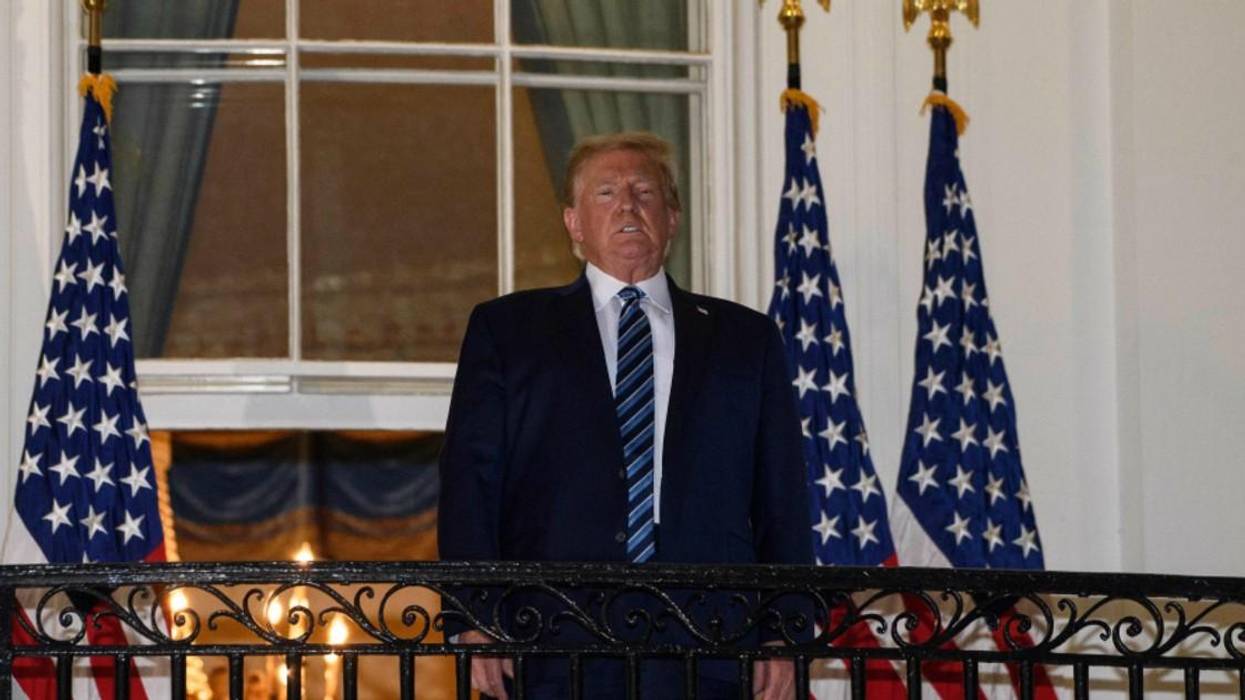
Donald Trump will go down in history as the president responsible for the death of hundreds of thousands of Americans due to the criminal negligence in his handling of the Covid-19 pandemic and for pushing the world closer to a precipice with his denialism of our climate crisis; yet, he may ultimately be best remembered for having decidedly transform American political culture with the theatricality of his proto-fascist politics.
Trump emerged on the political scene at a time of increasing contradictions in the American system of economic organization and distribution, with the rich getting richer and the poor poorer, and growing divisions within society at large over race, ethnicity, and culture. While he had no previous political experience, his instincts told him that the route to power in a highly divided society was to double down on those divisions--a tactic that had been employed quite successfully in the past by various extreme political figures all over the world, including the likes of Benito Mussolini in Italy and Adolph Hitler in Germany, respectively.
Indeed, Trump's stratagem of tapping into a huge reservoir of racism and nativism through the use of white identity politics and exploiting public discontent associated with America's economic decline through a standard repertoire of ultranationalist rants and transparent scapegoatism was key to his rise in power. Moreover, rather than aiming to unify a divided country while holding the nation's highest office, he continued to act more like the leader of a political party bent on cementing the ideological and cultural divisions in American society, all while implementing economic policies that would lead to further inequality and the expansion of the power of the plutocracy.
Trump's transformation of American political culture consisted in the unleashing of dangerous forces--arch-enemies of the open and diverse society--that posed an internal threat to liberal democracy. His refusal to accept the outcome of the 2020 election, and subsequent attempts by him and his allies to overturn the election, was indeed the culmination of four years of proto-fascist political rhetoric and authoritarian grandstanding.
Subsequently, Trump's politics has led many to conclude that the alleged billionaire entrepreneur is a fascist and that the United States was actually on the verge of becoming a fascist country during his four-year tenure in power. It is a belief that continues to hold sway over the minds of many progressives, especially since the GOP is officially now Trump's party and Republicans are fighting as dirty as they can to return to power, with or without Trump at the helm.
However, as I will argue below, and without any intention of downplaying the dangers that Trump and Trumpism represent for a dysfunctional democracy like the one that prevails in the United States, this is a belief based on a misunderstanding of fascism both as a movement and as a regime. Fascism has specific politico-economic properties, even though there are some subtle differences between Italian fascism, German Nazism, and Spanish Francoism, and is defined by a unique philosophical worldview regarding the relationship between state and individual. Fascism is an extreme right-wing authoritarian form of government, but not all authoritarian governments qualify as fascist, and the term in connection with Trump is quite misleading. In fact, hardly any expert on fascism thinks that what Trump practiced fits with the political ideology behind fascism.
Trump and the political movement he created share certain traits with fascism, such as reliance on hate, fear, and conspiracy theories.
The differences between fascism and Trump(ism) are quite striking. Trump and the political movement that he created do share certain traits with fascism, such as reliance on hate, fear, and conspiracy theories, along with the rejection of reason, to deepen social divisions and to create a sense of an imminent collapse as part of a strategy whose aim is to change the political environment by bringing about a change in the existing balance of social forces. But these are tactics that have been widely used by authoritarian leaders and extreme populist movements throughout the modern era of politics. Moreover, while the characterizations of Trump as an authoritarian figure with an utterly narcissistic personality or as a dangerous con artist who manipulates people to believe in lies and "alternative facts" are totally, unmistakably true, the orange maniac is not an ideologue by any stretch of the imagination; instead, he will gladly say whatever he feels is necessary to please his base.
What is fascism?
First, fascism represents one form of "exceptional capitalist state," as the Marxist political sociologist Nicos Poulantzas had argued, and reflects the breakdown of social order as a result of a severe capitalist crisis and the ensuing confrontation between different classes and ideological groups for political hegemony.
Fascism emerged in Europe during the interwar years (1919-1939) and was first established in Italy under Benito Mussolini (1922-1945) and then in Germany under Adolph Hitler (1933-1945). Italian fascism and German National Socialism represent "classical fascism" and rest on similar belief systems and regime properties, with one possible exception: the "biological" state did not figure as prominently in Italian fascism as it did under the Third Reich.
Fascism relies on paramilitary squads to spread terror and pursues relentless raids against socialists, communists, and other arch-enemies of fascism. This was typical of the role of Mussolini's paramilitary squads, known as the "blackshirts," whose activities covered all regions of the country, including the peninsula and the islands of Sardinia and Sicily, and constituted an integral component of the fascism's march to power and the establishment of a dictatorship.
The Nazi rise to power followed a similar path. In 1921, Hitler formed the paramilitary organization Sturm Abteilung (SA), more commonly known as the "brownshirts." The purpose of the "Sturm Unit" was none other than to intimidate political opponents. In 1925, Hitler established a sub-division of the SA, the Schutzstaffel (German for "Protective Echelon"), otherwise known as the SS, which served as Hitler's personal bodyguards. The SS, Hitler's "master race," would eventually see its role and size expanded dramatically after 1929 when Heinrich Himmler was put in charge. By the start of World War II, the SS consisted of more than 250,000 members that had a hand on virtually all major Nazi activities, including running concentration camps.
Unless I am mistaken, there were no signs of "blackshirts" or "brownshirts" engaging in thuggish vigilantism before Trump's rise to power.
Fascist political ideology is also unmistakably unique. Fascism strips away individual rights and glorifies the state. The organic state is typified by the fascist regime, which assigns the state complete control over every aspect of national life. For Giovanni Gentile, the philosopher and political theorist of Italian fascism, "state and individual are one," while "the authority of the state is not subject to negotiation, or compromise, or to divide its terrain with other moral or religious principles that might interfere in consciousness."
Fascism bans political opposition, ends constitutional rule, enforces censorship, and imprisons political opponents.
Indeed, as Benito Mussolini's own formulation of fascism has it, "Everything in the State, nothing outside the State, nothing against the State."
It is worth quoting at length the fascist conception of the state, as articulated once again by Mussolini himself:
Anti-individualistic, the Fascist conception of life stresses the importance of the State and accepts the individual only in so far as his interests coincide with those of the State, which stands for the conscience and the universal, will of man as a historic entity. It is opposed to classical liberalism which arose as a reaction to absolutism and exhausted its historical function when the State became the expression of the conscience and will of the people. Liberalism denied the State in the name of the individual; Fascism reasserts.
Totalitarianism and state terrorism are defining attributes of fascism. Trump's administration, horrific as it was, exhibited no such features.
Trump's economic policies were brutally neoliberal in origin and scope.
There are also striking differences between fascism and Trump(ism) when it comes to the economy.
Fascists do not oppose private property but believe in taming capitalism by forming a specific relationship between state and big business or monopoly capital, with the state having the upper hand. Mussolini identified the economics of fascism as "state capitalism." Fascism also intervenes in the overall workings of the economy through coordinated actions of some central planning board to attain a set of "fixed objectives," even if those actions tended at times to involve "dis-organic intervention," as Mussolini himself had once complained. Fascism also controls the monetary system, sets prices, and promotes large government projects and all sorts of public works as part of the pursuit of its alleged "full-employment" economy. Hitler's autobahn construction (though plans for the autobahn date to the 1920s and construction had actually begun before Hitler came to power) was undertaken under that pretext. Nonetheless, it was rearmament that helped the Nazis achieve economic recovery in the 1930s.
Trump's policies sought to enhance even further the power of the plutocracy in the United States.
Trump's economic policies, on the other hand, were brutally neoliberal in origin and scope. The war alone that his administration launched on regulations clearly testifies to Trump's commitment to free-market fundamentalism. As far as his opposition to "free trade" is concerned, it was initiated by his belief that other countries were bending the rules at the expense of the United States, not because he was in principle against the idea of "free trade."
Trump's policies sought to enhance even further the power of the plutocracy in the United States. And he accomplished this through the pursuit of extreme neoliberal policies, not through a corporatist model. On the other hand, to keep his fanatical base loyal, he employed a standard repertoire of proto-fascist rhetoric and challenged as far as he could the foundations of liberal democracy, which, according to his followers, had set rules that cater to the whims of the "detestable elite."
In this manner, Trump was not alone. Virtually all authoritarian political figures out there today (Orban in Hungary, Erdogan in Turkey, Bolsonaro in Brazil, to name just a few) use similar tactics, exploit the vulnerabilities in the political culture in which they operate and exhibit disdain for the rule of law. Do they all, with Trump together, belong to the fascist camp? Not unless the aim is to reduce fascism to a meaningless political ideology and forget the sickening atrocities committed by fascist regimes in the most murderous century in recorded history.
The Spaniards went back to the ballot boxes today, six months after their December 20 general elections concluded without a majority winner.
In December, the conservative Partido Popular (Popular Party, PP) and the socialist party (Partido Socialista Obrero Espanol, PSOE) were uprooted from their nearly 40-year hegemony by new parties on the left (Podemos, We Can) and right (Ciudadanos, Citizens) (see Common Dreams, December 21, 2015). They came in first, second, third, and forth, respectively, with the sitting PP government left in charge until either a majority parliamentary coalition could be formed or new elections were held.
Mud and slogan slinging ensued. Multiple rounds of negotiations among the leading parties to form a coalition were held. Meanwhile, a dysfunctional parliament served as a stage for hurling recriminations at each other for the failures of those talks. Rancorous televised debates only exacerbated the polarization, leaving a large portion of the electorate increasingly disenchanted. Finally, King Felipe the Sixth, the arbiter in this constitutional monarchy, threw in the towel and called for new elections.
With 99% of today's (June 26) vote counted, the major difference in the outcome was a gain in overall conservative votes, with a shift of votes from neoliberal newcomer Ciudadanos back to the PP, while, on the left, PSOE lost votes and an leftist alliance lead by Podemos, obtained results similar to their December outcomes.
The PP, which ruled with an absolute majority since deposing the PSOE in 2011, still comes out on top, with 33% of the vote and 137 out of 350 possible seats in the president-determining Congress of Deputies, an improvement of 14 seats since December. Ciudadanos, campaigning as fervently against PP corruption as against Podemos ideology, fell to 32 seats, losing 8, by pulling in just 13% of the vote.
Pre-election polls just a week ago predicted that an alliance of Podemos and its affiliated regional parties with the United Left (Izquierda Unida, IU) and Equo, a reformulated party of Greens, would comfortably supplanted the PSOE at second place and pave the way for leftist coalition at the head of government. But this prediction turned out to be strikingly inaccurate.
The PSOE, in charge when the global crisis pricked the Spanish credit and real estate bubble in 2008, held on to 85 seats with 23% of the vote, 5 seats less than its December result. The Podemos-led alliance, Unidos Podemos (United We Can), took 21% of the vote and 71 seats, essentially equaling the added results of Podemos and the IU when the parties ran separately in December.
Most of the balance of seats were won by either leftist (9 seats) or conservative (8 seats) pro-independence Catalonian parties.
Now the negotiations for a coalition government begin anew, but with the math no less complicated.
Before the elections, the four leading parties pledged to a weary electorate that a third round of elections would not be necessary - that a coalition, however grudgingly, would be formed. But as the leaders of Unidos Podemos and the PSOE appeared before the public this evening to concede their disappointment, there was a palpable pessimism that a progressive coalition government could be an outcome.
Indeed, if the leaders of the top parties honor their pledges not to repeat elections, only a PP-PSOE or a PSOE-Unidos Podemos-Ciudadanos coalition would have sufficient seats for an absolute majority.
After the December vote, a grand coalition of all the leftist parties would have included pro-separatist Catalonian ones, unacceptable to the PSOE. Although those parties could have been left out of the coalition and might have abstained from a parliamentary vote on the presidency, enabling a PSOE-Podemos simple majority, the PSOE opted to reach across ideological lines to conservative newcomer Ciudadanos, with the vain hope that Podemos would join them.
But this was a non-starter for the Podemos leadership, who were unwilling to collaborate with any form of the right, at least not without stronger incentives in terms of top government posts. It was clear they preferred their chances in new elections, with the renewed goal of outflanking the PSOE to become the left's standard bearer.
During the election interlude, new corruption cases surfaced at their usual weekly-or-so pace, old ones took new twists, and the Catalonian independence movement, with a separatist regional government now in power, moved, if only shakily, forward.
Among the scandals, a minister of the PP government was forced to resign due to revelations from the Panama Papers, another PP minister was taped colluding with the Catalonian anti-corruption office to dig up dirt specifically on separatist leaders, and two former PSOE presidents of the autonomous community (like a state in the US) of Andalucia sunk deeper into an ongoing embezzlement case. In another judiciary investigation, the PP was forced to pay a deposit of 1.24 million EUR before further testimony in a case involving undeclared PP finances, with its former party treasurer already in jail.
For all of that, and a joblessness rate second only to EU whipping boy Greece, the economy continued to inch forward in terms of gross domestic product (GDP) and new jobs, bolstering the PP's claim that they were on the right path. However, a leaked letter from sitting President Mariano Rajoy to European Union (EU) Commission head Jean-Claude Juncker gave the lie to their campaign pledge of no further budget cuts. It clearly suggested that more austerity measures would follow a PP win in June, ostensibly to avoid a hefty fine for exceeding the EU-imposed deficit ceiling of 3% of its GDP.
But, for all uproar outside the party, the expose fell on deaf ears within the party's base and Rajoy's poll numbers didn't budge. After all, they may have concluded, what's better than a good, comforting lie? Or, as one PP voter here in the northern autonomous community of Asturias told me, with a dismissive wave of his hand, "Who cares? They all do it!"
And, indeed, the other party leaders did little to polish their public images during the election interlude. Between the acrimonious TV debates and those in the parliament, the polls reflected that a substantial portion of the electorate found most of them disingenuous and uncompromising.
Given the PP's impervious base, it was perhaps the PSOE's Pedro Sanchez and Podemos's Pablo Iglesias who were more tarnished by the frays. Sanchez's initial charm as a new face in the PSOE simply wore thin, as did his party's hardly credible mantra of "vote for change."
Though not as discredited as the French socialists, whose labor reforms have ignited massive strikes and protests across France in recent weeks, many who have fled the PSOE no doubt recall that it was the PSOE that began budget cuts after 2008, at the bidding of the EU, before handing the reins to the PP in 2011.
But it was Iglesias who really had to roll with punches, which came at him from both the left and the right. After railing against the old "caste" systems of the PP and PSOE since the inception of Podemos in 2014, he has been accused by some on the left as being the leader of a "new caste" system, due to his strong-arm handling of the party direction at times. More theatrically, Podemos has been branded a party of Bolivarian revolutionists by both the socialists and the right, based on consulting contracts its founders had with the Chavez Venezuelan government years before the party was formed. The red-baiting surged again after their alliance with the IU, with its origins in the dissolved Communist Party of Spain.
But as local IU secretary Manolo Villar told me at a Unidos Podemos rally here in the industrial port town of Gijon this week, "We are not calling for an anti-capitalist revolution."
And, in fact, it was Obama, not Marx, who was invoked repeatedly by Unidos Podemos to explain a key concept in their economic plan: stimulus spending. But as a Eurozone country, they can't simply print money and sell bonds, as did the US. So where would the money come from?
Unlike any of their rivals - and notoriously the PP - they were very specific and honest about where: increased taxes. They proposed a higher tax rate on the top wage and investment income brackets and fewer tax breaks. A restructuring of the public debt would provide an additional source of funds. Among other projects, the revenue would be invested in public infrastructure, small and large business start-ups, science and technology research, and renewable energy development. It would also be used to provide a suite of economic aide measures for the long-term jobless and very poor, the spending of which would funnel the money back into local economies.
"Change will be slow," Villar told me. "We need to work within the existing institutions. What the United Left has fought for in the past and what we are fighting for now with Podemos is an economy with more justice and dignity for its workers. One could be pessimistic about our chances, but why not be optimistic? As the writer Coelho said, the optimist and the pessimist both die in the end!"
Looking over the wobbly sociopolitical state of the European Union these days - from a faltering Greece to an exiting UK, with a million refugees in between and nationalist fervor on the rise - it certainly looks like its cemeteries will not be short of former pessimists for the foreseeable future.
More than optimism, Podemos's Pablo Iglesias expressed pragmatism in his post-election speech, a need to look critically at the results of their campaign, and to communicate their message better.
That won't be easy.
They must convince a cynical public that - in spite of the dictums of the EU or Standard & Poor - the way forward toward a truly sustainable economy is to roll back the labor and social "reform" laws of the last five years, laws that left workers more vulnerable than ever to the vicissitudes of global financial markets.
They must convince not just their rank-and-file but a majority of Spaniards that investment in renewable energy, research, and education creates jobs, jobs in which workers are not viewed simply as disposable commodities useful for lowering interest rates and maximizing profits, but as participants in a healthy, transparent democracy.
After the Unidos Podemos rally earlier this week, Villar left me with another quote, one from Portuguese Nobel Laureate Jose Saramago, which he said captured the win-or-lose sentiment of progressive struggles:
"Defeat has something positive: it is never final; however, victory has something negative: it is never final."