
SUBSCRIBE TO OUR FREE NEWSLETTER
Daily news & progressive opinion—funded by the people, not the corporations—delivered straight to your inbox.
5
#000000
#FFFFFF
To donate by check, phone, or other method, see our More Ways to Give page.


Daily news & progressive opinion—funded by the people, not the corporations—delivered straight to your inbox.
What has shaped how most Americans see guns is less the gun lobby’s money than the ideology that it’s been spreading for years.
“Not again,” countless Americans have said for decades after another mass shooting like the one on Wednesday, August 27 at a mass in church at a Catholic school in Minneapolis. Some experts say we should focus more on the “red flags” that potential shooters may give off so authorities could have a better chance of stopping them. Others say we need to fortify schools and deploy more armed guards to deter them.
Hardly anyone has said, however, what would work, and has been proven to reduce gun violence in every other advanced nation. To license new gun buyers and require both criminal and mental health background checks, and a permit each time they want to purchase either a semiautomatic weapon or handgun. A handful of states like New Jersey have required all these measures for decades every time to buy a handgun, and no court has ruled these regulations violate the Second Amendment.
Back in 1959, the organization that became Gallup reported 75% of Americans would not oppose requiring a permit to buy a gun. Today, however, few Americans including even gun reform advocates talk about gun permits. The reason is that Americans on both sides of our ongoing debate over guns have been gaslit and don’t know it.
There are few more powerful emotions to move groups of people at once like fear. This is where the movement for gun rights and the movement “to make America great again” meet.
The National Rifle Association (NRA), whose leadership has since been ousted over their embezzlements, and the gun industry, represented by the National Shooting Sports Foundation, have both wielded tens of millions of dollars in election campaigns. But their donations explain only part of their influence. What has shaped how most Americans see guns is less their money than the ideology that they’ve been spreading for years.
“They call it the slippery slope, and all of a sudden everything gets taken away,” US President Donald Trump told reporters during his first term after a weekend of deadly shootings in a Walmart parking lot in El Paso and on a bar-lined street in Dayton. He said it after a phone conversation with the NRA’s now-disgraced leader Wayne LaPierre. The phrase is based on the idea that gun control is just a step or two away from gun confiscation and then tyranny.
This view is taken like gospel truth among the ranks and leadership of today’s Republican Party, even though it’s a myth. Gun control has never led to gun confiscation. Communist nations like the Soviet Union and Cuba declared firearms illegal under the threat of imprisonment to compel people to turn them in. Nazi Germany seized few usable firearms from Jews, as one NRA-funded author, Stephen P. Halbrook, admitted, but only in the back pages of his book, Gun Control in the Third Reich, published by a small California think tank. Democratic countries like the United Kingdom, Australia, and New Zealand have used buyback campaigns to voluntarily compel people to turn in semiautomatic weapons.
Democratic Party leaders and gun reform advocates are partly to blame. Despite their good intentions, they both chose to play it safe, while sidestepping the disinformation long peddled by the gun lobby. Reformers built the strongest movement for “gun sense” that this nation had ever seen after the Parkland high school shooting, which incorporated surviving students and parents from prior school shootings in Newtown and Columbine. But what its advocates failed to realize is that the movement for gun rights was even stronger.
Money on its own rarely moves people for very long. But what people may believe tends to resonate more, whether even one word of it is true. There are few more powerful emotions to move groups of people at once like fear. This is where the movement for gun rights and the movement “to make America great again” meet.
Donald Trump has flip-flopped over guns throughout his life, the last time in 2019 over better background checks after the El Paso and Dayton shootings. One doesn’t have to look back very far to find posters in online gun forums doubting his loyalty. But he seems to have proven himself to most pro-gun people today.
President Trump along with allies and followers continue to claim that he is the only one keeping tyranny in America at bay. Even as his followers, including paramilitaries like the Proud Boys and the National Front and the expanding ranks of federal immigration enforcement agents, gradually impose an armed presence loyal to the president across the land.
This is the kind of outcome that many gun rights activists have long said they feared. Considering how their alleged evidence has always been nothing more than a fairy tale may help explain why President Trump and his armed allies and troops are the ones imposing what looks like an emerging tyranny today, while our daily violence from guns goes on.
"Trump will send the military into DC to pick up litter and arrest homeless people, but won't do a damn thing to end the gun violence epidemic killing our kids," said one healthcare advocate.
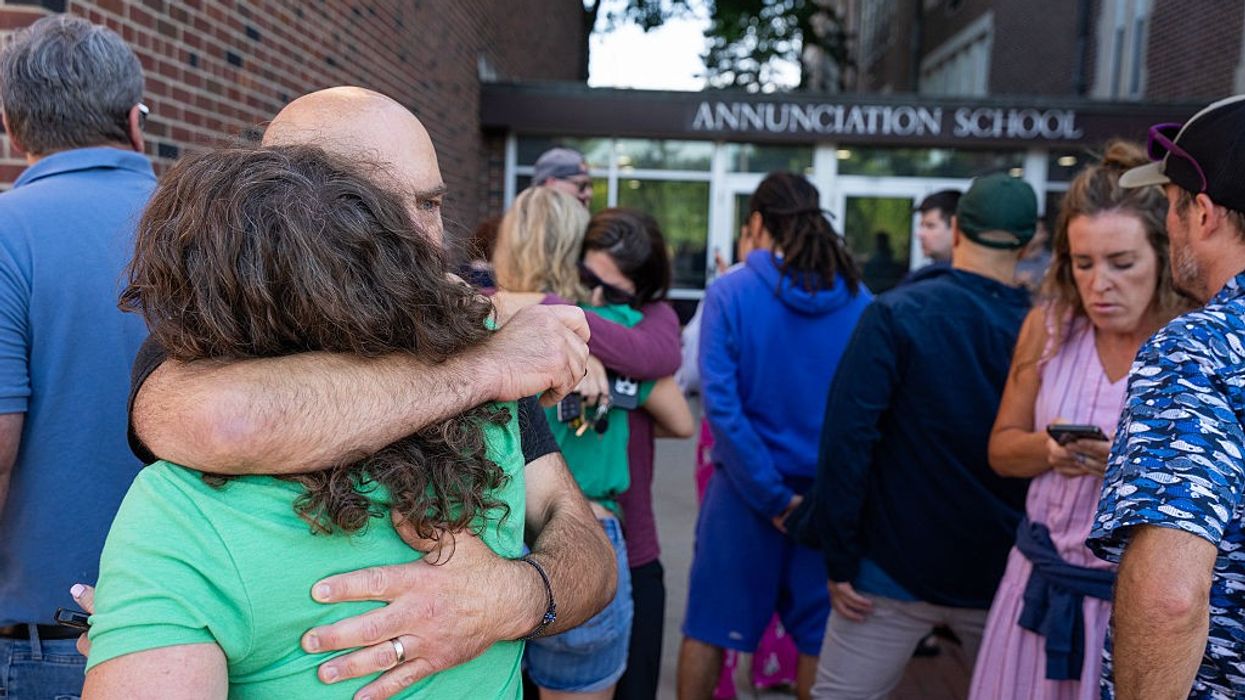
Another horrific mass shooting that left multiple children dead and injured has once again ignited a wave of fury at Republican lawmakers who refuse to take action to stop gun violence.
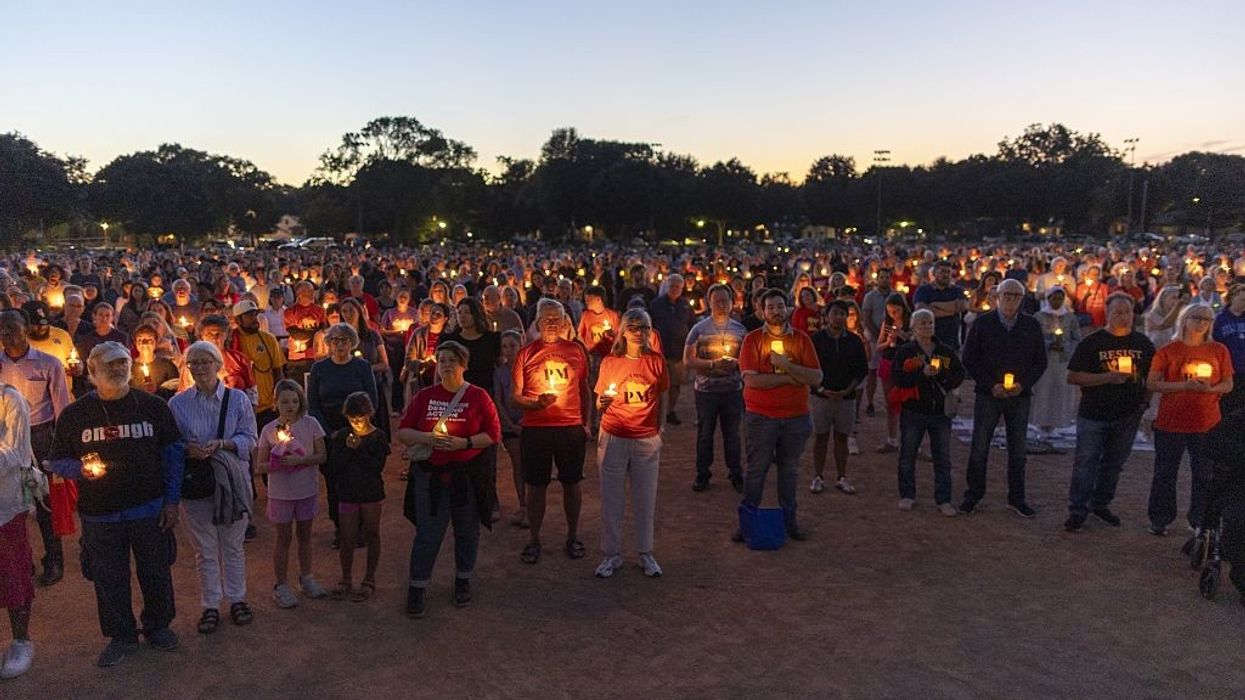
Two children—ages 8 and 10—were killed when a shooter fired through the windows of a church at the Annunciation Catholic School in Minneapolis on Wednesday morning. Another 17 people, including 14 more children, were also injured in the attack before the shooter died of a self-inflicted gunshot wound.
Minneapolis police say the shooter carried out the attack, which is now being investigated as an act of domestic terrorism, using three weapons: a rifle, a shotgun, and a pistol.
According to the Gun Violence Archive, not even eight months into 2025, there have already been 286 mass shootings—defined as cases in which four or more people are shot or killed—in the United States just this year, averaging more than one per day.
Gun violence is the number-one killer of children in the US, causing more deaths each year than car accidents, poisonings, and cancer. The victims of the shooting in Minneapolis join the more than 800 children killed and more than 2,200 injured by firearms this year.
Like dozens of mass shootings before it, Wednesday's deadly attack has stoked calls in Minnesota and around the country from Democratic lawmakers and gun control advocates for stricter gun laws, which have been repeatedly shot down by Republicans in Congress.
"We need better laws on the books nationally," said Minnesota's Democratic senator, Amy Klobuchar. "When you have so much access to guns right now and so many guns out there on the streets, you're going to continue to see these kinds of mass shootings."
"Don't just say this is about thoughts and prayers right now," said Minneapolis Mayor Jacob Frey. "These kids were literally praying. It was the first week of school. They were in a church."
"They should be able to go to school or church in peace without the fear or risk of violence, and their parents should have the same kind of assurance," Frey said. "These are the sort of basic assurances that every family should have every step of the day, regardless of where they are in our country."
Congress has not passed a significant piece of gun legislation since 2022, when it passed the Bipartisan Safer Communities Act in the wake of the horrific school shooting in Uvalde, Texas.
That law, which was supported by just 15 Republicans, introduced some modest reforms—including extended background checks for firearm purchasers under 21, funding for state red flag laws, and the closure of gun purchasing loopholes.
However, then-Senate Majority Leader Mitch McConnell (R-Ky.) only agreed to negotiate the bill if Democrats abandoned more ambitious reforms, such as bans on high-capacity magazines and universal background checks.
Since its passage, even this watered-down piece of legislation has been fought aggressively by Republican lawmakers backed by the gun industry's lobbying arm, the National Rifle Association, who have attempted to have it repealed.
Earlier this year, President Donald Trump ordered Attorney General Pam Bondi to present an action plan to reverse any law that the Department of Justice determines has "impinged on the Second Amendment rights of our citizens."
Through executive orders, Trump has rolled back efforts under the Biden administration to regulate ghost guns and enhance background checks.
The administration has also choked off more than $800 million in grants to local gun violence prevention groups and pushed for "concealed carry reciprocity" legislation, which would require all states to honor concealed carry permits issued by other states.
Instead of stricter gun control measures, Trump has personally advocated for schools to arm teachers and focus on improving mental healthcare—even as he's rolled back rules ensuring Americans have access to that care.
"Until we have more elected officials willing to place gun safety over allegiance to the gun lobby, more and more families will face unbearable suffering from random acts of violence," said Rep. Lloyd Doggett (D-Texas) on Wednesday. "Congress could—and should—pass stricter gun safety laws, but continues to cave to the gun lobby."
Rep. Pramila Jayapal (D-Wash.) added: "The United States continues to be the only country where school shootings are a regular occurrence. We must stop this epidemic of gun violence and finally put the lives of our kids first."
Other advocates noted the contrast between Trump's response to the imaginary "crime wave" in Washington, DC, where he has initiated a militarized takeover, and his lack of interest in fighting America's endless wave of gun violence.
"Guns are the leading cause of death for kids in the US," said Melanie D'Arrigo, the executive director of the Campaign for New York Health. "Trump will send the military into DC to pick up litter and arrest homeless people, but won't do a damn thing to end the gun violence epidemic killing our kids."
Charles Idelson, a former communications director for National Nurses United, said: "If Trump wants to pretend he is 'fighting crimes,' stop protecting the pro-gun violence cabal."
"Attorney General James took on Trump's fraud... and won," said New York City mayoral candidate Zohran Mamdani. "So it's little wonder that Trump's politicized DOJ is now coming after her."
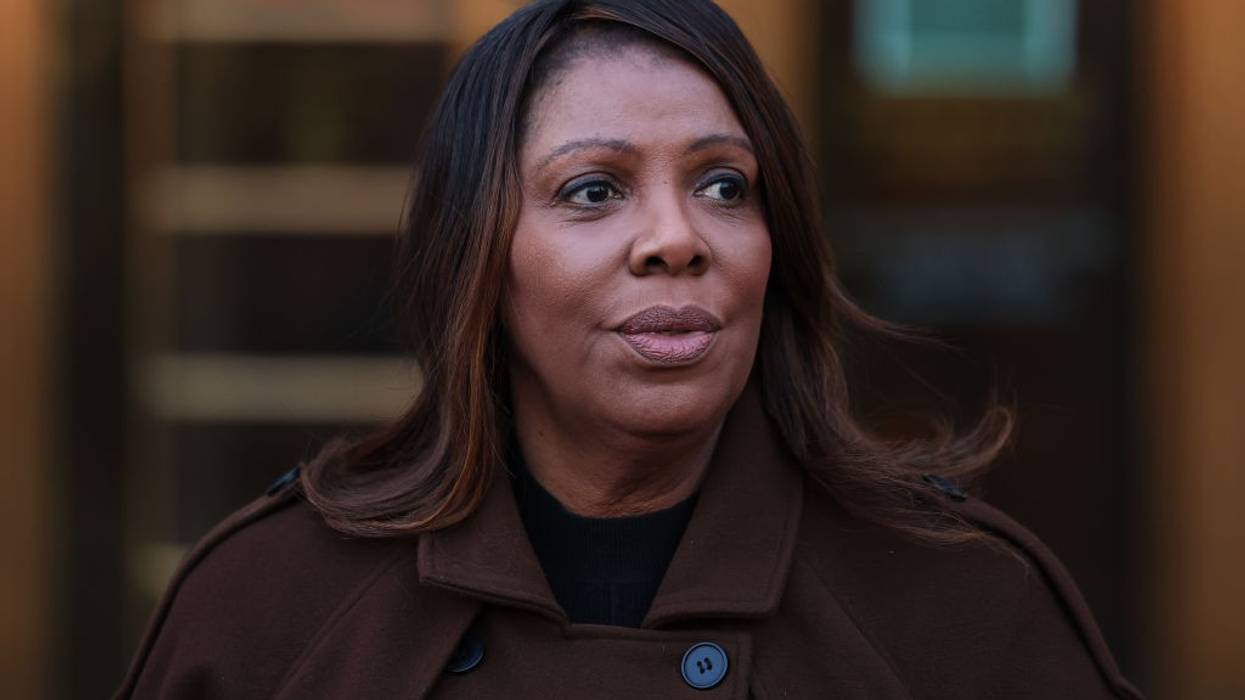
A lawyer representing New York's top law enforcement official, Attorney General Letitia James, said Friday that the news of the Trump administration's investigation into James and her successful legal cases against President Donald Trump amounted to "the most blatant and desperate example" of the president's "political retribution campaign."
In recent days, The Washington Post reported Friday, the U.S. Department of Justice (DOJ) issued a subpoena to James as part of an investigation into whether the attorney general, a longtime adversary of Trump, violated the president's civil rights when she successfully sued him and his real estate business for fraud.
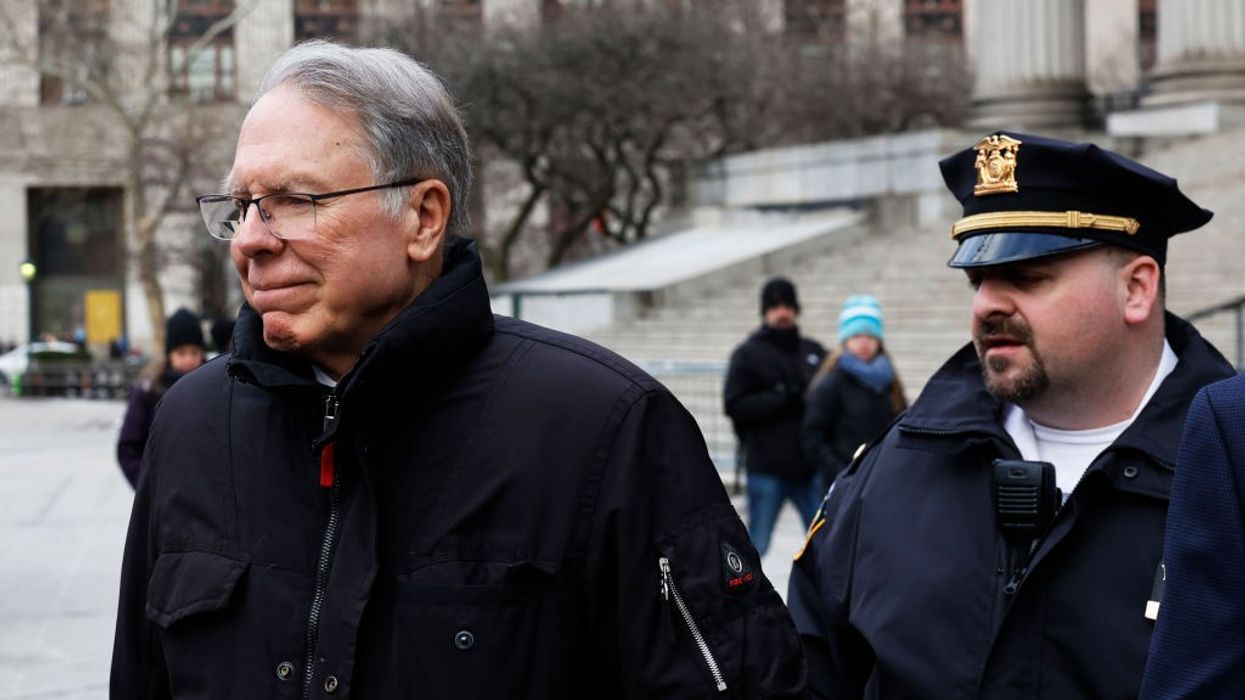
A second subpoena was related to James' litigation against the National Rifle Association, in which a New York jury found last year that former NRA CEO Wayne LaPierre and other executives had engaged in rampant corruption.
The civil rights statute that the Trump administration is reportedly using to investigate James' case against the president is typically used in cases related to law enforcement officers discriminating against or mistreating people based on race, religion, sex, or ethnicity. According to The New York Times, the DOJ is arguing that James used her law enforcement authority to deprive Trump of his rights.
James filed a civil fraud case against Trump and the Trump Organization in 2022 and won a $450 million judgment against the president in penalties plus interest. The interest the president owes has grown to half a billion dollars as he has refused to pay and has appealed the ruling.
New York Supreme Court Justice Arthur Engeron said that Trump and his company's executives were "incapable of admitting the error of their ways" regarding the "blatantly false financial data" they used to misrepresent of the value of their properties, which allowed them to get better loan and insurance rates.
The Democratic candidate in the New York City mayoral race, state Rep. Zohran Mamdani (D-36), expressed little surprise that Trump was apparently retaliating against the attorney general who won against him in court.
"Attorney General James took on Trump's fraud and the NRA's rampant corruption—and won both cases," said Mamdani. "So it's little wonder that Trump's politicized DOJ is now coming after her. The people of New York stand with their lawyer and champion."
The subpoenas were issued months after the DOJ appeared to try another tactic to punish James when it opened a criminal investigation into alleged mortgage fraud, accusing the attorney general of lying on loan documents for a home that she purchased in Virginia and saying the home would be her primary residence. James' attorneys have said the error was an honest mistake.
Dana Nessel, the Democratic attorney general of Michigan, came to James' defense on Friday and condemned "the depths to which Trump and his cronies will go to exact vengeance upon anyone who has dared to hold him accountable."
But the subpoenas, said Nessel, are not just a concern for James.
"Americans should know and understand how deeply compromised our federal law enforcement agencies are," she said. "If this can happen to AG James, it can happen to anyone."
Geoff Burgan, a spokesperson for James, agreed that "any weaponization of the justice system should disturb every American."
"We stand strongly behind our successful litigation against the Trump Organization and the National Rifle Association, and we will continue to stand up for New Yorkers' rights," said Burgan.
Abbe Lowell, the attorney general's lawyer, said that "weaponizing the Department of Justice to try to punish an elected official for doing her job is an attack on the rule of law and a dangerous escalation by this administration."
"If prosecutors carry out this improper tactic and are genuinely interested in the truth," said Lowell, "we are ready and waiting with facts and the law."
"These laws change the nature of self-defense, turning everyday disputes into deadly confrontations," the report, compiled by Everytown for Gun Safety, says.
A new report has found that "Stand Your Ground" laws have led to an increased rate of gun homicides in the United States.
These laws allow anyone who believes they are facing the threat of death or bodily harm to use deadly force without the requirement to first retreat to safety. But according to a report released Monday by the gun control advocacy group Everytown for Gun Safety, they have become a "license to kill."
Data compiled by the group shows that these laws have led to around 700 additional gun deaths each year, increasing the number of gun deaths nationally by 8% to 11%. That estimate came from a 2022 study published by the medical journal JAMA Network Open, which looked at data from 1999 to 2017.
Following aggressive lobbying by the National Rifle Association and the firearms industry, the first Stand Your Ground laws were introduced in Florida in 2005. Since then, 29 states have adopted them.
Over that time, those states have seen especially high increases in violence, with Alabama, Missouri, and Florida all having 30% or greater increases to their homicide rates.
Everytown's report details one particularly harrowing story from Florida in which Stand Your Ground laws contributed to the shooting of two children:
In October 2022, William Hale and Frank Allison drove alongside each other on US Highway 1 in Hialeah, Florida. A traffic dispute grew more dangerous as both men began driving erratically. When Hale threw a water bottle at the other car, Allison retaliated with a gun, firing a shot that hit Hale's 5-year-old daughter. In response, Hale fired all of the bullets in his handgun, striking Allison's 14-year-old daughter.
Though both men were initially charged with attempted murder, prosecutors dropped the charges against the man who fired first. Under Florida's so-called "Stand Your Ground" legal defense law, the thrown water bottle justified responding with deadly force, leading to a child being shot. In the end, with two girls wounded in a road rage tragedy, the man who started the shootout was protected by a distortion of self-defense that allows people to shoot first and ask questions later.
"These laws change the nature of self-defense, turning everyday disputes into deadly confrontations," the report says. "Far from empowering victims, Shoot First laws lower the threshold for justifiable homicide, encouraging the escalation of petty arguments and armed vigilantism."
These laws attracted national scrutiny in 2012 following the shooting of 17-year-old Trayvon Martin in Florida by a neighborhood watchman, George Zimmerman, who was acquitted under the state's Stand Your Ground law.
The 2020 shooting of another young Black man, Ahmaud Arbery, in Georgia, is likewise believed to have been exacerbated by Georgia's Stand Your Ground law, though the three men who killed him were ultimately found guilty.
Stand Your Ground laws also contribute to heightened racial disparities for shooting victims, according to FBI data from 2019-23.
Justifiable homicide rates increased by 55% in states with Stand Your Ground laws, the report found. In those same states, the shootings of Black victims by white shooters are four times as likely to be deemed justified than they would be if the roles were reversed, a higher rate than in states without these laws.
In some Stand Your Ground states like Michigan, Indiana, Louisiana, Pennsylvania, and Kansas, the disparity was more than seven times greater for Black victims than white ones.
And contrary to claims that loose gun restrictions protect women, the report found multiple studies concluding that domestic violence cases in which a woman claimed self-defense were less likely to be deemed justifiable, while women convicted were more likely to serve longer sentences.
"In addition to increased risk of victimization in Shoot First states, convictions are unfairly skewed against people of color and women," the report concludes. "In the decades since the first Shoot First law was enacted, no research shows that these laws lead to better outcomes for anyone. Shoot First was created to solve a problem that does not exist—and Americans are paying the price."
How the nation's highest court supercharged the nation’s gun violence epidemic.
If you’re looking for someone to blame for the gun violence that has left our schools, streets, and communities soaked in blood, don’t point just at the National Rifle Association and their lackeys in the Republican Party. Raise another finger, ideally your middle one, toward a Supreme Court that has enabled the unceasing rise of gun-related carnage in all its ever-more-obscene forms.
The key decision came in 2008, when a 5-4 majority led by the late Justice Antonin Scalia ruled in District of Columbia v. Heller that the Second Amendment protects an individual right to own firearms. Prior to Heller, the combined weight of academic scholarship and legal precedent had construed the Second Amendment as protecting civilian gun ownership only in connection with long-antiquated state militias. This view was long seen as reflecting the spirit of the actual debates held during the Constitutional Convention of 1787.
Scalia and the other members of the conservative Heller majority purported to base their radical reinterpretation of the Second Amendment on their “originalist” understanding of the Founding Fathers’ intentions. But their novel conclusion essentially ignored the first 13 words of the Second Amendment regarding the necessity of preserving the militias.
This amounted to a distortion of American history. State militias played a critical role in the American Revolution, and before that, in maintaining order in the 13 colonies. As the Second Amendment historian Noah Shusterman has written:
The men writing the Bill of Rights wanted every citizen to be in the militia, and they wanted everyone in the militia to be armed. If someone was prohibited from participating in the militia, the leaders of the founders’ generation would not have wanted them to have access to weapons… Read the debates about the Constitution and the Bill of Rights, and the militia’s importance leaps off the page. Alexander Hamilton, writing in the Federalist Papers, called a well-regulated militia “the most natural defense of a free country.” His anti-Federalist critics agreed with the need for a citizens’ militia, writing that “a well-regulated militia, composed of the Yeomanry of the country, have ever been considered as the bulwark of a free people.”
Few errors of constitutional interpretation have had such deadly real-world consequences as Heller. Justice John Paul Stevens, who authored the principal dissent in Heller, later condemned the ruling as “the worst self-inflicted wound in the court’s history.”
Since Heller, both guns and gun deaths have surged in tandem in what the American Enlightenment Project calls the “Heller Inflection.” In 2008, there were 305 million guns in circulation and 31,500 reported gun deaths; there are now 470 million guns in circulation and over 45,000 reported gun deaths per year. Mass shootings, defined as events involving four or more victims, have grown as well—from 272 in 2014 to 653 last year, according to the Gun Violence Archive.
But as bad as Heller was, it still recognized that certain gun control measures remained “presumptively lawful.” In the words of Scalia:
Nothing in our opinion should be taken to cast doubt on longstanding prohibitions on the possession of firearms by felons and the mentally ill, or laws forbidding the carrying of firearms in sensitive places such as schools and government buildings, or laws imposing conditions and qualifications on the commercial sale of arms.
In 2010, in McDonald v. Chicago, the court extended Heller’s Second Amendment analysis to cover state and local governments in addition to federal enclaves. But in 2022, with Clarence Thomas’ 6-3 majority opinion in New York Rifle & Pistol Association v. Bruen, the court cast aside the limiting language of Heller about presumptively lawful gun-control restrictions.
Bruen struck down New York’s firearm permit system that had been on the books since 1909. To reach that result, the court rejected the traditional methods of judicial scrutiny used to determine the constitutionality of state and federal statutes that required judges to balance the governmental interests advanced by legislation against the competing rights of individuals. In place of interest balancing, Thomas and his cohorts substituted a specious “history and tradition” test based on the justices’ highly selective and subjective reading of history and their sense of tradition.
In fact, gun-control regulations like the New York permit system have been commonplace in the United States from colonial times to the present. The founders supported a variety of strict measures, including the registration of guns issued to militia members and prohibitions against carrying firearms in public. By the early 1900s, nearly every state had enacted laws requiring firearm licenses and banning concealed carry.
As a result of Bruen, however, that history has effectively been neutered. Judges now must regard gun-control measures as presumptively invalid. To overcome the presumption, the government must prove that even the most commonsense laws are firmly rooted, either explicitly or by analogy, in the “nation’s historical tradition of firearm regulation.”
Together with Heller and McDonald, Bruen has led to a surge in Second Amendment challenges to gun laws since 2008. Pre-Heller, the lower federal courts decided an average of 26 gun cases per year; they now hear nearly 700 per year. The challengers are also winning a higher percentage of cases compared to the pre-Heller era, especially in cases decided by Donald Trump-appointed judges appointed. “Trump judges are close to casting 50% of their votes in favor of gun rights, when the average for other Republicans is 28%,” one study has found.
Last term, the Supreme Court surprised many by upholding a federal law that bars anyone subject to a domestic-violence restraining order from possessing a gun. However, it did so without signaling that it is prepared to modify the hard Second Amendment lines drawn in Heller and Bruen. As long as the court is controlled by right-wing activists beholden to the gun lobby and the Republican Party, those lines and their horrendous consequences are here to stay.
Until we’re willing to say, men’s gun violence, we’ll continue to miss the mark, falling short of any campaign to prevent these massacres.
Maybe there won’t be a copycat mass shooting to grotesquely mark the 25th anniversary of the Columbine massacre on April 20, 1999. But just as we can be certain there will be another solar eclipse, it’s only a matter of time before a hail of bullets will block out the sun for another community somewhere in America. What’s also true? Expect the shooter to be male, probably white.
In an effort to prevent mass shooters from attaining posthumous fame, today the media rarely reveals their names. Back in 1999, after high school seniors Dylan Klebold and Eric Harris murdered 12 classmates and a teacher in Littleton, Colorado, their names were widely broadcast and published.
A quarter century later, despite substantive actions to prevent mass shootings by a number of states—and, with vice president Kamala Harris now overseeing the first-ever White House Office of Gun Violence Prevention—we still lead the world in this particular brand of murder. USA! USA! USA! (As horrific as the April 13 murder of six by an Australian man at a mall outside of Sydney was, he was only wielding a knife. I shudder to think of the level of carnage if he had been brandishing an AR-15, the weapon of choice in most mass shootings.)
Sure, there are rare occasions when women pull the trigger, but as certain as I am that we’ll never hear a news report begin with the words, “A gunwoman opened fire today…,” I believe that to minimize mass shootings, we must move the question of the gender of the shooter from the periphery to the center of a long overdue national conversation.
Australia, you might recall, banned automatic and semi-automatic weapons after a mass shooting in Port Arthur, Tasmania, on April 28, 1996. There a gunman opened fire in a cafe, slaughtering 35 and wounding 23. Then-prime minister John Howard, a conservative politician in office for just six weeks, was able to push through sweeping gun control legislation 12 days after the shooting.
The legislative package he shepherded through banned selling and importing semi-automatic and automatic rifles, and shotguns, and required gun purchasers to explain the reason—and wait 28 days—before buying a firearm. Most significantly, the Australian law required a mandatory gun buyback. The government confiscated and destroyed nearly 700,000 firearms, cutting in half the number of households that possessed guns.
Prime Minister Howard said at the time, “People used to say to me, ‘You violated my human rights by taking away my gun.’ I’d tell them, ‘I understand that. Will you please understand the argument [that] the greatest human right of all is to live a safe life without fear of random murder?’”
Why, in 2024—a quarter century after Columbine, 12 years after Sandy Hook, eight years after Orlando, six years after Las Vegas, two years after Uvalde, and six months after Lewiston—is it so hard for U.S. legislators and gun owners to understand that?
In a world where leaders of all stripes use the term “a just war” with a straight face, working to prevent mass shootings feels more within our grasp then say, ending the war in Gaza. What to do first? Change how we talk about the issue. That means refusing to speak out against generic “gun violence.” Until we’re willing to say, men’s gun violence, we’ll continue to miss the mark, falling short of any campaign to prevent mass shootings.
This is not a condemnation of men. The vast majority of men are not mass shooters. For decades, I worked at a men’s center, published a magazine promoting a new definition of manhood, and championed revisiting how we socialize boys, as early as preschool. More and more men are rejecting conventional masculinity.
The weakened, shell-of-itself National Rifle Association coined the oft cited cliché, “Guns don’t kill people. People do” more than a century ago. Variations have long been used to thwart gun control legislation. It’s astonishing how little pushback there’s been.
“People kill people?” Really? Sure, there are rare occasions when women pull the trigger, but as certain as I am that we’ll never hear a news report begin with the words, “A gunwoman opened fire today…,” I believe that to minimize mass shootings, we must move the question of the gender of the shooter from the periphery to the center of a long overdue national conversation.
Now is a good time to listen again to entertainers Martin Mull and Steve Martin. They had it right when they penned the satirical sea shanty, “Men” with its one word chorus: Men, men, men, men.
"The NRA has lost its leader, its power, and its wealth," said one campaigner. "Today's trial verdict is one more nail in the NRA's political coffin."
Democratic New York Attorney General Letitia James and gun control advocates nationwide celebrated on Friday after a Manhattan jury found the National Rifle Association and the NRA's longtime former leader liable in a civil corruption case.
James, who launched the case in 2020, said on social media that "in a major victory, my office won our case against the NRA and its senior leadership for years of corruption and greed. Wayne LaPierre and a senior executive at the NRA must pay $6.35 million for abusing the system and breaking our laws."
After over three decades as the NRA's CEO, LaPierre stepped down in January. The 74-year-old cited health reasons but his resignation from the powerful gun lobbying group came just before the trial began, sparking speculation that he was trying to dodge accountability.
"For years, Wayne LaPierre used charitable dollars to fund his lavish lifestyle. LaPierre spent millions on luxury travel, private planes, expensive clothes, insider contracts, and other perks for himself and his family," James said Friday. "Wayne LaPierre blatantly abused his position and broke the law. But today, LaPierre and the NRA are finally being held accountable for this rampant corruption and self-dealing."
"In New York, you cannot get away with corruption and greed, no matter how powerful or influential you think you may be," she added. "Everyone, even the NRA and Wayne LaPierre, must play by the same rules."
The jury found LaPierre liable for $5.4 million but, because he already repaid some of it, he has to give the group $4.35 million. However, he's not the only executive involved in the case. Jurors also found that NRA general counsel John Frazer must pay $2 million, and former treasurer Wilson "Woody" Phillips violated his official duties. James wants the trio banned from serving in any leadership roles for charities that do business in the state—which will be decided by a judge.
"Jurors also found that the NRA omitted or misrepresented information in its tax filings and violated New York law by failing to adopt a whistleblower policy," according to The Associated Press. The AP noted that "another former NRA executive turned whistleblower, Joshua Powell, settled with the state last month, agreeing to testify at the trial, pay the NRA $100,000, and forgo further involvement with nonprofits."
Welcoming the jury's decisions, Nick Suplina, senior vice president of law and policy at Everytown for Gun Safety, said in a statement that "we're two months into 2024 and the NRA has already managed to lose this trial, their longtime leader, and whatever political relevance it had left."
"This verdict," he added, "confirms what we've seen in recent elections, in state legislatures, and in the halls of Congress: The gun lobby has never been weaker and the gun safety movement has never been stronger."
The New York Democrat was among lawmakers and others calling out the pro-Israel lobby group as it advocated against a cease-fire in the Gaza Strip.
As the American Israel Public Affairs Committee took aim at Congresswoman Alexandria Ocasio-Cortez and other progressive lawmakers critical of U.S. support for Israel's war on the Gaza Strip, the New York Democrat compared the lobby group to the National Rifle Association.
After a CNN journalist noted on social media that an Israeli group submitted to the International Court of Justice (ICJ) a report on sexual violence allegedly committed during the Hamas-led October 7 attack on Israel, AIPAC claimed that "a cease-fire now keeps these rapist monsters armed and in power in Gaza," and mentioned multiple members of Congress, including Ocasio-Cortez.
The New York Democrat responded that "it is appalling that AIPAC is targeting women members of Congress who have survived sexual assault with this horrific rhetoric. Each and every day, their role in U.S. politics becomes a greater scandal. They are the NRA of foreign policy. Of course they don't want a cease-fire."
The other lawmakers targeted by AIPAC were Democratic Reps. Jamaal Bowman (N.Y.), Cori Bush (Mo.), Pramila Jayapal (Wash.), Summer Lee (D-Pa.), Ilhan Omar (Minn.), Mark Pocan (Wis.), Ayanna Pressley (Mass.), and Rashida Tlaib (Mich.), the only Palestinian American in Congress.
"I'm starting to think that AIPAC isn't just a puppet of [Israeli Prime Minister Benjamin] Netanyahu, but a partner," said Pocan. "They cover for his murdering of innocents in the course of supposedly going after Hamas and those actions aren't getting hostages released. They seem fine with that and don't mind the killing of kids."
In less than five months, Israel's blockade and bombardment of Gaza have killed at least 29,313 Palestinians and devastated civilian infrastructure, displacing the vast majority of the Hamas-governed enclave's 2.3 million residents.
Before October 7, the United States already gave Israel nearly $4 billion in annual military aid. The Biden administration has responded to the war by seeking a package worth over $14 billion, bypassing federal lawmakers to arm Israeli forces, and defending Israel's occupation of Palestinian territories at the ICJ on Wednesday.
AIPAC, meanwhile, has worked to oust progressive members of Congress in the November election. The group is also fighting growing global allegations that Israel is committing genocide in Gaza and demands for a cease-fire deal that would free hostages taken on October 7 as well as Palestinians imprisoned in Israel.
"A cease-fire means Palestinians will not be slaughtered by Israel every day. A cease-fire means medicine and food. A cease-fire means hostages come home," Jewish Voice for Peace political director Beth Miller said of the group's social media post. "AIPAC wants a total genocide of Palestinians, with full funding from the U.S. AIPAC wants death and destruction. That's it."
Organizer Melissa Byrne accused AIPAC of "exploiting sexual violence to keep a war going," adding that the group "prefers war to freeing the hostages and security for Israel and Palestine."
"Missouri has some of the weakest gun laws in the country," said the St. Louis Democrat. "So to the Missouri Republicans who are pointing their finger at the people of Kansas City... this blood is on your hands."
A day after a deadly shooting at the Kansas City Chiefs' Super Bowl victory parade, Democratic Missouri Congresswoman Cori Bush on Thursday took aim at Republicans from her state who "continue to eviscerate and obstruct gun safety laws."
"St. Louis and I rise to send our love and condolences to Kansas City, Missouri in the wake of yesterday's mass shooting," Bush said on the floor of the U.S. House of Representatives. "This preventable and despicable epidemic of gun violence, it affects us all. It impacts my district in St. Louis; it impacts your districts; it impacts our entire country. And it does not need to be this way."
"Missouri has some of the weakest gun laws in the country," she noted. "So to the Missouri Republicans who are pointing their finger at the people of Kansas City, Missouri and calling them 'thugs'... this blood is on your hands. You don't get to scapegoat the victims of this shooting when you are actively blocking gun violence prevention legislation."
Republicans lawmakers' allegiance to the National Rifle Association (NRA), a powerful gun lobby group, over the needs of the people is "absolutely shameful," the "Squad" member declared. "Missouri needs you to act. Join us in passing meaningful commonsense gun safety legislation, so that we can put an end to this crisis and save lives."
The Wednesday shooting left at least one person dead—Lisa Lopez-Galvan, a disc jockey and mother of two—and 22 others injured, according to The Kansas City Star. No charges have been filed but two unidentified teenage suspects are in police custody.
"In untangling the myth of defensive gun use, one thing is abundantly clear: If safety is the goal, guns are not the answer."
Fueled by right-wing politicians and the powerful gun lobby, nearly three-quarters of firearm owners in the United States believe the enduring myth that a gun at the ready will keep them safer—but a new analysis offers the latest hard evidence that guns simply make life more dangerous and deadly for everyone.
The Center for American Progress (CAP) joined gun violence research group GVPedia to release an issue brief debunking the falsehoods pushed by the National Rifle Association (NRA) and other pro-gun groups, which, looking to "counter the horrors of everyday gun violence in America... masterfully constructed a narrative based on the myth of a 'good guy with a gun' using their weapon defensively to stop an armed assailant before harm can be done."
Listening to former NRA CEO Wayne LaPierre and the right-wing lawmakers who count on the gun lobby's endorsements, one could hardly be blamed for conjuring an image of a "good guy with a gun" who frequently stops a violent attack from happening—but the analysis shows how faulty research in the 1990s underpinned such claims.
Surveys at the time, including a widely-cited study by Gary Kleck and Matt Gertz, estimated that between 760,000 and 2.5 million defensive gun uses (DGU) occurred annually.
But the Harvard Injury Control Research Center found two years later that fewer than 550,000 burglaries occurred in gun owners' homes annually, while Kleck and Gertz had estimated that "guns were used for self-defense during burglaries approximately 845,000 times."
"Burglary victims would have needed to use their gun defensively in more than 100% of cases, which is, of course, impossible," the issue brief reads.
Until the myth of the "good guy with the gun" is defeated, said Devin Hughes, founder and president of GVPedia, "Americans will continue buying firearms in the mistaken belief that those guns will make them safer, and gun violence will continue unabated."
"Accurate information is critically important in fighting America’s epidemic of gun violence. Just as important, however, is countering inaccurate information," Hughes added.
CAP also analyzed data on DGU from the National Crime Victimization Survey (NCVS), which estimated just 70,000 such instances per year.
The group found that nine times as many people report being victimized by a person with a gun than being protected by a firearm. Respondents to two Harvard surveys taken in 1996 and 1999 were three times as likely to report being threatened or victimized with a gun than having used one to protect themselves.
In addition to putting a household at higher risk of an accidental gun injury or death, gun ownership also is not "the safest means of self-protection," CAP found.
NCVS data from 2007-11 showed that of the 14,145 crime incidents in which a victim was present, less than 1% involved DGU.
Eleven percent of victims who did not use a gun defensively reported being injured during the altercation; almost the same amount, 10.9%, reported injuries in cases of the victim using a gun.
More than 38% of victims who used a gun defensively reported property loss, while less than 35% who defended themselves with a different weapon reported that property was stolen during the incident.
"The idea that one is not safe unless they are carrying a gun is perhaps the most personal and insidious myth constructed by the gun lobby," said CAP. "What does improve safety is stronger gun laws, improved clearance rates, and investments in community violence intervention programming."
The brief noted that people who intend to use their guns defensively are more likely to keep them "unlocked, readily accessible, and loaded, substantially increasing the risk of unauthorized access by a minor"—suggesting that a parent with a gun for self-protective purposes is unlikely to successfully use it for self-defense, and is actively endangering family members by having the gun.
"Similar to adult cohabitants, children living in a home with a firearm are at a greater risk for unintentional injury and death, homicide, and suicide," said CAP. "Moreover, their unauthorized access to household firearms can put those outside the home at risk, with more than 74% of firearms used in school shooting incidents obtained from the student's home or from the home of a relative or family friend."
Citing a number of examples of people in states with so-called "Stand Your Ground" laws, which say that gun owners have a right to use their firearms if they believe they are being threatened, CAP and GVPedia showed how, contrary to the narrative about the "good guy with a gun," most DGU cases "are harmful to society" and involve innocent people being killed due to the presence of a firearm.
"Emboldened by a 'shoot first, ask questions later' culture, too many armed individuals have used deadly force as a first response, rather than a last resort," said CAP. "More concerning, gun homicides in which white shooters invoked SYG after killing Black victims were determined justifiable by the legal system five times more often than when the situation was reversed, indicating serious racial disparities in the defensive use of firearm."
The group's research showed how the gun industry and its backers have used "the manipulation of fear, perversion of self-defense, and falsified statistics" to weaken "the public's ability to properly inform themselves of the risks associated with gun ownership," said Allison Jordan, research associate for gun violence prevention at CAP.
"In untangling the myth of defensive gun use, one thing is abundantly clear," said Jordan. "If safety is the goal, guns are not the answer."