

SUBSCRIBE TO OUR FREE NEWSLETTER
Daily news & progressive opinion—funded by the people, not the corporations—delivered straight to your inbox.
5
#000000
#FFFFFF
To donate by check, phone, or other method, see our More Ways to Give page.
Daily news & progressive opinion—funded by the people, not the corporations—delivered straight to your inbox.

"Equipment manufacturers like John Deere have lost millions, but let's remember that working people are hit hardest by the president's disastrous economic policies," said one lawmaker.
US President Donald Trump has pitched his tariffs on foreign goods as a way to bring more manufacturing jobs back into the United States.
However, it now appears as though the tariffs are hurting the manufacturing jobs that are already here.
As reported by Des Moines Register, iconic American machinery company John Deere announced on Monday that it is laying off 71 workers in Waterloo, Iowa, as well as 115 people in East Moline, Illinois, and 52 workers in Moline, Illinois. The paper noted that John Deere has laid off more than 2,000 employees since April 2024.
In its announcement of the layoffs, the company said that "the struggling [agriculture] economy continues to impact orders" for its equipment.
"This is a challenging time for many farmers, growers, and producers, and directly impacts our business in the near term," the company emphasized.
According to The New Republic, Cory Reed, president of John Deere's Worldwide Agriculture and Turf Division, said during the company's most recent earnings call that the uncertainty surrounding Trump's tariffs has led to many farmers putting off investments in farm equipment.
"If you have customers that are concerned about what their end markets are going to look like in a tariff environment, they're waiting to see the outcomes of what these trade deals look like," he explained.
Josh Beal, John Deere's director of investor relations, similarly said that "the primary drivers" for the company's negative outlook from the prior quarter "are increased tariff rates on Europe, India, and steel and aluminum."
The news of the layoffs drew a scathing rebuke from Nathan Sage, an Iowa Democrat running for the US Senate to unseat Sen. Joni Ernst (R-Iowa), who has praised the president's tariff policies.
"John Deere is once again laying off Iowans—a clear sign economic uncertainty hits the working class hardest, not the CEOs at the top," he wrote in a post on X. "Cheered on by Joni Ernst, Republicans in Washington want to play games with tariffs and give tax cuts to billionaires while Iowa families continue to struggle. It's time to stop protecting the top 1% and fight for the working people who keep our economy strong."
Rep. Jim McGovern (D-Mass.) also ripped Trump's trade policies for hurting blue-collar jobs.
"Because of Trump's tariffs, farmers can't afford to buy what they need to make a living," he said. "Equipment manufacturers like John Deere have lost millions, but let's remember that working people are hit hardest by the president's disastrous economic policies. Tired of 'winning' yet?"
John Deere is not the only big-name American manufacturer to be harmed by the Trump tariffs, as all three of the country's major auto manufacturers in recent months have announced they expect to take significant financial hits from them.
Ford last month said that its profit could plunge by up to 36% this year as it expects to take a $2 billion hit from the president's tariffs on key inputs such as steel and aluminum, as well as taxes on car components manufactured in Canada and Mexico.
General Motors last month also cited the Trump tariffs as a major reason why its profits fell by $3 billion the previous quarter. Making matters worse, GM said that the impact of the tariffs would be even more significant in the coming quarter when its profits could tumble by as much as $5 billion.
GM's warning came shortly after Jeep manufacturer Stellantis projected that the Trump tariffs would directly lead to $350 million in losses in the first half of 2025.
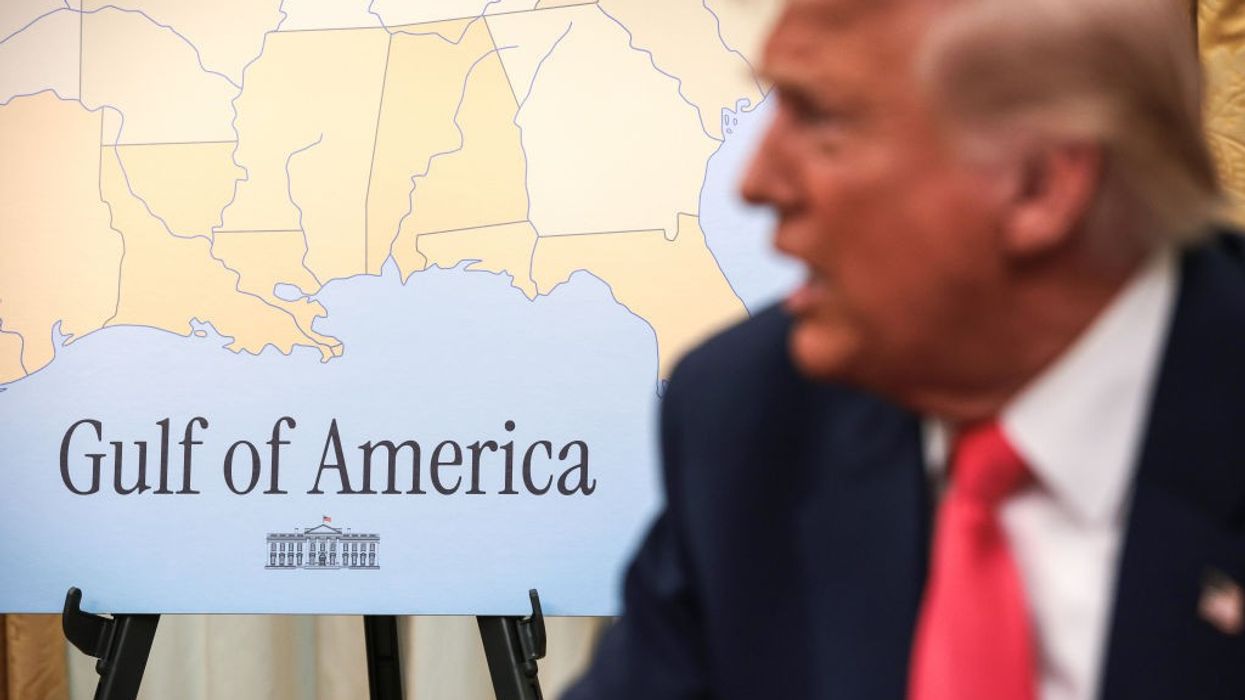
The Democrats are once again abdicating the jobs terrain to Trump, hoping instead that his tariff toy will blow up in his dictatorial hands. Instead of calling tariffs “insane,” Democrats should call them job-killing tariffs. And as prices rise, they can blame Trump for that as well.
Whether by design or instinct, candidate Donald Trump set a perfect trap for the Democrats when, in September 2024, he reacted to the John Deere and Company’s announcement that it would move a thousand jobs from the Midwest to Mexico. Trump said then:
I am just notifying John Deere right now that if you do that, we are putting a 200% tariff on everything that you want to sell into the United States.
Trump saw Deere’s announcement as the perfect opportunity to jump on Deere’s job destruction, which the company used to finance 12.2 billion in stock buybacks to enrich its investors.
The Democrats? They sent billionaire Mark Cuban out to the media to complain that the tariffs were “insane.”
But threatening tariffs did not feel insane to the Deere workers who were about to lose their jobs. Nor did they feel insane to the millions of other workers who had lost their jobs due to “free trade” deals like NAFTA.
The Democrats now have a chance to turn the tables—but, alas, they probably won’t.
The Democrats stumbled into the Trump’s tariff trap and provided many workers with yet another reason to abandon a party that had failed to say anything at all about the needless job destruction caused by overt corporate greed.
After Trump won the presidency last November, I was sure he would set more tariff traps, provoking the Democrats to reflexively react as corporate shills.
But along the way something funny happened. Trump fell into his own tariff trap, and his public support has fallen somewhat. The Democrats now have a chance to turn the tables—but, alas, they probably won’t.
Even the most ardent MAGA apologist knows that Trump has dictatorial impulses. He wants to play Brando in “The Godfather” and make you an offer you can’t refuse.
But playing Don Corleone in domestic affairs doesn’t come easily. Trump can flood the zone with executive orders, but the courts are still functioning and often enforce the law. Even a pliable Congress has rules which can get in the way of the legislative results Trump is demanding.
But there are two areas where Trump really can act unilaterally—foreign affairs and tariff policy.
As president, Trump is free to bully Ukraine, kiss up to Putin, threaten to annex Greenland, Panama, and even Canada. No one in the U.S. can really stop him. He doesn’t need the blessing of Congress unless he wants a new treaty, which he doesn’t.
Similarly, he can use Section 301 of the Trade Act of 1974, which authorizes the U.S. Trade Representative, a Trump toady, to impose tariffs in response to unfair trade practices, which are not defined.
There is no way a full-scale trade war with Canada will do anything but shatter jobs on both sides of the border, while raising prices as well.
Tariffs are a shiny new toy for Trump to play with. He can turn tariffs on and off, making entire countries jump to his tune. Each day he comes up with new reasons to justify them—fentanyl, immigrants, unfair subsidies, too much control of domestic banking (God forbid!). But these are just excuses for having fun by intimidating entire countries.
Trump can also combine his control of foreign policy with tariffs, as he is gleefully doing with Canada. What fun it is to threaten to take down the Canadian economy with tariffs while bullying them into becoming the 51st state. Clearly Trump wants to flex his dictatorial muscles, even as his real one’s sag with age.
But by playing dictator, he has abdicated the targeted use of tariffs to protect jobs. There is no way a full-scale trade war with Canada will do anything but shatter jobs on both sides of the border, while raising prices as well. Why? Because corporations like John Deere are not fleeing to Canada to find cheaper labor.
As a result, a tariff war with Canada is likely to kiss goodbye as many U.S. jobs as are protected. But Trump doesn’t seem to care because he’s all in on making Canada sweat. Damn the jobs! Damn inflation! He’s simply in love with his unilateral powers, which no one else in the world has. That’s a high that beats fentanyl.
Trump may not know it, but he is playing with fire. Tariffs are certain to raise U.S. prices. Why? Because when U.S. corporations see that their competition from Canada faces price increases caused by the 25 percent tariff, the companies will raise their own prices, especially in key industries with only a handful of large competitors.
A tariff war with Canada is likely to kiss goodbye as many U.S. jobs as are protected. But Trump doesn’t seem to care because he’s all in on making Canada sweat. Damn the jobs! Damn inflation! He’s simply in love with his unilateral powers...
Furthermore, by Trump turning his tariff toy on and off, he is causing economic uncertainty. That uncertainty has already had a drastic impact on the stock market.
But it will get much worse if corporations hold back on investment decisions until Trump stops fiddling with his toy.
It’s a very big deal when corporations delay investment decisions. Slower investment rollouts can lead to an economic slowdown and even a recession. And such a downturn can quickly get out of hand, because the Wall Steet derivative games, the kind of which that caused the 2008 crash, are up and running again, bigger than ever.
So, here’s the trap. Tariffs will cause inflation, forcing the Federal Reserve to increase interest rates to combat price increases. And higher interest rates will further reduce economic activity, leading to more unemployment. The Fed then will be unable to boost employment, because that requires decreasing interest rates, which are likely to further fuel inflation.
Bingo, stagflation. I wonder how Trump will feel if morphs into Jimmy Carter?
James Carville is telling the Democrats to do nothing. Play dead and let the guy implode.
But that’s a very dangerous game. Even with all the chaos Trump still has favorability ratings close to 50 percent. His supporters see him taking action, it’s why they voted for him, and they will give him time to make his plans work. Yes, there are protests, but they’re nothing like in Trump’s first term. The danger is, if the Democrats give him uncontested time and space, Trump might find a way to escape from his trap.
Instead, the Democrats should take a page from Trump and put job protection on the top of their agenda. As tariffs bite and cause job destruction, the Democrats should show up and support those laid-off workers. Instead of calling tariffs “insane,” they should call them job-killing tariffs. And as prices rise, they can blame Trump for that as well.
I wonder how Trump will feel if morphs into Jimmy Carter?
More importantly, they should go after any company that receives taxpayer money and is laying off taxpayers. They should slam stock buybacks that enrich Wall Street wealth extractors and CEOs. They should make it perfectly clear that protecting jobs from corporate greed is the number one priority of the Democratic Party.
Will they do this? Dream on.
There is little indication that the Democrats are willing to upset their Wall Street backers by interfering with private sector layoff decisions and stock buybacks. The Democrats are once again abdicating the jobs terrain to Trump, hoping instead that his tariff toy will blow up in his dictatorial hands.
Maybe it will, or maybe working people will see that the Democrats still don’t give a damn about their job security. At least Trump is trying, they may say.
Until the Democrats offer a compelling working-class vision, those living paycheck to paycheck have reasons to stick with Trump who, at the very least, has buried the free-trade mantra that working people know has destroyed so many jobs and damaged their communities.
GM just told 1,000 workers they're jobs are gone. But I haven’t heard Joe Biden, Chuck Schumer, Hakeem Jeffries, or any other leading Democrat say a critical word about it.
At the same time Democrats and progressives are justifiably enraged at Trump’s gonzo Cabinet picks, they’re all but mute about corporate America’s continued siphoning of economic gains to the top.
Yet this siphoning has created the stagnant wages and insecure jobs that helped propel Trump into the presidency and give Republicans control over both chambers of Congress.
Trump at least gave workers an explanation for what’s happened to them — although it was a lie: It isn’t undocumented immigrants or the “deep state” or transgender kids or any other Trump bogeyman.
It’s corporate greed.
The most recent example: On Friday, GM announced it was laying off 1,000 workers. These layoffs followed another round of GM layoffs in August, which saw 1,500 jobs cut. The cuts affected both salaried and hourly staff, including some United Auto Workers members.
Why aren’t Democrats, who still control the Senate and presidency, moving more aggressively to outlaw stock buybacks — which were considered illegal stock manipulations before Ronald Reagan’s SEC gave them the green light?
Most of the workers being laid off Friday were notified via email early Friday morning. Some had been working for GM for over thirty years.
GM says it has no choice. It must cut costs.
This is what we hear again and again from corporate America. We’ll be hearing even more of this as Artificial Intelligence takes over white-collar as well as blue-collar jobs.
No choice?
GM is on track for making record profits this year, surpassing its 2022 record profit of $14.5 billion. In the third quarter of 2024 alone, GM made $3.4 billion. That’s a $200 million increase from the same period last year.
GM CEO Mary Barra’s compensation for 2024 is $27.8 million. This includes a base salary of $2.1 million, stock awards of $14.6 million, stock option awards valued at $4.9 million, an “incentive plan” compensation (as if she needed more incentive) of $5.3 million, other payment of $997,392, and perks (personal travel, security, financial counseling, company vehicles, and an executive health plan) valued at $389,005.
The ratio of Barra’s compensation to that of the typical GM employee is estimated to be 303-to-1.
In June, GM announced $6 billion in stock buybacks. This means $6 billion of GM’s record profits will be used to purchase its own shares of stock — thereby boosting share prices (and the portion of Barra’s compensation in stock grants and options) simply because fewer shares of GM stock will be in circulation.
Keep in mind that the richest 1 percent of American hold over half of the value of all shares of stock held by Americans, and the richest 10 percent hold 92 percent.
So, in fact, GM’s savings from axing 1,000 jobs will be transferred into the pockets of wealthy Americans (including GM’s CEO).
Why aren’t Democrats up in arms about this? I haven’t heard Joe Biden, Chuck Schumer, Hakeem Jeffries, or any other leading Democrat say a critical word about GM’s latest move.
Democrats have offered no alternative explanation for what’s happened to average working people or agenda for remedying it. Trump's baseless explanation and agenda are the only ones available. So it’s no surprise that many working Americans voted for Trump on Election Day.
Why isn’t Michigan’s Democratic governor, Gretchen Whitmer — who may be in the running for president in 2028 (assuming we have another election) — accusing GM of sacrificing jobs for profits that are siphoned off to big investors?
Why aren’t Democrats, who still control the Senate and presidency, moving more aggressively to outlaw stock buybacks — which were considered illegal stock manipulations before Ronald Reagan’s SEC gave them the green light?
Why aren’t they demanding that capital gains taxes be increased on the super-wealthy, whose stock gains this year alone have made America’s billionaires 30 percent richer?
Why aren’t they moving to increase corporate taxes on corporations whose ratio of CEO pay to their median workers is more than 50 to 1? And impose even higher taxes if the ratio exceeds 100 to 1? (Senate Budget Committee Chair Sheldon Whitehouse, along with Representatives Barbara Lee and Alexandria Ocasio-Cortez, have introduced just such a bill, but no one knows about it. Why isn’t the Democratic leadership loudly pushing this?)
The lesson of the debacle of the 2024 election is that big corporations and the wealthy have shafted average working Americans, whose wages and jobs have gone nowhere for decades and who are understandably frustrated and angry at what they see as a rigged system.
But Democrats have offered no alternative explanation for what’s happened to average working people or agenda for remedying it. Trump's baseless explanation and agenda are the only ones available. So it’s no surprise that many working Americans voted for Trump on Election Day.
Now Trump and his Republican stooges think they’ve been given a license to blow the system up — initially by appointing a bunch of clowns, conspiracy theorists, and sexual predators to key posts.
It’s important to rail against Trump’s appointments. But unless we attack the sources of the outrage Trump has tapped into, working Americans will continue to go along with whatever Trump and his lapdogs want to do.

Think about it this way, maybe it's the Democratic Party which has become deplorable to the working class.
Did the working class, especially its white members, elect Donald Trump again because they are basically racist, sexist, homophobic, and xenophobic? Are they craving a strongman who can protect white supremacy from a flood of immigrants and put the woke liberals in their place? Didn’t Harris lose primarily because she’s a woman of color?
More than a few progressives, as well as the New York Times, believe these are plausible explanations for Harris’s defeat. I’m not so sure.
The working class started abandoning the Democrats long before Trump became a political figure, let alone a candidate. In 1976, Jimmy Carter received 52.3 percent of the working-class vote; In 1996, Clinton 50 percent; In 2012, Obama 40.6 percent; and in 2020, Biden received only 36.2 percent.
This decline has little to do with illiberalism on social issues. Since Carter’s victory, these workers have become more liberal on race, gender, immigration and gay rights, as I detail in my book, Wall Street’s War on Workers.
These voters of color don’t fit comfortably into that basket of deplorables Hillary Clinton described, but they are a part of the working class that’s been laid off time and again because of corporate greed.
Furthermore, my research shows that mass layoffs, not illiberalism, best explains the decline of worker support for the Democrats. In the former Blue Wall states of Pennsylvania, Michigan, and Wisconsin, for example, as the county mass layoff rate went up the Democratic vote went down. The statistical causation, of course, may be off, but the linkage here between economic dissatisfaction and flight from the Democratic Party is straightforward.
Did the Working Class Give Trump 1.9 Million More Votes?
Trump improved his vote total from 74.2 million in 2020 to 76.1 in 2024, an increase of 1.9 million. Did the white working class support him more strongly this year?
No. According to the Edison exit polls, Trump’s share of the non-college white vote dropped from 67 percent in 2020 to 66 percent in 2024. (For 2020 exit polls see here. For 2024 see here.)
In fact, the largest increase for Trump this year came from non-white voters without a college degree. Trump’s percentage of these voters jumped from 26 percent in 2020 to 33 percent in 2024. These voters of color don’t fit comfortably into that basket of deplorables Hillary Clinton described, but they are a part of the working class that’s been laid off time and again because of corporate greed.
The Defection of the Border Democrats
Perhaps the most astonishing collapse of the Democratic vote is found in the Texas counties along the Rio Grande. Take Starr County, population 65,000, most of whom are Hispanic. Hillary Clinton won that county by 60 percent in 2016. Trump won it this year by 16 percentage points, a massive shift of 76 percentage points, almost unheard of in electoral politics. Trump won 12 of the 14 border counties in 2024, up from only five in 2016. Interviews suggest that these voters are very concerned by uncontrolled border crossings, inflation, and uncertainly in finding and maintaining jobs in the oil industry.
(I hear whispers among progressives that Hispanic men just don’t like women in leadership positions. Yet just across the Mexican border, Hispanic men seemed quite comfortable recently electing a female president.)
The Big Story Is the Overall Decline of the Harris Vote
Harris received 73.1 million votes in 2024, a drop of 8.3 million compared with Biden’s 81.3 million votes in 2020. That’s an extraordinary decline. Who are these voters who decided to sit it out?
So far, while the final votes are tallied and exit polls are compiled, it looks like they are a very diverse group—from young people upset about the administration’s failure to restrain Israel to liberals who didn’t like watching Harris go after suburban Republicans by palling around with arch-conservatives Liz and Dick Cheney.
Personally, I think many working-class voters of all shades sat on their hands because Harris really had so little to offer them. Harris was viewed as both a member of the establishment and a defender of it, and the establishment hasn’t been too considerate of working-class issues in recent decades.
Many working-class voters of all shades sat on their hands because Harris really had so little to offer them.
Harris’ highly publicized fundraising visit to Wall Street certainly made that clear. And in case we missed that signal, her staff told the New York Times that Wall Street was helping to shape her agenda. It’s very hard to excite working people by arguing, in effect, that what’s good for Wall Street is also good for working people.
The John Deere Fiasco
For me, the symbolic turning point was the Harris campaign’s pathetic response to the John Deere company’s announcement about shipping 1,000 jobs from the Midwest to Mexico. Trump jumped on it right away, saying that if Deere made that move, he would slap a 200-percent tariff on all its imports from Mexico. If I were a soon-to-be-replaced Deere worker, that would have gotten my attention.
The Harris campaign responded as well, but not in a way that would convince workers that she really cared about their jobs. The campaign sent billionaire Mark Cuban to the press to claim such a tariff would be “insanity.” He and the campaign said not one word about the jobs that would soon be lost. Trump promised to intervene. Harris promised nothing.
The sad part is that the Biden-Harris campaign could have at least tried. They had the power of the entire federal government. They could have cajoled and bullied, waved carrots and sticks. In short, they could have easily made a visible public effort to prevent the export of those good-paying jobs by a highly profitable corporation that was spending billions of dollars on stock buybacks to enrich Wall Street and it’s CEO. Here was a chance to defend jobs against overt greed. Instead, they essentially told working people that Harris wasn’t willing to fight for those jobs.
But Didn’t the Working-Class Abandon Sherrod Brown?
I haven’t yet found any comprehensive demographic data about Brown and his working-class support. We do know, however, that he ran well ahead of Harris. Brown lost his Senate race by 3.6 percent in Ohio compared to a Harris loss by 11.5 percent.
Rather than blaming working-class voters for not rejecting Trump out of hand, the Democrats should reflect on the failure of their brand and their failure of nerve.
Brown knew that he was carrying a heavy load as a Democrat, especially because of the passage of NAFTA, which was finalized during Bill Clinton’s presidency. As Brown put it: “The Democratic brand has suffered again, starting with NAFTA…. But, what really mattered is: I still heard it in the Mahoning Valley, in the Miami Valley, I still heard during the campaign about NAFTA.”
Brown, as a loyal Democrat, was stuck with that dubious brand, and with Harris, as she was clobbered in Ohio. Tom Osborne, the former local labor leader and a refreshing political newcomer, shed the Democratic Party burden by running as an independent in Nebraska. He lost his Senate race by 6.8 percent compared to 10.9 percent for Harris. Brown did better than Osborne but it’s highly likely that both did much better than Harris with working-class voters.
Maybe the Democratic Party Has Become Deplorable to the Working Class
Rather than blaming working-class voters for not rejecting Trump out of hand, the Democrats should reflect on the failure of their brand and their failure of nerve.
Will the Democrats learn from this debacle and change their ways? I’m not optimistic. They are the defenders of the liberal elite establishment and have grown very comfortable (and prosperous) in that role.
We may not have all the data we desire or need as yet, but we know this much: something has to change. And that change is not going to come from the old guard of this deplorable Democratic Party establishment.

How about a Sovereign Wealth Fund for Workers? Harris needs to prove she has the guts to take on the powerful and truly protect working-class jobs and incomes.
With the election up for grabs and perhaps even slipping towards Trump, Kamala Harris needs an October surprise. What major last-minute events might tip the election her way?
Here are a few that could make news.
Cease-fire in Gaza? That certainly would help among young people and in Michigan, where voters of Arab descent are angry at the Biden administration. But there’s no way Bibi Netanyahu is going to help the Democrats. He wants Trump, who he can more easily manipulate.
Cease-fire in Ukraine? That certainly would help with the substantial number of voters who believe that endless war is a drain on American resources. But there’s no way Putin is going to help the Democrats. He wants Trump, who he can more easily manipulate.
What major last-minute events might tip the election her way?
Another Salacious Trump Revelation? Even if a video emerges with Arnold Palmer in Trump’s shower, it’s doubtful it would make a difference. When it comes to sex scandals or pining for loyal generals like Hitler’s, or even felony charges, there’re more than enough out there already, and they haven’t made much of a difference.
Or how about this...
A Sovereign Wealth Fund for Workers? Imagine that Kamala Harris appeared at a John Deere facility in the Midwest to highlight the company’s plan to move 1,000 jobs to Mexico, while at the same time awarding its shareholders with $12.2 billion in stock buybacks.
Standing In front of the plant gate Harris should say:
To create a meaningful opportunity economy, we must halt the needless layoffs of working people, the goal of which only is to enrich the rich.
On my first day in office, I will institute a new clause in every government contract: No taxpayer money shall be awarded to companies that layoff taxpayers.
If Deere wants to continue to serve as a government contractor, it will refrain from moving jobs out of the country.
Even in a booming economy, more than four million workers will be laid off this year. Many of those layoffs will be used to raise money for stock buybacks, jobs sacrificed to reward the largest shareholders and company executives. (Stock buybacks are a blatant form of stock manipulation – using the company’s money to buy back its own shares and thereby artificially raising the stock’s price. More layoffs, more money for stock buybacks.)
Therefore, also on my first day in office, I will call on Congress to establish a Sovereign Wealth Fund for Workers, which will provide wage insurance for laid off workers. The insurance will pay workers the difference between what they earned on the jobs they were laid off from and the new jobs they find.
The Fund will be financed by requiring that 10 percent of all stock buybacks go into the Sovereign Wealth Fund for Workers. In 2025 this would amount to $100 billion of stock shares.
On my watch, no longer will working people experience downward mobility while the richest of the rich become even richer.
Wall Street, to be sure, will mercilessly attack her. How dare she prevent the wealthy from getting wealthier? How dare she protect the wages of the working class? Don’t the Democrats know who’s buttering their bread?
Wall Street, to be sure, will mercilessly attack her. How dare she prevent the wealthy from getting wealthier? How dare she protect the wages of the working class? Don’t the Democrats know who’s buttering their bread?
In response, Harris needs to prove she has the guts to take on the powerful and truly protect working-class jobs and incomes.
How about going on national television (or FOX News) and quote from Franklin D. Roosevelt’s 1936 Madison Square Garden speech:
[Wall Street] had begun to consider the Government of theUnited States as a mere appendage to their own affairs. We know now that Government by organized money is just as dangerous as Government by organized mob.
Never before in all our history have these forces been so united against one candidate as they stand today. They are unanimous in their hate for me—and I welcome their hatred.
Now there’s an October surprise.
And the best way to do that is to... fight like hell for the working class.
Kamala Harris must win the former Blue Wall states of Michigan, Pennsylvania, and Wisconsin, which are now up for grabs. And winning those battleground states requires reaching working-class voters who have been economically harmed and left behind by Wall Street’s insatiable greed.
The Harris campaign has not been courting these voters the way you would expect from the party of working people. Instead, she has managed both to kiss up to Wall Street and to allow Trump to appear as the savior of working-class jobs. Those advising her on this strategy are either politically tone deaf or worse, blinded by potential Wall Street employment opportunities after the election.
The Vice-President’s first big gaffe was going to Wall Street for a highly publicized fundraising event saying she “would encourage innovative technologies like AI.” Doesn’t her team understand that Artificial Intelligence is not a term of endearment to working people who fear automation will kill their jobs?
The Harris campaign has not been courting these voters the way you would expect from the party of working people. Instead, she has managed both to kiss up to Wall Street and to allow Trump to appear as the savior of working-class jobs.
Meanwhile, the New York Times reports that behind the scenes her advisors have been moderating her proposals to please Wall Street. (“How Wall St. Is Subtly Shaping the Harris Economic Agenda”.) How is this the party of working people?
Fantasy Finance
The Harris team is suffering from several debilitating illusions. They seem to believe that if Wall Street approves of her economic agenda, it will close the economic-approval ratings gap with Trump. That certainly isn’t the case in the more industrialized states where most working people see Wall Street as the destroyer of jobs.
There also is no lost love there for the big banks that are too big to fail and get bailed out whenever they rape and pillage the economy into disaster. If you ask the average worker in the Midwest to pick the one word that they associate with Wall Street, nearly all will say “greed.”
The Harris team clearly believes that we live in a win-win economy—that when Wall Street does well, we all do well. They seem oblivious to the ways in which Wall Street’s leveraged buyouts and stock buybacks have robbed millions of working people of their livelihoods.
These workers are not stupid. When a private equity company buys up the facility where they work, they know layoffs are coming to service the new debt load. When a company pours corporate funds into buying back their own stock to artificially boost the stock price, they know that layoffs will be used to pay for shoveling all this money to the richest stock owners and executives. (Please see Wall Street’s War on Workers for all the gory details.)
Blowing Off the John Deere Workers
The Harris team, however, has the perfect chance to show that they understand how important it is for the government to save jobs from rapacious corporations. The opportunity came when John Deere announced that it would send 1,000 jobs to Mexico, crying competitive pressure while in 2023 earning $10 billion in profits, paying its CEO $26.7 million, and conducting $12.2 billion in stock buybacks.
Donald Trump saw a big opening and called for a 200 percent tariff on Deere’s imports if it shipped those jobs to Mexico. That threat, idle or not, certainly caught the attention of the workers who were about to see their jobs evaporate. And it certainly resonated with economically precarious workers all through the industrial heartland who could care less about whether tariffs are good or bad macroeconomic policy.
What did the Harris team do? Exactly the wrong thing. It wheeled out Mark Cuban, the celebrity billionaire owner of the Dallas Mavericks, to attack the tariff as “insanity…ridiculously bad and destructive,” on macroeconomic grounds Not a word said by Cuban or the Harris campaign about those 1,000 jobs that are about to be destroyed. That shows “ridiculously bad and destructive” political campaigning.
I’m starting to wonder about the smarts of the Harris advisors. They seem willfully oblivious to the fact that Trump’s 2017 intervention to save jobs at the Carrier air conditioning company in Indiana was wildly popular among voters of all political persuasions. Guess what? Having the government step in to save your job is what people want the government to do. Why can’t Harris say she will do the same?
I’ve been begging, pleading, jumping up and down to get the Harris campaign to say she will stop corporations from taking our tax dollars, pouring it into stock buybacks, and then laying off millions of workers each year. The proposal is really simple. Add this one sentence to every federal contract:
“No taxpayer money in the form of federal grants, contracts, and purchases, shall go to corporations that layoff taxpayers and conduct stock buybacks.”
But my message is not penetrating the dense Democratic Party ecosystem distorted by Wall Street’s cash and future lucrative job opportunities.
The Harris campaign clearly believes they are doing more than enough to attract working people in the key battleground states, and that it is wiser to placate rather than offend Wall Street.
I sure hope they are right and, come election night, that my analysis is dead wrong.

"As president, he cut taxes for corporations, encouraged outsourcing, and lost nearly 200,000 manufacturing jobs, including auto jobs," said Democratic presidential nominee Kamala Harris.
Democratic nominee Kamala Harris hammered former President Donald Trump's manufacturing record ahead of his visit to the battleground state of Michigan on Friday, pointing out that offshoring of U.S. jobs increased during the Republican nominee's first White House term despite his grand promises to revitalize the nation's industrial base.
"Donald Trump is one of the biggest losers of manufacturing in American history," Harris, who outlined her own domestic manufacturing priorities earlier this week, said in a statement Thursday. "He makes empty promise after empty promise to American workers, but never delivers. As president, he cut taxes for corporations, encouraged outsourcing, and lost nearly 200,000 manufacturing jobs, including auto jobs. He has joked about firing workers, supported state anti-union laws, and suggested companies move jobs out of Michigan."
"Yet it was Trump's trade deal that made it far too easy for a major auto company like Stellantis to break their word to workers by outsourcing American jobs," Harris continued, pointing to the United States-Mexico-Canada Agreement (USMCA). "As one of only 10 senators to vote against USMCA, I knew it was not sufficient to protect our country and its workers. Many who voted for this deal conditioned their support on a review process, which as president I will use."
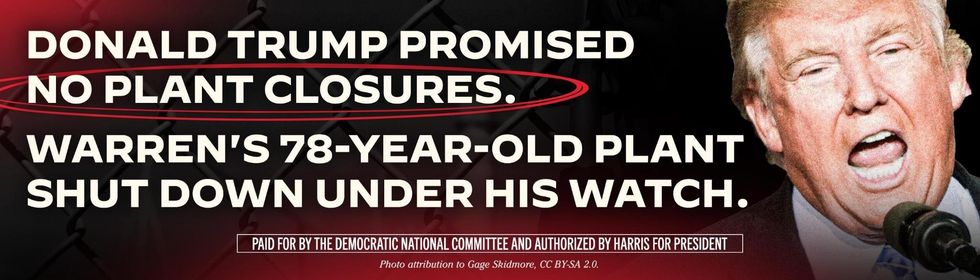
"On his watch, a Warren car plant closed and the auto industry bled thousands of jobs."
Trump has two campaign events scheduled in Michigan on Friday as recent polling shows him narrowly behind Harris in the key state, which President Joe Biden won in 2020.
Despite his starkly anti-worker record, Trump has sought to appeal to members of the United Auto Workers (UAW)—which has endorsed Harris—and other unions in Michigan and elsewhere during his bid for another term, issuing sweeping promises and dire warnings about the future of U.S. manufacturing if he loses in November.
If he doesn't prevail, Trump said during a town hall in Flint, Michigan last week, "there will be zero car jobs, manufacturing jobs."
"It will all be out of here," he added.
Democrats have countered such claims by pointing to the fact that offshoring accelerated under Trump, particularly due to the passage of the Tax Cuts and Jobs Act—a law that delivered massive tax breaks to the rich and incentivized corporate offshoring.
A Public Citizen analysis published in the final months of Trump's presidency found that the Republican nominee's administration "awarded more than $425 billion in federal contracts to corporations listed among those responsible for offshoring 200,000 American jobs" during his first term.
The Economic Policy Institute separately found that roughly 1,800 U.S. factories shuttered during Trump's first term.
One of those factories was a General Motors plant in Warren, Michigan—a closure that the Democratic National Committee (DNC) highlighted with a billboard display in the city ahead of Trump's visit Friday.
“Donald Trump broke his promises to Michigan's working families," said Stephanie Justice, a DNC spokesperson. "On his watch, a Warren car plant closed and the auto industry bled thousands of jobs."
In a video released earlier this week as part of its 2024 election efforts, UAW president Shawn Fain called Trump a "con man" who is merely posturing as an ally of the working class while pushing policy changes that would primarily benefit those of his own class, the ultra-wealthy.
"We can't get fooled or distracted by a con man like Donald Trump. That's why I'm voting for Kamala Harris," said Fain. "That's why our union has endorsed Kamala Harris, and that's why our country needs Kamala Harris as our next president."
Throughout the 2024 campaign, Trump has proposed aggressive tariffs to help protect and restore U.S. manufacturing. Earlier this week, the former president singled out John Deere, a federal contractor that has announced plans to lay off roughly 2,000 workers and shift some of its production to Mexico.
"I am just notifying John Deere right now that if you do that, we are putting a 200% tariff on everything that you want to sell into the United States," Trump said during a campaign event in Pennsylvania earlier this week.
In an op-ed for Common Dreams on Thursday, Labor Institute executive director Les Leopold implored the Harris campaign and the Democratic Party more broadly to do more to counter Trump's messaging, specifically by calling out and moving to penalize companies that carry out mass layoffs while rewarding their rich investors with stock buybacks and dividends.
"Because Trump has difficulty focusing on a coherent message, the field is still open for the Democrats to put forth a new policy that directly affects the jobs of millions of workers," wrote Leopold. "Harris should give a primetime talk and focus on the $700 billion in taxpayer money that now goes to private corporations for goods, services, and subsidies."
"Here's the line she should stress: No taxpayer money shall go to corporations that lay off taxpayers or conduct stock buybacks," he continued. "The Democrats must decide, and soon, whether they really are the party of the working class. If they are, then they must fight hard to save worker jobs from unabated corporate greed."

Trump has promised to stick John Deere with a 200% tariff if it outsources U.S. jobs to Mexico; the Dems responded by getting a billionaire to call this “insanity.”
“The greed of the John Deere company is giving President Biden the perfect opportunity to win back working-class voters. All he needs to do is put up a major fight to stop Deere from shipping U.S. jobs to Mexico.”
I wrote that on June 12, 2024, and the Democrats ignored me. Donald Trump did not. He just called for a 200% tariff on all John Deere imports if the company exports U.S. jobs to Mexico.
How have the Democrats responded to Trump? In the worst way possible. They got billionaire Mark Cuban to say that Trump’s clumsy effort to save 1,000 jobs is “insanity… ridiculously bad and destructive.” Cuban didn’t even mention the plight of the workers.
Cuban’s argument is nothing short of embarrassing. He says that since the proposed tariff on Deere is higher than the one proposed on Chinese imports, Deere will be unable to compete with Chinese tractors and farm equipment. This will potentially lead, he said, to the “destruction of one of the most historied companies in the United States of America.”
The Democrats must decide, and soon, whether they really are the party of the working class. If they are then they must fight hard to save worker jobs from unabated corporate greed.
What exactly is so insane? Trump’s goal isn’t to tariff John Deere out of business. His goal is to keep Deere from exporting 1,000 jobs. Why is it insane to preserve those 1,000 decent-paying unionized U.S. jobs?
Cuban ignores the question of why Deere feels the need to ship jobs to Mexico. Deere argues that it must do so in order to stay competitive. That leads to a Catch-22 proposition: If Deere moves jobs to Mexico and faces a stiff tariff, it will go under. And, if it doesn’t move the jobs to Mexico, it will become uncompetitive and also go under. Cuban is in line with how Deere justifies layoffs to workers: If we don’t cut 1,000 jobs now and move to Mexico, more jobs will be cut later.
The big, bigger, and biggest problem is that the Democrats and Cuban are unable to put workers and their livelihoods front and center. They are unable to mouth these words: The 1,000 Deere workers should keep their jobs precisely because Deere, one of the greediest companies on Earth, is loaded with profits and is pouring billions upon billions into stock buybacks. Which is flat-out true.
Last year, Deere recorded $10 billion in profits and it’s CEO was paid $26.7 million. The company also spent $12.2 billion on stock buybacks that enriched its top officers as well as the big Wall Street funds that own loads of Deere stock. (What are stock buybacks? A way for a company to boost the price of its shares by buying them on the open market—a blatant form of stock manipulation that was illegal until deregulated by the Reagan administration.)
And here’s the simple truth: The move to Mexico is designed to cut labor costs in order to finance those stock buybacks. It has nothing to do with competition, Chinese or otherwise. As any Deere worker would tell us, it’s all about greed. The sad thing is that Cuban, a critic of stock buybacks, knows this as well, but refuses to call out Deere.
My book, Wall Street’s War on Workers, conclusively shows that from 1996 to 2020, as the mass layoff rate rose in any given county in Pennsylvania, Michigan, and Wisconsin, the Democratic vote declined. In the rural counties, on average, one-third of the workforce suffered through mass layoffs. Losing your job in a county that has few decent employment alternatives does not lead to positive feelings about the party that is supposed to be the defender of the working class.
Trump’s intervention in 2017 to stop Carrier from moving an Indiana plant to Mexico was “wildly popular.” And yet the Democrats remain tone deaf to the plight of mass layoff victims.
The question is why?
The answer involves understanding what John Kenneth Galbraith called “the conventional wisdom.” There’s an entrenched sense within the Democratic Party of what kinds of interventions are acceptable in financialized capitalism and which are not. Here are a few of the internalized rules:
On a deeper level what ties all this together is a profound faith in corporate power and efficiency. It will be for the better for all of us if billionaire CEOs are free to run their corporations as they see fit. That faith includes protecting the right of corporations to hire and fire at will. After all, new technologies and globalization inevitably involve the churning of jobs, don’t they? Trying to stop or slow down that process would only cripple the economy, wouldn’t it? And we certainly don’t want a country where government officials tell billionaires what to do, do we?
Therefore, a sober, realistic Democratic Party, trapped in its conventional wisdom, will refuse to intervene in corporate hiring and firing. Instead, they travel down the uninspiring and unconvincing path creating an “opportunity economy,” growing new jobs for the future from taxpayer subsidies to chipmakers and the like.
Not so with Trump. He swings a wrecking ball at the conventional wisdom. He acts as if he actually believes that jobs should not be exported to lower-wage countries, and that puts him in tune with nearly every U.S. industrial worker. To be sure many Democrats believe the same. The difference is that Trump has no built-in guard rails about intervening in corporate decision-making. You move jobs to Mexico, he bellows, and we’ll slap a tariff on your butt that is so high that it will be much cheaper for you to keep the jobs here.
That has to be music to the ears of every Deere worker facing the axe, and it certainly will get the attention of millions of workers who have seen their jobs shipped abroad.
Because Trump has difficulty focusing on a coherent message, the field is still open for the Democrats to put forth a new policy that directly affects the jobs of millions of workers. I’m a broken record on this because it’s so very simple. Harris should give a primetime talk and focus on the $700 billion in tax payer money that now goes to private corporations for goods, services, and subsidies: Here’s the line she should stress:
No taxpayer money shall go to corporations that lay off taxpayers or conduct stock buybacks.
To clarify the point, she should add some pragmatic flexibility:
For those companies receiving taxpayer money, layoffs must be voluntary, not compulsory, as is already the case for many white-collar employees.
That would seem fair and just to millions of workers, even if Wall Street would find it “insane.”
The Democrats must decide, and soon, whether they really are the party of the working class. If they are then they must fight hard to save worker jobs from unabated corporate greed.
Is that really too much to ask?

"John Deere's reckless layoffs and job cuts are an insult to the working class people of Iowa and Illinois," said the United Auto Workers.
The United Auto Workers on Tuesday condemned the manufacturing company John Deere over recent mass layoffs at factories in Iowa and Illinois, arguing the company's strong profits, lavish handouts to investors, and exorbitant CEO pay give the lie to claims that the job cuts and outsourcing were necessary.
"John Deere's reckless layoffs and job cuts are an insult to the working-class people of Iowa and Illinois, and the United Auto Workers will fight for justice for our members and communities affected by these moves," the union said in a statement. "Let's be clear: there is no need for Deere to kill good American jobs and outsource them to Mexico for cheap labor. The company is forecasted to make $7 billion in profit this year. CEO John May's total compensation for 2023 was $26.8 million."
The union went on to note that John Deere, which is headquartered in Illinois, has spent more than $43 billion on investor-enriching stock buybacks and dividends over the past 20 years, leaving "no question that there is enough profit to go around" and that the company "can afford to keep good jobs in Iowa and Illinois."
"So why are they choosing not to? Because Deere's corporate greed means more to them than the lives of working-class people in Ankeny, Waterloo, Ottumwa, or Dubuque. And our government lets them get away with it, with broken trade laws that don't protect workers on either side of the border," the union said. "When a company is doing as well as Deere, on the hard work of those UAW members who make the product that generates those profits, there is absolutely no reason for job cuts, layoffs, outsourcing, or cutbacks."
The company has spent $43.6 billion on stock buybacks and dividends over the past two decades. There is no question that there is enough profit to go around, and Deere can afford to keep good jobs in Iowa and Illinois.
— UAW (@UAW) July 30, 2024
The UAW represents more than 10,000 John Deere employees across the United States and, in 2021, held a
five-week strike against the company over inadequate wages and benefits.
In recent weeks, John Deere has laid off an estimated 1,500 U.S. workers as part of what the company has described as a broader effort to "control costs." The Guardian's Michael Sainato noted last month that the company reported "a profit of over $10 billion in fiscal year 2023" and spent more than $7.2 billion on stock buybacks.
The UAW's statement came a day after John Deere announced it would lay off around 300 salaried employees at its headquarters in Moline, Illinois.
"The batch of layoffs comes after the tractor giant said earlier this month it would lay off nearly 600 workers across two factories in Iowa and one in Moline," The Chicago Tribune reported.
Given that John Deere is a major beneficiary of federal contracts and subsidies, U.S. President Joe Biden and Vice President Kamala Harris—the presumptive Democratic nominee—have faced calls to act in response to the company's mass layoffs and stock buybacks.
"Corporations that do business with the federal government aren't going to like it and will surely cry 'socialism!'" Les Leopold, executive director of the Labor Institute, wrote in an op-ed for Common Dreams last week. "But if the Democrats don’t find a way to intervene to stop the needless mass layoffs that are happening right now, there's a good chance Trump/Vance might fill the void."
As the White House remains quiet on the issue, the UAW said it is doing all it can to "minimize the impacts of these cuts and layoffs for our members at Deere and pushing the company to do right by our members, their families, and their communities."
"We will keep pushing for justice at Deere and keep letting corporate America know that the working class will not accept the scraps while the CEOs and shareholders get richer and richer," the union added.
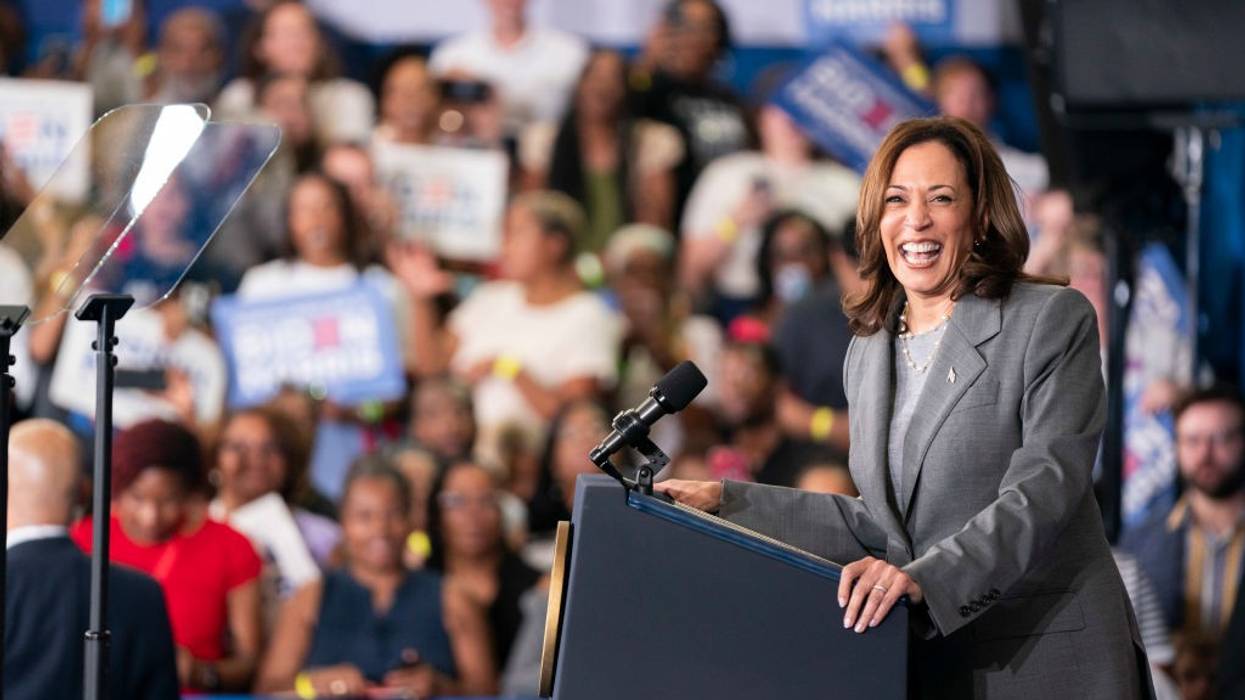
If Harris and the Democrats don’t find a way to intervene to stop the needless mass layoffs that are happening right now, there’s a good chance and Trump/Vance might fill the void.
Can Kamala Harris reach blue collar workers?
There’s a way, but it won’t be easy.
U.S. Vice President Kamala Harris will have to do what few Democrats have been willing to do—directly prevent corporations from laying off workers to finance stock buybacks.
Imagine if Kamala Harris said the following: “My administration will do all in its power to stop the needless mass layoffs that have plagued working people for over a generation.”
Right now, in Racine, Wisconsin, Case-New Holland (CNH), a global maker of agricultural equipment, is laying off 200 workers as part of a $150 million cost-reduction effort. That savings is helping to finance the $652 million CNH has spent over the past year on stock buybacks.
The same goes in spades for the John Deere company, which is exporting 1,000 jobs from Illinois and Iowa to Mexico to finance $12.2 billion in stock buybacks.
Are these stock buybacks adding new technologies needed to build better farm implements? Are they putting new AI programs into tractors to plow fields on their own? Do they help make workers more productive or enhance company sales? Not a chance.
Stock buybacks are stock manipulation. A company buying back its stock artificially boosts the stock price without creating new products or developing more efficient ways to produce old ones. It’s the same earnings, but more per share, driving up the share price, because the buybacks reduce the number of shares.
How do stock buybacks help a company? They don’t, but they sure help CNH executives, who are paid in stock incentives, and they surely enrich the Wall Street barons who cash in their shares to reap a quick profit.
But wait, isn’t stock manipulation illegal, akin to insider trading? Before 1982, stock buybacks were illegal—corporations could only use 2% of their profits to repurchase their own shares. But that year the Securities and Exchange Commission foolishly removed that restriction, and all hell broke loose. Corporations have ever since laid off workers to finance more and more stock buybacks. Today about 68% of all corporate profits go to stock buybacks. And since 1996, when the government started keeping track, more that 30 million workers have been subject to mass layoffs. (For all the gory details, please see Wall Street’s War on Workers.)
Not much, worries Richard Glowacki, a union official trying to deal with the CNH mass layoff. “President’s don’t dictate what companies do—except in wartime,” he said.
Technically, that’s true, but presidents have the bully pulpit, and they can use it to get the attention of CEOs who need to do business with the federal government.
That’s exactly what former President Donald Trump did to Carrier, the air conditioning giant, in 2017, when he pressured the company not to move 1,100 jobs to Mexico. (About 800 may have been saved, at a cost.)
Greg Hays, the CEO of Carrier’s parent company, United Technologies, made it clear why he gave in to the demand.
“I was born at night, but it wasn’t last night. I also know that about 10% of our revenue comes from the U.S. government.”
Hays understood the implicit power of the federal government, which purchases more than $700 billion a year in goods and services from private corporations. That power could be used more generally to protect the livelihoods of working people.
Imagine if Kamala Harris said the following:
My administration will do all in its power to stop the needless mass layoffs that have plagued working people for over a generation. Since 1996, more than 30 million workers have lost their jobs during a mass layoff. These devastating events are harming the health and economic well-being of our people and their communities. Many of these layoffs are economically unnecessary and are only intended to enrich CEOs and their Wall Street investors.
This must stop.
In our free enterprise system, corporations are free to expand and contract their workforces. But taxpayers are not obliged to reward those that lay off workers with federal contracts. Right now, more than $700 billion a year of taxpayer money goes to corporations for goods and services needed to provide for the public good and our common defense.
Worker tax payers have the right to demand that their money is used to protect jobs in corporations that receive these contracts.
Therefore, my administration will add a new clause to every federal contract valued at $10 million or more: “For the life of this contract, no compulsory layoffs.”
If a federal contractor wants to reduce the number of employees while under contract, it must be a voluntary layoff through which the employee willing accepts a negotiated buyout package and is not forced to do so.
The principle is simple and clear: Taxpayer money should not be used to lay off taxpayers. Taxpayer money should support job stability.
This may be a bridge too far for Kamala Harris and the Democrats. Corporations that do business with the federal government aren’t going to like it and will surely cry “socialism!” But if the Democrats don’t find a way to intervene to stop the needless mass layoffs that are happening right now, there’s a good chance and Trump/Vance might fill the void.
BTW, both John Deere and CNH are federal contractors.
Walking the picket line is good. So are infrastructure investments that create new jobs in the future. But nothing beats saving a worker’s job in the here and now. That really sends the most powerful message of all, that the Democrats are willing and able to fight for the working class.