SUBSCRIBE TO OUR FREE NEWSLETTER
Daily news & progressive opinion—funded by the people, not the corporations—delivered straight to your inbox.
5
#000000
#FFFFFF
To donate by check, phone, or other method, see our More Ways to Give page.

Daily news & progressive opinion—funded by the people, not the corporations—delivered straight to your inbox.
By uniting around a political program capable of defeating Netanyahu's far-right agenda, and setting aside their factional interests, Arab politicians could achieve something their previous parliamentary efforts failed to accomplish.
The results of Israel's October 27 elections were welcomed by Palestinian Arab communities in Israel and millions of Palestinians worldwide.
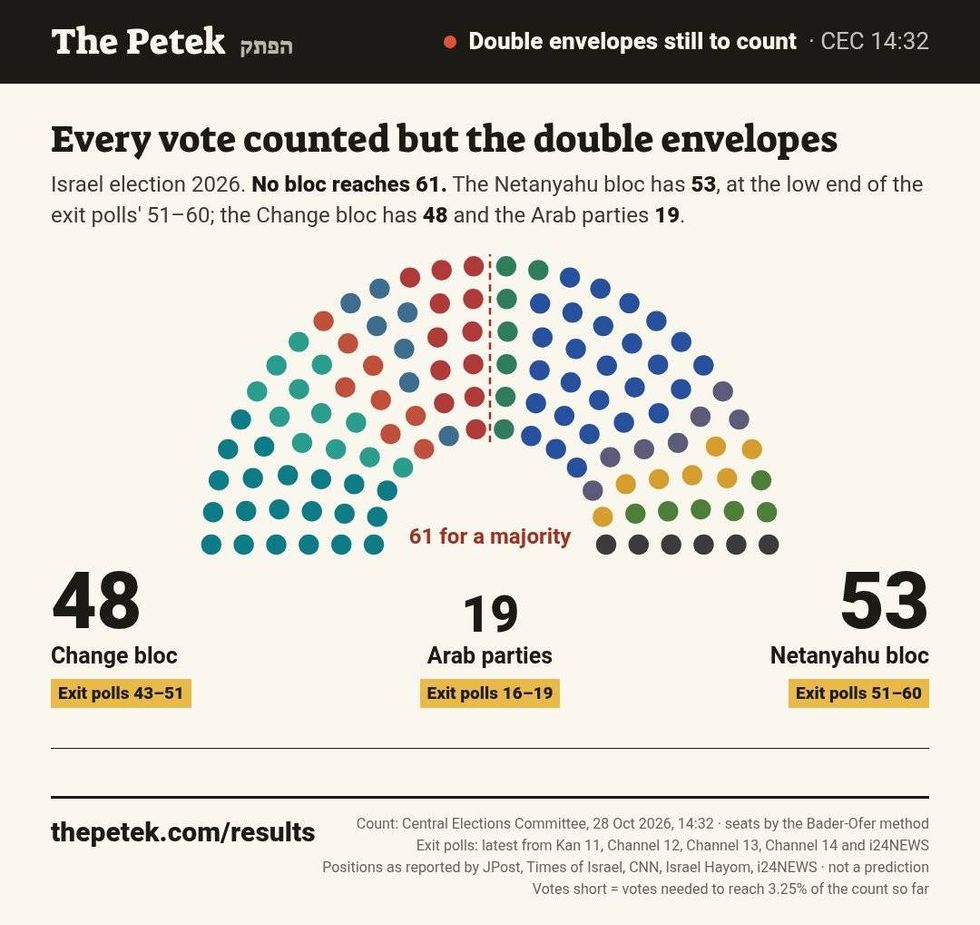
Neither Israeli Prime Minister Benjamin Netanyahu's right-wing bloc nor that of his rival, former military chief Gadi Eisenkot, secured the 61 seats required to form a government. This made the 19 seats won by Arab parties all the more consequential.
In a political system structured to marginalize its Arab minority, the electoral achievement of the Joint List and Ra'am cannot be overstated. Through their relative unity and an extraordinary convergence of political circumstances, Palestinian voters have seemingly managed to beat the system at its own game.
The choice now is not between purity and betrayal, but between paralysis, allowing Netanyahu's wars to continue unchecked, and strategic disruption.
The achievement came despite fearmongering and outright racist rhetoric by mainstream Jewish political parties, including Eisenkot himself.
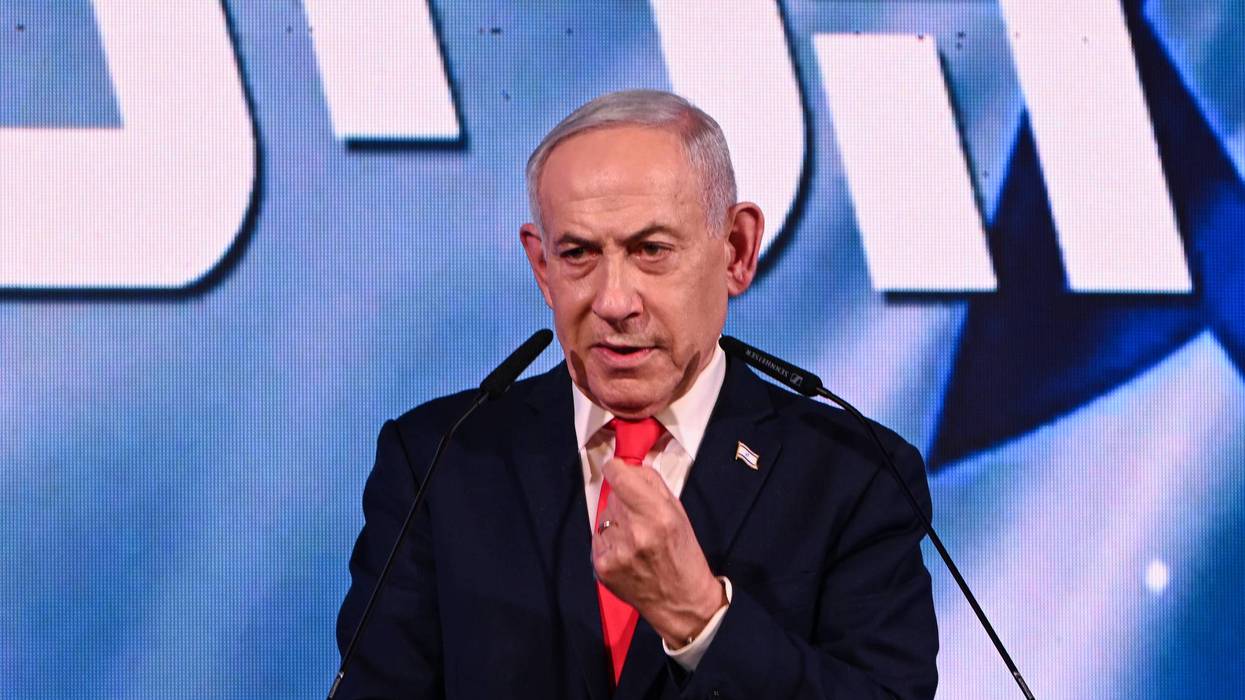
Netanyahu built much of his campaign around the specter of an Arab political takeover. On election day, he warned, “If we don't wake up now, we'll find ourselves with a government of Mansour Abbas and Ahmed Tibi.”
Far-right National Security Minister Itamar Ben-Gvir employed similar rhetoric. Alarmed by Arab turnout, he declared, “If you want this country to be Jewish and Zionist, you must go out and vote,” before warning his supporters, “Don't let them win.”
Even Eisenkot, often portrayed in Western media as a more amiable and less hawkish alternative to Netanyahu, rejected the prospect of governing with Arab parties, declaring, “I do not see an Arab party that accepts my principles.”
Whether the electoral deadlock forces him to reconsider that position is another matter. The point is that Eisenkot and his potential allies, including Naftali Bennett and Yisrael Beiteinu leader Avigdor Lieberman, have rejected Arab participation in governing coalitions.
Imagine this happening in a true democracy, where an entire political community is excluded from government because its members are Black, Irish, or Christian.
This is the crux of Israel's democracy problem. While presenting itself as democratic, Israel has waged political, legal, and constitutional wars against its Palestinian citizens, treating their very identity as a threat to the Jewish character of the state.
Historically, this has been the central point of contention among Palestinian communities in Israel: Why should Arabs participate in elections that validate a system constructed, from its very foundation, to entrench Jewish supremacy and persecute its Palestinian minority?
Consider the Knesset itself. Section 7A of its Basic Law allows electoral lists and candidates to be disqualified for rejecting Israel's existence as a Jewish and democratic state.
Imagine Black American politicians being required to recognize the United States as a white state before being permitted to contest elections.
In 2018, Israel went further, passing the Nation-State Basic Law, which declares that the right to national self-determination in Israel is “unique to the Jewish people.”
It is therefore hardly surprising that some Palestinian political movements have refused to participate in what they regard as a political charade, choosing instead to defend their communities' rights outside a fundamentally rigged parliamentary system.
One example is Abnaa al-Balad, which has long advocated boycotting Knesset elections rather than granting legitimacy to the Israeli political order.
This debate resembles the historical disagreement between revolutionary abstentionism, which rejects participation in institutions deemed illegitimate, and socialist parliamentary participation, which argues that refusing parliamentary engagement should not become an absolute principle.
Vladimir Lenin addressed this argument in his 1920 work "Left-Wing Communism: An Infantile Disorder," rejecting the notion that revolutionary movements should abandon parliamentary participation under all circumstances.
Israel's latest elections have given this debate renewed urgency.
To be clear, although some Arab parties have roots in leftist traditions, none can simply be described as revolutionary.
Ra'am, led by Mansour Abbas, participated in the Zionist coalition government headed by Naftali Bennett and Yair Lapid in June 2021. Abbas effectively sidelined broader Palestinian national aspirations in favor of municipal budgets, socioeconomic equality, and combating crime within Arab communities in Israel.
Ra'am has now won eight seats, and Abbas has made clear his willingness to pursue the same coalition strategy.
The Joint List, on the other hand, secured 11 seats. Its priorities include removing Netanyahu, defending Palestinian national rights, and advancing social justice for Palestinian citizens of Israel.
Now, more than ever, Palestinians need unity. All are facing extraordinary threats: the ongoing genocide in Gaza, accelerating annexation and ethnic cleansing in the West Bank, and further suppression of Palestinian communities inside Israel.
By uniting around a political program capable of defeating Netanyahu's far-right agenda, and setting aside their factional interests, Arab politicians could achieve something their previous parliamentary efforts failed to accomplish: Force Israel to change direction, slow down its machinery of death, and remove the wanted war criminal Netanyahu from power.
While one may insist, on principle, that participating in a corrupt political system validates that very system, history occasionally produces moments so dangerous that even such morally defensible positions must be reconsidered, however temporarily.
The choice now is not between purity and betrayal, but between paralysis, allowing Netanyahu's wars to continue unchecked, and strategic disruption.
Certain distinctions, however, must remain absolutely clear. Replacing Netanyahu is not liberation. Eisenkot is no peacemaker, but a committed Zionist whose military record and political positions offer Palestinians little reason to expect justice. A new Israeli government will not erase the crimes of the state or fundamentally dismantle its apartheid system.
What such a change might offer is a disruption of the alliance through which Netanyahu, Ben-Gvir, and Finance Minister Bezalel Smotrich have pursued their agenda of genocide, ethnic cleansing, and annexation, potentially slowing Israel's capacity to inflict violence on the current scale.
Real change, on the other hand, can only be achieved through genuine Palestinian unity and resistance on all fronts, sustained global solidarity, legal accountability, and meaningful political action.
When the Zionist Israeli politicians talk about “Arab Israelis,” they sound an awful lot like Strom Thurmond and George Wallace in the bad old days of Jim Crow in the United States.
The Israeli newspaper Arab 48 reports that some 80% of Palestinian Israelis voted in the parliamentary election. I use the term “Palestinian Israeli” on the model of “Italian American,” rather than the typical “Arab Israeli,” which is racist since it implies that all speakers of Arabic are one ethnicity or nationality and that there are no Palestinians.
The community has not voted in that proportion since the 1960s, and it is a sign of widespread anger over the policies of Prime Minister Benjamin Netanyahu, who is wanted for war crimes under a warrant issued by the International Criminal Court.
The editors of Arab 48 say that the Palestinian-Israeli parties may get 19 seats in the 120-seat Knesset, nearly 16% of seats. That isn’t quite equal to their 21.7% proportion of the population, but it is closer than they’ve been before. However, this representation will not turn into political power, since the Zionist parties absolutely refuse to allow Palestinian-Israeli blocs into their coalitions. This rejection of political participation for over a fifth of the population illustrates the oxymoronic character of the phrase “Jewish and democratic.”
Because Jewish parties in Israel refuse to cooperate with Palestinian-Israeli ones, Jewish politicians like Netanyahu can spew racial hatred and pursue a cold-hearted genocide without fear of voter backlash.
The main rival to the ruling Likud, Gadi Eisenkot, has announced that not only will he refuse to admit the Palestinian-Israeli parties to his coalition but that he would not accept their passive support either. In a parliamentary government you need 51% of seats to avoid losing a vote of no confidence, which would cause the government to fall and lead to new elections. But you could have a prime minister with 48% of the seats who stays in power a long time if parties that are not in her coalition pledge not to call a vote of no confidence. They would do this if they generally liked most of her policies and disliked those of her rivals. Eisenkot, who bears some responsibility for the Gaza genocide, is saying he won’t accept even passive support from the Palestinian Israelis, since, of course, it would make him at least a little beholden to them.
During the electoral campaign, Netanyahu and his Finance Minister-tsar of the West Bank, Bezalel Smotrich, constantly instigated against the Palestinian Israelis.
Mahmoud Mujadala, writing in the same newspaper, reports that Netanyahu and other members of the ruling Likud Party are accusing the Palestinian-Israeli parties of “stealing the election.” Netanyahu is alleging fraud and bribery at the ballot box, sort of the way US President Donald Trump and his acolytes accuse minorities in this country of voter fraud and the way they reject their loss of any election as a form of fraud. Netanyahu called for a police investigation. He also attacked the Joint List for chanting, “My country is my country.”
The Likud Party, among the more racist in the world, issued a communique saying, “The election in the State of Israel was stolen by Arab parties, which support terrorism and the erasure of the Jewish state, through serious criminal offenses that included bribery, threats, violence, fraud, and the deployment of disallowed voter mobilization programs.” It also accused Palestinian-Israelis of voting multiple times, taking a leaf from the crazy talk characteristic of Trumpism in the United States.
Because no Zionist, Jewish party will allow Palestinian Israelis into its coalition, it is possible that the two major blocs, those of Netanyahu and Eisenkot, will be unable to form a government. If they continue to reject a government of national unity, and if none of their smaller constituent parties defects to the other coalition, then yet another election will have to be held.
Because Jewish parties in Israel refuse to cooperate with Palestinian-Israeli ones, Jewish politicians like Netanyahu can spew racial hatred and pursue a cold-hearted genocide without fear of voter backlash. In the US, even segregationists like Strom Thurmond and George Wallace tried to get the Black vote once African Americans were allowed to vote and became a force in politics. That sort of moderation of extremist views isn’t happening in Israel because it still practices elements of Jim Crow.
Israel’s population is roughly 10,305,000, with 2,173,000 of them being Palestinian Israelis. Jews, along with Israeli citizens not recognized as halachic Jews by the Grand Rabbinate, total 7,828,000. Typically nearly a million of the Jews are outside the country at any one time, since young people and even middle-aged people go abroad for education and careers and many only return decades later. The return rate has fallen, though, during the fighting of the past three years. There are also 304,000 foreign nationals working in Israel, including guest workers and asylum seekers. The Palestinian-Israelis are 21.7% of the total Israeli citizen population.
The Hispanic and Latine population in the United States is roughly 20.5% of the whole. So this would be like Anglo politicians here saying that Marco Rubio should never be in the US cabinet. In fact, 22 Hispanics or Latines have served in US cabinet positions, beginning in 1988 with Ronald Reagan’s appointment of Lauro Cavazos as US Secretary of Education.
Or it would be like saying that the 50 Hispanics and Latines who hold seats in the US House of Representatives all got there by voter fraud or bribery.
In fact, the Zionist Israeli politicians, when they talk about “Arab Israelis,” sound an awful lot like Strom Thurmond and George Wallace in the bad old days of Jim Crow in the United States. Those segregationists stood against the 1965 Voting Rights Act. They didn’t want African Americans to have the franchise! And neither do the Zionist Jewish politicians in Israel want non-Jews to have the franchise. Since the latter can vote, and get seats in parliament, the only thing left for the Zionists to do is to pull their wagons around and make sure no non-Jews are allowed into the ruling coalition or the cabinet.
And the UK Green Party was attacked for passing a resolution noting that Zionism is racist. Of course, not everyone who considers themselves a Zionist is necessarily a racist. But the leaders of the political parties that embody Zionism are pretty unanimous on this score.
"Israeli policy will stay the same," said one woman in a Gaza refugee camp. "It's the policy that the Israeli state was founded on."
As Israelis await the results of this week's elections with a sense of uncertainty, Palestinians are certain of one thing—that their suffering will continue regardless of who emerges victorious.
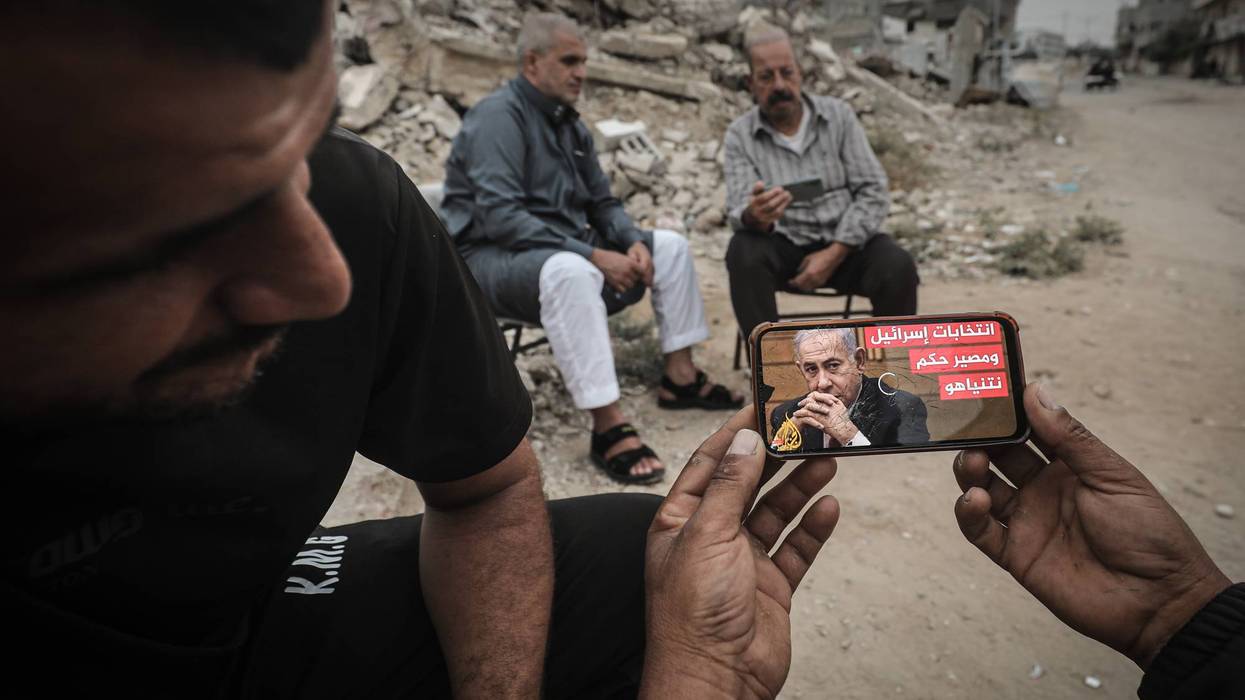
"We don't care about their elections in any way. Gaza is in the same state. Their elections change nothing here," one elderly Palestinian woman told The Specter on Wednesday from a refugee camp in the obliterated strip, where three years of US-backed Israeli genocide have left 250,000 people dead or wounded, nearly 2 million inhabitants displaced, and the territory in ruins.
A younger woman in the camp told the outlet that "things in Gaza won't change, and they will get worse" if Prime Minister Benjamin Netanyahu is reelected.
"The first thing he'll do is pick up where he left off, displacing Palestinians from the occupied West Bank... and from the Gaza Strip," she continued.
If former lawmaker and ex-Israel Defense Forces Chief of Staff Gadi Eisenkot wins, "things may unfold a little differently," she predicted, but Israeli policy will stay the same. It's the policy the Israeli state was founded on."
Like Netanyahu, Eisenkot emphatically rejects Palestinian statehood, calling the two-state solution “a mistake" and "delusional," given the October 2023 attack led by the militant resistance group Hamas—whose animus was fueled by over a century of Zionist usurpation.
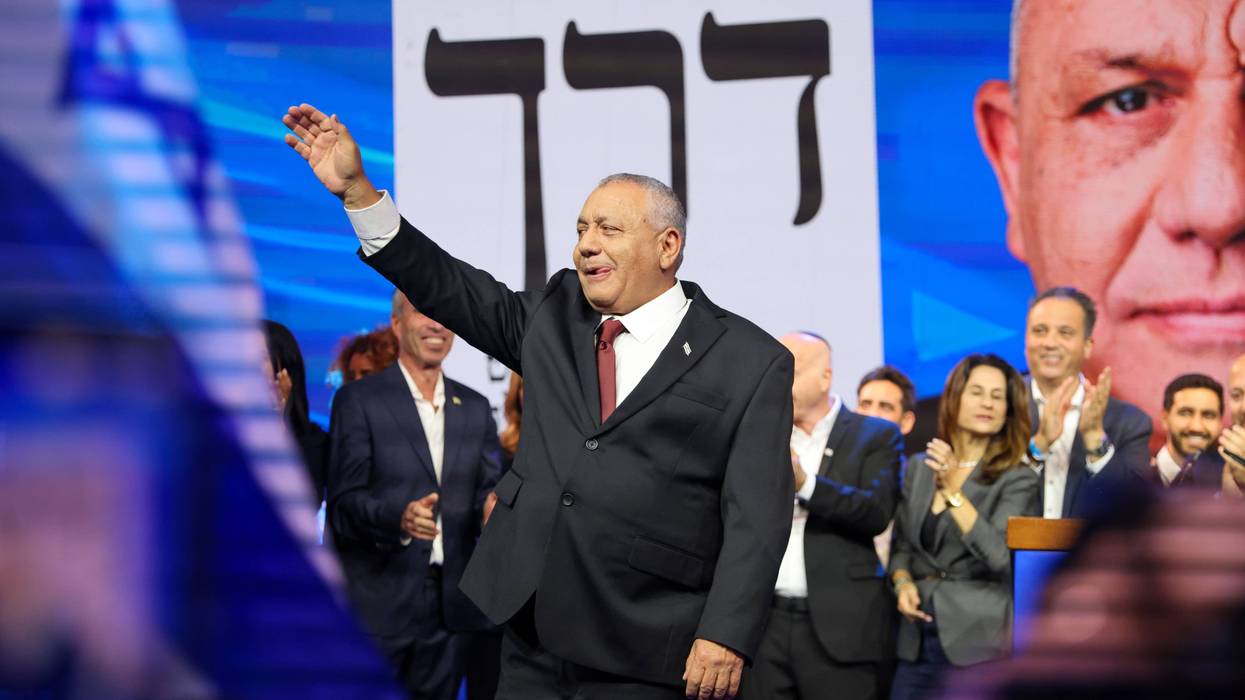
With around 90% of ballots counted as of Thursday, Israeli media projected that Netanyahu’s right-wing and ultra-Orthodox allies would capture 53 seats in the 120-member Knesset, compared with 48 for the opposition led by Eisenkot.
The Knesset has 120 seats, so 61 are needed for a parliamentary majority. The candidates' shortfall means either side would likely need support from Arab parties to emerge victorious—a prospect rejected by many Jewish political leaders.
Netanyahu would remain caretaker prime minister throughout any negotiations to form a new coalition.
Palestinian American fashion designer Alana Hadid—the half-sister of models Gigi and Bella Hadid—said in a video posted to social media that "it's important for people to understand that the intention of an election in Israel to make you think that there will be change. And of course, there will be some change in that there will be a different brand of Zionism."
"Zionism is universal across Israelis," she added, "so whoever wins this election, the change will be in name only."
Haaretz, Israel's oldest daily newspaper, on Thursday published an article in which Gazans mostly shrugged off the Israeli elections.
"Honestly, I don't feel anything about the results. As someone from Gaza, I'm just waiting to see who will bomb me next—the right or the left," a young man named Mahmoud said. "In the end, the bad will go, and the worse will come. They're two sides of the same coin, and both support your killing as a Gazan."
"I think people in Gaza will be happy to see Netanyahu fall, not because of Eisenkot, of course, but because they experienced Netanyahu and saw what he did," he added. "They hope Eisenkot will deal with Gaza differently, or that there will be some relief. But, as I said, even though the two are against each other, both want you killed."
"If they don't want to let us vote, they should say so," said the mayor of one Bedouin town.
With Israel’s governing coalition projected to lose its majority in the Knesset following Tuesday’s vote, Israeli Prime Minister Benjamin Netanyahu’s Likud Party made the unsubstantiated claim Wednesday that Arab parties “stole” the election.
“The elections in the state of Israel were stolen by Arab parties that support terrorism and the elimination of the Jewish state through serious criminal offenses of bribery, threats, violence, forgeries, and the use of prohibited software to mobilize voters,” the party said in a statement that was shared by Netanyahu on social media.
Without going into detail, the party said it was handing “hundreds of testimonies and pieces of evidence regarding election theft in many Arab polling stations" to investigators, including what it claimed were “thousands of envelopes” containing cash and ballot slips for Ra’am, one of two Arab factions that saw surging support Tuesday.
Three Ra’am activists were arrested before polls opened Tuesday in connection with an alleged vote-buying scheme; around 24,000 shekels were recovered in envelopes containing ballot papers. Netanyahu has claimed without evidence that the men were “senior officials” in the party. It remains unclear whether investigators have found any evidence that votes were changed as a result.
Likud also said Wednesday that it had provided the police and Shin Bet with evidence of “threats and violence against polling station members” in predominantly Arab communities, as well as “multiple voting behind the curtain, voting with double identities, discrepancies between the number of envelopes and the number of voters, the use of prohibited mobilization software, and more.” The post did not include specific evidence of the claims.
"Law enforcement agencies must act with an iron fist and in an immediate manner," the party said.
Israel’s Central Elections Committee said Tuesday that it had seen no indications of systematic tampering with ballot papers and was addressing individual complaints as they arose.
Talal al-Krenawi, the mayor of the Bedouin town of Rahat, rejected Likud’s fraud allegations Wednesday, calling them “disgusting… lies and falsehoods” and accusing Netanyahu of “incitement against the Bedouins.”
"We voted properly, with the ballot papers and identity cards," he said. "I have never seen elections as clean as these. It is a disgrace and a shame."
Alongside the far-right Jewish Power party led by National Security Minister Itamar Ben-Gvir, Likud tried to ban the two main Arab factions from participating in the elections, but the Supreme Court ultimately reversed that move earlier this month.
"Now that we have exercised our democratic right, we have stolen the elections? If they don't want to let us vote, they should say so," al-Krenawi said. "What they are doing is ugly. They are portraying us as thieves and cheats. It is simply disgusting."
Before voting even began, Israeli outlets reported that Likud had planned to declare the result fraudulent if Netanyahu did not emerge victorious. Likud dispatched thousands of right-wing activists to monitor polling places and undertook a program to surveil Arab voters. Haaretz reported that the party "may use the footage as false evidence for a conspiracy theory that the election was rigged."
The Yashar party, led by Gadi Eisenkot, warned Tuesday that Netanyahu was “panicking and has begun making up stories and claiming that the election is being stolen.”
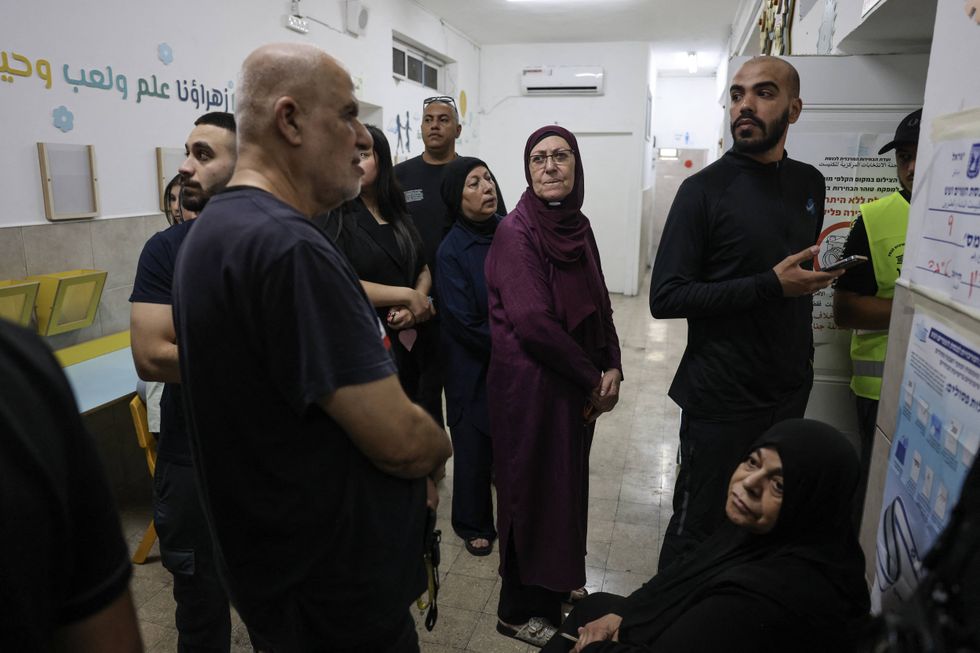
Arab voters turned out in unprecedented numbers Tuesday despite reports of delays and intimidation at polling sites. Ra’am Leader Mansour Abbas accused Netanyahu of “lying and inciting against” his voters, using strong Arab turnout as a “scare tactic” to mobilize his own anti-Arab voters.
The two Arab-majority factions, Ra’am and the Joint List, were projected to win 19 seats in the 120-seat Knesset on Tuesday, potentially giving them leverage in determining whether the Jewish anti-Netanyahu opposition can form a coalition government to oust him from power.
Netanyahu’s allegations bear an eerie resemblance to US President Donald Trump’s efforts to overturn his defeat in the 2020 presidential election and to right-wing Brazilian candidate Flávio Bolsonaro’s attempt earlier this week to claim that the reelection of Brazilian President Luiz Inácio Lula da Silva was the result of fraud.
“What a disgusting terrorist and war criminal this close Trump family friend is,” remarked author and political analyst Seth Abramson, who has noted how other right-wing populists have copied the US president’s election denial strategy.
"You have to know nothing about complex government investigations to think... the Netanyahu regime—which hates all Arabs and wants them erased—was magically able to get credible evidence of a historic nationwide criminal conspiracy in hours," he wrote on social media.
"I hear those who say Netanyahu's replacements aren't much better," he said, "but at least—unlike Netanyahu—they're not facing years in prison on corruption charges... in most cases haven't (yet) ordered genocidal attacks, and aren't (yet) proven sociopaths."
"We have no future here if we don’t stop being afraid," said Yair Golan, the leader of the left-wing Democrats party. "We must no longer accept Netanyahu’s racist division between Jewish votes and Arab votes."
Israel’s opposition parties appeared to have secured enough Knesset seats in Tuesday’s elections to oust Prime Minister Benjamin Netanyahu from power and end a four-year reign marked by genocidal war in Gaza and escalating terror and dispossession against Palestinians in the West Bank.
But will they?
With about 86% of ballots counted as of Wednesday morning, Netanyahu's far-right religious bloc is projected to have lost about 11 seats, putting them at 53, eight shy of an outright majority.
The Jewish opposition bloc, led by Yashar party leader Gadi Eisenkot, is projected to win 48 seats, putting it in a position to take control. But it would likely have to cooperate with the parties representing Israel’s Arab minority, which together won a record 19 seats on Tuesday thanks to unprecedented turnout among Arab voters who braved racist incitement from the Netanyahu camp and widespread suppression tactics at the ballot box.
Ameer Fakhoury, an analyst at Israel’s Van Leer Jerusalem Institute think tank, described the mobilization of Palestinian citizens in the elections as a “truly historic development.”
"They went to the polls in extraordinary numbers to confront a political leadership responsible for what they regard as the gravest crimes against their people: devastation in Gaza, ethnic cleansing in the West Bank, and years of persecution and intimidation at home," he told Middle East Eye.
"History has placed Palestinian citizens of Israel in an extraordinary position. Having mobilized first and foremost to protect their own people, they may now also help rescue Jewish Israelis from their country's destructive trajectory," he said.
"Bibi or Tibi"
With a limited window for the parties to negotiate a new government before another election is triggered, the Arab parties now hold leverage to press their demands.
Mansour Abbas, the leader of the smaller of the two Arab factions, Ra’am, signaled his willingness to compromise on Tuesday evening as the results emerged, saying his priority was to “bring down Benjamin Netanyahu, [Finance Minister Bezalel Smotrich], and [National Security Minister Itamar Ben-Gvir] in this election.”
Ra’am has featured in further-right governments before, previously helping to cobble together the majority that briefly allowed former Prime Minister Naftali Bennett—also part of the Eisenkot coalition—to form one in 2021. But with the current parliamentary math, Abbas’ seven seats alone would not be enough to form a majority.
The larger Arab coalition, the left-wing Joint List, has also offered to back Eisenkot’s government. Its parliamentary leader, Ahmad Tibi, has been vocal about his demands for concessions, including commitments to fight crime in Arab communities, end the demolition of unauthorized homes often built due to permit discrimination, halt racist incitement against Arab citizens, and offer a potential “political horizon” for Palestinian self-determination.
He said the choice was between "either Bibi or Tibi."
Eisenkot has likewise described “Netanyahu’s retirement from political life” as a central goal. But in an effort to court Jewish Netanyahu voters hostile to Arabs and hold together his own bloc, he ruled out working with Arab parties unless they recognize Israel as a Jewish state, accept conscription of Palestinian citizens of Israel into the Israeli military, and denounce Hamas as a terrorist organization.
Amjad Shbita, the general secretary of Hadash, the socialist party that is the biggest faction in the Joint List, has expressed hostility to the idea that Eisenkot would get to dictate terms.
“Laying down conditions won’t work with the Joint List,” Shbita said. “We will negotiate as equals because we need each other.”
Tibi said the opposition could form a coalition “if it wants to, if it is brave enough to.”
Making things more complex is pressure from within Eisenkot's bloc. Bennett and former Defense Minister Avigdor Liberman have rejected forming a government dependent on Arab parties’ support or abstention.
Liberman has urged members of Netanyahu’s Likud party to defect and join the opposition to form a “true” right-wing government. One potential opening would be to peel away Likud hawks opposed to Netanyahu’s concessions to ultra-Orthodox parties, most notably draft exemptions for yeshiva students.“Anyone who tries to erase the voices of Arab citizens is surrendering to Netanyahu and giving up on Israel."
On the other side of the opposition, Yair Golan, the leader of the left-wing Democrats party, has urged Eisenkot to cooperate with the Arab parties and form a coalition that would decisively push Netanyahu out of power.
“Netanyahu lost. I know how to count to 120. Sixty-five is more than 55. That’s how Israeli democracy works. Period,” Golan wrote Wednesday on social media. “The reality must teach us one resounding lesson: We have no future here if we don’t stop being afraid. And if we don’t stop with the racism. We must no longer accept Netanyahu’s racist division between Jewish votes and Arab votes.”
"Anyone who tries to erase the voices of Arab citizens is surrendering to Netanyahu and giving up on Israel," he said.
Another possibility on the table is a “national unity government” that would involve a power-sharing agreement between the Netanyahu and Eisenkot factions, likely boxing out the Arabs entirely.
Eitan Tzelgov, an expert on Israeli populism and democratic backsliding at the UK's University of East Anglia, presented the choice for Eisenkot's bloc as a binary one: "govern with the Arab parties, or with Netanyahu."
"Israel is a tribal society, with cohesive right-wing tribes and a shrinking liberal tribe that will need to make a decision," he said in an email to Common Dreams. "Over the years, Netanyahu and the far right have built an ideological firewall around the Arab parties by presenting any Jewish-Arab collaboration as support for terrorism."
"The leaders of the change bloc, representing Israel’s liberal camp, now must decide if they are willing to break it," he continued. "That is the only way to bring about a U-turn from the current government’s policies in Gaza and the West Bank."
He was not optimistic about their stomach for it: “A more likely outcome at the moment,” he said, “is a split within the change bloc and collaboration of some of its components with Netanyahu, a result [US President Donald Trump] reportedly supports.”
Joint List Chair Yousef Jabareen put the stakes in plain terms: “Anyone who wants to offer a substantive and genuine alternative to Netanyahu’s blood-soaked government will have to talk to us,” he said. “It’s either the continuation of racism, the continuation of exclusion, and the continuation of supremacy, or a genuine Jewish-Arab partnership.”