

SUBSCRIBE TO OUR FREE NEWSLETTER
Daily news & progressive opinion—funded by the people, not the corporations—delivered straight to your inbox.
5
#000000
#FFFFFF
To donate by check, phone, or other method, see our More Ways to Give page.
Daily news & progressive opinion—funded by the people, not the corporations—delivered straight to your inbox.
“That is just not medical care," said one expert, "that is torture."
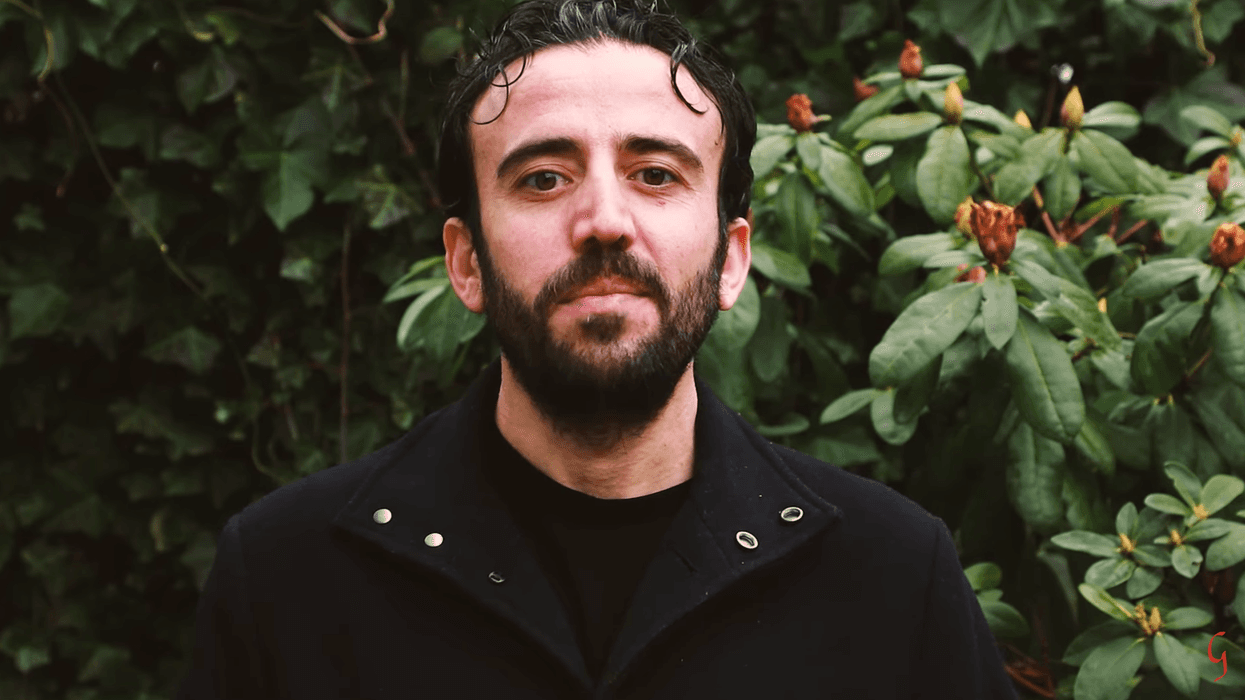
In the latest articles in his series on former hunger-striking asylum-seekers who were force-fed while detained by US Immigration and Customs Enforcement, Guardian immigration reporter José Olivares on Monday featured a Kurdish filmmaker who said he is still suffering from physical and psychological pain from the torture he endured last year.
Iran-born Gabar Choli told Olivares that he went voluntarily with guards to the infirmary at ICE's Port Isabel Service Processing Center in Los Fresnos, Texas, the first time he was force-fed.
“First I did not resist," he said. "But after I saw they were torturing me, I started protesting: ‘I’m not coming with you people.'"
From there, things only got worse. Choli said that guards would pin him down while staff shoved a plastic tube through his nose, down his throat and esophagus, and into his stomach to pump him full of nutritional liquid without his consent.
“Two guards would hold my feet; two hold my hands; one hold my head—and they would shove tubes in my nose,” Choli told Olivares. “It’s not easy to be wrestled to the ground twice a day by men that are stronger than you. And you just take it. You have 60cm (2 feet) of tube going through you, and you just feel every centimeter of it.”
“I was respectful. I just told them I am protesting for humane treatment, nothing else,” he said. “But they were determined to break me.”
Choli recounted how one nurse working for ICE “shoved the tube so hard” that “he tore my nose from the inside.”
“They would take me to solitary cell and I would just choke on my blood and drink the blood from inside [my throat],” he said.
The force-feeding continued for the next eight months. One time, a guard's rough treatment injured his ribs and made breathing painful for weeks. Another time, guards “pressed so hard on my shoulder, I thought my chest was going to break in half."
During another session, medical staff ignored Choli's warnings and accidentally shoved the nasogastric feeding tube into his lung.
On some Fridays, Choli agreed to drink the nutritional shakes if guards let him pray and socialize with other detainees.
Court records viewed by Olivares showed Choli suffered injuries and medical issues including swollen sinuses, esophageal damage, and stomach problems following his force-feeding.
Dr. Chanelle Diaz, an assistant professor at Columbia University’s medical center, told The Guardian, "That is just not medical care, that is torture."
Choli admitted: "It just broke me, mentally broke me. It came to a point that I decided to write my body an apology letter.”
The writer and director of short dramas including Waves Goodbye, Love if Loud, and We Don't Understand Him, He Speaks in Broken English, Choli advocates for Kurdish independence and legally sought asylum in the United States upon entering the country from Canada in 2022. He lived legally in Los Angeles, attended his required ICE check-ins, and obtained a US work permit while his asylum case was processed.
An immigration judge denied Choli's asylum claim in 2024, but granted him protection against being deported to Iran, barring the government from sending him back there. He was arrested in February 2025 during a routine ICE check-in following President Donald Trump's return to the White House.
Choli was first sent to the Desert View Annex in Adelanto, California—run by private prison profiteer GEO Group—where detainees have reported medical and mental health neglect, excessive use of force and pepper spray, mold, punsafe drinking water, inadequate food, poor sanitation, and use of solitary confinement, among other alleged abuses.
The following month, as ICE officials pressured him to agree to be deported to Iran—where his advocacy for Kurdish independence could cost him his life—Choli began his hunger strike, demanding better conditions and a fair resolution to his case.
“I am not suicidal,” Choli declared to a judge. “I am using hunger strike as the only available option to protest the abuse and mistreatment.”
Around two weeks after beginning his hunger strike, Choli was transferred to Port Isabel, where he was held in solitary confinement—which survivors and experts call a form of psychological torture—as he continued his hunger strike.
US District Judge Rolando Olvera—an appointee of former President Barack Obama—ordered Choli's force-feeding following a request from ICE, which called the detainee's hunger strike an attempt "to manipulate the immigration system" and “a serious threat to the security and good order” at Port Isabel. Olvera did not meet with Choli, who had no legal representation throughout his ordeal.
The US Department of Homeland Security told The Guardian that ICE “provides involuntary medical treatment only to prevent imminent life-threatening harm or death."
However, under the World Medical Association’s Declaration of Malta, doctors are advised not to force-feed prisoners who choose to hunger strike and understand the consequences of their actions.
During The Troubles in Northern Ireland, British authorities allowed 10 imprisoned Irish Republican Army members, including former Member of Parliament Bobby Sands, to starve themselves to death.
In contrast, force-feeding is institutional policy in US prisons, including the Guantánamo Bay concentration camp in Cuba, where detainees—most of whom were charged with no crime—were force-fed during the George W. Bush and Barack Obama administrations.
During Trump's two terms, hundreds of people have gone on hunger strike at ICE detention centers across the country to protest overcrowded and unsanitary conditions, spoiled and worm-infested food and water, inadequate medical care, delays in immigration procedures, alleged physical and psychological torture, and other mistreatment.
In May, US Homeland Security Secretary Markwayne Mullin dismissed the hunger strikers as a “handful” of detainees whom he falsely claimed were striking because they “want their ethnic right food.”
"This isn't Holiday Inn," Mullin said, referring to the hotel chain.
In early January, ICE deported Choli to Canada, where he was reunited with his siblings. He told Olivares that he had to learn to eat again.
"The price of it was my kidneys, my gallbladder," he said. "My intestines. My being. My bladder, you know, is damaged. Every time I twist and turn, I feel pain. But this is the price you pay for making a stand for what is right.”
"If they admit openly that there are hunger strikes, they admit that the conditions in detention are so bad that people are willing to forgo food in order to raise awareness," one lawyer said of the administration.
The Trump administration subjected hunger-striking immigrants held in US Immigration and Customs Enforcement detention centers to involuntary medical procedures, including forced feeding, a blatant and painful violation of medical ethics widely considered to be torture.
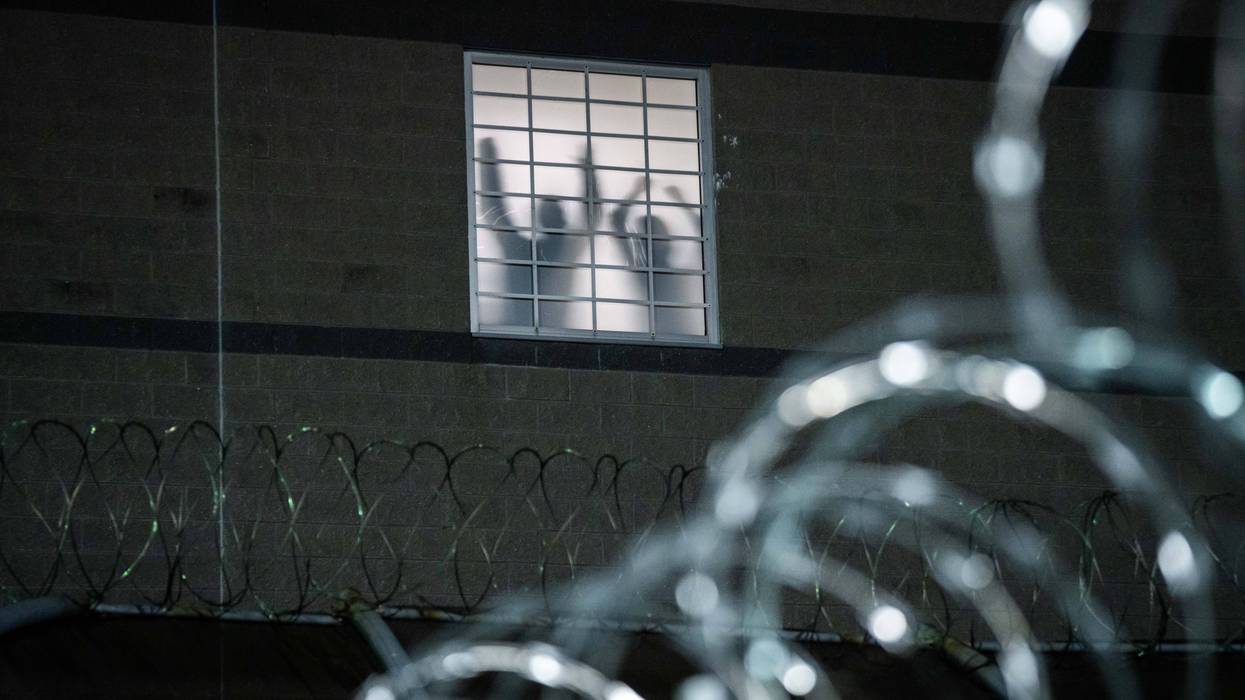
In the second article of a two-piece series, The Guardian revealed on Monday that court records showed ICE personnel attempted to subject at least 10 hunger-striking detainees to the procedures. At least three, and possibly five, detainees were force-fed, while five others ended their hunger strikes at the last minute rather than undergo the invasive, non-consensual insertion of a plastic tube through the nose, down the throat and esophagus, and into the stomach to deliver liquid nutrition against their will.
Hundreds of people have gone on hunger strike at ICE detention centers across the country to protest overcrowded and unsanitary conditions, spoiled and worm-infested food and water, inadequate medical care, delays in immigration procedures, alleged physical and psychological torture, and other mistreatment.
The Guardian's investigation found that one Kurdish asylum seeker detained at ICE's Port Isabel Service Processing Center in Los Fresnos, Texas was subjected to force-feeding for eight months, while another hunger-striker at the same facility endured six months of the painful procedure. In six cases reviewed by The Guardian, immigrants who were force-fed had no legal representation.
The Department of Homeland Security maintains that detainees receive adequate meals and care and disputes reports of abuse.
In May, Homeland Security Secretary Markwayne Mullin dismissed the hunger strikers as a "handful" of detainees and falsely claimed they were striking because they "want their ethnic right food."
"Well, they can go back to their country and get whatever food they want... This isn't Holiday Inn," he added while Commerce Secretary Howard Lutnick looked on and smiled approvingly.
DHS Secretary Mullin dismisses the detainee hunger strike in an ICE facility:
They're refusing to eat because they want their ethnic food. Well, they can go back to their country and get whatever food they want. This isn't Holiday Inn. pic.twitter.com/tdUYMkUy1K
— FactPost (@factpostnews) May 27, 2026
A judge must authorize the forced feeding of ICE detainees. According to The Guardian, judges often quickly issue the requested emergency orders before immigrants can legally object.
“There’s very little due process in these proceedings,” immigrant rights attorney Eunice Cho told the newspaper, comparing the judges' orders to a "rubber stamp."
Global medical authorities, United Nations bodies, human rights defenders, and others—including people subjected to it—call forced feeding a form of torture.
"The tube went inside a little bit and then got stuck," Ajay Kumar, a former ICE detainee force-fed during Trump's first term in 2019, told The Intercept, which in 2022 obtained video of the Indian asylum seeker being strapped and pinned down by five guards in riot gear before having the nasogastric tube forced into him.
"I felt as if [the tube] was going down my throat, tearing up the insides, and blood started coming from my mouth and nose," he said. "It was very hard."
"After that they took me for an X-ray. After doing the X-ray, they informed me that the tube has not been inserted properly, so we will have to insert it again," Kumar recalled. He was asked if he wanted to end his hunger strike and, when he said no, the second insertion began. "It was more painful. These people are torturing me. The one ICE officer, I never forget him. He's smiling."
Kumar was taken for a second X-ray and was again informed that the tube was incorrectly inserted. He was again asked if he would continue his strike.
"You can torment me as much as you want, you won't be able to break my spirits," he told them. The tube was correctly inserted the third time and Kumar was pumped full of a nutritional shake. He said he could not breathe, sleep, or speak properly for weeks after.
Kumar said he was force-fed in front of three other detainees "so that they would all start eating after seeing what's happening to me."
"Whenever the doctors said, 'Yes, we are helping you, we cannot let you die like this,' I used to tell them, you are treating me worse than dying," he added.
Under the World Medical Association’s Declaration of Malta, doctors are advised to not force-feed prisoners who choose to hunger strike and understand the consequences of their actions.
“Forcible feeding is never ethically acceptable,” the declaration states.
In 1981, UK authorities allowed 10 imprisoned Irish Republican Army members, including former Member of Parliament Bobby Sands, to starve themselves to death in Northern Ireland. Their deaths occurred after between 46 and 73 days of refusing food.
In contrast, force-feeding is institutional policy in US prisons, including the Guantánamo Bay concentration camp in Cuba, where detainees—most of whom were charged with no crime—were force-fed during the George W. Bush and Barack Obama administrations.
Immigrants detained by the US have been force-fed since at least the Obama administration.
Sarah Houston, a managing attorney at ImmDef, told The Guardian that an ICE Health Service Corps document acknowledging the force-feeding of detainees and viewed by the newspaper is a "blatant admission" that the practice is being used by the Trump administration.
“But if they admit openly that there are hunger strikes, they admit that the conditions in detention are so bad that people are willing to forgo food in order to raise awareness about the situation,” Houston said. “Because no one goes on hunger strike unless they are really desperate.”
Matthew Wynia, a medical ethicist and director of the Center for Bioethics and Humanities at the University of Colorado, said that “it is unethical to force treatment on someone who is saying, 'Don’t do this to me.'"
“People who are on hunger strike do not want to die, they are not suicidal," he continued. "They are using the only tool available to them to protest the circumstances of their confinement.”
“The idea of health professionals serving as agents of the state, rather than protectors of our patients, has a notorious history," Wynia added. "And for the medical profession, we really don’t want to go down that path again."
The Guardian series comes amid a broader pattern of abuse and neglect, sometimes deadly, of ICE detainees, many of whom are locked up in facilities run by private prison profiteers.
According to ICE’s public database, more than 50 people have died while detained by the Department of Homeland Security (DHS) agency during President Donald Trump’s second term, including two people who were killed in a sniper attack on an ICE administrative and processing center in Dallas. At least 10 of the deaths were men who killed themselves, according to an Associated Press investigation published late last month.
Many of the deaths were preventable, say experts who point to systemic understaffing and DHS policy choices that weaken detainee care and employee oversight.