SUBSCRIBE TO OUR FREE NEWSLETTER
Daily news & progressive opinion—funded by the people, not the corporations—delivered straight to your inbox.
5
#000000
#FFFFFF
To donate by check, phone, or other method, see our More Ways to Give page.

Daily news & progressive opinion—funded by the people, not the corporations—delivered straight to your inbox.
This retreat shows that these projects and their false climate solutions are not just unpopular, they’re also a major financial risk to companies, investors, and communities.
Plans for one of the world’s largest blue hydrogen and ammonia projects have collapsed, wasting billions of dollars in a risky bet that frontline communities resisted for years. Despite "clean" marketing, the project would have relied on dirty fracked gas.
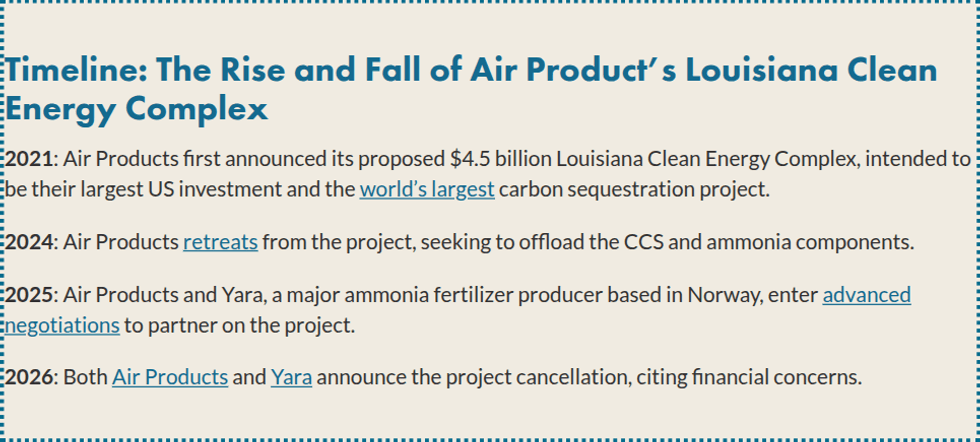
The gas and chemicals company Air Products canceled its proposed $4.5 billion Louisiana Clean Energy Complex, wasting $2.9 billion—more than half of the overall cost—after concluding the project no longer met its financial expectations. Once promoted as the company’s largest US investment—and the world’s largest carbon sequestration project—the cancellation is more than a corporate setback. It is a signal of the end of the so-called "low carbon" hydrogen hype despite years of industry promotion, generous public subsidies, and claims that these technologies can be used to tackle climate change.
This retreat shows that these projects and their false climate solutions are not just unpopular, they’re also a major financial risk to companies, investors, and communities. For Louisiana communities that opposed the project from the beginning, however, the announcement means something else: proof that projects portrayed as inevitable can be stopped.
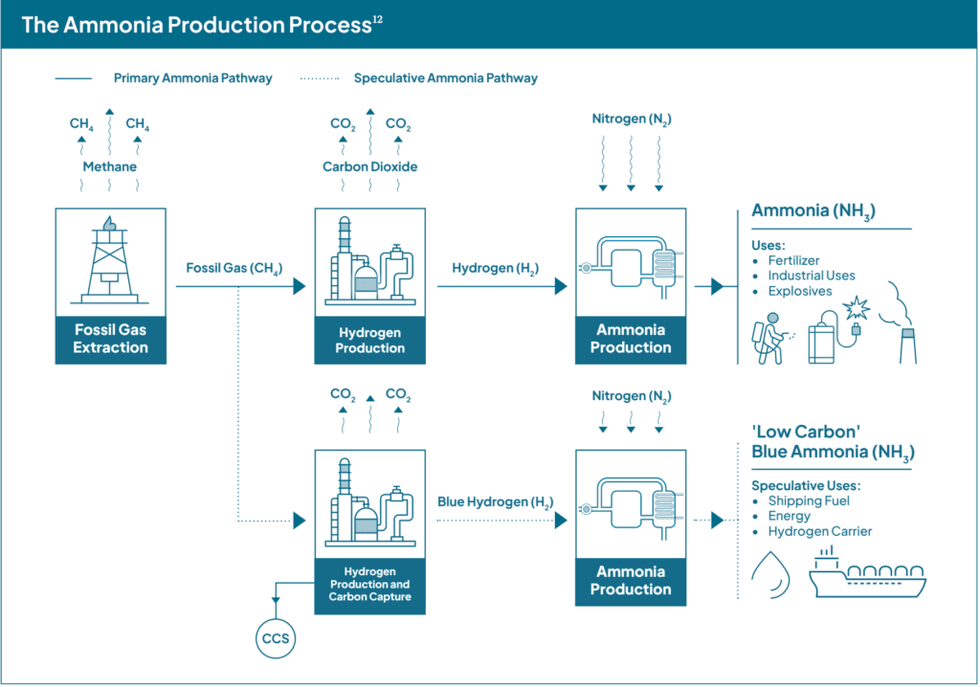
When Air Products first announced the project in 2021, the company described it as a transformational investment. Their plans included the production of 1,700 metric tons of hydrogen per day from fracked gas with up to 95% of emissions mitigated through carbon capture and storage (CCS). They planned to pump the hydrogen—called "blue" hydrogen due to the addition of CCS—through a pipeline along the Gulf Coast for refineries and petrochemical plants, or turn it into ammonia, which is a toxic, fossil fuel-derived chemical—used primarily as a fertilizer.
That vision quickly began to unravel. By 2024, Air Products was already seeking partners to offload parts of the project, including the ammonia and carbon capture components. In 2025, it entered advanced negotiations with Norwegian fertilizer giant Yara. By mid-2026, both companies announced the project had been abandoned, citing financial concerns and an inability to find customers for a speculative market.
The cancellation reflects a broader reality: Despite billions in public funds and years of political backing, many blue hydrogen projects continue to struggle with rising costs, uncertain markets, and technical challenges.
Air Products is not alone. At least 45 hydrogen and ammonia production facilities have been proposed in recent years across the US—mostly clustered in Texas and Louisiana—with only one making it to the construction phase, and many more on hold. Although more than 80% of ammonia produced in the US is used to manufacture fertilizer, much of the proposed buildout depends on speculative markets—including using ammonia as a shipping fuel, hydrogen carrier, and energy source—none of which are possible at scale today.
To make these projects appear climate friendly, companies increasingly market them as "clean," "blue," or "low-carbon" by pairing fossil fuel-based hydrogen and ammonia production with CCS. Yet, CCS has repeatedly failed to deliver emissions reductions while putting communities at elevated risk for pollution and related disasters. Despite that record, federal carbon capture subsidies were expanded in 2022 and again in 2025, potentially leading to the transfer of $1 trillion in public funds to private corporations over the coming decades.
The collapse of one of the industry’s flagship projects should prompt investors and policymakers alike to ask whether this business model is built on wishful thinking rather than sound evidence and economics.
Air Products’ proposed Louisiana Complex would have consisted of a hydrogen and ammonia plant in Ascension, Louisiana, with 38 miles of pipeline sprawling across five parishes, connecting to one of at least 10 separate injection wells underneath Lake Maurepas. The project would have formed part of a larger effort to transform Louisiana into a national hub for CCS.
More than just a proposed storage site, Lake Maurepas is an important estuarine ecosystem beloved by locals for recreational activities like boating, fishing, and wildlife observation. One of the nation’s largest forested wetlands borders the lake, supporting wildlife, commercial fishing, and local businesses. For generations, communities have depended on these waters—not simply for income, but as part of their identity. From the moment residents learned about the Air Products project, they organized against it.
Today, more than 30 CCS projects are under review across the state by the Louisiana Department of Conservation and Energy. Many would be built alongside communities already burdened by decades of petrochemical pollution in the 85-mile stretch along the Mississippi River between New Orleans and Baton Rouge, known locally as Cancer Alley.
These communities have long borne the health costs of fossil fuel development. Siting this experimental and knowingly dangerous CCS technology alongside frontline communities already overburdened by industrial pollution would force them to shoulder another layer of industrial risk, while companies stand to gain hundreds of billions of dollars in public money over the next 20 years through a federal tax credit.
The failure of Air Products’ vision is not a surprise to anyone watching the proposed CCS buildout; the ballooning costs and failure to deliver on ambitious promises follow a familiar pattern.
The Kemper “clean coal” project in Mississippi was once celebrated as the future of carbon capture, claiming it would capture 65% of emissions from the power plant. Originally budgeted at $3 billion, the costs of the project more than doubled to $7.5 billion over the seven years of its construction (2010-2017), before the carbon capture system was abandoned altogether. Despite the massive investment, the Kemper facility never operated as promised and was partially demolished in 2021. Local residents are still paying for the corporate loss from this experiment through their electricity bills.
The failure of the Kemper project should have been a warning for future investments and should have prompted the more fundamental question: Who bears the cost of these projects?
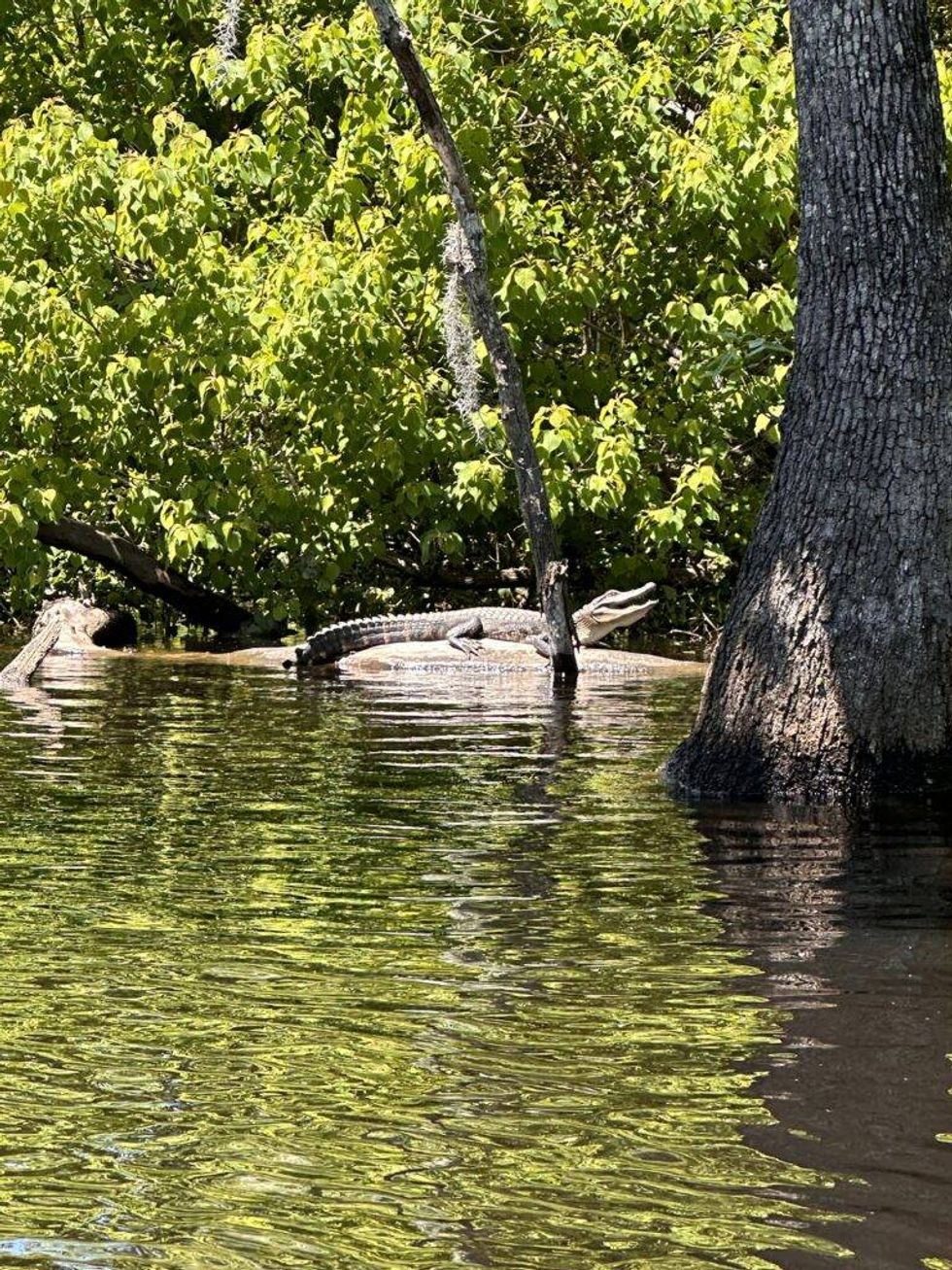
While Louisiana leads the nation in oil refining, natural gas production, and chemical production, the state consistently ranks among the poorest and least educated states in the US. CCS projects will no doubt add to the unequal environmental burden that the state population is forced to bear for the benefit of corporations. While many of the hardships can be quantified, the joy and love for the land by its residents is immeasurable. There’s no metric that captures the experience of paddling a canoe across Lake Maurepas, seeing alligators bask in the sun, listening to birdsongs echo across the wetlands, or watching the flotant—marsh grasses that float on top of the water—bob with the waves.
For the communities that have called this place home for generations, protecting the lake has never been about stopping a single project—it has been about safeguarding a way of life. The cancellation of the project is a victory not only for the hundreds of community members who organized against it—showing what is possible when people stand together to fight against false solutions—but also for the future generations who will continue to enjoy this remarkable ecosystem.
The cancellation is also a major win for communities that spent years warning about the project’s risks. Concerned residents across the complex’s planned footprint partnered with environmental groups to speak out at public hearings, organize neighbors, and challenge permits, refusing to accept that the project was inevitable.
Their persistence mattered. For years, the fossil fuel industry insisted that carbon capture represented the future—that projects like this were necessary and unavoidable. But as James Hiatt, founder of For a Better Bayou based in Lake Charles, Louisiana, put it:
Air Products pulling out proves that nothing here is inevitable. Industry wants us to believe these projects are a done deal, that our voices don’t matter. They do. Elected and regulators didn’t hand us this win; community pressure did. Consistent, persistent organizing works.
Air Products’ withdrawal is not simply a failed investment by one company. It is a warning to policymakers considering whether public money should continue subsidizing projects that repeatedly fail to deliver.
Communities increasingly reject being asked to bear new risks in exchange for promises that never materialize. And this failure is likely not the last ammonia and CCS project to be canceled. Even now, many projects are on hold or delayed, further signaling to companies, investors, and communities that they are a bad bet.
The cancellation also sends a broader message: Expensive, speculative technologies designed to prolong fossil fuel production aren’t fooling anyone and companies pushing these risky projects will be footing the bill.

"Reject false solutions, such as natural gas, mega-dams, geoengineering, bioenergy, forest offsets, carbon trading schemes, nuclear energy, biodiversity credits, and carbon capture and storage."
As about 265 million people across the United States face advisories for this week's "climate change-driven heatwave," over 160 groups from 45 countries on Monday collectively called for "real" and urgent action to "keep global warming below 1.5ºC to preserve a healthy and livable planet for ourselves and future generations."
The "call to action" was released as United Nations climate meetings are wrapping up in Bonn, Germany, and in anticipation of the next U.N. Climate Change Conference (COP30), set to be held in Belém, Brazil in November.
The joint call was published on the first day of the virtual Global Women's Assembly for Climate Justice: Path to COP30 and Beyond, organized by the Women's Earth and Climate Action Network (WECAN) International.
"For too long, science-based climate solutions have been sacrificed on the altar of capitalism."
"The climate crisis is not just an environmental crisis—it is a crisis of justice, of society, and of humanity itself. How we respond, and who is centered in that response, matters profoundly," said WECAN founder and executive director Osprey Orielle Lake in a statement. "We are calling for systemic transformation—one that delivers climate, social, and economic justice for all generations."
"While governments and corporations push us deeper into climate chaos, movements around the world are rising," she noted. "From every corner of the Earth, women leaders are coming together with solutions and strategies to defend our planet and our communities. We call on governments and financial institutions to heed their voices and ensure effective and equitable policies—from Bonn to Belém and beyond. We must rise boldly, because climate change is not waiting for politics. Our movements are not bending. We are not breaking. We are defining and building a healthy and just future for all."
The new call to action points out that "last year, the world breached this threshold with global average temperatures exceeding 1.5ºC above preindustrial levels. This alarming milestone is not yet a permanent breach of the Paris agreement guardrail, which refers to long-term warming, although scientists predict that 2024 will be the first of a 20-year period reaching 1.5ºC warming."
"Although the pathway is drastically narrowing, the International Energy Agency affirms that the goal of the Paris agreement is still attainable," the publication continues. "Scientists assert that limiting global warming to 1.5ºC will require significant and urgent action from governments and financial institutions."
Specifically, the coalition outlined 10 broad actions for governments and financial institutions, beginning with urging both the public and private sectors to end fossil fuel expansion and extraction, and to "reject false solutions, such as natural gas, mega-dams, geoengineering, bioenergy, forest offsets, carbon trading schemes, nuclear energy, biodiversity credits, and carbon capture and storage."
The collective also called for accelerating a just transition, promoting women's leadership and gender equity, protecting the rights of Indigenous peoples, safeguarding forests and biodiversity, preserving oceans and freshwater, advancing food security and sovereignty, implementing the Rights of Nature, providing robust climate finance, and cutting off financial institutions' support for "harmful projects and redirecting resources into climate solutions."
STARTING SOON! The first day of the Global Women's Assembly for Climate Justice: Path to COP30 and Beyond is kicking off today at 1:00 PM EDT! Join us via Zoom for interpretation and chat moderation or be welcome to watch live on Facebook and Youtube! tinyurl.com/CJ-2025
[image or embed]
— WECAN International (@wecan-intl.bsky.social) June 23, 2025 at 11:49 AM
In addition to WECAN, signatories include Amazon Watch, Journalists for Human Rights, MADRE, MoveOn.org, Public Citizen, Rainforest Action Network, Turtle Island Restoration Network, Urgewald, and over 100 other organizations.
"For too long, science-based climate solutions have been sacrificed on the altar of capitalism," said Zukiswa White, a project specialist and social justice consultant, and speaker at the WECAN assembly. "Corporations, financial institutions, and governments have criminalized and penalized those fighting to defend life, protect the integrity of the planet, and fight for climate action. All this, while the wealthy elite profit off of extracting and burning our planet's resources."
"If we are to prevent the worst of climate change—a crisis that is already impacting most people on the planet—we demand that we insist on a different path," White continued. "Choosing to keep the status quo is neither a coincidence nor is it our inevitable destiny. Rather, it is a political choice. So too is upholding systems that violate planetary boundaries. To counter this, we must center the work of frontline leaders and experts around the world—move into implementation of policies that not only halt climate devastation, but also champion democratic, gender transformative, and community-based solutions."
"The Fair Share NDC is more than just a pledge, it is a road map for how the U.S. can prevent the coming catastrophe," said one campaigner.
A coalition of climate campaigners on Tuesday published a proposal "for how the U.S. can play a bigger role in tackling the global climate emergency."
Described as "a civil society model document for the U.S. climate action pledge submission to the United Nations Framework Convention on Climate Change" under the landmark Paris agreement, the Fair Share Nationally Determined Contribution (NDC) is a "comprehensive plan for the United States to significantly reduce greenhouse gas emissions and enhance climate action in an equitable way both domestically and internationally."
Russell Armstrong, international policy liaison at the U.S. Climate Action Network, a member of the coalition, explained that "the Fair Share NDC is more than just a pledge, it is a road map for how the U.S. can prevent the coming catastrophe."
The plan sets targets for the U.S. to slash domestic carbon dioxide emissions by 80% by 2035 from 2005 levels, in line with "scientific standards and universally accepted global justice principles."
Allie Rosenbluth, U.S. program manager at coalition member Oil Change International, said: "The U.S. has a long way to go to become the climate leader the world needs. It's the largest producer of oil and gas in human history, and it plans to expand fossil fuels far beyond what's compatible with a livable climate."
"The Fair Share NDC shows what the U.S. must do to change course, starting with an equitable phaseout of fossil fuels and paying its fair share to the countries dealing with the consequences of U.S. extraction," she added.
The proposal is centered on a phased approach to ending all fossil fuel production, with coal to be eliminated by the end of the decade and oil and gas by 2031. The plan also proposes the development of "robust public transportation infrastructure and transitioning to 100% clean energy by 2030."
"This transition will also be fair, funded, feminist, and equitable," the report states. "A funded fossil fuel phaseout means that wealthy Global North countries commit to paying their fair share for fossil fuel phaseout in their own countries and in the Global South. A feminist fossil fuel phaseout means a gender-just energy transition from an extractive, fossil-fueled economy to a regenerative, care-based economy that sustains life and well-being for all."
According to Oil Change International:
The U.S.' historic emissions are so large that the U.S. cannot mitigate enough emissions domestically to fulfill its "fair share" of responsibility for the climate crisis. It must also provide Global South countries annually with $106 billion in mitigation funding and $340 billion worth of adaptation and loss and damage funding by 2030. To mobilize money on such a scale, the U.S. can redirect funding for fossil fuel subsidies and military weaponry, and make wealthy elites and big polluters pay for the damages they've already caused. Finally, changing global rules on debt, taxes, trade, and technology will also significantly expand the fiscal space Global South countries have to finance their own transitions, lowering the overall bill.
The report warns that the U.S. must commit "to avoiding dangerous distractions and unproven technological solutions, such as
forest offsets; carbon market mechanisms; carbon capture and storage, direct air capture, enhanced oil recovery, and other false solutions that act as dangerous distractions to only delay phasing out of fossil fuel production."
Tuesday is False Solutions Day during the Global Week of Action for Climate Finance and a Fossil-Free Future, which runs from September 13-20 and focuses on pressuring Global North governments to "stop making empty promises" and "cease pandering to corporations to perpetuate fossil fuels."
Basav Sen, climate policy director at the Institute for Policy Studies, a member of the coalition, said in a statement that "the U.S. is the world's largest oil and gas producer and largest cumulative greenhouse gas emitter."
"It's time the U.S. took responsibility for its outsized role in causing the climate crisis," Sen added. "The Fair Share NDC is a pathway for the U.S. to actually become the climate leader it claims to be, both internationally and at home."
"The multinational $4 trillion fossil fuel industry has not only corrupted citizens' understanding of the climate crisis but also contributed to the erosion of democracy around the world."
As more people around the world demand an end to the fossil fuel era in the face of a worsening planetary emergency, Big Oil is "undermining democratic functions to stem the tide of climate action," a report published Tuesday revealed.
"Through a wide array of tactics, the multinational $4 trillion fossil fuel industry has not only corrupted citizens' understanding of the climate crisis but also contributed to the erosion of democracy around the world," the Center for American Progress (CAP) said in a new analysis.
CAP's Chris Martinez, Laura Kilbury, and Joel Martinez examined "what these tactics look like in practice and how they work against democratic systems to stifle climate action."
According to the authors, the three main democracy-destroying tactics are:
The fossil fuel industry is "stifling democratic rights through lawsuits, anti-protest laws, and voter suppression," the report states. Meanwhile, Big Oil greenwashes its harmful practices through direct advertising and via lobby groups like the American Petroleum Institute, which "regularly publicizes its member companies' investments in renewable energy and carbon reduction technologies."
"On closer inspection, however, industry's declared efforts to fight climate change fall woefully short, with oil and gas companies often devoting more attention to creating the appearance of working on climate solutions than actually developing them," the analysis contends.
Big Oil also uses the tactic of "astroturfing," or creating the appearance of grassroots support for policies and practices that are beneficial to the industry but harm the climate by perpetuating the fossil fuel era.
"The oil and gas industry's strategy is clear: Manipulate the levers of power to obstruct any climate policies that may reduce the world's reliance on fossil fuels," Martinez, CAP's associate director for domestic climate, said in a statement. "If left unchecked, these tactics stifle democratic rights, making governments more responsive to corporations than their own citizens."
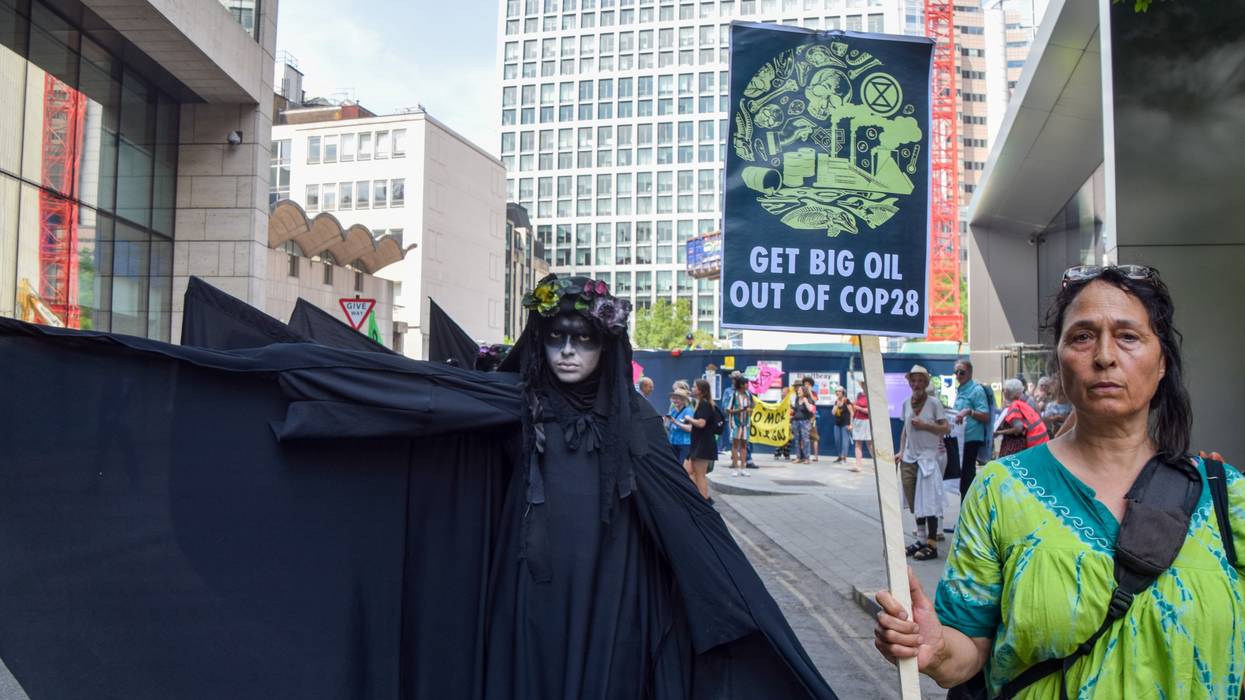
The CAP analysis comes as a record 2,456 fossil fuel lobbyists flood the floors of the United Nations Climate Change Conference, or COP28, in Dubai, peddling influence and false climate solutions like so-called "abated" emissions, biofuels, and hydrogen.
"In the case of the [United Arab Emirates'] COP28 presidency, the industry capture of these spaces is complete, with a state-backed fossil fuel company threatening to interfere with multilateral climate progress at the highest and most consequential level," the report states, referring to summit president Sultan Ahmed Al Jaber, who is also the CEO of the UAE's national oil firm—and who has reportedly been using the run-up to the conference to pursue new fossil fuel deals.
"As warning lights of democratic backsliding strobe across the world and endanger critical efforts to address the climate crisis," the analysis adds, "the twin threat of the fossil fuel industry's attacks on climate action and the democratic functions necessary to take that action must not be ignored."
"These carbon credits are essentially predicting whether someone will chop down a tree, and selling that prediction," said one study author. "If you exaggerate or get it wrong, intentionally or not, you are selling hot air."
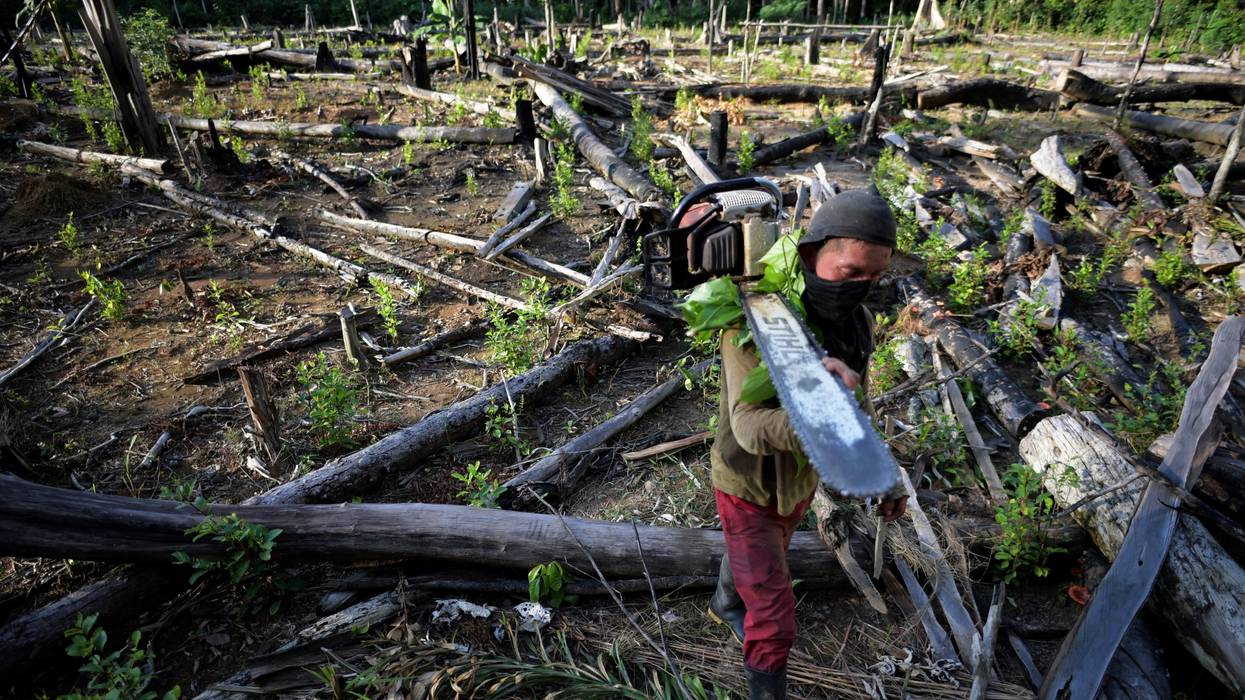
Most carbon offset schemes significantly overestimate their impact on reducing deforestation, with many of the carbon credits purchased by polluting corporations amounting to little more than "hot air," according to a researcher behind a study released Thursday that could portend billions of dollars in losses for speculators.
"Reducing emissions from deforestation and forest degradation (REDD) projects are intended to decrease carbon emissions from forests to offset other carbon emissions and are often claimed as credits to be used in calculating carbon emission budgets," explains the study, which was published in the journal Science.
However, according to the study:
We examined the effects of 26 such project sites in six countries on three continents using synthetic control methods for causal inference. We found that most projects have not significantly reduced deforestation. For projects that did, reductions were substantially lower than claimed...
Methodologies used to construct deforestation baselines for carbon offset interventions need urgent revisions to correctly attribute reduced deforestation to the projects, thus maintaining both incentives for forest conservation and the integrity of global carbon accounting.
"Carbon credits provide major polluters with some semblance of climate credentials. Yet we can see that claims of saving vast swathes of forest from the chainsaw to balance emissions are overblown," study co-author Andreas Kontoleon, from the University of Cambridge's Department of Land Economy, said in a statement.
"These carbon credits are essentially predicting whether someone will chop down a tree, and selling that prediction," he added. "If you exaggerate or get it wrong, intentionally or not, you are selling hot air."
Kontoleon added that overestimations of forest preservation have driven an increase in the number of carbon credits on the market, resulting in artificial price suppression.
"Potential buyers benefit from consistently low prices created by the flood of credits," he said. "It means that companies can tick their net-zero box at the lowest possible cost."
This could mean that carbon speculators stand to lose billions of dollars in the future as offsets become stranded assets.
"It's currently a buyer's market and buyers are, rightly, prioritizing quality. There are over a billion tons of issued but not retired credits in the market—this suggests lots of credits can be written off, and there will remain a large supply for buyers to tap into," Anton Root, head of research at AlliedOffsets, told The Guardian Thursday.
"A correction like that could help to orient the market toward fundamental supply-demand dynamics, which we don't currently tend to see, and drive up the price for credits that are deemed to be above the quality threshold," he added.
The new research follows other scientific research and journalistic investigations, including a January study by The Guardian, Die Zeit, and SourceMaterial that concluded that over 90% of the rainforest carbon offsets sold by Verra, the nonprofit organization that sets the world's leading sustainability standard, "are largely worthless and could make global heating worse."
While some scientists argue that CO2 extraction, either via natural or technological means, is needed in order to meet the goals of the Paris climate agreement, opponents call the technology a "false climate solution."
Green groups including Extinction Rebellion and Food & Water Watch have for years warned against carbon capture and storage, which critics call a "scam" and "greenwashing."
"Carbon offset markets are widely discredited," Food & Water Watch policy director Jim Walsh said earlier this year. "Their only benefit lies in enriching the middlemen charged with selling the lie."
Despite this, the Biden administration is pushing ahead with a plan to invest $2.5 billion in a pair of major carbon capture and storage projects, which it claims will "significantly reduce carbon dioxide emissions from electricity generation and hard-to-abate industrial operations" as part of the "effort critical to addressing the climate crisis and meeting the president's goal of a net-zero emissions economy by 2050."
"Carbon offset markets are widely discredited. Their only benefit lies in enriching the middlemen charged with selling the lie."
A leading U.S. green group on Wednesday dismissed a major carbon offset deal as a "scam," while underscoring such schemes' inefficacy at reducing emissions.
NextGen—a joint venture between Swiss carbon finance consultancy South Pole and Japan's Mitsubishi Corporation—announced a "landmark" purchase of nearly 200,000 tons of carbon removal credits from three projects. These include a U.S. direct air capture project—a technology that extracts carbon dioxide directly from the atmosphere—and a Finnish manufacturer of biochar, a black carbon substance derived from biomass.
NextGen chairman Philip Moss said the deal "provides an opportunity for the oil and gas sector to transition into cleaner activities."
While some scientists argue that CO2 extraction, either via natural or technological means, is needed in order to meet the goals of the Paris climate agreement, opponents call the technology a "false climate solution."
According to Food & Water Watch:
Carbon offset markets have been repeatedly exposed as fraudulent, ineffective schemes that do little to reduce emissions. Carbon dioxide removal is similarly proven to fail. Direct air capture produces between 2.2-3.5 tons of CO2 equivalent emissions for every ton captured; while an Illinois ethanol carbon capture facility often touted as proof of concept has increased emissions since installing the technology in 2017.
"Carbon offset markets are widely discredited. Their only benefit lies in enriching the middlemen charged with selling the lie—NextGen's scheme is no different," Food & Water Watch policy director Jim Walsh said in a statement. "Carbon capture is a costly and ineffective distraction from the real work of transitioning off dirty fossil and biofuels."
"Carbon capture is a costly and ineffective distraction from the real work of transitioning off dirty fossil and biofuels."
Nevertheless, in February, President Joe Biden's Energy Department announced more than $2.5 billion in funding for a pair of major carbon capture and storage projects, which it claims will "significantly reduce carbon dioxide emissions from electricity generation and hard-to-abate industrial operations" as part of the "effort critical to addressing the climate crisis and meeting the president's goal of a net-zero emissions economy by 2050."
Walsh argued that the Biden administration's "foolhardy embrace of failed carbon removal technologies" is "to blame for the latest corporate gold rush to sell the carbon capture scam."
"Bogus carbon capture offsets are no solution to the climate crisis," he added.