
SUBSCRIBE TO OUR FREE NEWSLETTER
Daily news & progressive opinion—funded by the people, not the corporations—delivered straight to your inbox.
5
#000000
#FFFFFF
To donate by check, phone, or other method, see our More Ways to Give page.


Daily news & progressive opinion—funded by the people, not the corporations—delivered straight to your inbox.
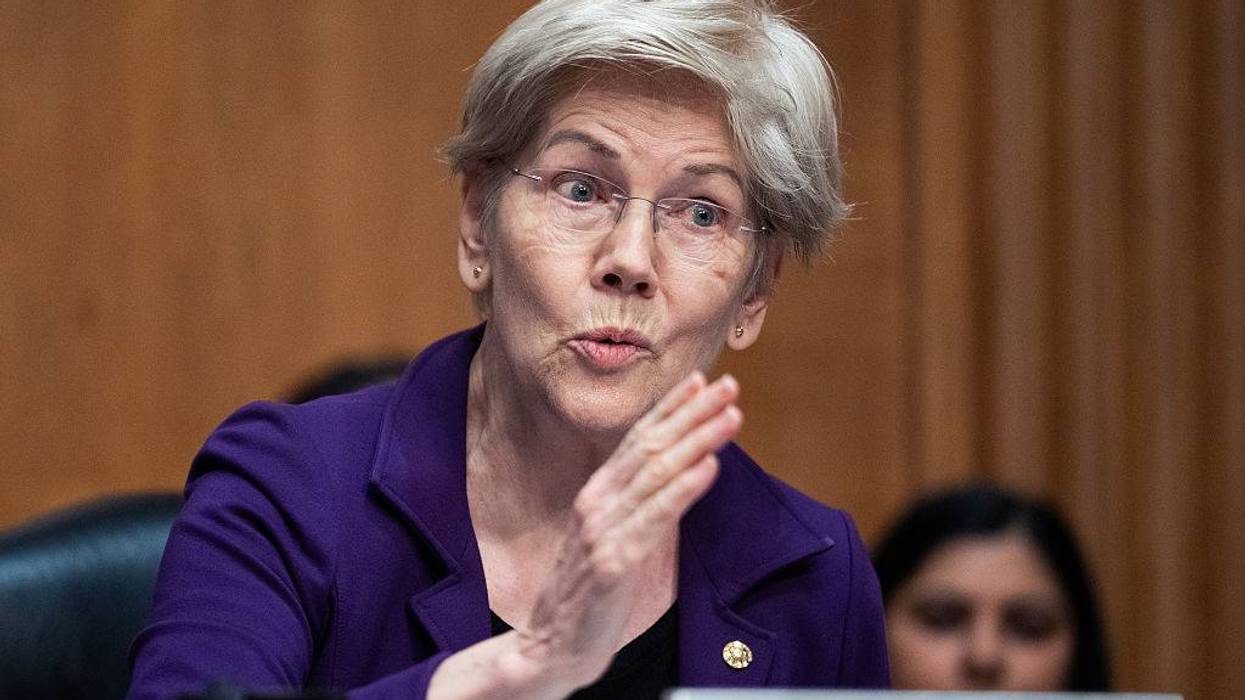
Sen. Elizabeth Warren said the bill would stop Trump from "trying to snatch up billions of taxpayer dollars to line his own pockets and settle personal scores."
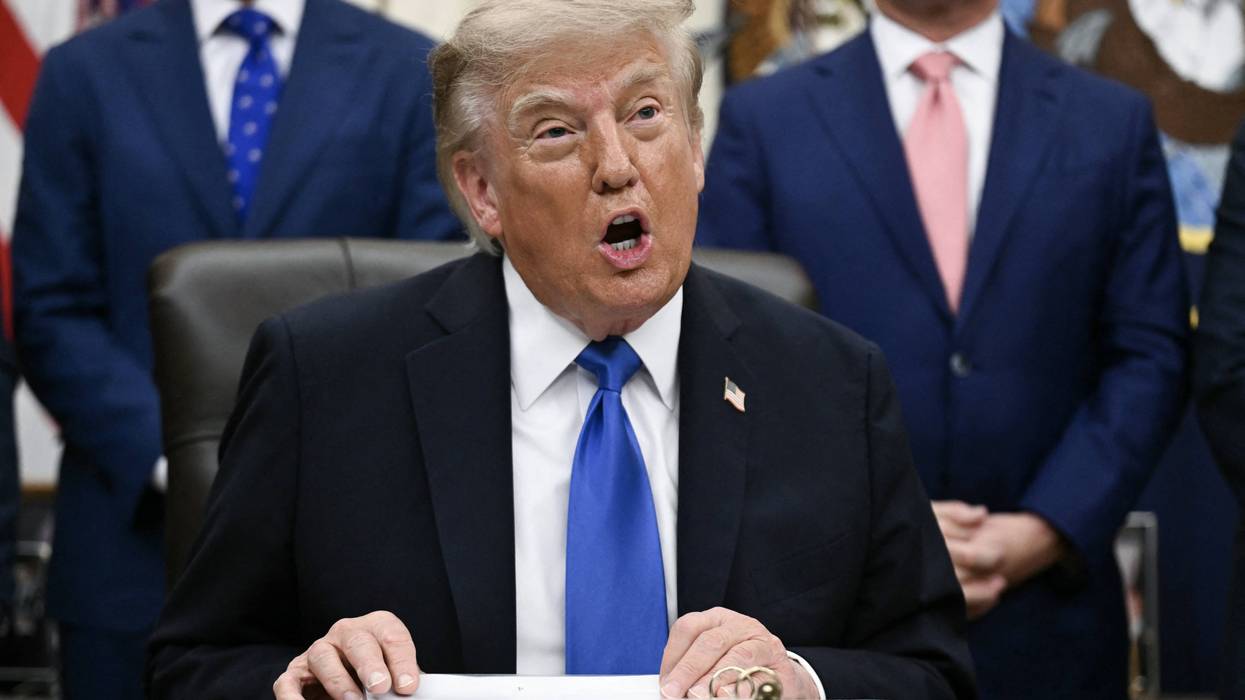
Four Democratic lawmakers on Wednesday unveiled legislation aimed at ending what they described as President Donald Trump's "plunder" of US taxpayers.
The Ban Presidential Plunder of Taxpayer Funds Act—cosponsored by Sens. Chuck Schumer (D-NY) and Elizabeth Warren (D-Mass.) and Reps. Jamie Raskin (D-Md.) and Dave Min (D-Calif.)—was crafted in response to Trump's effort to get the federal Internal Revenue Service to hand him a $10 billion settlement for the 2020 leak of his tax records and his demand that the US Department of Justice (DOJ) pay him $230 million over its past criminal investigations of him.
Among other things, the bill would bar both the president and the vice president, as well as their immediate family members, from collecting settlement payments from the federal government while in office.
The proposed legislation would also prohibit both the president and the vice president from filing administrative claims for damages while in office, and would only allow presidents and vice presidents to "collect compensatory damages awarded by a federal court if the court appoints an independent counsel to represent the agency and makes all proceedings public."
The bill allows former presidents and vice presidents to collect damages from the federal government, but only if the agency being sued "appoints career expert staff to lead the agency’s review or adjudication of any administrative claim brought by the former president/VP, and no official appointed by any president/VP is involved in handling the claim."
Additionally, any settlement made to a former president or vice president must be made public within seven days.
Warren said that the legislation was necessary to stop Trump from "trying to snatch up billions of taxpayer dollars to line his own pockets and settle personal scores."
Raskin accused Trump of exploiting the power of his office to "loot billions of dollars from American taxpayers," an operation that he described as the "ongoing scandal of this ruthlessly corrupt administration."
"The ‘Ban Presidential Plunder of Taxpayer Funds Act’ will prevent the president from pursuing the emerging MAGA grift of suing the government as a ‘plaintiff’ on bogus grounds," Raskin added, "and then settling the suit as ‘defendant’ for big bucks, a collusive settlement scam they recently executed with the disgraced former National Security Adviser Michael Flynn, who waltzed off with more than a million dollars for a bogus claim already dismissed by a federal court."
Flynn settled with the DOJ last month in a case in which he accused the government of "improperly and politically" targeting him, after he was charged with making false statements to the FBI in 2017.
The Democrats' bill has earned the endorsements of government watchdogs Democracy Defenders Action, Common Cause, Citizens for Responsibility and Ethics in Washington (CREW), and the Project on Government Oversight (POGO).
Debra Perlin, vice president of policy at CREW, praised the bill for establishing "common sense guardrails to protect against corrupt payouts to the president and the vice president during their terms in office and after they depart."
"Since returning to office, Donald Trump keeps finding troubling new ways to enrich himself at the taxpayers' expense," Perlin noted. "The president’s lawsuit against the IRS for $10 billion is emblematic of a pattern of self-dealing and corruption that appears pervasive in his administration."
"Billionaire companies are bankrolling Trump’s ballroom and it stinks of bribery," said Sen. Elizabeth Warren.
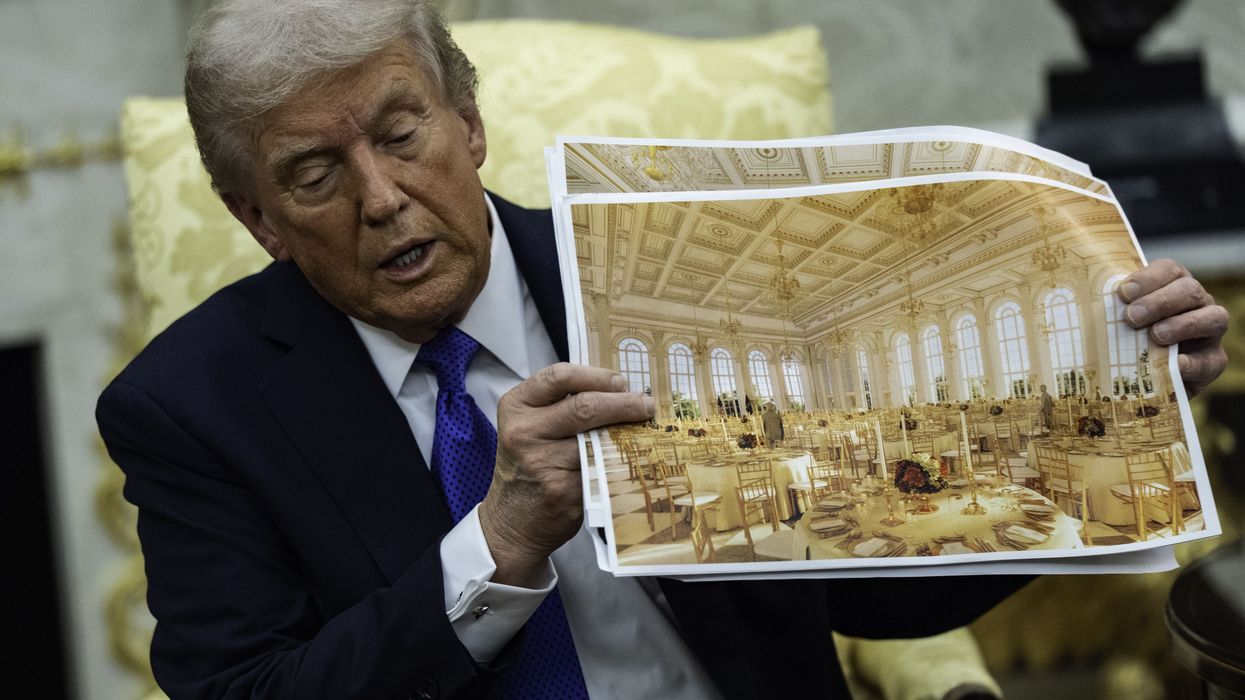
Amid concerns over President Donald Trump's White House ballroom, a pair of Democratic US lawmakers on Tuesday introduced legislation "to root out apparent bribery and corruption" involving the $300 million project.
Sen. Elizabeth Warren (D-Mass.) and Rep. Robert Garcia (D-Calif.) introduced the Stop Ballroom Bribery Act, described by Warren's office as "the first piece of legislation addressing the ballroom that would impose donation restrictions."
“Billionaires and giant corporations with business in front of this administration are lining up to dump millions into Trump’s new ballroom—and Trump is showing them where to sign on the dotted line," Warren said in a statement. "Americans shouldn’t have to wonder whether President Trump is building a ballroom to facilitate a pay-to-play scheme for political favors. My new bill will put an end to what looks like bribery in plain sight."
Billionaire companies are bankrolling Trump’s ballroom and it stinks of bribery.That’s why @robertgarcia.house.gov and I introduced a bill to crack down on this potential corruption.
[image or embed]
— Elizabeth Warren (@warren.senate.gov) November 18, 2025 at 11:16 AM
Garcia said: "Donald Trump is raising hundreds of millions of dollars to build himself a White House ballroom at a time when millions of American families can barely make ends meet. It's outrageous that the White House won’t reveal who’s bankrolling Trump’s pet project, and that the people’s house could be funded by shady figures, corrupt money, and bad actors."
"This bill will ban contributions from anyone with a conflict of interest, prevent bribery, and ensure we can hold any administration accountable for blatant corruption," he added.
Noting that many of the "wealthy individuals, corporations, and organizations" funding the ballroom "need something from the Trump administration," Warren's office flagged "serious concerns of quid-pro-quo arrangements and possible bribery."
"Ethics experts have argued that the apparent pay-to-play relationship between Trump and business leaders oversteps the norms of presidential behavior and could erode Americans’ trust in government," the senator's office added.
As Warren's office noted:
Key ballroom donors currently have business interests in front of the Trump administration. For example, Google, which recently donated $22 million to settle President Trump’s censorship lawsuit against YouTube, will benefit if Trump’s [Department of Justice] decides not to appeal a recent judicial ruling in a relevant antitrust case. Meanwhile, Union Pacific Railroad is seeking federal approval of a lucrative merger and Palantir is working to get more federal contracts.
The White House has refused to be fully transparent, publishing only a noncomprehensive donor list missing multiple key donors and offering donors anonymity. Donations for projects like the ballroom are often channeled through the National Park Service and philanthropic partners; nonprofits with formal ties to property used by the president and [Vice President JD Vance] raise unique conflict-of-interest risks when fundraising from individuals and corporations with interests in front of the federal government.
The Stop Ballroom Bribery Act would:
Virginia Canter, chief counsel and director for ethics and anticorruption at Democracy Defenders Action—another backer of the bill—said that "over the past year, President Trump has raised millions of dollars for vanity projects at the White House—like paving over the Rose Garden and demolishing the beloved East Wing."
"These funds have come from private donors without meaningful transparency or accountability,” Canter added. “The highest office in the land should never be for sale, nor should it ever appear to be."
Trump's "betrayal of Americans is brazen" said a DNC spokesperson.
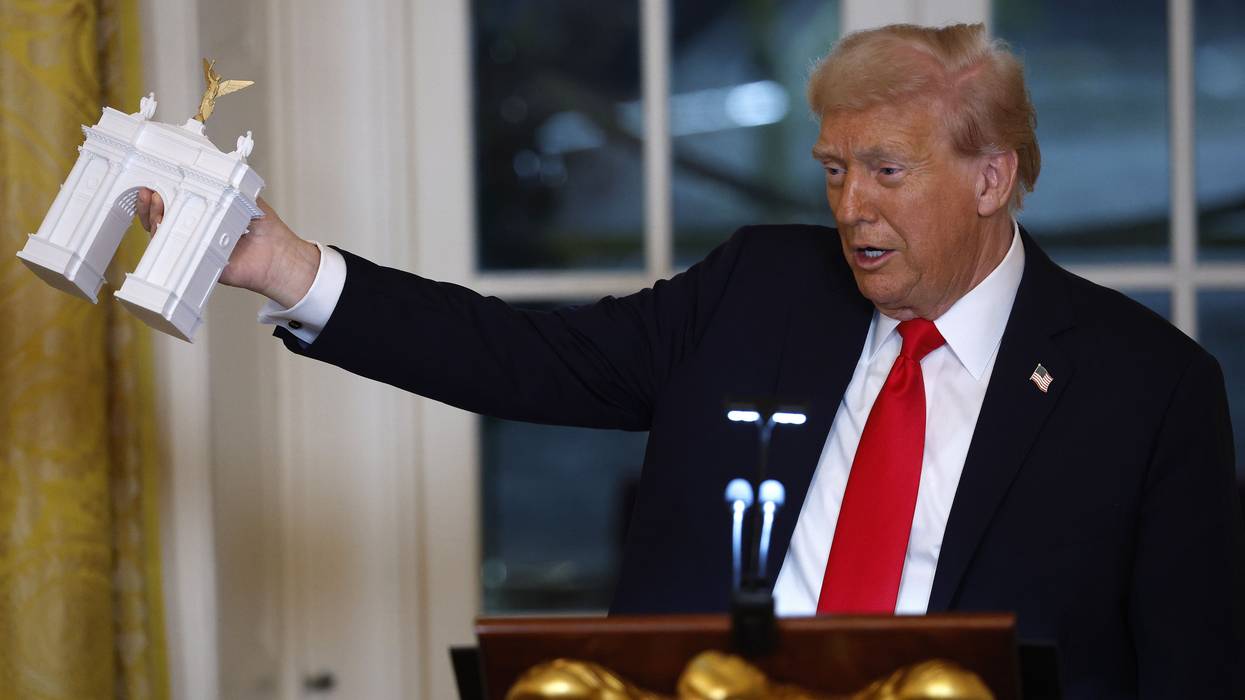
President Donald Trump on Wednesday evening held an event at the White House to thank some of America's richest corporations for financing his planned $250 million ballroom—an event that garnered the latest accusations of corruption against a president who has also raked in billions of dollars in profits in the cryptocurrency market since he took office.
As reported by The Washington Post, Trump "treated donors from Silicon Valley, Wall Street and the defense sector to a candlelit dinner in the East Room on Wednesday as a thank-you, praising them for quickly heeding his call for support and noting some offered as much as $25 million."
Trump also told the guests in attendance that they would likely be inviting to the ballroom's grand opening.
According to a report from The Wall Street Journal, several of the most powerful corporations in the US sent representatives to attend the dinner, including Apple, Lockheed Martin, Microsoft, Meta, Google, Amazon, and Palantir. Others expected to attend were Stephen Schwarzman, founder of investment firm Blackstone, as well as prominent cryptocurrency investors Tyler and Cameron Winklevoss.
The White House dinner drew immediate criticism from the Democratic National Committee (DNC), which labeled it a "cash-for-access" event that took place as Americans across the country are struggling to afford basic necessities such as groceries and healthcare, and as the Republican Party has refused to negotiate with Democrats on extending healthcare subsidies in exchange for ending the government shutdown.
"This administration’s slogan should be ‘Let them eat cake,'" said Rosemary Boeglin, communications director for the DNC. "Trump is busy wining and dining with his rich friends and wealthy donors while failing to make a deal to end the government shutdown. Instead of trading cash for access, Trump and his Republican loyalists in Congress should be getting back to work to reopen the government and avoid a healthcare crisis."
Boeglin added that Trump's "betrayal of Americans is brazen," and noted that he could find money to bail out his political ally in Argentina but not enough to fund enhanced tax credits that help Americans pay for health insurance.
Sen. Elizabeth Warren (D-Mass.) released a video on Wednesday night that also bashed Trump for hosting an entire dinner at the White House to thank big corporate donors for funding his vanity project.
" Donald Trump has found the time to wine and dine billionaires," she said. "Oh, and apparently to carve his corporate donors' names permanently into the walls in the White House. You cannot make this up! As usual, billionaire corporations are lining up to dump money into Trump's ballroom, possibly in exchange for some favors."
I didn't know draining the swamp meant Donald Trump building a $200 million ballroom for billionaires to bend the knee for special favors. pic.twitter.com/dqKb0glyl6
— Elizabeth Warren (@SenWarren) October 16, 2025
Richard Painter, a law professor at the University of Minnesota and vice-chairman for Citizens for Responsibility and Ethics in Washington, told The New York Times that the White House event honoring wealthy donors "shows what the ballroom is really all about: pay to play."
"This is payment for access," he added. "Not just to the grounds of the White House but access to the president of the United States."
Many of the attendees at the dinner were from industries that are pushing for loose regulations of artificial intelligence and other technology and companies—such as Amazon, Lockheed Martin, and Palantir—that have contracts with the federal government.
Kathleen Clark, a law professor at Washington University in St. Louis who specializes in government ethics, told the Post that the ballroom raised serious ethical concerns because "it may or not be money in his pocket, but it’s absolutely to benefit Trump personally because it’s important to him."