

SUBSCRIBE TO OUR FREE NEWSLETTER
Daily news & progressive opinion—funded by the people, not the corporations—delivered straight to your inbox.
5
#000000
#FFFFFF
To donate by check, phone, or other method, see our More Ways to Give page.
Daily news & progressive opinion—funded by the people, not the corporations—delivered straight to your inbox.
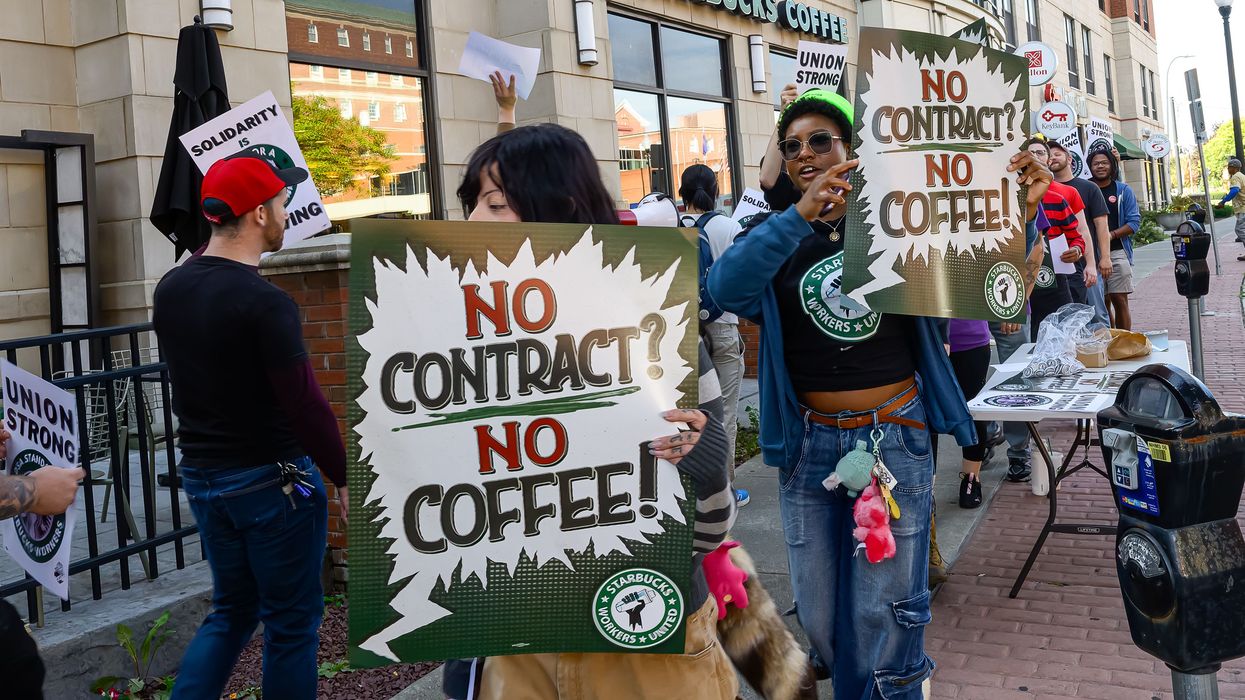
As its workers fight for a living wage and for the company to address hundreds of labor violation complaints, Starbucks Workers United says it's prepared for the "biggest and longest" strike in the company's history.
As hundreds of Starbucks workers go on strike across the US to protest the company's unfair labor practices, its union is telling customers to boycott the company in hopes of pressuring it to return to the bargaining table to negotiate its first union contract.
“As of today, Starbucks workers across the country are officially ON STRIKE,” said Starbucks Workers United, the union representing nearly 10,000 baristas, on social media Thursday. “We’re prepared for this to become the biggest and longest [unfair labor practices] strike in Starbucks history.”
The union implored customers: "DON'T BUY STARBUCKS for the duration of our open-ended ULP strike!"
The strike comes after negotiations between the union and the company stalled out in April. Last week, 92% of union baristas voted to authorize a strike as the company's lucrative holiday season began. They are hoping to turn the company’s annual “Red Cup Day,” during which it gives out free reusable cups to customers, into a “Red Cup Rebellion.”
The union says three of its core demands remain unmet. It has called for the company to address "rampant" understaffing, which it says has led to longer wait times for customers and overwhelmed staff, while simultaneously leaving workers without enough hours to afford the cost of living.
It also seeks higher take-home pay for workers. Starting baristas make just over $15 per hour, which data from MIT shows is not enough to afford the cost of living in any US state when working 40 hours a week. According to the union, most Starbucks workers receive fewer than 20 hours of work per week, rendering them ineligible for benefits.
The union has drawn a contrast between its workers' pay, which averages less than $15,000 a year, and that of CEO Brian Niccol, who raked in a total compensation package of $96 million in just four months after taking over last year.
"Too many of us rely on SNAP or Medicaid just to get by, and most baristas still don’t earn a livable wage. In a majority of states, starting pay is just $15.25 an hour—and even then, we’re not getting the 20 hours a week we need to qualify for benefits," said Jasmine Leli, a barista and strike captain from Buffalo, New York, where the first Starbucks store in the nation voted to unionize back in 2021.
The company has gone nearly four years without recognizing it. While it claims to have engaged with the union in "good faith," the National Labor Relations Board (NLRB) has found Starbucks guilty of over 500 labor law violations, making it the worst violator in modern history.
These have included illegal firings and disciplinary actions against union organizers, the illegal withholding of wages and benefits, threats to close stores that unionize, and illegal surveillance of employees. More than 700 unfair labor practice charges made against the company remain unresolved, including 125 of them filed since January.
According to an estimate from the Strategic Organizing Center, Starbucks' union-busting had cost the company more than $240 million through February 2024. That money was lost in the form of legal fees and payments to consultants, as well as productivity lost due to anti-union store closures and captive audience meetings.
“Things have only gone backwards at Starbucks under Niccol’s leadership," Leli said. "But a fair union contract and the resolution of hundreds of unfair labor practice charges are essential to the company’s turnaround."
The union has argued that in order to meet their demands for a fair contract, it would cost less than a single day's sales.
The strike begins just days after 85 US lawmakers—led by Sen. Bernie Sanders (I-Vt.) and Rep. Pramila Jayapal (D-Wash.)—sent letters demanding that the company stop union-busting and negotiate a fair deal with its employees.
"Starbucks is not a poor company," the Senate letter said to Niccol. "Last year, Starbucks made over $3.6 billion in profit and paid out nearly $5 billion in stock buybacks and dividends. In fact, in the first three quarters of the year, Starbucks made $1.7 billion in profit and paid out over $2 billion in dividends. Last year, you made $95 million in compensation for the four months you worked in 2024, roughly 6,666 times more than what your average worker was paid for the entire year."
"Despite that extravagant spending on executives and shareholders, Starbucks refuses to reach an agreement with its own workers even though you are less than one average day’s sales apart from a contract," it continued. "Starbucks must reverse course from its current posture, resolve its existing labor disputes, and bargain a fair contract in good faith with these employees."
The strike will begin at 65 stores across more than 40 US cities, with rallies scheduled in New York, Philadelphia, Chicago, Columbus, and Anaheim, among other locations. The union said the strike is "open-ended," with no set end date, and that baristas across more than 550 unionized stores across the country are prepared to join in.
“If Starbucks keeps stonewalling a fair contract and refusing to end union-busting, they’ll see their business grind to a halt,” said Michelle Eisen, a spokesperson for Starbucks Workers United, who has worked as a barista for 15 years. “'No contract, no coffee' is more than a tagline—it’s a pledge to interrupt Starbucks’ operations and profits until a fair union contract and an end to unfair labor practices are won."
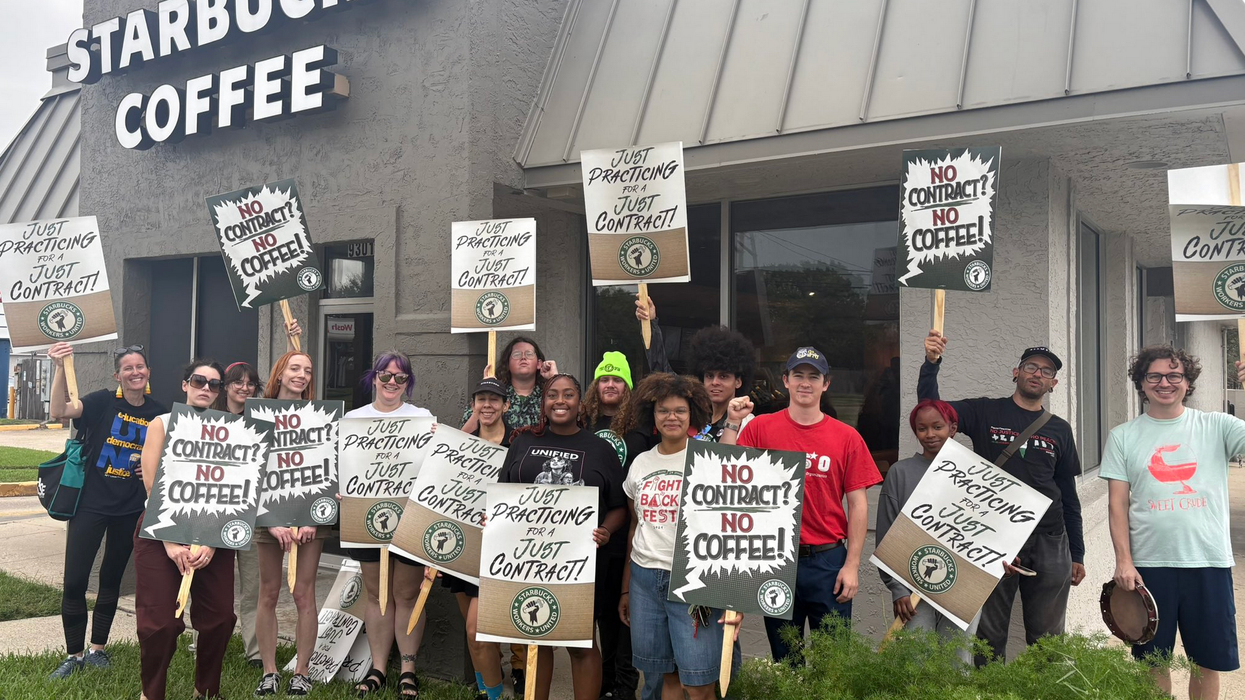
“Starbucks must reverse course from its current posture, resolve its existing labor disputes, and bargain a fair contract in good faith with these employees.”
As Starbucks workers prepare to strike amid stalled contract talks with management, more than 80 US lawmakers on Monday demanded that bosses at the world's largest coffee chain stop union busting and negotiate a fair deal for employees.
Starbucks workers—who have been in talks with company bosses led by CEO Brian Niccol for over a year—accuse management of stonewalling on key contract issues including higher pay, more hours, and an end to unfair labor practices and union busting. Last week, members of Starbucks Workers United overwhelmingly voted to authorize an unfair labor practices strike—they're calling it a "Red Cup Rebellion"—at over 650 locations if the company fails to finalize a fair contract by November 13.
Members of the Congressional Labor Caucus led by Sen. Bernie Sanders (I-Vt.) in the Senate and Rep. Pramila Jayapal (D-Wash.) in the House sent letters to Niccol expressing their concern over management's "failure to reach a fair first contract with its baristas" and a "troubling return to union busting."
"In February 2024, Starbucks and Workers United announced a path forward to commit to negotiating a foundational framework for contracts, establishing a fair process for organizing, and resolving outstanding legal issues," the Senate letter states. "We were hopeful that the company would abide by this commitment and bargain in good faith with Starbucks workers who exercised their right to form a union."
The lawmakers continued:
As you well know Starbucks is not a poor company. Last year Starbucks made over $3.6 billion in profit and paid out nearly $5 billion in stock buybacks and dividends. In fact, in the first three quarters of the year, Starbucks made $1.7 billion in profit and paid out over $2 billion in dividends. Last year, you made $95 million in compensation for the four months you worked in 2024, roughly 6,666 times more than what your average worker was paid for the entire year.
Despite that extravagant spending on executives and shareholders, Starbucks refuses to reach an agreement with its own workers even though you are less than one average day’s sales apart from a contract. To make matters worse, Starbucks recently began closing stores across the country and laying off hundreds of workers as part its $1 billion restructuring plan. It is clear that Starbucks has the money to reach a fair agreement with its workers.
"Starbucks must reverse course from its current posture, resolve its existing labor disputes, and bargain a fair contract in good faith with these employees," the letter demands.
Starbucks Workers United has already filed more than 100 charges against the coffee giant over the past 11 months, alleging unfair labor practices including reprisals against unionizing baristas. The union calls Starbucks "the biggest violator of labor law in modern history," as administrative law judges and the National Labor Relations Board (NLRB) have found that the company has committed more than 500 violations of labor law.
Niccol—who last year became Starbucks’ fourth CEO in just two years—brought with him a history of union busting during his previous job as the head of Chipotle. Under his leadership, the fast-food chain closed a store in Augusta, Maine in 2022 after employees there tried to make it the company’s first unionized location. The workers filed a complaint at the NLRB, which ruled that the closure was an illegal act of union busting.
Workers at more than 600 Starbucks locations across the United States have voted to unionize since baristas at a store on Elmwood Avenue in Buffalo, New York became the first to do so in late 2021.
“Union baristas mean business and are ready to do whatever it takes to win a fair contract and end Starbucks’ unfair labor practices,” Michelle Eisen, a Starbucks Workers United spokesperson and 15-year veteran barista, said in a statement announcing last week's strike authorization. “We want Starbucks to succeed, but turning the company around and bringing customers back begins with listening to and supporting the baristas who are responsible for the Starbucks experience."
"If Starbucks keeps stonewalling, they should expect to see their business grind to a halt," Eisen added. "The ball is in Starbucks’ court.”
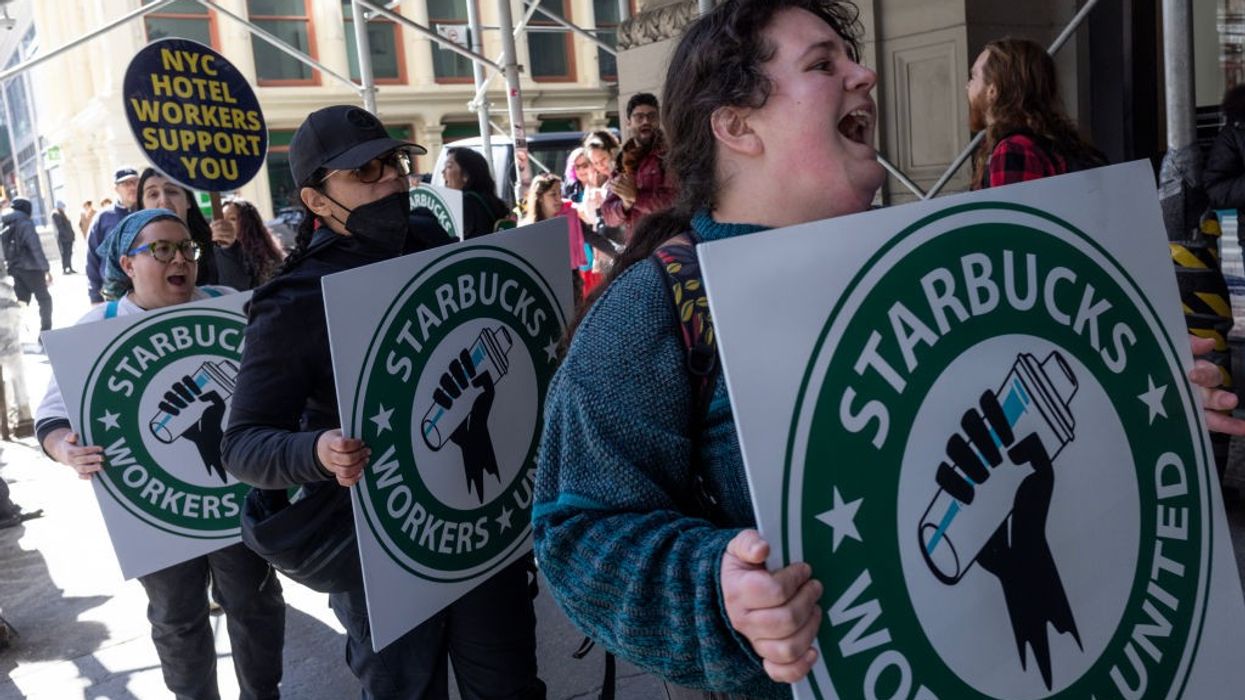
The CEO of Starbucks made 6,666 times as much as the company's median employee, all while the company crushes workers' efforts to unionize.
The staggering inequality between bosses and workers only continued to grow last year, according to a new report from the AFL-CIO on executive pay.
The union's latest "Executive Paywatch" report, which uses data from the Securities and Exchange Commission (SEC) to track the pay disparities between CEOs and the employees that work for them, found that the average S&P 500 executive made an eye-popping 285 times more than their median worker did, up from a 268-to-1 ratio in 2023.
CEOs received a $1.4 million raise last year, the data shows, bringing their average yearly compensation up to $18.9 million, a 7% increase. The median worker, meanwhile, made just $49,500, marking just a 3% increase from the year before.
In order to make the same amount as their boss made in a single year, the report noted that the typical employee would need to have begun working in 1740—"Before the AMERICAN REVOLUTION," the union noted on X.
By far the widest disparity was at Starbucks, where CEO Brian Niccol—who took over the company last year—brought home 6,666 times as much as his median employee.
In 2024, while the average Starbucks employee took home less than $15,000, Niccol received a compensation package, primarily made up of company stock, worth nearly $98 million.
For more than three years, Starbucks has waged what New York Times columnist Megan Stack called a "dirty war" against its employees' attempts to unionize.
The company has fired union organizers and pro-union workers, cut their hours to deny them healthcare coverage, shut down unionized stores, and subjected employees to aggressive anti-union "captive audience" meetings.
The Economic Policy Institute estimates that Starbucks has likely had more complaints of illegal union-busting filed against it than any other company in the National Labor Relations Board's 90-year history.
In response to the AFL-CIO's new report, the X account for Starbucks Workers United wrote: "When Starbucks and CEO Brian Niccol tries to tell us they can't afford fair union contracts... remember this."
Starbucks is merely the most glaring example of the inequality highlighted in the report: Coca-Cola, General Electric, Ross Stores, Yum! Brands, Chipotle, and many other flagship American companies paid their CEOs more than 1,000 times as much as their median workers.
These disparities are projected to get even larger following the passage of President Donald Trump's recent budget legislation, which guts social safety net programs like Medicaid and food stamps in order to pay for gigantic new tax breaks for corporations and the wealthiest Americans.
It has been described by some economic analysts as the "largest transfer of wealth in history."
According to a study by the University of Pennsylvania, the incomes of the top 0.1% wealthiest households will increase by more than $83,000 on average by 2033, while the incomes of the poorest 40% will decline.
"Corporate CEOs are raking in millions, and now they'll get another kickback from President Trump's tax cut gift and anti-worker agenda," said Fred Redmond, secretary-treasurer of the AFL-CIO.
The average marginal tax rate paid by these executives, the report found, will decrease by nearly $500,000 a year. In all, the CEOs in the report will be able to avoid paying an extra $738 million in income taxes thanks to the bill.
That lost tax revenue, the report found, could have paid for Medicaid healthcare coverage for more than 80,000 people, SNAP food assistance for over 300,000, or school lunches for more than 900,000 students.
The report notes that many of the CEOs and companies that are expected to profit royally from the bill gave large donations to Trump's inauguration, including Amazon's Jeff Bezos, Coinbase's Brian Armstrong, Google's Sundar Pichai, and Meta's Mark Zuckerberg.
"Is it any wonder," asked former Labor Secretary Robert Reich, "so many people think the system is rigged?"
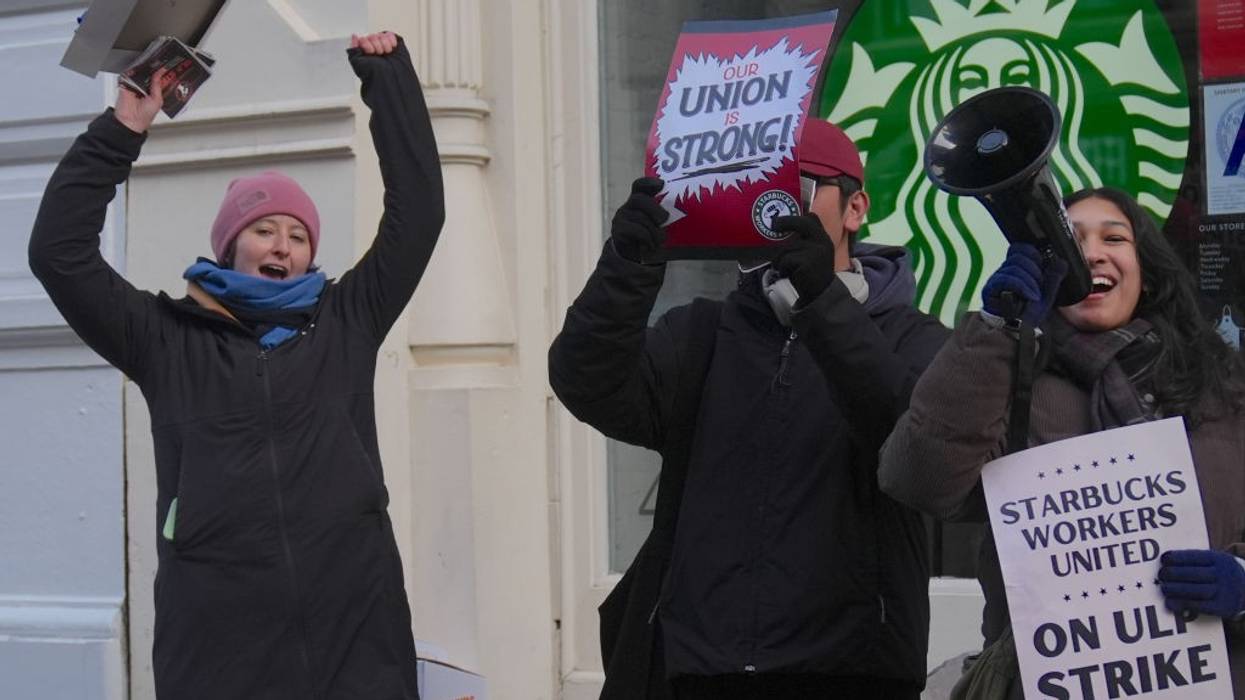
"Workers shouldn't struggle to pay their bills while working for one of the biggest fast-food corporations in the world," said Starbucks Workers United.
Starbucks workers at more than 300 locations across the United States, from Atlanta to Boston to Los Angeles, are expected to walk off the job Tuesday to pressure the coffee giant to come to the bargaining table with a just contract offer that includes a living wage, benefit improvements, and fair scheduling.
As the Christmas Eve strikes kicked off, Starbucks Workers United (SBWU) wrote in a social media post that management's latest economic offer to unionized workers, which included no immediate wage increases, indicated that the $100 billion corporation "seems to prefer investing in CEO Brian Niccol's $113 million compensation package."
"SBWU is demanding the company present us with a serious economic offer at the bargaining table," the group wrote. "Workers shouldn't struggle to pay their bills while working for one of the biggest fast-food corporations in the world."
"If Starbucks wants to put their money where their mouth is," SBWU added, "it's time to invest in WORKERS the way they're investing in rich CEOs. We demand Starbucks bargain a fair contract!"
Over 5,000 Starbucks workers have walked off the job so far as part of the latest strikes, according to one organizer.
 Starbucks employees and supporters rally outside of a Starbucks store on December 23, 2024 in New York City. (Photo: Adam Gray/Getty Images)
Since the groundbreaking victory in Buffalo, New York just over three years ago, the Starbucks union movement has expanded to more than 500 stores across the U.S., with over 11,000 baristas organizing in the face of aggressive and often illegal opposition from the company's management.
Unionized Starbucks workers are demanding a base wage of at least $20 an hour for baristas, with an elevated wage floor in high-cost-of-living areas and annual inflation adjustments.
They're also calling for healthcare benefit improvements, protections against union-busting, and "a fair process to obtain consistent schedules."
SBWU said Tuesday that the Christmas Eve walkouts mark the largest-ever unfair labor practice strike at Starbucks, and the organization urged customers and allies to boycott the company for the duration of the actions.
"Spread the word—and friends don't let friends cross the picket line!" SBWU wrote on social media.
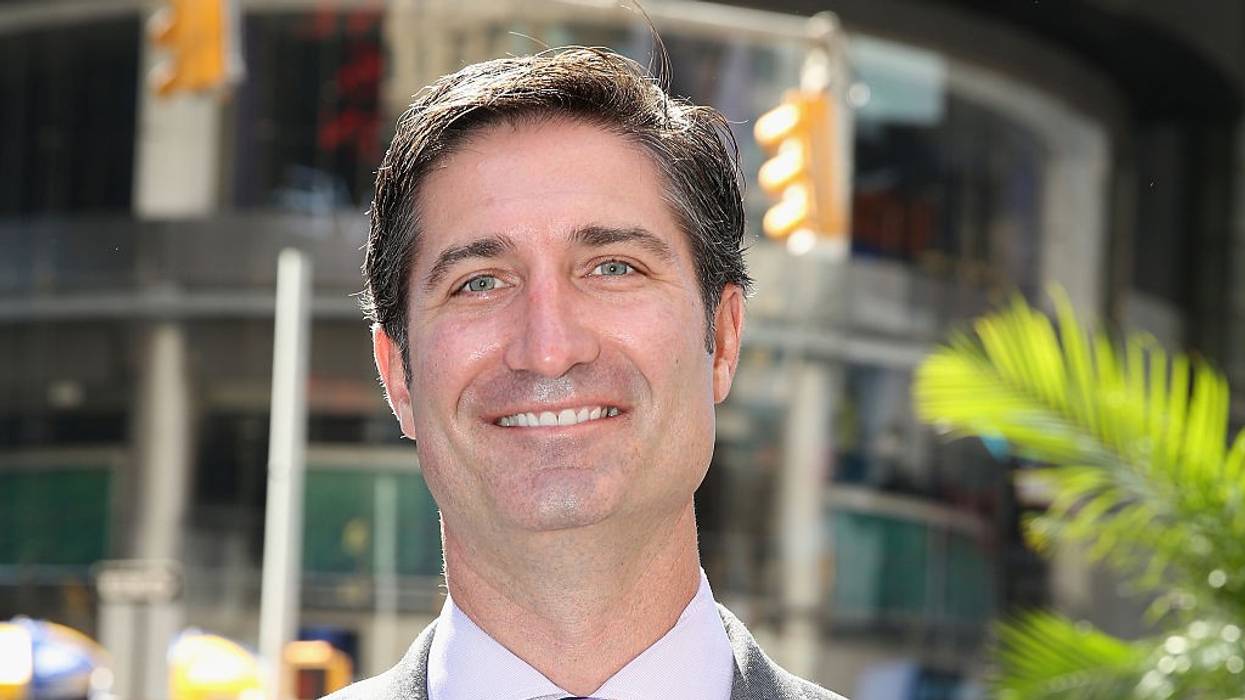
"These jets are a stark symbol of social and climate injustice, where a privileged few indulge in the most environmentally damaging form of travel for mere convenience," said one Greenpeace campaigner.
Green groups' anger percolated this week after it was revealed that Brian Niccol, Starbucks' new CEO, will "supercommute" approximately 1,000 miles between one of his homes in California and the coffee giant's Seattle headquarters three times a week.
A Starbucks spokesperson said earlier this week that "while Brian will have an office in Southern California, his primary office and a majority of his time will be spent in our Seattle Support Center."
"When he is not traveling for work, he will be in our Seattle office at least three days a week, in alignment with our hybrid work policies," the spokesperson added. "He will also have a home in Seattle."
"A private jet flight causes about 10 times more CO2 emissions than a regular flight per flight per person."
Greenpeace—which for years has been running a campaign to ban private jets and regularly stages protests against them at airports around the world—led condemnation of Niccol's harmful commute.
"As the world faces unprecedented heatwaves, droughts, floods, and other dire consequences of an accelerating climate crisis, it is unjustifiable for companies to offer company aircraft as employee perks," Greenpeace campaigner Clara Thompson told The Washington Post on Thursday.
"These jets are a stark symbol of social and climate injustice, where a privileged few indulge in the most environmentally damaging form of travel for mere convenience," Thompson added.
As Greenpeace notes:
A private jet flight causes about 10 times more CO2 emissions than a regular flight per flight per person, and 50 times more than the average train ride. Eighty percent of the world's population have never flown, yet they're the ones most impacted by the climate crisis. In just one hour, a single private jet can emit two tons of CO2. The global average energy-related carbon footprint is around 4.7 tons of CO2 per person per year.
While private jets account for a tiny fraction of global greenhouse emissions, the world's richest 1% produce more than double the emissions of the poorest 50%, and a single billionaire produces a million times more emissions than an average person, according to a 2022 Oxfam study.
Some critics accused Starbucks—which in 2020 set a goal of reducing carbon emissions by 50% this decade—of hypocrisy, with one social media user contrasting Niccol's private jet commute with the company's introduction of widely despised and environmentally dubious paper straws. Another eagle-eyed observer spotted a book titled How to Avoid a Climate Disaster on display in Niccol's office in a Wall Street Journal article photo.
"I'm sure that private jet will use sustainable aviation fuel," climate scientist David Ho quipped on social media.
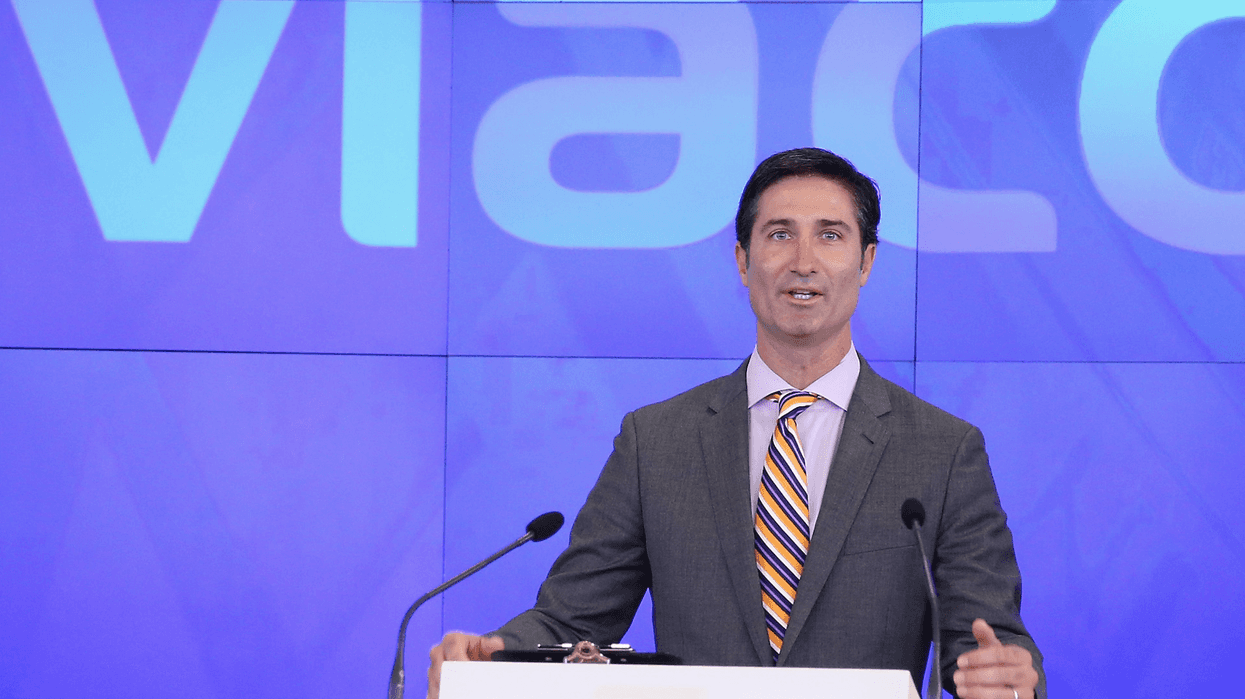
Niccol's tenure as Chipotle CEO was marred by settlements over unfair labor practices and child labor law violations.
Labor advocates responded to Tuesday's announcement that global coffee giant Starbucks hired Brian Niccol as its new chief executive officer by highlighting his history of union-busting during his previous job as CEO of the fast-food chain Chipotle.
Starbucks' move to replace former CEO Laxman Narasimhan with Niccol comes as the company's share price has fallen amid an ongoing unionization wave by its workers and boycotts over its perceived support for Israel, which is on trial for genocide at the World Court over its war on Gaza.
"We are thrilled to welcome Brian to Starbucks. His phenomenal career speaks for itself," Starbucks board chair Mellody Hobson said in a statement announcing his hiring. "Like all of us at Starbucks, he understands that a remarkable customer experience is rooted in an exceptional partner experience."
Niccol—who will be Starbucks' fourth CEO in just two years—said he is "energized by the tremendous potential to drive growth and further enhance the Starbucks experience for our customers and partners, while staying true to our mission and values."
Starbucks refers to its workers as "partners."
However, More Perfect Union noted that, under Niccol's leadership, Chipotle closed a store in Augusta, Maine in 2022 after employees there tried to make it the company's first unionized location. The workers filed a complaint at the National Labor Relations Board (NLRB), which ruled that the closure was an illegal act of union-busting.
Last year, Chipotle agreed to pay former workers at the Augusta store $240,000 as part of a settlement over the illegal closure. The company also settled another unfair labor practices charge after the NLRB sided with workers at a Lawrence, Kansas Chipotle who accused management of thwarting their unionization drive.
While the Augusta workers failed to unionize their store, employees of another Chipotle—this one in Lansing, Michigan—overcame what More Perfect Union called "egregious union-busting" and voted to join the International Brotherhood of Teamsters Local 243.
During Niccol's tenure, Chipotle also paid to settle child labor law violations in Massachusetts, New Jersey, and Washington, D.C.
According to the Financial Times, Starbucks' decision to oust Narasimhan came after pressure from activist investor Elliott Management and former company CEO Howard Schultz, a notorious union-buster.
Niccol will take over as Starbucks CEO on September 9. Until then, chief financial officer Rachel Ruggeri will serve as interim CEO.
According to the Starbucks Workers United union, employees at more than 470 Starbucks locations across the United States have voted to unionize since baristas at a store on Elmwood Avenue in Buffalo, New York became the first to do so in late 2021.