

SUBSCRIBE TO OUR FREE NEWSLETTER
Daily news & progressive opinion—funded by the people, not the corporations—delivered straight to your inbox.
5
#000000
#FFFFFF
To donate by check, phone, or other method, see our More Ways to Give page.
Daily news & progressive opinion—funded by the people, not the corporations—delivered straight to your inbox.
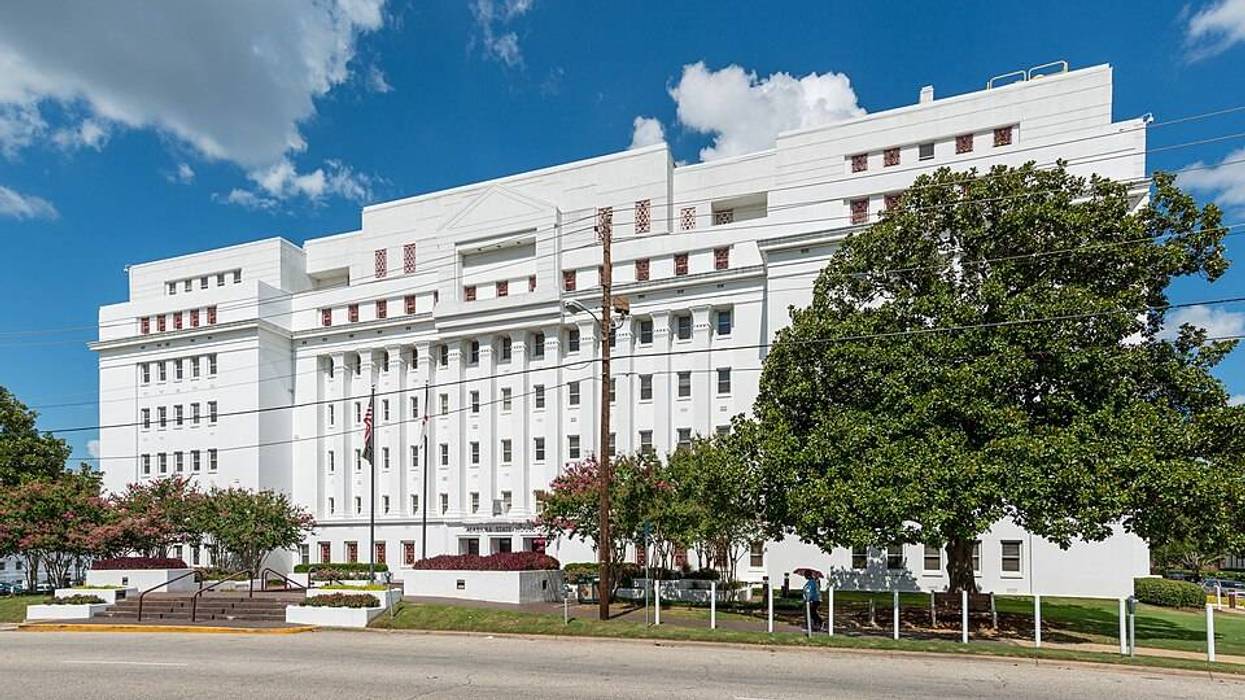
"Across the South, states are rushing to suppress Black voting power now that they mistakenly believe they can get away with it," one advocate said.
In the latest fallout from the Supreme Court's further weakening of the Voting Rights Act in Louisiana v. Callais on April 29, Alabama and South Carolina on Friday both took steps to further gerrymandering plans that would reduce representation for Black and Democratic voters in their states.
Alabama Gov. Kay Ivey signed legislation on Friday that would ignore the results of May 19 primaries and hold a new election if federal courts agree to rescind the creation of a second near-Black majority congressional district in the state.
At the same time, the South Carolina legislature held a meeting to consider creating new maps that could grant the Republican Party the chance to win all of the state's seven seats in the US House of Representatives by redrawing the state's only majority-Black district.
“I was out there in 1965 marching for the right to vote, and now we are back here in 2026 doing the same thing,” Betty White Boynton, who joined a protest outside the Alabama Statehouse on Friday, told The Associated Press.
“What happened here today is that we were set back as a people to the days of Reconstruction.”
The moves, with risk eroding the gains of the civil rights movement, also come in the midst of a redistricting battle set off when President Donald Trump called on GOP-led states to redraw their maps to help his party retain control of the House in the 2026 midterm elections
In Alabama, the Supreme Court case Allen v. Milligan led to the creation of a second district with close to a Black majority and the election of Democratic Rep. Shomari Figures. The new map would leave Black voters with a chance to elect a representative in just 1 of the state's 7 districts, despite the fact that they make up 30% of the population.
“Despite remaining under a court order that bars Alabama from redrawing its congressional map and that voters have already cast ballots in the state’s congressional primary elections, Alabama Republicans are desperately and shamelessly moving to pave the way for reversion to a map that robs Black voters of equal access to representation in the US House," John Bisognano, president of the National Democratic Redistricting Committee, said in a statement.
Bisognano continued: "What is happening in Alabama is not happening in a vacuum. Across the South, states are rushing to suppress Black voting power now that they mistakenly believe they can get away with it. The Alabama legislature’s fevered rush to diminish Black voting power in their state is clear proof that protections once afforded under Section 2 of the Voting Rights Act remain vital still today. Alabamians across the state are rising up in protest to this immoral power grab—their voices must not be silenced.”
After the Republican-majority Alabama legislature passed the bill on Friday, state Sen. Rodger Smitherman (D-18) said, “What happened here today is that we were set back as a people to the days of Reconstruction,” according to AP.
However, it is unclear how successful the Republican effort will be in Alabama, given that the Supreme Court explicitly said in Louisiana v. Callais that its decision did not apply to Alabama, as Figures pointed out at a town hall Friday evening. Also on Friday, a three-judge panel refused to lift an injunction on changing the state's maps, meaning the decision will rest with the Supreme Court on Monday, May 11.
"I feel pretty confident that the lines will stay the same in the immediate future, but it has not changed the efforts of Republicans here in the state of Alabama and across the country," Figures said, as Alabama Reflector reported.
In South Carolina on Friday, legislators held a meeting that would be the first step toward redrawing their districts to eliminate the one currently represented by Democratic Congressman Jim Clyburn. While lawmakers agreed that the Supreme Court's ruling in Louisiana v. Callais would allow for the redistricting, some questioned the wisdom and morality of the act.
“I agree if the law allows us to do it, then we can do It,” state Rep. Justin Bamberg (D-90) said. “But I can slap somebody’s mama and it’s not the right thing to do.”
Bisognano also linked the South Carolina plan to Louisiana v. Callais:
Following the Supreme Court’s shameful decision to gut the Voting Rights Act, South Carolina Republicans are now racing to be second to push through an immoral gerrymander that would demolish the lone congressional district that gives South Carolina’s Black voters a meaningful opportunity for representation in the US House.
This gerrymander is a deliberate attempt by South Carolina Republicans to tear apart a long-standing Black-opportunity district and diminish their vote by spreading Black voters into six districts that stretch over a hundred miles in every direction. On this gerrymander, all South Carolinians would lose. South Carolinians deserve maps that respect communities of interest and protect the fundamental right to vote.
Rep. Clyburn, meanwhile, stood up for his district and criticized state Republicans for prioritizing loyalty to Trump over loyalty to voters.
"Republicans are trying to break apart South Carolina’s 6th District. Not because voters demanded it, but because Donald Trump requested it," Clyburn wrote on social media Thursday.
He continued: "This fight is bigger than one district. It’s about whether our democracy belongs to the people, or to politicians who change the rules when they don’t like the results. We cannot let them succeed."
The Alabama and South Carolina developments capped a dramatic week for national redistricting battles. On Thursday, the Tennessee House voted to break up the state's only Black congressional district. The Senate followed suit, and Gov. Bill Lee promptly signed the new map into law.
On Friday, the Virginia state Supreme Court dealt a blow to Democratic efforts to counteract the new Republican maps, striking down a voter-approved redistricting in Virginia that would favor Democrats.
As these attacks target communities of color, we’re witnessing the systematic disenfranchisement of people who’ve fought hardest for economic justice and workers’ rights.
Today, I’m writing as someone who believes deeply in democracy, especially as a group of anti-worker Missouri lawmakers prepare to divide our community so that they can silence our voices, including my own.
States usually redraw electoral district boundaries every 10 years following the US Census to account for population shifts and demographic changes. But for political reasons, Texas lawmakers have gone ahead and redrawn their political map. And now several other states, including Missouri, are trying to do the same thing.
The NAACP is suing the State of Missouri to stop this action, calling it an “unconstitutional redistricting process” and a “blatant effort to silence Black voters and strip them of their fundamental rights.”
In Missouri’s 5th Congressional District, where I live, the clear aim of this gerrymandering is to dilute the voting power of Black and brown communities instead of letting us choose leaders who reflect our values. This isn’t just politics as usual. It’s a calculated assault on democracy and a power grab for an elite few.
As these attacks target communities of color, we’re witnessing the systematic disenfranchisement of people who’ve fought hardest for economic justice and workers’ rights. These same corporate-backed lawmakers recently repealed guaranteed sick days for more than 700,000 workers, including me and my coworkers.
My community deserves a voice in choosing our representation instead of having politicians strip it away—politicians who care more about protecting themselves instead of the people they were elected to represent.
A couple years ago, I got sick with what I thought was the flu. I didn’t have health insurance, so I couldn’t see a doctor. I stayed home from my shift at Taco Bell to protect my coworkers and customers from a potentially contagious illness. I was already falling behind on rent after management cut my hours prior to getting sick, and taking time to recover was the final straw. I missed $450—over half my rent. I came home from work to an eviction notice. My son Rashaad and I lost our home.
As a parent, few things are more heartbreaking than not being able to care for your children properly. Had I been able to take a few days off while still getting paid, we could have stayed housed. I couldn’t help getting sick, but the greedy corporation I worked for chose to abandon me as soon as I stopped making them rich.
If I had paid sick days, that wouldn’t happen. And ironically enough, I previously helped win paid sick days through a ballot initiative. Despite promises to respect the will of the people, Missouri politicians sided with big business over working families and overturned our right to paid leave. By gutting this policy, these corporate-backed politicians didn’t just force workers like me to go to work sick—they stole money from our pockets and food from our cupboards.
This redistricting scheme is clearly part of a two-pronged plan to suppress voter participation and double down on attacking the rights of working people. In fact, they’re using the same special session they’ve called to pass redistricting to also destroy a 115-year old ballot initiative process in our state constitution that won us—across party lines—paid leave, Medicaid expansion, and restored abortion rights.
But working people like me don’t back down when our lives are on the line. We stay committed to the fight for our rights, from the streets, to the strike line, to the statehouse. My community deserves a voice in choosing our representation instead of having politicians strip it away—politicians who care more about protecting themselves instead of the people they were elected to represent.
We were already living in modern-day economic slavery. Now they’re trying to put us in political slavery too. But we won’t let them. Across this country, working people will not be silenced or divided. Our political leaders need to stop trying to rig the rules and let the people decide who represents us.
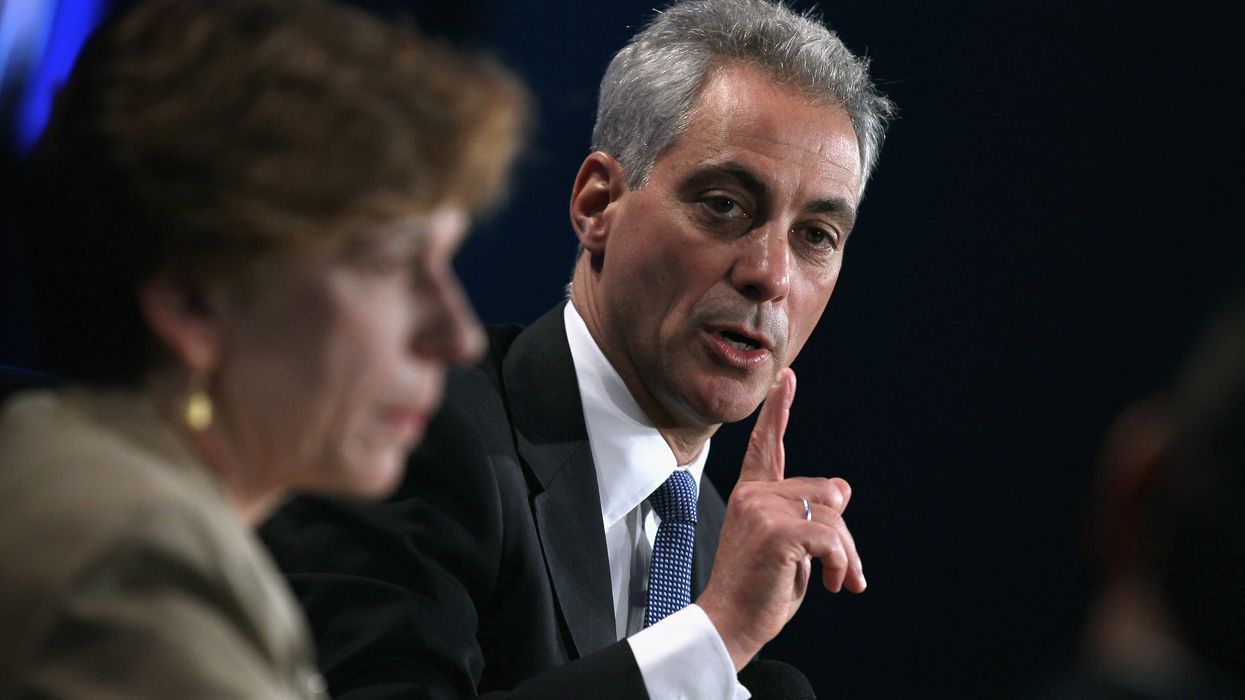
If Emanuel ends up in the top DNC spot, the message will be that wealthy power brokers have fully recaptured the party.
If the Democratic National Committee is trying to find a new leader proficient at alienating Black voters, it couldn’t do better than Rahm Emanuel.
Emanuel has indicated in recent days that he’s interested in the job. If he goes for it at the party’s upcoming meeting, much of the old Democratic guard is likely to back him, setting up an intra-party brawl.
Last week, David Axelrod served as a digital advance man for his former Obama White House colleague, posting that “Dems need a strong and strategic party leader, with broad experience in comms, fundraising, and winning elections,” while touting Emanuel as just the man for the job: “Dude knows how to fight and win!”
The Democratic National Committee should not choose for its chair a pugnacious bully who relishes fighting with the party’s most loyal constituencies and committed activists.
In terms of well-connected power-brokering, Emanuel’s ties with Democratic elites and corporate donors have been second to none. And he can boast an impressive political resume—senior adviser to President Bill Clinton, congressman from Illinois, chair of the Democratic Congressional Campaign Committee in Democrats’ 2006 sweep, chair of the House Democratic Caucus, and White House chief of staff for Barack Obama, before becoming mayor of Chicago in 2011.
But his eight-year record as mayor could trip up Emanuel if he runs for DNC chair. Long before leaving office in 2019, Emanuel had fallen into disrepute. By the end of 2015, a poll found that his approval rating among Chicago residents had sunk to 18%. No wonder he decided not to run for a third term.
Emanuel stands out at provoking bitter enmity from Black people, crucial voters in the Democratic Party base.
He earned notoriety for the cover-up of a video showing how Chicago police killed 17-year-old Laquan McDonald one night in October 2014. For 13 months, during Emanuel’s campaign for reelection, his administration suppressed a ghastly dashboard-camera video showing the death of McDonald, an African American who was shot 16 times by a police officer while walking away from the officer. (A jury later convicted the officer of second-degree murder and 16 counts of aggravated battery.)
Memories of Emanuel’s malfeasance have remained vivid. In 2020, Rep. Alexandria Ocasio-Cortez (D-N.Y.) expressed a widely held view when she tweeted: “Rahm Emanuel helped cover up the murder of Laquan McDonald. Covering up a murder is disqualifying for public leadership.”
Last weekend, amid reports that Emanuel was weighing a bid for DNC chair, Ocasio-Cortez denounced him as a symptom of what ails the party: “There is a disease in Washington of Democrats who spend more time listening to the donor class than working people. If you want to know the seed of the party’s political crisis, that’s it.”
Longtime Chicago journalist and activist Delmarie Cobb wrote a scathing assessment of his mayoral record in 2021. While mentioning that Emanuel “closed 50 public schools in predominantly Black and brown neighborhoods,” Cobb also pointed out that “he closed six of 12 mental health clinics in these communities.” She added: “Now, who needs access to mental health care more than Chicago’s Black and brown residents who are underserved, underemployed, and under constant threat of violence?”
Emanuel’s response to the McDonald killing was emblematic of his arrogant leadership method, routinely clashing with the basic interests of racial minorities and the non-affluent. When Emanuel was nearing the end of his last term, The Nation magazine summed up his term this way: “The outgoing mayor’s legacy will be defined by austerity, privatization, displacement, gun violence, and police brutality.”
It’s fitting that Axelrod is leading the charge for Emanuel to win the top post at the DNC. Both of them were well-compensated for providing services to the giant Exelon Corporation, a public utility with the nation’s largest set of nuclear power reactors. In fact, Emanuel “helped create the company through a corporate merger in 2000 while working as an investment banker,” The New York Times reported.
During that stint as an investment bank director—after leaving the Clinton White House and before entering Congress—Emanuel used his connections to make $18 million in just two-and-a-half years. It’s that kind of coziness with economic elites that has caused Democrats’ appeals for working-class votes to ring hollow.
A frequent refrain at Vice President Kamala Harris’s campaign rallies was “We won’t go back!” But if Emanuel ends up as the DNC chair, the message will be quite the opposite—signaling that wealthy power brokers have fully recaptured the party.
As Emanuel’s days are numbered in his position as ambassador to Japan, the chance to become chair of the DNC might be too tempting to pass up. Shortly after President Joe Biden nominated him for the diplomatic role, Chicago Tribune columnist Rex Huppke wrote that the idea was “laughably absurd.” As mayor, Huppke recalled, “Emanuel was, as he always has been in public life, a pugnacious bully.”
The Democratic National Committee should not choose for its chair a pugnacious bully who relishes fighting with the party’s most loyal constituencies and committed activists.
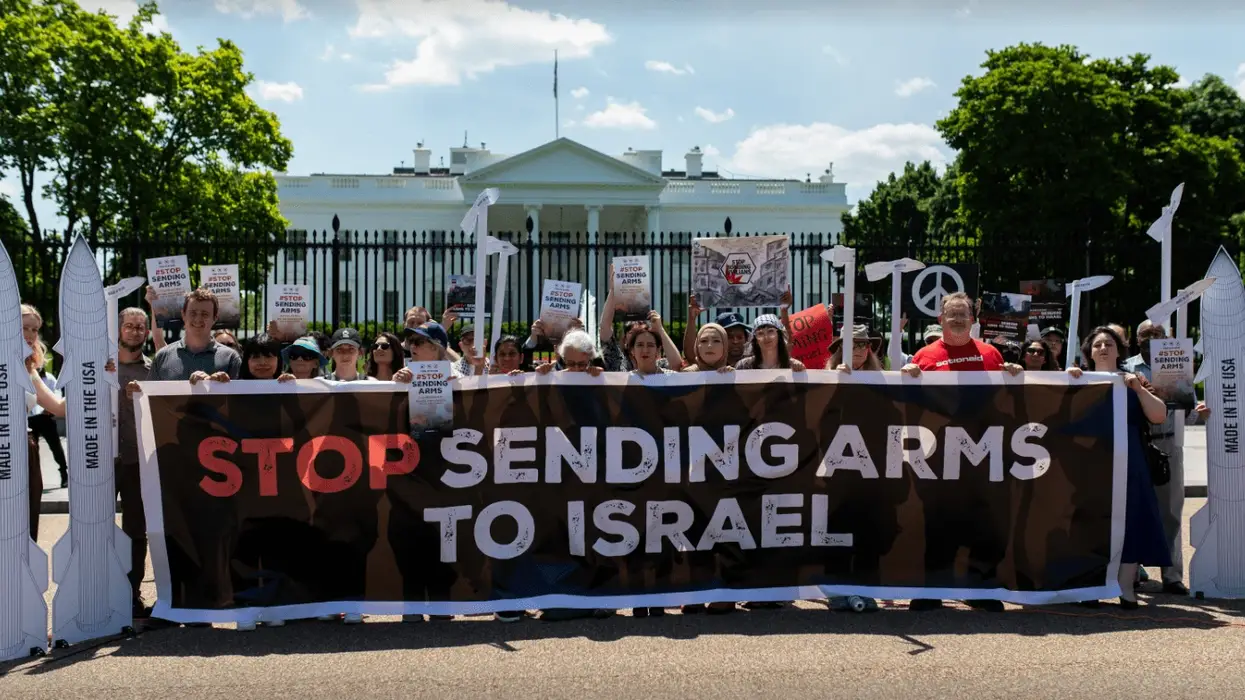
"The NAACP calls on President Biden to draw the red line and indefinitely end the shipment of weapons and artillery to the state of Israel," said Derrick Johnson, the civil rights group's CEO.
Citing Israel's killing of over 36,000 Palestinians in Gaza and its defiance of a World Court order to stop attacking Rafah, the NAACP on Wednesday joined the hundreds of human rights and civil society organizations urging the Biden administration to halt weapons transfers to Israel.
The leading U.S. civil rights group noted Israel's defiance of the International Court of Justice's May 24 order to stop attacking the southern Gaza city of Rafah and the Israel Defense Force's (IDF) May 26 bombing of a refugee encampment there that killed and wounded hundreds of Palestinians, including many women and children.
"The total death toll of Gazans has reached over 36,000 with another 81,000 injured," the NAACP said. "Nearly 500 Palestinians in the West Bank, including 117 children, have also been killed."
NAACP president and CEO Derrick Johnson acknowledged the "tragedy" of October 7, when an attack by Hamas-led militants left more than 1,100 Israelis and others dead—at least some of whom were killed by Israeli fire—and over 240 others taken as hostages.
"It is our hope that those with loved ones still in captivity are reunited as expeditiously as possible," he said in a statement, adding that "Hamas must return the hostages and stop all terrorist activity."
"The Middle East conflict will only be resolved when the U.S. government and international community take action, including limiting access to weapons used against civilians," Johnson stressed. "The NAACP calls on President [Joe] Biden to draw the red line and indefinitely end the shipment of weapons and artillery to the state of Israel and other states that supply weapons to Hamas and other terrorist organizations."
That red line has repeatedly shifted. In March, Biden agreed that any Israeli invasion of Rafah—where around 1.5 million Palestinians forcibly displaced from other parts of Gaza were sheltering alongside local residents at the time—would constitute a "red line."
Last month, as Israeli forces invaded Rafah, Biden qualified his red line by saying it would only be crossed in the event of a "major" assault on the city. Israeli forces have blasted their way to the heart of the city since then, killing and wounding at least hundreds of civilians. More than 1 million people have fled Rafah, according to United Nations officials.
U.S. Secretary of State Antony Blinken then denied that Biden had drawn any red line in Rafah, telling NBC News "Meet the Press" host Kristen Welker on May 12 that "we don't talk about red lines when it comes to Israel."
Democratic strategists are worried about Biden losing Black votes over his complicity in the Gaza carnage. Polling shows Biden's support among Black Americans has dropped significantly since 2020, as it has among Muslim Americans and others concerned about Palestine. According to a Zeteo/Data for Progress survey published last month, a majority of Democratic voters of all races believe Israel is committing genocide in Gaza.
Citing an interview it conducted with Johnson, Reuters reported Thursday that "the NAACP's decision to speak out was driven in part by young Black Americans horrified by the images of dead Palestinian civilians."
"It's raising a lot of questions around why our tax dollars are being used to harm civilians," Johnson said.
The NAACP joins at least hundreds of other organizations calling on Biden to suspend U.S. arms shipments or military aid to Israel. More than 1,000 Black pastors representing hundreds of thousands of congregants from coast to coast have also demanded that Biden push Israel for a cease-fire.
On Tuesday, Bend the Arc: Jewish Action, a group that has not historically taken a stand on the Israel-Palestine issue, implored Biden to immediately "stop providing offensive weapons to the Israeli military."
"Not acting on your own red lines, combined with the Israeli government's promise to continue to violate them, will further erode your viability as a candidate in a race where every vote will matter," asserted Jamie Beran, the group's CEO.
Palestine defenders welcomed the NAACP's call—even if it came so late.
"Glad to see NAACP and Derrick Johnson join our demand for Biden to halt all arms transfers to Israel," said Mohammed Khader, policy manager at the U.S. Campaign for Palestinian Rights. "Israel is using U.S. weapons to commit grave atrocities in Gaza, including on Black/Afro-Palestinians. Hope to see more legacy institutions and other civil rights groups join us."
Huwaida Arraf, a Palestinian American human rights attorney who co-organized and took part in the 2008 and 2010 Gaza Freedom Flotillas—the latter of which was attacked by Israeli forces, who killed 10 activists—lamented in a social media post that "the NAACP has been shamefully silent for [the] last eight months."
But welcoming the group's call to halt arms shipments, Arraf added that "this should be a stark message to Biden that support for Israel may hurt him among Black voters" come November.
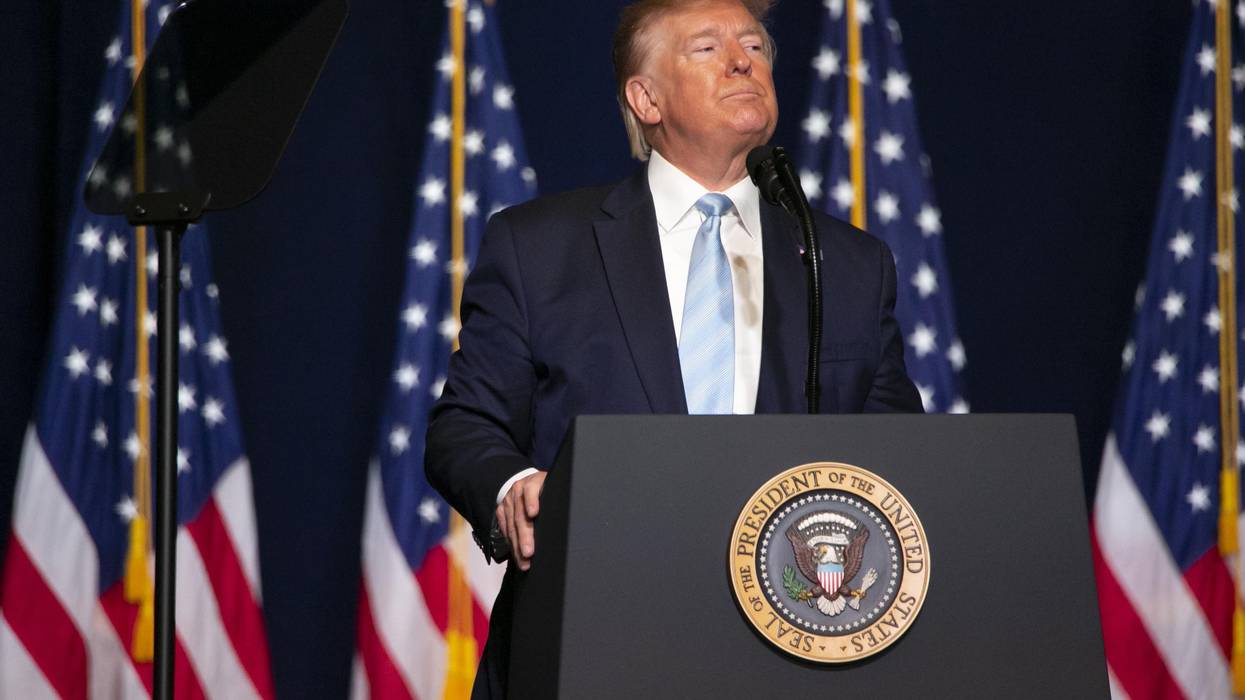
Consider Trump’s first term nothing but an appetizer, should he be reelected.
Consider Donald Trump to be in a racial bind when it comes to election 2024. After all, he needs Black voters to at least defect from Joe Biden in swing states, if not actually vote for him. Yet, more than ever, he also needs his white nationalist base to believe that a second Trump term will be even more racist than the first and he’s been openly claiming that he’ll address the ghost of anti-white racism. Not surprisingly, his evolving strategy for the Black vote has been high on empty symbolism and viral moments, but distinctly low on specific promised policy benefits for the Black community.
Milkshakes and far-right policies are all the presumptive Republican presidential candidate has recently offered Blacks. Take his orchestrated photo op at a Chick-fil-A in Atlanta a preview of things to come. The event was organized by Black MAGA supporter and Republican operative Michaelah Montgomery, who recruited some young African Americans, probably students from nearby historically Black colleges and universities (HBCUs), to cheer for Trump when he entered the place. He proceeded to buy milkshakes for everyone. Montgomery herself gave Trump a picture-perfect hug and, to the glee of MAGAworld, stated, “I don’t care what the media tells you, Mr. Trump. We support you.”
Naturally, while there he made false claims about what he had done for Black folks while president. It wasn’t quite a speech, but he more or less mumbled that he had great support in the area because “I have done more for the people of Atlanta than any other president by far. I have done more for the black community than any other president since Abraham Lincoln and maybe including Abraham Lincoln, but since Abraham Lincoln. And it looks like our polling is very good in the state of Georgia overall. We are very happy about it. We have had — you see the support. It’s been really something.”
Note to Trump: You had such great support in Georgia in 2021 that the GOP lost two Senate seats in run-off elections there (while you were trying to overthrow the government). And that was primarily because of the turnout of Black voters who, the previous November, had voted for President Biden and returned to vote Democrats Jon Ossoff and Raphael Warnock into office.
Without actually engaging the students at Chick-fil-A, and speaking in his usual broken fashion, Trump boasted: “That’s really nice. We took care of the — black colleges, university. They are taken care of. Biden did nothing for them. I did everything.”
Note to Trump: The Fostering Undergraduate Talent by Unlocking Resources for Education Act (or FUTURE Act) you signed ensured that permanent funding for HBCUs would remain at essentially the same level as during the Obama administration (about $85 million). The Biden administration, on the other hand, has invested over $7 billion in HBCUs. That includes “$3.6 billion for HBCUs through the American Rescue Plan and other COVID relief,” “$1.6 billion in capital finance debt relief for 45 public and private HBCUs,” and “$1.7 billion in grant funding to expand academic capacity and provide support for low-income students.”
MAGA and HBCUs
Michaelah Montgomery is steeped in contemporary MAGA politics. She has ties to the Blexit Foundation, a group started by far-right provocateur and conspiracy theorist Candace Owens to sway African Americans from the Democratic Party. Montgomery states on her LinkedIn page that she was Blexit’s city director for the Atlanta metro region. She is also the founder of Conserve the Culture, a group apparently devoted to converting young African American students to conservative, that is, Trumpublican, politics.
In interviews with the right-wing media, she made it appear that Trump had encountered a group of everyday young Black people at that Chick-fil-A who spontaneously expressed their love for him. In fact, it was a handpicked group that did not represent most HBCU students or the Black community more generally.
If she really thought Trump had developed significant popularity among Black students, why didn’t she schedule him to speak at an HBCU? Montgomery later said: “The media will definitely have you thinking that if [Trump] were to show up to our neighborhood… that an angry mob of some sort would form or a riot would ensue.” She can pretend otherwise, but if Donald (“the Black people like me”) Trump actually ever showed up to spew his usual lies to any HBCU audience or Black community in the nation, there would indeed be massive protests.
While he claims he’s had great relations with HBCU presidents, he only visited one of those schools during his presidency and it turned into a scandalous Trumpian event. In 2019, he gave a talk at Benedict College in South Carolina to crow about his criminal justice reform policies. However, Benedict students were asked to stay in their dorms, where they were essentially imprisoned for an hour and served lunch while Trump bloviated. The faculty, too, were requested to stay away. According to USA Today, only seven students were allowed to attend the event and they were not allowed to ask questions.
Black and Far Right
Trump’s Black supporters continue to propagate the false notion that he’s going to make a historic breakthrough in voter support in the coming election. Polls are one thing, election results another. While his campaigns in 2016 and 2020 were wish-casting that he would get 15% to 20% of the Black vote, he only won 6% and 8% respectively.
And it should be noted that Trump desperately wants to dump Black votes not cast for him. The Big Lie that he won in 2020 was premised on his contention that voting in Black-dominated cities was corrupt and that millions of votes should have been discounted. Accepting that “reality” is the price of admission to Trumpworld, whether at the Trump-colonialized Republican National Committee or for any prospective vice-presidential candidate.
And worse yet, his African American sycophants continue to drink the Kool-Aid. South Carolina Republican Senator Tim Scott humiliated himself recently on NBC’s Meet the Press when he clumsily refused six (yes, six!) times to state that he would accept a Trump defeat in the fall. Repeatedly asked, he demonstrated that his desire to stay in Trump’s good graces and potentially become his running mate took priority over the most basic stance for maintaining a constitutional democracy.
In the service of Trump, Scott also launched a video series, “America’s Starting Five,” a weekly discussion between him and the other four Black Republicans in Congress, Representatives Burgess Owens (UT), John James (MI), Wesley Hunt (TX), and Byron Donalds (FL). The goal: to convince Black voters that the GOP and Trump are the only way to go if African Americans want to get ahead.
The first episode, however, didn’t focus on policy differences between the Democrats and Trump, but on two ill-advised and well-criticized statements by Joe Biden. In 2019, he said that “poor kids are just as bright and talented as white kids,” implying it was a given that white kids were bright and talented. He immediately recognized his mistake and tried to clean it up with gibberish. (“Wealthy kids, black kids, Asian kids, no, I really mean it, but think how we think about it.”) In 2020, as he was finishing an interview with the popular Black radio host Charlamagne tha God, Biden said, “Well I tell you what, if you have a problem figuring out whether you’re for me or Trump, then you ain’t black.” At the time, criticism flowed from across the political spectrum in the Black community, chastising the president for seemingly attempting to police Black racial identity.
Scott and the others used those statements to draw a conclusion about Biden’s bigotry and then extend that critique to the Democratic Party. This required, of course, burying decades of Trump’s racist statements and behavior in a memory hole that went deep into the center of the earth. It was an act of epic historical revisionism. They functionally erased the fact that he gave succor to white supremacists marching in Charlottesville, Virginia, in 2017, attacked voting rights, expressed a desire to shoot Black Lives Matter protesters, demanded that there be less immigrants from “shithole” nations and more from Norway, defamed black prosecutors, judges, and district attorneys with racist verbal attacks, insulted Harriet Tubman, and so much more during his presidency.
The Racial Storm Is Coming
Yet consider Trump’s first term nothing but an appetizer, should he be reelected. According to his campaign website, the Heritage Foundation’s Project 2025, and Project 47, he will unleash a program of racial authoritarianism unseen since the worst days of slavery and Jim Crow segregation. And he’ll be emboldened and enabled by a constitution filled with ambiguities and undemocratic provisions, by an increasingly reactionary Supreme Court he helped appoint, and by millions of his supporters (many of whom have shown a propensity for using violence to meet their idea of his agenda).
Trump’s second-term racial program is already emerging. He stated while president and recently reiterated that “we will terminate every diversity, equity, and inclusion program across the entire federal government” and end Biden’s “Marxist executive order that seeks to impose racist and woke sexual ideology across the federal government.”
Believe him.
And it won’t just stop at the federal level or in the public sector. As the Guardian recently reported, MAGA forces are planning to go after all efforts at inclusion (whether related to racial, gender, religious, or sexual-orientation), including in the corporate sector and the non-profit world. Trump’s former adviser Stephen Miller’s America First Legal group and other far-right actors have already filed suits against Fearless Fund, a venture capital business founded by Black women; Hello Alice, which provides grants to small Black business owners; and the George Floyd Memorial scholarship program at Minneapolis’s North Central University, among other initiatives. America First Legal has been on a hyper mission to end diversity efforts, all of which it perceives as harmful to white Americans.
In a broader context, Trump has stated, “But if you look right now, there’s absolutely a bias against white and that’s a problem.” First and foremost, Trump sees himself as a victim of racism by Black public authorities and has been signaling that he’s all in on a campaign of overt white nationalism. It couldn’t be clearer where he’ll focus the resources of the White House and federal government should he return to power.
And one thing is guaranteed: he’ll have support for his actions. As USA Today noted, citing a CBS November poll, “Most white voters supporting Trump believe that racial minorities are favored over white people.” About 58% of Trump voters (as opposed to 9% of Biden ones) believe “racial minorities” are favored over “white people.”
And his plans (as well as those of his GOP allies) to get back into office include not only voter suppression tactics like closing polling sites, ending early voting, and questioning mail-in or drop-box ballots, but attempting to employ an army of Election Day militias who will look for “irregularities” and “illegal” behavior. Is there any doubt where those 100,000 election watchers will be sent (or what they will look like)? And by the way, there has been stone-dead silence from Trump’s Black supporters on the plan to send hardcore MAGA troops to Black and Latino communities in swing states.
Absurd to the End
Trump has said to his Black backers, “I’m being indicted for you, the Black population.” That’s his way of attempting to link his own misconduct and corruption to his conviction that the Black community is overwhelmingly filled with criminals. Even worse, he has insultingly compared himself to South African leader Nelson Mandela, one of the most famous prisoners in the world for nearly three decades. Of course, he knows absolutely nothing about Mandela or what sent him to prison, only that he was famous for it. Mandela became a global hero to tens of millions who fought for years for his freedom.
You undoubtedly won’t be surprised to learn that, according to former Trump lawyer Michael Cohen, The Donald had a remarkably low opinion of Mandela. Cohen wrote in Disloyal: A Memoir that, after Mandela died in 2013, Trump told him, “Mandela f—ed the whole country up. Now it’s a s—hole. F— Mandela. He was no leader.”
Of course, Trump knew little and could have cared less about Africa, or South Africa in particular. There is almost no record of him discussing or tweeting about South Africa. The one time he did, based on a news report by far-right commentator Tucker Carlson, he tweeted a white supremacist talking point, falsely claiming that there were “large-scale killings” of white farmers in that country. From former Klan leader David Duke to hard racist websites like the Daily Stormer, white supremacists naturally celebrated Trump’s tweet.
In 2016, every white nationalist and supremacist in this country supported Donald Trump. In 2020-2021, in the wake of the Charlottesville riots, immigration cruelties, and the January 6th insurrection, they supported him again. And now, as the 2024 election looms, and Trump fights “anti-white” racism, he has once more earned their love and their votes.
Singer and activist John Legend who, along with his wife Chrissy Teigen, has battled Trump for years, summed up the former president best. He said: “He’s done very little for us and he is at his core, truly, truly a racist.”
Welcome to the 2024 election season and a world in which Black MAGA is still MAGA to the core.

"It is my stance as a Morehouse man, nay as a human being, to call for an immediate and permanent cease-fire in the Gaza Strip," said valedictorian DeAngelo Fletcher.
Advisers for U.S. President Biden reportedly saw Morehouse College, a historically Black men's college in Atlanta where he gave the commencement address Sunday, as a school where the president was unlikely to face protests over his continued support for Israel's assault on Gaza, which has been the subject of mass demonstrations led by students at universities across the country over the past month.
But students and faculty made clear at the ceremony that many of them, like others in higher education, are intent on sending Biden a strong message of disapproval over his Israel policy.
A number of faculty members and students wore keffiyehs, the traditional scarves worn in parts of the Middle East including Palestine, and by some supporters of Palestinian rights to show solidarity with civilians in Gaza. Others displayed the Palestinian flag on their graduation gowns.
ABC News White House correspondent Selina Wang reported that while most of the alumni present at the graduation stood up when Biden was introduced, all but a few of the students remained seated.
The war in Gaza, where Israel has killed more than 35,000 Palestinians since October while receiving billions of dollars in military aid from the Biden administration, was directly mentioned by valedictorian DeAngelo Fletcher, who had placed a Palestinian flag motif on his graduation cap.
"It is my stance as a Morehouse man, nay, as a human being, to call for an immediate and permanent cease-fire in the Gaza Strip," said Fletcher as Biden sat behind him and applauded. "From the comfort of our homes, we watch an unprecedented number of civilians mourn the loss of men, women, and children, while calling for the release of all hostages."
Some students and faculty turned their backs when the president gave his address, in which he said he supports "peaceful, non-violent protest." Other students walked out of the ceremony, but Biden's speech was not disrupted like the last time he addressed a group of college students at George Mason University, when protesters interrupted him 10 times.
Biden has been rebuked by First Amendment advocates for suggesting the Palestinian solidarity and anti-war protests that have spread across college campuses in recent weeks are inherently antisemitic, and for failing to speak out against aggressive police responses to protests at schools including Emory University, Columbia University, and University of Texas at Austin.
"It's a humanitarian crisis in Gaza. That's why I've called for an immediate cease-fire, an immediate cease-fire to stop the fighting. Bring the hostages home," said the president, adding that he is "working around the clock" to secure a two-state solution in the Middle East and to ensure aid is allowed into Gaza, where key border crossings are now closed by Israel.
Middle Eastern policy expert Assal Rad said Biden's call for a cease-fire seven months into Israel's escalation amounts to "nonsense," considering his administration's veto of several cease-fire resolutions at the U.N. Security Council and the $17 billion military aid package Biden signed in April for Israel.
A majority of Americans disapprove of Israel's assault on Gaza, and Black voters, a key constituency who supported Biden in 2020, are no exception.
The Carnegie Endowment for International Peace found last month that 68% of Black Americans wanted the U.S. to demand an immediate and permanent cease-fire, and 59% said conditions must be applied to U.S. military aid to Israel to ensure the Middle Eastern country is using U.S. weapons for "legitimate self-defense and in a way that is consistent with human rights standards."
While 66% of Black Americans overall said their feelings toward Biden had not changed due to his Israel policy, those under age 30 were more likely to say their views on the president had become more negative since October.
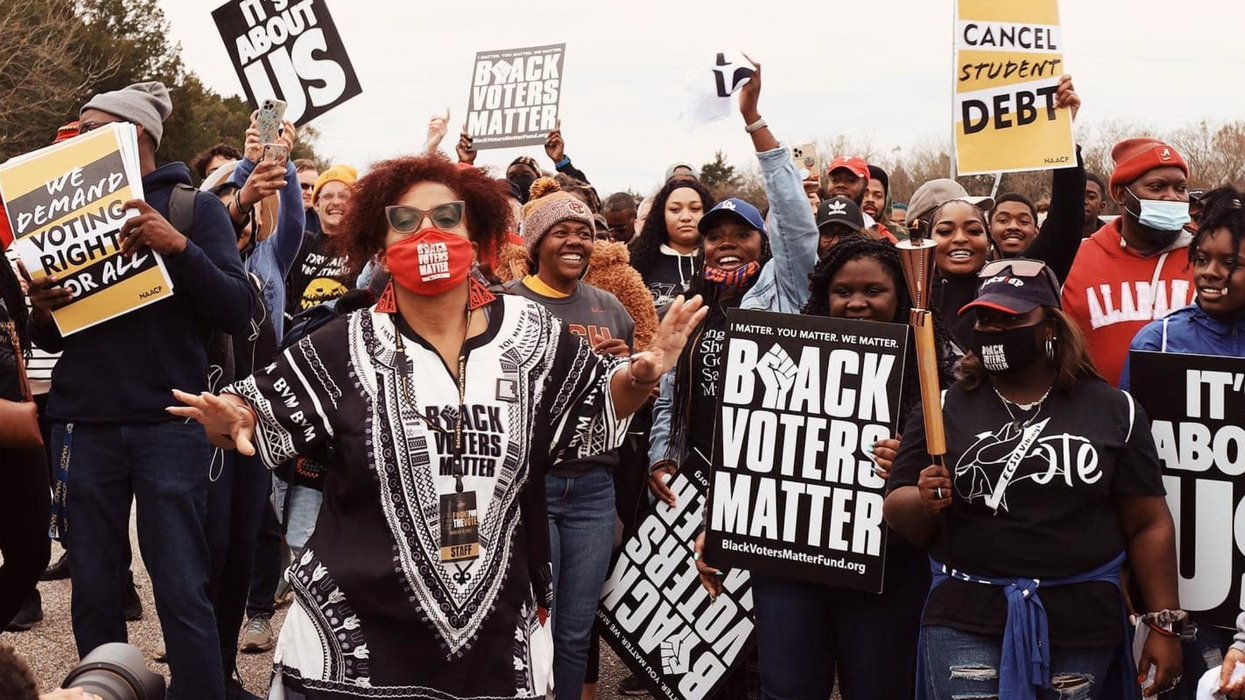
As the Alabama ACLU noted, the state must now create a second district "where Black voters have an opportunity to elect a candidate of their choice by the 2024 elections."
In a ruling hailed by civil rights defenders as a "win for Black voters," the U.S. Supreme Court on Tuesday
declined to intervene in a case in which Alabama Republicans are openly defying a federal court's order to redraw the state's racially gerrymandered congressional map.
Evan Milligan, the lead plaintiff in the case, applauded Tuesday's ruling—in which no justices publicly dissented—as a "victory for all Alabamians" and "definitely a really positive step."
The state's Republican policymakers "basically said if you were Black in Alabama, your vote would count for less," Milligan told The Associated Press. "It was our duty and honor to challenge that."
U.S. Rep. Terri Sewell (D-Ala.) described the decision as "another big win for Alabama's Black voters."
Sherrilyn Ifill, the former head of the NAACP Legal Defense Fund (LDF), called the ruling "huge."
"I am darned near tearful with pride," she wrote on social media. "It takes so much to litigate these cases—often before hostile courts, with opposition that is unprincipled, and with naysayers all around."
The Brennan Center for Justice's Michael Li said in a statement that "after a string of remarkable victories, Black voters in Alabama are closer than ever to winning relief from discriminatory maps."
A 2022 order by a federal district court ruled that a new congressional map approved by Alabama's GOP-controlled Legislature and Republican Gov. Kay Ivey after the 2020 census diluted Black voting power because it contained just one majority African-American district. The court—which found that the maps violated Section 2 of the Voting Rights Act and the 14th Amendment—ordered the state to create a new plan with two Black "opportunity districts."
Alabama appealed to the U.S. Supreme Court, which in June ruled 5-4 in Allen v. Milligan—with right-wing Justices John Roberts and Brett Kavanaugh surprising many observers by joining their three liberal colleagues in the majority—to affirm the lower court's decision.
In response to Allen v. Milligan, Ivey convened a special legislative session to make a new map, which she approved in July, declaring that state lawmakers know "our people and our districts better than the federal courts or activist groups."
Despite court orders, Alabama Republicans' new congressional map—the Livingston Congressional Plan 3—lacked a second majority Black district. The map's sponsor, state Sen. Steve Livingston (R-8), said U.S. House Speaker Kevin McCarthy (R-Calif.) told him that he was "interested in keeping my majority."
A federal three-judge panel consisting of two appointees of former President Donald Trump and one appointee of former President Ronald Reagan subsequently blocked the new map, writing that "we are deeply troubled that the state enacted a map that the state readily admits does not provide the remedy we said federal law requires."
On Monday, a special master appointed by the district court submitted three proposals for a new congressional map in Alabama. One of them will be chosen as the state's map for the 2024 elections. A three-judge panel has tentatively scheduled an October 3 hearing to consider the maps.
LDF president and director-counsel Janai Nelson said on social media that "all maps proposed by the special master would allow Black Alabamians the opportunity to elect a candidate of their choice in two congressional districts in the state."
Tuesday's ruling follows the Supreme Court's June decision to allow the redrawing of Louisiana's racially gerrymandered congressional map—a move that will add a second majority-Black district in the Southern state where 1 in 3 residents are African-American.
The ruling also comes amid a battle over Florida's congressional map, drawn by the office of Republican Gov. Ron DeSantis—a 2024 presidential candidate—and approved last year by the state's GOP-controlled Legislature. Earlier this month, a state judge ruled that the redistricting plan is an unconstitutional dilution of Black voters' ability to vote for the legislator of their choice and ordered the map redrawn.
The case will now head to the Florida Supreme Court, where a majority of justices are DeSantis appointees.
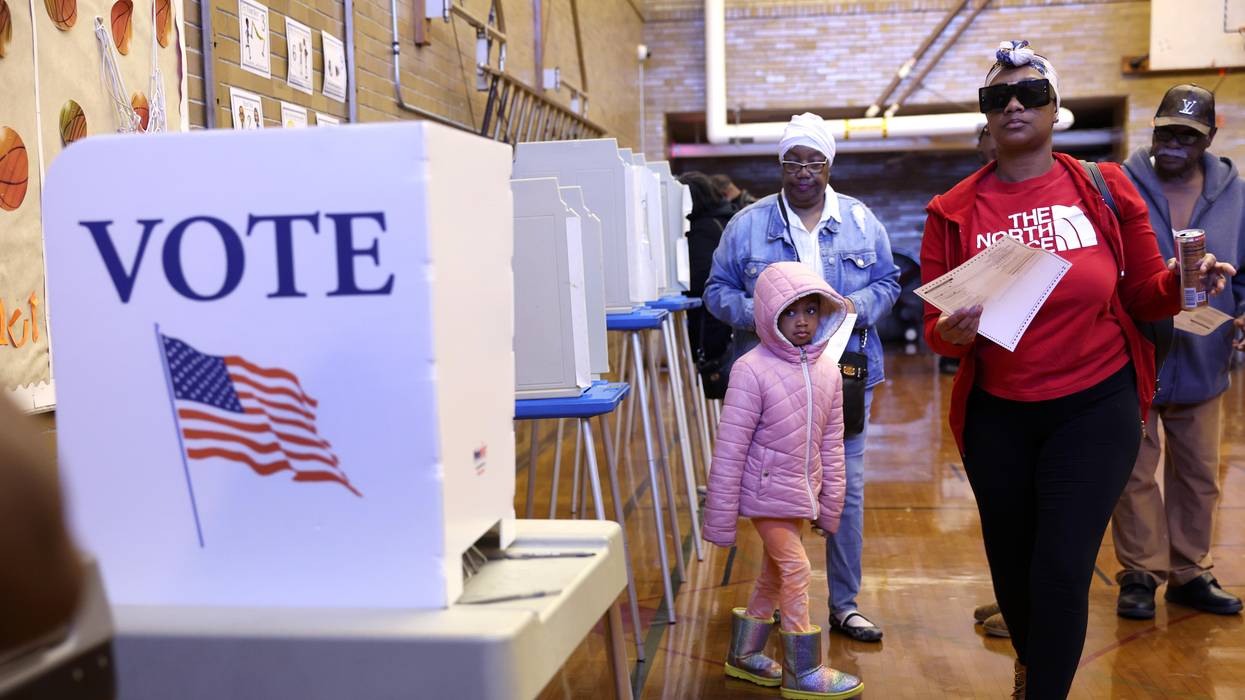
"It is incredibly racist to brag about lowering Black and Brown turnout, it is also unacceptable to have these comments and views held by an election official," said one advocacy group.
Voting rights advocates in Wisconsin on Thursday called on a far-right conspiracy theorist and member of the state's election authority to resign following revelations that he boasted about suppressing Black and Brown Milwaukee voters during last year's midterms.
Urban Milwaukee first reported that Bob Spindell, chairman of the 4th Congressional District GOP and a member of the Wisconsin Elections Committee (WEC), gloated in an email to thousands of Republicans that "we can be especially proud of the city of Milwaukee (80.2% Dem Vote) casting 37,000 less votes than cast in the 2018 election, with the major reduction happening in the overwhelming (sic) Black and Hispanic areas."
"From participating in a criminal conspiracy to overturn the 2020 election results, to now boasting about the suppression of votes from people of color, Spindell clearly cannot be trusted to fairly and adequately carry out a position directly related to the integrity of the Wisconsin election system."
Spindell explained that "this great and important decrease in Democrat votes in the city" was due to a "well thought out multifaceted plan," which included negative ads targeting Black voters, Republican lawsuits that increased voting restrictions, and an effort to convince Democratic voters to stay home on Election Day.
"While this is incredibly disturbing, we are not surprised by this recent revelation of additional Republican tactics used for voter suppression," the political action group Black Leaders Organizing for Communities (BLOC) said in response to Spindell's email. "Many of us have been sounding the alarm about how sinister voter suppression tactics have become, and Spindell's comments reinforce what we already knew."
"It is incredibly racist to brag about lowering Black and Brown turnout, it is also unacceptable to have these comments and views held by an election official," BLOC added. "We join calls from various grassroots partners... to rescind Spindell's appointment to the Wisconsin Election Commission."
Chris Walloch, executive director of A Better Wisconsin Together, a progressive research hub, tied Spindell's email to the official's support for former President Donald Trump's "Big Lie" about the last presidential election.
"There's no easier way to put it—Spindell is a Trump faction conspiracy theorist who has actively tried to sabotage and influence the outcome of Wisconsin elections based upon his own partisan bias," Walloch said in a statement.
"From participating in a criminal conspiracy to overturn the 2020 election results, to now boasting about the suppression of votes from people of color, Spindell clearly cannot be trusted to fairly and adequately carry out a position directly related to the integrity of the Wisconsin election system," Walloch added. "Wisconsinites deserve better, and we are demanding better."
Spindell was already a controversial figure. A prominent purveyor of Trump's "Big Lie," he was one of 10 fake Republican electors who plotted to fraudulently hand Trump a second White House term.
"The comments Commissioner Spindell made are not only egregious, they are the antithesis to what a true democracy is all about," Samuel Liebert, the Wisconsin state director for the advocacy group All Voting Is Local, said in a statement. "Nobody should be celebrating the disenfranchisement of Wisconsin voters, least of all an election official serving on the Wisconsin Elections Commission."
"The targeting of Black and Brown voters and the rejoicing over tens of thousands of us casting fewer ballots than in previous elections is alarming and leaves little doubt that barriers to the ballot and the spreading of disinformation regarding voting and elections have specifically been implemented and utilized to prevent us from voting," he continued.
"No matter our color, background, or zip code, most Wisconsinites believe that voters pick our leaders, our leaders do not pick their voters," Liebert added. "Elections officials, such as those serving on the WEC, should deliver the promise of American democracy to all, regardless of party affiliation."
The U.S. Supreme Court announced Monday that it will soon weigh in on whether North Carolina's redistricting relied too heavily on race, deliberately clustering large populations of black voters into two districts in an attempt to diminish their influence and sway election results.
The Hill reports:
North Carolina citizens bringing the case forward argued that the redrawn lines were a "textbook example of racial gerrymandering" that violated the equal protection clause of the 14th Amendment.
They claimed North Carolina lawmakers packed black voters from "disparate black communities" into the 1st Congressional District and 12th Congressional District.
A federal court ruled earlier this year that the 2011 redistricting did constitute racially motivated gerrymandering and ordered the lines to be redrawn, though voters challenged the new districts as well. According to Politico's Josh Gerstein, "The latest revision of the map is expected to preserve a 10-to-3 Republican-Democratic split in the state's U.S. House delegation."
Nonetheless, North Carolina Republican Gov. Patrick McCrory and the state Board of Elections petitioned the Supreme Court to weigh in on the lower court ruling, claiming that "the trial court's finding of racial gerrymandering was based on erroneous fact-finding," Courthouse News Service reports.
As the Supreme Court will now consider the case when it reconvenes this fall, the maps will unlikely change before November's presidential election.
North Carolina's voter suppression efforts have come under increased scrutiny since the passage in 2013 of House Bill 589, which eliminated same-day registration, required strict forms of voter ID, and shortened the early voting period, among other things. Citing the widespread disenfranchisement caused by these and other new voting restrictions, voting rights advocates across the nation are pressuring federal lawmakers to restore the 1965 Voting Rights Act before the upcoming election.
The race is far from over, Bernie Sanders told his supporters on Saturday night after news outlets projected a big win for Hillary Clinton in the South Carolina Democratic primary.
"Let me be clear on one thing tonight," Sanders said in a statement just after 7 pm EST. "This campaign is just beginning. We won a decisive victory in New Hampshire. She won a decisive victory in South Carolina. Now it's on to Super Tuesday. In just three days, Democrats in 11 states will pick 10 times more pledged delegates on one day than were selected in the four early states so far in this campaign. Our grassroots political revolution is growing state by state, and we won't stop now."
As of 7:30 pm, according to CBS News:
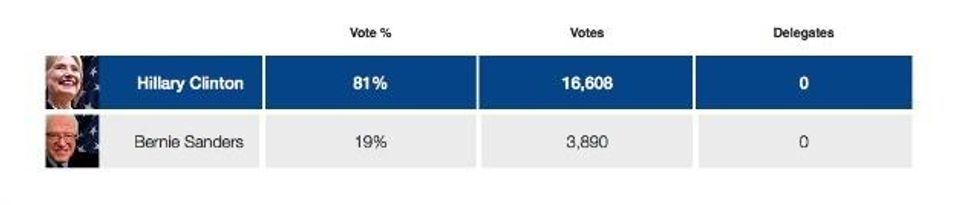
CBS reported a high turnout among African Americans, who overwhelmingly backed Clinton. According to CBS exit polling, "more than 86 percent of black women and 79 percent of black men supported her over Sanders."
Jane Sanders, Bernie Sanders' wife, told the Guardian about that particular margin of victory: "I think we're getting a lot better [at reaching African American voters]. It's just that they didn't know us. They didn't know us in the South generally."
However, the Associated Press pointed out that this "bodes well for Clinton headed into Super Tuesday contests across the South, where several states have large populations of black voters."
Eleven states hold Democratic primaries or caucuses on Tuesday, March 1, and the stakes are high for Sanders. The U.S. senator from Vermont "needs something to change because frankly, he's losing," Harry Enten wrote at FiveThirtyEight on Saturday.
Among those states is Texas, where Sanders spoke to a "mega-rally" of 10,000 people on Saturday and highlighted his ability to beat GOP frontrunner Donald Trump in the general election.
"I believe that Donald Trump's idea of dividing us up is a horrific un-American idea," Sanders told the outdoor rally in Austin. "I believe that not only can we win this Democratic nominating process, but we can defeat Trump and defeat him soundly."