

SUBSCRIBE TO OUR FREE NEWSLETTER
Daily news & progressive opinion—funded by the people, not the corporations—delivered straight to your inbox.
5
#000000
#FFFFFF
To donate by check, phone, or other method, see our More Ways to Give page.
Daily news & progressive opinion—funded by the people, not the corporations—delivered straight to your inbox.

Instead of eradicating structures of inequality, our current leadership is implementing policies that destroy government jobs and dismantle agencies responsible for preventing predatory economic practices.
Dr. Martin Luther King, Jr.’s words from his “Beyond Vietnam” speech still ring true.
“When machines and computers, profit motives, and property rights are considered more important than people,” he warned, “the giant triplets of racism, extreme materialism, and militarism are incapable of being conquered.”
Those words, delivered in 1967, still summarize today’s political moment. Instead of putting the lives of working Americans first, our leaders in Congress and the White House have prioritized advancing corporate profits and wealth concentration, slashing government programs meant to advance upward mobility, and deploying military forces across the country, increasing distrust and tension.
This historic regression corresponds with a recessionary environment for Black America in particular. That’s what my organization, the Joint Center, found in our report, State of the Dream 2026: From Regression to Signs of a Black Recession.
Unless we act deliberately, economic and racial inequalities will become entrenched, resulting in generational loss.
The economic landscape for Black Americans in 2026 is troubling, with unemployment rates signaling a potential recession. By December 2025, Black unemployment had reached 7.5%—a stark contrast to the national rate of 4.4%. This disparity highlights the persistent economic inequalities faced by Black communities, which have only been exacerbated by policy shifts that have weakened the labor market. The volatility in Black youth unemployment, which fluctuated dramatically in the latter months of 2025, underscores the precariousness of the situation.
The Trump administration’s executive orders have systematically dismantled structures aimed at promoting racial equality. By targeting programs such as Lyndon Johnson’s 1965 Equal Employment Opportunity executive order and defunding agencies like the Minority Business Development Agency, the administration has shifted federal support away from disadvantaged businesses.
As a result, Black-owned firms risk losing contracts and resources tied to federal programs, potentially resulting in job losses and reduced economic growth. These changes threaten billions in federal revenue for Black-owned firms and undermine efforts to move beyond racial inequality in the workforce.
The GOP’s so-called “Big Beautiful Bill,” passed in 2025, further entrenches inequality by providing tax cuts that disproportionately benefit high-income households and corporations—while simultaneously slashing investments in programs like Medicaid and SNAP, limiting access to essential services for low-income households.
The technology sector, a critical component of the American economy, is also affected by this disregard for civil rights. Executive orders like “Removing Barriers to American Leadership in Artificial Intelligence” have stripped away protections that could advance inclusion in this rapidly growing field. As a result, the future of the American economy risks reinforcing past inequalities.
Dr. King’s call for strong, aggressive federal leadership in addressing racial inequality remains highly relevant. However, instead of eradicating structures of inequality, our current leadership is implementing policies that destroy government jobs and dismantle agencies responsible for preventing predatory economic practices. These choices undermine longstanding efforts to combat racial and economic disparities—and exemplify the regressive economic policies that coincide with rising Black unemployment.
As Dr. King stated, “we refuse to believe that the bank of justice is bankrupt.” But urgent action is required. Unless we act deliberately, economic and racial inequalities will become entrenched, resulting in generational loss. The core question is whether we will move beyond our nation’s history of racism, materialism, and militarism, and—as Dr. King urged—embrace “the fierce urgency now” to advance equity.

We taxpayers fund ICE, the Border Patrol, and Secretary of Homeland Security Kristi Noem’s salary (and her two jets). Without congressional action by the end of January, funding for ICE will lapse.
With the killing of Renee Good, an unarmed mother of three, the American people have reached a breaking point. As protests surged beyond Minnesota to all 50 states, a critical window has opened in Washington. Congress has until the end of January to decide whether to fund a massive expansion of Immigration and Customs Enforcement, and Democratic senators alone can just say no.
Minneapolis Mayor Jacob Frey told ICE to leave, but instead the Trump regime doubled down, adding to the thousands of federal agents already sent to the twin cities. Federal agents smashed car windows to grab people observing their activities, broke down doors, and created fear and chaos around schools. President Donald Trump warned of more to come, posting to Minnesota on Truth Social on January 13, “THE DAY OF RECKONING & RETRIBUTION IS COMING.”
While the streets of Minneapolis fill with grieving and defiant residents, Congress is preparing to pour billions more into the very agencies responsible for the chaos.
There are only a few people with the power to stop the brutalizing of our communities being carried out by ICE. Congress has the power of the purse, and Congress can stop this. We taxpayers fund ICE, the Border Patrol, and Secretary of Homeland Security Kristi Noem’s salary (and her two jets). Without congressional action by the end of January, funding for ICE will lapse.
There is support among some in Congress for reining in ICE. Others will have to join these courageous leaders if we are to rein in the federal brutality.
In the Senate, where 60 votes are required to move a funding bill forward, just 41 senators can block any bill that expands the ICE budget. Senate Democrats, including two Independents who caucus with Democrats, number 47. Senate Democrats alone can halt funding for ICE.
So far, the Democratic leadership has not stepped up. Only enormous pressure from their constituents will force them to show any backbone.
There is support among some in Congress for reining in ICE. Others will have to join these courageous leaders if we are to rein in the federal brutality.
“It’s hard to imagine how Democrats are going to vote for a DHS bill that funds this level of illegality and violence without constraints,” Sen. Chris Murphy (D-Conn.) told Axios last week.
Sen. Chris Van Hollen (D-Md.) said on X he would not support any funding for Trump’s ICE operations without safeguards.
Members of the Congressional Progressive Caucus have been speaking out.
“Our caucus members will oppose all funding for immigration enforcement in any appropriation bills until meaningful reforms are enacted to end militarized policing practices,” Rep. Ilhan Omar (D-Minn.) told a press conference at the US Capitol. According to a report in the Guardian, Omar, who is the caucus’s deputy chair, went on to say, “We cannot and we should not continue to fund agencies that operate with impunity, that escalate violence, and that undermine the very freedoms this country claims to uphold.”
“They’ve gone rogue under Donald Trump; they should be disbanded,” Rep. Joaquin Castro (D-Texas) said, according to The Hill. “You’re still going to have immigration enforcement, but ICE shouldn’t have any part of it.”
The massive funding that is supercharging ICE is coming from taxpayers. Trump’s signature legislation, the so-called “Big Beautiful Bill,” earmarks $170 billion over four years for immigration enforcement. The ICE budget alone would nearly triple compared to its 2024 budget, reaching $28.7 billion per year. The bill included $30 billion over four years to hire 10,000 additional ICE officers, according to the Brennan Center for Justice.
This massive influx of cash would also triple the budget for immigrant detention, eventually becoming 62% larger than the funding for the entire federal prison system. Detention of undocumented immigrants has grown to the highest level in US history, according to the Migration Policy Institute, with more than 8 in 10 held in private detention centers. Contrary to the Trump regime’s promise to go after the “worst of the worst,” 71% of ICE detainees have no criminal conviction.
This year’s appropriation for ICE has yet to be approved. And Congress can just say no.
With Kristi Noem and others in the Trump regime calling protesters “domestic terrorists,” these growing detention facilities could be used to hold any who express disagreement with the Trump agenda.
The Department of Homeland Security (DHS) is also using its massive war chest to pressure state and local law enforcement to enter into 287(g) partnerships with ICE, in which they receive generous federal funding for collaborating with federal agents.
This federal “campaign of terror” relies entirely on congressional approval, says Rep. Delia Ramirez (D-Ill.) of Chicago. “We need to cut and claw back ICE’s funding as natural consequences for DHS’ disregard for the rule of law and violations of our rights,” the Guardian quoted her as saying.
This year’s appropriation for ICE has yet to be approved. And Congress can just say no.
The people affected by the bloated ICE budget are our friends and neighbors. They are hospital and home-health workers. They harvest the crops and process meat, and many own small businesses. They are mothers and fathers and neighbors who contribute to the fabric of our communities. They pay taxes and contribute to social security, although they are not eligible to receive social security benefits. Many of those targeted are in the US legally, including refugees, those applying for citizenship, and even US citizens.
Public support for the ICE roundups has plummeted since President Trump took office. More Americans now believe ICE is making the country less safe (47%) than more safe (34%), according to an Economist/YouGov poll taken after the shooting of Renee Good. A plurality of Americans (46%) support the abolition of ICE, a figure that jumps to 80% among Democrats or those who lean Democratic. Indivisible has made the ICE funding fight a major priority.
The Trump regime wants us to believe we are powerless to stop this massive buildup of armed, masked federal forces in our cities and towns. They’re wrong.
People are making their opinions known through extraordinary acts of courage:
Ordinary people are showing up, as Renee Good did, to literally blow the whistle on ICE outside workplaces, in neighborhoods, and at detention centers. Around the country, people are supporting parents trying to get their kids to school—and those whose loved ones have been detained. Rapid response teams have formed, with members filming detentions, challenging federal agents to show warrants, and staging late-night parties outside hotels housing ICE agents.
People power is having an impact. Spotify recently stopped accepting ICE recruitment ads following a widespread consumer boycott, and Avelo Airlines ended its contract for deportation flights.
The Trump regime wants us to believe we are powerless to stop this massive buildup of armed, masked federal forces in our cities and towns. They’re wrong. Our tax dollars are the fuel for this machine. The American people are stepping up, risking injury and arrest to defend their rights and their neighbors. Now we will see if elected lawmakers have as much courage as the people they represent. It’s time for Congress to use the budgeting powers vested in them by the founders, and turn off the spigot.
At least 25 people have died in ICE custody since President Donald Trump returned to office, making 2025 the deadliest year for people in ICE custody since 2004.
Gabriel Garcia-Aviles was a 56-year-old grandfather with a work permit who’d been living in the US for over 30 years. He was a beloved member of his Southern California community.
This fall, Immigration and Customs Enforcement (ICE) agents detained Garcia-Aviles and sent him to the Adelanto immigration detention center. He died around a week later, with ICE only informing his family that he was in critical condition once he was on his deathbed.
At the hospital, his daughter Mariel found him “unconscious, intubated,” and with “dried blood on his forehead.” He had “a cut on his tongue and blood on his lips” and “broken teeth and bruising on his body,” according to reporting from LA Taco. No clear cause of death was given, leaving his family shattered and still searching for answers.
That’s the second death this year at Adelanto.
Ultimately Congress must defund and dismantle ICE, end the unnecessary and inhumane system of immigration detention, and create more legal pathways to citizenship, among other reforms.
Ismael Ayala-Uribe, a 39-year-old former DACA recipient from Orange County, lived in the US for nearly 35 years. ICE apprehended him while he was working at a car wash and sent him to Adelanto on August 22. He died a month later of an abscess after reportedly being denied lifesaving medical treatment.
ICE didn’t inform his family that he’d been hospitalized. They only learned of Ayala-Uribe’s death the following day after a police visit.
At least 25 people have died in ICE custody since President Donald Trump returned to office, making 2025 the deadliest year for people in ICE custody since 2004. Over 65,000 others remain detained, also the highest number in years. Immigrants with no criminal record remain the largest group in immigration detention. According to ProPublica, ICE has also detained over 170 US citizens this year.
Adelanto, owned and operated by the GEO Group, is among ICE’s sprawling network of mostly private, for-profit detention facilities notorious for human rights abuses. But it’s hardly alone.
From the Krome Detention Center in Florida to the Karnes County detention facility in Texas, people in ICE custody are routinely subjected to abysmal conditions and medical neglect. The detention population has increased by 50% this year, which experts have warned could lead to more deaths.
Rights groups have been issuing warnings like these for years.
In 2024, the American Civil Liberties Union and Physicians for Human Rights examined the deaths of 52 people who died in ICE custody between 2017 to 2021 and concluded that 95% of those deaths would have been “preventable or possibly preventable” with appropriate medical care. The researchers also found ICE’s oversight and accountability mechanisms “critically flawed.”
These problems have only worsened as immigration arrests have escalated as part of the Trump administration’s anti-immigrant agenda. Recent US Senate investigations uncovered dozens of cases of medical neglect, insufficient or rotten food, foul water, and pregnant women forced to sleep on the floor in ICE detention facilities this year.
Watchdog groups and lawmakers have found that ICE has repeatedly failed to comply with its own protocols, ignored congressional inquiries, and denied members of Congress entry to facilities, even though they have the authority to conduct unannounced oversight visits.
ICE acts increasingly like a rogue agency, refusing to follow US and international law. Yet the “Big Beautiful Bill” Trump signed this year includes $45 billion for ICE to build new prisons housing adults and children, which all but ensures more abuses and preventable deaths. Meanwhile, private prison companies continue to profit.
It doesn’t have to be this way. More oversight would help safeguard civil and human rights. But ultimately Congress must defund and dismantle ICE, end the unnecessary and inhumane system of immigration detention, and create more legal pathways to citizenship, among other reforms.
Legislation recently introduced by US Reps. Pramila Jayapal (D-Wash.) and Adam Smith (D-Wash.) would be a step forward. If passed, it would repeal mandatory detention and phase out privatized detention.
As more families are ripped apart, our nation of immigrants stands at a crossroads. It can continue on this path of extreme cruelty and systemic abuse, or it can uphold human rights and dignity for all people.
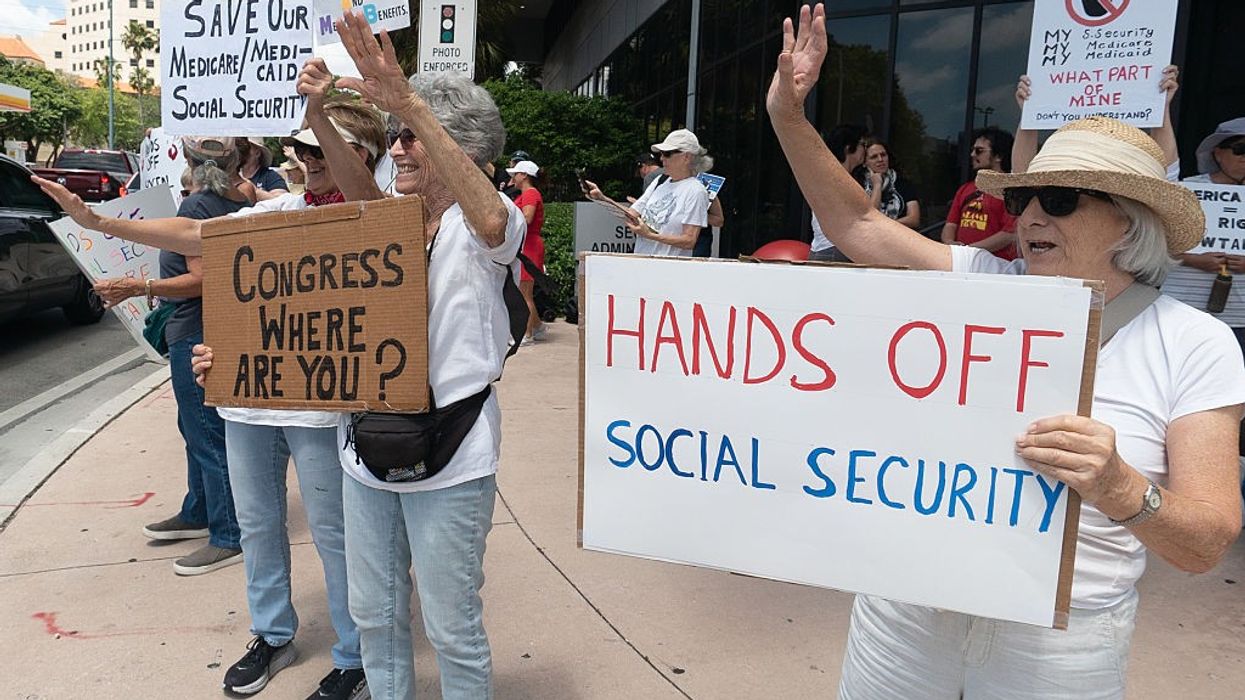
Instead of having a piece of birthday cake, make a call to your member of Congress, post on social media about how we need to protect Social Security, and talk to your friends about the need to speak up against threats to your benefits.
This August 14 marks the 90th anniversary of President Franklin Roosevelt signing the Social Security Act into law. This was a huge step forward for America, and our country has been profoundly changed for the better. We quite understandably focus on Social Security’s retirement benefits, but Social Security is much more than this. It is a social insurance policy that helps children whose parents have died and those who are disabled and provides spousal income.
It is very easy to be tempted into celebrating Social Security’s longevity and enjoying a piece of birthday cake. Given the threats to Social Security, as well as other programs like Medicaid, such celebrations are misleading. The best way to mark Social Security’s 90th birthday is to adapt a phrase made famous by the legendary labor organizer Joe Hill: “Don’t celebrate—organize!”
Given the threats to Social Security by the Trump administration in just seven months in office, celebrations are not helpful. Let’s briefly review some of the recent Trump actions that impact your benefits:
Given all of this, if you really care about Social Security, it is impossible to blithely celebrate its birthday.
So instead of having a piece of birthday cake, make a call to your member of Congress, post on social media about how we need to protect Social Security, and talk to your friends about the need to speak up against threats to your benefits. In other words, don’t celebrate–organize!

It’s here. What should Democrats be doing now?
It’s here. Stop all the useless debate. Whether it’s a consolidating dictatorship, as Rachel Maddow says, or an illiberal democracy, or an electoral autocracy…
If masked and plainclothes secret police arresting undocumented immigrants, students, and citizens alike, including members of Congress, aren’t a clear enough indication, then the military takeover of Washington DC, citing lies about the crime rate, is.
America has become a fascist state. How fascist is irrelevant; the question serves only as an excuse, a way to tag out and wait for things to blow over. It’s not that bad.
So it’s here. It’s here thanks to President Donald Trump. What did we expect? It’s here thanks to his enablers, most prominent among them, Republican members of Congress. It’s here thanks to Republican voters and nonvoters alike, whose apathy in the last election should not be forgiven.
If anything, with approval ratings rock bottom, Democrats would be showing that they aren’t as feeble as they currently are and have been.
It’s here thanks to the ignorant and indifferent, the dumb and deluded, the hateful, scornful, spiteful, shortsighted, racist, militaristic, misogynistic, misguided…
Democrats—failed candidates and sitting representatives—are at fault too. For never putting up an effective fight despite all the warnings they gave us, despite all the warnings we gave them, pleading for proper change; who, even out of power, continue to resist with little ambition or desperation, strongly-worded letters a testament to what they are or have become: slaves to donors, the corporate class, and their own irrelevancy. Hello, Sen. Chuck Schumer (D-N.Y.)
This needs to change. It’s starting to, maybe. California Gov. Gavin Newsom has offered a bit more fight, but he feels so very performative, both eyes on the presidency. Illinois Gov. JB Pritzker feels a bit more honest—maybe it’s the belly—but as a billionaire, he’s also part of the problem.
A few others seem genuinely genuine, and are channeling, for once, the frustration of those they represent—or hope to—which happens also to be their own, rather than chiding us or assuring us that all is well. Hello, Zohran Mamdani.
So there’s some hope, however slim. The midterms loom. Republicans are scared. Trump aside, whose handling of the Epstein scandal has isolated even the most MAGA, his policies are unpopular. They will only grow more unpopular as their effects kick in; they can’t all be delayed until after the midterms. The reality of them will only grow more stark as ordinary people begin to suffer and Republicans and Fox News struggle to skew the story, losing track of their own lies. But only if Democrats make a concerted effort to connect the dots.
Avoid Town Halls, Republicans have been advised. It’s easy to see why. The few representatives to hold them regardless have been heckled and booed, called out for what they are: liars. Shameful. They’ve been called worse.
They’re scared. Which is why the party is trying to gerrymander their way out of a potential midterm defeat, to secure the one-party system they crave, a facade of democracy that will allow them, like other autocracies, to persist.
It’s here where Democrats and even Independents—elected representatives and prospective ones, organizers, activists, celebrities, podcast hosts—should be filling the void. Be for once bold. Brave. Enough with echo chambers. Strike deep into the heart of Trump country. Spark debate and controversy; garner headlines by simply being there, everywhere there’s a microphone and a too-large, red hat, at least some of which are definitely made in China.
Book Town Halls and adjacent venues; stage protests and counterprotests; tour as Sen. Bernie Sanders (I-Vt.) and Rep. Alexandria Ocasio Cortez (D-N.Y.) did, albeit under a less pretentious title… Fighting Oligarchy is like a harder-to-say synonym of Save Democracy, and we know how well that went… and explain, in the simplest terms, what we know is concerning people.
With cultural issues being a tad touchy—I get it—lead with economic, as Mamdani has been doing. We know how tariffs are hurting small businesses and big ones alike, like General Motors. How farmers are hurting. How tariffs are ensuring inflation remains high. How the Big Beautiful Bill Act will cut taxes for the rich and healthcare and food programs for those struggling to get by. How Trump has no plan regarding in vitro fertilization. How the wars in Ukraine and Gaza go on…
Name every single broken promise. Follow with the Epstein scandal. Repeat Trump’s own words: “terrific guy,” “A lot of fun to be with.” Show him partying with the pedophile. Over and over again. Show how he’s just another golf-loving nepo baby, a member of the Swamp as well the cabal of pedophiles—at least a sympathizer—he was entrusted to destroy; has he not floated a pardon for Ghislaine Maxwell? Moved her to Club Fed? Hint how he’s complicit, harnessing the conspiracy theories his supporters have themselves created. Challenge them to find, if they can and want to, the most twisted justifications.
There’s just so much to go on outside the more nuanced ways in which the current administration is unraveling not just democracy—which we don’t even need to mention—but what truly makes America great: economic opportunity, stability… Betrayal cuts deep.
Let the wounds fester, and we might find that something resonates, ripples outwards, flowers, flourishes, that seed of doubt; even if the most dug in refuse to admit that they were wrong, scammed, grifted… then at least the more moderate or indifferent can come around, inspiring, if not a popular revolt, than enough votes or nonvotes to turn the tide when the time comes.
If anything, with approval ratings rock bottom, Democrats would be showing that they aren’t as feeble as they currently are and have been. That, even if they believe in progressive policies more conservative voters may not agree with, like trans rights, women’s rights, due process for undocumented immigrants, or stricter gun laws, they also believe in a familiar, free, and safe, bountiful America.
So it’s here: fascism. The best we can do now is ensure it’s short lived.
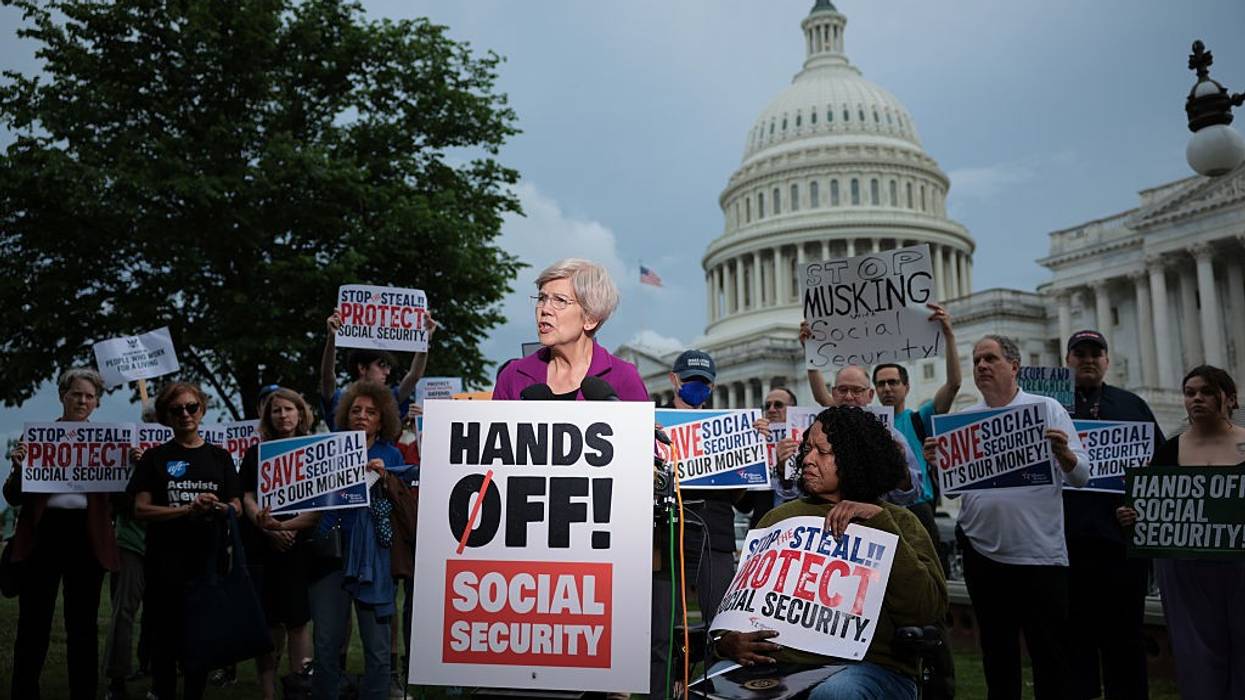
Despite assurances, Trump chips away at Americans’ earned benefits.
Despite U.S. President Donald Trump’s assurances that he will not touch Social Security (or Medicare or Medicaid for that matter), his war against Social Security marches on step by step. Politico reported last week that “Treasury Secretary Scott Bessent on Wednesday framed the president’s new ‘Trump accounts’ as a transformative tool for long-term wealth building and a ‘backdoor for privatizing Social Security.’” Not surprisingly, Bessent walked back his comments and Trump defenders put out statements pointing to Trump’s promises to defend Social Security.
While many are quite understandably focused on the macro level, the Trump administration is making it harder for Social Security beneficiaries to access their benefits. Last week, the Social Security Administration (SSA) announced that beneficiaries will not be able to perform simple tasks on the phone, such as change their address or check the status of their benefits. Instead, people are forced to go online to verify their identity or visit an already-overburdened Social Security field office.
All of this might seem familiar to you. Earlier this year, SSA announced similar rules only to have to back off after an uproar from Congress and advocacy groups. Guessing that this fleeting retreat offered them an opportunity, SSA put forth these similar rules in midsummer hoping that people were not paying attention. Kathleen Romig and Devin O’Conner of the Center on Budget and Policy Priorities offer some great perspective on this issue:
The Social Security Administration (SSA) is overwhelming its local offices by forcing millions more people to seek in-person service while cutting thousands of staff who provide that help. These offices, which primarily serve seniors, people with disabilities, and bereaved families, helped nearly 32 million visitors last year. But under a new policy set to take effect in August, beneficiaries will be forced to take millions of unnecessary trips to field offices, where they will face longer waits for appointments and slower processing times.
The Trump administration made no attempt to consult with members of Congress or advocacy groups. Instead, they simply put the notice in a technical note on the Office of Management and Budget website. These proposed changes will hurt older and more vulnerable beneficiaries the hardest as they will be less likely to travel to a Social Security field office or have the internet skills and access to be able to verify their identity online. One wonders why SSA failed to send an email out to beneficiaries with these important changes, especially since the administration used email recently to tout the misleading “benefits” of the “Big Beautiful Bill.”
Like all the other changes that SSA has proposed, the rationale to limit beneficiaries’ ability to access their earned benefits is fraud. As I am sure you remember, earlier this year, the then-Department of Government Efficiency (DOGE) head Elon Musk proclaimed that there was widespread fraud in the Social Security System. Elaine Kamarck of the nonpartisan Brookings Institute points out that “claims of widespread fraud in Social Security were misleading, with fraud representing just 0.00625% of the annual budget, far less than what private companies like Mastercard or Visa would accept.”
Fortunately, there have been several Democrats who have spoken out in defense of Social Security. Among them is Elizabeth Warren, a Democrat from Massachusetts, who has asked Social Security Commissioner Frank Bisignano “to provide data by August 11, including on the total number of calls received; details about the calls taken by an artificial intelligence tool— including the percentage of calls dropped, transferred, or ended without resolving the issue; the same details about the calls taken by a human customer service representative.”
We are only helpless if we accept Trump’s promises that he will not touch Social Security. Now is the time to turn anger into action. Speak up for Social Security. Everyone can do something. The Social Security benefits you save may be your own.
Trump’s defenders will call the ballroom symbolic. They are right. It symbolizes a state that has abandoned the moral obligations of government and replaced them with architecture.
U.S. President Donald Trump’s $200 million plan to construct a new golden ballroom at the White House is not just a monument to narcissism. It is statecraft by spectacle, financed by national rot. The timing is not subtle. It arrives alongside his “One Big, Beautiful Bill,” a federal budget that slashes Medicaid, food stamps, public housing, and climate programs, all while inflating the national deficit past $40 trillion. In this juxtaposition—architectural self-glorification for the ruling executive, fiscal starvation for the governed—we are not witnessing innovation. We are watching reruns of Versailles.
Louis XVI’s France operated on the principle of dépense utile, or “useful splendor”—the idea that royal extravagance was a form of political investment. Gold leaf and crystal chandeliers weren’t indulgence. They were instruments of authority. Versailles was never merely a residence. It was theater. It showcased the king’s ability to dominate not only his nobles but the metaphysical order of the kingdom itself. Every garden vista, every mirrored hallway, whispered the same thing: Obedience is beautiful, and beauty belongs to the crown.
This logic broke the country.
Calonne, Louis XVI’s finance minister in the 1780s, argued with sincerity that royal pageantry had diplomatic utility. France, he said, could not afford to appear poor. To reduce spending would be to lose face, both at home and abroad. It would risk undermining the delicate myth of royal omnipotence that kept the aristocracy groveling and foreign rivals guessing. So he doubled down. The state borrowed to cover Versailles’ operating costs. The result was a debt spiral so vast that it cracked the ancien régime wide open.
The French monarchy believed it could govern through performance. It fell because people eventually realized they were not guests at the party. They were the bill.
Fast forward to 2025. The United States now faces annual interest payments approaching $2 trillion, nearly one-third of all federal revenue. Unlike France in 1789, America has no tax-exempt aristocracy. Instead, it has tax-exempt billionaires. And instead of court ballet, it has cable news. But the fiscal structure is no less absurd. Trump’s budget performs the same dark magic: redirecting public funds toward elite vanity while accelerating structural collapse
The ballroom is a symptom. A projected $200 million marble-and-gold performance space, modeled loosely on Versailles’ Hall of Mirrors, will sit at the center of Trump’s renovated West Wing. It will host foreign dignitaries, Republican fundraisers, and presidential photo ops. This is how kleptocracy dresses itself—in borrowed grandeur, gilded walls, and florid illusions of permanence.
Meanwhile, Medicaid is being “restructured.” Supplement Nutrition Assistance Program benefits are being “realigned.” These are words chosen to disguise cruelty. The One Big Beautiful Bill is an exercise in anti-governance. It is designed to shrink the public sphere until only the strong, the connected, and the loyal remain. The money isn’t gone. It’s just moved—upwards.
There is bitter historical irony here. The French Revolution did not erupt because peasants lacked bread. Bread shortages had existed for centuries. What changed was the visibility of the farce. The illusion cracked. People saw a monarchy bleeding the treasury dry for glitter and pride, while demanding austerity from everyone else. The palace at Versailles, once a symbol of majesty, began to look grotesque. The line between luxury and insult collapsed.
Today, Americans are watching that same shift in real time. A president calls himself “king” on social media and receives thunderous applause from his base. He designs a ballroom while communities lose clinics. He throws gala dinners while food pantries see record demand. The White House is not a palace, but it is being remade into one.
The parallels to 18th-century France are not metaphorical. They are operational. Royal France justified excess as necessary to preserve order and prestige. Trump’s America justifies it with the language of branding. In both systems, the result is the same: obscene pageantry disguising political decay. The court is televised now. The courtiers wear microphones. And the people foot the bill.
There is no modern equivalent of Calonne’s Assembly of Notables. No gathering of billionaires will be summoned to justify the deficit or explain why America can afford a golden ballroom but not insulin. The rituals of accountability have vanished. The theater remains.
Trump’s defenders will call the ballroom symbolic. They are right. It symbolizes a state that has abandoned the moral obligations of government and replaced them with architecture. It is the spatial embodiment of policy by spectacle. The Roman emperors built circuses. Louis built Versailles. Trump builds ballrooms. The continuity is not ideological. It is psychological.
And it is ending the same way.
History offers no guarantees, but it does offer warnings. The French monarchy believed it could govern through performance. It fell because people eventually realized they were not guests at the party. They were the bill.
The question is not whether America can afford another ballroom. The question is whether it can survive the regime that thinks it should build one.
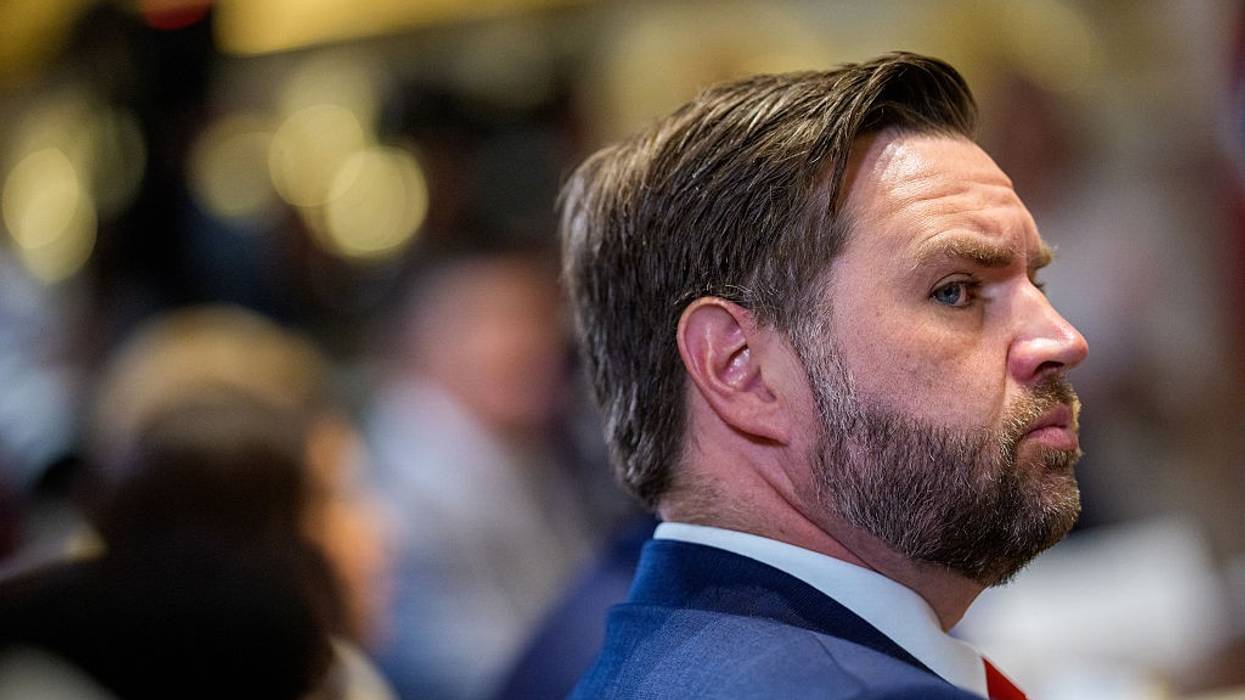
Financial disclosures analyzed by Accountable.US reveal that the vice president is invested in several defense contractors that have reaped lavish contracts since Trump's return to office.
The Trump administration has given contracts to four defense contractors that Vice President JD Vance has a financial stake in, according to a report by the government watchdog group Accountable.US.
Financial disclosure forms published by the Office of Government Ethics for June 2025 reveal that through at least the end of 2024—the last date at which he was required to disclose his investments—Vance had anywhere from $100,000 to $250,000 invested in Revolution's Rise of the Rest Seed Fund, a Washington, D.C.-based venture capital group he helped to found before taking office.
Rise of the Rest is invested in at least four military contractors that have since received large contracts from the Trump-Vance administration. Two of them received those contracts—worth millions of dollars—within two weeks of Trump beginning his second term.
Hermeus, the maker of hypersonic aircraft, received a contract worth $9.36 million from the Department of Defense in February. Another company, Slingshot Aerospace, has been awarded $1.7 million in contracts from the Air Force. The report notes that Slingshot's tools, which include GPS monitoring technology, have been used in the Israel-Palestine conflict.
The most lucrative company in Vance's portfolio is Anduril, which has received an eye-popping $220 million in government contracts since Trump and Vance took office and seen a 125% increase in its valuation.
It is expected to reap massive new contracts from the so-called "Big Beautiful Bill" that Trump signed into law earlier this month through its creation of expansive new border surveillance technology.
As Sam Biddle reported for The Intercept on Wednesday, the bill includes language that effectively grants Anduril "a monopoly on new surveillance towers for U.S. Customs and Border Protection":
A provision buried in the new mega-legislation stipulates that none of the $6 billion border tech payday can be spent on border towers unless they've been "tested and accepted by [CBP] to deliver autonomous capabilities."…
That reads like a description of Anduril's product—because it might as well be. A CBP spokesperson confirmed to The Intercept that under the new law, Anduril is now the country's only approved border tower vendor.
Anduril is also reportedly one of the main firms in contention for contracts to help build Trump's $175 billion "Golden Dome" security system.
Vance left Revolution in 2020 to start his own venture capital firm, Narya Capital, and two of the companies received investments from his previous firm after his departure. However, Vance directly acknowledged that he had a financial stake in all four of them on a Senate financial disclosure form in 2023, "indicating awareness of the investments," according to Accountable.US.
The Rise of the Rest Seed Fund presents other potential conflicts of interest as well. In addition to its investments in the defense industry, it has also been a major backer of The Bitcoin Company, providing it with more than $2.1 million in seed money in 2022.
Vance himself is a major Bitcoin enthusiast. His disclosures reveal that he personally holds anywhere from $250,000 to $500,000 worth of the cryptocurrency.
During his time in the White House, President Donald Trump has launched initiatives meant to supercharge the cryptocurrency industry, including a "Strategic Bitcoin Reserve," which sent the digital currency's price soaring in March.
Accountability.US executive director Tony Carrk describes Vance's financial entanglements as part of a broader pattern within the Trump administration.
"Vance's background and investments in companies benefiting from Trump government contracts come as no surprise given this administration’s record of benefiting themselves while raising costs and gutting health care for hardworking Americans," he said.
Past reports by the group have highlighted the president's own profiteering from cryptocurrency and other financial ventures. And last month, an investigation revealed that Donald Trump, Jr. also stood to profit tremendously from the "Golden Dome" project via his own investments in Anduril and Elon Musk's company SpaceX.
"As much as the Trump administration claims to be draining the swamp, their conflicts of interest, self-enrichment, and ties to special interests show they are creatures of it," said Caark. "Vice President JD Vance is no exception."
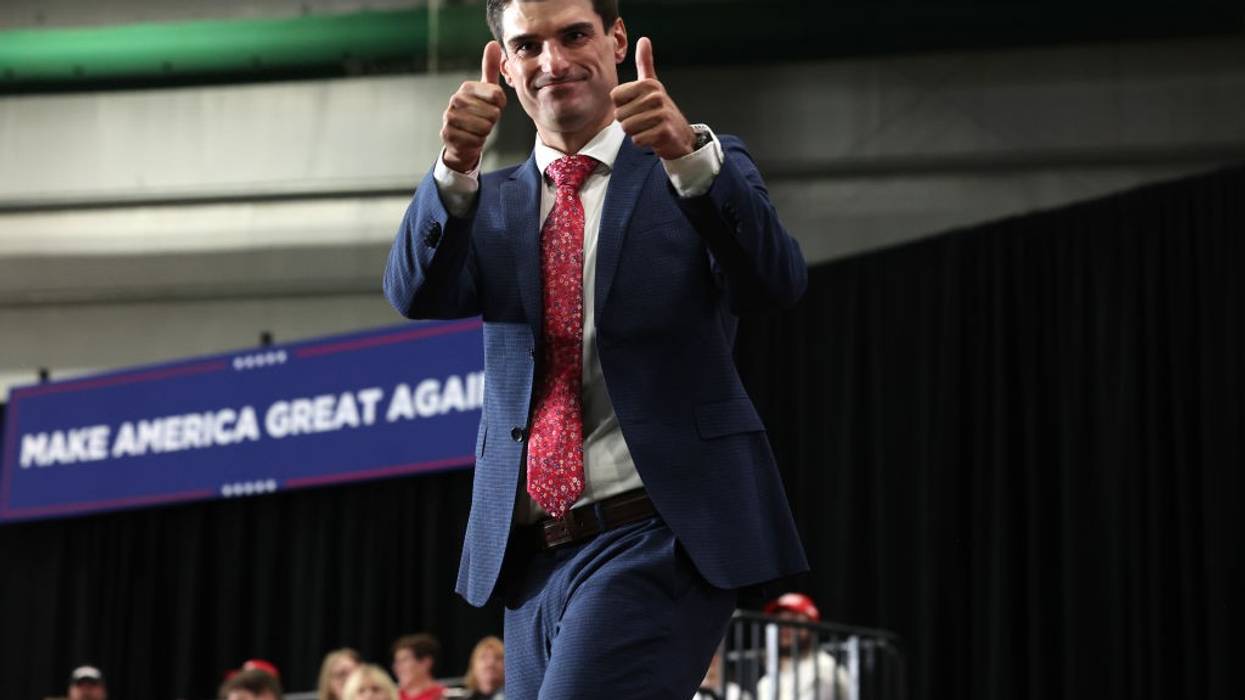
Northeastern Pennsylvania Congressman Rob Bresnahan is one of many Republicans in swing states who are taking heat after ripping away Medicaid coverage from their constituents.
A new ad campaign is targeting a vulnerable first-term Republican congressman in a Northeastern Pennsylvania swing district after he broke his promise not to vote for Medicaid cuts.
Rep. Rob Bresnahan Jr. (R-Pa.) joined the rest of his party last week to vote for the Republican budget megabill, which cut over $1 trillion from the safety net program over the next decade.
As editorial board of The Times-Tribune in Scranton wrote, Bresnahan's vote went against his "repeated promises" to protect safety net programs, including a pledge he made in February that "if a bill is put in front of me that guts the benefits my neighbors rely on, I will not vote for it."
Bresnahan did ultimately vote for the bill, which may now result in nearly a half-million of his "neighbors" in the state of Pennsylvania losing coverage, according to a study published last week by the Joint Congressional Economic Committee. More than 200,000 people in Bresnahan's district—over a quarter—are Medicaid recipients.
In a new ad released Monday by the progressive group Unrig Our Economy, one of those neighbors comes back to haunt him.
"I sat in a meeting with Congressman Bresnahan," says a Scranton woman named Krysten. "We discussed some issues that I deal with myself."
The ad notes that Krysten had an ankle injury that required "six surgeries," "rehabilitation," an "ankle brace," and "medication."
"I had explained how important Medicaid is with him sitting straight across from me," Krysten says. "He stated to me that he would not make cuts to Medicaid."
"Afterwards, when the votes were done," she continues, "when I found out how he voted, I was very upset to hear that Congressman Bresnahan voted for the largest cut to Medicaid in history to give tax breaks to billionaires. This doesn't make sense at all."
Bresnahan won his seat by just 1.6 points in 2024, knocking out Democratic incumbent Rep. Matt Cartwright. The Cook Political Report lists Bresnahan as one of the most vulnerable Republican incumbents in the country in the 2026 midterms.
"Congressman Bresnahan looked his own constituents in the eyes and promised to protect Medicaid, then turned around and voted to gut it so billionaires could get another tax break," said Kobie Christian, a spokesperson for Unrig Our Economy. "People like Krysten deserve healthcare and honesty, not cruel cuts and empty promises. Congressman Bresnahan should start fighting for his constituents, not the ultrarich."
Other Democratic-aligned groups are joining in the full-court press, hoping Bresnahan's betrayal of Medicaid recipients would be enough to sink his reelection chances.
In a post on X Tuesday, the House Majority PAC, which seeks to win the House majority back for Democrats, called out Bresnahan for selling his stock in the Centene Corporation, the largest Medicaid provider in the U.S., on May 15, just one week before the first version of the Republican bill passed the House. The value of the stock would tank throughout the month of June as cuts to Medicaid became increasingly inevitable.
"This congressman literally dumped stock in a Medicaid provider company right before this bill came to the floor," said Rep. Melanie Stansbury (D-N.M.). "Don't be fooled—these guys know exactly what they're doing."
Bresnahan is one of many Republicans who may be in danger after voting to strip Medicaid from their constituents.
According to Newsweek, 64 GOP lawmakers represent districts where the Medicaid enrollment rate is higher than the national average. In addition to Bresnahan, four others—Nick Begich (R-Alaska), Juan Ciscomani (R-Ariz.), Ken Calvert (R-Calif.), and Jeff Hurd (R-Colo.) won their districts by five points or less and are particularly vulnerable.
The GOP bill is historically unpopular, with polls from Quinnipiac University, The Washington Post, Pew Research, and Fox News all showing roughly 2-to-1 opposition. Meanwhile, just 10% of Americans say they support cuts to Medicaid spending compared to nearly half who say the government should spend more money on the program, according to Quinnipiac.
According to reporting from Politico Sunday, Republicans are now in panic mode about how this vote could affect their chances.
"What we know from past elections is that messing with people's healthcare coverage is very problematic for politicians," said Republican pollster Whit Ayres. "It has, in the past, yielded some very, very negative views about the people who supported it."